
Author: Eric

  • Small Details May Say A Lot

    Even after posting three blogs on John 9, there is still room for a few insights, particularly on the two interesting remarks of Jesus Christ. First, in John 9:4, “We must work the works of Him who sent Me as long as it is day; night is coming when no one can work.” What does Jesus mean by saying “as long as it is day, night is coming”? And the second, John 9:39, “For judgment I came into this world, so that those who do not see may see, and that those who see may become blind.” Lord willing, both will be explained as we go along our study of the Gospel of John.

    Continuing on my study of the Gospel of John, I came across John 5:1. “After this there was a feast of the Jews, and Jesus went up to Jerusalem.” The Bible did not mention which particular Jewish Feast John was referring to, so this will be my focus on this blog and following blog postings.

    As I had said in my previous blogpost, the introduction to my blog on Spiritual Blindness, there were Seven Jewish Annual Feasts commanded by the LORD God in Leviticus 23. The Seven Jewish Feasts of Leviticus 23 may also be divided into Three Harvest Festivals. Three times in a year, the Jews from everywhere would come to Jerusalem for the three Harvest Feasts – the Passover Feast, the Feast of Pentecost and the Feast of Tabernacle. Amazingly, the Three Harvest Feasts were occasioned according to the harvest seasons in Palestine – the harvest of barley, next wheat, and lastly fruits or grapes. God’s sovereignty is clearly in display here, don’t you think?

    The first harvest festival begins with the Feast of Passover, culminating with the thanksgiving harvest of barley – the Feast of Firstfruits (Leviticus 23:9-11). The second harvest festival was the Feast of Wheat or Pentecost, celebrating the thanksgiving harvest of wheat (Leviticus 23:15-16). Lastly, the third harvest festival begins with the Feast of Trumpets, then Feast of Atonement, and finally the Feast of Tabernacle or Booths or Ingathering – it’s the harvest of fruits or grapes (Leviticus 23:33-36).

    Here then is the summary of the Jewish Annual Festivals or Feasts. The first four Annual Jewish Feasts or Spring Festivals – from Passover to Pentecost – would occupy the first three months of the Jewish calendar year. Following the Spring Festivals would be a gap of four summer months then comes the final three Jewish Annual Feasts or Fall Festivals – the Feast of Trumpets, the Feast of Atonement, and the festivals finally culminate with the Feast of Ingathering (Tabernacle or Booths).

    Now, on our study of John 5:1, specifically John’s mention of the “feast of the Jews,” Albert Barnes said:

    Probably, the Passover, though it is not certain. There were two other feasts – the Pentecost and the Feast of Tabernacles.

    On the other hand, Nelson’s New Illustrated Bible Commentary said:

    The feast of the Jews is probably not the Passover, which John usually refers to by name (John 2:13; John 6:4; John 11:55). It may have been Purim, which is not a divine institution but a Jewish-instigated feast to celebrate the deliverance of the Jews and Queen Esther. It is literally a feast of the Jews.

    Lastly, Robertson’s Word Pictures said:

    As a matter of fact there is no way of telling what feast it was which Jesus here attended. Even if it was not the passover, there may well be another passover not mentioned besides the three named by John. (John 2:13, John 2:23; John 6:4; John 12:1)

    I only checked on three Bible commentaries, but nobody seems to agree on their opinion regarding John 5:1. This simply tells us Bible commentaries are not 100% foolproof. Understanding the Leviticus 23 Jewish Feasts would greatly help us in determining facts from fiction. Like for example, proving that Jesus Christ indeed spent three years or three and a half years of earthly ministry with His disciples.

    The NNIBC (Nelson’s New Illustrated Bible Commentary) rightly pointed out three verses from the Gospel – John 2:13; John 6:4 and John 11:55 – thereby showing us three annual Jewish Festivals, “the Passover,” involving Jesus Christ.

    Let us do a survey of all verses of Scripture mentioning the “Passover” in John’s Gospel. John 2:13 and John 2:23 refers to the first Jewish annual festival involving Jesus Christ. Obviously, John 11:55; 12:1; 13:1; 18:28: 18:39 and 19:14 covers the third and last Jewish festival ’cause the flow of narrative spoke of Jesus’ last week with His disciples proceeding to His crucifixion. Therefore, John 6:4 pertains to second Jewish Festival involving Jesus’ earthly ministry. Here we have the internal evidence of the Scripture that Jesus’ ministry covers three successive years of the annual Passover festival.

    Looking at all four Gospels, Jesus’ earthly ministry started after His baptism by John the Baptist (John 1:29-39; Matthew 3:13-17, 4:12-18; Mark 1:9-15; Luke 3:21-23), with John 2:13 mentioning the first Passover festival involving Jesus. However, prior to His ministry beginning in John 2:13 (Jesus first involvement with the Passover Feast), which was after His baptism by John the Baptist (John 1:29-33), the apostle John narrated a ministry of Jesus at a wedding in Cana. It is evident then that Jesus spent, at the very least, three years or three and a half years of earthly ministry, beginning at the age of 30, according to Luke 3:23.

    Now, going back to the “feast of the Jews” narrated by the apostle in John 5:1. We already knew that John spoke of three Passover Festivals involving Jesus. Also, we should now understand that a full cycle of the annual Jewish feasts begins with the Feast of Passover and ends with the Feast of Booths (Tabernacle or Ingathering). Interestingly, John only mentioned clearly one Feast of Booths in the entirety of his Gospel in John 7:2. However, following the flow of John’s narrative, we can outright see John 6:4, “Now the Passover, the feast of the Jews was at hand,” naturally connecting to John 7:2, “Now the Jews’ Feast of Booths was at hand,” thereby giving us a narrative of the full cycle of the second Jewish annual festival involving Jesus.

    Now, as I mentioned earlier, John 11:55, “Now the Passover of the Jews was at hand …” covers the third and last Passover festival involving Jesus. Since the succeeding narrative tells us the story of Jesus’ arrest, crucifixion, and resurrection, we are now left with one option. No, I don’t agree with Nelson’s New Illustrated Bible Commentary that the apostle John may be referring to the “Purim,” a non-divinely instituted feast at the time of Esther (Esther 9:26-32), simply because the events within John 5, specifically the teaching of Jesus Christ within the chapter clearly correlate with the essence of the Feast of Booths. I will discuss that in my next blog posting. For now, let us examine first the essence of the Passover Feast vis-vis the ministry of Jesus Christ.

    John ended his Gospel with his narrative of the Feast of Passover involving Jesus Christ. From a human perspective, that was the time Jesus Christ was crucified. But from God’s perspective, He became the true offering acceptable to God – He was the fulfillment of the Leviticus 23 “Passover Feast”. It should be noted that Jesus Christ came to fulfill all the requirements of the first or Old Covenant. See Matthew 5:17-18; Jesus declared:

    Do not think that I have come to abolish the Law or the Prophets; I have not come to abolish them but to fulfill them. For truly, I say to you, until heaven and earth pass away, not an iota, nor a dot, will pass from the Law until all is accomplished.

    For in doing so, He would be qualified to inaugurate the second or New Covenant of God. See Hebrews 10:5-10:

    Consequently, when Christ came into the world, He said, “Sacrifices and offerings You have not desired, but a body have You prepared for Me; in burnt offerings and sin offerings You have taken no pleasure. Then I said, ‘Behold, I have come to do Your will, O God. as it is written of Me in the scroll of the book.’” When He said above, “You have neither desired not taken pleasure in sacrifices and offerings and burnt offerings and sin offerings” (these are offered according to the Law), then He added, “Behold I have come to do Your will.” He does away with the first in order to established the second. And by that will we have been sanctified through the offering of the body of Jesus Christ once for all.

    Next, see 1 Corinthians 5:7, the apostle Paul wrote,

    Cleanse out the old leaven that you may be a new lump, as you really were unleavened. For Christ, our Passover Lamb, has been sacrificed.

    Looking then at both Hebrews 10:5-10 and 1 Corinthians 5:7, without a doubt, Jesus Christ indeed fulfilled both the Feast of Passover and Unleavened Bread at the Cross.

    The apostle Paul clearly spoke of the believers to have been “unleavened,” not because of their own deeds but by the redemptive work of Jesus Christ at the Cross. In Colossians 2:13-14, the apostle Paul also wrote:

    And you, who were dead in your trespasses and the uncircumcision of your flesh, God made alive together with Him, having forgiven us all our trespasses, by cancelling the record of debt that stood against us with its legal demands. This He set aside, nailing it to the Cross.

    The Feast of Passover and Unleavened Bread having been fulfilled, the cancelling of the record of debt that stood against the believers was then consummated at the cross. So Jesus uttered, “It is finished” (John 19:30), then gave up His spirit.

    A side note: Many have always believed that since Christ Jesus had died at the cross and He resurrected, then all is finished, and salvation is available once and for eternity. We often hear the claim “Once saved, always saved,” which sadly, has often led believers to think that no matter how they have lived their lives, since they have claimed faith in Christ, surely they are now saved and will be saved until the end. Here is one subtle yet implied traditional idea often offered.

    Let us again look at 1 Corinthians 5:7, but this time we will include the context:

    Cleanse out the old leaven that you may be a new lump, as you really are unleavened. For Christ, our Passover Lamb, has been sacrificed. Let us therefore celebrate the festival, not with the old leaven, the leaven of malice and evil, but with the unleavened bread of sincerity and truth. I wrote to you in my letter not to associate with sexually immoral people – not at all meaning the sexually immoral of the world, or the greedy and swindlers, or idolaters, since then you would need to go out of the world. But now I am writing to you not to associate with anyone who bears the name of brother if he is guilty of sexual immorality or greed, or is an idolater, reviler, drunkard, or swindler – not even to eat with such a one. For what have I to do with judging outsiders? Is it not those inside the church whom you are to judge? God judges those outside. “Purge the evil person from among you.” (1 Corinthians 5:7-13)

    “Purge the evil person from among you” is an Old Testament quotation found several times in the Law of Moses, Deuteronomy; see 13:5; 17:7; 17:12; 21:21; 22:21 & 22:24. It was also quoted against Israel, specifically the Tribe of Benjamin, in Judges 20:13. It was a call for the believers to set themselves apart or be sanctified. ‘Cause, again Hebrews 10:10 said, And by that will we have been sanctified through the offering of the body of Jesus Christ once for all.”

    The Nelson’s New Illustrated Bible Dictionary defined “sanctification” as

    the process of God’s grace by which the believer is separated from sin and becomes dedicated to God’s righteousness. Accomplished by the Word of God (John 17:7) and the Holy Spirit (Romans 8:3-4), sanctification results in holiness, or purification from guilt and the power of sin.

    I actually see two errors in the explanation of the NNIBD. The first one might be a simple typographical error. Reference for “accomplished by the Word” of John’s Gospel should be from John 17:17, not John 17:7. The second one is a common traditional misunderstanding on Paul’s usage of the “Spirit” (Romans 8:4). In the Bible dictionary, it was explained “as the Holy Spirit,” so a quick reading of Romans 8:3-4 then would lead us to understand that Paul was contrasting the “flesh” from the “Holy Spirit”. But a careful study of the whole discourse of Paul from within the Book of Romans, perhaps Romans 7:4-6, should enlighten us to see what truly Paul was saying.

    Likewise, my brothers, you also have died to the Law through the Body of Christ, so that you may belong to another, to Him who has been raised from the dead. In order that we may bear fruit for God. For while we were living in the flesh, our sinful passions, aroused by the Law, were at work in our members to bear fruit to death. But now we are released from the Law, having died to which held us captive, so that we serve in the NEW WAY OF THE SPIRIT and not in the old way of the written code.

    In other words, Paul’s usage of “flesh” was actually a reference to the “Law,” contrasting it from the Gospel of Christ. The Gospel is the new way of the Spirit, which is not in the old way of written code – the Law of Moses.

    Another passage to look at such be in 2 Corinthians 3:4-8, Paul wrote:

    Such is the confidence that we have through Christ toward God. Not that we are sufficient in ourselves to claim anything as coming from us, but our sufficiency is from God, who has made us sufficient to ministers of the NEW COVENANT, not of letter but of the Spirit. For the letter kills, but the Spirit gives life. Now if the ministry of death, carved in letters on stone, came with such glory that the Israelites could not gaze at Moses’ face because of its glory, which was being brought to an end, will not the ministry of the Spirit have even more glory?

    By “letter,” as against the “Spirit,” Paul was contrasting the Old Covenant from the New Covenant. Therefore, the “letter” refers to the “written code” mentioned also by Paul in Romans, while the “Spirit” refers to the Gospel of Jesus Christ, the New Covenant of God.

    Sanctification then, is the process of God’s grace displayed on the cross, setting apart believers for God, declaring them therefore “righteous, holy and pure” from guilt and the power of sin. However, sanctification also is a process by which every believer, now having been declared righteous, free from guilt and the power of sin, should live by. In other works, Christians should walk the talk.

    See Romans 6:17-18:

    But thanks be to God that you who were once slaves of sin have become obedient from the heart to the standard of teaching [the Gospel] to which you were committed, having been set free from sin, have become slaves of righteousness. I am speaking on human terms, because of your natural limitations. For just as you once presented your members as slaves to impurity and to lawlessness leading to more lawlessness, SO NOW PRESENT YOUR MEMBERS AS SLAVES TO RIGHTEOUSNESS LEADING TO SANCTIFICATION.

    Oh well, let me repeat the passage above, but this time using a paraphrase – easier to understand – English translation. The New Living Translation on Romans 6:17-19 said,

    Thank God! Once you were slaved to sin, but now you wholeheartedly obey this teaching [the Gospel] we have given you. Now you are free from your slavery to sin, and you have become slaves to righteous living. Because of the weakness of your human nature, I am using the illustration of slavery to help you understand all this. Previously, you let yourselves be slaves to impurity and lawlessness, which led ever deeper to sin. NOW YOU MUST GIVE YOURSELVES SLAVES TO RIGHTEOUS LIVING SO THAT YOU WILL BECOME HOLY.

    Note: “Holy” and “sanctification” are the same word in Greek. Also, at this point, perhaps we see that the Bible dictionaries as well are not 100% foolproof, just like the Bible commentaries I mentioned earlier. We need to learn to carefully study the Bible, doing the proper exegesis of the Scripture and not allowing traditions to dictate our understanding of the Word of God. For only then may we be sure that indeed what we believe is the truthful revelation of Scripture.

    Now, going back to 1 Corinthians 5:7-13, to celebrate the festival – that is, the Passover and Unleavened Bread – therefore means believers should keep themselves true to their festival celebration or confession of faith with unleavened bread of sincerity and truth. Again, that’s walking the talk. If we claim to have been sanctified by Christ, then indeed we ought to live a sanctified life. Also Jesus, with His utterance of “It is finished” (John 19:30), actually was declaring His fulfillment of the the first two Jewish Feasts of Leviticus 23 (Passover and Unleavened Bread).

    It is therefore false or wrong to see Jesus’ utterance in John 19:30 and say salvation is a done work at the cross. Rather, it was the initial, yet certainly important, feature of God’s salvation plan. Also, it is illogical and unbiblical to claim “Once saved, always saved” basing on John 19:30, especially since Paul also spoke of a coming judgment on his letter to the same audience, the believers of Corinth. See 2 Corinthians 5:10-11.

    For we must all appear before the judgment seat of Christ, so that each one may receive what is due for what he has done in the body, whether good or evil. Therefore, knowing the fear of the Lord, we persuade others. But what we are is known to God, and I hope it is known also to your conscience.

    It is also important to understand that Paul’s declaration of judgment in 2 Corinthians 5:10 refers to the Second Coming Judgment of Jesus Christ. See Revelation 20:11-15.

    Then I saw a great white throne and Him who seated on it. From His presence earth and sky fled away, and no place was found for them. And I saw the dead, great and small, standing before the throne, and books were opened. Then another book was opened, which is the Book of Life. And the dead were judged by what was written in the books, according to what they had done. And the sea gave up the dead who were in it. Death and Hades gave up the dead who were in them, and they were judged, each one of them, according to what they had done. Then Death and Hades were thrown into the Lake of Fire. This is the Second Death, the Lake of Fire. And if anyone’s name was not found written in the Book of Life, he was thrown into the Lake of Fire.

    In conclusion, it cannot be that believers would claim “once saved, always saved” based on the once and forever sacrifice and death of Jesus at the cross. Then, at the time of God’s judgment, salvation would be revoked for they have fallen short. That would make Christ’s redemptive work inept or lacking. Instead, we have to understand that the salvation plan of God demands that Jesus Christ MUST have fulfilled all the Seven Jewish Feasts, not just celebrated. Then salvation becomes a reality. Again, that was why Jesus Christ said in Matthew 5:17-18:

    Do not think that I have come to abolish the Law or the Prophets; I have not come to abolish them but to fulfill them. For truly, I say to you, until heaven and earth pass away, not an iota, not a dot, will pass from the Law until all is accomplished.

    I know, this blog would raise a lot of questions in your mind. It also happened to me before I came to understand the Scripture better. The more traditions we have learned or held on, the more difficult it would be for us to comprehend the true teachings of the Bible. As the saying goes, “Patience is a virtue.” Take it one step at a time. I personally have to double my effort allowing the Word of God to speak, rather than making my traditional ideas dictate my understanding of the Scripture.

    In closing, going back to John 9:39, “For judgment I came into this world, that those who do not see may see, and those who see may become blind.” By judgment, Jesus Christ was also referring to the same judgment spoken by the apostle Paul both in 2 Corinthians 5:10 and Revelation 20:11-15, which I had explained earlier. On the other hand, with John 9:4-5, it should be clear now that by “day,” Jesus was referring to, but is not limiting to, the time He was in the world (John 9:5). It also extends to the short time after His ascension, when His immediate disciples were also sent, this time by Jesus Christ, to do the work of God the Father (John 20:21) – that is, believing in Jesus Christ, whom the Father has Sent (John 6:29). Meanwhile, “night” pertains to the judgment uttered by Jesus Christ in John 9:39.

    Now, going back to our discussion on John 5:1. So biblically speaking, what was expected to occur with the fulfillment of the Feast of Booths by Jesus Christ? We shall next explore John 5.

    To be continued …

    If you want to follow our journey of unlearning tradition and relearning Scripture, you can stay updated by heading to our about page and subscribe directly to receive notifications in your inbox.

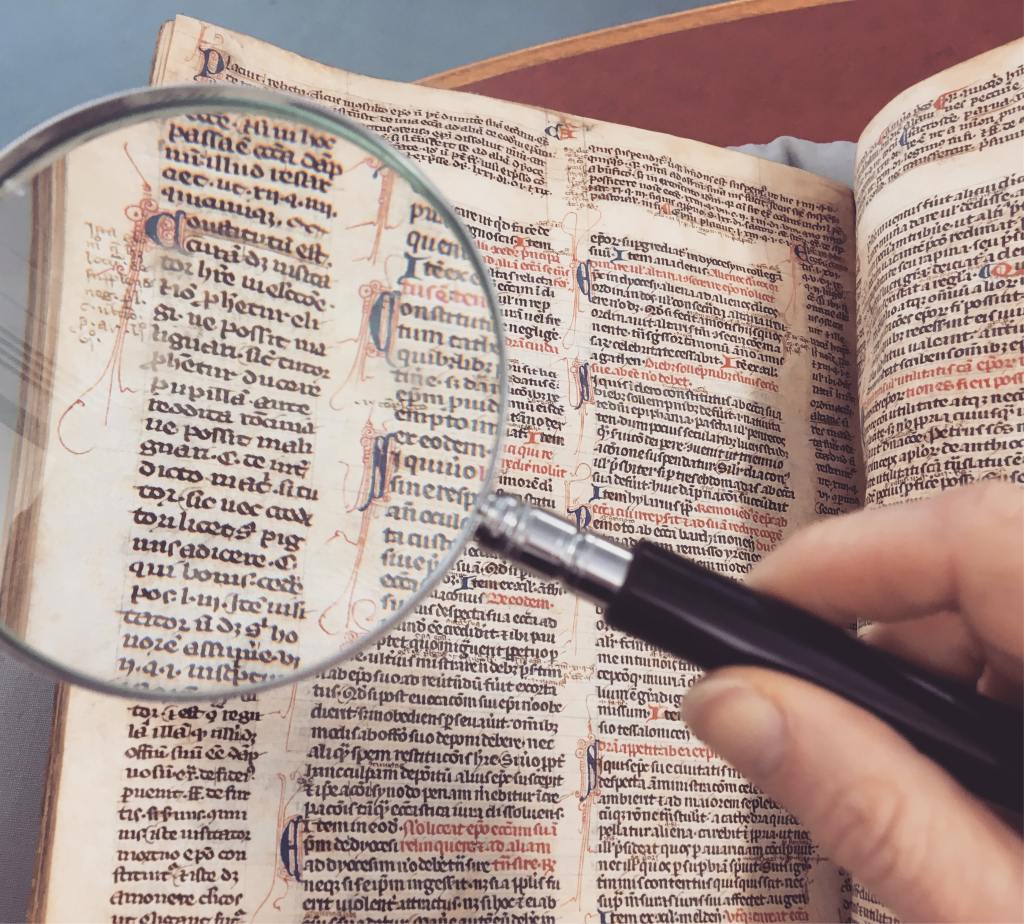
  • Spiritual Blindness: Conclusion

    A study on John 9

    In my last blog posting, I said, “The healed blind man did not only experience restored eyesight, but more importantly recovery from spiritual blindness.” Interestingly, John 1 also hinted on the idea of spiritual blindness. See John 1:10-11:

    He [Jesus] was in the world, and the world was made through Him, yet the world did not know Him. He came to His own, and His own people did not receive him.

    We will explore further the first chapter of John’s Gospel and see how the apostle had practically laid out the summary of his Gospel right there, right in the opening verses of chapter one, then compare it to John 9. But before we do, let us refresh our understanding of the ongoing context of John 9.

    Jesus had a long discourse against the Pharisees and scribes in John 8. Actually the tension between Jesus Christ and the Sanhedrin was already mentioned as early as John 7:32. The Sanhedrin was the highest ruling religious body and court of justice among the Jewish people at the time of Jesus. The Sanhedrin comprised both the Sadducees and Pharisees, with the High Priest as its head – 71 members altogether. The Sanhedrin was abolished after the destruction of Jerusalem in AD 70.

    Pharisees and scribes should be the best of the best when it comes to understanding the Scripture. The exchange of words between Jesus and the Pharisees and scribes may have started somewhere near the temple (John 8:2), but perhaps it ended inside the temple area, ’cause John 8:59 said, “So they picked up stones to throw at Him, but Jesus hid Himself and went out of the temple.” The discussion definitely turned ugly, for Jesus actually claimed divinity by saying, “Truly, truly, I say to you, before Abraham was, I am” (John 8:58). Was Jesus wrong to have claimed He was the Great “I am” of Exodus 3:14? The LORD God spoke first to Moses in Exodus 3 asking him to lead Israel in Exodus out of Egypt. Let us now turn to consider John 1:1-5:

    In the beginning was the Word, and the Word was with God, and the Word was God. He was in the beginning with God. All things were made through Him, and without Him was not any thing made that was made. In Him was life, and the life was the light of men. The light shines in the darkness, and the darkness has not overcome it.

    Then, in John 1:14,16-18, the apostle wrote:

    “And the Word became flesh and dwelt among us, and we have seen His glory, glory as of the only Son from the Father, full of grace and truth … For from His fullness we have all received, grace upon grace. For the Law was given through Moses; grace and truth came through Jesus Christ. No one has even seen God; the only God who is at the Father’s side, He had made Him known.”

    Psalm 33:6,9 said, “By the Word of the LORD the heavens were made, and by the breath of His mouth all their host … For He spoke, and it came to be; He commanded, it stood firm.”

    Both John and the Psalmist spoke of the Word; that is, Christ Jesus, the only Son of the Father. He spoke, then everything came to exist. Therefore, Jesus Christ, indeed is the Great “I am’” the Second Person of the Holy Trinity God.

    Now see John 9:30-33:

    The man answered, “Why, this is an amazing thing! You do not know where He comes from, and yet He opened my eyes. We know that God does not listen to sinners, but if anyone is a worshipper of God and does His will, God listens to Him. Never since the world began has it been heard that anyone opened the eyes of a man born blind. If this man were not from God, He could do nothing.”

    Amazing, isn’t it? The blind man practically reiterated what John had declared in John 1:1-5; Jesus Christ is of divine origin. Exactly what Jesus told the Pharisees and scribes causing them wanting to stone him (8:58-59). It’s ironic that, though the Pharisees should know Scripture better, the former blind man appeared to be more discerning than them. Clearly a case of spiritual blindness, don’t you think?

    Spiritual blindness, therefore, does not mean ignorance of the Scripture, rather having false beliefs.

    Again in John 1:9-13:

    The true light, which gives light to everyone, was coming into the world. He was in the world, and the world was made through Him, yet the world did not know Him. He came to His own, and His own people did not receive Him. But to all who did receive Him, who believed in His name, He gave the right to become children of God, who were born, not of blood nor of the will of the flesh nor of the will of man, but of God.

    [The former blind man answered the inquiry from his fellow Jew], “The man called Jesus made mud and anointed my eyes and said to me, ‘Go to Siloam and wash,’ So I went and washed and received my sight.” (John 9:11)

    The man born blind met Jesus, the True light, which gives light to everyone; that’s the reason why he was able to discern better than the Pharisees concerning the origin of Jesus. Oh yes, he also received his sight. A bonus, I should say.

    So the Pharisees again asked him how he had received his sight. And he said to them, “He put mud on my eyes and I washed, and I see.” Some of the Pharisees said, “This man is not from God, for He does not keep the Sabbath.” But others said, “How can a man who is a sinner do such signs?” And there was a division among them. So they said again to the blind man, “What do you say about Him, since He opened your eyes?” He said, “He is a Prophet.” (John 9:15-17)

    The blind man recognized the signs, so he said, “Jesus is the Prophet of God.” He believed Jesus, hence Christ gave him the right to become a child of God. Coincidence? Of course not! Everything comes by God’s divine providence. Scripture said,

    But to all who did receive Him, who believed in His name, He gave the right to become children of God, who were born, not of blood nor of the will of the flesh nor of the will of man, but of God. (John 1:12-13)

    The former blind man did not will to know Christ Jesus; rather it was Jesus who declared, “But that the works of God might be displayed in him” (John 9:3b). Again, the “work of God is for people to believe in Jesus Christ, whom the Father has sent” (John 6:29). Mission accomplished!

    The blind man rightly declared Jesus to be the Prophet of God, ’cause the “Son of Man,” the Messianic title of Christ, would mean He is the Anointed One of God the Father; therefore, Jesus should fulfill all three: Prophet (Deuteronomy. 18:15), Priest (Psalm 110:4) and King (Psalm 2:6-9).

    But wait, the Pharisees also had encountered Jesus Christ. Yet, they debated him in the temple area. In fact, the parents of the man born blind refused to say a word about Jesus Christ, especially to confess that Jesus is the Christ, ’cause the religious leaders – Pharisees included – had already agreed to cast out anyone confessing faith in the Son of Man (see John 9:22).

    True enough, the former blind man was only able to confess faith in Jesus, for in the fulness of Christ he have received, grace upon grace (John 1:16). Indeed, such an amazing grace was displayed by Christ Jesus in John 9:35-38:

    Jesus heard that they had cast him [the former blind man] out, and having found him He said, “Do you believe in the Son of Man?” He answered, “And who is He, Sir, that I may believe in Him?” Jesus said to him, “You have seen Him, and it is He who is speaking to you.” He said, “Lord, I believe,” and he worshiped Him.’

    The blind man was literally in darkness, and we may say he actually personified the whole nation of Israel in the story – blind spiritually. The healing of the man born blind indeed was an impossible task humanly speaking – exactly what the healed blind man said to the Pharisees: “Never since the world began has it been heard that anyone opened the eyes of a man born blind” (John 9:32). See Isaiah’s prophecy concerning Jesus Christ, the Anointed One of God the Father:

    Behold My Servant, whom I uphold, My Chosen, in whom My soul delights; I have put My Spirit upon Him; He will bring forth justice to the nations. (Isaiah 42:1)

    Thus says God, the LORD, who created the heavens and stretched them out, who spread out the earth and what comes from it, who gives breath to the people on it and spirit to those who walk in it: “I am the LORD; I have called You in righteousness; I will take You by the hand and keep You; I will give You as a Covenant for the people, a light for the nations, to open the eyes that are blind, to bring out the prisoners from the dungeon, from the prison those who sit in darkness. I am the LORD; that is My name; My glory I give to no other, nor My praise to carved idols. Behold, the former things have come to pass, and new things I now declare; before they spring forth I tell you of them.” (Isaiah 42:5-9)

    The Pharisees, knowing the prophecies in Scripture concerning the Christ, certainly recognized the signs, yet many others refused to acknowledge Christ and called Him a sinner ’cause He healed on a Sabbath. See John 9:16:

    Some of the Pharisees said, “This man is not from God, for He does not keep the Sabbath.” But others said, “How can a man who is a sinner do such signs?” And there was a division among them.

    Pharisees upheld the Law of Moses. Jesus said to them,

    For if you believed Moses, you would believe Me; for he wrote about Me. But if you do not believe his writings, how will you believe My words? (John 5:46-47)

    The Pharisees failed to see Christ in Scripture due to their self-centeredness, believing that no matter what they do – they would always be God’s children. A false assumption. In Matthew 3, John the Baptist was baptizing in the Jordan River, and the Pharisees came to him. John said to them,

    And do not presume to say to yourselves, ‘We have Abraham as our father,’ for I tell you, God is able from these stones to raise up children for Abraham. (Matthew 3:9)

    So again John 1:12-13:

    But to all who did receive Him [Jesus Christ], who believed in His name, He gave the right to become children of God, who were born, not of blood nor of the will of the flesh nor of the will of man, but of God.

    Spiritual blindness can be deadly. The Pharisees comprehend all prophecies in Scripture. It was not that they can’t see the signs; they did. They were not a victim of unbelief; rather, they were enslaved by their false beliefs. See Mark 7:8-9, 13:

    You leave the commandment of God and hold to tradition of men. You have a fine way of rejecting the commandment of God in order to establish your tradition! Thus making void the Word of God by your tradition that you have handed down. And many such things you do.

    The Pharisees claimed to hold on to the teachings of Moses (John 5:46-47). They may have done partially, but in truth, they made their own traditions or teachings. Traditions, established by men, hindered them from seeing that Jesus Christ, “the Son of Man – is the Lord of Sabbath” (Matthew 12:8).

    Similarly, the only way for anyone seeking or studying Scripture to find the True Christ of the Bible is to allow the Word of God to speak to us. Do not allow traditions or creeds of men to be our guide, rather Scripture alone!

    The story of John 9 should inspire us to see it’s all by God’s grace that anyone can come to know Jesus Christ, the Son of Man. The former blind man, humanly speaking, lost a lot when he received his sight. He may have lost or was severed from his parents and the community, since he had been cast out of the synagogue. Yet, it is amazing how people who seemed to have lost a lot found it easier to find Christ.

    P.S. Though there remain a lot to share within John 9, I decided to conclude my blogpost on “Spiritual Blindness,” a study of John 9, here. Lord willing, if ever, I will just write a supplementary blogpost if needed.

    Blessings!

    If you want to follow our journey of unlearning tradition and relearning Scripture, you can stay updated by heading to our about page and subscribe directly to receive notifications in your inbox.

  • Spiritual Blindness: Continuation

    A study on John 9

    The central characters within John 9 involve Jesus Christ, the man born blind and the Pharisees or the Jewish Religious Leaders. The story began with Jesus and His disciples leaving the Temple area (8:59). He then passed by the man born blind (9:1). The disciples, seeing the blind man, then asked Jesus, “Rabbi, who sinned, the man or his parents, that he was born blind?” 

    From the flow of events, this question appeared to have been prompted by a common belief connecting inborn disability with sin. Albert Barnes, on his commentary on John 9:2 said: “It was a universal opinion among the Jews that calamities of all kinds were the effects of sin.” Perhaps he was right; at the time of Jesus Jews do believe there is a correlation between inborn ailments and sin. ‘Cause in John 9:34, the Pharisees did expressed that exact idea against the man born blind, saying: “You were born in utter sin, and would you teach us?”

    Here is a clear example of a tradition (Jewish) that may not necessary be supported by Scripture. Or if the Bible did have some quotes seemingly expressing such an idea, it could have been misunderstood (Examples like: Psalm 51:5; Job 15:14-16; Job 25:4). Verses of Scripture have its context, flow of narrative or utterance, that must first be considered to rightly interpret the meaning of the verse within the Scripture.

    At the time of Antiochus Epiphanies (145 B.C.), the Seleucid king of the Third Gentile kingdom of the Book of Daniel, three Jewish religious sect came to exist – the Pharisees, the Sadducees and the Essenes. Only the first two were clearly mentioned in the Bible. It was suggested that the Essenes, a secluded Jewish sect, might be regarded as the authors of the Dead Sea Scrolls. The Sadducees, another Jewish sect known for their denial of the doctrine of resurrection, perhaps only on face value, claimed belief only in the Torah, the First Five Books of Moses (Genesis to Deuteronomy). Sadducees mostly came from the prominent Jewish families – the priests, merchants, and aristocrats. The high priests and the most powerful members of the priesthood were mainly Sadducees (Acts 5:17).

    Unlike the Sadducees, the Pharisees do believe in the resurrection. They also embraced all the books of the Old Testament Scripture. Yet, they have creeds or traditions that were not founded in the Scripture. See Matthew 15:1-3; the Bible said,

    Then Pharisees and scribes came to Jesus from Jerusalem and said, “Why do Your disciples break the traditions of the elders? For they do not wash their hands when they eat.” [The Pharisees were referring to ceremonial washing of hands.] He [Jesus] answered them, ‘And why do you break the commandments of God for the sake of your traditions?

    Adam Clarke, on his commentary for John 9:2 said, “The doctrine of the transmigration of souls appears to have been an article in the creed of the Pharisees.” The influence of the Pharisees on the masses cannot be denied. It was not surprising then that even the disciples of Jesus, Jew as they are, also had a notion that inborn physical defects are consequence of sin.

    Now back to verse 3 of John 9, Jesus corrected the common Jewish notion that sin was connected vis-a-vis with inborn disability, saying: “It was not that this man sinned, or his parents, but that the works of God might be displayed in him.” 

    I don’t believe Christ was suggesting the idea that disability was by divine design. Rather, he was pointing out it was not due to anyone’s sin that the man was born blind; also, despite his misfortune, God had meant to display His works through him. To prove His point, in verse 6, Jesus spat on the ground and made mud with saliva, anointed or applied (NASB) the mud to the blind man’s eyes.

    We should not see this as a formula or recipe for the miraculous healing, since Jesus did heal many other blind people without doing the same ritual. In Matthew 9:27-29, Jesus simply touched the eyes of two blind men, then pronounced, “It shall be done to you according to your faith.” While in Mark 8:22-25, Jesus did both, spitting on the two blind men’s eyes, not on the ground to make mud, and later He touched their eyes. Rather, the reason for making mud and applying it on the eyes of the man born blind was to create a scenario for Jesus to tell him, “’Go, wash in the pool of Siloam’ which means Sent.”

    Again, Albert Barnes suggested two reasons: First, the instruction appeared to be similar to that of 2 Kings 5:10, Elisha instructed Naaman, the Syrian, saying: “Go and wash in the Jordan seven times, and your flesh shall be restored, and you shall be clean.”

    The story in 2 Kings later revealed that the healing was occasioned for the Syrian to recognize and believe in the LORD God of Israel, whom Elisha served.

    Second, it was also suggested that the word “Siloam” is from the same verb as Shiloh in Genesis 49:10 (“The scepter shall not depart from Judah until Shiloh – that is, the Sent of God: the Messiah – come.”). 

    The second idea should excite us to see the connection between “Shiloh” and “Siloam,” but I have no way to prove the connection. The Strong’s Definition for Hebrew Words has Strong # H7886 for “Shiloh,” while “Siloam” clearly was from the same Hebrew word found in Isaiah 8:6 – “Shiloah” which has Strong # H7975. That was translated by John in his gospel as “Sent”. 

    It should be noted that throughout the Gospel of John, the Greek word “Sent” was used several times in reference to Jesus Christ – the One Sent by God the Father. Therefore, if we apply the idea that “Siloam or Shiloah” refers to Jesus Christ, Sent by the Father, we can then translate Isaiah 8:6 as actually saying, “Because this people has refused the waters of ‘Sent’” – that is Jesus Christ. He in turn had now appeared in Israel, asking the blind man, “Go, wash in the pool of Siloam or Sent; again, that is, Jesus Christ, the Messiah,” therefore, advertently announcing the arrival of the Messiah, as prophesied in Genesis 49:10. 

    “The scepter shall not depart from Judah, nor a Lawgiver from between his feet, until Shiloh come. And the obedience of the peoples to him”  (Gen 49:10 MKJV).

    In Isaiah 7-8, with the imminent invasion of the combined forces of (Northern) Israel and Syria against Judah or Jerusalem, the LORD God asked Ahaz, king of Judah to trust Him. Assuring Ahaz of His divine providence, the LORD God provided him a sign, saying: “Behold, the virgin shall conceive and bear a son, and shall call His name Immanuel.” That Old Testament promise came to be fulfilled with the announcement of the birth of Jesus Christ; see Matthew 1:23-25. Incidentally, Isaiah 8:6 was uttered against Judah, ‘cause instead of trusting the LORD’s deliverance, King Ahaz turned to Assyria for alliance and protection. 

    Therefore, we have to understand that verse 7 was one of the highlights of John 9. Then connecting it to the introductory rhetorical question of Jesus Christ to present Himself before the man born blind, whom He had healed, He asked: “Do you believe in the Son of Man?” Indeed, it was clear that Jesus, in John 9, meant it for the blind man to experience the works of God. Just as Jesus had told His disciples in John 9:3, “That the works of God might be displayed in him.”

    But what is the “work of God”? Was it about the miraculous healing of the blind man? That question was answered by Christ in John 6:29. The Bible said: “This is the work of God, that you may believe in Him [Jesus] whom He [God the Father] has Sent [Christ].”

    The man who was born blind did not only experience restoration from physical blindness, but more importantly – spiritual blindness.

    To be continued … 

    P.S You may want to read the first posting on this topic for context.

    If you want to follow our journey of unlearning tradition and relearning Scripture, you can stay updated by liking our Facebook page. You can also head to our main Blog page and subscribe directly to receive notifications in your inbox.

  • Spiritual Blindness: Introduction

    A study on John 9

    This Sunday, for our house gathering, we did a study on the Gospel of John, a disciple of Jesus Christ, specifically chapter 9 of the said gospel. 

    The story of the man born blind appeared only in the Gospel of John. Following the flow of narrative presented by John, Jesus came to Jerusalem about middle of the Jewish Feast (John 7:14) – the Feast of Booths or Tabernacle (John 7:2). The following Spring Feast of the next Jewish year Jesus Christ was crucified. 

    The Jews had Seven Annual Jewish Feasts. Feast of the Passover and Unleavened Bread, Feast of Firstfruits and Feast of Weeks or Pentecost – these first four Jewish Feasts were Spring Feast. Spring in Palestine also was the beginning of the Jewish year. Then after a spread of four months (summer months), it will be followed by the last three Fall Feast: Feast of Trumpets, Feast of Atonement and Feast of Booths. The seven annual Jewish feasts was regulated by God in Leviticus 23. 

    It should be noted that all Seven Jewish Feasts would have its completion through Christ Jesus, the Son of Man. Scripture spoke of Christ’s fulfillment of the Feast of Passover and Unleavened Bread (1Co. 5:7). He then fulfiiled the Feast of Firstfruits by His Resurrection (1Co. 15:23). Next, by His ascension so the coming of Holy Spirit was fulfilled at the Pentecost, Acts 2. 

    The last half of the Seven Jewish Feasts would be the motive of the Second Coming of Jesus Christ: Judgement (Trumpets), Redemption (Atonement), and lastly Eden Restored (Tabernacle). 

    The central theme of John 9, Jesus’ healing of the blind man, was to demonstrate His offer of salvation through faith in the Son of Man, so we have John 9:39. “Jesus said, ‘For judgment I came into this world, that those who do not see may see, and those who see may become blind.’”

    To be continued …

    If you want to follow our journey of unlearning tradition and relearning Scripture, you can stay updated by heading to our about page and subscribe directly to receive notifications in your inbox.