Author: Eric

  • Lament into Praise

    God works in mysterious ways. Instead of focusing on pent-up frustration, I turned on Spotify to listen to Christian music while reading the verse of the day from a Bible app as a starting point to studying a whole book or passages. This morning it’s Micah 6:8. “He has told you, O man, what is good; and what does the LORD require of you but to do justice, and to love kindness, and to walk humbly with your God?”

    Micah prophesied during the reigns of Jotham, Ahaz, and Hezekiah, all kings of Judah—a contemporary of Isaiah. It was a time of prosperity, and Micah denounced the wealthy for oppressing the poor and warned of God’s impending judgment (Micah 1:3-5). The northern kingdom had actually fallen during Micah’s ministry, in 722 BC, and Judah almost did as well (2 Kings 18-20). 

    Micah prophesied against the rulers and prophets of both Judah and Israel, who falsely claimed to speak from God (Micah 3). The highlight of Micah’s prophecy concerns the last days, the arrival of God’s kingdom (Micah 4:1-7; Isaiah 2:2-4; Romans 10:8-18), and Christ Jesus (Micah 5:2-5). Micah 6:6-8 reveals God’s heart and desire for His people: “With what shall I come before the LORD, and bow myself before God on high? Shall I come before Him with burnt offerings, with calves a year old? Will the LORD be pleased with thousands of rams, with ten thousands of rivers of oil? Shall I give my firstborn for my transgression, the fruit of my body for the sin of my soul?” “He has told you, O man, what is good; and what does the LORD require of you but to do justice, and to love kindness, and to walk humbly with your God?” (Micah 6:6-8)

    God changes not. Micah 6:6-8 is precisely reflected in Hosea 6:6, which was quoted twice by Jesus Christ, first in Matthew 9:12-13, “Those who are well have no need of a physician, but those who are sick. Go and learn what this means: ‘I desire mercy, and not sacrifice.’ For I came not to call the righteous, but sinners.” Christ’s coming was to offer a second chance, a restoration to God.

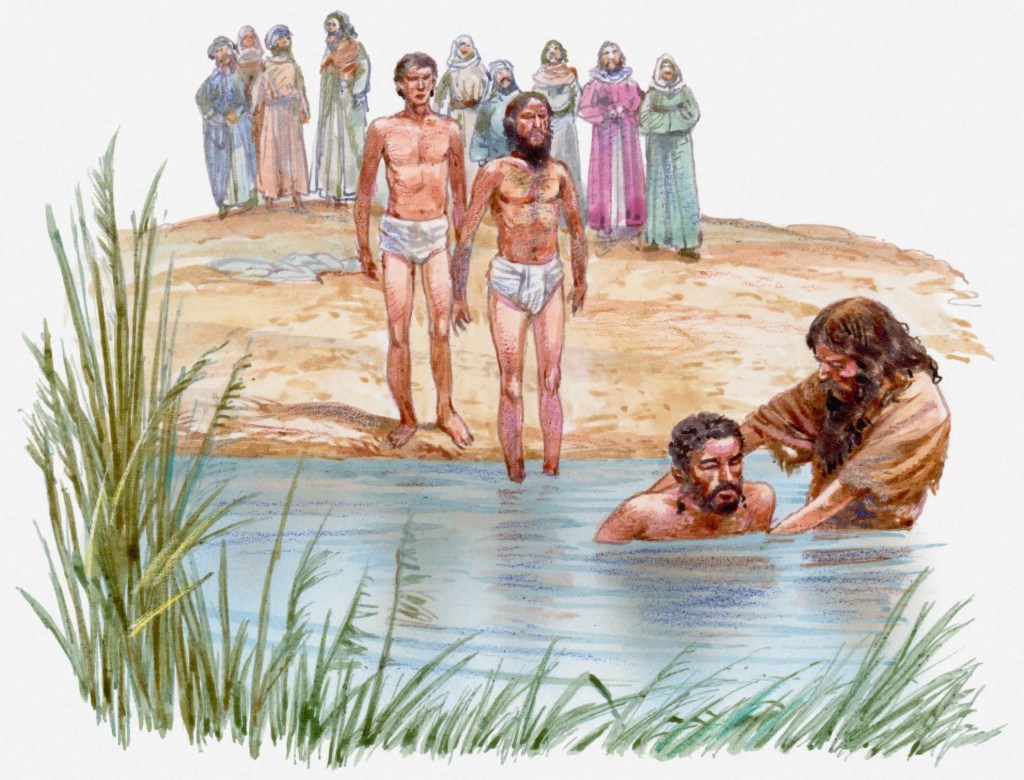
    The Bible states that everyone is born of Adam, born after Adam had fallen from the grace of God (Romans 5:12). Jesus Christ, therefore, is our only way back to God. He is the mediator of the New Covenant (Hebrews 9:11-12, 15; 12:22-24; Luke 22:19-20; 1 Corinthians 11:25). The Bible states, “For as in Adam all die, so also in Christ shall all be made alive (1 Corinthians 15:22).” That’s the essence of our Christian water baptism. We die to Adam and are alive in Jesus, rising out of the water a new person in Christ . But unless we acknowledge being sinners, then Christ’s calling or the Gospel makes no sense to us. And unless we truly have become a new person in Christ, then our water baptism does not mean a thing. Water baptism is just an expression of one’s testimony that the person now belongs to Jesus Christ.

    The second time is in Matthew 12:6-8, “I tell you, something greater than the temple is here. And if you had known what this means, ‘I desire mercy, and not sacrifice,’ you would not have condemned the guiltless. For the Son of Man is Lord of the Sabbath.”

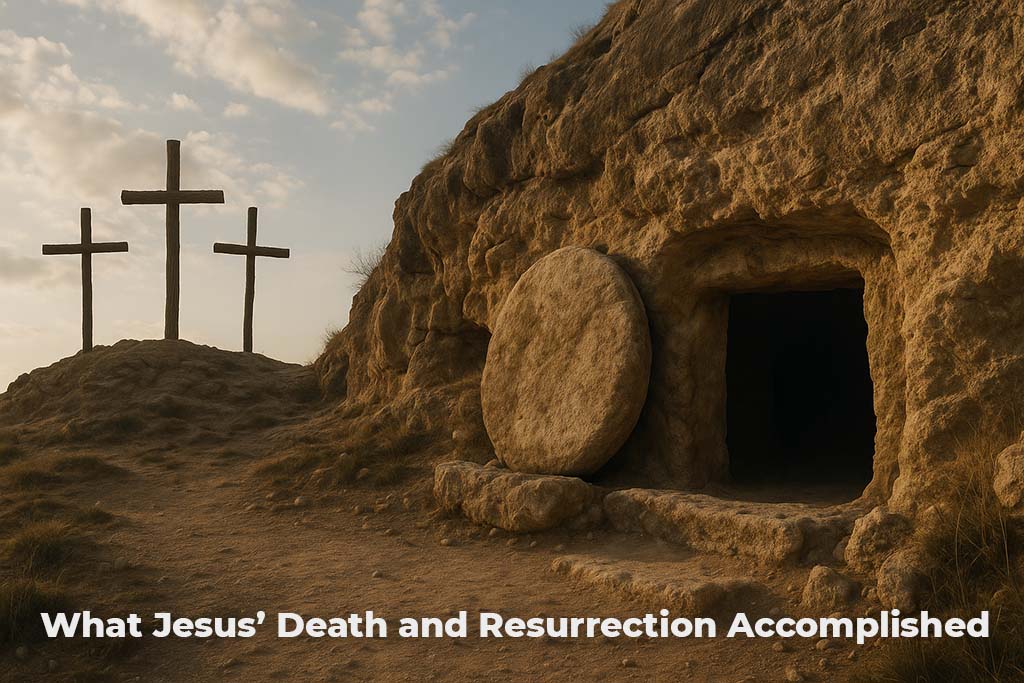
    Jesus Christ is the true temple of God (Matthew 12:6; John 2:19, 21). Christ is the Head, and the church is His body (Colossians 1:18), built on the foundation of the apostles and prophets. Jesus Himself is the cornerstone, and by His death and resurrection, we Christians grow together into a holy temple in the Lord (Ephesians 2). 

    Yes, we Christians, the holy temple in the Lord, is greater than the Old Covenant Jerusalem temple. Hence, Jesus, in John 4 states, “Believe Me, the hour is coming when neither on this mountain nor in Jerusalem will you worship the Father. You worship what you do not know; we worship what we know, for salvation is from the Jews. But the hour is coming, and IS NOW HERE, when the true worshipers will worship the Father in spirit and truth, for the Father is seeking such people to worship Him. God is spirit, and those who worship Him must worship in spirit and truth.” (John 4:21-24)

    What does it take to worship God in spirit and truth? Surely, it does not mean simply going to the Sunday worship service or a building where Christians supposedly gather for worship, but to walk the talk. Here’s Paul’s words regarding worship: “I appeal to you (i.e. the church) therefore, brothers, by the mercies of God, to present your bodies as a living sacrifice, holy and acceptable to God, which is your spiritual worship. Do not be conformed to this world, but be transformed by the renewal of your mind, that by testing you may discern what is the will of God, what is good and acceptable and perfect.” (Romans 12:1-2)

    Let me be clear, Paul, by “your bodies” refers to the church. See Romans 12:5, “So we, though many, are one body in Christ, and individually members one of another.”

    Christ is the Lord of the Sabbath—a declaration Jesus revealed about Himself, making known that He is the God of creation (see Matthew 12:8; Genesis 1:1-2:2). Yes, Genesis creation account isn’t about God’s narration of His creation of all things, though indeed He alone is the creator of all things (Psalm 33:6-9; Colossians 1:16-17). God in Genesis used creation language to reveal His creation of His people. Hence, Paul, in 2 Corinthians 4:6, quotes Genesis 1:3, to explain God’s Old Covenant vis-à-vis the New, and God’s Old Covenant people vis-à-vis the New, His Church.

    John also did the same, quoting Genesis 1:3, and referring it to Jesus, the Word. He even used the same opening phrase in Genesis “in the beginning” to connect the two. See John 1:1-5, “In the beginning was the Word, and the Word was with God, and the Word was God. He was in the beginning with God. All things were made through Him, and without Him was not any thing made that was made. In Him was life, and the life was the light of men. The light shines in the darkness, and the darkness has not overcome it.”

    God, through Christ Jesus, creates a new people for Himself, and we—the church—are God’s New Covenant people. (2 Corinthians 5:17-19) But have we truly learned from God’s Word?

    • How is it that Christians are still enticed by the world and its riches, if we have known true riches is only with Jesus Christ?
    • Have we Christians shown justice and mercy to our fellowmen?
    • Have our pastors truly been speaking Christ’s Word? Are we worshipping God and Jesus Christ in truth and in spirit? Why is it there are a lot of nominal Christians?
    • Have we been sharing the faith to our loved ones, fiancés, friends, and children? Why is it many times Christians fear men rather than God?
    • And I have a lot more vented frustrations having seen Christianity in its present mode. Until when will a Christian truly walk by faith? Does everyone need to have a Damascus experience or a denial like that of Peter before walking truthfully with Jesus? Sadly, many have walked the way of Judas, denying Jesus because He doesn’t suit their expectation of the Christ.

    Jesus Christ, without a doubt, has arrived. His kingdom is a present reality, though it isn’t of this world. When asked by the Pharisees when God’s kingdom would come, Jesus states, “The kingdom of God is not coming in ways that can be observed, nor will they say, ‘Look, here it is!’ or ‘There!’ for behold, the kingdom of God is in the midst of you.” (Luke 17:20-21)

    The Bible states, “For Jesus must reign until He has put all His enemies under His feet. The last enemy to be destroyed is death” (1 Corinthians 15:25-26). Isn’t death destroyed already? If not, why are pastors saying in wakes, “Our Christian friend is now with the Lord Jesus Christ or in a better place?”

    Christians have misunderstood the concept of death being destroyed. It doesn’t imply that Christians would cease to die physically. Instead, death is no longer an end to life, as Jesus states, “Truly I tell you, anyone who hears My word and believes Him who sent Me has eternal life and will not face judgment but has transcended death to life.” (John 5:24)

    Here’s the proof from Scripture that “death has been swallowed up in victory” (1 Corinthians 15:54). The Bible, in 1 Corinthians 15:56 states, “The sting of death is sin, and the power of sin is the law.

    Do we still have the Jerusalem temple standing today? If not, how can the Mosaic Law now be observed? Didn’t Christ’s death make obsolete the Mosaic regulations of animal offerings? With the second and final destruction of the Jerusalem temple, Daniel’s visions of the end came to be fulfilled. Scripture states, “When the shattering of the power of the holy people comes to an end; all these things would be finished (Daniel 12:7)”. The Mosaic law is the power of the Old Testament people (Deuteronomy 7:6-11), and it has become obsolete, fulfilled in Christ Jesus (Matthew 5:17; Hebrews 9; Luke 24:25-26; 24:44). Similarly, we Christians are nobody before God except by faith in Christ Jesus, the mediator of the New Covenant.

    Even Adam’s death no longer holds power over Christians. Paul, in Romans, explains, “Therefore, there is no condemnation for those in Christ Jesus. The law of the Spirit of life in Christ Jesus (i.e., the Gospel) has set you free from the law of sin and death (i.e., the law of Adam’s death [Genesis 2:16-17]). For what the law (i.e., the Mosaic law) could not accomplish because it was weakened by the flesh, God did. He condemned sin in the flesh by sending His own Son in the likeness of sinful flesh as a sin offering, so that the law’s requirement would be fulfilled in us who do not walk according to the flesh but according to the Spirit.” (Romans 8:1-4)

    Christians, let us live by faith in Jesus Christ, then we shall see the workings of God’s kingdom. And in Him alone will we find peace, and not be frustrated. For Jesus Christ is the same yesterday, and today, and forever (Hebrews 13:8). Paul states, “Rejoice in the Lord always. I will say it again: Rejoice! Let your graciousness be known to everyone. The Lord is near. (Let me be clear, with Paul, Jesus is near, but now God’s with us [Matthew 1:23; Revelation 21:1-3].) Don’t worry about anything, but in everything, through prayer and petition with thanksgiving, present your requests to God. And the peace of God, which surpasses all understanding, will guard your hearts and minds in Christ Jesus.” (Philippians 4:4-7) Therefore, compared to Paul’s era, today’s Christians have the assurance of God’s peace. Unlike the beliefs and teachings of contemporary Christianity, the promises of Jesus are not delayed or long in coming; instead, they are a present reality.

    Let us therefore turn our lament into praise. That’s how the psalms were written. That’s how prophets of the Old Testament comforted themselves. At the end of our laments, let us learn that God alone is our peace. Therefore, as Paul states, “If then you have been raised with Christ, seek the things that are above, where Christ is, seated at the right hand of God. Set your minds on things that are above, not on things that are on earth.” (Colossians 3:1-2)

    All glory be to God and Jesus Christ alone!

    Peter, in the words of Acts 3:6, declared, “I possess neither silver nor gold, but in the name of Jesus Christ, I offer you what I have.” Share this article freely, for you freely receive. Take note, underlines and highlights are clickable links for definitions or Bible references. Stay updated by heading to our about page and subscribe directly to receive notifications in your inbox. Blessings!

  • Sharing Insights from Scripture (Temple & Sabbath)

    Since last week, our study was on Matthew 12:1-8. The focus of Matthew 12 may be seen in verses 6-8. Jesus states,“I tell you, something greater than the temple is here. And if you had known what this means, ‘I desire mercy, and not sacrifice,’ you would not have condemned the guiltless. For the Son of Man is Lord of the Sabbath.” (Matthew 12:6-8)

    Key to understanding Matthew 12 boils down to comprehending its context, Christ’s declarations, and His quote from Hosea 6:6, “For I desire mercy and not sacrifice, the knowledge of God rather than burnt offerings.”

    Christ’s Quotation of Hosea 6:6

    Hosea, the last prophet to condemn the Ten Tribes of Israel, particularly the Northern kingdom, delivered his prophecies long after the kingdom’s division during the reign of Rehoboam. Despite its prosperity under Jeroboam’s rule, the Northern kingdom became insecure that Jews from the North might continue to travel to Jerusalem for worship, as per the Law of Moses. Consequently, Jeroboam constructed a rival temple in both Bethel and Dan. (1 Kings 12:25-33) This act marked the beginning of the Northern kingdom’s decline, ultimately leading to its conquest by the Assyrians in 722 BC, fulfilling God’s pronouncement of judgment upon the Ten Tribes – “I will put an end to the kingdom of the house of Israel.” (Hosea 1:4)

    Before Hosea, Amos had already prophesied the downfall of Israel. The LORD declared, “Behold, I am establishing a plumb line in the midst of My people Israel; I will never again pass by them. The high places of Isaac shall be desolate, and the sanctuaries of Israel shall be laid waste, and I will rise against the house of Jeroboam with the sword.” (Amos 7:8-9) Amos repeated this same message of judgment, see Amos 8:2, “The end has come upon my people Israel; I will never again pass by them.”

    Christ’s quotation of Hosea 6:6, “For I desire mercy and not sacrifice, the knowledge of God rather than burnt offerings,” was a pivotal moment. Interestingly, this wasn’t the first time Jesus had quoted this verse. He had done so earlier in Matthew 9:13, highlighting the primary purpose of His coming—to offer redemption (“For I did not come to call the righteous, but sinners”).

    Context of Matthew

    The context of Matthew was the arrival of Jesus, the promised Christ (or Messiah) of the Old Testament Scripture. And yet, Jews of Jesus’ days, though acknowledging His signs (John 2:23), refused to acknowledge the truth; they were in denial.

    Christ’s Declaration

    In John’s Gospel, Jesus makes a bold declaration: “Destroy this temple, and in three days I will raise it up.” (John 2:19) John clarifies that Jesus is referring to the temple of His body, which is His church. (John 2:21-22) Jesus delves into the theme of the temple in Matthew 12. Let us explore the story.

    Pharisees questioned Jesus for allowing His disciples to pluck grain and eat on the Sabbath. In response, Jesus cited the example of David taking the bread of Presence, which was forbidden to him under the Mosaic Law because it was reserved for the priests. This pointed out their hypocrisy. Jesus then addressed the priests, noting that they were engaged in slaughtering animals for sacrifice on the Sabbath and other days, as per Numbers 28:9-10, yet they were not guilty. To emphasize the truth, Jesus declared, “I tell you, something greater than the temple is here.” He emphasized that if priests were not guilty for performing their duty, then Jesus Christ, who was greater than the temple, was even more deserving of their reverence. He then quoted Hosea 6:6 to support his claim: “Jesus is the fulfillment of God’s offer for redemption, as stated in Hosea 6:1-2: ‘Come, let us return to the LORD; for He has torn us apart so that He may heal us; He has struck us down, and He will bind us up. After two days, He will revive us; on the third day, He will raise us up, so that we may live before Him.’” Consequently, Jesus declared in John 2:19 that He would raise this temple (which, as explained in John 2:21, refers to His body) after three days.

    Understanding the Doctrine of the Church

    Understanding the doctrine of the church begins with recognizing that its establishment is rooted in the proclamation of the Gospel and the resurrection of Christ. Hosea 6:2,On the third day He will raise us up, that we may live before Him,” holds significant importance in this context. It is essential to grasp that the church is not a physical structure or a place of assembly, but rather God’s people who are saved by grace through faith in Christ’s death and resurrection. As Jesus stated to Peter, “On this rock—referring to the confession of Peter, Jesus is the Christ, the Son of God (Matthew 16:16)—I will build My church, and the gates of Hades will not overpower it. I will give you the keys of the kingdom of heaven, and whatever you bind on earth will have been bound in heaven, and whatever you loose on earth will have been loosed in heaven.” (Matthew 16:18-19) Christ Jesus and His Gospel serve as the keys to entrance into God’s kingdom. Jesus further emphasizes, “I am the way, and the truth, and the life. No one comes to the Father except through Me.” (John 14:6)

    Hebrews clearly taught that for as long as the temple in Jerusalem stands, the present age (i.e. the Jewish age, Hebrews 9:8-10) exists, which deals with food and drink and various washings, regulation until the time of reformation. (Hebrews 9:1-10) The reformation here has nothing to do with the reformation of Martin Luther and his contemporaries, but all about God’s workings. Hebrews 2:5 called it “the world to come“, while in 6:5, it’s referred to as the “age to come. Jesus Christ and Paul spoke of only two ages, the present age and the age to come. See Luke 20:34-36.

    “And Jesus said to them, “The sons of this age marry and are given in marriage, but those who are considered worthy to attain to that age and to the resurrection from the dead neither marry nor are given in marriage, for they cannot die anymore, because they are equal to angels and are sons of God, being sons of the resurrection.” (Luke 20:34-36)

    It’s evident that “the present age or this age” refers to the era before the resurrection of the dead. The age that follows would be the age of the New Heaven and the New Earth. Hebrews 9:8-10 provides a brief reference. The present age encompasses the period when temple regulations and sacrifices were still practiced. The time of Reformation would mark the cessation of the temple and its regulations and offerings. Do you still see the temple standing today?

    Sabbath

    Back on our discussion on Matthew. Jesus Christ further highlights His claim of divinity by declaring “For the Son of Man is Lord of the Sabbath” (Matthew 12:8). “Son of Man” is a reference to the Anointed One, the Christ (or Messiah) of Daniel 7:13-14. The Messiah was tasked with ruling over God’s kingdom.

    I saw in the night visions, and behold, with the clouds of heaven there came one like a Son of Man, and He came to the Ancient of Days and was presented before Him. And to Him was given dominion and glory and a kingdom, that all peoples, nations, and languages should serve Him; His dominion is an everlasting dominion, which shall not pass away, and His kingdom one that shall not be destroyed.” (Daniel 7:13-14)

    As the Lord of the Sabbath, Jesus actually shifted the discussion to His role as the Lord of creation. Genesis begins with God as the Creator (Genesis 1:1). The subsequent passages in Genesis 1 use creation language until Genesis 2:1-2, where God completed all His work and rested on the seventh day, which is the Sabbath. This is the underlying implication of Christ’s assertion that He is the Lord of the Sabbath.

    Creation language was clearly in play when Paul explained in Romans 8:18-23 the expectations and hope of redemption of Israel.

    For I consider that the sufferings of this present time are not worth comparing with the glory that is to be revealed to us. For the creation waits with eager longing for the revealing of the sons of God. For the creation was subjected to futility, not willingly, but because of Him who subjected it, in hope that the creation itself will be set free from its bondage to corruption and obtain the freedom of the glory of the children of God. For we know that the whole creation has been groaning together in the pains of childbirth until now. And not only the creation, but we ourselves, who have the firstfruits of the Spirit, groan inwardly as we wait eagerly for adoption as sons, the redemption of our bodies. For in this hope we were saved. Now hope that is seen is not hope. For who hopes for what he sees? But if we hope for what we do not see, we wait for it with patience. Likewise the Spirit helps us in our weakness. For we do not know what to pray for as we ought, but the Spirit himself intercedes for us with groanings too deep for words. And He who searches hearts knows what is the mind of the Spirit, because the Spirit intercedes for the saints according to the will of God. And we know that for those who love God all things work together for good, for those who are called according to His purpose. For those whom He foreknew He also predestined to be conformed to the image of his Son, in order that He might be the firstborn among many brothers. And those whom He predestined He also called, and those whom He called He also justified, and those whom He justified he also glorified.” (Romans 8:18-30)

    As I have wrote and explained in several of my articles. Do not be bothered by doctrines such as “foreknowledge”, “predestination”, supposedly supporting the idea of “election”. All these terms applies only to the Old Covenant Israel. See Romans 11:5-8.

    “So too at the present time there is a remnant, chosen – Greek word same as “election” – by grace. But if it is by grace, it is no longer on the basis of works; otherwise grace would no longer be grace. What then? Israel failed to obtain what it was seeking. The elect obtained it, but the rest were hardened, as it is written, “God gave them a spirit of stupor, eyes that would not see and ears that would not hear, down to this very day.”” (Romans 11:5-8)

    Paul made it clear that, despite the election, salvation is still by grace. He reiterated his teaching in Ephesians 2:8-9, stating, “For by grace you have been saved through faith. This is not your own doing; it is a gift from God, not a result of works, so that no one may boast.”

    Now, even with Revelation, the concept of creation language was evident. Jesus Christ, in Revelation 21:5 states, “Behold, I am making all things new.” “It is done! I am the Alpha and the Omega, the beginning and the end.” (Revelation 21:6)

    John, in Revelation, saw the passing of the first heaven and the first earth, and the coming of the new heaven and a new earth. This connects us back to Genesis 1:1, “In the beginning, God created the heavens and the earth“. So, was it a literal passing away of the physical creation or covenant creation language? Paul, in Romans 8, used creation language to assure believers of God’s covenant redemption. Or in plain words, God’s promised redemption.

    The theme of a new heaven and a new earth may be found in Isaiah 65:17-66:24. It speaks of the renewal of God’s people. Hence, “heaven and earth” is covenant language of God’s creation. Proof may be seen in Isaiah 51:16. God declared, “And I have put My words in your mouth and covered you in the shadow of My hand, establishing the heavens and laying the foundations of the earth, and saying to Zion, ‘You are My people.’” (Isaiah 51:16)

    The Bible, particularly in Hebrews 4:4, quotes Genesis 2:1-2. Surprisingly, Hebrews asserts that the Sabbath rest for the people of God is not yet complete. This is evident in Hebrews 4:9-10, which states, “So then, there remains a Sabbath rest for the people of God, for whoever has entered God’s rest has also rested from his works as God did from His.” This implies that God is still actively engaged in His creation work. Interestingly, in John’s Gospel, when Jesus was questioned about healing on a Sabbath, he responded, “My Father is working until now, and I am working.” (John 5:17) What was the work that Jesus Christ ought to complete? In Matthew 5:17-18, Jesus states, “Do not think that I have come to abolish the Law or the Prophets; I have not come to abolish them but to fulfill them. For truly, I say to you, until heaven and earth pass away, not an iota, not a dot, will pass from the Law until all is accomplished.” The phrase “heaven and earth” refers to the Old Covenant Israel. With the judgment of God against them, destroying the temple and scattering them in AD 70, the Mosaic law, which was the basis of them being instituted as God’s people became the source of their judgment. See Deuteronomy 28:15-68 & Leviticus 26:14-46, but for a quick summary of the Mosaic Covenant on Disobedience, see Deuteronomy 28:58-61.

    If you are not careful to do all the words of this law that are written in this book, that you may fear this glorious and awesome name, the LORD your God, then the LORD will bring on you and your offspring extraordinary afflictions, afflictions severe and lasting, and sicknesses grievous and lasting. And He will bring upon you again all the diseases of Egypt, of which you were afraid, and they shall cling to you. Every sickness also and every affliction that is not recorded in the book of this law, the LORD will bring upon you, until you are destroyed.”

    John, in Revelation saw the visions of God’s judgment, see Revelation 8:6-9:21; 15-16, 18, and noticed covenant language of God’s punishment from the Law and the Prophets. Paul, in Romans 8 states, “There is therefore now no condemnation for those who are in Christ Jesus. For the law of the Spirit of life (i.e. The Gospel of the New Covenant) has set you free in Christ Jesus from the law of sin and death (Genesis 2:16-17; Romans 5:12-14; 1 Corinthians 15:21-22). For God has done what the law (i.e Mosaic Law), weakened by the flesh, could not do. By sending His own Son in the likeness of sinful flesh and for sin, He condemned sin in the flesh, in order that the righteous requirement of the law might be fulfilled in us, who walk not according to the flesh but according to the Spirit.” (Romans 8:1-4)

    How was the righteous requirement of the law fulfilled in us? See Hebrews 9:11-12, 15, 28.

    “But Christ has appeared as a high priest of the good things that have come. In the greater and more perfect tabernacle not made with hands (that is, not of this creation), He entered the most holy place once for all time, not by the blood of goats and calves, but by his own blood, having obtained eternal redemption.” (Hebrews 9:11-12)

    “Therefore, Jesus is the mediator of a new covenant, so that those who are called might receive the promise of the eternal inheritance, because a death has taken place for redemption from the transgressions committed under the first covenant.” (Hebrews 9:15)

    “So also Christ, having been offered once to bear the sins of many, will appear a second time, not to bear sin, but to bring salvation to those who are waiting for Him.” (Hebrews 9:28)

    Conclusion

    The temple, the Sabbath, they were all pointing to the fact that mankind remains outside of the Garden of Eden. See Revelation 21:1, with the passing of the first heaven and the first earth, and the arrival of the new heaven and the earth, John saw no temple. Because the Lord God the Almighty and the Lamb are its temple. (Revelation 21:22). No wonder, Paul states, “Therefore let no one pass judgment on you in questions of food and drink, or with regard to a festival or a new moon or a Sabbath. These are a shadow of the things to come, but the substance belongs to Christ.” (Colossians 2:16-17)

    Moreover, in another vision, but the same context, after God’s judgment on Old Covenant Israel, Scripture states, “Here is a call for the endurance of the saints, those who keep the commandments of God and their faith in Jesus. And I heard a voice from heaven saying, ‘Write this: Blessed are the dead who die in the Lord from now on.’ ‘Blessed indeed,’ says the Spirit, ‘that they may rest from their labors, for their deeds follow them!‘” (Revelation 14:12-13)

    Isn’t this the fulfillment of God’s promised of Sabbath rest for His people? Scripture states, “For whoever has entered God’s rest has also rested from his works as God did from His” (Hebrews 4:9-10). Henceforth, Christians shouldn’t be bothered by the Sabbath, nor the temple. With the completion of the New Creation, the New Heaven and the New Earth, Scripture states, “Behold, the dwelling place of God is with man. He will dwell with them, and they will be His people, and God Himself will be with them as their God.” (Revelation 21:3)

    No wonder Jesus declares, “Woman, believe Me, the hour is coming when neither on this mountain nor in Jerusalem will you worship the Father. You worship what you do not know; we worship what we know, for salvation is from the Jews. But the hour is coming, and is now here, when the true worshipers will worship the Father in spirit and truth, for the Father is seeking such people to worship him. God is spirit, and those who worship him must worship in spirit and truth.” (John 4:21-24)

    Did Jesus just hint at the temple’s impending destruction? Consequently, He told the Samaritan woman, “The hour is coming when neither on this mountain nor in Jerusalem will you worship the Father.” On the other hand, when Jesus said, “But the hour is coming and is now here,” He declared that henceforth, people should worship God in truth and in spirit because judgment is imminent. The temple, together with all its regulations and practices has become obsolete, see Hebrews 8:13, “In speaking of a new covenant, He makes the first one obsolete. And what is becoming obsolete and growing old is ready to vanish away.”

    Is everyone now enjoying God’s Sabbath rest? No, according to the Bible, “Blessed are those who wash their robes, so that they may have the right to the tree of life and that they may enter the city by the gates. Outside are the dogs, sorcerers, sexually immoral people, murderers, idolaters, and everyone who loves and practices falsehood.” (Revelation 22:14-15) The preaching of the Gospel remains significant. Scripture states, “Then I saw another angel flying directly overhead, with an eternal gospel to proclaim to those who dwell on earth, to every nation, tribe, language, and people.” (Revelation 14:6)

    We Christians are called to live by faith and share the Good News of the Bible with those who are outside, not yet part of God’s grace, so that they may also experience the same blessings we have. Unfortunately, many Christians remain confused and don’t understand the blessings they already possess. They often confuse material possessions as indicators of God’s blessings, leading them to be too busy pursuing these possessions and neglecting the need to study the Bible and truly comprehend God’s true riches. They settle for Sunday worship services, which are not as substantial as joining a Bible study group. This is the true reason why the church isn’t growing in Christ Jesus. Take time to reflect on your walk with Jesus Christ. The Bible states, “The things that are seen are transient, but the things that are unseen are eternal” (2 Corinthians 4:18). So, decide which one should be your priority?

    Blessings!

    Peter, in the words of Acts 3:6, declared, “I possess neither silver nor gold, but in the name of Jesus Christ, I offer you what I have.” Share this article freely, for you freely receive. Take note, underlines and highlights are clickable links for definitions or Bible references. Stay updated by heading to our about page and subscribe directly to receive notifications in your inbox. Blessings!

  • Morning Meditation

    A Psalm of David. Penned by a son of Korah. It reveals David’s heart during a time of deep sorrow, reflecting on the rebellion against him. This was a result of his actions when he took Bathsheba and killed Uriah. It’s a psalm that speaks of repentance, but also of trust in God’s kindness and forgiveness.

    All of us in one way or another have fallen short of God’s glory. It is impossible to live up to the standards of the Holy God. That’s precisely the reason Christ Jesus came to offer us a second chance. Scripture states, “For our sake God made Jesus to be sin who knew no sin, so that in Him we might become the righteousness of God.” (2Co 5:21) Let us therefore not be downhearted. God’s grace is sufficient for our weakness. Always trust in His grace. Paul said, “Set your minds on things that are above, not on things that are on earth.” (Col 3:2) Only then may we not fall into sinning.

    Peter, in the words of Acts 3:6, declared, “I possess neither silver nor gold, but in the name of Jesus Christ, I offer you what I have.” Note: Click on underlines and highlights for definitions or Bible references. Freely, for you freely receive. Stay updated by heading to our about page and subscribing directly to receive notifications in your inbox. Blessing!

  • Hymns or Contemporary Christian Music?

    Some Christian congregations argue that hymns should be sung during gatherings, not contemporary music. Is there really a basis for such contention? Three times in the New Testament, Paul spoke about hymns; Ephesians 5:19 & Colossians 3:16.

    “addressing one another in psalms and hymns and spiritual songs, singing and making melody to the Lord with your heart,” (Ephesians 5:19)

    “Let the word of Christ dwell in you richly, teaching and admonishing one another in all wisdom, singing psalms and hymns and spiritual songs, with thankfulness in your hearts to God.” (Colossians 3:16)

    The third was in Acts: “About midnight Paul and Silas were praying and singing hymns to God, and the prisoners were listening to them” (Acts 16:25). Paul, an apostle of Jesus Christ, was the authority behind Luke; he wrote both the Gospel of Luke and Acts.

    Yes, all of the New Testament writings have apostolic authority. The same may be said of Hebrews, though modern Bible scholars debate over its authorship. Keep in mind Peter’s statement: “Knowing this first of all, that no prophecy of Scripture comes from someone’s own interpretation. For no prophecy was ever produced by the will of man, but men spoke from God as they were carried along by the Holy Spirit” (2 Peter 1:20-21). Though Peter here refers to the Old Testament Scriptures, are we to believe that the New Testament Scriptures are not of divine inspiration? Here is Paul’s testimony that he received divine inspiration from Jesus Christ:

    “For I would have you know, brothers, that the gospel that was preached by me is not man’s gospel. For I did not receive it from any man, nor was I taught it, but I received it through a revelation of Jesus Christ.” (Galatians 1:11-12)

    John also, attested that his writings was of divine inspiration from Jesus Christ:

    “The revelation of Jesus Christ, which God gave Him to show to His servants (i.e. John and the rests) the things that must soon take place. He made it known by sending his angel to his servant John, who bore witness to the word of God and to the testimony of Jesus Christ, even to all that he saw.” (Revelation 1:1-2)

    Note: ScriptureDirect, a Greek linguistic tool, clearly distinguishes between “servants” and “his servant John”. The former is described as a plural noun, while the latter is singular. Here’s the link to download the app.

    Peter also implied that his letters were divinely inspired. See 2 Peter 3:15-16, “And count the patience of our Lord as salvation, just as our beloved brother Paul also wrote to you according to the wisdom given him, as he does in all his letters when he speaks in them of these matters. There are some things in them that are hard to understand, which the ignorant and unstable twist to their own destruction, as they do the other Scriptures.” (2 Peter 3:15-16)

    Now, the hymns that some Christians ascribe to are not the hymns that Paul referred to. By hymns, Paul referred to the Psalms in the Bible, which are of divine inspiration. Inerrant and prophetic, they speak about the coming of the Christ or Messiah, or the Messianic kingdom. All hymns written outside the Scripture were authored from the 2nd and 3rd centuries AD, and after the Reformation. 

    Modern Christian songwriters, like their secular counterparts, draw inspiration from their personal experiences and observations. Theology also significantly influences their songwriting. It’s important to note that no Christian would contest that no post-AD 70 Christian songwriters can claim the inerrancy of their lyrics, unlike those of the Psalms in the Bible. Hebrews 1:1-2 states, “Long ago, at many times and in many ways, God spoke to our fathers by the prophets, but in these last days He has spoken to us by His Son, whom He appointed the heir of all things, through whom also He created the world.” This implies that Jesus Christ holds the final revelation of God.

    A thorough examination of all the New Testament Scriptures reveals that none of its writings mention the fall of Jerusalem as a historical event. Instead, they emphasize that God’s judgment is imminent and about to be fulfilled at the time of their writings. Since all Scripture was written before A.D. 70, the fall of Jerusalem, a pivotal event that could not have escaped the writings of the New Testament, it is evident that all New Testament Scripture was composed before this date. For further clarification, please refer to this link, which explains that even Revelation was written before the fall of Jerusalem, contrary to the 90s suggestion made by some modern biblical scholars who relied on the writings of early church fathers from the second century of Christianity. None of them were infallible; a quick online search would easily reveal how they contradicted facts. For instance, Irenaeus’ book, ironically titled “Against Heresies,” Book two, chapter 22, claims that Jesus lived to be around 50 years old before His crucifixion. This is a clear contradiction of Scripture. Luke 3:23 explicitly states that Jesus was 30 years old when He began His ministry. According to the accounts of the John’s Gospel, which count the Passover Feasts He was present to and His crucifixion, His ministry lasted approximately 3.5 years. Modern Bible scholars have relied on Irenaeus’ writings to suggest that John wrote Revelation in the 90s. So, who should we believe: the Bible or Irenaeus? Should we rely on the internal evidence of Revelation or Irenaeus?

    Now, back to our topic, are hymns outside the Bible more reliable and truthful to the Scripture than modern Christian music? I would say it’s a case-by-case basis, or maybe not. Am I suggesting that we ought not to listen to modern hymns and contemporary Christian music? No, I am not. 

    Modern hymns and contemporary Christian music are no different from personal testimonies of conversion narratives to the faith. They are not universal to all; we came to faith in different ways, but should have one Lord, one faith, one baptism, one God and Father of all (Ephesians 4:5-6). 

    Why don’t Christians simply agree to disagree for the time being regarding modern hymns and contemporary Christian music? Let’s prioritize learning from the Bible, which is of utmost importance. As stated in Ephesians 5:25-26, by faith, we have been sanctified, cleansed, and washed for Christ Jesus. By studying the Scriptures, we can individually grow in our understanding of God’s Word. Consequently, we will be able to discern which modern hymns and contemporary Christian music are not aligned with the Scriptures.

    The same process should be experienced by each individual Christian. We all ought to grow in faith.  Paul states, “And Christ gave some to be apostles, some prophets, some evangelists, some pastors and teachers, to equip the saints for the work of ministry, to build up the body of Christ, until we all reach unity in the faith and in the knowledge of God’s Son, growing into maturity with a stature measured by Christ’s fullness. Then we will no longer be little children, tossed by the waves and blown around by every wind of teaching, by human cunning with cleverness in the techniques of deceit. But speaking the truth in love, let us grow in every way into him who is the head — Christ.” (Ephesians 4:11-15)

    We no longer have the apostles with us. And I will argue that neither do we have prophets because Jesus already came. He spoke God’s revelation to us, which are now in our Bibles. Perhaps we still have evangelists, pastors, and teachers, but all of whom should be known and verified by their teachings and lives. Jesus Christ declares, “Everyone then who hears these words of mine and does them will be like a wise man who built his house on the rock. And the rain fell, and the floods came, and the winds blew and beat on that house, but it did not fall, because it had been founded on the rock. And everyone who hears these words of mine and does not do them will be like a foolish man who built his house on the sand. And the rain fell, and the floods came, and the winds blew and beat against that house, and it fell, and great was the fall of it.” (Matthew 7:24-27)

    Discern carefully, have you learned from the Rock, no other but Jesus Christ? Be careful not to be part of those who sought the wide gate (Matt 7:13-20), instead of the narrow gate, the way of Christ (John 14:6-7). Christ Jesus may no longer be with us physically, but His presence can be learned and experienced through the Scriptures. Paul states, “For we walk by faith, not by sight.” (2 Corinthians 5:7)

    Again Paul declares, we ought not to seek things that can be seen but the things that are unseen. For the things that are seen are transient, but the things that are unseen are eternal (2 Corinthians 4:18). Once we have learned to be guided by the things unseen, that is by faith in Christ Jesus, then unlike Adam, nothing in this world can entice you to forsake God. 

    So, should we focus on hymns or contemporary Christian music? Let’s not get bogged down by trivial matters. Instead, let’s focus on the Word of God, and we’ll no longer be concerned with such things. Only then can we truly serve Jesus Christ. Remember Christ’s words, “If the blind lead the blind, both will fall into a pit.” (Matthew 15:14)

    Peter , in the words of Acts 3:6, declared, “I possess neither silver nor gold, but in the name of Jesus Christ, I offer you what I have.” Note: Click on underlines and highlights for definitions or Bible references. Freely, for you freely receive. Stay updated by heading to our about page and subscribing directly to receive notifications in your inbox. Blessing!

  • Change for the Better

    As I study the Bible, I realized Christians have misunderstood the doctrine of “election” as the selective picking and choosing act of God, rather than God’s mercy and grace. Let us take a look at Paul’s words in Romans regarding the fate of Old Covenant Israel.

    But it is not as though the word of God has failed. For not all who are descended from Israel belong to Israel, and not all are children of Abraham because they are his offspring, but ‘Through Isaac shall your offspring be named.’ This means that it is not the children of the flesh who are the children of God, but the children of the promise are counted as offspring. For this is what the promise said: ‘About this time next year I will return, and Sarah shall have a son.’ And not only so, but also when Rebekah had conceived children by one man, our forefather Isaac, though they were not yet born and had done nothing either good or bad—in order that God’s purpose of election might continue, not because of works but because of him who calls— she was told, ‘The older will serve the younger.’ As it is written, ‘Jacob I loved, but Esau I hated.’ What shall we say then? Is there injustice on God’s part? By no means! For He says to Moses, ‘I will have mercy on whom I have mercy, and I will have compassion on whom I have compassion.’ So then it depends not on human will or exertion, but on God, who has mercy.” (Romans 9:6-18)

    Paul’s quotation from Exodus 33:19, “I will have mercy on whom I have mercy, and I will have compassion on whom I have compassion (Romans 9:15),” provides context for explaining God’s election. The Old Testament stories serve as narratives that illustrate God’s redemptive works. Recall that Israel was destined for destruction at Mount Sinai, and God’s presence should no longer be with them (Exodus 32:30-33:3). However, upon Moses’ pleas, God extended grace and mercy to Israel through His election. See Paul’s confirmation on Romans 9:16, “So then it depends not on human will or exertion, but on God, who has mercy.”

    The doctrine of election has caused considerable division, confusion, and arrogance among its followers. However, election was an act of God’s mercy and grace, not a selective process of choosing individuals for salvation, as it has been misinterpreted in modern Christianity. How did God’s mercy manifest in Old Covenant Israel?

    Paul asserts, “For Christ is the end of the (i.e., Mosaic) law for righteousness to everyone (i.e., both Jew and Gentile) who believes.” (Romans 10:4) In Galatians, Paul further explains, “So then, the law was our (i.e., Israel’s) guardian until Christ came, in order that we might be justified by faith.” (Galatians 3:24) Finally, Paul concludes, “Therefore, faith comes from hearing, and hearing through the word of Christ.” (Romans 10:17) So he went on to state, “Their voice has gone out to all the earth, and their words to the ends of the world.” (Romans 10:18)

    The Book of Acts proves the Gospel reached the end of the then-known world of the Jew-the Empire of Rome. Paul was imprisoned in Rome preaching the Gospel to both Jew and Gentile (Acts 28:17-31). Doubtless then, God’s declaration in Acts 1:8 was fulfilled and documented by Luke, bringing to a conclusion, therefore, Christ’s Word concerning the end of Old Covenant Israel. Jesus Christ states:

    And this gospel of the kingdom will be proclaimed throughout the whole world as a testimony to all nations, and then the end will come. ‘So when you see the abomination of desolation spoken of by the prophet Daniel, standing in the holy place (let the reader understand), then let those who are in Judea flee to the mountains. Let the one who is on the housetop not go down to take what is in his house, and let the one who is in the field not turn back to take his cloak. And alas for women who are pregnant and for those who are nursing infants in those days! Pray that your flight may not be in winter or on a Sabbath. For then there will be great tribulation, such as has not been from the beginning of the world until now, no, and never will be.’” (Matthew 24:14-21)

    If there’s any disagreement with Christ’s declaration and its fulfillment, let the Word of God stand as a witness, not man. Luke, in writing a parallel account of Christ’s declaration, states:

    But when you see Jerusalem surrounded by armies, then know that its desolation has come near. Then let those who are in Judea flee to the mountains, and let those who are inside the city depart, and let not those who are out in the country enter it, for these are days of vengeance, to fulfill all that is written. Alas for women who are pregnant and for those who are nursing infants in those days! For there will be great distress upon the earth and wrath against this people. They will fall by the edge of the sword and be led captive among all nations, and Jerusalem will be trampled underfoot by the Gentiles, until the times of the Gentiles are fulfilled.” (Luke 21:20-24)

    “Times of the Gentiles” refers to the end of Gentiles lording over God’s people. God told Daniel about this:

    “And in the days of those kings (i.e. fourth kingdom of “iron and clay”, see Daniel 2:40-43) the God of heaven will set up a kingdom that shall never be destroyed, nor shall the kingdom be left to another people. It shall break in pieces all these kingdoms and bring them to an end, and it shall stand forever, just as you saw that a stone was cut from a mountain by no human hand, and that it broke in pieces the iron, the bronze, the clay, the silver, and the gold. A great God has made known to the king what shall be after this. The dream is certain, and its interpretation sure.”” (Daniel 2:44-45)

    Jesus Christ fulfilled Daniel’s prophecy and is the cornerstone upon which the church is built. As stated in Matthew 16:18, “the gates of hades shall not prevail upon it.” John asserts “whoever believes in the Son has eternal life; whoever does not obey the Son shall not see life, but the wrath of God remains on him” (John 3:36).

    Christ Jesus did not come to establish a physical kingdom, but rather a spiritual one. He declared, “God is spirit, and those who worship Him must worship in spirit and truth.” (John 4:24) On another occasion, when the Pharisees inquired about the kingdom of God’s arrival, Jesus responded, “The kingdom of God is not coming in a manner that can be observed, nor will they proclaim, ‘Look here!’ or ‘There!’ for behold, the kingdom of God is already within you.” (Luke 17:20-21) The advent of Jesus, the Christ, signifies the manifestation of God’s kingdom. Initially, it is an “already but not yet” until Jerusalem was destroyed with finality in 70 A.D.

    God’s grace upon Old Covenant Israel was manifested through the Gospel proclamation. Paul’s quotation in Romans 10:15 declaring God’s grace and mercy on everyone who believes the Gospel was cited from Isaiah 52:7, and Nahum 1:15 which says, “How beautiful upon the mountains are the feet of Him who brings good news, who publishes peace, who brings good news of happiness, who publishes salvation, who says to Zion, ‘Your God reigns.’” Same as in Nahum, Isaiah states, “Behold, upon the mountains, the feet of Him who brings good news, who publishes peace! Keep your feasts, O Judah; fulfill your vows, for never again shall the worthless pass through you; he is utterly cut off.”

    In both Old Testament passages, the Scripture refers to Christ—”the feet of Him”—as the bearer of the Gospel. Both Isaiah and Nahum preached of a coming period of grace and mercy in the midst of God’s judgment. Paul’s quotation of Isaiah 52:7 and Nahum 1:15 was changed from “Him” to “those” because the disciples of Jesus—that’s Paul and everyone else who preaches the Gospel—preach nothing else but the Words of Christ Jesus. They are the extension and messengers of the Gospel, for as long as the Gospel was preached precisely according to Christ’s Word. See Isaiah 49:5-6:

    “And now the LORD says, He who formed Me (i.e. Jesus) from the womb to be His servant, to bring Jacob back to Him; and that Israel might be gathered to Him— for I am honored in the eyes of the LORD, and My God has become My strength— He says: “It is too light a thing that You should be My servant to raise up the tribes of Jacob and to bring back the preserved of Israel; I will make you as a light for the nations, that My salvation may reach to the end of the earth.””

    Isaiah obviously was speaking about Jesus Christ, and His Gospel is for everyone, Jew and Gentile alike. After the death, resurrection and ascension of Jesus, Paul and Barnabas applied Isaiah 49:6 to themselves, see Acts 13:46-47:

    “And Paul and Barnabas spoke out boldly, saying, ‘It was necessary that the word of God be spoken first to you (i.e. the Jews). Since you thrust it aside and judge yourselves unworthy of eternal life, behold, we are turning to the Gentiles. For so the Lord has commanded us, saying, “I have made you a light for the Gentiles, that you may bring salvation to the ends of the earth.”‘”

    The same application was done for Paul’s change from “Him” to “those” in his quotation of Isaiah 52:7 and Nahum 1:15.

    Does God still elect people to salvation? Old Covenant Israel has ceased. Hebrews 8:13 states, “In speaking of a new covenant, He makes the first one obsolete. And what is becoming obsolete and growing old is ready to vanish away.” (Hebrews 8:13) Israel today is just like any other person on Earth. They ceased to be God’s people without Christ. Paul states, “From now on, therefore, we regard no one according to the flesh (i.e. circumcision, sign under the Mosaic Covenant). Even though we once regarded Christ according to the flesh, we regard Him thus no longer. Therefore, if anyone is in Christ, he is a new creation. The old has passed away; behold, the new has come.” (2 Corinthians 5:16-17)

    So does God elect people to salvation as it has been taught today? Such teaching simply has no basis in Scripture. Again, Paul asserts, “So faith comes from hearing, and hearing through the word of Christ.” (Romans 10:17) Consequently, Paul states as well, “For by grace you have been saved through faith. And this is not your own doing; it is the gift of God, not a result of works, so that no one may boast.” (Ephesians 2:8-9) The Gospel is the manifestation of God’s grace and mercy to everyone who believes. God does not arbitrarily decree some to salvation and others to damnation.

    I understand that most would find my exposition perplexing. But it is so mainly because we have been convinced to see, understand, and believe Christian teachings in its present form. True Christian doctrines are founded in the teachings of Jesus Christ, not of biblical scholars or renowned pastors or Christian figures. Paul states, “For when one says, ‘I follow Paul,’ and another, ‘I follow Apollos,’ are you not being merely human? What then is Apollos? What is Paul? Servants through whom you believed, as the Lord assigned to each. I planted, Apollos watered, but God gave the growth. So neither he who plants nor he who waters is anything, but only God who gives the growth. He who plants and he who waters are one, and each will receive his wages according to his labor. For we are God’s fellow workers. You are God’s field, God’s building. According to the grace of God given to me, like a skilled master builder I laid a foundation, and someone else is building upon it. Let each one take care how he builds upon it. For no one can lay a foundation other than that which is laid, which is Jesus Christ.” (1 Corinthians 3:4-11)

    I became a Christian and later on a pastor after the tragic passing of my only son. God amazingly turned our brokenness for His glory by turning my family and me to His Gospel. That is the reason I am seriously studying the Bible and willing to change my perspective when it’s contradicted by Scripture’s teachings. Yes, it comes with a cost. Fellow believers who hold to contemporary Christian teachings will ridicule and persecute you. But Christ did say that’s exactly what will happen once you faithfully follow Him. Jesus states, “A disciple is not above His teacher, nor a servant above His master. It is enough for the disciple to be like His teacher, and the servant like His master. If they have called the Master of the house Beelzebul, how much more will they malign those of His household” (Matthew 10:24-25). And we only have one true Teacher, no other than Jesus Christ. Isaiah prophesied His coming, saying:

    “Therefore the LORD waits to be gracious to you, and therefore He exalts Himself to show mercy to you. For the LORD is a God of justice; blessed are all those who wait for Him. For a people shall dwell in Zion, in Jerusalem; you shall weep no more. He will surely be gracious to you at the sound of your cry. As soon as He hears it, He answers you. And though the Lord give you the bread of adversity and the water of affliction, yet your Teacher will not hide Himself anymore, but your eyes shall see your Teacher. And your ears shall hear a word behind you, saying, “This is the way, walk in it,” when you turn to the right or when you turn to the left.” (Isaiah 30:18-21)

    Let us all learn from the Teacher, Jesus Christ, who is the Word (John 1:1, 14-18). During the transfiguration of Jesus Christ, God declares, “This is My beloved Son, with whom I am well pleased; listen to Him.” (Matthew 17:5; Mark 9:7; Luke 9:35) Have you been listening to Jesus or to the traditions of men?

    In conclusion, a change of perspective isn’t inherently negative, provided that the change aligns our faith and beliefs with Scripture. The Bible states:

    “And beginning with Moses and all the Prophets, Jesus interpreted to the disciples in all the Scriptures the things concerning Himself.” (Luke 24:27)

    “All Scripture is breathed out by God and profitable for teaching, for reproof, for correction, and for training in righteousness, that the man of God may be complete, equipped for every good work.” (2 Timothy 3:16-17)

    “Now these Jews were more noble than those in Thessalonica; they received the word with all eagerness, examining the Scriptures daily to see if these things were so.” (Acts 17:11)

    “And we impart this in words not taught by human wisdom but taught by the Spirit, interpreting spiritual truths to those who are spiritual.” (1 Corinthians 2:13)

    “Do your best to present yourself to God as one approved, a worker who has no need to be ashamed, rightly handling the word of truth.” (2 Timothy 2:15)

    Paul state, “I have applied all these things to myself and Apollos for your benefit, brothers, that you may learn by us not to go beyond what is written, that none of you may be puffed up in favor of one against another.” (1 Corinthians 4:6)

    The Reformation initiated by Martin Luther and others was a significant turning point in Christian history. However, it didn’t entirely restore the Bible’s teachings to its original state. We ought to make the change for the better and for good. This can only be achieved through the interpretation of Scripture by Scripture, reconciling the Old Covenant Scriptures with the New Covenant and vice versa.

    Peter, in the words of Acts 3:6, declared, “I possess neither silver nor gold, but in the name of Jesus Christ, I offer you what I have.” Share this article freely, for you freely receive. Take note, underlines and highlights are clickable links for definitions or Bible references. Stay updated by heading to our about page and subscribe directly to receive notifications in your inbox. Blessings!
  • It’s a Matter of the Heart

    Today, the Roman Catholics celebrate Palm Sunday. Scripture tells us this was the triumphant entry of Jesus, fulfilling Zechariah 9:9, the coming of the King. 

    Scripture states, “Rejoice greatly, O daughter of Zion! Shout aloud, O daughter of Jerusalem! Behold, your King is coming to you; righteous and having salvation is He, humble and mounted on a donkey, on a colt, the foal of a donkey. I will cut off the chariot from Ephraim and the war horse from Jerusalem; and the battle bow shall be cut off, and He shall speak peace to the nations; His rule shall be from sea to sea, and from the River to the ends of the earth.” (Zechariah 9:9-10) In other words, Jesus Christ, the King who rode on a donkey, was to liberate Israel and bring peace to all people – that’s the meaning of sea to sea, to the ends of the earth.

    Reading from Matthew 21:4-9, hysteria and excitement were all over Jerusalem. They exclaimed, “Hosanna to the Son of David! Blessed is He who comes in the name of the Lord! Hosanna in the highest!”

    “Blessed is He who comes in the name of the Lord!” is taken from Psalm 118, specifically verses 24-26. This psalm is recited annually during the Feast of Tabernacle, which serves as a rehearsal for the promise of Israel’s regathering. However, the Jews misunderstood its significance. They were perplexed by Christ’s denouncement of the temple (John 2:13-20). Moreover, as mentioned in John 2:13, the upcoming Jewish feast they were about to celebrate was not the Feast of Tabernacle, but the Passover. To add to the complexity, the religious leaders refused to acknowledge Jesus as the Christ, poisoning the minds of the Jews causing them to reject Him.

    Luke tells us Jesus knew He would be rejected; Scripture said He wept. 

    “And when Jesus drew near and saw the city, He wept over it, saying, ‘Would that you, even you, had known on this day the things that make for peace! But now they are hidden from your eyes. For the days will come upon you, when your enemies will set up a barricade around you and surround you and hem you in on every side and tear you down to the ground, you and your children within you. And they will not leave one stone upon another in you, because you did not know the time of your visitation.’” (Luke 19:41-44)

    The triumphant entry of Jesus Christ was the tipping point for Israel, a point of no return. Because of their rejection of Christ Jesus, judgment came upon them in 70 A.D. Here, Jesus spoke about the second and final destruction of the temple, saying, “and they will not leave one stone upon another in you, because you did not know the time of your visitation”. Precisely Jesus’ declaration in Matthew 23:36-24:2. Of which, the disciples understood as the return of Jesus and the end of the age – See Matthew 24:3. 

    “As Jesus sat on the Mount of Olives, the disciples came to Him privately, saying, ‘Tell us, when will these things be, and what will be the sign of your coming and of the end of the age?’”

    Did Jesus failed to bring peace? Of course not. Jesus declared to His disciples, “Peace I leave with you; My peace I give to you. Not as the world gives do I give to you. Let not your hearts be troubled, neither let them be afraid. You heard Me say to you, ‘I am going away, and I will come to you.’ If you loved Me, you would have rejoiced, because I am going to the Father, for the Father is greater than I.” (John 14:27-28)

    Sadly, like the unbelieving Jews that rejected Jesus Christ, Christians today have the same expectation and misconception of God’s promise of peace.

    Paul states, “Rejoice in the Lord always. I will say it again: Rejoice! Let your gentleness be evident to all. The Lord is near. Do not be anxious about anything, but in every situation, by prayer and petition, with thanksgiving, present your requests to God. And the peace of God, which transcends all understanding, will guard your hearts and your minds in Christ Jesus.” (Philippians 4:4-7)

    God’s peace does not mean we will be spared from troubling times. An example from Daniel, he was left in the den of lions, without a doubt a life threatening circumstance, and yet, was left unharmed by the lions, see Daniel 6. Scripture concludes, “So Daniel was taken up out of the den, and no kind of harm was found on him, because he had trusted in his God.” 

    God’s peace comes by faith in Him. The present war in the Middle East has tremendous consequences for the world. Economists and political analysts have projected difficulties and hard times ahead. But as a Christian, we ought to know who holds tomorrow. So live in faith. Walk by faith, and God will sustain us. 

    Crucial to understand as well is the fulfillment of God’s Word is never dependent on man’s actions. Contrary to what is being taught and believed, the rejection of the Jews didn’t delay the fulfillment of God’s kingdom. Jesus Christ fulfilled Scripture, ushering in His kingdom. The Bible states, “Let us be grateful for receiving a kingdom that cannot be shaken, and thus let us offer to God acceptable worship, with reverence and awe, for our God is a consuming fire.” (Hebrews 12:28-29)

    God’s kingdom cannot be shaken, because it’s a spiritual kingdom. Not a physical one like the kingdom of David or Solomon. Jesus Christ declares, “My kingdom is not of this world. If My kingdom were of this world, My servants would have been fighting, that I might not be delivered over to the Jews. But My kingdom is not from the world.” (John 18:36)

    Again, Jesus Christ states, “The kingdom of God is not coming in ways that can be observed, nor will they say, ‘Look, here it is!’ or ‘There!’ for behold, the kingdom of God is in the midst of you.” (Luke 17:20-21)

    Jesus Christ states, “I have said these things to you, that in Me you may have peace. In the world you will have tribulation. But take heart; I have overcome the world.” (John 16:33)

    Paul states, “For the kingdom of God is not a matter of eating and drinking but of righteousness, peace, and joy in the Holy Spirit.” (Romans 14:17) God’s kingdom is a matter of the heart, consciousness, and faith. Consequently, significant to ask: What is the condition of our hearts? Do we really have a heart of worship and believe in Jesus Christ?

    Peter, in the words of Acts 3:6, declared, “I possess neither silver nor gold, but in the name of Jesus Christ, I offer you what I have.” Share this article freely, for you freely receive. Take note, underlines and highlights are clickable links for definitions or Bible references. Stay updated by heading to our about page and subscribe directly to receive notifications in your inbox. Blessings!
  • Not by Water but By Fire

    Why is it being taught that the Second Coming of Jesus will result in the destruction of the world by fire? Isn’t this a contradiction of God’s pronouncement and promise made right after the flood in Noah’s days?

    Consider the Scripture: “Then Noah built an altar to the LORD and took some of every clean animal and some of every clean bird and offered burnt offerings on the altar. And when the LORD smelled the pleasing aroma, the LORD said in His heart, ‘I WILL NEVER AGAIN CURSE THE GROUND (this Hebrew word can also be translated as “earth”) BECAUSE OF MAN, for the intention of man’s heart is evil from his youth. Neither will I ever again strike down every living creature as I have done.’” (Genesis 8:20-21)

    God even provided a rainbow as the sign of His covenant, promising never again to destroy the earth due to the wickedness of man (Genesis 9:11-13). But incredibly, many preachers claim, God wouldn’t destroy the earth with water but fire. How does that sound to you?

    Consider a person saying, “I will never kill anyone with knives but guns?” Does that make any difference? It sounds the same, doesn’t it? It still means “I’m going to kill.” Let us not disregard God’s word and make Him appear ridiculous.

    Oh yes! Peter seems to be saying precisely that. Refer to the Bible, “But the day of the Lord will come like a thief; on that day, the heavens will pass away with a loud noise, the elements will burn and be dissolved, and the earth and its works will be revealed.” (2 Peter 3:10) However, we should understand its contextual nuances and contemporary meaning. Peter said, “the elements will burn and be dissolved,” not the heavenly bodies as most translations convey. The Greek word for “elements” is exclusively used in the New Testament in reference to the Mosaic law. For instance, check Galatians 3:23-4:3, Galatians 4:9-10, Colossians 2:8, Colossians 2:16-20, and Hebrews 5:11-6:6. On the other hand, “heavens and earth” refers to a covenant.

    Consider Jeremiah 31:31-34, which states, “Look, the days are coming” — this is the LORD’s declaration — “when I will make a new covenant with the house of Israel and with the house of Judah. This one will not be like the covenant I made with their ancestors on the day I took them by the hand to lead them out of the land of Egypt — My covenant that they broke even though I am their Master” — the LORD’s declaration. “Instead, this is the covenant I will make with the house of Israel after those days” — the LORD’s declaration. “I will put My teaching within them and write it on their hearts (in other words, it’s no longer by works, but faith). I will be their God, and they will be My people. “No longer will one teach his neighbor or his brother, saying, ‘Know the LORD,’ for they will all know Me, from the least to the greatest of them” — this is the LORD’s declaration. “For I will forgive their iniquity and never again remember their sin.” (Jeremiah 31:34)

    Isn’t that exactly what John was declaring, but he phrase it differently? See Revelation 21:1-4, “Then I saw a new heaven and a new earth; for the first heaven and the first earth had passed away, and the sea was no more. I also saw the holy city, the new Jerusalem, coming down out of heaven from God, prepared like a bride adorned for her husband. Then I heard a loud voice from the throne: Look, God’s dwelling is with humanity, and He will live with them. They will be His peoples, and God Himself will be with them and will be their God. He will wipe away every tear from their eyes. Death will be no more; grief, crying, and pain will be no more, because the previous things have passed away.” (Revelation 21:1-4)

    If death is no more, then sin is no more. Paul in 1 Corinthians 15 clearly states, “The sting of death is sin, and the power of sin is the law.” (1 Corinthians 15:56) Consequently, similar to the statement of Jeremiah, God declares, “For I will forgive their iniquity and never again remember their sin.” By faith, Christ Jesus bears the weight of the law of sin and death (Romans 8:1-2), making us righteous in God’s sight. See Scripture:

    Therefore, if anyone is in Christ, he is a new creation. The old has passed away; behold, the new has come. All this is from God, who through Christ reconciled us to Himself and gave us the ministry of reconciliation; that is, in Christ God was reconciling the world to Himself, not counting their trespasses against them, and entrusting to us the message of reconciliation. Therefore, we are ambassadors for Christ, God making His appeal through us. We implore you on behalf of Christ, be reconciled to God. For our sake He made Him to be sin who knew no sin, so that in Him we might become the righteousness of God.” (2Co 5:17-21)

    The New Covenant therefore is the New Heaven and New Earth of Revelation 21

    Here’s another example. Moses addressing Israel declared, “I call heaven and earth to witness against you today, that you will soon utterly perish from the land that you are going over the Jordan to possess. You will not live long in it, but will be utterly destroyed.” (Deu 4:26) Was Moses appealing to the literal heavens and earth or God’s covenant as a witness against them? Without a doubt, Moses refers to God’s covenant with Israel; that’s the context of Deuteronomy:

    “Take this Book of the Law and put it by the side of the ark of the covenant of the LORD your God, that it may be there for a witness against you.” (Deuteronomy 31:26)

    Preachers and pastors should not simply repeat what they have been told and taught. There is a reason why people who aspire to become pastors should enter seminary training. At the seminary, we are trained to properly handle God’s word, so let’s put it into practice. God will hold us accountable for all our words and pronouncements that we assume are taught in Scripture.

    Jesus Christ states, “My sheep hear My voice, and I know them, and they follow Me.” (John 10:27) Christians, ask yourselves, have you been hearing Christ’s voice and following Jesus or hirelings?

    Again, Jesus declares, “I am the good shepherd. The good shepherd lays down His life for the sheep. He who is a hired hand and not a shepherd, who does not own the sheep, sees the wolf coming and leaves the sheep and flees, and the wolf snatches them and scatters them. He flees because he is a hired hand and cares nothing for the sheep.” (John 10:11-13)

    Be discerning. Jesus warns, ““Enter by the narrow gate. For the gate is wide and the way is easy that leads to destruction, and those who enter by it are many. For the gate is narrow and the way is hard that leads to life, and those who find it are few.” (Matthew 7:13-14)

    Again the Bible says, “There is a way that seems right to a man, but its end is the way to death.” (Proverbs 14:12)

    Jesus Christ states, “I am the way, and the truth, and the life. No one comes to the Father except through Me.” (John 14:6) Let us be sure to learn from Christ’s words alone.

    Peter, in the words of Acts 3:6, declared, “I possess neither silver nor gold, but in the name of Jesus Christ, I offer you what I have.” Share this article freely, for you freely receive. Take note, underlines and highlights are clickable links for definitions or Bible references. Stay updated by heading to our about page and subscribe directly to receive notifications in your inbox. Blessings!
  • A War Based on a Lie

    Let me warn Christians that anyone who claims and teaches that the present conflict in Iran is a prelude to the Second Coming of Jesus Christ is delusional and false. All the prophecies in the Old Testament were fulfilled in Christ Jesus.

    After His resurrection, Jesus Christ declared, “These are My words that I spoke to you (i.e., the disciples) while I was still with you. Everything written about Me in the Law of Moses, the Prophets, and the Psalms must be fulfilled.” (Luke 24:44) During His sermon on the mount, Jesus emphasized, “Do not think that I have come to abolish the Law or the Prophets; I have not come to abolish them but to fulfill them” (Matthew 5:17). In essence, Jesus Christ proclaimed that He was fulfilling Scriptures from the very beginning of His earthly ministry and even after His resurrection. It’s crucial to understand that if Jesus didn’t fulfill all Scriptures, He wouldn’t be true to His Word and couldn’t be the Christ. However, Jesus certainly is the Christ.

    Hebrews teaches that the coming of Jesus Christ signaled the last days. See Scripture, “Long ago, at many times and in many ways, God spoke to our fathers by the prophets, but in these last days He has spoken to us by His Son, whom He appointed the heir of all things, through whom also He created the world” (Hebrews 1:1-2). The Bible says “it’s the last days”, not millennia. Peter affirmed it’s the last days in Acts 2:16-40, same as Paul and other apostles (2 Timothy 3:1; James 5:3; 2 Peter 3:3).

    Contrary to contemporary Christian teachings, God’s kingdom cannot be postponed. Daniel prophesied that it will come during the reign of the fourth Gentile kingdom ruling over Israel, asserting that it’s certain and sure (Daniel 2:44-45). Rome was the fourth empire after Babylon (Daniel 2:36-38), Persia, and Greece (Daniel 8:20-21). The fact is, even the Jewish religious leaders, despite denying Christ, knew its time; hence, Jesus said they were forcing themselves into the kingdom. See Luke 16:16, “The Law and the Prophets were until John; since then the good news of the kingdom of God is preached, and everyone forces his way into it.”

    The teaching about a Revived Roman Empire was developed to circumvent God’s declarations. There are many more lies invented to justify their assertions, and sadly many Christians have fallen into their myths and deceptions.

    God’s kingdom is spiritual. The Bible nowhere teaches it would be physical. Jesus made clear it’s not coming in ways that can be observed

    Jesus Christ declared the arrival of God’s kingdom; see Luke 17:20-21, “Being asked by the Pharisees when the kingdom of God would come, Jesus answered them, ‘The kingdom of God is not coming in ways that can be observed, nor will they say, “Look, here it is!” or “There!” for behold, the kingdom of God is in the midst of you.’”

    See Christ’s conversation with the Samaritan woman: “Jesus said to her, ‘Woman, believe Me, the hour is coming when neither on this mountain nor in Jerusalem will you worship the Father. You worship what you do not know; we worship what we know, for salvation is from the Jews. But the hour is coming, and is now here, when the true worshipers will worship the Father in spirit and truth, for the Father is seeking such people to worship Him. God is spirit, and those who worship Him must worship in spirit and truth.’ The woman said to Him, ‘I know that Messiah is coming (He who is called Christ). When He comes, He will tell us all things.’ Jesus said to her, ‘I who speak to you am He.’” (John 4:21-26)

    Without a doubt, Jesus is the Christ, the Messiah who was to come. He came, therefore the Messianic kingdom was inaugurated; that’s the reason the temple was destroyed in 70 A.D. Take note, Jesus did say, with His coming, Jerusalem would cease to be the place for worship. Believers are no longer confined to spaces or a sanctuary, but are to worship God in truth and spirit. 

    The Messianic kingdom was spoken in Psalm 2. Jesus Christ is the King of Zion, a fulfillment of Isaiah 9:6-7 and Isaiah 7:14 as declared in Matthew 1:22-23. The Bible never spoke of a gap in the prophetic fulfillment of God’s kingdom. The talk of a rapture is nonsense. With the coming of Jesus, the Messianic kingdom has begun. Paul, in Acts, declared the fulfillment of Psalm 2, “And we bring you the good news that what God promised to the fathers, this He has fulfilled to us, their children, by raising Jesus, as also it is written in the second Psalm, ‘You are My Son, today I have begotten You’” (Acts 13:32-33). The Messianic kingdom is God’s kingdom – the kingdom of heaven – as heralded by John the Baptist (Matthew 3:1-2) and announced by Jesus Christ to have arrived (Matthew 4:17; 12:28; Luke 11:20).

    What is too hard to understand? It’s plain and simple. But contemporary Christianity resists the truth and insists on what they have been told and taught. Example of the lie below:

    Taken from Tony Campbell

    Now that another Middle East crisis is at hand, soothsayers once more are abound. But Jesus Christ alone is the true prophet of God, to whom we ought to listen. At the transfiguration of Jesus, God declared, “This is My beloved Son, with whom I am well pleased; listen to Him.” (Matthew 17:5) 

    Christians, let us not be alarmed by claims or teachings that supposedly the end of the world is coming. The Bible never spoke of the end of the world, but the end of the age. Jesus Christ taught about two ages only, the present age and the age to come, see Mark 10:29-30 and Luke 18:29-30. By “present age or in this age”, Jesus didn’t mean our time but the Old Covenant age – the period in which He came, lived, died, and resurrected, which consists of regulations, offerings, and animal sacrifices – see Hebrews 9:1-15. The Bible teaches that Christ Jesus has made it obsolete, with the passing of the Jewish temple (Hebrews 8:13). Making it impossible for the Mosaic regulations to be observed and practiced. The Bible declared Christ Jesus the mediator of the New Covenant (Hebrews 9:15; 12:24).

    Paul, in Ephesians, expounded on the mystery of God about the church also teaches only two ages (Ephesians 1:21-22).

    However, Jewish survivors of the A.D. 70 destruction of the temple continued in disbelief, so they came out with the Talmudic writings. Prominent on its declaration is a third rebuilding of the Jewish temple, which was nowhere taught in the Old or New Testament Scripture, but has been promoted by some Christians who hold dispensational theology. Beware of what you are learning, believing, and teaching. You might be disseminating falsehoods. 

    Study the Bible thoroughly with a clear mind, free from biases introduced by mainstream Christianity. Just a few decades after Jesus Christ’s resurrection, false gospels began spreading, prompting Paul to confront them by writing letters to various churches (Galatians 1:6-9; 2 Corinthians 11:1-4). Also, the writing of the gospels ensued— Matthew, Mark, Luke, and John. Today, it remains an issue even millennia later. The root cause seems to be Christianity’s tendency to rely on the writings of early church fathers, those of the Reformers, or modern scholars rather than the Bible itself.

    Peter, in the words of Acts 3:6, declared, “I possess neither silver nor gold, but in the name of Jesus Christ, I offer you what I have.” Share this article freely, for you freely receive. Take note, underlines and highlights are clickable links for definitions or Bible references. Stay updated by heading to our about page and subscribe directly to receive notifications in your inbox. Blessing!

  • Beware of Jezebel

    Photo taken from Mis Relate

    I would venture to say that Elijah was disheartened. He recognized God’s immense power and greatness, yet he struggled to comprehend how wicked individuals could persist in their wickedness.

    Elijah, demonstrating God’s supreme power over anything else, defeated Jezebel’s false prophets. Instead of fearing God, Jezebel, in a defiant act, killed all the prophets of God. (1 Kings 18-19)

    Jezebel openly opposed God and His servants, while wolves in sheep’s clothing concealed their true identities and intentions but do the same (Matt 7:15; 16:6; Mk 12:38; Luke 12:15; Acts 20:29-30). The latter gained approval from their peers and have swayed people with their charming words, dramatic displays, and cunning tactics (2Co 4:2; 11:13-15; Rom 16:18; Eph 4:14; Rev 2:20). It’s no wonder we encounter such individuals who are respected and hold leadership positions within Christian communities. This is one of the reasons why local churches fail, besides flawed doctrines. Shouldn’t we Christians feel discouraged as well? Like in the days of Jezebel, evil always seems to triumph over good. Both Jezebel and the wolves in sheep’s clothing acted in defiance of God. The latter is far worse because they claim faith and yet act in defiance.

    Jesus Christ condemned churches that resembled Jezebel or harbored her within their midst. In Revelation 2:19-20, Christ declares:

    “I am aware of your works, your love, faith, service, and patient endurance, and that your latter works surpass your initial ones. However, I have a serious issue with you: you tolerate that woman Jezebel, who falsely claims to be a prophetess. She is teaching and seducing my servants to engage in sexual immorality and consume food that has been sacrificed to idols.”

    Jezebel’s ways subtly transform Christian devotion to God and the Bible into something else; that’s the point of Christ Jesus in Revelation.

    Jezebel, the wicked and idolatrous queen of King Ahab, wielded significant influence behind the throne. Obedient to her wishes, Ahab constructed a sanctuary for Baal and supported numerous pagan prophets (1 Kings 18:19). In essence, Jezebel represents the epitome of idolatry. Paul, in Colossians, clarified that idolatry goes beyond mere devotion to graven images. Instead, it encompasses sexual immorality, impurity, passion, evil desires, and covetousness (Col 3:5). Essentially, it is the love of the world rather than God, Jesus Christ, and His Word. That is exactly the reason for resurgence of wolves in sheep’s clothing in the Christian communities. They desire salvation and yet loved money, power and recognition.

    Simon the Sorcerer of Acts 8 exemplifies such people. The Bible clearly says Simon believed and was baptized (Acts 8:13). Yet, he had no real transformation; he still sought after fame. Hence, Scripture narrative describes that he remained lost (Acts 8:18-22).

    God changes not. Stop explaining away God’s character and His will. Christians, let us be discerning. Do not simply receive any teachings, but examine the Scriptures daily to see if these things are true. Beware of Jezebels as exemplified in Revelation. Christ Jesus denounced it then and still does. Be faithful to God, Jesus Christ, and His Word. Only then may we please God. Jesus said, “And do not fear those who kill the body but cannot kill the soul. Rather fear Him who can destroy both soul and body in hell.” (Matthew 10:28)

    People may believe they are saved and yet, in reality remains lost. There is a reason that the Bible twice states, “There is a way that seems right to a man, but its end is the way to death.” (Proverbs 14:12; 16:25)

    Paul declared, “Keep a close watch on yourself and on the teaching. Persist in this, for by so doing you will save both yourself and your hearers.” (1 Timothy 4:16)

    The way to salvation encompasses both our beliefs and life.

    Despite prevailing wickedness, let us not doubt God’s justice, righteousness, and grace. God through Isaiah, His prophet, declares, “For My thoughts are not your thoughts, neither are your ways My ways. For as the heavens are higher than the earth, so are My ways higher than your ways and My thoughts than your thoughts. For as the rain and the snow come down from heaven and do not return there but water the earth, making it bring forth and sprout, giving seed to the sower and bread to the eater, so shall My word be that goes out from my mouth; it shall not return to Me empty, but it shall accomplish that which I purpose, and shall succeed in the thing for which I sent it.” (Isa 55:8-11)

    Trust God, He never fails in His Word! The only reason some thought otherwise was because they fail to truly comprehend the Bible.

    Peter, in the words of Acts 3:6, declared, “I possess neither silver nor gold, but in the name of Jesus Christ, I offer you what I have.” Share this article freely, for you freely receive. Take note, underlines and highlights are clickable links for definitions or Bible references. Stay updated by heading to our about page and subscribe directly to receive notifications in your inbox. Blessing!

  • Don’t Miss the Chance

    Recently, my wife and I took a bus trip to Baguio City. It’s a good idea to buy your tickets in advance because the ticket counters at the station can get really crowded. A lot of people end up standing in line, hoping to get a ticket and board the bus. These people are betting on chance passengers.

    The apostle James says, “Your life is like a mist that vanishes quickly.” (Jas 4:14) Don’t take chances. Always bet on God’s word. Peter says, “As the Scriptures say, ‘People are like grass; their beauty is like a flower in the field. The grass withers and the flower fades. But the word of the Lord remains forever.’ That word is the Good News you heard.” (1Pet 1:24-25, NLT)

    Matthew 9:9-13 tells us about the calling of Matthew, and cross-referencing it to Hosea 6:6 together with its biblical context, as quoted by Matthew (Matt 9:13).

    The Jewish people of the Old Covenant and cohabiting people like the Samaritans, who lived during Jesus’ time, eagerly awaited the arrival of the Christ (John 1:41; 4:25; Luke 2:9-11). However, many of them missed their chance due to their arrogance, not ignorance. Isaiah 10:20-23; 65:1-17 and Daniel 12:4,7-9 prophesied the complete end or the time of the end for Old Covenant Israel. Jesus spoke of the temple’s final destruction (Matthew 23:37-38; 24:2; Luke 21:20-22), fulfilling Zechariah’s prophecy of the New heavenly Jerusalem (Zechariah 14), also described by John in Revelation 21-22. With the temple destroyed for the second and final time, the declaration in Hebrews 8:13, stating that the Old Covenant became obsolete, reached its climax. Old Covenant Israel relied on the Mosaic law rather than the grace offered through Christ Jesus, which caused them to miss their chance. (Galatians 3:10-11)

    Consequently, God through Jesus Christ came to call on the lost, so He replied to the self-righteous Pharisees, who refused to mingle with outcasts, “Those who are well have no need of a physician, but those who are sick” (Matt 9:12). Of course, the context of Matthew 9:9-13 does not involve literally sickly people, but the outcasts and sinners.

    Let me clarify that God does not love sinners; instead, He detests them. Consequently, we witnessed God’s punishment and destruction of all humanity in the Genesis 6-9 account of Noah’s flood, leaving only eight individuals alive. Scripture explicitly states that this was because Noah found grace in God’s sight (Genesis 6:8). Yes, the translated word “favor” in that verse in most modern Bible translations originates from the Hebrew word “grace.” This was because God was fulfilling His covenant to restore His creation that had fallen in Adam through Jesus Christ (Hosea 1:10-11; Romans 9:25-26; 11:1-2, 26-29; 1 Corinthians 15:22).

    Matthew presents himself as the perfect example of the sick—spiritually, of course. He was a tax collector, which in the context of Old Covenant Israel made him a traitor, since he collected taxes from his own countrymen on behalf of their oppressor, Rome.

    Matthew identified those dining with Jesus as tax collectors and sinners (Matthew 9:10). These individuals weren’t known for their blatant sins; rather, they belonged to the lost tribes of Israel, specifically the ten tribes of the Northern kingdom. God had denounced these ten tribes in Hosea 6:6-10. Consequently, they were referred to as sinners in Matthew 9:10 and the lost sheep of the house of Israel in Matthew 10:6. Ephraim was a reference to Israel, the ten northern tribes.

    Like Adam, who was banished from the Garden of Eden for breaking God’s covenant—not to eat from the tree of knowledge of good and evil (Genesis 2:15-16; Genesis 3)—Israel, particularly the ten tribes of the Northern kingdom, was lost. God through Hosea declared, “But like Adam, they (i.e. Israel) transgressed the covenant; there they dealt faithlessly with Me.” (Hosea 6:7)

    Jesus came to restore both Israel and Judah to God, and this truth extends to all humanity. The Bible states, “For as in Adam all die, so also in Christ shall all be made alive.” (1Co 15:22) Therefore, the Gospel of Jesus Christ is intended for everyone to hear and believe.

    From God’s perspective, being “lost” signifies death. Jesus illustrated this concept in his parable of the prodigal son. The father exclaimed, “For this my son was dead, and is alive again; he was lost, and is found.” (Luke 15:24) Consequently, like Adam, Israel, or the ten northern tribes, they died covenantally or spiritually. As a result, anyone without Christ Jesus, the last Adam, would not possess eternal life, as mentioned in 1 Corinthians 15:45.

    As evident in the opening chapter of Hosea, particularly Hosea 1:4-9, God’s judgment against Israel was consistently clear and reiterated throughout the book. However, in Hosea 2:14-23 and other passages like Hosea 6:1-2, God revealed His restoration through the resurrection of Christ on the third day. Can you comprehend the logical progression from death to resurrection? Adam’s death, which affected all humanity, was spiritual in nature, so the remedy is also spiritual, not physical. Jesus articulated this truth in John 2:18-22 and Matthew 16:18, and Paul reaffirmed it in Ephesians 1:20-23. Paul explained that this restoration would occur through the church, which is a spiritual awakening or renewal of people, just as Jesus had declared to the apostles in Matthew 16:17-18. Furthermore, 1 Peter 2:9-10 indicated that this restoration was already underway. (Incidentally, the correct translation for Matthew 16:18 should be “the gates of Hades,” referring to the place of death, rather than “hell.”)

    In Hosea chapters 3 to 5, God revealed that Israel would continue to disobey Him. However, by His grace, God would call a remnant from Israel to salvation (Hosea 1:10-11; Romans 9-11), which Paul announced was already at work (Romans 9:1-8; 11:1-6, 25-27). Jesus Christ and His Gospel would be the instruments of God’s call (Romans 10:12-17).

    As evident in the Gospel of Matthew, the dominant religious authorities—the Sanhedrin—comprising Sadducees and Pharisees—were mostly self-righteous and adhered to beliefs inconsistent with the Bible. Jesus Christ was primarily rejected because He taught according to the Word of God, not human traditions (Mark 7:1-7). Jesus addressed the unbelieving Jews, stating, “I know that you are descendants of Abraham; yet you seek to kill Me because My word has no place in you.” (John 8:37)

    Christ’s Gospel and teachings were new to the people, causing resistance from the crowd. Consequently, Jesus stressed the significance of entering through the narrow gate, which leads to life, while the wide gate leads to destruction. He explained that the narrow gate is challenging to find and few enter, whereas many pass through the easy, wide gate (Matthew 7:13-14). Here, Jesus was comparing His teachings, which are the narrow gate, to the contemporary teachings of that era—the wide gate. Similarly, during the Reformation era initiated by Martin Luther, he was among a select few who believed and taught correctly from Scripture that salvation is achieved by grace, through faith, not of works. He emphasized that the righteous shall live by faith (Romans 1:16-17).

    The same can be said today. Throughout the millennia, modern Christianity has embraced many teachings and beliefs that are not in accordance with the Bible. Hence, sound doctrine would be heard and believed by a minority; most would suspect it’s a heresy. As the saying goes, “Repeat a lie often, and it becomes the truth”. This was because modern Christianity has focused on the writings of the so-called “early church fathers,” particularly those from one or two centuries after the last apostle of Jesus Christ. Moreover, during the reign of Emperor Constantine, this trend worsened. The Reformation occurred during the 16th century, and yet, it also produced its own flaws. The Bible’s teaching wasn’t fully restored.

    Many claim faith in Jesus but then revert to old routines, with little real change. They attend churches or online services but struggle to distinguish biblical passages or interpret them correctly. They rarely join Bible study groups. This indifference damages faith and stems mostly from discrepancies between church teachings and Scripture.

    The Bible can be confusing. Many say, “I cannot understand Scripture,” and pastors’ explanations differ. These are common feelings among believers. Some, frustrated, become indifferent.

    Matthew’s and the rest of the Gospels were written precisely because of distortions to the Gospel. Paul wrote Galatians before any of the gospels were written, and he states, “I am astonished that you are so quickly deserting Him (i.e. God) who called you in the grace of Christ and are turning to a different gospel—not that there is another one, but there are some who trouble you and want to distort the gospel of Christ.” (Gal 1:6-7)

    Both Matthew and Mark were written around the same time as Paul’s letters to the Corinthians. In 2 Corinthians 11:3, Paul addresses the same issue he had mentioned in Galatians. He warns that, just as the serpent deceived Eve with his cunning, their thoughts could be led astray from a sincere and pure devotion to Christ. Then Paul went on to rebuke them, saying, “For if someone comes and proclaims another Jesus than the one we proclaimed, or if you receive a different spirit from the one you received, or if you accept a different gospel from the one you accepted, you put up with it readily enough.” (2 Corinthians 11:4)

    Paul, in his letter to the Corinthian church, was battling heresy. False teachings can be detrimental to one’s salvation. See Paul’s words to Timothy: “Keep a close watch on yourself and on the teaching. Persist in this, for by so doing you will save both yourself and your hearers” (1Ti 4:16). Hence, Paul told Christians in Corinth: “Do not be deceived: ‘Bad company ruins good morals’” (1Co 15:33).

    We have seen in history how Christianity has been waged through swords. Examples would be the time of the Christian Crusaders. Today, it’s being done in the West, favoring Israel over any of its enemies. This was mainly due to the beliefs and teachings of Christian Zionism and Dispensationalism. The latter is the prevailing belief and teaching of most churches today. It is erroneous and inaccurate. Paul declared in Galatians, “And if you are Christ’s, then you are Abraham’s offspring, heirs according to promise” (Galatians 3:29). Old Covenant Israel missed its chance. Only a remnant of them were saved. They bet on the wrong ticket, the ride came, and they missed it. Jesus is the only ticket to salvation.

    Though Israel ceased to be the chosen people of God (Matt 21:33-45), God’s wrath against the generation that crucified Jesus Christ had already been fulfilled; the temple destroyed (Matt 23:32-38). Nevertheless, the Bible declares, “For God’s anger is but for a moment, and His favor is for a lifetime” (Psalm 30:4-5). God’s word is always true. His anger and vengeance against Old Covenant Israel were fulfilled with the second and final destruction of the Jewish Temple. However, God’s grace is eternal, so there remains hope for modern-day Israel. Like everyone else, they must hear and believe the Gospel of Christ Jesus (Rev 14:6).

    The Bible alone is infallible, while everything else can be erroneous and proven inaccurate when examined in light of the Scriptures. (WCF 1.4; 31.4)

    Matthew’s Gospel leads us to Christ Jesus. He quoted Old Testament Scriptures to confirm that Jesus is indeed the Christ. We have four Gospels in our Bible and numerous letters from the apostles of Jesus Christ. Why rely on uninspired secondhand sources instead of the Word of God? Let’s seize the opportunity to become Christ’s disciples, learning and teaching solely from His Word (John 8:31-32). Paul exemplified this principle, stating, “Now, brothers and sisters, I have applied these things to myself and Apollos for your benefit, so that you may learn from us the meaning of the saying, ‘Do not go beyond what is written.’ Then you will not be puffed up in being a follower of one of us over against the other.’” (1 Corinthians 4:6, NIV)

    Christ Jesus came and inaugurated the New Creation. Paul states, “Therefore, if anyone is in Christ, he is a new creation. The old has passed away; behold, the new has come.” (2 Corinthians 5:17) Hebrews declared that the Old Covenant became obsolete (Hebrews 8:13). Jesus Christ ushered in the age of grace, with the Gospel at its core. People must hear and believe the Gospel. It is an eternal gospel (Revelation 14:6); therefore, it is everlasting, contrary to the claims of many.

    Most of the religious leaders during the time of Jesus, Paul, and the rest of the apostles insisted on their prevailing beliefs, and they missed their chance. As the saying goes, “If we have not learned from history, then we are bound to repeat its mistakes.” Missing our chance is a crucial mistake. It will cost us eternity like anyone else who rejected, mingled, muddled, and watered down God’s Word.

    Matthew and the rest of the apostles, except for Judas, adhered to God’s word. Comparing Scriptures with Scriptures, they were saved by grace. Let’s not miss the chance and learn from the Bible.

    So, who are you? Are you a Pharisee or an outcast, like Matthew? Christ Jesus doesn’t care about our past. The Gospel call is for everyone, but only those who recognize Christ and His Gospel would benefit from the message. That’s the lesson in Matthew 9:9-13. However, after we’ve trusted Jesus Christ, we should be different from our past lives. Paul said, “Follow me, as I follow Christ (1 Co 11:1).” Therefore, follow pastors or teachers of the Bible only if they are truly following Jesus Christ. Be a Berean, as the Bible states, “They received the word with all eagerness, examining the Scriptures daily to see if these things were so.” (Acts 17:11) Don’t be content with listening; study the Bible on your own and ask questions if needed. Then compare the answers with the Word of God and verify if they’re consistent with the Scriptures.

    We have only one chance in our lifetime to bet on Christ Jesus. Don’t miss this chance.

    Peter, in the words of Acts 3:6, declared, “I possess neither silver nor gold, but in the name of Jesus Christ, I offer you what I have.” Share this article freely, for you freely receive. Take note, underlines and highlights are clickable links for definitions or Bible references. Stay updated by heading to our about page and subscribe directly to receive notifications in your inbox. Blessing!