One undeniable truth about life is that our physical existence has an end. Nobody should be surprised by it. It’s a known fact since the beginning of humanity. Perhaps we may say medical science has progress so much that the years of life have been prolonged. But I rather believe that medical science has helped improve the quality of life at the onset of diseases. It could also be argued that medical science might sometimes have unknowingly been prolonging the suffering of a terminally ill person. So it could be a matter of perspective.
Mankind has forever been trying to solve the problem of aging in the hope of addressing the reality of death. Death is a reality declared in the Bible. And Scripture did provide the solution to death.
In Genesis, God declared the punishment of death once the first humans broke His commandment – that they should not eat from the tree of the knowledge of good and evil. God gave mankind everything they needed for life, just one command, and yet they chose to break it so death occured.
But wait, what exactly did God say to Adam? See Genesis 2:16 -17.
And the LORD God commanded the man, saying, “You may surely eat of every tree of the garden, but of the tree of the knowledge of good and evil you shall not eat, FOR IN THE DAY THAT YOU EAT OF IT YOU SHALL SURELY DIE.”
Fast forward to Genesis 3:6-8.
So when the woman saw that the tree was good for food, and that it was a delight to the eyes, and that the tree was to be desired to make one wise, she took of its fruit and ate, and she also gave some to her husband who was with her, and he ate. Then the eyes of both were opened, and they knew that they were naked. And they sewed fig leaves together and made themselves loincloths. And they heard the sound of the LORD God walking in the garden in the cool of the day, and the man and his wife hid themselves from the presence of the LORD God among the trees of the garden.
No physical death occured immediately after mankind violated God’s commandment. The excuse that death came later cannot be acceptable if we take God’s Word accordingly. Reading from the text of Genesis 3:6-8, two things immediatly occured – mankind saw themselves naked and they became alienated from God – so spiritual death occured immediately after they broke God’s covenant. See Genesis 3:10.
And he [Adam] said, “I heard the sound of You [God] in the garden, and I was afraid, because I was naked, and I hid myself.”
Yes, God made a Covenant with Adam the moment He put him in the garden of Eden. The condition of God’s covenant was clearly stipulated in Genesis 2:16-17. Adam did not simply violate God’s commandment, he broke God’s Covenant with him. See Hosea 6:7, God said: “But like Adam they transgressed the Covenant; there they dealt faithlessly with Me.”
The Scripture in Job 1:21 said: And he [Job] said, “Naked I came from my mother’s womb, and naked shall I return. The LORD gave, and the LORD has taken away; blessed be the name of the LORD.”
Physical nakedness cannot be the problem. Adam and Eve were created naked (Genesis 2:25). No human was born dressed. It’s quite obvious from the narrative of Genesis that God didn’t saw nakedness as a problem, mankind did. See Genesis 3:10-11.
And he [Adam] said, “I heard the sound of you in the garden, and I was afraid, because I was naked, and I hid myself.” He [God] said, “Who told you that you were naked? Have you eaten of the tree of which I commanded you not to eat?”
Also see Genesis 2:25“And the man and his wife were both naked and were not ashamed.” Both Adam and Eve were naked when they were created and there seemed to be no problem with it. But when Adam told God he was afraid because he was naked so he hid himself, the LORD replied, “Who told you that you were naked?” Then He asked Adam, “Have you eaten of the tree of which I commanded you not to eat?” (Genesis 3:10-11).
Do you understand God’s question to Adam? God actually was asking Adam, “Did you broke the covenant that I have made with you?
Clearly nakedness as implied by Adam equates to his breaking of God’s covenant. And since God’s condition for mankind to remain inside the Garden of Eden was broken, Adam and Eve needed to be banished from the garden. See Genesis 3:22-24
Then the LORD God said, “Behold, the man has become like one of us in knowing good and evil. Now, lest he reach out his hand and take also of the tree of life and eat, and live forever-“ therefore the LORD God sent him out from the garden of Eden to work the ground from which he was taken. He drove out the man, and at the east of the garden of Eden he placed the cherubim and a flaming sword that turned every way to guard the way to the tree of life.
Before Adam and Eve broke God’s Covenant, mankind was in a state of innocence because they knew no evil, only goodness. Now that humanity had committed an evil deed breaking God’s covenant with them; hence, they now knew good and evil. Yet despite mankind’s sin, God clothed them to cover their shame – clearly an act of God’s kindness toward His creation. See Genesis 3:21.
And the LORD God made for Adam and for his wife garments of skins and clothed them.
God simply provided a temporary remedy for mankind; it looks forward to the calling of Abraham and the covenant making at Mount Sinai to the coming and return of Jesus Christ. See 2 Corinthians 5:2-4.
For in this tent we groan, longing to put on our heavenly dwelling, if indeed by putting it on we may not be found naked. For while we are still in this tent, we groan, being burdened-not that we would be unclothed, but that we would be further clothed, so that what is mortal may be swallowed up by life.
By “tent”, the apostle Paul here spoke of the Mosaic covenant, of which Paul said they groan longing to be further clothed by the New Covenant of Christ Jesus, then mortality may be swallowed up by life.
Spiritual death then means to be out of God’s Covenant. And without God’s Covenant mankind could forever be outside the Garden of Eden, where the TREE OF LIFE is.
It is quite obvious that mankind remains to be living even after Adam and Eve had broken God’s covenant and banished from the garden. In fact, they even multiplied by having children. But henceforth, every human would be born outside of the Garden of Eden and apart from God’s Creation Covenant.
The immediate consequence of mankind’s banishment from the Garden of Eden then demands as stipulated in Genesis 3:19 saying,
By the sweat of your face you shall eat bread, till you return to the ground, for out of it you were taken; for you are dust, and to dust you shall return.
Consequently, apart from God’s Covenant, physical birth and death became the natural cycle of humanity, and there is no way out of it. Mankind being of dust also is susceptible to degeneration, hence aging and death. The dilemma of death was the making of Adam, the representation of all humanity before God, with whom the LORD first made a covenant.
We can’t make any complaint or demands with God. The life that we have now still originated from God. See Genesis 2:7.
Then the LORD God formed the man of dust from the ground and breathed into his nostrils the breath of life, and the man became a living creature.
See also Ecclesiastes 12:7; Scripture said: “And the dust returns to the earth as it was, and the spirit returns to God who gave it.” By “spirit”, the Bible refers to the “breath of life” which made man a living being. See also Genesis 6:3.
Then the LORD said, “My Spirit shall not abide in man forever, for he is flesh: his days shall be 120 years.”
Our present existence or life is truly a gift from God. Eternity is not part of the original equation in creation due to Adam’s fall to sin. Rather, eternity is God’s gift for everyone whom will embrace His New Covenant. See Matthew 26:27-29.
And He [Jesus Christ] took a cup, and when He had given thanks He gave it to them [the disciples] saying, “Drink of it, all of you, for this is My blood of the covenant, which is poured out for many for the forgiveness of sins. I tell you I will not drink again of this fruit of the vine until that day when I drink it new with you in My Father’s kingdom.”
See also Hebrews 8:6.
But as it is, Christ has obtained a ministry that is as much more excellent than the old as the covenant he mediates is better, since it is enacted on better promises.
Jesus Christ alone is the solution to the humanities problem of death. The apostle Paul on his letter to the church of Ephesus said:
And you were dead in the trespasses and sins in which you once walked, following the course of this world, following the prince of the power of the air, the spirit that is now at work in the sons of disobedience- among whom we all once lived in the passions of our flesh, carrying out the desires of the body and the mind, and were by nature children of wrath, like the rest of mankind. But God, being rich in mercy, because of the great love with which he loved us,even when we were dead in our trespasses, made us alive together with Christ-by grace you have been saved– and raised us up with him and seated us with him in the heavenly places in Christ Jesus …
The journey of faith sometimes is long and tedious. But the transition from unbelief and faith in Christ Jesus is made once and should be real and true. God’s covenant with Adam demands obedience. Similarly the New Covenant of Jesus Christ also requires faith and obedience. See John 3:35-36.
The Father loves the Son and has given all things into His hand. Whoever believes in the Son has eternal life; whoever does not obey the Son shall not see life, but the wrath of God remains on him.
It is a delusion to claim faith in Jesus Christ yet be without obedience. Consequently, the apostle James said, “So also faith by itself, if it does not have works, is dead” (James 2:17).
If you want to follow our journey of unlearning tradition and relearning Scripture, you can stay updated by heading to our about page and subscribe directly to receive notifications in your inbox.
John chapters 13-17 covers the story of Jesus Christ with His disciples. The story begins with Jesus and His disciples taking the Passover Meal, so it’s the 14th of Nissan – the beginning of the Jewish Spring Festival. The Jewish day begins at sundown (6pm) to sundown (6pm) – the following day to us. It was the last moments of the Lord with His disciples. John 18 narrates the occasion of His arrest by the temple guards and the betrayal of Judas Iscariot.
John 13:30 tells us that Judas had departed after Jesus had handed him the morsel of bread. So beginning at John 13:31 to 17:26, it’s Jesus Christ and eleven apostles. These chapters of John’s Gospel were the last words of Jesus Christ to His eleven remaining disciples.
Jesus spoke of His glorification; see John 13:31-32
When he [Judas Iscariot] had gone out, Jesus said, “Now is the Son of Man glorified, and God is glorified in Him. If God is glorified in Him, God will also glorify Him in Himself, and glorify Him at once.
Jesus spoke of His departure; see John 13:33
Little children, yet a little while I am with you. you will seek Me, and just as I said to the Jews, so now I also say to you ‘Where I am going you cannot come.’
Jesus spoke of the New Commandment; see John 13:34
A new commandment I gave you, that you should love one another; just as I have loved you, you also are to love one another. By this all people will know that you are My disciples, if you have love for one another.
Jesus spoke of His Return; see John 14:3-4,6; also John 14:18-21
And if I go and prepare a place for you, I will come again and will take you to Myself, that where I am you may be also. And you know the way to where I am going … I am the way, and the truth, and the life. No one comes to the Father except through Me. (John 14:3-4,6)
I will not leave you as orphans; I will come to you. Yet a little while and the world will see Me no more, but you will see Me. Because I live, you also will live. In that day you will know that I am in My Father, and you in Me, and I in you. Whoever has My commandments and keeps them, he it is who loves Me. And he who loves Me will be loved by My Father, and I will love him and manifest Myself to him. (John 14:18-21)
Jesus spoke of the coming of the Holy Spirit; see John 14:25-26
These things I have spoken to you while I am still with you. But the Helper [Advocate], the Holy Spirit, whom the Father will send in My name, He will teach you all things and bring to your remembrance all that I have said to you.
Jesus spoke of the tribulation of His disciples; see John 15:18-25
If the world hates you, know that it has hated Me before it hated you. If you were of the world, the world would love you as its own; but because you are not of the world, but I chose you out of the world, therefore the world hated you. Remember the word that I said to you: ‘A servant is not greater than his Master.’ If they persecuted Me, they will also persecute you. If they kept My word, they will also keep yours. But all these things they will do to you on account of My name, because they do not know Him who sent Me. If I had not come and spoken to them, they would not have been guilty of sin, but now they have no excuse for their sin. Whoever hates Me hates My Father also. if I had not done among them the works that no one else did, they would not be guilty of sin, but now they have seen and hated both Me and My Father. But the word that is written in their Law must be fulfilled: ‘They hated Me without a cause.’
Jesus Christ, in John 15:25, quoted Psalm 35:19. “Let not those rejoice over Me who are wrongfully My foes, and let not those wink the eye who hate Me without cause.”
Psalms 34 & 35 does speak of David’s suffering. He was unjustly hated by Saul. But these two psalms are messianic psalms prophesying about the unjust persecution and suffering of Jesus Christ. So the story of David actually foreshadowed the betrayal and suffering of Jesus Christ by His own people – the Jew – and that He was hated for no cause. This further affirms my previous assertions in my blogs entitled “Immanuel, Our Confidence”, “Jesus Christ, Our Righteousness”, and “The Son of Man, Our Redeemer” that Psalms 34 & 35, both psalms of David, were Messianic prophesies concerning Jesus Christ.
Amazing, isn’t it? The Lord God truly is sovereign over all things. By divine providence, David’s life and righteousness foreshadowed that of Christ Jesus our Lord. Bear in mind that the context of Psalms 34 & 35 were those of David’s life involving his battle against Goliath, his faithful service to Saul and his anointing as God’s appointed King over Israel. Psalms 34 & 35 was written many years before David’s sin with Bathsheba. Psalms then are not simply utterance of praise or lament; Jesus said the Psalm/Psalms were Laws of the Jews (Luke 24:44).
In conclusion, the Bible really is a unit. The Old Testament Scripture is a commentary to the New Testament Scripture and vise-versa. Moses, the author of the First Five Books of the Old Testament Scripture – Genesis, Exodus, Leviticus, Numbers and Deuteronomy – existed 1600 years before John, author of Revelation, the last book of the New Testament Scripture. Yet, both spoke of the same truth – the end of Old Covenant Israel.
In this time of the pandemic, there is no other assurance other than the Bible. But the Bible must be understood and interpreted according to its intent and purpose. We must not fall into the mistake or errors of the past, the traditions that have no real biblical basis. Neither should we be led astray by modern preaching that have no regard of the biblical context, time statement and audience relevance. Don’t just listen to Sunday preaching, read along the Scripture to see if indeed what was said was from the inerrant teaching of the Scripture.
Blessings!
If you want to follow our journey of unlearning tradition and relearning Scripture, you can stay updated by heading to our about page and subscribe directly to receive notifications in your inbox.
In my last blog “Jesus Christ, Our Righteousness” I explained that David was not simply trusting God’s immediate deliverance but rather a future vindication based not on his own but the righteousness of Christ Jesus; see Psalms 35:23-24.
Awake and rouse Yourself for my vindication, for my cause, my God and my Lord! Vindicate me [David], O LORD, my God, according to Your righteousness, and let them not rejoice over me!
I also pointed out that David’s faith rest particularly on the coming Savior, Jesus Christ, for his utterance of “my God and my Lord” was exactly that of the Lord’s disciple Thomas; see John 20:28“Thomas answered Him [Jesus Christ], “My Lord and my God.”
David prophetically confessed faith in the coming Savior, understanding that He is God and the Lord of salvation. On the other hand, after His crucifixion and death, Thomas initially doubted the Lord Jesus Christ until He resurrected back to life and appeared to him in the flesh, then he uttered, “My Lord and My God!”
The apostle Peter, quoting David, clearly spoke of him as a prophet through his psalms; see Acts 2:25-28.
For David says concerning Him [Jesus Christ], “I saw the Lord always before me, for He is at my right hand that I may not be shaken; therefore my heart was glad, and my tongue rejoiced; my flesh also will dwell in hope. For You will not abandon my soul to Hades, or let Your Holy One see corruption. You have made known to me the paths of life; You will make me full of gladness with Your presence.”
Peter actually quoted verbatim Psalm 16:8-11. Clearly then David in the psalms was speaking on behalf of the LORD, prophesying about the coming Savior Jesus Christ. In Acts 2:27, same with Psalm 16:10, David spoke about the resurrection of Jesus Christ from the death. So David’s cry for vindication in Psalm 35:23-24 refers to his future redemption from Hades. That was fulfilled by Christ Jesus on His Second Coming at His Great White Throne Judgment together with the destruction of the Jerusalem and the Jewish Temple. See Revelation 20:11-15.
Then I saw a Great White Throne and Him [Jesus Christ] who was seated on it. From His presence earth and sky fled away, and no place was found for them. And I saw the dead, great and small, standing before the throne, and books were opened, which is the Book of Life. And the dead were judged by what was written in the books, according to what they had done. And the sea gave up the dead who were in it, Death and Hades gave up the dead who were in them, and they were judged, each one of them, according to what they had done. Then Death and Hades were thrown into the Lake of Fire. This is the Second Death, the lake of fire. And if anyone’s name was not found written in the book of life, he was thrown into the lake of fire.
See also Matthew 25:31; Jesus Christ told His disciples: “When the Son of Man comes in His glory, and all the angels with Him, then He will sit on His Glorious Throne.”
Bear in mind that Matthew chapters 24-25 is a unit, a long discourse by Jesus Christ telling His disciples the correlation of His Second Coming with that of the destruction of Jerusalem and the temple; see Matthew 24:1-3.
Jesus left the temple and was going away, when His disciples came to point out to Him the buildings of the temple. But He answered them, “You see all these, do you not? Truly, say to you, there will not be left here one stone upon another that will not be thrown down.”
As He [Jesus Christ] sat on the Mount of Olives, the disciples came to Him privately, saying “Tell us, when will these things be, and what will be the sign of Your coming and of the end of the age?”
As I had mentioned in my previous blog, clearly His disciples had understood that when Jesus spoke of the impending destruction of Jerusalem and the temple, it was about the coming Judgment of God spoken of by the Old Testament prophets. An example may be seen in Daniel 12:5-9.
Then I, Daniel, looked, and behold, two others stood, one on this bank of the stream and one on that bank of the stream. And someone said to the man clothed in linen, who was above the waters of the stream, “How long shall it be till the end of these wonders?” And I heard the man clothed in linen, who was above the waters of the stream; he raised his right hand and his left hand toward heaven and swore by Him who lives forever that it would be for a time, times, and half a times, and that when the shattering of the power of the holy people comes to an end all these things would be finished. I heard, but I did not understand. Then I said, “O my lord, what shall be the outcome of these things?” He said, “Go your way, Daniel, for the words are shut up and sealed until the time of the end …”
The disciples’ question on the “end of the age [Matthew 24:3]” refers to Daniel’s “time of the end [Daniel 12:4,7-9]” – also “the end of these wonders [Daniel 12:6],” which was the fulfillment of Daniel 12:1-3, see below:
At that time shall arise Michael, the great prince who has charge of your people [Israel]. And there shall be a time of trouble, such as never has been since there was a nation till that time [cf. Matthew 24:21]. But at that time your people shall be delivered, everyone whose name shall be found written in the book. And many of those who sleep in the dust of the earth shall awake, some to everlasting life, and some to shame and everlasting contempt. And those who are wise shall shine like the brightness of the sky above; and those who turn many to righteousness, like the stars forever and ever [cf. Matthew 13:43].
Revelation 20:11-15 in turn was the fulfillment of Daniel 12:1-3, which occurred at the Return of Christ Jesus our Lord, Matthew 25:31. The disciples understood it’s going to happen in their lifetime because Jesus had told them in advance, see Matthew 16:27-28.
For the Son of Man is going to come with His angels in the glory of His Father, and then He will repay each person according to what he has done. Truly, I say to you, there are some standing here who will not taste death until they see the Son of Man coming in His kingdom.
Who were those that Jesus mentioned was standing here? See Matthew 16:24, it’s the immediate disciples of Jesus Christ – Peter, James, John and the rest – not us; the Lord indeed had revealed the time of His coming. Shouldn’t our perspective of Jesus’ Second Coming be aligned with His Words?
Now back to Psalm 34 & 35, David was looking forward to his vindication by faith in Christ Jesus; see Psalm 34:22. “The LORD redeems the life of His servants; none of those who take refuge in Him will be condemned.” For Christ Jesus was the fulfillment of Psalm 34:18: “The LORD is near to the brokenhearted and saves the crushed in spirit.”
See Isaiah 61:1-2.
The Spirit of the Lord God is upon Me, because the LORD has anointed Me to bring good news to the poor; He has sent Me to bind up the broken-hearted, to proclaim liberty to the captives, and the opening of the prison to those who are bound; to proclaim the year of the LORD’s favor, and the Day of vengeance of our God; to comfort all who mourn …
Isn’t it obvious that it was Jesus Christ who spoke through the prophet of God concerning Isaiah 61:1-2? In the New Testament Scripture, Luke told us that Jesus indeed came and fulfilled that prophecy. see Luke 4:17-21.
And the scroll of the prophet Isaiah was given Him [Jesus Christ]. He unrolled the scroll and found the place where it was written, “The Spirit of the Lord is upon Me, because He has anointed Me to proclaim good news to the poor. He has sent Me to proclaim liberty to the captives and recovering of sight to the blind, to set at liberty those who are oppressed, to proclaim the year of the Lord’s favor.” And He rolled up the scroll and gave it back to the attendant and sat down. And the eyes of all in the synagogue were fixed on Him. And He began to say to them, “Today this Scripture has been fulfilled in your hearing.”
Jesus stopped reading after He said, “To proclaim the Lord’s favor [Luke 4:19],” because that was exactly what He was fulfilling at the moment. It was at His Return when the rest of Isaiah 61 was fulfilled.
Today, we may express the same confidence in Jesus Christ just as David did. This Covid-19 has brought about so much hardship and heartache, but the Word of God remains the same and trustworthy. Let us therefore remain faithful and trust Him with all our hearts, saying,
I will bless the LORD at all times; His praise shall continually be in my mouth. My soul make its boast in the LORD; let the humble hear and be glad. Oh, magnify the LORD with me, and let us exalt His name together! (Psalm 34:1-3)
Despite the pandemic, Jesus Christ ought to be worship. David trusted Jesus’ coming and deliverance. So much more should we now, for Jesus Christ had fulfilled all His promises in Scripture, and is seated at His throne reigning over all His creation. Next, see Psalm 34:4-10.
I sought the LORD, and He answered me and delivered me from all my fears. Those who look to Him are radiant, and their faces shall never be ashamed. This poor man cried, and the LORD heard him and saved him out of all his troubles. The angel of the LORD encamps around those who fear him, and delivers them. Oh, taste and see that the LORD is good! Blessed is the man who takes refuge in Him! Oh, fear the LORD, you His saints, for those who fear Him have no lack! The young lions suffer want and hunger; but those who seek the LORD lack no good thing.
At the beginning of this pandemic, I saw a lot of people panic-buying in the groceries and other household items stores. Perhaps some may be due to the proclamation of many that soon the return of Jesus Christ is happening, and this pandemic is a sign. Let me assure you that the pandemic has nothing to do with the Second Coming of Jesus Christ, for the Lord had told His disciples it’s happening in their generation.
I am a fulltime independent pastor, serving the Lord Jesus Christ not under the support of any organized Christian or mission organization, yet I saw the hand of God sustaining us through this pandemic. So I say to you also, “Oh, taste and see that the LORD is good! Blessed is the man who takes refuge in Him!” Jesus Christ promised to take care of all our needs, not wants, if we sought His kingdom and righteousness; see Matthew 6:25-27.
Therefore I tell you, do not be anxious about your life, what you will eat or what you will drink, nor about your body, what you will put on. Is not life more than food, and the body more than clothing? Look at the birds of the air: they neither sow and reap nor gather into barns, and yet your heavenly Father feeds them. Are you not of more value than they? And which of you by being anxious can add a single hour to his span of life?
Then, in Matthew 6:33-34, Jesus went on saying,
But seek first the kingdom of God and His righteousness, and all these things will be added to you. Therefore do not be anxious about tomorrow, for tomorrow will be anxious for itself. Sufficient for the day is its own trouble.
The Christian journey is like that of the Israelites after their exodus from Egypt and were in the wilderness. They were in God’s divine providence protecting and providing them their food on a daily basis. Most of us have resources more than enough for one day, yet many would shake in fear when their capacity to earn is hindered or cutoff.
Moses brought Israel out of the slavery of Egypt through the Red Sea. Christians were delivered from the slavery of death through faith in the blood of Jesus Christ; see Hebrews 2:14-15.
Since therefore the children share in the flesh and blood, He [Jesus Christ] Himself partook of the same things, that through death He might destroy the one who has the power of death, that is, the devil, and deliver all those who through fear of death were subject to lifelong slavery.
Oh yes, would Christians still experience suffering like now that we are in a pandemic? Sure, Christians are not immune from Covid-19; neither are we indifferent from the necessities of life. But Christians have the promised of eternal life in Christ Jesus. So Paul wrote in Romans 8:31-39.
What then shall we say to these things? If God is for us, who can be against us? He who did not spare His own Son but gave Him up for us, how will He not also with Him graciously give us all things? Who shall bring any charge against God’s elect? It is God who justifies. Who is to condemn? Christ Jesus is the one who died – more than that, who was raised – who is at the right hand of God, who indeed is interceding for us. Who shall separate us from the love of Christ? Shall tribulation, or distress, or persecution, or famine, or nakedness, or danger, or sword? As it is written, “For your sake we are being killed all the day long; we are regarded as sheep to be slaughtered.” No, in all these things we are more than conquerors through Him who loved us. For I am sure that neither death or life, nor angels nor rulers, not things present nor things to come, nor powers, nor height nor depth, nor anything else in all creation, will be able to separate us from the love of God in Christ Jesus our Lord.
That was the confidence of both David and Paul. Shouldn’t that also be our assurance and trust if we have truthfully claimed faith in Christ Jesus our Lord? Let us therefore live in the confidence of Christ’s love, and share the same faith to others; see Psalm 34:11-17.
Come, O children, listen to me; I will teach you the fear of the LORD. What man is there who desires life and loves many days, that he may see good? Keep your tongues from evil and your lips from speaking deceit. Turn away from evil and do good; seek peace and pursue it. The eyes of the LORD are toward the righteous and His ears toward their cry. The face of the LORD is against those who do evil, to cut off the memory of them from the earth. When the righteous cry for help, the LORD hears and delivers them out of all their troubles.
Truthful allegiance in God begin with the Fear of the LORD. In Proverbs 1:7, the Bible said, “The fear of the LORD is the beginning of knowledge; fools despise wisdom and instruction.” Christians ought to have authentic submission to Jesus Christ and His words; no ifs and no buts, just simple obedience.
It is truly rewarding to trust and rest upon Christ Jesus our Lord. Psalm 34:18-22 said,
The LORD is near to the brokenhearted and saves the crushed in spirit. Many are the afflictions of the righteous, but the LORD delivers him out of them all. He keeps all his bones; not one of them is broken. Affliction will slay the wicked, and those who hate the righteous will be condemned. The LORD redeems the life of His servants; none of those who takes refuge in Him will be condemned.
Scripture said, Christians will be no stranger to afflictions but the LORD will deliver us from all our troubles. And the greatest trouble that humanity faces is death, yet Jesus Christ promised and said:
Truly, truly, I say to you, whoever hears My word and believes Him [God the Father] who sent Me [Jesus Christ] has eternal life. He does not come into judgment, but has passed from death to life. (John 5:24)
Jesus Christ, the promised Messiah of the Jewish people, came to fulfill all Scripture. But He came not to ransom or redeem Jew alone but many – that is, both Jew and Gentile; see Matthew 20:28. “Even as the Son of Man came not to be served but to serve, and to give life as a ransom for many.” Jesus Christ – the Son of Man – then is also our redeemer. The apostle Paul in Romans 8:31-39, which I had quoted earlier explained the concept of Christ’s redemption thoroughly.
Life is all about perspective. If there is any positive thing about this pandemic – it cause people to stopped from their busyness and allowed them time to reflect on what truly are the necessities of life. David must had the same predicament when he was down having been pursued by Saul and humiliated by Achish king of Gath. It is always in the stillness of life’s trouble that we hear God’s Word vividly.
The words of Christ Jesus are timeless. It was for the immediate disciples and for future followers of the Lord as well. In John 17:15-26, Jesus said,
I do not ask that You [God the Father] take them out of the world, but that You keep them from the evil one. They are not of the world, just as I am not of the world. Sanctify them in truth; Your word is truth. As you sent Me into the world, so I have sent them into the world. And for their sake I consecrate Myself, that they also may be sanctified in truth. I do not ask for these only, but also for those who will believe in Me through their word, that they may all be one, just as you, Father, are in Me, and I in you, that they also may be in us, so that the world may believe that You have sent Me. The glory that You have given Me I have given them, that they may be one even as we are one, I in them and You in Me, that they may become perfectly one, so that the world may know that You sent Me and loved them even as You loved me. Father, I desire that they also, whom You have given Me, may be with Me where I am, to see My glory that You have given Me because You loved Me before the foundation of the world. O righteous Father, even though the world does not know you, I know you, and these know that You have sent Me. I made known to them Your name, and I will continue to make it known, that the love with which You have loved Me may be in them, and I in them.
The goodness of God is not defined by how He had or will deliver us from the worries of life. All of life’s worries will ceased at the end of this physical life, Scripture said “From dust we all came, to dust we shall return,” see
By the sweat of your face you shall eat bread, till you return to the ground, for out of it you were taken; for you are dust, and to dust you shall return.(Genesis 3:19)
Remember that You [God] have made me like clay; and will you return me to the dust?(Job 10:9)
If He [God] should set His heart to it and gather to Himself His spirit and His breath, all flesh would perish together, and man would return to dust.(Job 34:14-15)
You [God] return man to dust and say, ‘Return, O children of man!’(Psalm 90:3)
When You [God] hide Your face, they are dismayed; when You take away their breath, they die and return to their dust.(Psalm 104:29)
All go to one place. All are from the dust, and to dust all return.(Ecclesiastes 3:20)
Humanity does not live forever, for we are from dust and to dust we all will return. And nothing that was from the dust remains forever; it is susceptible to corrosion and decay. Hence, we ought to learn to accept that our present journey – that is, our lives – is temporal so we shouldn’t expect that it could be sustained forever. The scientific world might have been attempting to prolong life, but it may never be made to exist forever.
Yet, through faith in Jesus Christ – the Son of Man – He has redeemed us from the limitation of this present life, for in Him we have eternal life. In essence, life is to be enjoyed but always in obedience to Christ Jesus our Lord and God. Let us then seek to secure our eternal existence in Christ Jesus our Lord, trusting Him for everything about life and life eternal.
In conclusion, Psalm 34 & 35, psalms of encouragement for the downhearted and truth about Jesus Christ that was uttered by David, should keep us faithful and true in our confession of faith.
Blessings!
If you want to follow our journey of unlearning tradition and relearning Scripture, you can stay updated by heading to our about page and subscribe directly to receive notifications in your inbox.
Psalms 34 and 35 must be recognized as a unit, both were of David. Both psalms were written after David had fled from Saul and his humiliating encounter with Achish the king of Gath. Explanation for the background of both psalms may be found on my previous blog entitled “Immanuel, Our Confidence,” and this is a continuation. The two psalms were utterances of trust and confidence in God notwithstanding the fact that he was still being hunted down by Saul and more.
David’s cry for God’s help may be seen through Psalm 35:1-3.
Contend, O LORD, with those who contend with me; fight against those who fight against me! Take hold of the shield and buckler and rise for my help! Draw the spear and javelin against my pursuers! Say to my soul, “I am your salvation!”
David was still seeking God’s deliverance. This psalm (34 and 35) therefore was written before the death of Saul. God needed no weapons of war to rescue David. In Exodus, God simply parted the Red Sea for Israel to cross safely as they fled from the pursuing Egyptian. The same body of water then collapsed upon the pursuing Egyptians after Israel had safely crossed the Red Sea. David was a man of war. So he used battle metaphors of his time to illustrate his call for God to fight against his enemies.
Next, David justified his call for God’s help – he was innocent of any wrongdoings, yet his enemies wanted him dead. See Psalm 35:4-8.
Let them be put to shame and dishonor who seek after my life! Let them be turned back and disappointed who devise evil against me! Let them be like chaff before the wind, with the angel of the LORD driving them away! Let their way be dark and slippery, with the angel of the LORD pursuing them! For without cause they hid their net for me; without cause they dug a pit for my life. Let destruction come upon him when he does not know it! And let the net that he hid ensnare him: let him fall into it – to his destruction!
Actually David wasn’t simply calling for God’s help, he sought God’s justice. See Psalm 35:9-16.
Then my soul will rejoice in the LORD, exulting in His salvation. All my bones shall say, “O LORD, who is like you, delivering the poor from him who is too strong for him, the poor and needy from him who robs him?
Malicious witnesses rise up; they ask me of things that I do not know. They repay me evil for good; my soul is bereft. But I, when they were sick – I wore sackcloth; I afflicted myself with fasting; I prayed with head bowed on my chest. I went about as though I grieved for my friend or my brother; as one who laments his mother, I bowed down in mourning.
But at my stumbling they rejoiced and gathered; they gathered together against me: wretches whom I did not know tore at me without ceasing; like profane mockers at a feast, they gnash at me with their teeth.
The lad David first served as armor-bearer for Saul (1 Samuel 16:21), as he went back and forth shepherding his father’s flock (1 Samuel 17:15). Next, he went to seek Saul’s approval to fight Goliath when no one from among Israel’s army dared to take on the Philistine giant champion warrior’s taunting and challenge (1 Samuel 17:33-37). Later, David continued to do battles for Saul and was victorious, therefore earning him the crowd’s victorious chant, “Saul has struck down his thousands, and David his ten thousands” (1 Samuel 18:7). This caused Saul to become jealous of David so he wanted him dead (1 Samuel 18:7-8 & 18:25). David therefore fled from Saul (1 Samuel 20:1). Clearly then, David was innocent of any wrongs against Saul. It was due to such injustice that David called on God’s urgent deliverance. See Psalm 35:17-21.
How long, O Lord, will you look on? Rescue me from their destruction, my precious life from the lions! I will thank You in the great congregation; in the mighty throng I will praise You.
Let not those rejoice over me who are wrongfully my foes, and let not those wink the eye who hate me without cause. For they do not speak peace, but against those who are quiet in the land they devise words of deceit. They open wide their mouths against me; they say, “Aha, Aha! Our eyes have seen it!”
You have seen, O LORD; be not silent! O Lord, be not far from me! Awake and rouse Yourself for my vindication, for my cause, my God and my Lord!
LORD, all capitalized, “YAHWEH/YHWH” in Hebrew, with Lexicon Strong’s Hebrew Dictionaries #H3068, appeared first in the Bible in Genesis 2:4. “This is the account of the heavens and the earth when they were created, in the day that the LORD God made earth and heaven.”
Another Lexicon Vine’s Complete Expository Dictionary of the Old Testament reasoned that “apparently Adam knew God by this personal or covenantal name from the beginning.” In other words, “LORD,” all capitalized in the English translation of the Bible is the Covenant Name of God.
Throughout Psalms 34 and 35, twenty-five times David used the LORD’s covenant name in reference to God but three times in Psalm 35, “Lord” was used – “Adonay,” in Hebrew, with Lexicon Strong’s Hebrew Dictionary #136. One more Lexicon Brown-Driver-Briggs’ Hebrew Definitions explained Adonay, a title spoken of YHWH in Jewish display of reverence. It might not make much difference except that in Psalm 35:23, David said “my God and my Lord!” The exact utterance of Thomas in reverence to Jesus Christ; see John 20:28. “Thomas answered Him [Jesus], ‘My Lord and my God!’” Furthermore, in the Septuagint Greek translation of the Old Testament Bible, Psalm 35:23 has the same Greek words for “Lord and God” with that of John 20:28. David then was not merely calling upon God for his physical deliverance from his enemies but vindication on the Day of Judgment – the Second Coming of Jesus Christ to Judge the living and the dead. On the next verse, Psalm 35:24, David said: “Vindicate me, O LORD, my God, according to Your righteousness, and let them not rejoice over me!”
The apostle Peter, in Acts 10:42, explaining to Cornelius and the rest of the Gentiles in his household, said: “And He [Jesus] commanded us to preach to the people and to testify that He is the One appointed by God to be Judge of the living and the dead.” (Acts 10:42)
David therefore was not merely seeking deliverance from his enemies rather he seeks God’s salvation. Many years later, God speaking through Daniel said:
But at that time your people [Israel] shall be delivered, everyone whose name shall be found written in the Book. And many of those who sleep in the dust of the earth shall awake, some to everlasting life, and some to shame and everlasting contempt. (Daniel 12:1C-2)
Those destined to shame and everlasting contempt was spoken by David in Psalm 35:24-26.
Vindicate me, O LORD, my God, according to Your righteousness, and let them not rejoice over me! Let them not say in their hearts, “Aha, our heart’s desire!” Let them not say, “We have swallowed him up.” Let them be put to shame and disappointed altogether who rejoice at my calamity! Let them be clothed with shame and dishonor who magnify themselves against me!
Whereas, those bound for everlasting life were also described by David in Psalm 35:27-28.
Let those who delight in my righteousness shout for joy and be glad and say evermore, “Great is the LORD, who delights in the welfare of of His servants!” Then my tongue shall tell of Your righteousness and of Your praise all day long.
David, the man of God, therefore prophesied about Jesus Christ and His Great White Throne Judgment; see Revelation 20:11-12.
Then I saw a great white throne and Him who was seated on it. From His presence earth and sky fled away, and no place was found for them. And I saw the dead, great and small, standing before the throne, and books were opened. Then another book was opened, which is the Book of Life. And the dead were judged by what was written in the books, according to what they had done.
Christ Jesus’ Day of Judgment then encompassed people who have passed away and were waiting in Hades, the place of death for both the righteous and the wicked, just as it was illustrated by the Lord through His parable of the “Rich Man and Lazarus” (Luke 16:19-31).
Oh yes, it was a mistake to teach that the righteous would go straight to heaven after death even before Jesus Christ return at His Second Coming. See John 14:3; Jesus Christ told His disciples, “And if I go and prepare a place for you, I will come again and will take you to Myself, that where I am you may also be.”
Then in John 14:6, Jesus assured the disciples saying, “I am the way, and the truth, and the life. No one comes to the Father except through Me.”
Despair not, for Jesus also told Peter with regards to John, “If it is My will that he [John the apostle] remain until I come, what is that to you? You follow Me!” (John 21:22)
Jesus Christ hinted that His return would be during the lifetime of the apostles, specifically while John was still alive. If Jesus Christ failed on His words, then He can’t be the Great Prophet Moses spoke about; see Deuteronomy 18:15. “The LORD your God will raise up for you a Prophet like me from among you, from your brothers – it is to Him you shall listen.” Would you rather listen to your pastors or follow the traditional teaching concerning the Second Coming of Jesus Christ, or believe Jesus Christ our Lord and our God?
The apostle Peter, preaching in the Temple area, confirmed that Jesus Christ indeed was the prophesied Great Prophet of God, see Acts 3:19-23.
Repent therefore, and turn back, that your sins may be blotted out, that times of refreshing may come from the presence of the Lord, and that He may send the Christ appointed for you, Jesus, whom heaven must receive until the time for restoring all things about which God spoke by the mouth of His holy prophets long ago, Moses said, “The Lord God will raise up for you a Prophet like me from your brothers. You shall listen to Him in whatever He tells you. And it shall be that every soul who does not listen to that Prophet shall be destroyed from the people.”
Back to our discussion. David could have given up on God when Saul kept on pursuing him, as well as when he was humiliated before Achish the king of Gath. Despite being known as a great warrior of Israel, in fear, he acted crazy before Achish (1 Samuel 21:12-15). But David did not gave up he kept the faith.
Our life’s journey will always have its ups and downs. There will be times that we may have lose control of our lives, tossed to and forth by the waves of our circumstances. In the midst of great storms or great waves of the sea, the sun remains but is covered by darkness. Similarly, Jesus Christ our Lord is not missing in moments of uncertainty or despair. Trust God, especially when all seems to have been lost.
In conclusion, David then was seeking God’s justice, not men’s. Rightly so, because it is good to be wrong before the eyes of men yet righteous before God. Seek not the approval of men but of God, because at the end of the day, it is to Him that we are accountable. David’s confidence rest not on his own righteousness but that of Christ Jesus our Lord whom he prophesied in Psalm 35.
Note: We haven’t explored Psalm 34. Lord willing, that shall be my next blog writing.
If you want to follow our journey of unlearning tradition and relearning Scripture, you can stay updated by heading to our about page and subscribe directly to receive notifications in your inbox.
The Book of Ruth is the narrative of God’s redemption plan played out through the story of Boaz and Ruth. The story of the Bible should always be understood from the perspective of the Hebrew people. We need to understand the culture, traditions and customs of the stories of the Bible.
Ruth, being a widow of a Jew, lost her place in the landscape of Israel. In the Jewish context, widows were the poorest of the poor ‘cause whatever property the husband may have while alive could not be transferred or inherited by his widow. Widows needed to be redeemed by the next of kin of the deceased husband. In essence, the widow was good as death having no ownership.
Boaz, being the second closest kin of Ruth’s deceased husband, needed to earn the right to redeem Ruth. So Boaz went out his way to do whatever was required by Jewish traditions to be the rightful redeemer of Ruth.
Boaz actually foreshadowed Jesus Christ, who went out to do the requirements of the Mosaic Law. Having lived a sinless life, He became the suitable sacrifice as a ransom for sin.
Ruth, on the other hand, is like us – we formerly were good as dead. Having no access to God and the New and Heavenly Jerusalem – the eternal home of everyone who believes in Jesus Christ – we were lost in the landscape of God’s presence.
One important transition in the story: Naomi, the mother-in-law of Ruth, not wanting to burden them, released them to find someone and remarry. Naomi no longer had any son to give as a husband for Ruth. Yet, Ruth chose to remain with Naomi. Though not an Israelites, she was willing to embrace the Jew as her people, and YHWH as her God. Ruth’s decision paved the way as it unfolded in the story for her to be redeemed restoring her rights to God’s Promised Land.
Jesus Christ came to fulfill the requirements of the Mosaic Law. So He died, resurrected back to life, ascended to the right hand throne of God the Father, and returned with the destruction of the Jewish Temple, fulfilling then the three offices of the Messiah, the Anointed One – the Prophet, the Priest and the King.
Jesus Christ came to fulfill the Law; see Matthew 5:17-18, Jesus Christ said:
Do not think that I have come to abolish the Law or the Prophets; I have not come to abolish them but to fulfill them. For truly, I say to you, until heaven and earth pass away, not an iota, not a dot, will pass from the Law until all is accomplished.
Jesus Christ died and was resurrected back to life fulfilling the Law and the Prophets; see Luke 24:44-46.
Then He [Jesus] said to them, “These are My words that I spoke to you while I was still with you, that everything written about Me in the Law of Moses and the Prophets and the Psalms must be fulfilled.” Then He [Jesus] opened their minds to understand the Scriptures, and said to them, “Thus it is written, that the Christ should suffer and on the third day rise from the dead …”
Jesus Christ ascended to the right hand throne of God the Father, as the High Priest and mediator of the New Covenant; see the following passages:
But now Christ has come as the High Priest of the good things to come. He passed through the greater and more perfect tent not made with hands, that is, not of this creation, and He enter once for all into the Most Holy Place not by the blood of goats and calves but by His own blood, and so He Himself secured eternal redemption. (Hebrew 9:11-12)
And so He [Jesus] is the mediator of a New Covenant, so that those who are called may receive the eternal inheritance He has promised, since He died to set them free from the violations committed under the First Covenant. (Hebrews 9:15)
For Christ did not enter a sanctuary made with hands – the representation of the true sanctuary – but into heaven itself,and He appears now in God’s presence for us. (Hebrews 9:24)
Jesus Christ returned as the King with the destruction of the Jewish Temple; see Hebrew 9:28 & Matthew 24:1-3.
So also, after Christ was offered once to bear the sins of many, to those who eagerly await Him He will appear a second time, not to bear sin but to bring salvation. (Hebrew 9:28)
Jesus left the temple and was going away, when His disciples came to point out to Him the buildings of the temple. But He answered them, “You see all these, do you not? Truly I say to you, there will not be left here one stone upon another that will not be thrown down.” As He sat on the Mount of Olives, the disciples came to Him privately, saying, “Tell us, when will these things be, and what will be the sign of Your coming and of the end of the age?” (Matthew 24:1-3)
The disciples of Jesus understood it well that with the destruction of Jerusalem and the temple was fulfillment of the Return of Christ, which Hebrews 9:28 explained – salvation was no longer a promise but a fulfillment.
Now to our discussion – just as Ruth was fully redeemed becoming the wife of Boaz, the Bible teaches that the redemption of the Church came at the Wedding of the Bride and Jesus Christ (Matthew 22:1-14; Revelation 19:6-9; Revelation 21:2-3,5-7,9-10 and etc.). The doctrine of resurrection within the Bible would become a reality only at the Wedding Banquet of Christ Jesus and the Church.
Ruth then, perfectly outlined the big picture of God’s salvation plan. Our understanding of salvation and resurrection should rightly fit that big picture. Ruth was not a simple love story. Rather, it was the love story of God for His people.
God truly is amazing; by His sovereignty, He worked out His redemption plan through the lives of Ruth and Boaz. All the more then we should trust God’s sovereign will and divine providence in every aspect of our lives.
If you want to follow our journey of unlearning tradition and relearning Scripture, you can stay updated by heading to our about page and subscribe directly to receive notifications in your inbox.
I went into a writing hiatus due to a circumstance my sibling was facing. I was greatly affected by it ’cause he is thousands of miles away from me, and his wife is going through a health condition. If you have read my blog posting entitled “Regarding Wilmer,” he was the one who offered and asked me about the Christian service for my departed son.
I’m not going to divulge private details concerning the health status, but the doctor categorized it as a critical condition. My brother has been with me each time I was in trouble. Now that he is in a difficult situation, I can’t even be with him, all because of this pandemic. I believe a lot of people can relate to the same predicament nowadays. I wanted to be comforted by the Lord, so that I can comfort my brother, so – as I always do – I turned to the Scripture. And Psalm 34 came to me, and I hope my reflection on this psalm would also be a comfort to anyone reading this blog who perhaps are in a similar circumstance.
The 150 Psalms of the Old Testament Bible must first be recognized as Jewish in nature. It’s a Jewish literature of songs and hymns written from the time of Moses to those of Ezra and Nehemiah. Beginning at Mount Sinai with Moses receiving God’s Covenant with Israel to the time of Ezra and Nehemiah, the rebuilding of the Second Temple which ultimately was renovated by King Herod during the Roman time. Psalms therefore impart prophecies of God in relation to His Covenant with Israel, reflection of the psalmist, and truths about the nature of God. Psalm 34 is one of the psalms written by David.
In order for us to truthfully understand the meaning and beauty of Psalm 34, we ought to first identify the occasion of this psalm. See Psalm 34:1.
Of David, when he changed his behavior before Abimelech, so that he drove him out, and he went away. I will bless the LORD at all times; His praise shall continually be in my mouth. My soul makes its boast in the LORD; let the humble hear and be glad. Oh, magnify the LORD with me, and let us exalt His name together!
The title of this psalm provided a hint, only one narrative would fit the description of Psalm 34:1 – the story of David in 1 Samuel 21:10-15.
And David rose and fled that day from Saul and went to Achish the king of Gath. And the servants of Achish said to him, “Is not this David the king of the land? Did they not sing to one another of him in dances, ‘Saul has struck down his thousands, and David his ten thousands?’”
And David took these words to heart and was much afraid of Achish the king of Gath. So he changed his behavior before them and pretended to be insane in their hands and made marks on the doors of the gate and let his spittle run down his beard. Then Achish said to his servants, “Behold, you see the man is mad. Why then have you brought him to me? Do I lack madmen, that you have brought this fellow to behave as a madman in my presence? Shall this fellow come into my house?”
From the English translation, it might appear to be two different occasions, ’cause Psalm 34 referred to a person named “Abimelech,” while in 1 Samuel 21:10, “Achish king of Gath” was the one confronting David. The Lexicon Brown-Driver-Briggs’ Hebrew Definitions however, among other things, defined Abimelech, as “the king of Gath in David’s time; maybe title of Philistine kings.” Therefore, Psalm 34:1 and the narrative of 1 Samuel 21:12-13 are linked together, referring to one and the same incident in David’s life.
Now, having settled the issue of relevance; between Psalm 34 and 1 Samuel 21:10, let us move on to other details of both writings. In 1 Samuel 21:12, the Bible said, “David took these words to heart and was much afraid of Achish the king of Gath.” Perhaps David was afraid that Achish now having recognized him might turned him over to Saul, who obviously was deviously jealous of David’s more prominent status. See 1 Samuel 21:11.
And the servants of Achish said to him, “Is not this David king of the land? Did they not sing to one another in dances, ‘Saul has struck down his thousands, and david his ten thousands?’”
In reality Saul still reigns as king over Israel not David, but obviously the Jews have considered David as the standby king waiting to be enthroned. This was the reason for Saul’s envy and insecurity, hence he pursued David and wanted him dead. More importantly, because Saul had broken the commandment of the LORD, the prophet Samuel told him that:
The LORD has torn the kingdom of Israel from you this day and has given it to a neighbor of yours, who is better than you. And also the Glory of Israel will not lie or have regret, for He is not a man, that he should have regret. (1 Samuel 15:28-29)
One of the highlights of David’s stories without a doubt should be that of his battle with Goliath. David was a lad when all Israel was challenged by Goliath to a man-to-man fight (1 Samuel 17:10). Not one person from the mighty army of Saul dared to fight with Goliath (1 Samuel 17:11). Nobody would venture to do so ’cause Goliath was a giant champion warrior from the Philistines. In this context, it was well understood that the inability of Israel to stand before Goliath’s challenge was an insult to the name of YHWH, the LORD God of Israel. Such an understanding may be seen clearly through the words of the lad David as he sought the approval of Saul to face Goliath in the battle. See 1 Samuel 17:36-37.
Your servant has struck down both lion and bears, and this uncircumcised Philistine shall be like one of them, for he has defiled the armies of the Living God.” And David said, “The LORD who delivered me from the paw of the lion and from the paw of the bear will deliver me from the hand of this Philistine.” And Saul said to David, “Go, and the LORD be with you!
I guess we all knew the conclusion of that encounter. Goliath was defeated by the lad David in the name of the LORD of hosts with a sling and a stone in his hand (1 Samuel 17:45,49). Fast forward now to 1 Samuel 21:10-15, David was no longer the young lad but was now an experienced commander of Israel’s armies. When he encountered Achish king of Gath, out of fear, he acted insane. Surely it was a decline from being a brave young lad who faced and defeated Goliath but now humiliated.
Many of us are like that. I also fell to the same temptation. If you have read my blogpost entitled “Regarding Wilmer,” you would see how boldly I embraced and sought the Gospel of Jesus Christ right at the wake of my only son and after. The fears and questions that I faced then may be considered my Goliath which I had encountered and overcame by the grace of God. As we walk the journey of faith, sometimes we become too trusting of ourselves, our achievements, our status, our resources, or people around us. So we begin to live our lives, perhaps unconsciously forgetting God’s moment-by-moment’s divine providence. Then when moments of difficulty or trials are upon us, our faith would be challenged.
I may say my brother’s predicament became a challenge to me. No, I never doubted God. I felt burdened and sorrowed by my inability to be with my brother, forgetting that although I am thousands of miles away from him, the Lord is forever present. That may have been the experience of David. He forgot that God has already anointed him to be King over Israel so there was no way that Achish king of Gath could have him killed without being King of Israel first. See 1 Samuel 16:1, 7, 11-13.
The LORD said to Samuel, “How long will you grieve over Saul, since I have rejected him from being king over Israel? Fill your horn with oil, and go. I will send you to Jesse the Bethlehemite, for I have provided for Myself a King among his sons.”
But the LORD said to Samuel, “Do not look on his appearance or on the height of his stature, because I have rejected him. For the LORD sees not as man sees: man looks on the outward appearance, but the LORD look on the heart.”
Then Samuel said to Jesse, “Are all your sons here?” And he said, “There remains yet the youngest, but behold, he is keeping the sheep.” Samuel said to Jesse, “Send and get him, for we will not sit down till he comes here.” And he sent and brought him in. Now he was ruddy and had beautiful eyes and was handsome. And the LORD said, “Arise, anoint him, for this is he. Then Samuel took the horn of oil and anointed him in the midst of his brothers. And the Spirit of the LORD rushed upon David from that day forward. And Samuel rose up and went to Ramah.
Take note then that David was God’s anointed King over Israel before he fought Goliath. The victory of David over Goliath therefore occurred in accordance with God’s divine providence making him King of Israel. In essence, David was sent by God, not Saul, to fight Goliath. Many times in our journey with the Lord we fail to remember that we are a child of God, precious in His sight. Therefore, there is no coincidence or chance encounter but only divine appointment or providence. There should be no fear whatever comes before us ’cause Jesus is Immanuel – God with us.
True enough, God’s mysterious working in David’s life came to light in 1 Samuel 22:1-2,5.
David departed from there and escaped to the cave of Adullam. And when his brothers and all his father’s house heard it, they went down there to him. And everyone who was in distress, and everyone who was in debt, and everyone who was bitter in soul, gathered to him. And he became commander over them. And there were with him about four hundred men.
Then the prophet of God said to David, “Do not remain in the stronghold; depart, and go into the land of Judah.” So David departed and went into the forest of Hereth.
After these twin divine workings of God, David, no longer alone, now has an army of four hundred men. Also David was timely aided by the prophet of God, thereby avoiding a massacre by Saul’s men (1 Samuel 22:18-19). Henceforth, David began to seek God’s guidance and was spiritually restored. That I believe was the background for David’s utterance in Psalm 34.
Our walk with Jesus is not a guarantee that we will always be shielded from life’s challenges. Life’s troubles would always be part of our daily living ’cause man was formed from dust so to dust our mortal body will return. Therefore, mankind is not immune to decay. The apostle Paul, in 1 Corinthians 15:45,47-49, said,
Thus it is written, “The first man Adam became a living being”; the Last Adam became a life-giving spirit … The first man was from the earth, a man of dust; the Second Man is from heaven. As was the man of dust, so also are those who are of the dust, and as is the Man of heaven, so also are those who are of heaven. Just as we have borne the image of the man of dust, we shall also bear the image of the Man of heaven.
But the Good News was, Jesus Christ came. He fulfilled all the prophecies and requirements of the Mosaic Law. Subsequently, the promised salvation of God is now a reality. Our present existence, therefore, should make no difference – for Christ Jesus reigns then and forevermore. We then should live with full conviction that “neither death nor life, nor things present nor things to come, nor anything else in all creation, will be able to separate us from the love of God in Christ Jesus our Lord.” (Romans 8:38-39)
In normal times we are quick to fall into complacency, disregarding God’s daily presence and guidance. We tend to make decision as if we are masters of our life. The Bible said “You are not your own, for you were bought with a price. So glorify God in your body” (1 Corinthians 6:19b-20). As Christians purchased by the blood of our Lord Christ Jesus who now reigns, so He alone is the Master of our lives, not us.
The proclamation of the Gospel should be done through our daily living. We live by the truths and promises of the Word of God everyday. We need not be sent out, as missionaries, that the Eternal Gospel of Jesus Christ be make known to the rest of mankind. Rather, the true Christian living should resonate the veracity of the Gospel.
I will ponder more on the thoughts, thanksgiving and confidence of David as expressed in Psalm 34 in my next blog posting.
If you want to follow our journey of unlearning tradition and relearning Scripture, you can stay updated by heading to our about page and subscribe directly to receive notifications in your inbox.
Like I said in my previous blog post, the theme of the Sabbath is the centerpiece of John 5. Ten times Sabbath was mentioned in John’s Gospel, four times in John 5. It should not be a surprise now that we know that the story of John 5 occurred during the Jewish Fall Harvest Festival – the Feast of Booths – ’cause the essence of the said feast is the Sabbath Rest.
The prophet Daniel was led into exile as a youth (Daniel 1:3-6). The said exile was the fulfillment of God’s pronounced judgment against the Judah, the Southern Kingdom, the last remaining territory of the former monarchy of David and Solomon. See Jeremiah 25:3-14
For twenty-three years, from the thirteenth year of Josiah the son of Amon, king of Judah, to this day, the word of the LORD has come to me, and I have spoken persistently to you, but you have not listened. You have neither listened nor inclined your ears to hear, although the LORD persistently sent to you all His servants the prophets, saying, “Turn now, every one of you, from his evil ways and evil deeds, and dwell upon the land that the LORD has given to you and your fathers from of old and forever. Do not go after other gods to serve and worship them, or provoke Me to anger with the work of your hands. Then I will do you no harm.” Yet you have not listened to Me, declares the LORD, that you might provoke Me to anger with the work of your hands to your own harm.
Therefore thus says the LORD of hosts: Because you have not obeyed My words, behold, I will send for all the tribes of the north, declares the LORD, and for Nebuchadnezzar the king of Babylon, My servant, and I will bring them against this land and its inhabitants, and against all these surrounding nations, I will devote them to destruction, and make them a horror, a hissing, and an everlasting desolation. Moreover, I will banish from them the voice of the mirth and the voice of gladness, the voice of the bridegroom and the voice of the bride, the grinding of the milestones and the light of the lamp. The whole land shall become a ruin and a waste, and these nations shall serve the king of Babylon seventy years. Then after the seventy years are completed, I will punish the king of Babylon and that nation, the land of the Chaldeans, for their iniquity, declares the LORD, making the land an everlasting waste. I will bring upon the land all the words that I have uttered against it, everything written in this book, which Jeremiah prophesied against all the nations. For many nations and great kings shall make slaves even of them, and I will recompense them according to their deeds and the work of their hands.
Fast forward to Daniel’s time, he was now perhaps in his eighties, for it had been seventy years since he was exiled to Babylon. See Daniel 9:1-2:
In the first year of Darius the son of Ahasuerus, by descent a Mede, who was made king over the realm of Chaldeans – in the first year of his reign, I Daniel, perceived in the books the number of years that, according to the word of the LORD to Jeremiah the prophet, must pass before the end of the desolations of Jerusalem, namely, seventy years.
Daniel, now that the Seventy Years Babylonian Captivity had come to passed – the judgment pronounced by God against Judah through his prophet Jeremiah – so he pleaded the LORD for mercy and restoration. The LORD’s answer to Daniel’s prayer and petition may be seen in Daniel 9:24-27. We will only focus on the summary of God’s answer in Daniel 9:24:
Seventy weeks are decreed about your people and your holy city, to finish the transgression, to put an end to sin, and to atone for iniquity, to bring in everlasting righteousness, to seal both vision and prophet, and to anoint a most holy place.
Daniel clearly was told of the final judgment “to finish transgression, to put an end to sin”; the atonement “to atone for iniquity, to bring in everlasting righteousness; and finally, the dwelling presence of God, the tabernacle (booths) “to anoint a most holy place”. Incidentally, the theme of Daniel 9:24 were all elements of John 5.
John 5:30, spoke of Judgment – Feast of Trumpet.
I can do nothing of My own. As I hear, I judge, and My judgment is just, because I seek not My own will but the will of Him [God the Father] who sent Me.
Next, John 5:21, spoke of Resurrection – Feast of Atonement.
For as the Father raises the dead and gives them life, so also the Son gives life to whom He will.
Finally, John 5:24, spoke of Eternal Life – Feast of Booths.
Truly, truly, I say to you, whoever hears My word and believes Him who sent Me has eternal life. He does not come into judgment, but has passed from death to life.
Now back to Daniel. He lived during the occupation of the first Gentile kingdom (Babylon) until the second, Mede and Persia, which he understood was to happen when he was asked to tell and interpret the dream of Nebuchadnezzar (Daniel 2). The confirmation of God’s pronouncement that four Gentile kingdoms would rule over Israel before the appearance of the Son of Man, the Anointed One of God, the deliverer of Israel may be seen in Daniel 7. Be assured also that the fulfillment of God’s Messianic Kingdom would occur within the reign of the fourth Gentile kingdom (Daniel 2:40-45). The identity of the three Gentile kingdoms were all named – the first, Babylon (Daniel 2:37-38); the second, Mede and Persia and third, Greece (Daniel 8:20-21); only the four kingdom was left unnamed, but a clue was given. See Daniel 7:7
a fourth beast, terrifying and dreadful and exceedingly strong. It had great iron teeth; it devoured and broke into pieces and stamped what was left with its feat. It was different from all the beasts that were before it, and it had ten horns.
About 600 years later, the identity of the fourth kingdom was finally revealed by the apostle John. See Revelation 13:1 and 17:7-11.
And I saw a beast rising out of the sea, with ten horns and seven heads, with ten diadems on its horns and blasphemous names on its heads. (Revelation 13:1)
But the angel said to me [John], “Why do you marvel? I will tell you the mystery of the woman, and of the beast with seven heads and ten horns that carries her. The beast that you saw was, and is not, and is about to rise from the bottomless pit and go to destruction. And the dwellers on earth whose names have not been written in the books of life from the foundation of the world will marvel to see the beast, because it was and is not and it to come. This calls for a mind of wisdom: the seven heads are the seven mountains on which the woman is seated; they are also the seven kings, five of whom have fallen, one is, the other has not yet come, and when he does come he must remain only a little while. As for the beast that was and is not, it is an eight but it belongs to the seven, and it goes to destruction.” (Revelation 17:7-11)
It should be noted that in the Greek, the seven mountains could also be translated as “seven hills,” and there is only one city at the time of the apostle, perhaps even now, that was known to sit on seven hills – that is, Rome. The seven kings, five of whom have fallen refers to the Roman emperors, beginning with (1) Julius Caesar, (2) Augustus Caesar, (3) Tiberius Caesar, (4) Caligula Caesar, (5) Claudius Caesar; “one is,” refers to Nero Caesar – the emperor reigning at the time of Peter, John and Paul.
Now, let us see Revelation 1:9-10.
I, John, your brother and partner in the tribulation and the kingdom and the patient endurance that are in Jesus, was on the island called Patmos on account of the Word of God and the testimony of Jesus. I was in the Spirit on the Lord’s Day, and I heard behind me a loud voice like a trumpet saying, “Write what you see in a book and send it to the seven churches, to Ephesus and to Smyrna and to Pergamum and to Thyatira and to Sardis and to Philadelphia and to Laodicea.”
According to the King James Concordance, eleven times “trumpet” was mentioned in the entire New Testament Bible. Six of them in the Book of Revelation; including Revelation 1:10. The Fall Harvest Festival of Leviticus 23, begins with the Feast of Trumpet, then Feast of Atonement and finally, Feast of Booths.
Incidentally, the “Lord’s Day,” of Revelation 1:10, which the Strong’s Hebrew and Greek Dictionaries said was “from, G2962; belonging to the Lord”, could not be referring to a Sunday, as traditionally suggested, but the Sabbath. See Genesis 2:2-3.
And on the seventh day God finished His work that He had done, and He rested on the seventh day from all His work that He had done. So God blessed the seventh day and made it holy, because on it God rested from all His work that He had done in creation.
Brown-Driver-Briggs’ Hebrews Definition defined “holy” as to consecrate, sanctify, prepare, dedicate, be hallowed, be holy, be sanctified, be separate. Therefore, the seventh day, which is the Sabbath, was sanctified, consecrated and set part for the LORD God; hence, the Lord’s Day or a “day belonging to the Lord”.
See also Exodus 20:8-10, of the Ten Commandments:
Remember the Sabbath day, to keep it holy. Six days you shall labor and do all your work, but the seventh day is a sabbath of the LORD your God … For in six days the LORD made the heavens and the earth, the sea and all that is in them, and rested on the seventh day; therefore the LORD blessed the sabbath day and made it holy.
The Lord’s Day cannot be a Sunday, which traditionally was concocted from the phrase “first day of the week” found in every gospel narrative concerning the resurrection of Jesus Christ.
See first, John 19:42 to 20:1.
So because of the Jewish Day of Preparation, since the tomb was close at hand, they laid Jesus there. Now on the first day of the week Mary Magdalene came to the tomb early, while it was still dark, and saw that the stone had been taken away from the tomb.
What is the Day of Preparation? See John 19:31.
Since it was the day of Preparation, and so that the bodies would not remain on the cross on the Sabbath (for that Sabbath was a high day), the Jew asked Pilate that their legs might be broken and that they might be taken away.
Every Passover and Unleavened Bread Festival, there would be two Sabbaths in the week; a regular Sabbath [the seventh day of the week; Saturday to us] and the High or Special Sabbath, which could be any day of the week as long as it is the fifteenth of Nisan.Leviticus 23:7 said “On the first day you shall have a holy convocation; you shall not do any ordinary work [Sabbath rest].” The first day of the Feast of Unleavened Bread was the beginning of the Passover-week-festival, the fifteenth of Nisan.
The Passover event in Exodus occurred “between the two evenings” (Exodus 12:6-8, translated “twilight”), beginning on the fourteenth of Nisan, which was the Preparation for the Passover. The Jewish day begins at sunset, and ends before sunset (6pm to before 6pm); unlike ours which is 12 midnight to before 12 midnight. Hence, Exodus 12:39 said,
At midnight [Hebrew “middle of two night” H2677 & H3915] the LORD struck down all the firstborn in the land of Egypt …
Jesus, then, was crucified on the day of Preparation (John 19:14). He was buried before sundown, the beginning of the High Sabbath, 15th of Nisan (John 19:30,42). Now, in John 20:1, “first day of the week” in the Greek actually means on “one Sabbath or first Sabbath” – meaning, first Sabbath after the High Sabbath. Yes, “Sabbath (G4521, from Hebrew H7676) but was somehow translated “week” by the English translation of the Bible.
See again John 19:42 to 20:1
So because the Jewish Day of Preparation, since the tomb was close at hand, they laid Jesus there. Now on the [One]first [Sabbath]day of the week Mary Magdalene came to the tomb early, while it was still dark, and saw that the stone had been taken away from the tomb.
Interlinear Bible for John 20:1,
<1161> The first <3391> day of the week <4521> cometh <2064> (5736) Mary <3137> Magdalene <3094> early <4404>, when it was <5607> (5752) yet <2089> dark <4653>, unto <1519> the sepulchre <3419>, and <2532> seeth <991> (5719) the stone <3037> taken away <142> (5772) from <1537> the sepulchre <3419>.
A check on an interlinear Bible said “The first” G3391, irregular feminine of G1520, which Thayer’s Greek Definitiondefined to mean “one”. Next, “day of the week” G4521, defined by Strong’s Hebrew and Greek Dictionaries as “Of Hebrew origin” [H7676] – the Sabbath.
Now, see also Mark 15:42,47 to 16:1-2.
And when evening had come, since it was the day of Preparation [14th of Nisan], that is, the day before the Sabbath [15th of Nisan] … Mary Magdalene and Mary the mother of Jesus saw where He was laid. When the Sabbath [High] was past, Mary Magdalene, Mary the mother of James, and Salome brought spices, so that they might go and anoint Him. And very early on thefirst[One, G1520]day of the week[Sabbath, G4521], when the sun had risen, they went to the tomb.
See also Luke 23:56 to 24:1.
Then they returned and prepared the spices and perfumes. And on the Sabbath [High] they rested according to the commandment. But on the first [One, G1520] day ofthe week[Sabbath, G4521], at early dawn, they came to the tomb bringing the spices which they had prepared.”
Lastly, Matthew 28:1
Now after the Sabbath [High], toward the dawn of the first [One, G1520] dayof the week[Sabbath, G4521], Mary Magdalene and the other Mary went to see the tomb.
Now Paul, in 1 Corinthians 5:7 declared Jesus Christ as the Passover Lamb that has been sacrificed. Then, in 1 Corinthians 15:23, Christ was the firstfruits, speaking of His resurrection. Therefore, another proof that Jesus could not have resurrected on a Sunday, as traditional taught and believed, rather on a Sabbath, fulfilling the Feast of Firstfruits of Leviticus 23, which occurred on a Sabbath, following the High Sabbath.
See Leviticus 23:10-11,15-16 from the NASB translation, a literal word-for-word translation.
“Speak to the sons of Israel and say to them, ‘When you enter the land which I am going to give to you and reap its harvest, then you shall bring in the sheaf of the first fruits of your harvest to the priest. He shall wave the sheaf before the LORD for you to be accepted; on the day after the Sabbath the priest shall wave it.”
“You shall also count for yourselves from the day after the Sabbath,from the day when you brought in the sheaf of the wave offering; there shall be seven complete Sabbaths. You shall count fifty days to the day after the seventh Sabbath …“
To count seven complete sabbaths, then the beginning of the count must also be on a Sabbath; thereby, the day after the High Sabbath refers to the regular weekly Sabbath. Clearly then, Jesus resurrected back to life on a Sabbath, not Sunday; let me say it again, fulfilling therefore the Feast of Firstfruits.
Let me repeat it again, Paul, in 1 Corinthians 5:7 declared Jesus Christ, as the Passover Lamb, that has been sacrificed. Then, in 1 Corinthians 15:23, Christ was the firstfruits, speaking of His resurrection. Therefore, once more, another proof that Jesus could not have resurrected on a Sunday, as traditional taught and believed, rather on a Sabbath, fulfilling the Feast of Firstfruits of Leviticus 23:10-11, which occur always on a Sabbath following the High Sabbath.
It all make sense then that it was on a Sabbath, the Lord’s Day, that John heard a loud voice like a trumpet, for the events narrated throughout the Book of Revelation spoke of the Last Day, the Second Coming of Jesus Christ, the fulfillment of the Fall Harvest Festivals of Leviticus 23.
Revelation 14:6-7,13
Then I saw another angel flying directly overhead, with an eternal gospel to proclaim to those who dwell on earth, to every nation and tribe and language and people. And he said with a loud voice, “Fear God and give Him glory, because the hour of His judgment has come, and worship Him who made heaven and earth, the sea and the springs of water … And I heard a voice from heaven saying, “Write this: Blessed are the dead who die in the Lord from now on. ‘Blessed indeed,” says the Spirit, “that they may rest from their labors, for their deeds follow them!’”
By the way, “a loud voice” in Revelation 1:10 was said to be “like a trumpet,” so similarly “a loud voice” in Revelation 14:7 must also be “like a trumpet,” which declared the arrival of the time of God’s judgment. Following the sound of the trumpet, a voice from heaven then declared “Blessed are the dead who die in the Lord from now on. Blessed indeed, that they may rest from their labors, for their deeds follow them!”
The significance of Revelation 14:13 may be seen through the words of Hebrews 4:9-10.
So there remains a Sabbath rest for the people of God. For the one who has entered His rest has himself also rested from his works, as God did from His.
Perhaps that was why Jesus would heal even on a Sabbath, indicating therefore, that He was working – first to make Himself known and believe by people (John 6:29) and second, to fulfill the true Sabbath Rest (Revelation 14:13; Hebrews 4:9-10), which would be a reality only after God rested on His work (Hebrews 4:9-10). So the apostle’s narrative on John 5:16-17 makes real sense now.
And this was why the Jews were persecuting Jesus, because He was doing these things on the Sabbath. But Jesus answered them, “My Father is working until now, and I am working.”
It should be worth mentioning then, that on top of the Seven Jewish Feasts of Leviticus 23 was the command to observed the Sabbath (Leviticus 23:3), since that was the essence of all the festivities of Israel, the fulfillment or the renewal of Genesis 2:2-3.
See Leviticus 23:3.
Six days shall work be done, but on the seventh day is a Sabbath of solemn rest, a holy convocation. You shall do no work. It is a Sabbath to the LORD in all your dwelling places.
Next, Genesis 2:2-3.
And on the seventh day God finished His work that He had done, and He rested on the seventh day from all His work that He had done. God blessed the seventh day and made it holy, because on it God rested from all His work that He had done in creation.
A small detail indeed reveals a lot. We must seek to know the true teachings of the Scripture. Traditions have blinded us from understanding the true essence of the Sabbath, which speaks of the salvation plan of God. Not until God have rested from His work, His creation would never experience and understand the true Sabbath Rest of God. See Revelation 21:3-4.
And I heard a loud voice from the throne, saying, “Behold, the dwelling place [tabernacle] of God is with man, and He will dwell with them, and they will be His people, and God Himself will be with them as their God. He will wipe away every tear from their eyes, and death shall be no more, neither shall there be mourning, nor crying, nor pain anymore, for the former things have passed away.
The doctrine of the Second Coming of Jesus and His fulfillment of the Final Harvest Feast, the Fall Festivals, need not be slice into actual detailed events ’cause Paul said
Behold, I tell you a mystery; we will not all sleep, but we will all be changed, in a moment, in the twinkling of an eye, at the last trumpet; for the trumpet will sound, and the dead will be raise imperishable, and we will be changed … But when this perishable will have put on the imperishable, and this mortal will have put on immortality, then will come about the saying that is written, “Death is swallowed up in victory.” (1 Corinthians 15:51-52,56)
Truly, a little deflection from the truth can indeed lead to a devastating false assumption. The Roman Empire, the fourth Gentile kingdom reigning over Israel, ceased to exist for more than a millennia now. So what does that tell us? Be reminded that God showed Daniel that the Messianic reign of Jesus Christ would occur within the time of the fourth Gentile kingdom, Rome. The Bible never spoke of a revived Roman Empire. Don’t you think we ought to take seriously our study of the Bible?
P.S. I have always wanted to understand the doctrine of the last things, eschatology. It was quite important and personal to me, for I wanted to be assured of what happened after death. That was the question that bothered me while I was at the wake of my only son. It’s been twenty years now. Glory be to God that finally I now comprehend Scripture, and the Lord Jesus Christ has graciously provided me understanding concerning the said doctrine.
The Lord graciously guided me and my family to know Jesus Christ, and it all began at the wake of my son, who, by the way, posthumously witnessed about God’s goodness through a penholder he had given me months before he went to be with the Lord. Perhaps that would be told at another blog posting.
If you want to follow our journey of unlearning tradition and relearning Scripture, you can stay updated by heading to our about page and subscribe directly to receive notifications in your inbox.
Introduction to John 5 (Continuation of “Small Details May Say A Lot)
A quick reading of John 5 might mislead many into thinking, “Oh well, it’s another miracle story of Jesus Christ, this time about a man invalid for 38 years.” I recall many years ago, each time I studied the Scripture in preparation for my upcoming Bible study, coming to the stories of the Gospels, I often asked myself, “What particular difference does this miracle story tell from that of the previous ones narrated by the gospel writers?” ‘Cause sometimes we seem to just be reading stories of miracles upon miracles, perhaps thinking that all these stories simply prove Jesus’ divinity. Jesus is God; that is true and should never be doubted. Yet, it’s not that simple. We have to remember that before us, the Gospels were written to a particular audience – the Jews, with a particular circumstance. They were awaiting the appearance of the Christ, the Anointed One of God, as promised by God for their deliverance.
The Jews, through God’s call and promise to Abraham, became the children of God. Genesis tells us the story of Abraham, Isaac and Jacob – until Jacob was named Israel. Everything that unfolded in the history of Israel was first spoken to Abraham, specifically that Israel would fall into slavery in a foreign nation, but God would lead them out in Exodus (Genesis 15:13-14). True enough, in Exodus, the LORD God made a bilateral covenant with Israel after He had fulfilled His promise of deliverance, leading the Jews out of Egypt. The Torah, first five books of the Old Testament Scripture – Genesis to Deuteronomy – all written by Moses, was significant in the life and dealing of God with Israel, and vice-versa.
And God said “Let there be lights in the expanse of the heavens to separate the day from the night. And let them be for signs and for seasons, and for days and years. (Genesis 1:14)
And God said, “This is the sign of the covenant that I make between Me and you and every living creature that is with you, for all future generations: I have set My bow in the cloud, and it shall be a sign of the covenant between Me and the earth. (Genesis 9:12-13)
You shall be circumcised in the flesh of your foreskins, and it shall be a sign of the covenant between Me and you [Abraham]. (Genesis 17:11)
He [God] said, “But I will be with you [Moses], and this shall be the sign for you, that I have sent you; when you have brought the people out of Egypt, you shall serve God on this mountain.” (Exodus 3:12)
All these curses shall come upon you and pursue you and overtake you till you are destroyed, because you did not obey the voice of the LORD your God, to keep His commandments and His statutes that He commanded you. They shall be a sign and wonder against you and your offspring forever.(Deuteronomy 31:45-46)
The Torah spoke about signs, which were an integral part of God’s dealing with Israel. No wonder, the apostle Paul, himself a Jew, said, “For Jews demand signs and Greeks seek wisdom” (1 Corinthians 1:22). Signs was really a big thing among the Jews, same with recognizing the promised Messiah. The LORD God speaking through Isaiah about the coming Christ said,
Behold My Servant, whom I uphold, My chosen, in whom My soul delights; I put My Spirit upon Him; He will bring forth justice to the nations … I am the LORD; I have called You in righteousness; I will take You by the hand and keep You; I will give You as a covenant for the people, a light for the nations, to open the eyes that are blind, to bring out the prisoners from the dungeon, from the prison those who sit in darkness. (Isaiah 42:1,6-7)
No wonder, along with the ministry of Jesus, He was healing and doing the signs. Throughout the Gospels, here also in John, it’s not merely about the miracles but “signs”. Seventeen times, the Greek word “sign” was used throughout the Gospel of John. Below are examples of the passages with the mention of “sign”:
“Now when He [Jesus] was in Jerusalem at the Passover Feast, many believed in His name when they saw the signs that He was doing”(John 2:23)
“This man [Nicodemus] came to Jesus by night and said to Him [Jesus], “Rabbi, we know that You are a teacher come from God, for no one can do these signs that You do unless God is with Him.” (John 3:2)
And a large crowd was following Him [Jesus], because they saw the signs that He was doing on the sick … When the people saw the sign that He had done, they said, “This is indeed the Prophet who is to come into the world!” (John 6:2,14)
Yet many of the people believed in Him [Jesus]. They said, “When the Christ appears, will He do more signs than this man has done?”(John 7:31)
And many came to Him [Jesus]. And they said, “John [the baptist] did no sign, but everything that John said about this man was true. (John 10:41)
The reason why the crowd went to meet Him [Jesus] was that they heard He had done this sign … Though He [Jesus] had done so many signs before them, they still did not believe in Him. (John 12:18,37)
Now Jesus did many other signs in the presence of the disciples, which are not written in this book; but these are written so that you may believe that Jesus is the Christ, the Son of God, and that by believing you may have life in His name. (John 20:30-31)
The Gospel of John narrated so many incidences, proofs, and signs pointing to Jesus as the Christ; yet, John 12:37 said, “though Jesus had done so many signs before them, they still did not believe in Him.” Was it simply due to the stubbornness of the Jews?
Let us take a step back and look at John 9:13-17. Scripture said,
They brought to the Pharisees the man who had formerly been blind. Now it was a Sabbath day when Jesus made the mud and opened his eyes. So the Pharisees again asked him how he had received his sight. And he said to them, “He [Jesus] put mud on my eyes, and I washed, and I see.” Some of the Pharisees said, “This man is not from God, for He does not keep theSabbath.” But others said, “How can a man who is a sinner do such signs?” And there was a division among them. So they said again to the blind man, “What do you say about Him, since He has opened your eyes?” He said “He is a prophet.” (John 9:13-17)
Now in John 5:8-9, 16, it said,
Jesus said to him [the invalid man], “Get up, take up your bed, and walk.” And at once the man was healed, and he took up his bed and walked. Now that day was the Sabbath … And this was why the Jews were persecuting Jesus, because He was doing these things on the Sabbath.
Despite the overwhelming signs of Jesus, His healing on a Sabbath became a hindrance to the Pharisees from believing in Him. Several times in the Gospels, that was the issue raised against Jesus – He performed miracles on a Sabbath. What was the Sabbath to a Jew? See Exodus 20:8-11.
Remember the Sabbath day, to keep it holy.Six days you shall labor, and do all your work, but the seventh day is a Sabbath to the LORD your God. On it you shall not do any work, you or your son, or your daughter, your male servant, or your female servant, or your livestock, or the sojourner who is within your gates. For in six days the LORD made heaven and earth, the sea, all that is in them, and rested on the seventh day. Therefore the LORD blessed the Sabbath day and made it holy.
The Sabbath prohibition from work was from the Ten Commandments of God, given by God through Moses at Mount Sinai in the wilderness after the Exodus event. The Sabbath prohibition was once again reiterated with the Covenant Renewal, after Israel had committed the sin of the Golden Calf (Exodus 32). Hence, Sabbath is of great significance to the Jews, for it was again reiterated by God’s bilateral covenant renewal with Israel (Exodus 34:10-28).
And He [LORD] said, “Behold, I am making a covenant. Before all your people I will do marvels, such as have not been created in all the earth or in any nation. And all the people among whom you are shall see the work of the LORD, for it’s an awesome thing that I will do with you. Observe what I command you this day … Take care, lest you make a covenant with the inhabitants of the land to which you go, lest it becomes a snare in your midst … You shall keep the Feast of Unleavened Bread [Passover]. Seven days you shall eat unleavened bread, as I commanded you, at the time appointed in the month of Abib, for in the month Abib you came out of Egypt … Six days you shall work, but on the seventh day you shall rest [Sabbath Rest]. You shall observe the Feast of Weeks, the firstfruits of wheat harvest [Pentecost], and the Feast of Ingathering [Booths] at the year’s end. Three times in the year shall all your males appear before the LORD God, the God of Israel. For I will cast out nations before you and enlarge your borders; no one shall covet your land, when you go up to appear before the LORD your God three times in the year” … And the LORD said to Moses, ” Write these words, for in accordance with these words I have made a covenant with you and with Israel.” So he [Moses] was there with the LORD forty days and forty nights. He neither ate bread nor drink water. And he wrote on the tablets the words of the covenant, the Ten Commandments. (Exodus 34:10-11a,12,18,21-24,27-28)
The circumstance of Israel at the time of Jesus, they were under the control of a foreign nation, Rome. Three times in a year, all Israel appeared before the LORD celebrating the Spring harvest festivals – (1) The Feast of Passover and Unleavened Bread, and the Feast of Firstfruits; then, (2) the Feast of Weeks or Pentecost; and finally (3) the Fall harvest Festivals – The Feast of Trumpets, Feast of Atonement and the Feast of Booths. Altogether, again, the seven annual Jewish Feasts of Leviticus 23. Hence, each time they observed a Jewish Feast, perhaps they were on the watch for the appearance or signs of the Christ.
On the other hand, the great significance of the Sabbath Rest was a command from the LORD God to Israel. It was among the covenant binding conditions of God’s bilateral covenant made with Israel; thereby, the objection of the Jews and the Pharisees, that Jesus was violating the Sabbath, was not without basis. Yet, it seems that Jesus had always chosen the Sabbath to perform His sign (Mark 3:2-5; Mark 6:2; Luke 6:6-10; Luke 13:10-14; John 5:9-16; John 9:14). Yes, in John 5, Jesus healed a man also on a Sabbath. In fact, ten times the word “Sabbath” was used in John’s Gospel; four of them appeared here in John 5. Sabbath therefore is an important theme here in John 5. indeed, small details does say a lot.
To be continued …
If you want to follow our journey of unlearning tradition and relearning Scripture, you can stay updated by heading to our about page and subscribe directly to receive notifications in your inbox.
Even after posting three blogs on John 9, there is still room for a few insights, particularly on the two interesting remarks of Jesus Christ. First, in John 9:4, “We must work the works of Him who sent Me as long as it is day; night is coming when no one can work.” What does Jesus mean by saying “as long as it is day, night is coming”? And the second, John 9:39, “For judgment I came into this world, so that those who do not see may see, and that those who see may become blind.” Lord willing, both will be explained as we go along our study of the Gospel of John.
Continuing on my study of the Gospel of John, I came across John 5:1. “After this there was a feast of the Jews, and Jesus went up to Jerusalem.” The Bible did not mention which particular Jewish Feast John was referring to, so this will be my focus on this blog and following blog postings.
As I had said in my previous blogpost, the introduction to my blog on Spiritual Blindness, there were Seven Jewish Annual Feasts commanded by the LORD God in Leviticus 23. The Seven Jewish Feasts of Leviticus 23 may also be divided into Three Harvest Festivals. Three times in a year, the Jews from everywhere would come to Jerusalem for the three Harvest Feasts – the Passover Feast, the Feast of Pentecost and the Feast of Tabernacle. Amazingly, the Three Harvest Feasts were occasioned according to the harvest seasons in Palestine – the harvest of barley, next wheat, and lastly fruits or grapes. God’s sovereignty is clearly in display here, don’t you think?
The first harvest festival begins with the Feast of Passover, culminating with the thanksgiving harvest of barley – the Feast of Firstfruits (Leviticus 23:9-11). The second harvest festival was the Feast of Wheat or Pentecost, celebrating the thanksgiving harvest of wheat (Leviticus 23:15-16). Lastly, the third harvest festival begins with the Feast of Trumpets, then Feast of Atonement, and finally the Feast of Tabernacle or Booths or Ingathering – it’s the harvest of fruits or grapes (Leviticus 23:33-36).
Here then is the summary of the Jewish Annual Festivals or Feasts. The first four Annual Jewish Feasts or Spring Festivals – from Passover to Pentecost – would occupy the first three months of the Jewish calendar year. Following the Spring Festivals would be a gap of four summer months then comes the final three Jewish Annual Feasts or Fall Festivals – the Feast of Trumpets, the Feast of Atonement, and the festivals finally culminate with the Feast of Ingathering (Tabernacle or Booths).
Now, on our study of John 5:1, specifically John’s mention of the “feast of the Jews,” Albert Barnes said:
Probably, the Passover, though it is not certain. There were two other feasts – the Pentecost and the Feast of Tabernacles.
On the other hand, Nelson’s New Illustrated Bible Commentary said:
The feast of the Jews is probably not the Passover, which John usually refers to by name (John 2:13; John 6:4; John 11:55). It may have been Purim, which is not a divine institution but a Jewish-instigated feast to celebrate the deliverance of the Jews and Queen Esther. It is literally a feast of the Jews.
Lastly, Robertson’s Word Pictures said:
As a matter of fact there is no way of telling what feast it was which Jesus here attended. Even if it was not the passover, there may well be another passover not mentioned besides the three named by John. (John 2:13, John 2:23; John 6:4; John 12:1)
I only checked on three Bible commentaries, but nobody seems to agree on their opinion regarding John 5:1. This simply tells us Bible commentaries are not 100% foolproof. Understanding the Leviticus 23 Jewish Feasts would greatly help us in determining facts from fiction. Like for example, proving that Jesus Christ indeed spent three years or three and a half years of earthly ministry with His disciples.
The NNIBC (Nelson’s New Illustrated Bible Commentary) rightly pointed out three verses from the Gospel – John 2:13; John 6:4 and John 11:55 – thereby showing us three annual Jewish Festivals, “the Passover,” involving Jesus Christ.
Let us do a survey of all verses of Scripture mentioning the “Passover” in John’s Gospel. John 2:13 and John 2:23 refers to the first Jewish annual festival involving Jesus Christ. Obviously, John 11:55; 12:1; 13:1; 18:28: 18:39 and 19:14 covers the third and last Jewish festival ’cause the flow of narrative spoke of Jesus’ last week with His disciples proceeding to His crucifixion. Therefore, John 6:4 pertains to second Jewish Festival involving Jesus’ earthly ministry. Here we have the internal evidence of the Scripture that Jesus’ ministry covers three successive years of the annual Passover festival.
Looking at all four Gospels, Jesus’ earthly ministry started after His baptism by John the Baptist (John 1:29-39; Matthew 3:13-17, 4:12-18; Mark 1:9-15; Luke 3:21-23), with John 2:13 mentioning the first Passover festival involving Jesus. However, prior to His ministry beginning in John 2:13 (Jesus first involvement with the Passover Feast), which was after His baptism by John the Baptist (John 1:29-33), the apostle John narrated a ministry of Jesus at a wedding in Cana. It is evident then that Jesus spent, at the very least, three years or three and a half years of earthly ministry, beginning at the age of 30, according to Luke 3:23.
Now, going back to the “feast of the Jews” narrated by the apostle in John 5:1. We already knew that John spoke of three Passover Festivals involving Jesus. Also, we should now understand that a full cycle of the annual Jewish feasts begins with the Feast of Passover and ends with the Feast of Booths (Tabernacle or Ingathering). Interestingly, John only mentioned clearly one Feast of Booths in the entirety of his Gospel in John 7:2. However, following the flow of John’s narrative, we can outright see John 6:4, “Now the Passover, the feast of the Jews was at hand,” naturally connecting to John 7:2, “Now the Jews’ Feast of Booths was at hand,” thereby giving us a narrative of the full cycle of the second Jewish annual festival involving Jesus.
Now, as I mentioned earlier, John 11:55, “Now the Passover of the Jews was at hand …” covers the third and last Passover festival involving Jesus. Since the succeeding narrative tells us the story of Jesus’ arrest, crucifixion, and resurrection, we are now left with one option. No, I don’t agree with Nelson’s New Illustrated Bible Commentary that the apostle John may be referring to the “Purim,” a non-divinely instituted feast at the time of Esther (Esther 9:26-32), simply because the events within John 5, specifically the teaching of Jesus Christ within the chapter clearly correlate with the essence of the Feast of Booths. I will discuss that in my next blog posting. For now, let us examine first the essence of the Passover Feast vis-vis the ministry of Jesus Christ.
John ended his Gospel with his narrative of the Feast of Passover involving Jesus Christ. From a human perspective, that was the time Jesus Christ was crucified. But from God’s perspective, He became the true offering acceptable to God – He was the fulfillment of the Leviticus 23 “Passover Feast”. It should be noted that Jesus Christ came to fulfill all the requirements of the first or Old Covenant. See Matthew 5:17-18; Jesus declared:
Do not think that I have come to abolish the Law or the Prophets; I have not come to abolish them but to fulfill them. For truly, I say to you, until heaven and earth pass away, not an iota, nor a dot, will pass from the Law until all is accomplished.
For in doing so, He would be qualified to inaugurate the second or New Covenant of God. See Hebrews 10:5-10:
Consequently, when Christ came into the world, He said, “Sacrifices and offerings You have not desired, but a body have You prepared for Me; in burnt offerings and sin offerings You have taken no pleasure. Then I said, ‘Behold, I have come to do Your will, O God. as it is written of Me in the scroll of the book.’” When He said above, “You have neither desired not taken pleasure in sacrifices and offerings and burnt offerings and sin offerings” (these are offered according to the Law), then He added, “Behold I have come to do Your will.” He does away with the first in order to established the second. And by that will we have been sanctified through the offering of the body of Jesus Christ once for all.
Next, see 1 Corinthians 5:7, the apostle Paul wrote,
Cleanse out the old leaven that you may be a new lump, as you really were unleavened. For Christ, our Passover Lamb, has been sacrificed.
Looking then at both Hebrews 10:5-10 and 1 Corinthians 5:7, without a doubt, Jesus Christ indeed fulfilled both the Feast of Passover and Unleavened Bread at the Cross.
The apostle Paul clearly spoke of the believers to have been “unleavened,” not because of their own deeds but by the redemptive work of Jesus Christ at the Cross. In Colossians 2:13-14, the apostle Paul also wrote:
And you, who were dead in your trespasses and the uncircumcision of your flesh, God made alive together with Him, having forgiven us all our trespasses, by cancelling the record of debt that stood against us with its legal demands. This He set aside, nailing it to the Cross.
The Feast of Passover and Unleavened Bread having been fulfilled, the cancelling of the record of debt that stood against the believers was then consummated at the cross. So Jesus uttered, “It is finished” (John 19:30), then gave up His spirit.
A side note: Many have always believed that since Christ Jesus had died at the cross and He resurrected, then all is finished, and salvation is available once and for eternity. We often hear the claim “Once saved, always saved,” which sadly, has often led believers to think that no matter how they have lived their lives, since they have claimed faith in Christ, surely they are now saved and will be saved until the end. Here is one subtle yet implied traditional idea often offered.
Let us again look at 1 Corinthians 5:7, but this time we will include the context:
Cleanse out the old leaven that you may be a new lump, as you really are unleavened. For Christ, our Passover Lamb, has been sacrificed. Let us therefore celebrate the festival, not with the old leaven, the leaven of malice and evil, but with the unleavened bread of sincerity and truth. I wrote to you in my letter not to associate with sexually immoral people – not at all meaning the sexually immoral of the world, or the greedy and swindlers, or idolaters, since then you would need to go out of the world. But now I am writing to you not to associate with anyone who bears the name of brother if he is guilty of sexual immorality or greed, or is an idolater, reviler, drunkard, or swindler – not even to eat with such a one. For what have I to do with judging outsiders? Is it not those inside the church whom you are to judge? God judges those outside. “Purge the evil person from among you.” (1 Corinthians 5:7-13)
“Purge the evil person from among you” is an Old Testament quotation found several times in the Law of Moses, Deuteronomy; see 13:5; 17:7; 17:12; 21:21; 22:21 & 22:24. It was also quoted against Israel, specifically the Tribe of Benjamin, in Judges 20:13. It was a call for the believers to set themselves apart or be sanctified. ‘Cause, again Hebrews 10:10 said, “And by that will we have been sanctified through the offering of the body of Jesus Christ once for all.”
The Nelson’s New Illustrated Bible Dictionary defined “sanctification” as
the process of God’s grace by which the believer is separated from sin and becomes dedicated to God’s righteousness. Accomplished by the Word of God (John 17:7) and the Holy Spirit (Romans 8:3-4), sanctification results in holiness, or purification from guilt and the power of sin.
I actually see two errors in the explanation of the NNIBD. The first one might be a simple typographical error. Reference for “accomplished by the Word” of John’s Gospel should be from John 17:17, not John 17:7. The second one is a common traditional misunderstanding on Paul’s usage of the “Spirit” (Romans 8:4). In the Bible dictionary, it was explained “as the Holy Spirit,” so a quick reading of Romans 8:3-4 then would lead us to understand that Paul was contrasting the “flesh” from the “Holy Spirit”. But a careful study of the whole discourse of Paul from within the Book of Romans, perhaps Romans 7:4-6, should enlighten us to see what truly Paul was saying.
Likewise, my brothers, you also have died to the Law through the Body of Christ, so that you may belong to another, to Him who has been raised from the dead. In order that we may bear fruit for God. For while we were living in the flesh, our sinful passions, aroused by the Law, were at work in our members to bear fruit to death. But now we are released from the Law, having died to which held us captive, so that we serve in the NEW WAY OF THE SPIRIT and not in the old way of the writtencode.
In other words, Paul’s usage of “flesh” was actually a reference to the “Law,” contrasting it from the Gospel of Christ. The Gospel is the new way of the Spirit, which is not in the old way of written code – the Law of Moses.
Another passage to look at such be in 2 Corinthians 3:4-8, Paul wrote:
Such is the confidence that we have through Christ toward God. Not that we are sufficient in ourselves to claim anything as coming from us, but our sufficiency is from God, who has made us sufficient to ministers of the NEW COVENANT, not of letter but of the Spirit. For the letter kills, but the Spirit gives life. Now if the ministry of death, carved in letters on stone, came with such glory that the Israelites could not gaze at Moses’ face because of its glory, which was being brought to an end, will not the ministry of the Spirit have even more glory?
By “letter,” as against the “Spirit,” Paul was contrasting the Old Covenant from the New Covenant. Therefore, the “letter” refers to the “written code” mentioned also by Paul in Romans, while the “Spirit” refers to the Gospel of Jesus Christ, the New Covenant of God.
Sanctification then, is the process of God’s grace displayed on the cross, setting apart believers for God, declaring them therefore “righteous, holy and pure” from guilt and the power of sin. However, sanctification also is a process by which every believer, now having been declared righteous, free from guilt and the power of sin, should live by. In other works, Christians should walk the talk.
See Romans 6:17-18:
But thanks be to God that you who were once slaves of sin have become obedient from the heart to the standard of teaching [the Gospel] to which you were committed, having been set free from sin, have become slaves of righteousness. I am speaking on human terms, because of your natural limitations. For just as you once presented your members as slaves to impurity and to lawlessness leading to more lawlessness, SO NOW PRESENT YOUR MEMBERS AS SLAVES TO RIGHTEOUSNESS LEADING TO SANCTIFICATION.
Oh well, let me repeat the passage above, but this time using a paraphrase – easier to understand – English translation. The New Living Translation on Romans 6:17-19 said,
Thank God! Once you were slaved to sin, but now you wholeheartedly obey this teaching [the Gospel] we have given you. Now you are free from your slavery to sin, and you have become slaves to righteous living. Because of the weakness of your human nature, I am using the illustration of slavery to help you understand all this. Previously, you let yourselves be slaves to impurity and lawlessness, which led ever deeper to sin. NOW YOU MUST GIVE YOURSELVES SLAVES TO RIGHTEOUS LIVING SO THAT YOU WILL BECOME HOLY.
Note: “Holy” and “sanctification” are the same word in Greek. Also, at this point, perhaps we see that the Bible dictionaries as well are not 100% foolproof, just like the Bible commentaries I mentioned earlier. We need to learn to carefully study the Bible, doing the proper exegesis of the Scripture and not allowing traditions to dictate our understanding of the Word of God. For only then may we be sure that indeed what we believe is the truthful revelation of Scripture.
Now, going back to 1 Corinthians 5:7-13, to celebrate the festival – that is, the Passover and Unleavened Bread – therefore means believers should keep themselves true to their festival celebration or confession of faith with unleavened bread of sincerity and truth. Again, that’s walking the talk. If we claim to have been sanctified by Christ, then indeed we ought to live a sanctified life. Also Jesus, with His utterance of “It is finished” (John 19:30), actually was declaring His fulfillment of the the first two Jewish Feasts of Leviticus 23 (Passover and Unleavened Bread).
It is therefore false or wrong to see Jesus’ utterance in John 19:30 and say salvation is a done work at the cross. Rather, it was the initial, yet certainly important, feature of God’s salvation plan. Also, it is illogical and unbiblical to claim “Once saved, always saved” basing on John 19:30, especially since Paul also spoke of a coming judgment on his letter to the same audience, the believers of Corinth. See 2 Corinthians 5:10-11.
For we must all appear before the judgment seat of Christ, so that each one may receive what is due for what he has done in the body, whether good or evil. Therefore, knowing the fear of the Lord, we persuade others. But what we are is known to God, and I hope it is known also to your conscience.
It is also important to understand that Paul’s declaration of judgment in 2 Corinthians 5:10 refers to the Second Coming Judgment of Jesus Christ. See Revelation 20:11-15.
Then I saw a great white throne and Him who seated on it. From His presence earth and sky fled away, and no place was found for them. And I saw the dead, great and small, standing before the throne, and books were opened. Then another book was opened, which is the Book of Life. And the dead were judged by what was written in the books, according to what they had done. And the sea gave up the dead who were in it. Death and Hades gave up the dead who were in them, and they were judged, each one of them, according to what they had done. Then Death and Hades were thrown into the Lake of Fire. This is the Second Death, the Lake of Fire. And if anyone’s name was not found written in the Book of Life, he was thrown into the Lake of Fire.
In conclusion, it cannot be that believers would claim “once saved, always saved” based on the once and forever sacrifice and death of Jesus at the cross. Then, at the time of God’s judgment, salvation would be revoked for they have fallen short. That would make Christ’s redemptive work inept or lacking. Instead, we have to understand that the salvation plan of God demands that Jesus Christ MUST have fulfilled all the Seven Jewish Feasts, not just celebrated. Then salvation becomes a reality. Again, that was why Jesus Christ said in Matthew 5:17-18:
Do not think that I have come to abolish the Law or the Prophets; I have not come to abolish them but to fulfill them. For truly, I say to you, until heaven and earth pass away, not an iota, not a dot, will pass from the Law until all is accomplished.
I know, this blog would raise a lot of questions in your mind. It also happened to me before I came to understand the Scripture better. The more traditions we have learned or held on, the more difficult it would be for us to comprehend the true teachings of the Bible. As the saying goes, “Patience is a virtue.” Take it one step at a time. I personally have to double my effort allowing the Word of God to speak, rather than making my traditional ideas dictate my understanding of the Scripture.
In closing, going back to John 9:39, “For judgment I came into this world, that those who do not see may see, and those who see may become blind.” By judgment, Jesus Christ was also referring to the same judgment spoken by the apostle Paul both in 2 Corinthians 5:10 and Revelation 20:11-15, which I had explained earlier. On the other hand, with John 9:4-5, it should be clear now that by “day,” Jesus was referring to, but is not limiting to, the time He was in the world (John 9:5). It also extends to the short time after His ascension, when His immediate disciples were also sent, this time by Jesus Christ, to do the work of God the Father (John 20:21) – that is, believing in Jesus Christ, whom the Father has Sent (John 6:29). Meanwhile, “night” pertains to the judgment uttered by Jesus Christ in John 9:39.
Now, going back to our discussion on John 5:1. So biblically speaking, what was expected to occur with the fulfillment of the Feast of Booths by Jesus Christ? We shall next explore John 5.
To be continued …
If you want to follow our journey of unlearning tradition and relearning Scripture, you can stay updated by heading to our about page and subscribe directly to receive notifications in your inbox.
In my last blog posting, I said, “The healed blind man did not only experience restored eyesight, but more importantly recovery from spiritual blindness.” Interestingly, John 1 also hinted on the idea of spiritual blindness. See John 1:10-11:
He [Jesus] was in the world, and the world was made through Him, yet the world did not know Him. He came to His own, and His own people did not receive him.
We will explore further the first chapter of John’s Gospel and see how the apostle had practically laid out the summary of his Gospel right there, right in the opening verses of chapter one, then compare it to John 9. But before we do, let us refresh our understanding of the ongoing context of John 9.
Jesus had a long discourse against the Pharisees and scribes in John 8. Actually the tension between Jesus Christ and the Sanhedrin was already mentioned as early as John 7:32. The Sanhedrin was the highest ruling religious body and court of justice among the Jewish people at the time of Jesus. The Sanhedrin comprised both the Sadducees and Pharisees, with the High Priest as its head – 71 members altogether. The Sanhedrin was abolished after the destruction of Jerusalem in AD 70.
Pharisees and scribes should be the best of the best when it comes to understanding the Scripture. The exchange of words between Jesus and the Pharisees and scribes may have started somewhere near the temple (John 8:2), but perhaps it ended inside the temple area, ’cause John 8:59 said, “So they picked up stones to throw at Him, but Jesus hid Himself and went out of the temple.” The discussion definitely turned ugly, for Jesus actually claimed divinity by saying, “Truly, truly, I say to you, before Abraham was, I am” (John 8:58). Was Jesus wrong to have claimed He was the Great “I am” of Exodus 3:14? The LORD God spoke first to Moses in Exodus 3 asking him to lead Israel in Exodus out of Egypt. Let us now turn to consider John 1:1-5:
In the beginning was the Word, and the Word was with God, and the Word was God. He was in the beginning with God. All things were made through Him, and without Him was not any thing made that was made. In Him was life, and the life was the light of men. The light shines in the darkness, and the darkness has not overcome it.
Then, in John 1:14,16-18, the apostle wrote:
“And the Word became flesh and dwelt among us, and we have seen His glory, glory as of the only Son from the Father, full of grace and truth … For from His fullness we have all received, grace upon grace. For the Law was given through Moses; grace and truth came through Jesus Christ. No one has even seen God; the only God who is at the Father’s side, He had made Him known.”
Psalm 33:6,9 said, “By the Word of the LORD the heavens were made, and by the breath of His mouth all their host … For He spoke, and it came to be; He commanded, it stood firm.”
Both John and the Psalmist spoke of the Word; that is, Christ Jesus, the only Son of the Father. He spoke, then everything came to exist. Therefore, Jesus Christ, indeed is the Great “I am’” the Second Person of the Holy Trinity God.
Now see John 9:30-33:
The man answered, “Why, this is an amazing thing! You do not know where He comes from, and yet He opened my eyes. We know that God does not listen to sinners, but if anyone is a worshipper of God and does His will, God listens to Him. Never since the world began has it been heard that anyone opened the eyes of a man born blind. If this man were not from God, He could do nothing.”
Amazing, isn’t it? The blind man practically reiterated what John had declared in John 1:1-5; Jesus Christ is of divine origin. Exactly what Jesus told the Pharisees and scribes causing them wanting to stone him (8:58-59). It’s ironic that, though the Pharisees should know Scripture better, the former blind man appeared to be more discerning than them. Clearly a case of spiritual blindness, don’t you think?
Spiritual blindness, therefore, does not mean ignorance of the Scripture, rather having false beliefs.
Again in John 1:9-13:
The true light, which gives light to everyone, was coming into the world. He was in the world, and the world was made through Him, yet the world did not know Him. He came to His own, and His own people did not receive Him. But to all who did receive Him, who believed in His name, He gave the right to become children of God, who were born, not of blood nor of the will of the flesh nor of the will of man, but of God.
[The former blind man answered the inquiry from his fellow Jew], “The man called Jesus made mud and anointed my eyes and said to me, ‘Go to Siloam and wash,’ So I went and washed and received my sight.” (John 9:11)
The man born blind met Jesus, the True light, which gives light to everyone; that’s the reason why he was able to discern better than the Pharisees concerning the origin of Jesus. Oh yes, he also received his sight. A bonus, I should say.
So the Pharisees again asked him how he had received his sight. And he said to them, “He put mud on my eyes and I washed, and I see.” Some of the Pharisees said, “This man is not from God, for He does not keep the Sabbath.” But others said, “How can a man who is a sinner do such signs?” And there was a division among them. So they said again to the blind man, “What do you say about Him, since He opened your eyes?” He said, “He is a Prophet.” (John 9:15-17)
The blind man recognized the signs, so he said, “Jesus is the Prophet of God.” He believed Jesus, hence Christ gave him the right to become a child of God. Coincidence? Of course not! Everything comes by God’s divine providence. Scripture said,
But to all who did receive Him, who believed in His name, He gave the right to become children of God, who were born, not of blood nor of the will of the flesh nor of the will of man, but of God. (John 1:12-13)
The former blind man did not will to know Christ Jesus; rather it was Jesus who declared, “But that the works of God might be displayed in him” (John 9:3b). Again, the “work of God is for people to believe in Jesus Christ, whom the Father has sent” (John 6:29). Mission accomplished!
The blind man rightly declared Jesus to be the Prophet of God, ’cause the “Son of Man,” the Messianic title of Christ, would mean He is the Anointed One of God the Father; therefore, Jesus should fulfill all three: Prophet (Deuteronomy. 18:15), Priest (Psalm 110:4) and King (Psalm 2:6-9).
But wait, the Pharisees also had encountered Jesus Christ. Yet, they debated him in the temple area. In fact, the parents of the man born blind refused to say a word about Jesus Christ, especially to confess that Jesus is the Christ, ’cause the religious leaders – Pharisees included – had already agreed to cast out anyone confessing faith in the Son of Man (see John 9:22).
True enough, the former blind man was only able to confess faith in Jesus, for in the fulness of Christ he have received, grace upon grace (John 1:16). Indeed, such an amazing grace was displayed by Christ Jesus in John 9:35-38:
Jesus heard that they had cast him [the former blind man] out, and having found him He said, “Do you believe in the Son of Man?” He answered, “And who is He, Sir, that I may believe in Him?” Jesus said to him, “You have seen Him, and it is He who is speaking to you.” He said, “Lord, I believe,” and he worshiped Him.’“
The blind man was literally in darkness, and we may say he actually personified the whole nation of Israel in the story – blind spiritually. The healing of the man born blind indeed was an impossible task humanly speaking – exactly what the healed blind man said to the Pharisees: “Never since the world began has it been heard that anyone opened the eyes of a man born blind” (John 9:32). See Isaiah’s prophecy concerning Jesus Christ, the Anointed One of God the Father:
Behold My Servant, whom I uphold, My Chosen, in whom My soul delights; I have put My Spirit upon Him; He will bring forth justice to the nations. (Isaiah 42:1)
Thus says God, the LORD, who created the heavens and stretched them out, who spread out the earth and what comes from it, who gives breath to the people on it and spirit to those who walk in it: “I am the LORD; I have called You in righteousness; I will take You by the hand and keep You; I will give You as a Covenant for the people, a light for the nations, to open the eyes that are blind, to bring out the prisoners from the dungeon, from the prison those who sit in darkness. I am the LORD; that is My name; My glory I give to no other, nor My praise to carved idols. Behold, the former things have come to pass, and new things I now declare; before they spring forth I tell you of them.” (Isaiah 42:5-9)
The Pharisees, knowing the prophecies in Scripture concerning the Christ, certainly recognized the signs, yet many others refused to acknowledge Christ and called Him a sinner ’cause He healed on a Sabbath. See John 9:16:
Some of the Pharisees said, “This man is not from God, for He does not keep the Sabbath.” But others said, “How can a man who is a sinner do such signs?” And there was a division among them.
Pharisees upheld the Law of Moses. Jesus said to them,
For if you believed Moses, you would believe Me; for he wrote about Me. But if you do not believe his writings, how will you believe My words? (John 5:46-47)
The Pharisees failed to see Christ in Scripture due to their self-centeredness, believing that no matter what they do – they would always be God’s children. A false assumption. In Matthew 3, John the Baptist was baptizing in the Jordan River, and the Pharisees came to him. John said to them,
And do not presume to say to yourselves, ‘We have Abraham as our father,’ for I tell you, God is able from these stones to raise up children for Abraham. (Matthew 3:9)
So again John 1:12-13:
But to all who did receive Him [Jesus Christ], who believed in His name, He gave the right to become children of God, who were born, not of blood nor of the will of the flesh nor of the will of man, but of God.
Spiritual blindness can be deadly. The Pharisees comprehend all prophecies in Scripture. It was not that they can’t see the signs; they did. They were not a victim of unbelief; rather, they were enslaved by their false beliefs. See Mark 7:8-9, 13:
You leave the commandment of God and hold to tradition of men. You have a fine way of rejecting the commandment of God in order to establish your tradition! Thus making void the Word of God by your tradition that you have handed down. And many such things you do.
The Pharisees claimed to hold on to the teachings of Moses (John 5:46-47). They may have done partially, but in truth, they made their own traditions or teachings. Traditions, established by men, hindered them from seeing that Jesus Christ, “the Son of Man – is the Lord of Sabbath” (Matthew 12:8).
Similarly, the only way for anyone seeking or studying Scripture to find the True Christ of the Bible is to allow the Word of God to speak to us. Do not allow traditions or creeds of men to be our guide, rather Scripture alone!
The story of John 9 should inspire us to see it’s all by God’s grace that anyone can come to know Jesus Christ, the Son of Man. The former blind man, humanly speaking, lost a lot when he received his sight. He may have lost or was severed from his parents and the community, since he had been cast out of the synagogue. Yet, it is amazing how people who seemed to have lost a lot found it easier to find Christ.
P.S. Though there remain a lot to share within John 9, I decided to conclude my blogpost on “Spiritual Blindness,” a study of John 9, here. Lord willing, if ever, I will just write a supplementary blogpost if needed.
Blessings!
If you want to follow our journey of unlearning tradition and relearning Scripture, you can stay updated by heading to our about page and subscribe directly to receive notifications in your inbox.

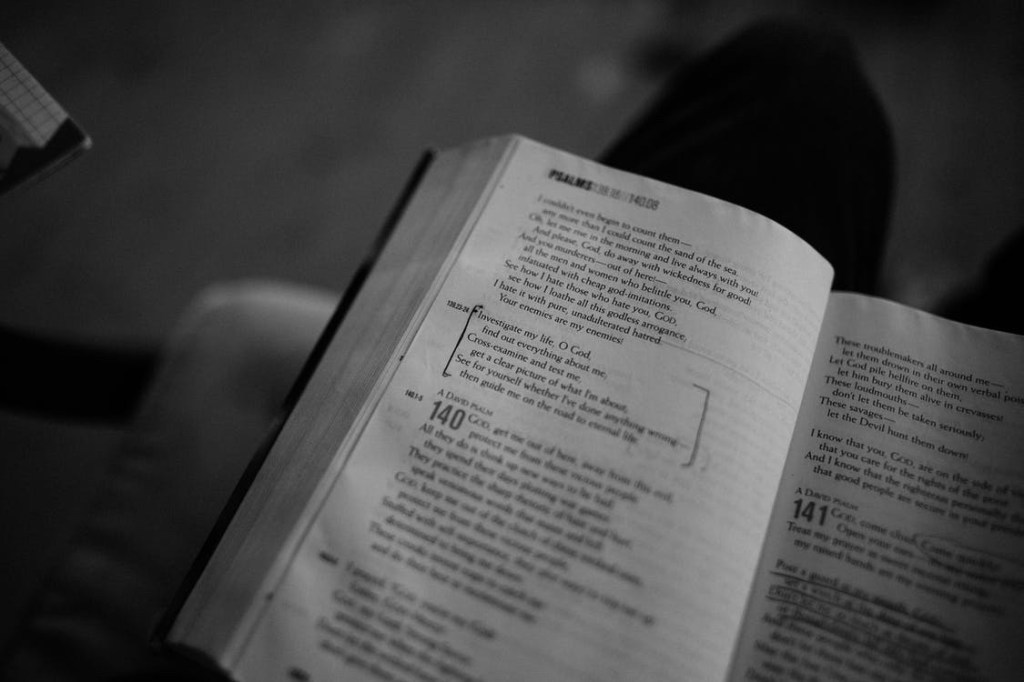






 Unlearning Tradition, Relearning Scripture