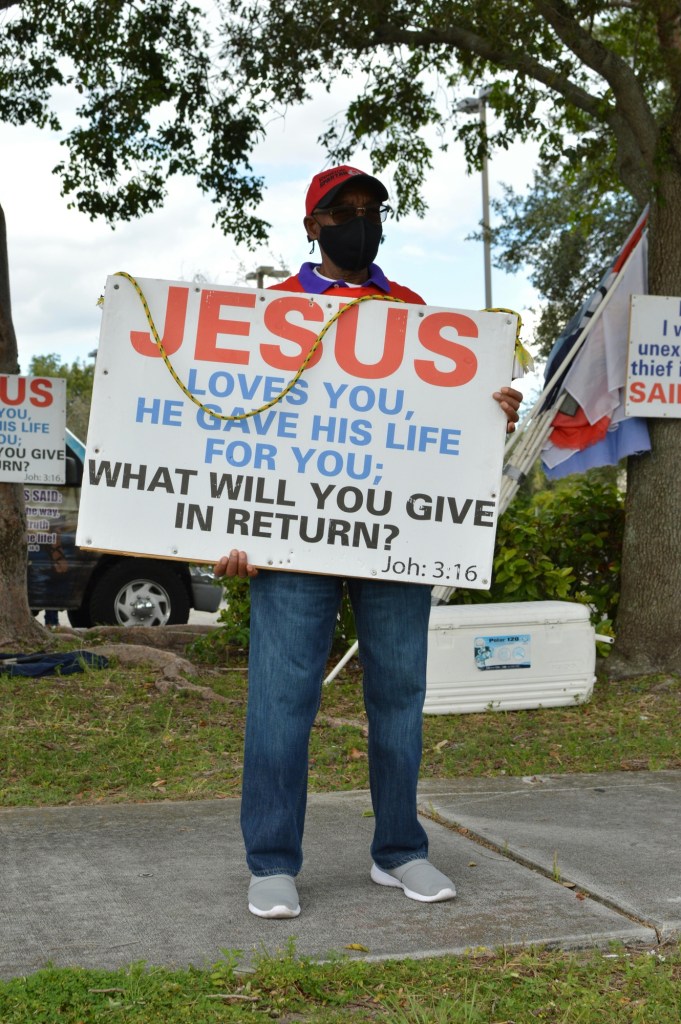
Reflecting on God’s desire for us who claim to follow Jesus Christ, let us consider the story of Cain and Abel as a case study. Why was Abel’s offering acceptable to God, while Cain’s was not?
Abel’s offering pleased God because it reflected a heart that honored Him first. In Genesis 4:3-7, we see that Abel offered the firstborn of his flock, signifying that he gave first to God. Cain, on the other hand, “in the course of time” offered some of the produce of the ground, but not the first fruits, indicating a lack of priority or wholehearted devotion.
Some interpret Abel’s offering as acceptable because it resembled the later Mosaic Law requirement to offer the fat portions to the Lord (Leviticus 3:16). However, the Law was established long after Cain and Abel, so their actions were not legally obligatory. Instead, God’s demand for the fat portions of all animal offerings reflected Abel’s genuine heart of giving to God first, not the other way around.
See God’s response to Cain—“If you do well, will you not be accepted?”—reveals that the real issue was the heart and attitude behind the offering. The act of giving must come from a place of surrender and prioritizing God above all.
This principle is echoed throughout Scripture. The story of Elijah and the widow shows the same heart condition: the widow gave the first portion of her last meal to God’s servant, demonstrating trust and putting God first. As a result, she and her son were sustained throughout the famine. (1 Kings 17:8-16)
Similarly, Paul commended the Macedonians in 2 Corinthians 8:1-6 because they gave themselves first to the Lord before giving their material support, even in extreme poverty. Their offering was accepted because it flowed from a surrendered heart.
The lesson is clear: God delights in offerings given with a heart that honors Him first. Gifts that are leftovers or given without full surrender do not please Him. True worship and acceptable giving are rooted in putting God above all else, both in life, in our ministry for God, and in offerings.
Consequently, Paul quoted Jesus saying, “It is more blessed to give than to receive (Acts 20:35),” a statement Jesus spoke before sending out His disciples. For us who serve the Lord Jesus Christ, this means we are called to share the Gospel without seeking payment. Yet, in the same context, the Lord also said, “The laborer deserves his food.” (Matthew 10:8-10) This reminds us that those who labor in the Word of God, as well as those who support them, should do so willingly and freely, without compulsion. In doing this, we reflect the heart of Abel, who offered the first and best of what he had to God, giving with a heart of faith and devotion.
Peter, in the words of Acts 3:6, declared, “I possess neither silver nor gold, but in the name of Jesus Christ, I offer you what I have.” Share this article freely, for you freely receive. Take note, underlines and highlights are clickable links for definitions or Bible references. Stay updated by heading to our about page and subscribe directly to receive notifications in your inbox. Blessings!
I’ve come to realize that many pastors are hesitant to discuss money because they’ve been taught and told not to speak on the topic. However, Paul addressed this issue on several occasions. Are pastors inferior to an apostle? Paul made it clear in Ephesians that both are mandated by Christ Jesus for His ministry. (Ephesians 4:11-14) While I understand that some people assume the role of a pastor but lack the necessary skills or love for God’s ministry. Some view the ministry not as a calling but as a profession, even worse, as an opportunity to gain wealth. (1 Timothy 6:3-5)
No wonder Paul said, “For we are not, like so many, peddlers of God’s word, but as men of sincerity, commissioned by God, in the sight of God we speak in Christ.” (2 Corinthians 2:17) This article applies only to the latter group: people who are genuinely committed to doing God’s work.
Here’s the silent truth: Pastors are even ridiculed when people discover that someone has been supporting them, despite the clear biblical teaching that it’s the right of the pastor to receive support.
For example, Paul said, “In the same way, the Lord commanded that those who proclaim the Gospel should get their living by the Gospel.” (1 Corinthians 9:14) It’s the right of pastors to receive their living from the Gospel, because it’s commanded by Jesus Christ (Luke 10:2-8).
Paul also said, “Let the one who is taught the word share all good things with the one who teaches.” (Galatians 6:6) This clearly teaches that the giving and receiving of ministry support is directly between the teacher and the learner.
Furthermore, Jesus instructed His disciples, “The harvest is abundant, but the laborers are few. Go your way; behold, I am sending you out as lambs in the midst of wolves. Carry no moneybag, no knapsack, no sandals, and greet no one on the road. Whenever you enter a house, first say, ‘Peace be to this house!’ If a son of peace is there, your peace will rest upon him. But if not, it will return to you. Stay in the same house, eating and drinking what they provide, for the laborer deserves his wages. Do not go from house to house.” (Luke 10:2-7)
Despite these clear teachings, God’s workers often face little support and are subjected to ridicule and accusations of wrongdoing. Paul himself expressed his frustration, stating, “Did I commit a sin in humbling myself so that you might be exalted? Because I preached God’s Gospel to you without charge? I robbed other churches by accepting support from them in order to serve you. And when I was with you and in need, I did not burden anyone. The brothers who came from Macedonia supplied my need. So I refrained and will refrain from burdening you in any way.” (2 Corinthians 11:7-9)
The Corinthian church was biblically obligated to actively support Paul’s ministry in their midst. Scripture emphasizes the responsibility of believers to help God’s workers, declaring, “Therefore, we ought to support God’s workers like these, so that we may be fellow workers for the truth.” (3 John 1:8)
Despite this clear mandate, Paul did not receive the support that was rightfully due him from the Corinthians. Instead, he endured their criticisms. In response, he wrote:
“I am here for the third time, ready to come to you. I will not be a burden because I seek not what is yours but you. Children are not obligated to save for their parents, but parents for their children. I will gladly spend and be spent for your souls. If I love you more, am I to be loved less? But since I did not burden you, you say, I was crafty and got the better of you by deceit.” (2 Corinthians 12:14‑16)
Paul’s words reveal his profound love for the Corinthians and his willingness to sacrifice for their spiritual growth, even without receiving the support that was biblically warranted. This passage serves as a reminder to recognize, honor, and assist those who faithfully labor in God’s work, fulfilling the partnership that Scripture envisions between God’s servants and His people.
God designed it that way. Both God’s workers and Christians who support them are considered workers in the Gospel. (3 John 1:8) God intended it to be a partnership. Therefore, Paul expressed his gratitude to the Philippians, saying, “I thank my God in all my remembrance of you, always in every prayer of mine for you all, making my prayer with joy, because of your partnership in the Gospel from the first day until now.” (Philippians 1:3-5) The Macedonians and the Philippians are essentially the same people. Paul revealed that they are his sole supporters, stating, “And you Philippians yourselves know that in the beginning of the gospel, when I left Macedonia, no church entered into partnership with me in giving and receiving, except you only.” (Philippians 4:15)
John teaches that those who prevent people from directly supporting God’s workers are considered evildoers. (3 John 1:9-11)
Demetrius, who welcomes and supports God’s workers, contrasts sharply with Diotrephes, who refuses and hinders others from doing the same. It is crucial to discern who you listen to and follow.
Shame on you, Diotrephes! You are wrongfully accusing God’s workers of wrongdoing by denying them support and hindering others from doing so. Let’s not be deceived by the cunning and deceitful reasoning of some people who exploit your ignorance of Bible teachings. Regrettably, some have accused God’s workers of wrongdoing while neglecting accountability in their own collections of donations from God’s people.
I am simply stating the truth. I have received an unusual call from God. My mission is to study the Bible, explain its teachings clearly and without restraint, and share them with others. God’s people should not be offended by God’s Word. If you have any doubts, I encourage or even challenge you to study the Bible thoroughly. Discover for yourself the authentic teachings of the Scriptures.
P.S. This is a follow through to my previous posting “Supporting Christian Workers: A Biblical Approach”
Peter, in the words of Acts 3:6, declared, “I possess neither silver nor gold, but in the name of Jesus Christ, I offer you what I have.” Share this article freely, for you freely receive. Take note, underlines and highlights are clickable links for definitions or Bible references. Stay updated by heading to our about page and subscribe directly to receive notifications in your inbox. Blessings!
Recently, I was asked how we can support Christian workers, which might have been prompted by a Facebook post I shared. Scripture provides numerous teachings on this matter, but I will focus on one passage to highlight the principle clearly.
In 3 John 1:1-14, the apostle John commends Gaius for his faithfulness and generosity towards traveling brothers serving in Christ’s name. Gaius’s actions show that he not only walks in the truth but also honors God’s work by helping those who proclaim it.
Key Principles from the Passage
1. Supporting Christian Workers is Commended
John praises Gaius for showing love and hospitality to Christian workers, even though they were strangers. He notes that sending them off “in a manner worthy of God” is a faithful act, making believers fellow workers in the truth.
The same principle has been endorsed by Paul: “Let the elders who rule well be considered worthy of double honor, especially those who labor in preaching and teaching. For the Scripture says, ‘You shall not muzzle an ox when it treads out the grain,’ and, ‘The laborer deserves his wages.’” (1 Timothy 5:17-18)
The first quotation has been used by Paul in reference to support for God’s workers (1 Corinthians 9:9, 14). The latter is quoted from Jesus Christ. When He sent out His disciples, He called on them to be faithful to the Gospel and trust God’s people for their provision. (Luke 10:2-9)
2. Christian Workers Depend on Believers’ Support
These workers “have gone out for the sake of Jesus’ name, accepting nothing from unbelievers,” meaning the responsibility of support falls on the church and fellow Christians.
3. Warning Against Hindering Support
John rebukes Diotrephes for his pride, refusal to welcome Christian workers, and for stopping others from supporting them. Scripture warns that imitating such behaviour is evil.
4. Imitate Good, Not Evil
Believers are encouraged to follow the example of Gaius and Demetrius, who have good testimonies, and avoid the divisive behaviour of Diotrephes.
Applying the Principles Today
Scripture encourages us to directly support Christian workers—missionaries, pastors, or evangelists. While many now rely on mission organisations to channel support, the biblical model emphasizes personal participation and partnership in the Gospel.
Paul teaches, “The point is this: whoever sows sparingly will also reap sparingly, and whoever sows bountifully will also reap bountifully. Each one must give as he has decided in his heart, not reluctantly or under compulsion, for God loves a cheerful giver. And God is able to make all grace abound to you, so that having all sufficiency in all things at all times, you may abound in every good work.” (2 Corinthians 9:6-8)
Christian giving is a personal decision and choice. By helping those who labor for Christ, we become co-workers in spreading the truth and experience the joy of participating in God’s mission. (3 John 1:5-8)
Important Insights on Giving
In the Bible, support was always direct—given straight to God’s workers. Modern practice often routes help through organizations or committees, which can delay or even withhold rightful support. In the name of accountability, this system sometimes creates the opposite effect: funds are mismanaged or stalled. Returning to the biblical model of direct giving would be simpler and more faithful.
Biblical Basis for Direct Support
Philippians 4:15‑16 – The Philippians sent aid directly to Paul, even multiple times.
Galatians 6:6 – Believers are called to share all good things directly with their instructors.
1 Timothy 5:17‑18 – Elders who teach are worthy of financial honour, just as labourers deserve wages.
Furthermore, Jesus teaches that giving should be discreet (Matthew 6:1‑4), done to please God rather than to be seen by others.
A Matter of Conscience
In the end, giving should follow God’s leading and the guidance of your conscience. It is not dependent on the approval of committees or organisations. Some Christians may prefer the modern method of routed support; it is their responsibility and choice. But it is wrong to impose such rules on those who wish to follow the biblical model. One of the worst things a Christian can do is to try to play God in the lives of others.
Supporting Christian workers directly is both a responsibility and a blessing, making us true co-laborers in God’s mission.
Peter, in the words of Acts 3:6, declared, “I possess neither silver nor gold, but in the name of Jesus Christ, I offer you what I have.” Share this article freely, for you freely receive. Take note, underlines and highlights are clickable links for definitions or Bible references. Stay updated by heading to our about page and subscribe directly to receive notifications in your inbox. Blessings!
Jesus once said, “You have heard that it was said, ‘You shall love your neighbor and hate your enemy.’ But I tell you, love your enemies and pray for those who persecute you, so that you may be children of your Father in heaven. For He causes His sun to rise on both the evil and the good, and sends rain on the just and the unjust.” (Matthew 5:43-45)
This challenges us to think deeply: does material abundance automatically mean we are blessed by God? If that were so, it would suggest that many wealthy but ungodly individuals are more favored than the faithful who live humbly. Yet Jesus reminds us that God’s providential grace is given to all, regardless of faith (Psalms 145:9; Acts 14:17).
It is common for Christians to fall into the trap of equating wealth with divine favor, forgetting that both abundance and scarcity are tests of our faith. The greater question is this: in times of plenty or in want, will we continue to praise God and live in obedience to Him?
Jesus often warned of the spiritual dangers of riches. Luke recounts the parable of the rich fool (Luke 12:13–21), and all three Synoptic Gospels tell of the rich young ruler (Matthew 19:16-24; Mark 10:17-23; Luke 18:18-25). When asked to surrender his possessions and follow Christ, the young man went away sorrowful. This led Jesus to declare, “Truly, I say to you, only with difficulty will a rich person enter the kingdom of heaven.” (Matthew 19:23)
Many contemporary preachers equate wealth with divine favor, but Proverbs 10:22 reminds us that “the blessing of the LORD makes rich, and He adds no sorrow with it.” True blessing lies not in amassing possessions but in finding contentment in God’s daily provision and being ready to share whenever He calls. This truth is evident in Jesus’ warning to the man obsessed with building larger storehouses for his wealth: “Fool! This night your soul is required of you, and the things you have prepared, whose will they be?” He concluded, “So is the one who lays up treasure for himself and is not rich toward God.” (Luke 12:20-21) On the other hand, Jesus praised the poor widow who gave two copper coins in contrast to the wealthy who contributed large sums of money, saying, “This poor widow has given more than everyone else. Because they all gave from abundance, but she, out of poverty, has given everything she had, all she had to live one day.” (Mark 12:41-44)
Paul, applying the teachings of Jesus, contrasted the wealthy Corinthians with the impoverished yet generous Macedonian believers. Despite their poverty, the Macedonians displayed the heart and teachings of Christ through remarkable generosity (2 Corinthians 8:1–6). Their giving was voluntary, sacrificial, and inspired by deep devotion to God—an “act of grace” (2 Corinthians 8:6).
Likewise, Paul praised the Philippians for their gifts, expressing the “act of grace” in another way: “a fragrant offering, a sacrifice acceptable and pleasing to God” (Philippians 4:18). It is called an act of grace because everything we have comes from God, and our ability to give flows from His grace.
In Matthew 25:31–46, Jesus confirmed this truth when He told the faithful who gave to those in need, “As you did it to one of the least of these brothers, you did it to Me” (v.40). Conversely, those who withheld care, generosity, and compassion faced the opposite judgment (vv.41–46). True generosity reflects God’s grace working in our hearts.
Let’s take a moment to reflect on the greatness of God? He alone is the source of everything good, while we are simply recipients, entrusted with the privilege to care, to share, and to give. Yet, our acts of grace are credited to us. As Philippians 4:17 shows, Paul expressed his gratitude by saying, “Not that I seek the gift, but I seek the fruit that increases to your credit.” It is no wonder Paul recalled the teachings of Jesus and said: “It is more blessed to give than to receive” (Matthew 10:8; Matthew 25:34-40; Luke 14:12-14; 2 Corinthians 9:6-12; Philippians 4:17-20; Hebrews 13:16). A truth quite the opposite of what many believe, isn’t it?
Christians, we are called to live by faith. James reinforces that faith without works is dead (James 2:14–20). Authentic faith expresses itself in action—serving others, meeting needs, and living out love. Salvation comes through faith, but genuine faith is proven in a daily walk of obedience.
Paul’s words in Philippians 2:12–13 remind us that faith is not a single moment but an ongoing journey of surrender and obedience to God. He calls on us believers to “work out [our] own salvation with fear and trembling,” not to earn salvation, but to live in a way that reflects the gift we have received. Our life’s testimony—through seasons of joy or struggle—reveals our trust in His perfect will. As the Gospel transforms us, God Himself works in our hearts, shaping our desires and guiding our actions for His glory. In response, we are to let His salvation manifest in how we live, bringing forth good works as the fruit of our faith.
This reflection encourages us to pause and reflect on what truly constitutes as blessings. It prompts us to assess how our faith is manifested in our daily lives. In fact, even in our ministry and sharing of the Gospel, as stated in Acts 20:35, “It is more blessed to give than to receive.”
Peter, in the words of Acts 3:6, declared, “I possess neither silver nor gold, but in the name of Jesus Christ, I offer you what I have.” Share this article freely, for you freely receive. Take note, underlines and highlights are clickable links for definitions or Bible references. Stay updated by heading to our about page and subscribe directly to receive notifications in your inbox. Blessings!
Some Christian congregations argue that hymns should be sung during gatherings, not contemporary music. Is there really a basis for such contention? Three times in the New Testament, Paul spoke about hymns; Ephesians 5:19 & Colossians 3:16.
“addressing one another in psalms and hymns and spiritual songs, singing and making melody to the Lord with your heart,” (Ephesians 5:19)
“Let the word of Christ dwell in you richly, teaching and admonishing one another in all wisdom, singing psalms and hymns and spiritual songs, with thankfulness in your hearts to God.” (Colossians 3:16)
The third was in Acts: “About midnight Paul and Silas were praying and singing hymns to God, and the prisoners were listening to them” (Acts 16:25). Paul, an apostle of Jesus Christ, was the authority behind Luke; he wrote both the Gospel of Luke and Acts.
Yes, all of the New Testament writings have apostolic authority. The same may be said of Hebrews, though modern Bible scholars debate over its authorship. Keep in mind Peter’s statement: “Knowing this first of all, that no prophecy of Scripture comes from someone’s own interpretation. For no prophecy was ever produced by the will of man, but men spoke from God as they were carried along by the Holy Spirit” (2 Peter 1:20-21). Though Peter here refers to the Old Testament Scriptures, are we to believe that the New Testament Scriptures are not of divine inspiration? Here is Paul’s testimony that he received divine inspiration from Jesus Christ:
“For I would have you know, brothers, that the gospel that was preached by me is not man’s gospel. For I did not receive it from any man, nor was I taught it, but I received it through a revelation of Jesus Christ.” (Galatians 1:11-12)
John also, attested that his writings was of divine inspiration from Jesus Christ:
“The revelation of Jesus Christ, which God gave Him to show to His servants (i.e. John and the rests) the things that must soon take place. He made it known by sending his angel to his servant John, who bore witness to the word of God and to the testimony of Jesus Christ, even to all that he saw.” (Revelation 1:1-2)
Note: ScriptureDirect, a Greek linguistic tool, clearly distinguishes between “servants” and “his servant John”. The former is described as a plural noun, while the latter is singular. Here’s the link to download the app.
Peter also implied that his letters were divinely inspired. See 2 Peter 3:15-16, “And count the patience of our Lord as salvation, just as our beloved brother Paul also wrote to you according to the wisdom given him, as he does in all his letters when he speaks in them of these matters. There are some things in them that are hard to understand, which the ignorant and unstable twist to their own destruction, as they do the other Scriptures.” (2 Peter 3:15-16)
Now, the hymns that some Christians ascribe to are not the hymns that Paul referred to. By hymns, Paul referred to the Psalms in the Bible, which are of divine inspiration. Inerrant and prophetic, they speak about the coming of the Christ or Messiah, or the Messianic kingdom. All hymns written outside the Scripture were authored from the 2nd and 3rd centuries AD, and after the Reformation.
Modern Christian songwriters, like their secular counterparts, draw inspiration from their personal experiences and observations. Theology also significantly influences their songwriting. It’s important to note that no Christian would contest that no post-AD 70 Christian songwriters can claim the inerrancy of their lyrics, unlike those of the Psalms in the Bible. Hebrews 1:1-2 states, “Long ago, at many times and in many ways, God spoke to our fathers by the prophets, but in these last days He has spoken to us by His Son, whom He appointed the heir of all things, through whom also He created the world.” This implies that Jesus Christ holds the final revelation of God.
A thorough examination of all the New Testament Scriptures reveals that none of its writings mention the fall of Jerusalem as a historical event. Instead, they emphasize that God’s judgment is imminent and about to be fulfilled at the time of their writings. Since all Scripture was written before A.D. 70, the fall of Jerusalem, a pivotal event that could not have escaped the writings of the New Testament, it is evident that all New Testament Scripture was composed before this date. For further clarification, please refer to this link, which explains that even Revelation was written before the fall of Jerusalem, contrary to the 90s suggestion made by some modern biblical scholars who relied on the writings of early church fathers from the second century of Christianity. None of them were infallible; a quick online search would easily reveal how they contradicted facts. For instance, Irenaeus’ book, ironically titled “Against Heresies,” Book two, chapter 22, claims that Jesus lived to be around 50 years old before His crucifixion. This is a clear contradiction of Scripture. Luke 3:23 explicitly states that Jesus was 30 years old when He began His ministry. According to the accounts of the John’s Gospel, which count the Passover Feasts He was present to and His crucifixion, His ministry lasted approximately 3.5 years. Modern Bible scholars have relied on Irenaeus’ writings to suggest that John wrote Revelation in the 90s. So, who should we believe: the Bible or Irenaeus? Should we rely on the internal evidence of Revelation or Irenaeus?
Now, back to our topic, are hymns outside the Bible more reliable and truthful to the Scripture than modern Christian music? I would say it’s a case-by-case basis, or maybe not. Am I suggesting that we ought not to listen to modern hymns and contemporary Christian music? No, I am not.
Modern hymns and contemporary Christian music are no different from personal testimonies of conversion narratives to the faith. They are not universal to all; we came to faith in different ways, but should have one Lord, one faith, one baptism, one God and Father of all (Ephesians 4:5-6).
Why don’t Christians simply agree to disagree for the time being regarding modern hymns and contemporary Christian music? Let’s prioritize learning from the Bible, which is of utmost importance. As stated in Ephesians 5:25-26, by faith, we have been sanctified, cleansed, and washed for Christ Jesus. By studying the Scriptures, we can individually grow in our understanding of God’s Word. Consequently, we will be able to discern which modern hymns and contemporary Christian music are not aligned with the Scriptures.
The same process should be experienced by each individual Christian. We all ought to grow in faith. Paul states, “And Christ gave some to be apostles, some prophets, some evangelists, some pastors and teachers, to equip the saints for the work of ministry, to build up the body of Christ, until we all reach unity in the faith and in the knowledge of God’s Son, growing into maturity with a stature measured by Christ’s fullness. Then we will no longer be little children, tossed by the waves and blown around by every wind of teaching, by human cunning with cleverness in the techniques of deceit. But speaking the truth in love, let us grow in every way into him who is the head — Christ.” (Ephesians 4:11-15)
We no longer have the apostles with us. And I will argue that neither do we have prophets because Jesus already came. He spoke God’s revelation to us, which are now in our Bibles. Perhaps we still have evangelists, pastors, and teachers, but all of whom should be known and verified by their teachings and lives. Jesus Christ declares, “Everyone then who hears these words of mine and does them will be like a wise man who built his house on the rock. And the rain fell, and the floods came, and the winds blew and beat on that house, but it did not fall, because it had been founded on the rock. And everyone who hears these words of mine and does not do them will be like a foolish man who built his house on the sand. And the rain fell, and the floods came, and the winds blew and beat against that house, and it fell, and great was the fall of it.” (Matthew 7:24-27)
Discern carefully, have you learned from the Rock, no other but Jesus Christ? Be careful not to be part of those who sought the wide gate (Matt 7:13-20), instead of the narrow gate, the way of Christ (John 14:6-7). Christ Jesus may no longer be with us physically, but His presence can be learned and experienced through the Scriptures. Paul states, “For we walk by faith, not by sight.” (2 Corinthians 5:7)
Again Paul declares, we ought not to seek things that can be seen but the things that are unseen. For the things that are seen are transient, but the things that are unseen are eternal (2 Corinthians 4:18). Once we have learned to be guided by the things unseen, that is by faith in Christ Jesus, then unlike Adam, nothing in this world can entice you to forsake God.
So, should we focus on hymns or contemporary Christian music? Let’s not get bogged down by trivial matters. Instead, let’s focus on the Word of God, and we’ll no longer be concerned with such things. Only then can we truly serve Jesus Christ. Remember Christ’s words, “If the blind lead the blind, both will fall into a pit.” (Matthew 15:14)
Peter , in the words of Acts 3:6, declared, “I possess neither silver nor gold, but in the name of Jesus Christ, I offer you what I have.” Note: Click on underlines and highlights for definitions or Bible references. Freely, for you freely receive. Stay updated by heading to our about page and subscribing directly to receive notifications in your inbox. Blessing!
I would venture to say that Elijah was disheartened. He recognized God’s immense power and greatness, yet he struggled to comprehend how wicked individuals could persist in their wickedness.
Elijah, demonstrating God’s supreme power over anything else, defeated Jezebel’s false prophets. Instead of fearing God, Jezebel, in a defiant act, killed all the prophets of God. (1 Kings 18-19)
Jezebel openly opposed God and His servants, while wolves in sheep’s clothing concealed their true identities and intentions but do the same (Matt 7:15; 16:6; Mk 12:38; Luke 12:15; Acts 20:29-30). The latter gained approval from their peers and have swayed people with their charming words, dramatic displays, and cunning tactics (2Co 4:2; 11:13-15; Rom 16:18; Eph 4:14; Rev 2:20). It’s no wonder we encounter such individuals who are respected and hold leadership positions within Christian communities. This is one of the reasons why local churches fail, besides flawed doctrines. Shouldn’t we Christians feel discouraged as well? Like in the days of Jezebel, evil always seems to triumph over good. Both Jezebel and the wolves in sheep’s clothing acted in defiance of God. The latter is far worse because they claim faith and yet act in defiance.
Jesus Christ condemned churches that resembled Jezebel or harbored her within their midst. In Revelation 2:19-20, Christ declares:
“I am aware of your works, your love, faith, service, and patient endurance, and that your latter works surpass your initial ones. However, I have a serious issue with you: you tolerate that woman Jezebel, who falsely claims to be a prophetess. She is teaching and seducing my servants to engage in sexual immorality and consume food that has been sacrificed to idols.”
Jezebel’s ways subtly transform Christian devotion to God and the Bible into something else; that’s the point of Christ Jesus in Revelation.
Jezebel, the wicked and idolatrous queen of King Ahab, wielded significant influence behind the throne. Obedient to her wishes, Ahab constructed a sanctuary for Baal and supported numerous pagan prophets (1 Kings 18:19). In essence, Jezebel represents the epitome of idolatry. Paul, in Colossians, clarified that idolatry goes beyond mere devotion to graven images. Instead, it encompasses sexual immorality, impurity, passion, evil desires, and covetousness (Col 3:5). Essentially, it is the love of the world rather than God, Jesus Christ, and His Word. That is exactly the reason for resurgence of wolves in sheep’s clothing in the Christian communities. They desire salvation and yet loved money, power and recognition.
Simon the Sorcerer of Acts 8 exemplifies such people. The Bible clearly says Simon believed and was baptized (Acts 8:13). Yet, he had no real transformation; he still sought after fame. Hence, Scripture narrative describes that he remained lost (Acts 8:18-22).
God changes not. Stop explaining away God’s character and His will. Christians, let us be discerning. Do not simply receive any teachings, but examine the Scriptures daily to see if these things are true. Beware of Jezebels as exemplified in Revelation. Christ Jesus denounced it then and still does. Be faithful to God, Jesus Christ, and His Word. Only then may we please God. Jesus said, “And do not fear those who kill the body but cannot kill the soul. Rather fear Him who can destroy both soul and body in hell.” (Matthew 10:28)
People may believe they are saved and yet, in reality remains lost. There is a reason that the Bible twice states, “There is a way that seems right to a man, but its end is the way to death.” (Proverbs 14:12; 16:25)
Paul declared, “Keep a close watch on yourself and on the teaching. Persist in this, for by so doing you will save both yourself and your hearers.” (1 Timothy 4:16)
The way to salvation encompasses both our beliefs and life.
Despite prevailing wickedness, let us not doubt God’s justice, righteousness, and grace. God through Isaiah, His prophet, declares, “For My thoughts are not your thoughts, neither are your ways My ways. For as the heavens are higher than the earth, so are My ways higher than your ways and My thoughts than your thoughts. For as the rain and the snow come down from heaven and do not return there but water the earth, making it bring forth and sprout, giving seed to the sower and bread to the eater, so shall My word be that goes out from my mouth; it shall not return to Me empty, but it shall accomplish that which I purpose, and shall succeed in the thing for which I sent it.” (Isa 55:8-11)
Trust God, He never fails in His Word! The only reason some thought otherwise was because they fail to truly comprehend the Bible.
Peter, in the words of Acts 3:6, declared, “I possess neither silver nor gold, but in the name of Jesus Christ, I offer you what I have.” Share this article freely, for you freely receive. Take note, underlines and highlights are clickable links for definitions or Bible references. Stay updated by heading to our about page and subscribe directly to receive notifications in your inbox. Blessing!
Personal conversion testimony is valid for as long as we have kept the faith. Though God remembers our actions in the past, He is more concerned about how we have kept the faith. That’s the point of Paul’s assertion saying, “I have fought the good fight, I have finished the race, I have kept the faith.” (2 Timothy 4:7)
Let us not gravitate to personal testimonies that never became a lifetime commitment. That’s the reason we get surprised when spiritual giants get caught in controversy. Paul states, “Follow my example, as I follow the example of Christ.” (1Corinthians 11:1)
The Bible tells us, “Even Simon himself believed, and after being baptized he continued with Philip. And seeing signs and great miracles performed, he was amazed.” (Acts 8:13)
And yet, Simon, perhaps not being able to overcome his old self. He tried to buy from Peter the power of the Holy Spirit (Acts 8:18-19). So Peter replied, “May your silver perish with you, because you thought you could obtain the gift of God with money! You have neither part nor lot in this matter, for your heart is not right before God. Repent, therefore, of this wickedness of yours, and pray to the Lord that, if possible, the intent of your heart may be forgiven you. For I see that you are in the gall of bitterness and in the bond of iniquity.” (Acts 8:20-23)
Our water baptisms serve as a personal testament to our repentance of sins and commitment to follow Jesus Christ. Like a survey, they reflect the moment, not the end, marking the beginning of a lifelong journey with Jesus. Therefore, only in hindsight can people truly validate our transformation for Christ Jesus.
Back when I was still in Metro Manila, I often heard this phrase on a Christian radio station: “If you are still talking about what you have done in the past, then you have not done anything new.” Christians need to constantly walk the talk and live by their faith. Once saved, always saved is only true if one has kept the faith. The best testimony you can give is your life.
Peter, in the words of Acts 3:6, declared, “I possess neither silver nor gold, but in the name of Jesus Christ, I offer you what I have.” Share this article freely, for you freely receive. Take note, underlines and highlights are clickable links for definitions or Bible references. Stay updated by heading to our about page and subscribe directly to receive notifications in your inbox. Blessing!
Can Christians justify participating in the recently concluded Black Nazarene parade, the present Sinulog parade, or even just the subsequent party without compromising their relationship with Christ Jesus?
The Bible, specifically Genesis 6:5-8, describes the natural behavior of humans and its consequences. It states, “The LORD saw that the wickedness of man was great in the earth, and that every intention of the thoughts of his heart was only evil continually. And the LORD regretted that He had made man on the earth, and it grieved Him to His heart. So the LORD said, ‘I will blot out man whom I have created from the face of the land, man and animals and creeping things and birds of the heavens, for I am sorry that I have made them.’ But Noah found favor in the eyes of the LORD.’”
Interestingly, the Hebrew word for “favor” is actually “grace.” Ironically, Israel disregarded God’s grace. In Judges, this phrase is repeatedly used to describe the behavior of God’s Old Covenant people, stating, “In those days there was no king in Israel. Everyone did what was right in his own eyes.” (Jdg 17:6) Regrettably, this behavior is also observed in many professing Christians. They desire the privilege of being God’s people but simultaneously insist on their own interpretations of what is right.
Consider this passage summarized from 2 Corinthians 5:17-20: “We Christians are ambassadors of Christ Jesus, carrying with us the ministry of reconciliation—that is, the Gospel. Should we then, even for fun, compromise the Gospel?”
If 2 Corinthians 5:17-20 is not convincing enough, how about Romans 6:16-23? Paul explains that presenting oneself as a slave means obeying either sin, leading to death, or righteousness, leading to sanctification. To illustrate, before we became Christians we were all slaves to impurity and lawlessness producing death, but now, as Christians, slaves to God, we are sanctified for eternal life. Paul then concludes, “The wages of sin is death, but God’s gift is eternal life in Christ Jesus”.
Dualistic Christianity is not taught in the Bible. We must stop justifying such an idea. We bear the responsibility of sharing the Gospel. God has called us Christians to be channels of blessing through it. If we blend in with the world, how can people clearly understand what it means to be a Christian? The reality is that we are saved by grace. This means we are all previously under God’s wrath, but through faith in Christ Jesus, we have been given eternal life, enjoying the fullness of God’s blessing.
So, here’s the challenge: Should we arrogantly declare ourselves Christians but live according to our desires or the world’s ways, disregarding God’s Word? If we do, we lose our integrity and credibility as bearers of the Gospel, not just for ourselves, but also for the lost in need of God’s grace because we mishandled the faith. As the Bible states, “Pay close attention to your life and your teaching; persevere in these things, for in doing this you will save both yourself and your hearers.” (1Ti 4:16)
Peter, in the words of Acts 3:6, declared, “I possess neither silver nor gold, but in the name of Jesus Christ, I offer you what I have.” Share this article freely, for you freely receive. Take note, underlines and highlights are clickable links for definitions or Bible references. Stay updated by heading to our about page and subscribe directly to receive notifications in your inbox. Blessing!
Recently, a friend from afar came to visit us. She inquired about my journey to becoming a pastor. To summarize my experience, I explained that I spent six years in an organized church, where I received a salary. However, for close to twelve years now, I have been serving independently, conducting Bible studies without a salary. Instead, I trust in God for voluntary contributions. She was amazed by God’s goodness and grace.
Is it permissible for a pastor to engage in money-making ventures or be employed in secular work while also serving God? Paul addressed this question in 1 Corinthians 9:7-14.
“Who serves as a soldier at his own expense? Who plants a vineyard without eating any of its fruit? Or who tends a flock without getting some of the milk? Do I say these things on human authority? Does not the Law say the same? For it is written in the Law of Moses, “You shall not muzzle an ox when it treads out the grain.” Is it for oxen that God is concerned? Does He not certainly speak for our sake? It was written for our sake, because the plowman should plow in hope and the thresher thresh in hope of sharing in the crop. If we have sown spiritual things among you, is it too much if we reap material things from you? If others share this rightful claim on you, do not we even more? Nevertheless, we have not made use of this right, but we endure anything rather than put an obstacle in the way of the gospel of Christ. Do you not know that those who are employed in the temple service get their food from the temple, and those who serve at the altar share in the sacrificial offerings? In the same way, the Lord commanded that those who proclaim the gospel should get their living by the gospel.” (1 Corinthians 9:7-14)
Jesus told a person who wanted to follow Him, “Foxes have holes, and birds of the air have nests, but the Son of Man has nowhere to lay His head.” (Luke 9:58)
We do not follow Jesus for material gains, but rather for forgiveness, restoration to God, and the gift of eternal life. This principle applies to everyone, including both pastors and disciples of Christ.
Jesus warns those who wish to follow Him that it won’t be easy. It’s not a bed of roses; life’s challenges will still arise. He further emphasized this by telling another potential follower, “No one who puts his hand to the plow and looks back is fit for the kingdom of God.” (Luke 9:62)
It’s ironic that many Christians often put Jesus or the Bible on the backseat when life’s troubles or even busyness arise. This is not a true way to follow Jesus Christ. Following Him can be summarized by the wedding vow: “I promise to be true to you in good times and in bad, in sickness and in health. I will love you and honor you all the days of my life.”
Oddly, Jesus even states, “Whoever loves father or mother more than Me is not worthy of Me, and whoever loves son or daughter more than Me is not worthy of Me.” (Matthew 10:37)
The journey of following Jesus is a narrow path with no other options. Hence, Jesus earlier in Luke 9 teaches: “If anyone would come after Me, let him deny himself and take up his cross daily and follow Me. For whoever would save his life will lose it, but whoever loses his life for My sake will save it.” (Luke 9:23-24)
Doesn’t seem to have options there, do we? It requires a strong commitment to follow Him, regardless of the consequences or obstacles. Jesus Christ invites us, saying, “Come, follow Me,” with no qualifications or exceptions.
During our Bible study, we often come across a passage in Scripture that leads to disagreement among some participants about its applicability to everyone. Consider Christ’s directive: “And Jesus, looking at him, loved him and said to him, ‘You lack one thing: go, sell all that you have and give to the poor, and you will have treasure in heaven; and come, follow Me.’” (Mark 10:21).
Is this an isolated teaching in Scripture? It is not. Jesus, in Luke 12:33-34, teaches something similar that applies to all who wish to be His disciples: “Sell your possessions and give to the needy. Provide yourselves with moneybags that do not grow old, with a treasure in the heavens that does not fail, where no thief approaches and no moth destroys. For where your treasure is, there will your heart be also.” (Luke 12:33-34)
The central message of Christ Jesus is not to demand that we sell all our possessions, but rather to emphasize that we should not love material wealth more than we love God. We need to place our hearts in the right position, as stated in Matthew 6:19-21. Jesus further explains, “No one can serve two masters; either he will hate the one and love the other, or he will be devoted to one and despise the other. You cannot serve God and money.” (Matthew 6:24)
We should follow Jesus with full conviction and trust. Take some time to reflect on whether you can endure the journey of following Him. The cost may be high, but the reward is priceless—eternal entry into God’s kingdom. Remember that when we decide to follow Jesus Christ, we are bound by a sacred commitment, like a wedding vow.
Peter, in the words of Acts 3:6, declared, “I possess neither silver nor gold, but in the name of Jesus Christ, I offer you what I have.” Share this article freely, for you freely receive. Take note, underlines and highlights are clickable links for definitions or Bible references. Stay updated by heading to our about page and subscribe directly to receive notifications in your inbox. Blessing!
Christians often find it challenging to understand God’s concept of faith. As mentioned in Hebrews 11:1, “Now faith is the assurance of things hoped for, the conviction of things not seen.” This means that faith is not based on what we can immediately perceive or touch. Instead, it relies on a steadfast belief in God’s truthfulness. Therefore, we trust that He cares for us and will fulfill His wonderful purpose for our lives—our salvation. Paul emphasizes this in Romans when he states, “What then shall we say to these things? If God is for us, who can be against us? He who did not spare His own Son but gave Him up for us all, how will He not also with Him graciously give us all things?” (Romans 8:31-32).
“All things” encompasses the smaller aspects of life, such as our daily needs, in comparison to the “breath of life” that makes us living beings. Jesus Christ teaches us not to worry about these lesser things when he says, “Therefore I tell you, do not be anxious about your life—what you will eat or drink, or about your body—what you will wear. Is not life more than food, and the body more than clothing? Look at the birds of the air: they neither sow nor reap nor gather into barns, and yet your heavenly Father feeds them. Are you not of more value than they?” (Matthew 6:25-26)
Christians, we should prioritize the truly important matters—specifically, eternal life. We must not compromise our faith in God out of fear over a lack of resources, which can lead us to become overly focused on the pursuit of money. This is why Jesus said, “No one can serve two masters; for either he will hate the one and love the other, or he will be devoted to the one and despise the other. You cannot serve God and money.” (Matthew 6:24)
I have often found myself at a crossroad, deciding whether to follow God without knowing what lies ahead. The last time this happened was when my tenure as a pastor in a local church was unjustly ended. Although I completed my term, it was not renewed. I recall someone telling me that if I had just let things slide, I would still be the pastor of that church. However, I simply cannot compromise my faith in God and His Word. I chose to persist and trust Him to lead the way.
Now, here I am, independently conducting Bible studies and writing about the truths concerning the faith. Just recently, I ran into one former church council member. I shared with him that stepping out to do ministry on my own has been a great blessing from God.
Let us continuously be aware of the precious gift that God offers to everyone. As Paul states in Ephesians 2:8, salvation comes by grace through faith in Christ alone. Therefore, let’s persevere in our faith and diligently seek His kingdom and righteousness. Allowing a wrong to slide isn’t adhering to God’s righteousness, is it? Jesus teaches us that if we faithfully sought His kingdom and righteousness, all these other things— our daily provisions— will also be given to us (Matthew 6:33). This is essentially the message of Proverbs 10:22: “The blessing of the LORD makes rich, and He adds no sorrow with it.”
Faith in Jesus Christ is at the center of Christianity. It is inconceivable, isn’t it, to have a faithless Christianity? Consequently, Hebrews 11:6 states, “And without faith it is impossible to please Him, for whoever would draw near to God must believe that He exists and that He rewards those who seek Him.”
Peter, in the words of Acts 3:6, declared, “I possess neither silver nor gold, but in the name of Jesus Christ, I offer you what I have.” Share this article freely, for you freely receive. Take note, underlines and highlights are clickable links for definitions or Bible references. Stay updated by heading to our about page and subscribe directly to receive notifications in your inbox. Blessing!