Tag: sin

  • Fall of the Cherub

    The Serpent, identified in Revelation 12:9 as Satan, first appears as the tempter in Eden (Genesis 3). In Ezekiel 28:12–15, he is described as a fallen guardian cherub. God uses the fall of this angel to illustrate the pride and arrogance of the king of Tyre:

    “Son of man, raise a lamentation over the king of Tyre, and say to him, Thus says the Lord GOD:
    You were the signet of perfection, full of wisdom and perfect in beauty. You were in Eden, the garden of God; every precious stone was your covering, sardius, topaz, and diamond, beryl, onyx, and jasper, sapphire, emerald, and carbuncle; and crafted in gold were your settings and your engravings. On the day that you were created they were prepared. You were an anointed guardian cherub. I placed you; you were on the holy mountain of God; in the midst of the stones of fire you walked. You were blameless in your ways from the day you were created, till unrighteousness was found in you.” (Ezekiel 28:12-15)

    This passage reveals that the Serpent was not created to tempt. He began as a perfect guardian cherub but later rebelled against God and deceived Eve.

    Humanity’s Choice

    Adam, created in God’s image (Genesis 5:1), ultimately chose disobedience. Like the fallen cherub, he turned away from God. Yet here lies the great difference: while fallen angels were not offered redemption, humanity received an invitation to reconciliation. Sin did not end the story—God’s mercy opened the path to hope.

    The Wonder of Salvation

    The mystery of salvation is so profound that even angels long to understand it. 1 Peter 1:12 declares:

    > It was revealed to the Old Testament prophets that they were serving not themselves but you— the church— in the things that have now been announced to you through those who preached the good news to you by the Holy Spirit sent from heaven, things into which angels long to look.

    Paul echoes this in Ephesians 3:10:

    > So that through the church the manifold wisdom of God might now be made known to the rulers and authorities in the heavenly places.

    The fall of angels highlights the tragedy of rebellion, while the redemption of humanity showcases the glory of God’s salvation—a story that moves heaven to awe and calls us to worship.

    God’s Answer to Human Suffering

    We must stop blaming God for the world’s suffering, for He gave humanity the freedom to choose. Through Adam, sin entered the world, and with it, suffering. But in Christ, redemption is offered:

    > “For as in Adam all die, so also in Christ shall all be made alive.” (1 Corinthians 15:22)

    God’s blessings are not only spiritual. Paul reminds us:

    > “What then shall we say to these things? If God is for us, who can be against us? He who did not spare His own Son but gave Him up for us all, how will He not also with Him graciously give us all things?” (Romans 8:31-32)

    And he reassures us:

    > “Who shall separate us from the love of Christ? Shall tribulation, or distress, or persecution, or famine, or nakedness, or danger, or sword?… No, in all these things we are more than conquerors through Him who loved us.” (Romans 8:35-37)

    Through Christ, suffering has meaning and victory is assured.

    The Church’s Call to Renewal

    The modern church, at times, has failed to fully embrace Paul’s revelation of God’s manifold wisdom. Too often, deep theology is avoided, and the church is reduced to the image of a sanctuary for the imperfect, rather than a community of people being actively transformed. We are familiar with the common saying: “The church is a hospital for the sick.” Yet Paul’s exhortation challenges this limited view:

    > “Cleanse out the old leaven that you may be a new lump, as you really are unleavened. For Christ, our Passover lamb, has been sacrificed…” (1 Corinthians 5:7-8)

    Paul also instructs the believers in Colossians 3:5-17 to put away the old self, embracing the life of Christ through love, forgiveness, and thanksgiving. Likewise, Peter reminds the church:

    Peter states, > “As obedient children, do not be conformed to the passions of your former ignorance, but as God who called you is holy, you also be holy in all your conduct, since it is written, ‘You shall be holy, for I am holy.’” (1 Peter 1:14-16)

    This is why Paul consistently addressed believers as saints (Romans 1:7; 1 Corinthians 1:2; Ephesians 1:1; Philippians 1:1; Colossians 1:2, etc.).

    The message is unmistakable: the church is called to be a visible testimony of transformation, embodying God’s holiness and love for the world to see.

    Credit: Photo owned by Alexandre Cabanel — Fallen Angel

    Conclusion

    It all began with the fall of a cherub. Followed by the fall of Adam. Yet, Jesus reminds us of a profound truth:

    > “Truly, truly, I say to you, unless a grain of wheat falls into the earth and dies, it remains alone; but if it dies, it bears much fruit. Whoever loves his life loses it, and whoever hates his life in this world will keep it for eternal life. If anyone serves Me, he must follow Me; and where I am, there will My servant be also. If anyone serves Me, the Father will honor him.” (John 12:24-26)
    what-jesus-death-and-resurrection-accomplished

    Credit: Photo owned by Scott Roberts

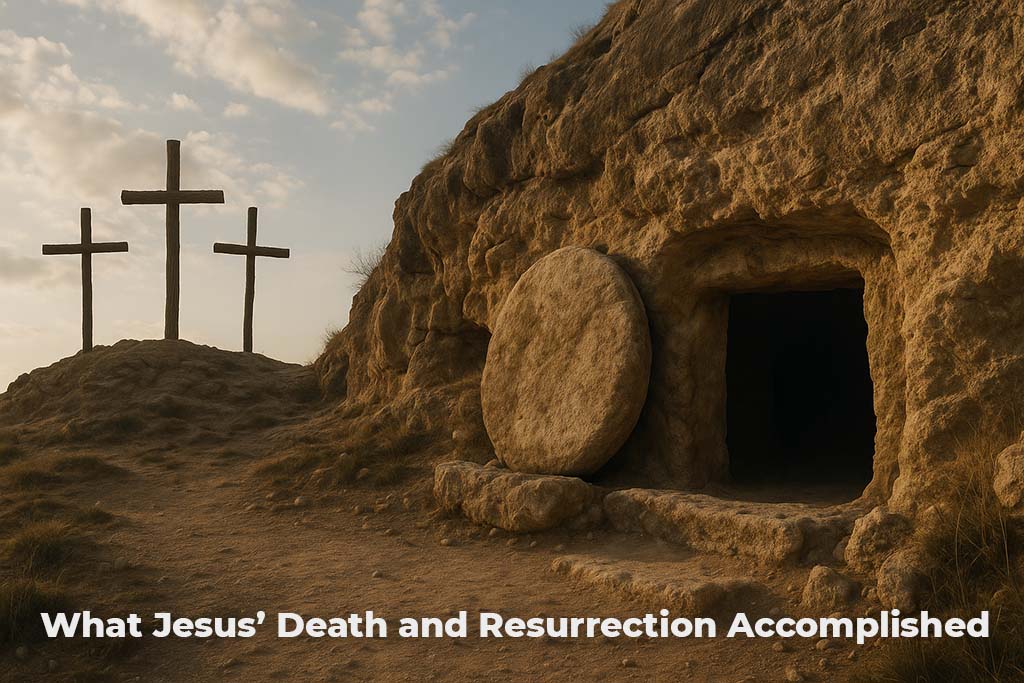
    In this passage, Jesus reveals His death and resurrection, was the ultimate act of sacrifice and fruitful surrender. It highlights the contrast between the pride of the fallen cherub and the humble journey of those who choose to follow Christ. By fully submitting to the will of the Father and dying on the cross, Jesus shows the path to true life. Likewise, when we die to ourselves, we gain eternal life, and in faithfully serving our Lord Jesus, we receive the honor that comes from the Father.

    Peter, in the words of Acts 3:6, declared, “I possess neither silver nor gold, but in the name of Jesus Christ, I offer you what I have.” Share this article freely, for you freely receive. Take note, underlines and highlights are clickable links for definitions or Bible references. Stay updated by heading to our about page and subscribe directly to receive notifications in your inbox. Blessings!

  • The Hypocrisy Virus: Be Careful Not to Catch It

    Passage in Scripture to ponder: 

    “In the meantime, when so many thousands of the people had gathered together that they were trampling one another, He (Jesus) began to say to His disciples first, “Beware of the leaven of the Pharisees, which is hypocrisy. Nothing is covered up that will not be revealed, or hidden that will not be known.” (Luke 12:1-2)

    The Bible, due to the hypocrisy of supposedly religious people, narrated these words of Jesus Christ: “Nothing is concealed that will not be revealed, nor is anything hidden that will not be known.” This phrase was recorded twice in Luke’s Gospel. In Luke 8, Jesus used this phrase after explaining the Parable of the Sower to His disciples (Luke 8:11-15). He then went on to say, “No one after lighting a lamp covers it with a jar or puts it under a bed, but puts it on a stand so that those who enter may see the light. For nothing is hidden that will not be made manifest, nor is anything secret that will not be known and come to light. Therefore, take care how you hear, for to the one who has, more will be given, and from the one who has not, even what he thinks he has will be taken away.” (Luke 8:16-18)

    Jesus Christ in this instance cautioned the disciples that if they had truly understood what He had taught them, then they were good soils, and they should live up to what they had learned and remained as such. However, if not, perhaps they were just pretentious, like the Pharisees. Jesus then assured them that whatever they thought they knew, had, or gained would be taken away from them. Clearly, this is judgment language. Conversely, if they had remained faithful to His Word, Jesus assured them that more would be given to them.

    Life’s challenges can either make or break an individual. As the saying goes, “The true color of the paint is only revealed after being stirred.” Similarly, our Christian walk would only be evident after we have steadfastly adhered to God’s word, even amidst hardships or blessings that life may bring.

    The Book of Proverbs emphasizes that every word of God is true and serves as a shield for those who seek refuge in Him. However, it cautions against adding to His words, as this may lead to God’s rebuke and be found a liar. The author of Proverbs presents two requests: to deny them not during his lifetime; that is, to remove falsehood and lying from his life. He also asks for neither poverty nor riches but only the food that is necessary for him, lest he become excessively satisfied and deny God or, conversely, become impoverished and resort to stealing, profaning the name of his God. (Proverbs 30:5-9)

    This proverb has been a guiding principle in my life since I became a Christian, especially now that I am a servant of God’s Word.

    The true blessing in life is to know Jesus Christ. Once we have known Him, we should yearn for an intimate relationship with Him. This intimacy is not achieved through our imagination or second-guessing of who Jesus is. Instead, we have the Bible, God’s revelation of Himself, Jesus Christ, and the Holy Spirit, which teach us about Him. 

    In John’s Gospel, Jesus said to Thomas, “I am the way, the truth, and the life. No one comes to the Father except through Me. If you had known Me, you would have known My Father also. From now on, you do know Him and have seen Him.” (John 14:6-7)

    If it weren’t for the Scriptures, we would be left questioning or debating without end about Jesus or the path to God the Father. We wouldn’t have the correct theology, knowing that the only way to the Father is through Christ Jesus, not through Mary or any other individual who was made a saint by a religious order. The Bible twice states, “There is a way that seems right to a man, but its end is the way to death” (Proverbs 14:12; 16:25). Wouldn’t it be ironic to discover the truth only after it was too late? This is the story of the Rich Man and Lazarus; check out Luke 16:19-31.

    In the Gospel of John, Thomas, at one point, did not have a proper theology of God and of Jesus Christ. He was confused, unable to relate to the circumstances at hand, after Jesus told them He alone is the way to the Father. Wouldn’t it be much more confusing today, now that Jesus no longer physically walks on Earth? No wonder we have different sects or denominations today. How would anyone desiring to believe in Jesus Christ discern which teachings are true? Isn’t proper theology then a must? 

    Scripture affirms that God continues to communicate with us, but only through His Son, Jesus Christ (Hebrews 1:1-2). However, this communication is no longer in His incarnated state or manifested in a theophany, but rather through His Word, the Bible. Scripture declares, “In the beginning was the Word, and the Word was with God, and the Word was God.” (John 1:1)

    If Thomas, who had the privilege of directly seeing and hearing from Jesus Christ, found it so difficult to comprehend, certainly wouldn’t it be so much more today without theology or proper teachings of the Bible? Especially in today’s digital age, where both true and false narratives are prevalent, how can we discern which one to believe? Isn’t it paramount that we grasp the fundamental principles of our faith? Paul emphasized that the sole foundation of Christianity lies in Christ Jesus (1 Corinthians 3:11), and this should be the guiding principle in building His church (1 Corinthians 3:9-10; Matthew 16:18; Ephesians 2:19-22). 

    In Luke 12, the second time Jesus used the phrase, “Nothing is covered up that will not be revealed, or hidden that will not be known (Luke 12:2)”, it can be interpreted in two ways. First, in conjunction with its immediate preceding context, Luke 12:1, Jesus was reassuring the disciples that the pretentious religiosity of the Pharisees, which they should avoid, would be exposed. On the other hand, it could also be that the disciples’ accurate proclamations of His Gospel would not be in vain (Luke 12:2-3). Consequently, although they might be in danger due to the Pharisaic evil influence and plots, they need not fear man (Luke 12:4-7). 

    As Christians, especially those who have the responsibility of sharing Christ Jesus full-time, we should not be hesitant or uncertain about what we confess, share, and teach. The reality of our faith and ministry profoundly impacts our eternity, and those who listens to us (1 Timothy 4:16). God is not a man who judges from a distance; He witnesses everything and comprehends the true state of our hearts. While some may deceive, as the Pharisees did during Jesus’ time, no one can outsmart God. 

    Being a doctor, engineer, architect, judge, or any other profession is a serious matter because it can be critical to one’s health or life. This is especially true for Christians, especially pastors or teachers of the Bible, because it involves not just this temporal existence but eternity. The Christian life and ministry are not just fancy things to do and discard without consequences. God judges our intentions, and He knows the true condition of our hearts, whether we are doing it for Him or for some other worldly reason. Paul declared, “Do you not know that you are God’s temple (i.e., the church) and that God’s Spirit dwells in you? If anyone destroys God’s temple, God will destroy him. For God’s temple is holy, and you are that temple. Let no one deceive himself. If anyone among you thinks that he is wise in this age, let him become a fool that he may become wise. For the wisdom of this world is folly with God. For it is written, ‘He catches the wise in their craftiness,’ and again, ‘The Lord knows the thoughts of the wise, that they are futile.’” (1 Corinthians 3:16-20)

    There’s a reason why Jesus advised His disciples to be wary of the influence of the Pharisees. It’s contagious and can spread rapidly, like a virus. Any professing Christian who has fallen into that state should seek God’s mercy and grace, hoping to be awakened before it’s too late. Yet, the irony of life is that regret is always too late. 

    Christians who are burdened to bring back their sliding brethren should do so with caution. Scripture said, “If another believer is overcome by some sin, you who are godly should gently and humbly help that person back onto the right path. And be careful not to fall into the same temptation yourself.” (Gal 6:1, NLT)

    Christians who have remained steadfast in God’s word should always be watchful, like in the pandemic days. We armed ourselves with preventive measures and distanced from those who have contracted COVID-19, especially the vulnerable. Since it’s easily transmissible, likewise Pharisaic trends, pretentious as they are, can be persuasive and pervasive, catching you flat-footed, compromising your faith and eternity. 

    Once again, I wrote this article in the spirit of Paul’s words in 2 Corinthians 2:4, with affliction, pain, and love for whoever it may concern.

    Peter, in the words of Acts 3:6, declared, “I possess neither silver nor gold, but in the name of Jesus Christ, I offer you what I have.” Share freely, for you freely receive. Stay updated by heading to our about page and subscribe directly to receive notifications in your inbox. Blessing!

    Note: All underlined or highlighted words can be clicked for definitions or Scripture references.