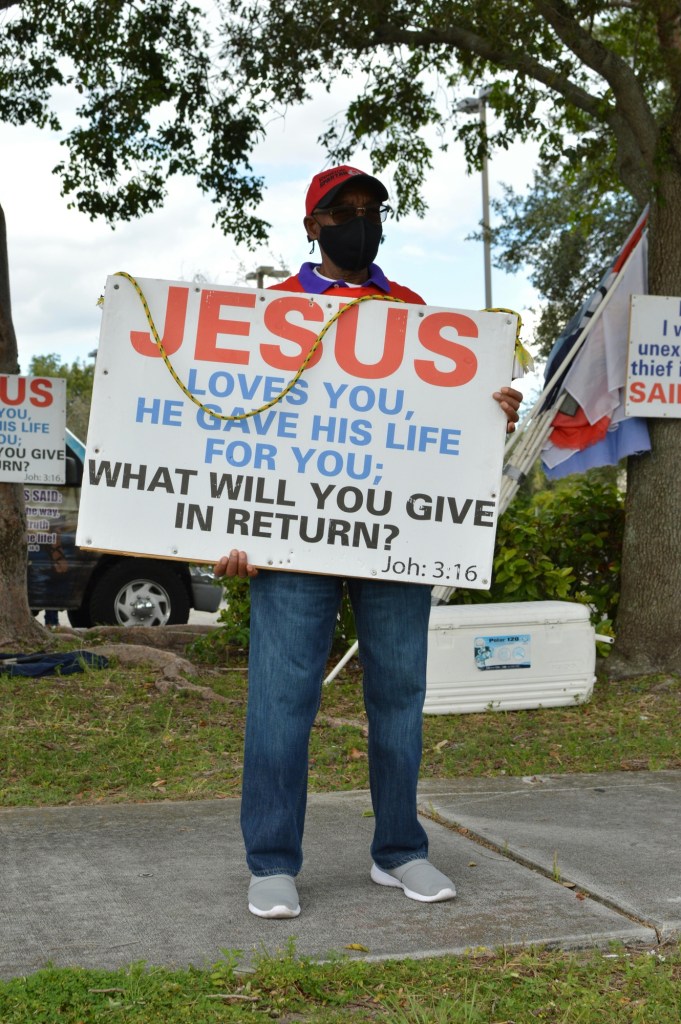
Tag: seeking truths

  • Priceless!

    Many people blame God when life becomes difficult, asking questions like, “Why did God allow this to happen?” Is God really uncaring? Did He create a miserable life for us?

    In the beginning, God created man, provided him with a suitable partner, and placed them in His garden. However, there was a condition: they were forbidden from eating the fruit from a particular tree. But Adam, humanity’s representative before God, chose to disobey the covenant. Consequently, troubles have plagued humanity ever since.

    The Bible recounts the first murder following their banishment from the garden and mentions how, as human populations grew, God observed their persistent wickedness. It states, “Every intention of the thoughts of man’s heart was only evil continually.” This contradicts the very intention of God in creation, as evident in Genesis 1:3-31, where each day of God’s work is described as good or very good.

    So, is it really God’s fault that humanity is in such a fallen state? Isn’t it rather a result of humanity’s own choices to reject God and His goodness?

    Despite humanity’s rebellion, God allows people to live until their physical lives come to an end. Only then does God take back the source of life from them. Ecclesiastes 12:7 states, “The dust returns to the earth as it was, and the spirit returns to God who gave it.”

    God alone is the source of life. When humanity attempts to govern itself, it faces the consequences of separation from God. He warned Adam, saying, “You may surely eat of every tree in the garden, but of the tree of the knowledge of good and evil you shall not eat, for in the day that you eat of it, you shall surely die” (Genesis 2:16-17). Adam’s spiritual or covenant death was a result of breaking that covenant. God does not revoke what He has given—the breath of life—until the physical body expires. Although God intended for humanity to live forever, as shown by the presence of the tree of life in the Garden of Eden, Adam and Eve were expelled from the garden because they lost their right to eternal life.

    God always provides for us. He reversed the curse on the ground that had made it unproductive due to Adam’s sin, as described in Genesis 3:16-19. However, this promise came after He had judged the world with the flood during Noah’s time. The LORD stated, “I will never again curse the ground because of man, for the intention of man’s heart is evil from his youth. Neither will I ever again strike down every living creature as I have done. While the earth remains, seedtime and harvest, cold and heat, summer and winter, day and night shall not cease” (Genesis 8:21-22).

    Remarkably, even after Adam’s curse, God’s purpose in creating humanity in His image remains unchanged. He promised the Seed of the woman. Hence, the Scriptures proclaim, “But when the fullness of time had come, God sent forth His Son, born of a woman, born under the law, to redeem those who were under the law, so that we might receive adoption as sons” (Galatians 4:4-5).

    This promise is not limited to those under the Mosaic Law but extends to everyone who believes in Jesus Christ. As Galatians 3:24-28 states, “So then, the law was our guardian until Christ came, in order that we might be justified by faith. But now that faith has come, we are no longer under a guardian, for in Christ Jesus you are all sons of God through faith. For as many of you as were baptized into Christ have put on Christ. There is neither Jew nor Greek, neither slave nor free, nor male and female; for you are all one in Christ Jesus.”

    In the beginning, God nurtured Adam and Eve in the garden, even after their expulsion from it. Scripture states that God made garments of skins and clothed them. Similarly, He cared for the Israelites during their time in the wilderness. God regarded Israel as a special nation among the nations until they rejected Christ Jesus. However, He was not surprised by Israel’s rejection of Him; it had been prophesied. In Genesis 3:15, God declared, “I will put enmity between you (the serpent) and the woman, and between your offspring and her offspring; He shall bruise your head, and you shall bruise His heel.” Christ Jesus was the promised offspring of the woman. In contrast, Old Covenant Israel is described as the offspring of the devil, as seen in John 8:44-45. Jesus addressed the unbelieving Jews, saying, “You are of your father the devil, and your will is to do your father’s desires. He was a murderer from the beginning and does not stand in the truth, because there is no truth in him. When he lies, he speaks out of his own character; for he is a liar and the father of lies. But because I tell the truth, you do not believe me.”

    John the Baptist had the same description for the unbelieving Jews, see Matthew 3:7, “But when he saw many of the Pharisees and Sadducees coming to his baptism, he said to them, ‘You brood of vipers! Who warned you to flee from the wrath to come?’”

    With the arrival of Christ Jesus, God extends His care to all who believe in Him, offering the gift of eternal life. All we need to do is believe and trust in God’s goodness. As Paul states in Romans, “What then shall we say to these things? If God is for us, who can be against us? He who did not spare His own Son but gave Him up for us all, how will He not also with Him graciously give us all things?” (Romans 8:31-32).

    Life in this world will not always be trouble-free. Everything tangible and physical is subject to corruption and decay. The Christian life is rooted in the spiritual, even as we live in the flesh. We are called to salvation and yet remain here on Earth because it is our mission to share the Gospel of Christ with others. This calling is not limited to being a missionary; it involves being part of God’s work and living accordingly. That is the true essence of Christianity. Therefore, let us cultivate a legacy of sharing the message of Jesus and His Gospel, so that others might also join us in eternal life.

    I urge all Christians to refrain from dividing ourselves over doctrinal differences. Let us humbly embrace the true teachings of the Bible and strive for unity in faith. Paul clearly states in Ephesians that Christianity comprises one body and one Spirit. We are called by one Lord, one faith, one baptism, and one God and Father of all (Ephesians 4:4-6).

    Understand the parables of Jesus: “The kingdom of heaven is like treasure hidden in a field, which a man found and covered up. Then in his joy he goes and sells all that he has and buys that field. ‘Again, the kingdom of heaven is like a merchant in search of fine pearls, who, on finding one pearl of great value, went and sold all that he had and bought it.’” (Matthew 13:44-46)

    The Gospel of Jesus Christ is the only gift that anyone can carry into eternity—God’s kingdom. Jesus proclaimed that the kingdom of heaven is here (Luke 17:20-21). We should learn from the Bible to understand that there is nothing more valuable than discovering God’s kingdom. It is truly priceless!

    Peter, in the words of Acts 3:6, declared, “I possess neither silver nor gold, but in the name of Jesus Christ, I offer you what I have.” Share this article freely, for you freely receive. Take note, underlines and highlights are clickable links for definitions or Bible references. Stay updated by heading to our about page and subscribe directly to receive notifications in your inbox. Blessing!

  • The Wedding Vow

    Recently, a friend from afar came to visit us. She inquired about my journey to becoming a pastor. To summarize my experience, I explained that I spent six years in an organized church, where I received a salary. However, for close to twelve years now, I have been serving independently, conducting Bible studies without a salary. Instead, I trust in God for voluntary contributions. She was amazed by God’s goodness and grace.

    Is it permissible for a pastor to engage in money-making ventures or be employed in secular work while also serving God? Paul addressed this question in 1 Corinthians 9:7-14.

    “Who serves as a soldier at his own expense? Who plants a vineyard without eating any of its fruit? Or who tends a flock without getting some of the milk? Do I say these things on human authority? Does not the Law say the same? For it is written in the Law of Moses, “You shall not muzzle an ox when it treads out the grain.” Is it for oxen that God is concerned? Does He not certainly speak for our sake? It was written for our sake, because the plowman should plow in hope and the thresher thresh in hope of sharing in the crop. If we have sown spiritual things among you, is it too much if we reap material things from you? If others share this rightful claim on you, do not we even more? Nevertheless, we have not made use of this right, but we endure anything rather than put an obstacle in the way of the gospel of Christ. Do you not know that those who are employed in the temple service get their food from the temple, and those who serve at the altar share in the sacrificial offerings? In the same way, the Lord commanded that those who proclaim the gospel should get their living by the gospel.” (1 Corinthians 9:7-14)

    Jesus told a person who wanted to follow Him, “Foxes have holes, and birds of the air have nests, but the Son of Man has nowhere to lay His head.” (Luke 9:58)

    We do not follow Jesus for material gains, but rather for forgiveness, restoration to God, and the gift of eternal life. This principle applies to everyone, including both pastors and disciples of Christ.

    Jesus warns those who wish to follow Him that it won’t be easy. It’s not a bed of roses; life’s challenges will still arise. He further emphasized this by telling another potential follower, “No one who puts his hand to the plow and looks back is fit for the kingdom of God.” (Luke 9:62)

    It’s ironic that many Christians often put Jesus or the Bible on the backseat when life’s troubles or even busyness arise. This is not a true way to follow Jesus Christ. Following Him can be summarized by the wedding vow: “I promise to be true to you in good times and in bad, in sickness and in health. I will love you and honor you all the days of my life.”

    Oddly, Jesus even states, “Whoever loves father or mother more than Me is not worthy of Me, and whoever loves son or daughter more than Me is not worthy of Me.” (Matthew 10:37)

    The journey of following Jesus is a narrow path with no other options. Hence, Jesus earlier in Luke 9 teaches: “If anyone would come after Me, let him deny himself and take up his cross daily and follow Me. For whoever would save his life will lose it, but whoever loses his life for My sake will save it.” (Luke 9:23-24)

    Doesn’t seem to have options there, do we? It requires a strong commitment to follow Him, regardless of the consequences or obstacles. Jesus Christ invites us, saying, “Come, follow Me,” with no qualifications or exceptions.

    During our Bible study, we often come across a passage in Scripture that leads to disagreement among some participants about its applicability to everyone. Consider Christ’s directive: “And Jesus, looking at him, loved him and said to him, ‘You lack one thing: go, sell all that you have and give to the poor, and you will have treasure in heaven; and come, follow Me.’” (Mark 10:21).

    Is this an isolated teaching in Scripture? It is not. Jesus, in Luke 12:33-34, teaches something similar that applies to all who wish to be His disciples: “Sell your possessions and give to the needy. Provide yourselves with moneybags that do not grow old, with a treasure in the heavens that does not fail, where no thief approaches and no moth destroys. For where your treasure is, there will your heart be also.” (Luke 12:33-34)

    The central message of Christ Jesus is not to demand that we sell all our possessions, but rather to emphasize that we should not love material wealth more than we love God. We need to place our hearts in the right position, as stated in Matthew 6:19-21. Jesus further explains, “No one can serve two masters; either he will hate the one and love the other, or he will be devoted to one and despise the other. You cannot serve God and money.” (Matthew 6:24)

    We should follow Jesus with full conviction and trust. Take some time to reflect on whether you can endure the journey of following Him. The cost may be high, but the reward is priceless—eternal entry into God’s kingdom. Remember that when we decide to follow Jesus Christ, we are bound by a sacred commitment, like a wedding vow.

    Peter, in the words of Acts 3:6, declared, “I possess neither silver nor gold, but in the name of Jesus Christ, I offer you what I have.” Share this article freely, for you freely receive. Take note, underlines and highlights are clickable links for definitions or Bible references. Stay updated by heading to our about page and subscribe directly to receive notifications in your inbox. Blessing!

  • What about Faith?

    Christians often find it challenging to understand God’s concept of faith. As mentioned in Hebrews 11:1, “Now faith is the assurance of things hoped for, the conviction of things not seen.” This means that faith is not based on what we can immediately perceive or touch. Instead, it relies on a steadfast belief in God’s truthfulness. Therefore, we trust that He cares for us and will fulfill His wonderful purpose for our lives—our salvation. Paul emphasizes this in Romans when he states, “What then shall we say to these things? If God is for us, who can be against us? He who did not spare His own Son but gave Him up for us all, how will He not also with Him graciously give us all things?” (Romans 8:31-32).

    “All things” encompasses the smaller aspects of life, such as our daily needs, in comparison to the “breath of life” that makes us living beings. Jesus Christ teaches us not to worry about these lesser things when he says, “Therefore I tell you, do not be anxious about your life—what you will eat or drink, or about your body—what you will wear. Is not life more than food, and the body more than clothing? Look at the birds of the air: they neither sow nor reap nor gather into barns, and yet your heavenly Father feeds them. Are you not of more value than they?” (Matthew 6:25-26)

    Christians, we should prioritize the truly important matters—specifically, eternal life. We must not compromise our faith in God out of fear over a lack of resources, which can lead us to become overly focused on the pursuit of money. This is why Jesus said, “No one can serve two masters; for either he will hate the one and love the other, or he will be devoted to the one and despise the other. You cannot serve God and money.” (Matthew 6:24)

    I have often found myself at a crossroad, deciding whether to follow God without knowing what lies ahead. The last time this happened was when my tenure as a pastor in a local church was unjustly ended. Although I completed my term, it was not renewed. I recall someone telling me that if I had just let things slide, I would still be the pastor of that church. However, I simply cannot compromise my faith in God and His Word. I chose to persist and trust Him to lead the way.

    Now, here I am, independently conducting Bible studies and writing about the truths concerning the faith. Just recently, I ran into one former church council member. I shared with him that stepping out to do ministry on my own has been a great blessing from God.

    Let us continuously be aware of the precious gift that God offers to everyone. As Paul states in Ephesians 2:8, salvation comes by grace through faith in Christ alone. Therefore, let’s persevere in our faith and diligently seek His kingdom and righteousness. Allowing a wrong to slide isn’t adhering to God’s righteousness, is it? Jesus teaches us that if we faithfully sought His kingdom and righteousness, all these other things— our daily provisions— will also be given to us (Matthew 6:33). This is essentially the message of Proverbs 10:22: “The blessing of the LORD makes rich, and He adds no sorrow with it.”

    Faith in Jesus Christ is at the center of Christianity. It is inconceivable, isn’t it, to have a faithless Christianity? Consequently, Hebrews 11:6 states, “And without faith it is impossible to please Him, for whoever would draw near to God must believe that He exists and that He rewards those who seek Him.”

    Peter, in the words of Acts 3:6, declared, “I possess neither silver nor gold, but in the name of Jesus Christ, I offer you what I have.” Share this article freely, for you freely receive. Take note, underlines and highlights are clickable links for definitions or Bible references. Stay updated by heading to our about page and subscribe directly to receive notifications in your inbox. Blessing!

  • It’s Priceless

    Many people blame God when life becomes difficult, asking questions like, “Why did God allow this to happen?” Is God really uncaring? Did He create a miserable life for us?

    In the beginning, God created man and provided a suitable partner for him. His only condition was that they should not eat the fruit from one specific tree. However, Adam, humanity’s representative before God chose to break this covenant. Since then, troubles have plagued humanity.

    The Bible recounts the first murder and mentions how, as human populations grew, God observed their ongoing wickedness. It states, “Every intention of the thoughts of man’s heart was only evil continually.”

    So, is it really God’s fault that humanity is in such a fallen state? Isn’t it rather a result of humanity’s own choices to reject God and His goodness?

    Despite humanity’s rebellion, God allows people to live until their physical lives come to an end. Only then does God take back the source of life from them. Ecclesiastes 12:7 states, “The dust returns to the earth as it was, and the spirit returns to God who gave it.”

    God alone is the source of life. When humanity seeks to govern itself, it incurs the consequences of separation from God. God warned Adam, saying, “You may surely eat of every tree in the garden, but of the tree of the knowledge of good and evil you shall not eat, for in the day that you eat of it, you shall surely die” (Genesis 2:16-17). Adam’s death was a consequence of him breaking the covenant. God does not take back what He has given—the breath of life—until the physical body expires. Although God intended for humanity to live forever, as evidenced by the presence of the tree of life in the Garden of Eden, but Adam and Eve were expelled from the garden because they lost their right to eternal life.

    Yet, God always provides. His purpose in creating humanity in His image cannot be denied. He promised the Seed of the woman—not just any woman. The Scriptures declare, “But when the fullness of time had come, God sent forth His Son, born of a woman, born under the law, to redeem those who were under the law, so that we might receive adoption as sons” (Galatians 4:4-5). This promise is not limited to those under the Mosaic Law but extends to everyone who believes in Jesus Christ. As Galatians 3:24-28 states, “So then, the law was our guardian until Christ came, in order that we might be justified by faith. But now that faith has come, we are no longer under a guardian, for in Christ Jesus you are all sons of God through faith. For as many of you as were baptized into Christ have put on Christ. There is neither Jew nor Greek, neither slave nor free, nor male and female; for you are all one in Christ Jesus.”

    God cared for Adam and Eve in the garden and similarly looked after the Israelites during their time in the wilderness. He considered Israel special among the nations until they rejected Christ Jesus. With the arrival of Christ, God extends that same care to all who believe in Jesus, but with the gift of eternal life. All we need to do is believe and trust in God’s goodness.

    Life in this world will not always be trouble-free. Everything tangible and physical is subject to corruption and decay. The Christian life is rooted in the spiritual, even as we live in the flesh. We are called to salvation and yet remain here on Earth because it is our mission to share the Gospel of Christ with others. This calling is not limited to being a missionary; it involves being part of God’s work and living accordingly. That is the true essence of Christianity.

    As we remember our deceased loved ones, we are reminded of our own fragility. One day, we too will be memories for others. However, when that day comes, we continue to exist and live in the presence of Jesus because we have believed in Him. Therefore, let us cultivate a legacy of sharing the message of Jesus and His Gospel, so that others might also join us in eternal life.

    The Bible states, “Precious in the sight of the LORD is the death of His saints.” (Psalm 116:15) The Gospel of Jesus Christ is the only gift anyone can bring with them into eternity. God’s gift of life is priceless!

    Peter, in the words of Acts 3:6, declared, “I possess neither silver nor gold, but in the name of Jesus Christ, I offer you what I have.” Share this article freely, for you freely receive. Take note, underlines and highlights are clickable links for definitions or Bible references. Stay updated by heading to our about page and subscribe directly to receive notifications in your inbox. Blessing!

  • “Great Power comes with Great responsibility.”

    Photo taken from CNN.com

    The article says, Ajoy, now 34, is one of a growing network of “ex-evangelicals” who have removed themselves from what they now view as the damaging beliefs of some evangelical, Pentecostal, and Baptist churches. She runs a popular TikTok account discussing faith and, among other things, the effects of traumatic religious experiences that can last for years – even a lifetime. Click to read the full article below.

    Scaring people into believing doesn’t work. It has resulted in people who claim to believe in Christ Jesus but wouldn’t endure for their faith. Their sole desire was to be raptured and escape the supposed seven years of tribulation that follow the rapture.

    Here is a short video explaining how the teaching about rapture came to exist.

    Paul, in his letter to the church, emphasized, “For it has been granted to you that for the sake of Christ you should not only believe in Him but also suffer for His sake, engaged in the same conflict that you witnessed I had and now hear that I still endure.” (Philippians 1:29-30)

    John, the apostle of Christ Jesus, was already facing tribulation. John in Revelation said, “I, John, your brother and partner in the tribulation and the kingdom and the patient endurance that are in Jesus, was on the island called Patmos on account of the word of God and the testimony of Jesus.” (Revelation 1:9) Yes, the tribulation that Jesus Christ taught in Matthew 24:9-14, which applies to His followers— Christians of John’s era.

    How can we be certain that this applies to the first-century Christians, particularly during John’s time? Jesus spoke of a Great Tribulation that would follow, as mentioned in Matthew 24:15-35. This refers to the Old Covenant Jews, specifically the destruction of the temple and city by the Romans.

    If you are not convinced, see the context of Matthew 24, leading to Christ’s teaching on the tribulation and great tribulation. Scripture in Matthew 24 told us: “Jesus left the temple and was going away, when His disciples came to point out to Him the buildings of the temple. But He answered them, ‘You see all these, do you not? Truly, I say to you, there will not be left here one stone upon another that will not be thrown down.’ As He sat on the Mount of Olives, the disciples came to Him privately, saying, ‘Tell us, when will these things be, and what will be the sign of your coming and of the end of the age?’” (Matthew 24:1-3)

    What age was ending? Jesus only spoke of two ages. Refer to Mark 10:29-30: “Jesus declared, ‘Truly, I say to you, no one who has forsaken home, brothers, sisters, mother, father, children, or possessions for my sake and for the gospel will not receive a hundredfold reward in this present age—houses, brothers, sisters, mothers, children, and possessions—along with persecutions. And in the age to come, eternal life.’”

    The present age that Jesus spoke of was the Old Covenant Age, while the age to come is the New Covenant, which we understand as the Church Age.

    One significant piece of evidence that the Old Covenant Age has ended is the absence of the Jewish temple. The Book of Hebrews illustrates this point, specifically in Hebrews 9:8-28. Let’s examine these passages to understand their proper teaching.


    First, the scripture teaches us that the Holy Spirit indicates that the way into the holy places is not yet opened as long as the first section (the temple) is still standing, which symbolizes the present age. (Hebrews 9:1-10)


    Next, from Hebrews 9:11-26:

    Under this arrangement, gifts and sacrifices are offered that cannot perfect the conscience of the worshiper; they only address food, drink, and various washings—regulations for the body imposed until the time of reformation. However, when Christ appeared as the High Priest of the good things that have come, He entered once for all into the holy places—not by means of the blood of goats and calves but by means of His own blood, thus securing an eternal redemption.

    If the blood of goats and bulls, and the sprinkling of defiled persons with the ashes of a heifer, can sanctify for the purification of the flesh, how much more will the blood of Christ, who through the eternal Spirit offered Himself without blemish to God, purify our conscience from dead works to serve the living God?

    Therefore, Jesus Christ is the mediator of a new covenant, so that those who are called may receive the promised eternal inheritance, because a death has occurred that redeems them from the transgressions committed under the first covenant. Where there is a will, the death of the one who made it must be established. A will takes effect only at death; it is not in force while the one who made it is alive. Thus, not even the first covenant was inaugurated without blood.

    When every commandment of the law was declared by Moses to all the people, he took the blood of calves and goats along with water, scarlet wool, and hyssop, and sprinkled both the book itself and all the people, saying, “This is the blood of the covenant that God commanded for you.” In the same way, he sprinkled the blood on the tent and all the vessels used in worship. Indeed, under the law, almost everything is purified with blood, and without the shedding of blood, there is no forgiveness of sins.

    Therefore, it was necessary for the copies of the heavenly things to be purified with these rites, but the heavenly things themselves required better sacrifices than these. For Christ has entered, not into holy places made with hands, which are copies of the true things, but into heaven itself, now to appear in the presence of God on our behalf.

    He did not need to offer Himself repeatedly, as the high priest enters the holy places every year with blood not his own; otherwise, He would have had to suffer repeatedly since the foundation of the world. But as it is, He has appeared once for all at the end of the ages (the term “aiōn” in Greek could be translated as “age,” not necessarily “ages”) to put away sin by the sacrifice of Himself.


    Lastly, Hebrews 9:27-28:

    Just as it is appointed for man to die once and after that comes judgment, so Christ, having been offered once to bear the sins of many, will appear a second time, not to deal with sin but to save those who are eagerly waiting for Him.


    The Christian church has lost its grip on truth. When will Christians wake up to realize that their primary mission is not simply to maintain the existence of the organized church? The means does not always justify the end. Christians should uphold the truths of the Bible. If believing in those truths causes some Christians to leave, so be it.

    We can learn from the story in John 6. Jesus Christ shared the truth about Himself with the Jews, but they found it strange and unacceptable. Scripture states, “When many of Christ’s disciples heard it, they said, ‘This is a hard saying; who can listen to it?’” Jesus, aware that His disciples were grumbling, responded, “Do you take offense at this? Then what if you were to see the Son of Man ascending to where He was before? It is the Spirit who gives life; the flesh is no help at all. The words that I have spoken to you are spirit and life” (John 6:60-63).

    Jesus went on to say: “This is why I told you that no one can come to Me unless it is granted him by the Father.” After this, many of His disciples turned back and no longer walked with Him. So Jesus said to the twelve, “Do you want to go away as well?” Simon Peter answered Him, “Lord, to whom shall we go? You have the Words of eternal life, and we have believed and have come to know that You are the Holy One of God.” Jesus answered them, “Did I not choose you, the twelve? And yet one of you is a devil.” He spoke of Judas, the son of Simon Iscariot, for he, one of the twelve, was going to betray Him. (John 6:65-71)

    Paul, in Romans 10:17, concluded his lengthy discourse on election, which began in Romans 9, by stating, “So faith comes from hearing, and hearing through the word of Christ.” God calls people through His Word. Jesus has earlier emphasized this concept in John 6:63, saying, “My Word is spirit and life.” This is the biblical manifestation of election, not a supernatural, random selection by God.

    Following the story of John 6, in another similar occasion, “Jesus said to Jews, “If God were your Father, you would love Me, for I came from God and I am here. I came not of My own accord, but He sent Me. Why do you not understand what I say? It is because you cannot bear to hear My WORD.” (John 8:42-43)

    Christianity revolves around Jesus Christ and His Word, nothing more and nothing less. I encourage fellow Christians to engage in a sincere study of God’s Word. There is a reason why believers should attend seminary and graduate before becoming pastors; this training equips them to teach from Scripture correctly.

    However, If they still cannot teach solely from the Bible, they should seek additional training to learn how to handle the Bible correctly, as instructed by the apostle Paul (2 Timothy 2:15).

    Let me remind everyone of what the apostle James said about us who teach from the Bible: “My brothers, not many of you should become teachers, for you know that we who teach will be judged more strictly.” (James 3:1)

    A lot of Christians desires to learn from the Bible. As the saying goes in a Spiderman movie, “With great powers comes great responsibility”, the same may be said of us who teach from the Bible. Jesus Christ said, “Can a blind man lead a blind man? Will they not both fall into a pit? A disciple is not above his teacher, but everyone when he is fully trained will be like his teacher.” (Luke 6:39-40)

    In Isaiah 30:20, the Bible promised, “And though the Lord give you the bread of adversity and the water of affliction, yet your Teacher will not hide Himself anymore, but your eyes shall see your Teacher.” Christ Jesus is the manifestation of God’s promised Teacher. Shouldn’t Christians seek to learn from Him alone? Jesus is the Word (John 1:14-17). He further emphasized in Luke 6:40 that we could emulate Him by comprehending God’s Word.

    Peter, in the words of Acts 3:6, declared, “I possess neither silver nor gold, but in the name of Jesus Christ, I offer you what I have.” Share this article freely, for you freely receive. Take note, underlines and highlights are clickable links for definitions or Bible references. Stay updated by heading to our about page and subscribe directly to receive notifications in your inbox. Blessing!

  • Hope Springs Eternal

    Photo taken from Cebu Daily News

    In these troubling times, it’s heartwarming to hear stories of human goodness. Here’s a link to a heartwarming tale of a stray dog finding a loving home in the US.

    The Bible said, “The wolf and the lamb shall graze together; the lion shall eat straw like the ox, and dust shall be the serpent’s food. They shall not hurt or destroy in all My holy mountain,” says the LORD.” (Isaiah 65:25)

    Let’s learn from this story of a stray dog. Many are struggling and may be falling into depression. All it took was a chance encounter with a stranger who was willing to extend a helping hand. The rest is up to us. If you responded positively to that opportunity, your chances of bettering yourself are now possible. However, never abuse a gracious offer. They only offer you a hand, not their entire person.

    Depression is the fear of being alone in your misery, but that’s never true. Scripture states, “Behold, the virgin shall conceive and bear a Son, and they shall call His name Immanuel” (which means, God with us – Matthew 1:23).” That’s Jesus Christ.

    In the Book of Revelation, the Bible proclaims, “And I heard a resounding voice from the throne declaring, ‘Behold, the dwelling place of God has come to man. He will reside among them, and they will be His people. God Himself will be with them as their God.’” (Revelation 21:3)

    The Jerusalem temple, the visible manifestation of the First Heaven and First Earth, has ceased to exist. This aligns with Jesus Christ’s teachings in Scripture, as it has passed away. For reference, check out Matthew 24:1-35.

    Paul, in his letter to the church of Corinth, declared, “Therefore, if anyone is in Christ, they have become a new creation. The old has passed away; behold, the new has come.” (2 Corinthians 5:17)

    The New Creation has been a constant presence since the arrival of Christ Jesus, marking the inauguration of God’s kingdom. (For Scripture references, see Luke 17:20-21 and Matthew 12:28.) Its fullness becomes a complete reality with the destruction of the Old Covenant Jewish temple. Jesus declared, “Destroy this temple, and in three days I will raise it up.” (John 2:19) Clearly, the temple about to be destroyed was the Jerusalem temple. Christ Jesus, along with His church, constitutes the New Temple (Ephesians 2:19-22 and Ephesians 5:23), which He established by His resurrection.

    Though it is sad that the organized church has mangled the image of God’s church. Often times, it becomes a stumbling block for people to believe the Gospel. Nevertheless, never be afraid to be alone, especially if you are truly a Christian.

    Regardless of what happens, God promises never to abandon or forsake us. As it says in Hebrews 13:5, “Keep your life free from love of money and be content with what you have, for he has said, ‘I will never leave you nor forsake you.’”

    Scripture also warns that “the love of money brings trouble” (1 Timothy 6:10). Instead, seek God’s blessings, as it says in Proverbs 10:22, “The blessing of the LORD makes rich, and he adds no sorrow with it.”

    There is hope in humanity, after all. God’s goodness shines through in the hearts of those who are always ready to care and help. However, they must embrace the Gospel. Ephesians 2:8-9 emphasizes, “For by grace you have been saved through faith. It is not your own doing; it is the gift of God, not a result of works, so that no one may boast.”

    Share the Gospel, but do not imposed rules, regulations, or practices that are not explicitly taught in Scripture. The Bible intended God’s church to be a community, not an organization.

    Peter, in the words of Acts 3:6, declared, “I possess neither silver nor gold, but in the name of Jesus Christ, I offer you what I have.” Share this article freely, for you freely receive. Take note, underlines and highlights are clickable links for definitions or Bible references. Stay updated by heading to our about page and subscribe directly to receive notifications in your inbox. Blessing!

  • Find Your Way

    Inspired by the teachings of Jesus, we must prioritize reaching out to those who are lost rather than getting distracted by the many. If you understand the parable of the lost sheep (Luke 15:1-7), you’ll see my point.

    In Luke 15:1-7, it is important to correctly identify the characters in the story. The religious leaders criticized Jesus for associating with tax collectors and sinners. In the context of Luke, the term “sinners” does not literally refer to lawbreakers; rather, it pertains to Galileans, specifically the ten lost tribes of Israel (as mentioned in Luke 13:1-2).

    To illustrate this point, let’s consider the third parable in Luke 15, which specifically addresses the Pharisees. The Pharisees are depicted by the self-righteous elder son in the parable of the “Two Sons” (Luke 15:11-32). The ten lost tribes, on the other hand, are represented by the lost son, who in the parable was warmly welcomed back by his father after seeking forgiveness from both God and his father (Luke 15:21). Additionally, Jesus, when sending out His disciples, instructed them to go nowhere among the Gentiles or enter any town of the Samaritans, but rather to seek out only the lost sheep of the house of Israel (Matthew 10:5-6).

    So similarly, in Luke 15:1-7, the ninety-nine sheep in the open country symbolize the Pharisees and the two tribes of Israel—Judah and Benjamin—that remained in covenant with God after Solomon’s kingdom was divided, as noted in 1 Kings 12:21-24. Moreover, it’s important to mention that only those from the tribes of Judah and Benjamin were involved in the first rebuilding of the temple (Ezra 1:5, 4:1). The one lost sheep represents the ten lost tribes of Israel, whom the Pharisees regarded as sinners. This is reminiscent of Hosea 11:12, which states, “Ephraim has surrounded Me [God] with lies, and the house of Israel with deceit, but Judah still walks with God and is faithful to the Holy One.” Additionally, tax collectors, viewed as traitors by the Jews for collecting taxes on behalf of Rome, are also classified among these so-called sinners.


    Ephraim became the leading tribe of the northern kingdom (Joshua 17:15Judges 3:27), and the capital, Samaria, was located in Ephraim’s territory. In fact, Scripture sometimes refers to Israel as simply “Ephraim,” due to the size of the tribe (e.g., Isaiah 11:13 and Jeremiah 31:6). – Excerpt from GotQuestions.Org.


    Consequently, always let Scripture be our guide in matters of the church. Before leading someone to Christ Jesus, it’s crucial to acknowledge the current state of the church. Our predicament arises from the fact that Christians primarily relied on writings from early church fathers rather than Scripture. When we examine the history of the church, we tend to focus on the Reformation period and beyond. Instead of the Book of Acts, which chronicles the birth of the church, we concentrate on human writings. In essence, as long as Christians continue to study human writings, the doctrines of Jesus Christ will remain elusive and subject to ongoing debates.

    Considering the various requirements, practices, and regulations in modern Christianity, one could argue that the church resembles the Sanhedrin of Jesus’ time. The Jewish religious authorities had traditions and customs that often diverged from God’s Word. In Mark 7:1-13, Christ makes a crucial point when He says, “You leave the commandment of God and hold to the tradition of men” (Mark 7:8). It’s no surprise that today, churches engage in debates about issues like the method of water baptism, forms of church governance, and other practices that are not clearly outlined in Scripture.

    However, we know that repentance is explicitly a prerequisite for baptism. This raises an important question: Why is there so much controversy surrounding infant baptism? Can an infant genuinely repent before being baptized? I think it’s possible that the Reformation’s doctrine of infant baptism was just a response to the Roman Catholic practice of baptism of infants or children. These questions reflect the troubling state of modern Christianity.

    A call to return to the traditions of the Reformation does not necessarily lead to a genuine return to the roots of Christianity. Instead, a true effort to revisit the traditions of the early Church should focus on the teachings found in the Book of Acts. This represents the real essence of “Scripture alone.” Unfortunately, this essence has been obscured by interpretations that incorporate the traditions, practices, and opinions of the early Church fathers. Although proponents may deny it, this approach effectively equates the Bible with the teachings of the Church fathers.

    Moving forward, instead of focusing on reconstructing the current state of the church, let’s begin anew. Many have attempted a second Reformation, but it’s time to start from the beginning. Instead of relying solely on human-created discipleship materials, we should prioritize studying the Bible deeply. The principles of discipleship are clearly outlined in the Gospels by Christ Jesus, Acts, and letters attributed to the immediate apostles of our Risen Lord.

    It is essential to first learn how to properly interpret Scripture. Remember, God is the true author of each book of the Bible, which means there can only be one correct interpretation of Scripture. It is irresponsible to second-guess the Bible. Our duty is to study and learn so that we can effectively teach the Bible.

    You don’t need to study in seminary to learn how to interpret Scripture properly; this can be done through our online Bible study sessions. However, I wonder how many people are truly interested.

    Nevertheless, for those who yearn to learn, find your way. With a will, there’s always a way. It’s not about not understanding Scripture, it’s about indifference.

    Many years ago, while I was still contemplating entering seminary training, these passages in Scripture guided my decision-making. The Bible said, “And though the Lord give you the bread of adversity and the water of affliction, yet your Teacher will not hide Himself anymore, but your eyes shall see your Teacher. And your ears shall hear a word behind you, saying, ‘This is the way, walk in it,’ when you turn to the right or when you turn to the left.” (Isaiah 30:20-21) There is no other way to the truth except by the Word of Jesus Christ, our Teacher.

    Lastly, as I mentioned earlier, it’s important to start fresh. Focus on reaching out to those who are not already part of conventional Christianity. Take inspiration from the Bible, specifically Acts 18:5-6, which states, “When Silas and Timothy arrived from Macedonia, Paul was occupied with the word, testifying to the Jews that the Christ was Jesus. When they opposed and reviled him, he shook out his garments and said to them, ‘Your blood be on your own heads! I am innocent. From now on, I will go to the Gentiles.’”

    It can be challenging to change deeply ingrained habits or beliefs. Just as some faced risks in the synagogues (as noted in John 9:18-23), many who are entrenched in conventional beliefs may resist new ideas. Therefore, it’s crucial to share the Gospel with those outside of conventional Christianity. Once they have discovered the truth, it will be difficult for anyone to convince them otherwise.

    However, do not completely disregard those who are part of conventional Christianity but are genuinely seeking the truth. Individuals with a sincere passion for the Bible will respect the Scriptures and be open to learning. They just need proper guidance along the way.

    The church’s mandate is not to develop methods that make the Gospel more appealing to the majority. Instead, our responsibility is to teach the truths of the Bible, regardless of the consequences. We do not serve Jesus Christ while seeking the approval of our peers. Rather, we are called to be faithful to the Chief Shepherd of God’s flock (1 Peter 5:4; Matthew 24:31-46). Unfortunately, when it comes to the matter of Christ’s return, many churches have become like the “boy who cried wolf.” If you understand what I mean, bless you!

    Peter, in the words of Acts 3:6, declared, “I possess neither silver nor gold, but in the name of Jesus Christ, I offer you what I have.” Share this article freely, for you freely receive. Take note, underlines and highlights are clickable links for definitions or Bible references. Stay updated by heading to our about page and subscribe directly to receive notifications in your inbox. Blessing!

  • Heal the World

    This morning, I was listening to some music, then a cover song on Michael Jackson’s “Heal the World” started to play. I was immediately reminded by its message, which I summarized as “love is all that is needed to make the world a better place for everyone”. True enough, don’t you think?

    Christ Jesus came to the world to redeem people for Himself. He’s not in the business of picking and choosing, but an honest offer for salvation. However, along with salvation, His aim is for us Christians to be bearers of the Gospel, precisely with the goal of making His created world a place of joy and gladness. (Isaiah 65:17-25)

    However, the irony is, and it cannot be denied, that there are people who claim to be Christians and yet, they didn’t live in love. They didn’t care for each other, or do God’s work without selfish motivations. Scripture said, “Love is patient and kind; love does not envy or boast; it is not arrogant or rude. It does not insist on its own way; it is not irritable or resentful; it does not rejoice at wrongdoing, but rejoices with the truth. Love bears all things, believes all things, hopes all things, endures all things.” (1 Corinthians 13:4-7)

    I have known people who have always been part of missions work, presenting themselves as loving, faithful servants of the Lord. Yet, they connived to demean people that call for accountability. Churches collect people’s money; hence, every cent given ought to be accounted for. Nobody is outright accused of any wrongdoing. But why so secretive about money collected and left unused? Is there anything wrong with calling for accountability?

    Without kindness, selflessness, and truth, there can be no real love. What is the best testament of a Christian? James explained, “What good is it, my brothers, if someone says he has faith but does not have works? Can that faith save him? If a brother or sister is poorly clothed and lacking in daily food, and one of you says to them, ‘Go in peace, be warmed and filled,’ without giving them the things needed for the body, what good is that? So also faith by itself, if it does not have works, is dead. But someone will say, ‘You have faith and I have works.’ Show me your faith apart from your works, and I will show you my faith by my works.” (James 2:14-18)

    Christ Jesus has done His redemptive work, offering everyone an opportunity to be His people. And yet, some have claimed faith and yet remained unconverted. They loved the world more than people. They loved riches more than truth. They loved fame more than Jesus Christ. Hence, Scripture said, “For people will be lovers of self, lovers of money, proud, arrogant, abusive, disobedient to their parents, ungrateful, unholy, heartless, unappeasable, slanderous, without self-control, brutal, not loving good, treacherous, reckless, swollen with conceit, lovers of pleasure rather than lovers of God, having the appearance of godliness, but denying its power. Avoid such people.” (2 Timothy 3:2-5)

    Anyone who finds themselves identified in 2 Timothy 3:2-5 ought to repent and change. Verbal confession of faith does not count; real change involves the heart, mind, and action. The last commandment of Jesus Christ to His disciples before crucifixion was to “love one another”. See Scripture, Jesus Christ told His disciples, “A new commandment I give to you, that you love one another: just as I have loved you, you also are to love one another. By this all people will know that you are My disciples, if you have love for one another.” (John 13:34-35)

    Israel was called to be God’s people so that they may be the light and salt of the world. They were supposed to bring all nations to God. Yet, they failed miserably due to self-righteousness. Do you not see people who professed to be Christians doing the same? Of course, I do not mean everyone. But it has become hard to distinguish real Christians from pretenders unless you spend time with them. However, by the time you discover who’s who, controversy would have already erupted. That’s the sad reality of our present Christianity. 

    In my almost three decades of being a Christian, it’s ironic, but sometimes I have found people outside our faith to be more loving, caring, and understanding. If my personal experience reflects the true state of modern Christianity, how then can the church be effective in bringing people to the faith, and not be a stumbling block later? 

    I thank God for His grace, that despite all the ugly experiences we’ve had as Christians, my children didn’t stumble in their faith. But how many have been similarly hurt and have left the faith? Shouldn’t those who caused it be accountable to Christ Jesus? Jesus Christ said, “But whoever causes one of these little ones who believe in Me to sin, it would be better for him to have a great millstone fastened around his neck and to be drowned in the depth of the sea.” (Matthew 18:6)

    Sadly, I don’t see such people repentant. Instead, they continue with their lies and propaganda just to make themselves right in their own eyes. Reminiscence of Judges, don’t you think? (Judges 17:6) I sincerely hope they one day repent and change.

    So I found Christianity today falling short on two fronts: first, they teach a lot of traditions but not necessarily doctrines of the Bible; second, it’s difficult to find true and honest love among Christians. Both shortcomings are condemned by Jesus Christ in Revelation 2-3.

    My family and I are always thankful to Christians we encountered at our home church. Not that everyone is true. But we have experienced unconditional love from some brethren then and even today. 

    The same may be said of some Christians here who have become our friends. We are forever grateful for their love, most especially when times are rough for us. 

    However, I dare not make a ratio of who’s who; else I find it discouraging. Instead, I remain hopeful that God indeed has His people everywhere. 

    Same as in life, we get to know real friends only when we’re down and alone. That’s also the sad reality of modern Christianity. But to be fair, an honest evaluation of the church post-apostles’ time would reveal it’s no different from today. But should Christians be complacent and make that an excuse and remain lacking?

    This blog is not meant to condemn or rebuke anyone. Rather, I hope to awaken people to the reality that confession of faith should come with a change of heart, mind, and action. How can the church truly be agents to heal the world if there is no real love and compassion for the suffering and lost? The real essence of love is God and Christ Jesus. The Bible said, “God shows His love for us in that while we were still sinners, Christ died for us.” (Romans 5:8) The Bible in 1 John 4:19 declares, “We love because God first loved us”.

    Peter, in the words of Acts 3:6, declared, “I possess neither silver nor gold, but in the name of Jesus Christ, I offer you what I have.” Share this article freely, for you freely receive. Take note, underlines and highlights are clickable links for definitions or Bible references. Stay updated by heading to our about page and subscribe directly to receive notifications in your inbox. Blessing!

  • The Sacred Ministry of Divine Calling and Generosity

    One clear principle we learned from Christ Jesus and His call to His apostles is that it involves individuals, not the entire family. While some of the disciples were siblings, each chose to follow Jesus Christ by their own volition. Christ even warned His disciples, saying, “And a person’s enemies will be those of his own household.” (Matthew 10:36) As we can see, even His own human family was not supportive of His work at the onset of Christ’s ministry (see Mark 3:20-21; John 7:2-5).

    In our modern times, we witness couples who actively partner in ministry, each having made a conscious decision to serve Christ Jesus. Another notable example is when children later follows in the footsteps of their pastor-father. This is commendable if they have received proper guidance and have embraced God’s calling. However, it is crucial to emphasize that coercing children into joining our ministry is not advisable. They should serve Christ Jesus willingly, not because we pastor-fathers have imposed it upon them. As Christ reminds us, “Come, follow Me.” It is Jesus who calls, not through coercion of men. 

    Scripture proclaims, “Jesus is the same yesterday, today, and forever” (Hebrews 13:8). God’s methodology for ministry remains unchanged; it’s Christians who have reinvented new concepts of ministry work.

    Jesus Christ commanded, “You received without paying; give without pay. Acquire no gold, silver, or copper for your belts, no bag for your journey, or two tunics or sandals or a staff, for the laborer deserves his food. And wherever you enter a town or village, find out who is worthy and stay there until you leave” (Matthew 10:8-11).

    Have you noticed the phrase “the laborer deserves his food”? This principle was emphasized in Paul’s letters, particularly in 1 Corinthians 9:4-14, Galatians 6:6-7, and 1 Timothy 5:17-18. Christians who understand the Lord’s ministry support God’s servants willingly. As servants of the Word, we should uphold the same principles and procedures. Go forth and perform God’s work with confidence in His unwavering truthfulness to His Word. Just as God demonstrated His faithfulness through acts like providing for Elijah during the famine, offering Abraham a sacrifice to spare Isaac’s life, and countless other acts, we too can trust in God’s provision.

    If servants of the Word cannot trust God’s Word for sustenance, how can we effectively teach people about faith? 

    So, I challenge God’s workers who are struggling to embark on God’s ministry, because they fear the lack of provision. In Joshua 3, the Israelites carrying God’s ark of the covenant reached the Jordan River. The water receded, allowing the priest and all of Israel to cross over. However, before the water receded, God’s people ought to trust His Word that it would happen. As He had stipulated, they should take – that step of faith – so as soon as they stepped into the water, and it immediately receded. See Joshua 3:7-17. 

    “The LORD said to Joshua, ‘Today I will begin to exalt you in the sight of all Israel, that they may know that, as I was with Moses, so I will be with you. And as for you, command the priests who bear the ark of the covenant, “When you come to the brink of the waters of the Jordan, you shall stand still in the Jordan.” And Joshua said to the people of Israel, ‘Come here and listen to the words of the LORD your God.’ And Joshua said, “Here is how you shall know that the living God is among you and that He will without fail drive out from before you the Canaanites, the Hittites, the Hivites, the Perizzites, the Girgashites, the Amorites, and the Jebusites. Behold, the ark of the covenant of the Lord of all the earth is passing over before you into the Jordan. Now therefore take twelve men from the tribes of Israel, from each tribe a man. And when the soles of the feet of the priests bearing the ark of the LORD, the Lord of all the earth, shall rest in the waters of the Jordan, the waters of the Jordan shall be cut off from flowing, and the waters coming down from above shall stand in one heap.” So when the people set out from their tents to pass over the Jordan with the priests bearing the ark of the covenant before the people, and as soon as those bearing the ark had come as far as the Jordan, and the feet of the priests bearing the ark were dipped in the brink of the water (now the Jordan overflows all its banks throughout the time of harvest), the waters coming down from above stood and rose up in a heap very far away, at Adam, the city that is beside Zarethan, and those flowing down toward the Sea of the Arabah, the Salt Sea, were completely cut off. And the people passed over opposite Jericho. Now the priests bearing the ark of the covenant of the LORD stood firmly on dry ground in the midst of the Jordan, and all Israel was passing over on dry ground until all the nation finished passing over the Jordan.”

    Remember this from the moment you start serving God: “It is God who calls, and He alone provides.” Therefore, instead of asking for pledges for ministry support, trust in God’s timely provision.

    You might wonder, “How can people support my ministry if they do not know who I am or what I do?” Christ Jesus teaches His disciples by saying, “Whenever you enter a house, first say, ‘Peace be to this house!’ If a person of peace is there, your peace will rest upon them; if not, it will return to you. Stay in that same house, eating and drinking what they provide, for the laborer deserves their wages. Do not move from house to house. When you enter a town and are welcomed, eat whatever is set before you.” (Luke 10:5-8)

    Let me be clear: Christ does not teach us, pastors, to take advantage of gracious Christians. Instead, Jesus imparts His principles of serving and giving. Paul articulates this clearly in Galatians 6:6-7: “Let the one who is taught the word share all good things with the one who teaches. Do not be deceived: God is not mocked, for whatever one sows, that will he also reap.”

    It’s important to express gratitude to those who support our ministry. However, we must remember that it is God who inspires them to give. Just as we are called to be God’s servants, they are also fulfilling their role in the act of grace. Ultimately, all good things come from Him!

    As evident in John’s letter to the church, “Dear friend, you are being faithful to God when you care for the traveling teachers who pass through, even though they are strangers to you. They have told the church here of your loving friendship. Please continue providing for such teachers in a manner that pleases God. For they are traveling for the Lord, and they accept nothing from people who are not believers. So we ourselves should support them so that we can be their partners as they teach the truth.” (3 John 1:5-8 NLT)

    If you read the entirety of 3 John, it is clear that those who hinders Christians from extending aids to God’s workers were deemed evil workers (3 John 9-12).

    Paul taught Christian about giving, which he referred to as the act of grace (2 Corinthians 8:1-7). We should likewise teach this to others, but I want to emphasize that we should teach, not demand or worse, scare them into giving.

    Christ Jesus Himself did not always multiply bread and fish. In fact, He never did it for His own sustenance, even during the 40 days of temptation by the devil. Instead, He demonstrated unwavering trust in God. Jesus Christ exemplified His principle on serving God and giving, as He had taught, as seen in Luke 8:1-3.

    “Soon afterward Jesus went on through cities and villages, proclaiming and bringing the good news of the kingdom of God. And the twelve were with Him, and also some women who had been healed of evil spirits and infirmities: Mary, called Magdalene, from whom seven demons had gone out, and Joanna, the wife of Chuza, Herod’s household manager, and Susanna, and many others, who provided for them out of their means.”

    Hence, Paul teaches the same, saying, “So we, though many, are one body in Christ, and individually members one of another. Having gifts that differ according to the grace given to us, let us use them: if prophecy, in proportion to our faith; if service, in our serving; the one who teaches, in his teaching; the one who exhorts, in his exhortation; the one who contributes, in generosity; the one who leads, with zeal; the one who does acts of mercy, with cheerfulness.” (Romans 12:5-8)

    As the body of Christ, Christians are called to endure and work together for the advancement of the Gospel. Each of us should faithfully fulfill our calling, gift, or role. We are all in this together, as the Bible teaches us about the ministry of partnerships. 

    According to the Bible, God not only calls individuals to the ministry but He also inspires others to give, making them partners in His work—fellow workers for the truth (3 John 5-8). Therefore, responding to God’s calling and the act of grace or giving both require trust in Him.

    In Scripture, giving to God’s workers is intended to be a direct act rather than a process where funds are collected and then distributed, a concept that has emerged only in modern Christianity. Unfortunately, this contemporary approach can sometimes be exploited to control and manipulate pastors for coercive or political purposes. It’s also not a secret that some organizations that collect funds for mission work have been associated with irregularities. The Bible teaches us to give directly to God’s workers (Galatians 6:6-7; 1 Corinthians 9:14; 3 John 5-8; 2 Corinthians 8:23-24).

    In the book of Philippians, Paul expressed his gratitude to the Philippians for the gift they sent him. At the time, he was imprisoned in Rome, and their support was delivered by an emissary. Paul described their contributions as a fragrant offering to God and, in response, offered them a prayer for God’s blessings. ( see Philippians 4:10-20)

    Hence, just as there is a corresponding reward for God’s faithful workers, the same may be said for Christians who excel in the act of giving. (see 1 Corinthians 3:8,14; 2 Timothy 4:6-8; 1 Peter 5:1-4; Matthew 10:40-42; Matthew 25:34-40; Philippians 4:18-19; 2 Corinthians 8:13-15; 2 Corinthians 9:6-15).

    Therefore, everything should be done with confidence in God, in accordance with the Scriptures’ teachings. Christian workers respond to God’s call to glorify Him. Those who participate in the act of grace do so to glorify God’s work. So borrowing from Paul’s words, “So, whether you eat or drink, or whatever you do, do all to the glory of God.” (1Co 10:31)

    Christians, let us all adhere to the principles taught in Scripture. God’s ministry is sacred, and the sanctity of His work is of utmost importance to Him and to us as well.

    This is the first and only article I wrote that deals with the act of grace. Take it as a teaching on God’s call and giving, and not for the purpose of solicitation, but for God’s glory. Peter, in the words of Acts 3:6, declared, “I possess neither silver nor gold, but in the name of Jesus Christ, I offer you what I have.” Share this article freely, for you freely receive. Take note, underlines, and highlights are clickable links for definitions or Bible references. Stay updated by heading to our about page and subscribe directly to receive notifications in your inbox. Blessing!

  • Is Hebrews 10:25 truly referring to Sunday gatherings of Christians?

    EXPOSITION

    Westminster Confession of Faith, chapter 26, section 2 states that “saints, by profession, are obligated to maintain a holy fellowship and communion in worshiping God and performing other spiritual services that contribute to their mutual edification. They are also encouraged to assist each other in practical matters, according to their abilities and needs. This communion, as God provides the opportunity, should be extended to all who call upon the name of the Lord Jesus, regardless of location.” (For reference, click on this link: WCF 26.2, search the table of contents, then go to chapter 26, section 2, and look also for the annotation to Hebrews 10:24-25.)

    The doctrine presented here is not exclusive to Reformed Christians. Many Christians and preachers have misinterpreted and wrongly applied the text in Scripture, believing that Hebrews 10:24-25 emphasizes the significance of Christian gatherings, particularly Sunday gatherings. However, this is not the intended teaching of Hebrews 10:24-25. Read the passage here: “And let us consider how to encourage one another to love and good works, not neglecting to meet together, as is the habit of some, but rather encouraging one another, especially as you see the Day approaching.”

    The phrase “meet together” (Greek: episunagōgē, G1997) appears only twice in the New Testament. It specifically refers to the gathering that will occur upon the return of Christ Jesus. The other instance is found in 2 Thessalonians 2:1, where Paul states, “Now concerning the coming of our Lord Jesus Christ and our being gathered together—which is the same in Greek as ‘meet together’ in Hebrews 10:25—to him, we ask you, brothers.” Here, Paul urges Christians of his day to recognize the truth that Christ’s return is imminent within their generation. Note that Hebrews 10:25 emphasizes, “especially as you see the Day—i.e., the Day of gathering togetherapproaching or drawing near.”

    The term “Day” in verse 25 specifically refers to the Day of the Lord, as evidenced by various biblical passages such as Acts 2:20, 1 Corinthians 5:5, 1 Thessalonians 5:2, 2 Thessalonians 2:2, and 2 Peter 3:10. Contrary to popular belief, it does not denote Sunday but rather the Second Coming, Christ’s Day of Judgment, and the gathering of the church to be with Jesus (refer to 1 Thessalonians 4:16-17).

    Consequently, Hebrews 10:25 emphasized two significant truths: God’s impending Day of judgment and the gathering of believers to be with the Lord Jesus Christ—both happening at once. In the succeeding verses, Scripture therefore states, “For if we go on sinning deliberately (i.e., ignoring ‘the Day of the Lord’) after receiving the knowledge of the truth, there no longer remains a sacrifice for sins, but a fearful expectation of judgment, and a fury of fire that will consume the adversaries” (Hebrews 10:26-27).

    Clearly, salvation and Christ’s Second Coming are not two separate teachings, as many Christians believe, but are intertwined together. This is evident in Hebrews 9:28. Hence, there isn’t a major doctrine—salvation—and the latter a minor one after all.

    ADMONITION

    Sadly, many preachers fail to study Scripture diligently before preaching, leading to a misinterpretation of God’s teachings. Preaching should not be about eloquence alone but rather a truthful presentation of God’s Word. As Paul emphasized, “For Christ did not send me to baptize but to preach the gospel, and not with words of eloquent wisdom, lest the cross of Christ be emptied of its power.” (1 Corinthians 1:17)

    This is why I continuously urge Christians to resist human-written statements, such as Westminster Confessions of Faith, or any other creeds by so-called early church fathers or of the Reformation, but to study the Bible, interpreting Scripture with Scripture.

    Christian churches should stop repeating the mistake of history. Do not falsely use Scripture just to accomodate persisting practices or traditions. Paul clearly teaches that the bedrock of the church is Christ Jesus, together with His teachings (1Co 3:11).

    Jesus Christ said, “Everyone then who hears these words of mine and does them will be like a wise man who built his house on the rock. And the rain fell, and the floods came, and the winds blew and beat on that house, but it did not fall, because it had been founded on the rock. And everyone who hears these words of mine and does not do them will be like a foolish man who built his house on the sand. And the rain fell, and the floods came, and the winds blew and beat against that house, and it fell, and great was the fall of it.” (Mat 7:24-27)

    Keep in mind that “Jesus is Rock” (1 Corinthians 10:4), the “cornerstone of the church, the house” (Ephesians 2:19-20; 2 Timothy 2:20).

    Jesus Christ declared, “And I also say to you that you are Peter, and on this Rock I will build My church, and the forces of Hades will not overpower it” (Matthew 16:18). In this context, the Rock, as in 1 Corinthians 10:4, refers to Christ. Jesus was therefore referring to Peter’s confession about Him, “You are the Christ, the Son of the living God” (Matthew 16:16). According to Christ’s teachings, only the church built on His Word can overcome Hades or death and have eternal life. Which one have we been building? The one on the “rock” or, hopefully not, the sand?

    Paul warned, “If anyone destroys God’s temple (another term in Scripture referring to the church), God will destroy him. For God’s temple is holy, and you are that temple.” (1Co 3:17)

    I suppose that’s a fair warning from the Bible. Consequently, James advised, “My brothers, not many of you should become teachers, for you know that those who teach will be judged more strictly.” (James 3:1)

    It is both a privilege and a daunting responsibility to teach God’s word. Therefore, as teachers of Scripture, we must diligently study the Bible in depth before sharing it with others. If we remain faithful to God’s word and teach only the truth, we will be rewarded (as seen in 1 Corinthians 3:9-15). Conversely, if we fail to do so, Jesus Christ and the apostles warn that judgment awaits us, or at the very least, we will suffer losses.

    POSTSCRIPT EXPLAINER

    Incidentally, by “being with Christ Jesus or gathered together to Jesus Christ”, Christ Jesus with finality and completely fulfilled Paul’s teaching: “What agreement has the temple of God with idols? For we are the temple of the living God; as God said, ‘I will make My dwelling among them and walk among them, and I will be their God, and they shall be My people. Therefore go out from their midst, and be separate from them, says the Lord, and touch no unclean thing; then I will welcome you, and I will be a Father to you, and you shall be sons and daughters to Me, says the Lord Almighty.’” (2 Corinthians 6:16-18)

    Perhaps it would be easier to understand if I explained it this way: God’s church now has access to the Garden of Eden, where man and God are in spiritual fellowship, even though we remain in our present human form. This is similar to Adam when God first placed him in the garden. However, this time, Christians have access to the Tree of Life, which is Christ Jesus. Consequently, believers live forever. Jesus said, “I am the resurrection and the life. Whoever believes in Me, though he die, yet shall he live, and everyone who lives and believes in Me shall never die” (John 11:25-26). Let me be clear, though, Jesus wasn’t talking about not dying physically, but covenantally or spiritually.

    Confusing? It’s confusing only because you’ve traditionally learned that Adam’s death for violating God’s covenant was a physical one. However, as declared by God in Genesis 2:16-17, Adam didn’t die physically the day he broke God’s covenant. Instead, he died at the age of 930. His death was a covenantal death, marking his transition from being in the image and likeness of God to the fallen image. For verification, compare Adam at creation (Genesis 5:1) and after the fall, as well as everyone else born after him (Genesis 5:3).

    Peter, in the words of Acts 3:6, declared, “I possess neither silver nor gold, but in the name of Jesus Christ, I offer you what I have.” Share freely, for you freely receive. Take note, click on underlines and highlights for definitions or Bible references. Stay updated by heading to our about page and subscribe directly to receive notifications in your inbox. Blessing!