Tag: Second Coming of Jesus Christ

  • “Great Power comes with Great responsibility.”

    Photo taken from CNN.com

    The article says, Ajoy, now 34, is one of a growing network of “ex-evangelicals” who have removed themselves from what they now view as the damaging beliefs of some evangelical, Pentecostal, and Baptist churches. She runs a popular TikTok account discussing faith and, among other things, the effects of traumatic religious experiences that can last for years – even a lifetime. Click to read the full article below.

    Scaring people into believing doesn’t work. It has resulted in people who claim to believe in Christ Jesus but wouldn’t endure for their faith. Their sole desire was to be raptured and escape the supposed seven years of tribulation that follow the rapture.

    Here is a short video explaining how the teaching about rapture came to exist.

    Paul, in his letter to the church, emphasized, “For it has been granted to you that for the sake of Christ you should not only believe in Him but also suffer for His sake, engaged in the same conflict that you witnessed I had and now hear that I still endure.” (Philippians 1:29-30)

    John, the apostle of Christ Jesus, was already facing tribulation. John in Revelation said, “I, John, your brother and partner in the tribulation and the kingdom and the patient endurance that are in Jesus, was on the island called Patmos on account of the word of God and the testimony of Jesus.” (Revelation 1:9) Yes, the tribulation that Jesus Christ taught in Matthew 24:9-14, which applies to His followers— Christians of John’s era.

    How can we be certain that this applies to the first-century Christians, particularly during John’s time? Jesus spoke of a Great Tribulation that would follow, as mentioned in Matthew 24:15-35. This refers to the Old Covenant Jews, specifically the destruction of the temple and city by the Romans.

    If you are not convinced, see the context of Matthew 24, leading to Christ’s teaching on the tribulation and great tribulation. Scripture in Matthew 24 told us: “Jesus left the temple and was going away, when His disciples came to point out to Him the buildings of the temple. But He answered them, ‘You see all these, do you not? Truly, I say to you, there will not be left here one stone upon another that will not be thrown down.’ As He sat on the Mount of Olives, the disciples came to Him privately, saying, ‘Tell us, when will these things be, and what will be the sign of your coming and of the end of the age?’” (Matthew 24:1-3)

    What age was ending? Jesus only spoke of two ages. Refer to Mark 10:29-30: “Jesus declared, ‘Truly, I say to you, no one who has forsaken home, brothers, sisters, mother, father, children, or possessions for my sake and for the gospel will not receive a hundredfold reward in this present age—houses, brothers, sisters, mothers, children, and possessions—along with persecutions. And in the age to come, eternal life.’”

    The present age that Jesus spoke of was the Old Covenant Age, while the age to come is the New Covenant, which we understand as the Church Age.

    One significant piece of evidence that the Old Covenant Age has ended is the absence of the Jewish temple. The Book of Hebrews illustrates this point, specifically in Hebrews 9:8-28. Let’s examine these passages to understand their proper teaching.


    First, the scripture teaches us that the Holy Spirit indicates that the way into the holy places is not yet opened as long as the first section (the temple) is still standing, which symbolizes the present age. (Hebrews 9:1-10)


    Next, from Hebrews 9:11-26:

    Under this arrangement, gifts and sacrifices are offered that cannot perfect the conscience of the worshiper; they only address food, drink, and various washings—regulations for the body imposed until the time of reformation. However, when Christ appeared as the High Priest of the good things that have come, He entered once for all into the holy places—not by means of the blood of goats and calves but by means of His own blood, thus securing an eternal redemption.

    If the blood of goats and bulls, and the sprinkling of defiled persons with the ashes of a heifer, can sanctify for the purification of the flesh, how much more will the blood of Christ, who through the eternal Spirit offered Himself without blemish to God, purify our conscience from dead works to serve the living God?

    Therefore, Jesus Christ is the mediator of a new covenant, so that those who are called may receive the promised eternal inheritance, because a death has occurred that redeems them from the transgressions committed under the first covenant. Where there is a will, the death of the one who made it must be established. A will takes effect only at death; it is not in force while the one who made it is alive. Thus, not even the first covenant was inaugurated without blood.

    When every commandment of the law was declared by Moses to all the people, he took the blood of calves and goats along with water, scarlet wool, and hyssop, and sprinkled both the book itself and all the people, saying, “This is the blood of the covenant that God commanded for you.” In the same way, he sprinkled the blood on the tent and all the vessels used in worship. Indeed, under the law, almost everything is purified with blood, and without the shedding of blood, there is no forgiveness of sins.

    Therefore, it was necessary for the copies of the heavenly things to be purified with these rites, but the heavenly things themselves required better sacrifices than these. For Christ has entered, not into holy places made with hands, which are copies of the true things, but into heaven itself, now to appear in the presence of God on our behalf.

    He did not need to offer Himself repeatedly, as the high priest enters the holy places every year with blood not his own; otherwise, He would have had to suffer repeatedly since the foundation of the world. But as it is, He has appeared once for all at the end of the ages (the term “aiōn” in Greek could be translated as “age,” not necessarily “ages”) to put away sin by the sacrifice of Himself.


    Lastly, Hebrews 9:27-28:

    Just as it is appointed for man to die once and after that comes judgment, so Christ, having been offered once to bear the sins of many, will appear a second time, not to deal with sin but to save those who are eagerly waiting for Him.


    The Christian church has lost its grip on truth. When will Christians wake up to realize that their primary mission is not simply to maintain the existence of the organized church? The means does not always justify the end. Christians should uphold the truths of the Bible. If believing in those truths causes some Christians to leave, so be it.

    We can learn from the story in John 6. Jesus Christ shared the truth about Himself with the Jews, but they found it strange and unacceptable. Scripture states, “When many of Christ’s disciples heard it, they said, ‘This is a hard saying; who can listen to it?’” Jesus, aware that His disciples were grumbling, responded, “Do you take offense at this? Then what if you were to see the Son of Man ascending to where He was before? It is the Spirit who gives life; the flesh is no help at all. The words that I have spoken to you are spirit and life” (John 6:60-63).

    Jesus went on to say: “This is why I told you that no one can come to Me unless it is granted him by the Father.” After this, many of His disciples turned back and no longer walked with Him. So Jesus said to the twelve, “Do you want to go away as well?” Simon Peter answered Him, “Lord, to whom shall we go? You have the Words of eternal life, and we have believed and have come to know that You are the Holy One of God.” Jesus answered them, “Did I not choose you, the twelve? And yet one of you is a devil.” He spoke of Judas, the son of Simon Iscariot, for he, one of the twelve, was going to betray Him. (John 6:65-71)

    Paul, in Romans 10:17, concluded his lengthy discourse on election, which began in Romans 9, by stating, “So faith comes from hearing, and hearing through the word of Christ.” God calls people through His Word. Jesus has earlier emphasized this concept in John 6:63, saying, “My Word is spirit and life.” This is the biblical manifestation of election, not a supernatural, random selection by God.

    Following the story of John 6, in another similar occasion, “Jesus said to Jews, “If God were your Father, you would love Me, for I came from God and I am here. I came not of My own accord, but He sent Me. Why do you not understand what I say? It is because you cannot bear to hear My WORD.” (John 8:42-43)

    Christianity revolves around Jesus Christ and His Word, nothing more and nothing less. I encourage fellow Christians to engage in a sincere study of God’s Word. There is a reason why believers should attend seminary and graduate before becoming pastors; this training equips them to teach from Scripture correctly.

    However, If they still cannot teach solely from the Bible, they should seek additional training to learn how to handle the Bible correctly, as instructed by the apostle Paul (2 Timothy 2:15).

    Let me remind everyone of what the apostle James said about us who teach from the Bible: “My brothers, not many of you should become teachers, for you know that we who teach will be judged more strictly.” (James 3:1)

    A lot of Christians desires to learn from the Bible. As the saying goes in a Spiderman movie, “With great powers comes great responsibility”, the same may be said of us who teach from the Bible. Jesus Christ said, “Can a blind man lead a blind man? Will they not both fall into a pit? A disciple is not above his teacher, but everyone when he is fully trained will be like his teacher.” (Luke 6:39-40)

    In Isaiah 30:20, the Bible promised, “And though the Lord give you the bread of adversity and the water of affliction, yet your Teacher will not hide Himself anymore, but your eyes shall see your Teacher.” Christ Jesus is the manifestation of God’s promised Teacher. Shouldn’t Christians seek to learn from Him alone? Jesus is the Word (John 1:14-17). He further emphasized in Luke 6:40 that we could emulate Him by comprehending God’s Word.

    Peter, in the words of Acts 3:6, declared, “I possess neither silver nor gold, but in the name of Jesus Christ, I offer you what I have.” Share this article freely, for you freely receive. Take note, underlines and highlights are clickable links for definitions or Bible references. Stay updated by heading to our about page and subscribe directly to receive notifications in your inbox. Blessing!

  • Hope Springs Eternal

    Photo taken from Cebu Daily News

    In these troubling times, it’s heartwarming to hear stories of human goodness. Here’s a link to a heartwarming tale of a stray dog finding a loving home in the US.

    The Bible said, “The wolf and the lamb shall graze together; the lion shall eat straw like the ox, and dust shall be the serpent’s food. They shall not hurt or destroy in all My holy mountain,” says the LORD.” (Isaiah 65:25)

    Let’s learn from this story of a stray dog. Many are struggling and may be falling into depression. All it took was a chance encounter with a stranger who was willing to extend a helping hand. The rest is up to us. If you responded positively to that opportunity, your chances of bettering yourself are now possible. However, never abuse a gracious offer. They only offer you a hand, not their entire person.

    Depression is the fear of being alone in your misery, but that’s never true. Scripture states, “Behold, the virgin shall conceive and bear a Son, and they shall call His name Immanuel” (which means, God with us – Matthew 1:23).” That’s Jesus Christ.

    In the Book of Revelation, the Bible proclaims, “And I heard a resounding voice from the throne declaring, ‘Behold, the dwelling place of God has come to man. He will reside among them, and they will be His people. God Himself will be with them as their God.’” (Revelation 21:3)

    The Jerusalem temple, the visible manifestation of the First Heaven and First Earth, has ceased to exist. This aligns with Jesus Christ’s teachings in Scripture, as it has passed away. For reference, check out Matthew 24:1-35.

    Paul, in his letter to the church of Corinth, declared, “Therefore, if anyone is in Christ, they have become a new creation. The old has passed away; behold, the new has come.” (2 Corinthians 5:17)

    The New Creation has been a constant presence since the arrival of Christ Jesus, marking the inauguration of God’s kingdom. (For Scripture references, see Luke 17:20-21 and Matthew 12:28.) Its fullness becomes a complete reality with the destruction of the Old Covenant Jewish temple. Jesus declared, “Destroy this temple, and in three days I will raise it up.” (John 2:19) Clearly, the temple about to be destroyed was the Jerusalem temple. Christ Jesus, along with His church, constitutes the New Temple (Ephesians 2:19-22 and Ephesians 5:23), which He established by His resurrection.

    Though it is sad that the organized church has mangled the image of God’s church. Often times, it becomes a stumbling block for people to believe the Gospel. Nevertheless, never be afraid to be alone, especially if you are truly a Christian.

    Regardless of what happens, God promises never to abandon or forsake us. As it says in Hebrews 13:5, “Keep your life free from love of money and be content with what you have, for he has said, ‘I will never leave you nor forsake you.’”

    Scripture also warns that “the love of money brings trouble” (1 Timothy 6:10). Instead, seek God’s blessings, as it says in Proverbs 10:22, “The blessing of the LORD makes rich, and he adds no sorrow with it.”

    There is hope in humanity, after all. God’s goodness shines through in the hearts of those who are always ready to care and help. However, they must embrace the Gospel. Ephesians 2:8-9 emphasizes, “For by grace you have been saved through faith. It is not your own doing; it is the gift of God, not a result of works, so that no one may boast.”

    Share the Gospel, but do not imposed rules, regulations, or practices that are not explicitly taught in Scripture. The Bible intended God’s church to be a community, not an organization.

    Peter, in the words of Acts 3:6, declared, “I possess neither silver nor gold, but in the name of Jesus Christ, I offer you what I have.” Share this article freely, for you freely receive. Take note, underlines and highlights are clickable links for definitions or Bible references. Stay updated by heading to our about page and subscribe directly to receive notifications in your inbox. Blessing!

  • Is Hebrews 10:25 truly referring to Sunday gatherings of Christians?

    EXPOSITION

    Westminster Confession of Faith, chapter 26, section 2 states that “saints, by profession, are obligated to maintain a holy fellowship and communion in worshiping God and performing other spiritual services that contribute to their mutual edification. They are also encouraged to assist each other in practical matters, according to their abilities and needs. This communion, as God provides the opportunity, should be extended to all who call upon the name of the Lord Jesus, regardless of location.” (For reference, click on this link: WCF 26.2, search the table of contents, then go to chapter 26, section 2, and look also for the annotation to Hebrews 10:24-25.)

    The doctrine presented here is not exclusive to Reformed Christians. Many Christians and preachers have misinterpreted and wrongly applied the text in Scripture, believing that Hebrews 10:24-25 emphasizes the significance of Christian gatherings, particularly Sunday gatherings. However, this is not the intended teaching of Hebrews 10:24-25. Read the passage here: “And let us consider how to encourage one another to love and good works, not neglecting to meet together, as is the habit of some, but rather encouraging one another, especially as you see the Day approaching.”

    The phrase “meet together” (Greek: episunagōgē, G1997) appears only twice in the New Testament. It specifically refers to the gathering that will occur upon the return of Christ Jesus. The other instance is found in 2 Thessalonians 2:1, where Paul states, “Now concerning the coming of our Lord Jesus Christ and our being gathered together—which is the same in Greek as ‘meet together’ in Hebrews 10:25—to him, we ask you, brothers.” Here, Paul urges Christians of his day to recognize the truth that Christ’s return is imminent within their generation. Note that Hebrews 10:25 emphasizes, “especially as you see the Day—i.e., the Day of gathering togetherapproaching or drawing near.”

    The term “Day” in verse 25 specifically refers to the Day of the Lord, as evidenced by various biblical passages such as Acts 2:20, 1 Corinthians 5:5, 1 Thessalonians 5:2, 2 Thessalonians 2:2, and 2 Peter 3:10. Contrary to popular belief, it does not denote Sunday but rather the Second Coming, Christ’s Day of Judgment, and the gathering of the church to be with Jesus (refer to 1 Thessalonians 4:16-17).

    Consequently, Hebrews 10:25 emphasized two significant truths: God’s impending Day of judgment and the gathering of believers to be with the Lord Jesus Christ—both happening at once. In the succeeding verses, Scripture therefore states, “For if we go on sinning deliberately (i.e., ignoring ‘the Day of the Lord’) after receiving the knowledge of the truth, there no longer remains a sacrifice for sins, but a fearful expectation of judgment, and a fury of fire that will consume the adversaries” (Hebrews 10:26-27).

    Clearly, salvation and Christ’s Second Coming are not two separate teachings, as many Christians believe, but are intertwined together. This is evident in Hebrews 9:28. Hence, there isn’t a major doctrine—salvation—and the latter a minor one after all.

    ADMONITION

    Sadly, many preachers fail to study Scripture diligently before preaching, leading to a misinterpretation of God’s teachings. Preaching should not be about eloquence alone but rather a truthful presentation of God’s Word. As Paul emphasized, “For Christ did not send me to baptize but to preach the gospel, and not with words of eloquent wisdom, lest the cross of Christ be emptied of its power.” (1 Corinthians 1:17)

    This is why I continuously urge Christians to resist human-written statements, such as Westminster Confessions of Faith, or any other creeds by so-called early church fathers or of the Reformation, but to study the Bible, interpreting Scripture with Scripture.

    Christian churches should stop repeating the mistake of history. Do not falsely use Scripture just to accomodate persisting practices or traditions. Paul clearly teaches that the bedrock of the church is Christ Jesus, together with His teachings (1Co 3:11).

    Jesus Christ said, “Everyone then who hears these words of mine and does them will be like a wise man who built his house on the rock. And the rain fell, and the floods came, and the winds blew and beat on that house, but it did not fall, because it had been founded on the rock. And everyone who hears these words of mine and does not do them will be like a foolish man who built his house on the sand. And the rain fell, and the floods came, and the winds blew and beat against that house, and it fell, and great was the fall of it.” (Mat 7:24-27)

    Keep in mind that “Jesus is Rock” (1 Corinthians 10:4), the “cornerstone of the church, the house” (Ephesians 2:19-20; 2 Timothy 2:20).

    Jesus Christ declared, “And I also say to you that you are Peter, and on this Rock I will build My church, and the forces of Hades will not overpower it” (Matthew 16:18). In this context, the Rock, as in 1 Corinthians 10:4, refers to Christ. Jesus was therefore referring to Peter’s confession about Him, “You are the Christ, the Son of the living God” (Matthew 16:16). According to Christ’s teachings, only the church built on His Word can overcome Hades or death and have eternal life. Which one have we been building? The one on the “rock” or, hopefully not, the sand?

    Paul warned, “If anyone destroys God’s temple (another term in Scripture referring to the church), God will destroy him. For God’s temple is holy, and you are that temple.” (1Co 3:17)

    I suppose that’s a fair warning from the Bible. Consequently, James advised, “My brothers, not many of you should become teachers, for you know that those who teach will be judged more strictly.” (James 3:1)

    It is both a privilege and a daunting responsibility to teach God’s word. Therefore, as teachers of Scripture, we must diligently study the Bible in depth before sharing it with others. If we remain faithful to God’s word and teach only the truth, we will be rewarded (as seen in 1 Corinthians 3:9-15). Conversely, if we fail to do so, Jesus Christ and the apostles warn that judgment awaits us, or at the very least, we will suffer losses.

    POSTSCRIPT EXPLAINER

    Incidentally, by “being with Christ Jesus or gathered together to Jesus Christ”, Christ Jesus with finality and completely fulfilled Paul’s teaching: “What agreement has the temple of God with idols? For we are the temple of the living God; as God said, ‘I will make My dwelling among them and walk among them, and I will be their God, and they shall be My people. Therefore go out from their midst, and be separate from them, says the Lord, and touch no unclean thing; then I will welcome you, and I will be a Father to you, and you shall be sons and daughters to Me, says the Lord Almighty.’” (2 Corinthians 6:16-18)

    Perhaps it would be easier to understand if I explained it this way: God’s church now has access to the Garden of Eden, where man and God are in spiritual fellowship, even though we remain in our present human form. This is similar to Adam when God first placed him in the garden. However, this time, Christians have access to the Tree of Life, which is Christ Jesus. Consequently, believers live forever. Jesus said, “I am the resurrection and the life. Whoever believes in Me, though he die, yet shall he live, and everyone who lives and believes in Me shall never die” (John 11:25-26). Let me be clear, though, Jesus wasn’t talking about not dying physically, but covenantally or spiritually.

    Confusing? It’s confusing only because you’ve traditionally learned that Adam’s death for violating God’s covenant was a physical one. However, as declared by God in Genesis 2:16-17, Adam didn’t die physically the day he broke God’s covenant. Instead, he died at the age of 930. His death was a covenantal death, marking his transition from being in the image and likeness of God to the fallen image. For verification, compare Adam at creation (Genesis 5:1) and after the fall, as well as everyone else born after him (Genesis 5:3).

    Peter, in the words of Acts 3:6, declared, “I possess neither silver nor gold, but in the name of Jesus Christ, I offer you what I have.” Share freely, for you freely receive. Take note, click on underlines and highlights for definitions or Bible references. Stay updated by heading to our about page and subscribe directly to receive notifications in your inbox. Blessing!

  • Confusion is not of God

    Christians who believe that salvation was completed at the cross should take a moment to reexamine Scripture. Consider Paul’s teachings on salvation: “For as in Adam all die, so also in Christ shall all be made alive. But each in his own order: Christ the firstfruits, then, at His coming, those who belong to Christ. Then comes the end, when He delivers the kingdom to God the Father after destroying every rule, authority, and power. For He must reign until He has put all His enemies under His feet. The last enemy to be defeated is death.” (1 Corinthians 15:22-26)

    Christ’s reign began with His ascension. Peter confirms this by saying, “This Jesus, whom God raised up, and of whom we all are witnesses. Therefore, being exalted at the right hand of God and having received from the Father the promise of the Holy Spirit, He has poured out what you are now witnessing and hearing. David did not ascend into the heavens, but he himself declares, ‘The Lord said to my Lord, “Sit at My right hand, until I make Your enemies Your footstool.”’ Therefore, let all the house of Israel be assured that God has made Him both Lord and Christ, this Jesus whom you crucified.” (Acts 2:32-36)

    The outpouring of the Holy Spirit at Pentecost, as described in Acts 2, was a sign that Jesus is the Christ, the Son of God, and the Second Person of the Holy Trinity. After His resurrection, Christ appeared to His disciples and said, “Thus it is written (quoting Psalm 22), that the Christ should suffer and rise from the dead on the third day. And that repentance for the forgiveness of sins should be proclaimed in His name to all nations, beginning from Jerusalem. You are witnesses of these things. And behold, I am sending the promise of My Father upon you. But stay in the city until you are clothed with power from on high.” (Luke 24:46-49)

    Remember the Jews were about to stone Jesus when He claimed the same, making Himself equal with God the Father. Check out John 10:30-31.

    Once again, Peter testified about the exaltation and reign of Christ, this time before the Sanhedrin, the Jewish Religious Council (Acts 5:27-28). He stated, “The God of our fathers raised Jesus, whom you killed by hanging Him on a tree. God has exalted Him to His right hand as Leader and Savior, to provide repentance to Israel and forgiveness of sins.” (Acts 5:30-31)

    Before his martyrdom, Stephen witnessed and declared, “Behold, I see the heavens opened, and the Son of Man standing at the right hand of God” (Acts 7:56). In this context, Stephen’s reference to Jesus Christ as the Son of Man was not meant to emphasize His humanity as commonly understood, but rather to highlight His divinity.

    For further reference, consider Daniel 7:13-14, which states: “I saw in the night visions, and behold, with the clouds of heaven there came one like a Son of Man, and He came to the Ancient of Days” – this phrase refers to divinity, sovereignty, and kingship as noted in Daniel 7:9-10 and 7:22 – “and presented before Him. And to Him was given dominion, glory, and a kingdom, that all peoples, nations, and languages should serve Him; His dominion is an everlasting dominion, which shall not pass away, and His kingdom one that shall not be destroyed” (Daniel 7:13-14).

    Now, let’s revisit Paul’s exhortation in 1 Corinthians 15:22-26. He asserted that Christ’s reign would eventually bring everything to a complete and triumphant conclusion, ultimately defeating death. Isn’t that the very essence of salvation? 

    So clearly salvation wasn’t completed at the cross, but only upon His return. To understand what was finished at the cross, click here to read this blog “Was Salvation Completed at the Cross?

    Paul further explained in 1 Corinthians 15, “Behold! I tell you a mystery. We shall not all sleep” – i.e. an expression referring to Christians who died; examples as applied to Stephen (Acts 7:60) and Lazarus (John 11:11-13) – “but we shall all be changed, in a moment, in the twinkling of an eye, at the last trumpet. For the trumpet will sound, and the dead will be raised imperishable, and we shall be changed. For this perishable body must put on the imperishable, and this mortal body must put on immortality. When the perishable puts on the imperishable, and the mortal puts on immortality, then shall come to pass the saying that is written: ‘Death is swallowed up in victory.’ ‘O death, where is your victory? O death, where is your sting?’” (1 Corinthians 15:51-55)

    The underlined phrase “but we shall all be changed” refers to the transformation – not of the human physical body but that of the Old Covenant body or creation to that of the New Covenant body or creation. See Paul’s declaration in Philippians: “But our citizenship is in heaven, and from it we await a Savior, the Lord Jesus Christ, who will transform our lowly body to be like His glorious body, by the power that enables Him even to subject all things to Himself” (Php 3:20-21). I understand, the explanation here could be difficult to comprehend for now. This is mainly due to our preconceived understanding of the passage, as traditionally taught. See Galatians 4:21-5:1, for Paul’s explanation on the topic. Perhaps 2 Corinthians 5:16-17 is easier to comprehend. Paul declared: “From now on, therefore, we regard no one according to the flesh” – Paul has repeatedly used the term in reference to law of circumcision, the Old Covenant, see Galatians 5:1-18). “Even though we once regarded Christ according to the flesh, we regard Him thus no longer. Therefore, if anyone is in Christ, he is a new creation. The old has passed away; behold, the new has come.” (2Co 5:16-17)

    In conclusion, the Bible teaches that salvation became a complete reality when Jesus Christ returned, as expressed in the phrase, “death is swallowed up in victory.” So, why has the teaching on salvation become confusing, if not misleading? As students of the Bible, we should not feel the need to rationalize because God has revealed everything to us. It simply requires a thorough study of the Scriptures, applying biblical hermeneutics and careful exegesis.

    It’s important to let go of preconceived notions about the end times. Avoid relying on commentaries, renowned scholars, personalities, or even the early church fathers, as they may have erred. The Westminster Confession of Faith, chapter 31.3, notes that “all synods or councils since the apostles’ times, whether general or particular, may err, and many have erred. Therefore, they should not be made the rule of faith or practice, but rather used as a help in both.

    Scripture alone is infallible and without error. The confusion arises because humans, who are fallible, resist the clear declarations of Christ Jesus and seek alternative interpretations.

    Finally, Paul in Corinthians emphasized, “For God is not a God of confusion but of peace” (1 Corinthians 14:33). Now, let’s examine the current state of churches regarding the doctrine of the end times. Do you observe order, peace, and unity among them? We have various denominations, including dispensationalist, post-millennial, and amillennial, among others. If there is no peace and unity, then it is not of God. It should be that simple. God cannot fail in His Word. Jesus Christ, the anointed one of God, cannot fail in His words and promises. He told His living apostles that His return would occur in their lifetime. What is so hard to understand about that? Consider Christ’s declarations to His apostles; here are a few examples: Matthew 16:27-28, Mark 8:28-9:1, Luke 9:27, and Matthew 10:23.

    The only way to refute Jesus’ straightforward statements to His immediate and living apostles was to find one among the eleven apostles of Christ alive and among us today, in our present physical state. Alternatively, by insisting otherwise and twisting Christ’s clear declaration, people have made Him a liar and a false prophet. However, He is not false; He is the Great Prophet promised by God to Moses, who said, “It is to Him that everyone should listen.” Check out Deuteronomy 18:15, Acts 3:19-23, Matthew 17:4-5, and Luke 9:35.

    Here’s a fair warning from Christ Jesus: “If they do not heed Moses and the Prophets, neither will they be convinced if someone should rise from the dead” (Luke 16:31). “Moses and the Prophets” refers to the entirety of the Old Testament Scriptures. Christ Jesus clearly stated that He came not to abolish the Law or the Prophets, but to fulfill them (Matthew 5:17). He reinforced this message after His resurrection, as seen in Luke 24:25-27: “O foolish ones, and slow of heart to believe all that the prophets have spoken! Was it not necessary that the Christ should suffer these things and enter into His glory?” Beginning with Moses and all the Prophets, He interpreted to them all the Scriptures concerning Himself (Luke 24:25-27).

    Jesus also declared, “These are My words that I spoke to you (referring to the apostles) while I was still with you, that everything written about Me in the Law of Moses and the Prophets and the Psalms must be fulfilled” (Luke 24:44). Therefore, returning to Luke 16:31, Jesus is essentially saying that anyone who rejects Scripture rejects the truths about Him and His Word. Paul expresses a similar sentiment: “And even if our gospel is veiled, it is veiled to those who are perishing” (2 Corinthians 4:3). May God’s grace be upon everyone reading this.

    Enough of the lies. Anyone genuinely seeking to bring people to salvation would verify the information they share and proclaim. Regrettably, the majority of modern churches have fallen into traditions that have been developed over millennia. Honest students of the Bible should agree that it all began with the early church fathers, revered religious figures. The problem arises when our reverence falls into men rather than Jesus Christ. Paul addressed this error in 1 Corinthians 3 to 4 and emphatically applied his rebuke, exhortation, and teaching on the topic in 1Co 4:6, where he declared, “I have applied all these things to myself and Apollos for your benefit, brothers, that you may learn by us not to go beyond what is written, so that none of you may be puffed up in favor of one against another.”

    I write my blog not to attack anyone, but to present the truth. My goal is for readers to be able to recognize and distinguish between truth and falsehood, as well as between tradition and Scripture. Jesus Christ stated, “If you abide in My word, you are truly My disciples, and you will know the truth, and the truth will set you free” (John 8:31-32). To “abide” means to remain steadfast, to continue, and to be fully true to Christ’s teachings. Blessings!

    Note: Click on underlines and highlights for definitions or Bible references.

    Peter, in the words of Acts 3:6, declared, “I possess neither silver nor gold, but in the name of Jesus Christ, I offer you what I have.” Share freely, for you freely receive. Stay updated by heading to our about page and subscribe directly to receive notifications in your inbox. Blessing!

  • “Was Salvation Completed at the Cross?”

    Common belief teaches that Christ Jesus completed His work for salvation at the cross. Perhaps mainly due to His last word, “It is finished” (John 19:30), before breathing His last. However, such understanding would be challenged by another clear statement in Scripture: “So also Christ, having been offered once to bear the sins of many, will appear a second time, not to bear sin, but to bring salvation to those who are waiting for Him.” (Hebrews 9:28) Appearing a second time, isn’t that Christ’s Second Coming? Consequently, salvation was not completed at the cross, contrary to common belief, but at the Return of Jesus Christ.

    The purpose of Bible study is to make clear the true teachings of Jesus Christ. Modern Christianity has a lot of teachings and practices that are not consistent with the Bible.

    We may not realize its implications. But a lot of critical thinking people have been turned off by popular and traditional beliefs because they fail to see consistency in common Christian beliefs and the Bible.

    Let us be reminded by Christ’s words: “But whoever causes one of these little ones who believe in Me to fall away — it would be better for him if a heavy millstone were hung around his neck and he were drowned in the depths of the sea.” (Matthew 18:6)

    When Jesus declared, “It is finished,” He was referring to His mission as the suffering servant outlined in Isaiah 53 and various other Scriptures, such as Psalm 22:14-18. Paul explicitly explained what was fulfilled at the cross in 1 Corinthians 5:6-7, stating, “Cleanse out the old leaven that you may be a new lump, as you truly are unleavened. For Christ, our Passover lamb, has been sacrificed. Therefore, let us celebrate the festival, not with the old leaven, the leaven of malice and evil, but with the unleavened bread of sincerity and truth.” Paul was referring to the Feast of Passover and Unleavened Bread (see Leviticus 23:4-8). These Jewish festivals were rehearsals, and Christ Jesus was the fulfillment of each one. Clearly, from Leviticus 23, there were more festivals after the Passover and Unleavened Bread.

    For those who argue that Hebrews 9:28 is the sole passage that teaches salvation was completed only upon Jesus’ return, consider this alternative passage:

    Jesus declared, “I am the way, and the truth, and the life. No one comes to the Father except through Me.” (John 14:6) Since God the Father is in heaven, Jesus implies that no one can go to heaven without His intervention.

    However, before emphasizing this point, Jesus first reassures His disciples, saying, “Let not your hearts be troubled. Believe in God; believe also in Me. In My Father’s house are many rooms. If it were not so, would I have told you that I go to prepare a place for you? And if I go and prepare a place for you, I will return and take you to Myself, that where I am you may be also. And you know the way to where I am going.” (John 14:1-4)

    Once again, God the Father is in heaven. Jesus talks about His ascension. He then assures His disciples that upon His return they would be with Him.

    In other words, like Hebrews 9:28, heaven would only be accessible to the disciples after the return of Jesus Christ.

    Don’t you think it’s time to reexamine Scripture? Evaluate carefully, and see whether prevailing teachings and beliefs are aligned with the Bible’s teachings.

    Christians cannot be declaring lies. Hence, Paul teaches, “Keep a close watch on yourself and on the teaching. Persist in this, for by so doing you will save both yourself and your hearers.” (1 Timothy 4:16)

    Thus far, I’ve cited Hebrews 9:28 and John 14:3 to illustrate that salvation is yet to be fully realized without Jesus Christ’s return. This raises a crucial point.

    The Bible teaches a doctrine of “already but not yet.” This applies to the period between Christ’s first and second coming. “Already but not yet” means that the moment a person confesses and maintains their faith in Christ Jesus, God’s promise of salvation becomes a certainty. However, the full realization or completion of Christ’s redemptive work was not yet achieved at the time of the New Testament writings. One aspect that many overlook is that Christ Jesus would fulfill all things within the generation of His immediate disciples.

    Checkout Christ’s declaration to His immediate disciples: “These are My words that I spoke to you while I was still with you, that everything written about Me in the Law of Moses and the Prophets and the Psalms must be fulfilled.” (Luke 24:44)

    Modern Christianity missed out on the timeframe of God’s word. Certainly, God’s promised salvation had already been completed. God’s wrath on Old Covenant Israel has been fulfilled, the Jewish temple no longer stands, and the Old Covenant regulations have all ceased. Without the temple, modern Israel, even if they desire to continue the OT regulations of the Bible, can no longer do so.

    In essence, modern Christianity misinterpreted Christ’s Second Coming. Consider Hebrews 6:1-2, which states, “Therefore let us leave the elementary doctrine of Christ and go on to maturity, not laying again a foundation of repentance from dead works and of faith toward God, and of instruction about washings, the laying on of hands, the resurrection of the dead, and eternal judgment.” If the doctrine of Christ’s Second Coming, which heralds His final judgment, was considered elementary doctrine even millennia ago, why do Christians continue to teach about Christ’s return today? It’s quite puzzling, isn’t it? Actually, “elementary” in Greek means “beginning or preliminary,” so Hebrews was suggesting that we leave the preparatory doctrine because Christ’s return signifies the completion of God’s unshakable and eternal kingdom (See Hebrews 12:22-28).

    I’ll delve deeper into this topic and explore related concepts in subsequent blogs.

    Note: Click on underlines and highlights for definitions or Bible references.

    Peter , in the words of Acts 3:6, declared, “I possess neither silver nor gold, but in the name of Jesus Christ, I offer you what I have.” Share freely, for you freely receive. Stay updated by heading to our about page and subscribe directly to receive notifications in your inbox. Blessing!

  • True North of Life

    Blogging has faced criticism from some Christian ministers, particularly those in positions of authority. Some bloggers and vloggers have been accused of misrepresenting themselves and spreading false information, which is true, but not all. However, can we assert that all Christian ministers are truly faithful to God’s word? If so, we wouldn’t have diverse interpretations of the Bible. Similarly, some bloggers and vloggers may have been consistent with truthful facts, while others are not. Therefore, it would be unfair to categorize people based on their status. Instead, people are defined by their convictions and words. In Christian ministry, the Bible alone stands as the foundation of truth, but it must always be handled rightly and properly expounded.

    I started blogging during my seminary days. A professor introduced us to the concept, and I briefly began a few blogs before discontinuing them. Since English grammar wasn’t my strong suit, so I stopped writing altogether.

    When I transitioned to the pastorate, we were asked to contribute to the church’s quarterly magazine. I recall that for the next six years, I was required to write one article per quarter. However, I stopped writing when I began and was preoccupied with my independent Bible study ministry.

    It’s been eleven years since we began our ministry. I don’t recall the exact date I resumed writing, but this time, I created this blog website to reach a wider audience.

    The pandemic gave me more time to write, and it became more practical due to the social distancing health protocols. As a result, my ministry has expanded to include blogging, explaining God’s Word, and conducting online Bible studies.

    God certainly works in mysterious ways. I hope my writings will continue to be useful and relevant even after I’m gone.

    I believe it still would be, as Ecclesiastes declared, “What has been is what will be, and what has been done is what will be done. There is nothing new under the sun. Is there anything that is said, ‘See, this is new’? It has already existed in the ages that have passed.” (Ecclesiastes 1:9-10)

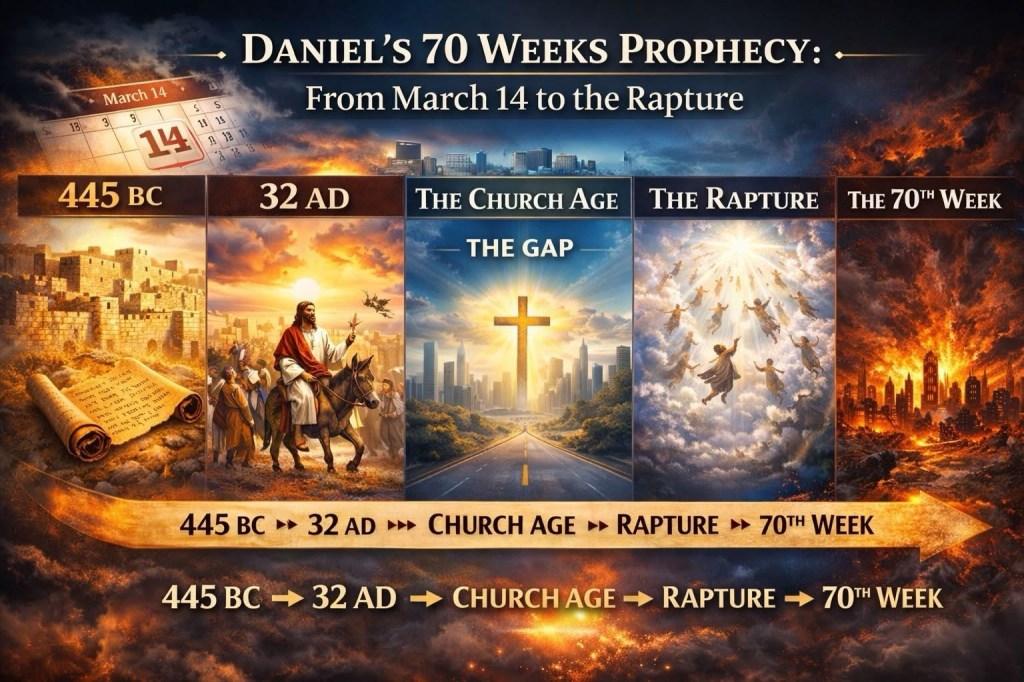
    The Christian endeavor to do better would not end. Contrary to popular beliefs, the Christian age would not end with the rapture. The Christian age, which commenced at the Pentecost of Acts 2, continues and will continue for eternity. God’s church is the manifestation of His kingdom, which I would like to detail next.

    The Book of Hebrews said, “Therefore let us be grateful for receivingtake note, it’s in the present, active, participle – a kingdom that cannot be shaken, and thus let us offer to God acceptable worship, with reverence and awe.” (Hebrews 12:28)

    Note: In Greek, the “present active participle” serves as a verbal adjective, signifying an action that is ongoing or repeated. It occurs simultaneously with the main verb in a sentence, providing additional context and detail to the action being described.

    Therefore, God’s unshakable kingdom is already at work, present yet awaiting its completion. Christ’s Church represents God’s kingdom on Earth, unlike the Davidic kingdom of the Old Covenant, which ended disastrously. The kingdom was initially split into two— Israel and Judah— due to the sins of Solomon and Rehoboam. Israel fell into the Assyrian Empire, Judah into Babylon, and finally Rome. In contrast, the New Covenant kingdom of Christ Jesus is eternal and unshakable, as evident in Hebrews 12:22-28.

    See Scripture: “But you have come – again take note it’s in the Second Perfect, Active, Indicative to Mount Zion and to the city of the living God, the heavenly Jerusalem, and to myriads of angels, to the general assembly and church of the firstborn who are enrolled in heaven, and to God, the Judge of all, and to the spirits of the righteous made perfect, and to Jesus, the mediator of a new covenant, and to the sprinkled blood, which speaks better than the blood of Abel.” (Hebrews 12:22-24, NASB)

    Did you notice that Hebrews explicitly stated that God’s church is the new heavenly Jerusalem? This is synonymous with the New Heaven and New Earth as described by John in Revelation, who refers to her as the bride of Christ Jesus—the church (Revelation 21:1-2). It’s commendable that the NASB translation of the Bible faithfully retained the word “church,” unlike most modern English translations.

    Note: In Greek, the “second perfect active indicative” form is used to express a completed action that occurred in the past and carries lasting implications or a state that continues into the present.

    No wonder, in Luke 17:20-21, the Bible provides another proof that God’s kingdom is already present during Christ Jesus’ incarnation.

    The scripture states, “When the Pharisees asked Jesus about the kingdom of God, He replied, ‘The kingdom of God is not coming in a way that can be seen or heard. It is already among you.’”

    In Revelation, Scripture proclaims, “The kingdom of the world has becomethat note, Second Aorist, Middle Deponent, Indicative – the kingdom of our Lord and of His Christ, and He will reign forever and ever.” (Revelation 11:15)

    Note: In Greek, a “second aorist middle deponent indicative” verb form shows a completed action from the past. It mainly uses the middle voice, but the verb is considered deponent. This means it has only middle (or middle and passive) forms, while still having an active meaning.

    Therefore, Since John had witnessed Christ Jesus, who proclaimed that the kingdom was present among them, John addressed his contemporary audience, the church of his era, in Revelation. He declared, “The kingdom of the world has become the kingdom of our Lord and of His Christ.” Consequently, God’s kingdom has permeated the world, and its fulfillment lies in the generation that first witnessed its arrival.

    Whether you believe Christ Jesus has returned fulfilling His promise to come in the lifetime of His apostles, as stated in Matthew 16:28; Matthew 10:23; Mark 9:1; Luke 9:27, and many other passages of the Bible or not, the fact remains that God’s kingdom has arrived as Jesus Christ Himself declared in Luke 17:20-21; Matthew 12:28; Luke 11:20; Romans 14:16-17; Colossians 1:13; Hebrews 12:28. Take time to carefully study those passages. Remember that if you unreasonably reject God’s word, you are not opposing me, but rather God. 

    As Gamaliel told the religious order of his time accusing Peter and John of falsehood, “So in the present case I tell you, keep away from these men and let them alone, for if this plan or this undertaking is of man, it will fail; but if it is of God, you will not be able to overthrow them. You might even be found opposing God!” (Acts 5:38-39)

    Do not be misled by teachings like that of the rapture and the likes. Popular as they may be, it does not mean they are true to the Bible. Unless you can defend it conclusively with Scriptures.

    Christ Jesus and His apostles confronted prevailing popular traditional beliefs and teachings. They went against the then recognized and accepted religious order. Who is in the right? If you know your Bible, you know the answer to that. 

    Keep in mind religious titles and positions do not count in the eyes of God, unless they uphold and honor God’s word (Hebrews 13:7; 1 Thessalonians 5:12-13). God’s truth can only be proven through faithful exposition of the Bible. 

    I write for two primary reasons: to preserve the sanctity of God’s word and to clarify theological concepts or ideas found in Scripture. My hope is to enrich the spiritual lives of Christians by revealing God’s truth. Isn’t theology then a means of edifying the church? Paul’s ecclesiology in Ephesians, which explains the doctrine of the church, wasn’t it for her edification? If a pastor, or someone in a Bible college or seminary, disagrees, perhaps they don’t understand Paul’s exhortation in Ephesians chapters one to two. If this is the case, then Christianity is certainly in danger of losing its identity.

    Compass, used for navigation, always points north, aligning with Earth’s magnetic field, guiding travelers on their journeys. Similarly, in life, we must learn from the sole source of truth, the Word of God. Preserving the sanctity of God’s Word, as it has been taught and explained in the Bible, is crucial. It should remain the True North in our life’s journey. If it were distorted, misinterpreted, or misbelieved, people would be misled and have misguided faith.

    Note: Click on underlines and highlights for definitions or Bible references.

    Peter, in the words of Acts 3:6, declared, “I possess neither silver nor gold, but in the name of Jesus Christ, I offer you what I have.” Share freely, for you freely receive. Stay updated by heading to our about page and subscribe directly to receive notifications in your inbox. Blessing!

  • Another Open Letter to the Church:

    Quoting Paul’s words, “For I wrote to you out of much affliction and anguish of heart and with many tears, not to cause you pain but to let you know the abundant love that I have for you.” Speaking God’s truth in love, as taught in 2 Corinthians 2:4, so I share out of love for God’s church.

    Without a doubt, no one can truly be a Christian without doctrine. Doctrine refers to a set of beliefs or teachings that define one’s faith. In the context of Christianity, doctrine encompasses the fundamental truths about Jesus Christ, His salvation, His kingdom, and other related matters. Consequently, no Christian can claim to believe in Christ Jesus without being deeply concerned about the doctrine. Paul emphasized the significance of vigilance and perseverance in one’s life and doctrine, stating, “Be vigilant about your life and doctrine. Persevere in them, for if you do, you will save both yourself and your listeners.” (1 Timothy 4:16)

    Clearly, doctrine and faith are closely intertwined; it’s impossible to claim one without the other. The Christian faith is a set of doctrines centered on Christ Jesus. It’s no wonder that twice Paul condemned those who distorted the Gospel (see Galatians 1:6-7; 2 Corinthians 11:2-4). The Gospel is God’s doctrine for salvation. Ignorance and arrogance are dangerous predicaments for individuals claiming to be Christians. Be discerning and avoid falling for such lies.

    The Bible alone holds the authority to definitively speak about God’s doctrine for salvation. When read and taught in its context, Scripture remains inspired and inerrant. Consequently, Christians must be aware of potential errors, human influences, or biases that may arise when they read and listen to extra-biblical literatures. Scripture quotes must always be consistent with the biblical teaching of their text. The apostle taught Christians, saying, “I have applied all these things to myself and Apollos for your benefit, brothers, that YOU MAY LEARN BY US NOT TO GO BEYOND WHAT IS WRITTEN, that none of you may be puffed up in favor of one against another.” (1 Corinthians 4:6)

    Lately, with the recent events in Israel, many Christians have been making predictions about the future, claiming they are based on biblical prophecy. However, a closer look at their approach reveals that they have been quoting Scriptures without considering their context. I challenge anyone who claims to have found a prophecy about a third rebuilding of the Jewish temple in the Scriptures to provide the specific passage.

    Paul gave a warning to the church, saying, “For the time is coming when people will not endure sound teaching, but having itching ears they will accumulate for themselves teachers to suit their own passions, and will turn away from listening to the truth and wander off into myths.” (2 Timothy 4:3-4)

    That time occurred during Paul’s era, and unfortunately, it persists to this day. As I mentioned in my article “A Love Letter to the Church,” “since the decline in doctrinal standards has been ongoing for decades, if not centuries, defective doctrines have become the norm. Consequently, truthful biblical teachings have become indistinguishable to most Christians.” We don’t require another reformation; instead, we need a renewed interest in biblical truth. We can’t find it unless we revisit the writings of the first-century church, the Bible, and learn from there. That’s why our ministry is named “Unlearning Tradition, Relearning Scripture.” May God grant us grace to make time for this, even amidst our busy schedules. If securing our future here is important to you, I emphasize that our spiritual well-being is of utmost importance cause it’s about now and forevermore.

    Paul emphasized this in his letter to the church, “Let us focus on the unseen rather than the visible. The visible is fleeting, while the unseen is eternal.” (2 Corinthians 4:18)

    P.S. After encountering contradictions in the traditional teachings of the church, I made an effort to relearn Scripture. Despite knowing that Scripture is a unity, I couldn’t reconcile the traditional teachings. With the help of my seminary training, I embarked on a journey of restudying the Bible. As God promised in Proverbs 2:1-5, if we receive God’s words, treasure its commandments, and make ourselves attentive to its wisdom, yearning for understanding like that of hidden treasures, we will be given understanding and knowledge.

    With utmost humility and confidence in the Lord, I share that my understanding of the Scripture has grown. By God’s grace, I have found the courage to teach and explain it in my Bible study groups. If I were solely concerned with gaining acceptance and personal benefits, would I risk challenging the prevailing popular beliefs? However, driven by concern for my own salvation and the hope of reuniting with my departed son, I could not remain silent and continue adhering to conventional Bible teachings. Recognizing that my ultimate reward lies with the Lord Jesus Christ, I have chosen to openly share the Word to honor God and out of love for His church. Ultimately, God alone is the ultimate arbiter of truth, as revealed in His sacred Bible.

    Keep in mind that back in the days of Jesus Christ and the early church, the Sanhedrin, the Jewish religious order, was the recognized authority of Scripture. However, they led the people astray. Therefore, titles alone do not signify authority in conveying the truthful teachings of God’s word; correct exposition does. Hence, Paul emphasized, “Do your utmost to present yourself to God as one approved, a worker who has no need to be ashamed, rightly handling the word of truth.” (2 Timothy 2:15) Didn’t Paul uphold the doctrines of the Bible? 

    Peter , in the words of Acts 3:6, declared, “I possess neither silver nor gold, but in the name of Jesus Christ, I offer you what I have.” Share freely, for you freely receive. Stay updated by heading to our about page and subscribe directly to receive notifications in your inbox. Blessing!

  • Focus on the Subject

    Some Christian pastors argue that the church vanished after Revelation 3, suggesting that this indicates the rapture of the church. However, consider the photo above: did everything around the mushroom disappear, or was the focus solely on the mushroom? This analogy suggests that the idea of a church rapture is not necessarily valid. Rather, John shifts his focus to the judgment of Old Covenant Israel. This is evident in Revelation 11:15, where the seventh angel blows his trumpet, and heavenly voices proclaim, “The kingdom of the world has become the kingdom of our Lord and of His Christ, and He shall reign forever and ever.”

    In John’s Gospel (the Book of Revelation was also written by him), Christ Jesus, confronted by the Sanhedrin, the religious order of the Jews, declared, “My kingdom is not of this world. If My kingdom were of this world, My servants would have been fighting so that I might not be handed over to the Jews. But My kingdom is not of this world.” (John 18:36)

    Therefore, the kingdom that Christ Jesus conquered was that of the Old Covenant Israel. In Matthew 21, when confronted by the chief priests and Jewish elders, questioning His signs and authority to teach, Jesus Christ responded, “Therefore I tell you, the kingdom of God will be taken away from you and given to a people producing its fruits” (Matthew 21:43). Now, let’s consider the language of imminence that Christ Jesus spoke to the seven churches in Revelation. 

    First, to Ephesus, “Remember therefore from where you have fallen; repent, and do the works you did at first. If not, I WILL COME TO YOU and remove your lampstand from its place, unless you repent. Yet this you have: you hate the works of the Nicolaitans, which I also hate. He who has an ear, let him hear what the Spirit says to the churches. To the one who conquers I WILL GRANT TO EAT OF THE TREE OF LIFE, which is in the paradise of God.” (Revelation 2:5-7)

    Repentance is only possible during one’s lifetime, not after death, as demonstrated by Christ’s teachings in the story of Lazarus and the rich man (Luke 16:19-31). Therefore, Jesus’ warning is directed at the living church of Ephesus, urging them to repent before His return. Isn’t it logical then that Jesus implied His return would be in their lifetime?

    Second, to Smyrna, “Don’t be afraid of what you’re about to endure. The devil is about to imprison some of you for ten days, testing your faith. Be steadfast until death, and I’ll give you the crown of life. He who has an ear, let him hear what the Spirit says to the churches. THE ONE WHO CONQUERS WON’T BE HARMED BY THE SECOND DEATH.” (Revelation 2:10-11)

    The second death occurred at the final judgment of Christ Jesus, as described in Revelation 20:11-15. Concerning Christ’s deliverance and justice, refer to Luke 18:1-8, where Christ delivers a parable about an unjust judge. Jesus emphasizes the swift and imminent nature of His justice, stating that it would be speedy. I doubt the faithful Christians of Smyrna understood a millennial as the idea of such swift justice. However, it’s important to note that Christ’s teachings in Luke 18:1-8 were delivered in the context of Luke 17:20-31, where Jesus speaks about the coming of His kingdom. More importantly, in Luke 18:8, Jesus implicitly assures His disciples that His swift justice would be with them during their lifetime. Jesus said “Nevertheless, when the Son of Man comes, will he find faith on earth?” (Luke 18:8)

    Third, to Pergamum, “Repent, or I’LL COME TO YOU SOON and wage war against them with the sword of my mouth. He who has an ear, let him hear what the Spirit says to the churches. To the one who conquers, I’ll give some of the hidden manna and a white stone with a new name written on it, a name known only to the one who receives it.” (Revelation 2:16-17)

    Jesus prophesied that His coming to Christians in Pergamum would be imminent, not a millennium later. Why do Christians choose to complicate the straightforward statements of Christ Jesus? Keep in mind that Jesus Christ warns not to add or deduct from His Words written in Revelation: “I warn everyone who hears the words of the prophecy of this book: if anyone adds to them, God will add to him the plagues described in this book, and if anyone takes away from the words of the book of this prophecy, God will take away his share in the tree of life and in the holy city, which are described in this book. He who testifies to these things says, ‘SURELY I AM COMING SOON.’ Amen. Come, Lord Jesus!” (Revelation 22:18-20)

    Fourth, to Tyatira, “HOLD ON TO WHAT YOU HAVE UNTIL I RETURN. The one who conquers and keeps My works until the end will receive authority over the nations and rule them with an iron rod, just as I received authority from My Father.” (Revelation 2:25-27)

    Isn’t “until I return” an assurance of imminent arrival? Jesus Christ, once again, assures churches of John’s lifetime that they should keep the faith because He is coming soon.

    Fifth, to Sardis, “remember what you received and heard. Keep it and repent. If you don’t wake up, I WILL COME LIKE A THIEF, and you won’t know when I will attack you again. However, there are still a few names in Sardis, people who haven’t defiled themselves, and they will walk with Me in white, for they are worthy. The one who conquers will be clothed in white garments, and I will never erase his name from the book of life. I will proclaim his name before My Father and before His angels. He who has an ear, let him hear what the Spirit says to the churches.” (Revelation 3:3-6)

    The phrase “coming like a thief” suggests that Jesus’ return will be an unexpected event. This underscores the significance of the church’s role during this momentous occasion. If no one is present to witness it, what purpose does it serve for Christ to emphasize to the church that His return will be like a thief in the night? It’s important to remember that this message was addressed to the church during John’s time. In other words, the church wouldn’t have a precise understanding of the exact time of Christ’s return, but it would certainly be within the lifetime of John and his immediate audience.

    Sixth, to Philadelphia, “I AM COMING SOON. Hold on to what you have so that no one can take away your crown. The one who conquers will become a pillar in the temple of My God. They will never leave it, and I will write on them the name of My God and the name of the city of My God, the new Jerusalem, which descends from My God from heaven, and My own new name.” (Revelation 3:11-12)

    I suppose this time, it’s quite straightforward to understand. Jesus Christ had promised Christians in Philadelphia that His return would be imminent, not in the distant future of churches during John’s lifetime, but even ours, as futurists have led many to believe.

    Lastly, the seventh, to Laodicea, “Behold, I STAND AT THE DOOR AND KNOCK. If anyone hears My voice and opens the door, I will come in to them and eat with them, and they will eat with Me. The one who conquers will be granted a place with Me on My throne, just as I conquered and sat down with My Father on His throne. He who has an ear, let him hear what the Spirit says to the churches.” (Revelation 3:20-22)

    Jesus Christ was speaking to the church of Laodicea, not to us. This is a recurring theme in John’s writings, referring to churches in his lifetime. Unless you believe that John would remain alive, as John clarified in his Gospel that this was not what Christ had told Peter. Instead, John wrote, “Jesus said to Peter, ‘If it is My will that he (John) remain until I come, what is that to you? You follow Me!’” See John 21:20-25. Can you comprehend Christ’s declaration to Peter? Or have you been blinded by tradition to the point where it seems incomprehensible to you? Jesus Christ implicitly communicated to Peter that His return would occur during John’s lifetime.

    Christ Jesus has fulfilled His purpose and promises. He declared that He alone would establish His church. The church is eternal, and even Hades has no power over it as seen in Matthew 16:18-19. The church is not just a parenthesis to Israel, its fulfillment signals the end of Old Covenant Israel. Keep in mind that “hades and death” were thrown to the lake of fire before John declared the passing of the first heaven and first earth and the coming of the new heaven and new earth (Revelation 21:1). Incidentally, the first heaven and the first earth refer to the Old Covenant, while the New Heaven and New Earth is the New Covenant. Consequently, Paul explained in 2 Corinthians 5:16-17, “From now on, therefore, we regard no one according to the flesh (that is, circumcision). Even though we once regarded Christ according to the flesh, we regard Him thus no longer. Therefore, IF ANYONE IS IN CHRIST, HE IS A NEW CREATION. The old has passed away; behold, the new has come.”

    See Galatians 6:11-15, for a parallel teaching of Paul on circumcision and flesh: “See with what large letters I am writing to you with my own hand. It is those who want to make a good showing IN THE FLESH WHO WOULD FORCE YOU TO BE CIRCUMCISED, and only in order that they may not be persecuted for the cross of Christ. For even those who are circumcised do not themselves keep the law, but they desire to have you circumcised that they may boast in your flesh. But far be it from me to boast except in the cross of our Lord Jesus Christ, by which the world has been crucified to me, and I to the world. FOR NEITHER CIRCUMCISION COUNTS FOR ANYTHING, NOR UNCIRCUMCISION, BUT A NEW CREATION.”

    I completely understand if my discussion here might have confused you. I was in a similar situation many years ago. However, after being persuaded by Christ’s words, I dedicated myself to a serious and sincere study of God’s word. Today, there is a resurgence of Christians embracing the authentic teachings of the Bible. If you want to understand, all you need to do is to keep your focus, read, and study the Bible. While reading the Bible, avoid getting sidetracked by unnecessary details and focus on the main subject. In God’s own time, you will fully comprehend Scripture.

    Peter, in the words of Acts 3:6, declared, “I possess neither silver nor gold, but in the name of Jesus Christ, I offer you what I have.” Share freely, for you freely receive. Stay updated by heading to our about page and subscribe directly to receive notifications in your inbox. Blessing!

  • Dissecting Jeremiah 29:11

    Christians have always been eagerly anticipating a better tomorrow—a day when all our earthly troubles would cease to exist. Most Christians believe this will happen upon the return of Jesus Christ.

    The LORD of hosts, the God of Israel, declared in Scripture, “For I know the plans I have for you,” declares the LORD, “plans for welfare and not for evil, to give you a future and a hope,” Jeremiah 29:11. This passage has been misinterpreted and misused, often falsely taught as a guarantee of material prosperity. One possible reason for this misinterpretation is the translation of the Hebrew word “shâlôm,” which means “peace or tranquility,” into “prosper” in the New International Version (NIV).

    Jeremiah 1:1-2 introduces Jeremiah’s ministry, which began during the 13th year of Josiah’s reign as the king of Judah. The Bible Hub timeline suggests that Jeremiah’s ministry started around 627 B.C. and lasted for approximately 40 years. This ministry culminated in the downfall of the nation of Judah and the destruction of its capital, Jerusalem, in 586 B.C., as recorded in Jeremiah 52.

    It’s fascinating to observe that, as per God’s Word in Jeremiah 29:10, the rebuilding of the temple was completed in 516 B.C., precisely seventy years after the Jews were exiled to Babylon (586 B.C.). Subsequently, the exiles returned and joyfully celebrated the dedication of God’s house (Ezra 6:14-16).

    Jeremiah 29:11 therefore proclaims God’s promise of “peace” to His people, even amidst severe judgment against Judah. This may seem contradictory, but it’s not. It’s crucial to understand that God declared a seventy-year captivity and exile against the Jews as a punishment for their sin before their return and the rebuilding of the city and the temple (see Jeremiah 25:12; 29:10). In retrospect, we know that after their return and the rebuilding of Jerusalem and its temple, most of the Jews remained unfaithful to the LORD God, breaking His Covenant (see Malachi 1:14; 3:8-9). How then do we make sense of Jeremiah 29:11? Surely, God cannot be promising one thing then failing to deliver.

    Let us explore the full promise of God in Jeremiah 29:11-14.

    “For thus says the LORD: When seventy years are completed for Babylon, I will visit you, and I will fulfill to you My promise and bring you back to this place. For I know the plans I have for you, declares the LORD, plans for welfare and not for evil, to give you a future and a hope. Then you will call upon Me and come and pray to Me, and I will hear you. You will seek Me and find Me, when you seek Me with all your heart. I will be found by you, declares the LORD, and I will restore your fortunes and gather you from all the nations and all the places where I have driven you, declares the LORD, and I will bring you back to the place from which I sent you into exile.”

    Daniel, God’s prophet after Jeremiah’s ministry, was a young man among the exiles in Babylon (Daniel 1:1-6). After seventy years had passed, Daniel remembered Jeremiah’s prophecy of Israel’s return and yearned for its restoration (Daniel 9:1-2). He then prayed to God for mercy and the rebuilding of God’s temple (Daniel 9:17-19). However, to his dismay, God announced a second desolation of the Jewish temple before forgiveness, atonement, and restoration to God’s presence becomes a reality (Daniel 9:20-27). Notably, God used the number “seventy,” but instead of years, it was seventy prophetic weeks (Daniel 9:24), culminating in the final “week” or “one seven.” Additionally, Daniel aligned God’s judgment of Israel with that of Deuteronomy 28-31, stating, “As it is written in the Law of Moses” (Daniel 9:13) – blessings for obedience, and God’s curse for disobedience.

    I won’t delve into explaining Daniel 9:24-27 because it would significantly extend the length of this blog post. However, it’s important to remember that all prophecies will be fulfilled when the “abomination of desolation” spoken by Daniel has come to pass (Dan 9:26-27; Matt 24:15). Interestingly, Jesus Christ specifically predicted that the event would occur when the temple was destroyed, emphasizing its finality (Matthew 23:36-38; 24:2-3, 14-21). The second and final destruction of the Jewish temple was future both to Daniel and at the time of the incarnate Jesus Christ. Check out two key verses from Matthew 24:14-21.

    “So when you see the abomination of desolation spoken of by the prophet Daniel, standing in the holy place (let the reader understand),” Matthew 24:15 says. Without a doubt, Jesus was referring to Daniel 9:24-27. Of utmost importance, Jesus declared, “For then there will be great tribulation, such as has not been from the beginning of the world until now, and never will be,” Matthew 24:21, a reference to Daniel 12. This declaration highlights the end of the Old Covenant Israel.

    As I have mentioned earlier, the desolation of the temple occurred in 70 A.D. Understand also that though there was a return of the Jews in 1948, unlike the first return, the temple was never rebuilt. Without the temple, the Jews ceased to be God’s people. God has removed His dwelling presence from Old Covenant Israel.

    So back to Jeremiah 29:12-13, God next declared, “Then you will call upon Me and come and pray to Me, and I will hear you. You will seek Me and find Me, when you seek Me with all your heart.” Interestingly, Jesus Christ spoke the reverse to the unbelieving Jewish religious leaders. See John 7:33-34. “Jesus then said, ‘I will be with you a little longer, and then I am going to Him who sent Me. You will seek Me and you will not find Me. Where I am you cannot come.’”

    Now, comparing Jeremiah 29:12-13 with that of Isaiah 65:24, God declared, “Before they call, I will answer; while they are still speaking, I will hear.” It’s the same comforting assurance saying that God now hears—an exact contrast to God’s pronouncement of judgment against Israel, that even if they call upon the LORD, He would not listen. See Jeremiah 11:11 & 14:11-12; Isaiah 1:15; Ezekiel 8:17-18; Micah 3:4; Zechariah 7:13-14; Luke 13:24-28; all spoken against Old Covenant Israel.

    Finally, see Jeremiah 29:14, God said, “I will bring you back to the place from which I sent you into exile.” From where were the Jews exiled? Jerusalem, isn’t it? Amazingly, Isaiah 65 spoke of a New Jerusalem, which was also spoken by John in Revelation.

    Once again, let’s compare Isaiah 65:17-19 with that of Revelation 21:1-4. In Isaiah, God said, “For behold, I create new heavens and a new earth … I will rejoice in Jerusalem and be glad in My people; NO MORE SHALL BE HEARD IN IT THE SOUND OF WEEPING AND THE CRY OF DISTRESS.” Now in Revelation 21:1-4, “Then I saw a new heaven and a new earth, for the first heaven and the first earth had passed away, and the sea was no more. And I saw the holy city, new Jerusalem, coming down out of heaven from God … HE WILL WIPE AWAY EVERY TEAR FROM THEIR EYES, AND DEATH SHALL BE NO MORE, NEITHER SHALL THERE BE MOURNING, NOR CRYING, NOR PAIN ANYMORE, for the former things have passed away.”

    Aren’t both passages expressing the idea of “peace and tranquility”? Precisely God’s promise in Jeremiah 29:11. Reading from the Christian Standard Bible, it says, “For I know the plans I have for you”— this is the LORD’s declaration —“plans for your well-being [Shâlôm, meaning peace in the Hebrew language], not for disaster, to give you a future and a hope.”

    Therefore, in Jeremiah 29:14, God’s promise of return isn’t about the physical land of Jerusalem, but the heavenly one. The Jewish return and rebuilding of the temple during the time of Nehemiah, Zerubbabel and Ezra fell short of fulfilling God’s promise. Now, consider this: in Revelation, John was in the tribulation, exiled to Patmos (Rev 1:9), as prophesied by Jesus Christ in Matthew 24:9-21 to His apostles. He foresaw the imminent arrival of God’s New Heaven and New Earth, the heavenly Jerusalem, as well as the passing of the Old Covenant Jerusalem (Revelation 21:1-2). Therefore, Jeremiah 29:11-14, Isaiah 65:17-25, and Revelation 21-22 all spoke about the time of the New Creation.

    Do we still see the Jewish temple standing in Jerusalem? The Dome of Rock now stands at the very site of the former Herod’s temple-a restoration and expansion of Zerubbabel’s second temple. This was the temple where Jesus taught the Scripture occasionally, which was destroyed by the Romans in 70 A.D., just as prophesied by Christ Jesus, therefore bringing to an end the Jewish Age (click and read Matthew 23:36-24:3; 24:14-21).

    See Luke’s account concerning God’s vengeance against Israel and its desolation. “But when you see Jerusalem surrounded by armies, then know that its desolation has come near. Then let those who are in Judea flee to the mountains, and let those who are inside the city depart, and let not those who are out in the country enter it, for these are days of vengeance, to fulfill all that is written.” (Luke 21:20-22)

    The desolation of Jerusalem marked the end of the Old Covenant Israel-the Jewish age. As Paul declared in 2 Corinthians 5:17, “Therefore, if anyone is in Christ, he is a new creation. The old had passed away; behold, the the new has come.” Undoubtedly, Christians now experience the blessings of God’s New Covenant. While we may still encounter challenges worldwide, we should keep the peace of God—that is, our belief and faith, knowing that He holds our future in His hands. In reality, our tomorrow is already here; Christ Jesus has conquered the curse of Adam’s fall. All we need to do is persevere in our faith, regardless of our current temporal circumstances.

    Truly ironic that modern Christianity has been teaching the reverse. They insist the Jews continue to be God’s people despite them denying Christ Jesus. To justify their teachings, they invented a future coming of Jesus Christ and a second grace for Israel, contradicting everything that Paul had taught in Romans 9-11; Galatians 3-5, and his many other letters. I surmise this happened because Christians fail to study the Bible. Instead of delving into Scripture, they chose to study from men’s writings. Rather than exegeting the Scripture, they chose to study Bible commentaries. Keep in mind that only the Bible is inerrant; all else has erred.

    With the arrival of the New Heaven and the New Earth, God’s New Covenant finally became a full reality. Revelation 21:22-23 said, “And I [John the Beloved] saw no temple in the city, for its temple is the Lord God the Almighty and the Lamb. And the city has no need of sun or moon to shine on it, for the glory of God gives it light, and its lamp is the Lamb.” In John 2:19, the incarnate Jesus Christ declared, “Destroy this temple, and in three days I will raise it up,” to which John later explained in his Gospel, “But He [Jesus Christ] was speaking about the temple of His body (John 2:21)”. The apostle Paul then explained the church was the body of Christ Jesus, see Ephesians 2:19-22. “So then you [Gentile Christians] are no longer strangers and aliens, but you are fellow citizens with the saints [1st Century Jewish Converts to Christianity] and members of the household of God, built on the foundation of the apostles and prophets [Scripture, both Old and New Testament], Christ Jesus Himself being the cornerstone, in whom the whole structure, being joined together, grows into a holy temple in the Lord. In Him you also are being built together into a dwelling place for God by the Spirit.”

    With the coming of Christ Jesus, Galatians told us there is no longer distinctions between Jews and Gentiles. All that are in Christ Jesus are Abraham’s offspring, heirs according to His promise. Click and read Galatians 3:25-29. So why does Modern Christianity insist that Jews today remains to be people of God? Aren’t they digressing from the true message of the Gospel?

    Incidentally, for proper biblical ecclesiology (Doctrine of the Church), understand that only Christ Jesus builds His Church and no one else. The incarnate Jesus Christ declared in Matthew 16:18, “And I also say to you that you are Peter, and on this Rock, I will build My Church, and the gates of Hades will not overpower it.” Hades not having power over the Church means death no longer has power over the Church. Therefore, salvation and eternal life have become a reality, not just a promise. Christ Jesus is the Rock, not Peter; click and read 1Co 10:4.

    Jesus Christ promised His disciples “peace” before His betrayal, crucifixion, and death. See John 14:27, where Jesus said, “Peace I leave with you; My peace I give to you. Not as the world gives do I give to you. Let not your hearts be troubled, neither let them be afraid.” Doesn’t this imply that believing in Christ Jesus is the key to finding peace even in difficult times? The same “peace” that Paul urges Christians to have in his letter to the Philippians (see Philippians 4:6-7). Therefore, in Scripture, “peace” is synonymous with faith and belief. In other words, Christians cannot claim faith and belief without experiencing God’s peace. That is, trusting Him that everything will be well because He is in control.

    Jeremiah 29:11 is God’s promise of peace fulfilled through Christ Jesus’ death, resurrection, ascension, and return, completing therefore His New Covenant. Yes, Jesus has already secured our future, and it’s here now for all who believe in Him. To truly comprehend this, we must cultivate faith and trust in His word, as He consistently communicated through the Bible.

    Peter, in the words of Acts 3:6, declared, “I possess neither silver nor gold, but in the name of Jesus Christ, I offer you what I have.” Share freely, for you freely receive. Stay updated by heading to our about page and subscribe directly to receive notifications in your inbox. Blessing!

  • Chance of a Lifetime

    Although others may teach about a possible chance even after death, the Bible is unequivocal that our sole opportunity for salvation lies in this present life or existence. Jesus Christ, through a parable, imparted this profound truth.

    “There was a rich man who was clothed in purple and fine linen and who feasted sumptuously every day. And at his gate was laid a poor man named Lazarus, covered with sores, who desired to be fed with what fell from the rich man’s table. Moreover, even the dogs came and licked his sores. The poor man died and was carried by the angels to Abraham’s side. The rich man also died and was buried, and in Hades, being in torment, he lifted up his eyes and saw Abraham far off and Lazarus at his side. And he called out, ‘Father Abraham, have mercy on me, and send Lazarus to dip the end of his finger in water and cool my tongue, for I am in anguish in this flame.’ But Abraham said, ‘Child, remember that you in your lifetime received your good things, and Lazarus in like manner bad things; but now he is comforted here, and you are in anguish. And besides all this, between us and you a great chasm has been fixed, in order that those who would pass from here to you may not be able, and none may cross from there to us.’ And he said, ‘Then I beg you, father, to send him to my father’s house— for I have five brothers—so that he may warn them, lest they also come into this place of torment.’ But Abraham said, ‘They have Moses and the Prophets; let them hear them.’ And he said, ‘No, father Abraham, but if someone goes to them from the dead, they will repent.’ He said to him, ‘If they do not hear Moses and the Prophets, neither will they be convinced if someone should rise from the dead.’” (Luke 16:19-31)

    Here are some detailed facts:

    After death, both Lazarus and the rich man found themselves in Hades. Hades was the place of death before God’s final judgment at the coming of Christ Jesus (as mentioned in 2 Corinthians 5:10, John 5:28-29; Revelation 20:11-14, and so on).

    The rich man, who had lived luxuriously and cared little for Lazarus’ destitute state, ended up in the place of torment. In contrast, Lazarus, despite being poor, was also in Hades but in a blissful state, in Abraham’s bosom. 

    Perhaps you might ask, “Why did Lazarus find himself in a state of bliss? Was it simply because he was poor?” The answer to that question wasn’t explicitly stated in the story, but rather in the context of the parable. See Luke 16:13-16:

    Jesus Christ said, “No servant can serve two masters, for either he will hate the one and love the other, or he will be devoted to the one and despise the other. You cannot serve God and money.” The Pharisees, who were lovers of money, heard all these things, and they ridiculed Him. And He (Jesus) said to them, “You are those who justify yourselves before men, but God knows your hearts. For what is exalted among men is an abomination in the sight of God. “The Law and the Prophets were until John; since then the good news of the kingdom of God is preached, and everyone forces his way into it.”

    The parable was spoken in response to the Pharisees’ hardness of heart. They refused God’s offer of salvation because they had much to give up—they were lovers of money. Consequently, by inference, Lazarus, despite having no riches, was dependent on God’s mercy and trusted in His grace, which explains why he ended up in Abraham’s side. Keep in mind that Abraham was the father of faith, as Paul states in Romans 4:9-12. Therefore, by implication, Lazarus also, lived in faith.

    Hoping that this simple explanation would clear out myths about death and heaven. Paul, writing to the Corinthians, said, “I know a man in Christ who fourteen years ago was caught up to the third heaven—whether in the body or out of the body I do not know, God knows. And I know that this man was caught up into paradise—whether in the body or out of the body I do not know, God knows— and he heard things that cannot be told, which man may not utter.” (2 Corinthians 12:2-4)

    Easton’s Bible Dictionary explain: According to the Jewish notion there were three heavens,

    (a) The firmament, as “fowls of the heaven” (Gen 2:19; Gen 7:3, Gen 7:23; Psa 8:8, etc.), “the eagles of heaven” (Lam 4:19), etc.

    (b) The starry heavens (Deu 17:3; Jer 8:2; Mat 24:29).

    (c) “The heaven of heavens,” or “the third heaven” (Deu 10:14; 1Ki 8:27; Psa 115:16; Psa 148:4; 2Co 12:2).

    Clearly, at the time of Paul, heaven remained inaccessible to man. He was only privileged to glimpse a vision of heaven even before Christ had returned.

    Furthermore, in Christ’s parable, Jesus made it clear that there was a vast chasm between the realms of the living and the dead, and no one from either side could cross over. Therefore, after death, the destination of people was sealed, and they were only waiting for the final judgment. Hence, the idea of praying for the dead is nowhere in the Bible.

    Jesus asserted that no one would be permitted to return to the realm of the living after death. Christ further explained that even those who had been informed about His resurrection would ultimately end up in the place of torment in Hades because they had failed to believe the teachings of Moses and the Prophets—a reference to the Old Testament Scriptures. Jesus, speaking about His resurrection, said, “These are My words that I spoke to you while I was still with you, that everything written about Me in the Law of Moses, the Prophets, and the Psalms must be fulfilled.” (Luke 24:44)

    The entire Bible is about Jesus Christ. Therefore, it is crucial to be careful not to reject His Word. 

    Yes, God’s offer of salvation through Christ Jesus is a second chance. Better yet, a limited chance because it is only valid while we are still alive. Once we die, our time is up. Go, therefore, and share the Gospel with your loved ones, family, and friends. Knowing that it’s their chance of a lifetime.

    Peter, in the words of Acts 3:6, declared, “I possess neither silver nor gold, but in the name of Jesus Christ, I offer you what I have.” Share freely, for you freely receive. Stay updated by heading to our about page and subscribe directly to receive notifications in your inbox. Blessing!