The Serpent, identified in Revelation 12:9 as Satan, first appears as the tempter in Eden (Genesis 3). In Ezekiel 28:12–15, he is described as a fallen guardian cherub. God uses the fall of this angel to illustrate the pride and arrogance of the king of Tyre:
“Son of man, raise a lamentation over the king of Tyre, and say to him, Thus says the Lord GOD:
You were the signet of perfection, full of wisdom and perfect in beauty. You were in Eden, the garden of God; every precious stone was your covering, sardius, topaz, and diamond, beryl, onyx, and jasper, sapphire, emerald, and carbuncle; and crafted in gold were your settings and your engravings. On the day that you were created they were prepared. You were an anointed guardian cherub. I placed you; you were on the holy mountain of God; in the midst of the stones of fire you walked. You were blameless in your ways from the day you were created, till unrighteousness was found in you.” (Ezekiel 28:12-15)
This passage reveals that the Serpent was not created to tempt. He began as a perfect guardian cherub but later rebelled against God and deceived Eve.
Humanity’s Choice
Adam, created in God’s image (Genesis 5:1), ultimately chose disobedience. Like the fallen cherub, he turned away from God. Yet here lies the great difference: while fallen angels were not offered redemption, humanity received an invitation to reconciliation. Sin did not end the story—God’s mercy opened the path to hope.
The Wonder of Salvation
The mystery of salvation is so profound that even angels long to understand it. 1 Peter 1:12 declares:
> It was revealed to the Old Testament prophets that they were serving not themselves but you— the church— in the things that have now been announced to you through those who preached the good news to you by the Holy Spirit sent from heaven, things into which angels long to look.
Paul echoes this in Ephesians 3:10:
> So that through the church the manifold wisdom of God might now be made known to the rulers and authorities in the heavenly places.
The fall of angels highlights the tragedy of rebellion, while the redemption of humanity showcases the glory of God’s salvation—a story that moves heaven to awe and calls us to worship.
God’s Answer to Human Suffering
We must stop blaming God for the world’s suffering, for He gave humanity the freedom to choose. Through Adam, sin entered the world, and with it, suffering. But in Christ, redemption is offered:
> “For as in Adam all die, so also in Christ shall all be made alive.” (1 Corinthians 15:22)
God’s blessings are not only spiritual. Paul reminds us:
> “What then shall we say to these things? If God is for us, who can be against us? He who did not spare His own Son but gave Him up for us all, how will He not also with Him graciously give us all things?” (Romans 8:31-32)
And he reassures us:
> “Who shall separate us from the love of Christ? Shall tribulation, or distress, or persecution, or famine, or nakedness, or danger, or sword?… No, in all these things we are more than conquerors through Him who loved us.” (Romans 8:35-37)
Through Christ, suffering has meaning and victory is assured.
The Church’s Call to Renewal
The modern church, at times, has failed to fully embrace Paul’s revelation of God’s manifold wisdom. Too often, deep theology is avoided, and the church is reduced to the image of a sanctuary for the imperfect, rather than a community of people being actively transformed. We are familiar with the common saying: “The church is a hospital for the sick.” Yet Paul’s exhortation challenges this limited view:
> “Cleanse out the old leaven that you may be a new lump, as you really are unleavened. For Christ, our Passover lamb, has been sacrificed…” (1 Corinthians 5:7-8)
Paul also instructs the believers in Colossians 3:5-17 to put away the old self, embracing the life of Christ through love, forgiveness, and thanksgiving. Likewise, Peter reminds the church:
Peter states, > “As obedient children, do not be conformed to the passions of your former ignorance, but as God who called you is holy, you also be holy in all your conduct, since it is written, ‘You shall be holy, for I am holy.’” (1 Peter 1:14-16)
This is why Paul consistently addressed believers as saints (Romans 1:7; 1 Corinthians 1:2; Ephesians 1:1; Philippians 1:1; Colossians 1:2, etc.).
The message is unmistakable: the church is called to be a visible testimony of transformation, embodying God’s holiness and love for the world to see.
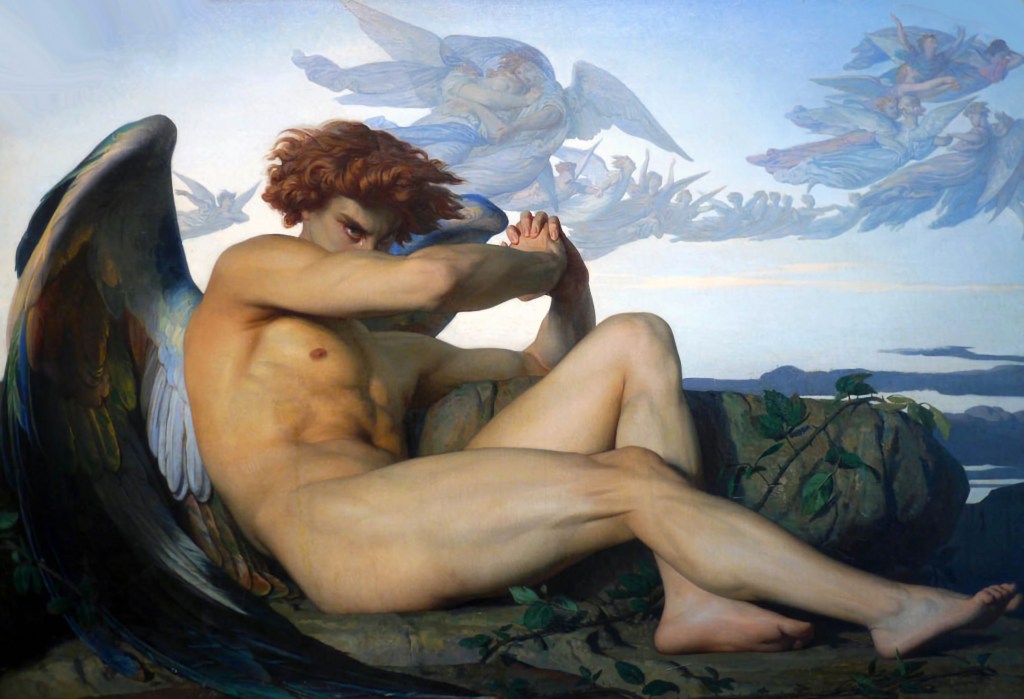
Credit: Photo owned by Alexandre Cabanel — Fallen Angel
Conclusion
It all began with the fall of a cherub. Followed by the fall of Adam. Yet, Jesus reminds us of a profound truth:
> “Truly, truly, I say to you, unless a grain of wheat falls into the earth and dies, it remains alone; but if it dies, it bears much fruit. Whoever loves his life loses it, and whoever hates his life in this world will keep it for eternal life. If anyone serves Me, he must follow Me; and where I am, there will My servant be also. If anyone serves Me, the Father will honor him.” (John 12:24-26)
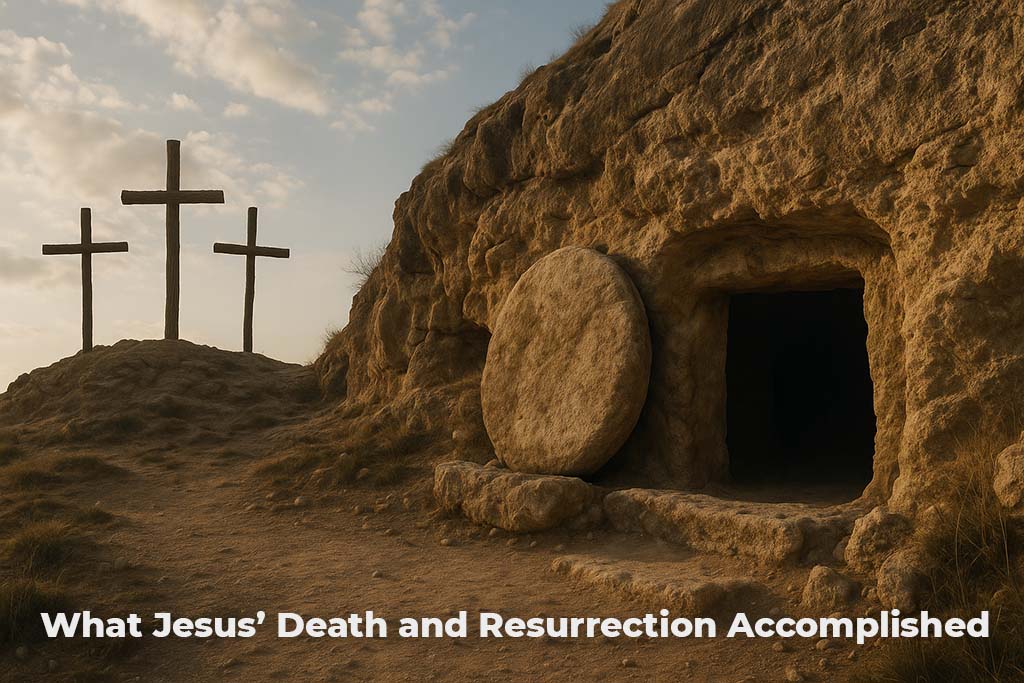
Credit: Photo owned by Scott Roberts
In this passage, Jesus reveals His death and resurrection, was the ultimate act of sacrifice and fruitful surrender. It highlights the contrast between the pride of the fallen cherub and the humble journey of those who choose to follow Christ. By fully submitting to the will of the Father and dying on the cross, Jesus shows the path to true life. Likewise, when we die to ourselves, we gain eternal life, and in faithfully serving our Lord Jesus, we receive the honor that comes from the Father.
Peter, in the words of Acts 3:6, declared, “I possess neither silver nor gold, but in the name of Jesus Christ, I offer you what I have.” Share this article freely, for you freely receive. Take note, underlines and highlights are clickable links for definitions or Bible references. Stay updated by heading to our about page and subscribe directly to receive notifications in your inbox. Blessings!