Let me warn Christians that anyone who claims and teaches that the present conflict in Iran is a prelude to the Second Coming of Jesus Christ is delusional and false. All the prophecies in the Old Testament were fulfilled in Christ Jesus.
After His resurrection, Jesus Christ declared, “These are My words that I spoke to you (i.e., the disciples) while I was still with you. Everything written about Me in the Law of Moses, the Prophets, and the Psalms must be fulfilled.” (Luke 24:44) During His sermon on the mount, Jesus emphasized, “Do not think that I have come to abolish the Law or the Prophets; I have not come to abolish them but to fulfill them” (Matthew 5:17). In essence, Jesus Christ proclaimed that He was fulfilling Scriptures from the very beginning of His earthly ministry and even after His resurrection. It’s crucial to understand that if Jesus didn’t fulfill all Scriptures, He wouldn’t be true to His Word and couldn’t be the Christ. However, Jesus certainly is the Christ.
Hebrews teaches that the coming of Jesus Christ signaled the last days. See Scripture, “Long ago, at many times and in many ways, God spoke to our fathers by the prophets, but in these last days He has spoken to us by His Son, whom He appointed the heir of all things, through whom also He created the world” (Hebrews 1:1-2). The Bible says “it’s the last days”, not millennia. Peter affirmed it’s the last days in Acts 2:16-40, same as Paul and other apostles (2 Timothy 3:1; James 5:3; 2 Peter 3:3).
Contrary to contemporary Christian teachings, God’s kingdom cannot be postponed. Daniel prophesied that it will come during the reign of the fourth Gentile kingdom ruling over Israel, asserting that it’s certain and sure (Daniel 2:44-45). Rome was the fourth empire after Babylon (Daniel 2:36-38), Persia, and Greece (Daniel 8:20-21). The fact is, even the Jewish religious leaders, despite denying Christ, knew its time; hence, Jesus said they were forcing themselves into the kingdom. See Luke 16:16, “The Law and the Prophets were until John; since then the good news of the kingdom of God is preached, and everyone forces his way into it.”
The teaching about a Revived Roman Empire was developed to circumvent God’s declarations. There are many more lies invented to justify their assertions, and sadly many Christians have fallen into their myths and deceptions.
God’s kingdom is spiritual. The Bible nowhere teaches it would be physical. Jesus made clear it’s not coming in ways that can be observed.
Jesus Christ declared the arrival of God’s kingdom; see Luke 17:20-21, “Being asked by the Pharisees when the kingdom of God would come, Jesus answered them, ‘The kingdom of God is not coming in ways that can be observed, nor will they say, “Look, here it is!” or “There!” for behold, the kingdom of God is in the midst of you.’”
See Christ’s conversation with the Samaritan woman: “Jesus said to her, ‘Woman, believe Me, the hour is coming when neither on this mountain nor in Jerusalem will you worship the Father. You worship what you do not know; we worship what we know, for salvation is from the Jews. But the hour is coming, and is now here, when the true worshipers will worship the Father in spirit and truth, for the Father is seeking such people to worship Him. God is spirit, and those who worship Him must worship in spirit and truth.’ The woman said to Him, ‘I know that Messiah is coming (He who is called Christ). When He comes, He will tell us all things.’ Jesus said to her, ‘I who speak to you am He.’” (John 4:21-26)
Without a doubt, Jesus is the Christ, the Messiah who was to come. He came, therefore the Messianic kingdom was inaugurated; that’s the reason the temple was destroyed in 70 A.D. Take note, Jesus did say, with His coming, Jerusalem would cease to be the place for worship. Believers are no longer confined to spaces or a sanctuary, but are to worship God in truth and spirit.
The Messianic kingdom was spoken in Psalm 2. Jesus Christ is the King of Zion, a fulfillment of Isaiah 9:6-7 and Isaiah 7:14 as declared in Matthew 1:22-23. The Bible never spoke of a gap in the prophetic fulfillment of God’s kingdom. The talk of a rapture is nonsense. With the coming of Jesus, the Messianic kingdom has begun. Paul, in Acts, declared the fulfillment of Psalm 2, “And we bring you the good news that what God promised to the fathers, this He has fulfilled to us, their children, by raising Jesus, as also it is written in the second Psalm, ‘You are My Son, today I have begotten You’” (Acts 13:32-33). The Messianic kingdom is God’s kingdom – the kingdom of heaven – as heralded by John the Baptist (Matthew 3:1-2) and announced by Jesus Christ to have arrived (Matthew 4:17; 12:28; Luke 11:20).
What is too hard to understand? It’s plain and simple. But contemporary Christianity resists the truth and insists on what they have been told and taught. Example of the lie below:
Taken from Tony Campbell
Now that another Middle East crisis is at hand, soothsayers once more are abound. But Jesus Christ alone is the true prophet of God, to whom we ought to listen. At the transfiguration of Jesus, God declared, “This is My beloved Son, with whom I am well pleased; listen to Him.” (Matthew 17:5)
Christians, let us not be alarmed by claims or teachings that supposedly the end of the world is coming. The Bible never spoke of the end of the world, but the end of the age. Jesus Christ taught about two ages only, the present age and the age to come, see Mark 10:29-30 and Luke 18:29-30. By “present age or in this age”, Jesus didn’t mean our time but the Old Covenant age – the period in which He came, lived, died, and resurrected, which consists of regulations, offerings, and animal sacrifices – see Hebrews 9:1-15. The Bible teaches that Christ Jesus has made it obsolete, with the passing of the Jewish temple (Hebrews 8:13). Making it impossible for the Mosaic regulations to be observed and practiced. The Bible declared Christ Jesus the mediator of the New Covenant (Hebrews 9:15; 12:24).
Paul, in Ephesians, expounded on the mystery of God about the church also teaches only two ages (Ephesians 1:21-22).
However, Jewish survivors of the A.D. 70 destruction of the temple continued in disbelief, so they came out with the Talmudic writings. Prominent on its declaration is a third rebuilding of the Jewish temple, which was nowhere taught in the Old or New Testament Scripture, but has been promoted by some Christians who hold dispensational theology. Beware of what you are learning, believing, and teaching. You might be disseminating falsehoods.
Study the Bible thoroughly with a clear mind, free from biases introduced by mainstream Christianity. Just a few decades after Jesus Christ’s resurrection, false gospels began spreading, prompting Paul to confront them by writing letters to various churches (Galatians 1:6-9; 2 Corinthians 11:1-4). Also, the writing of the gospels ensued— Matthew, Mark, Luke, and John. Today, it remains an issue even millennia later. The root cause seems to be Christianity’s tendency to rely on the writings of early church fathers, those of the Reformers, or modern scholars rather than the Bible itself.
Peter, in the words of Acts 3:6, declared, “I possess neither silver nor gold, but in the name of Jesus Christ, I offer you what I have.” Share this article freely, for you freely receive. Take note, underlines and highlights are clickable links for definitions or Bible references. Stay updated by heading to our about page and subscribe directly to receive notifications in your inbox. Blessing!
Recently, my wife and I took a bus trip to Baguio City. It’s a good idea to buy your tickets in advance because the ticket counters at the station can get really crowded. A lot of people end up standing in line, hoping to get a ticket and board the bus. These people are betting on chance passengers.
The apostle James says, “Your life is like a mist that vanishes quickly.” (Jas 4:14) Don’t take chances. Always bet on God’s word. Peter says, “As the Scriptures say, ‘People are like grass; their beauty is like a flower in the field. The grass withers and the flower fades. But the word of the Lord remains forever.’ That word is the Good News you heard.” (1Pet 1:24-25, NLT)
Matthew 9:9-13 tells us about the calling of Matthew, and cross-referencing it to Hosea 6:6 together with its biblical context, as quoted by Matthew (Matt 9:13).
The Jewish people of the Old Covenant and cohabiting people like the Samaritans, who lived during Jesus’ time, eagerly awaited the arrival of the Christ (John 1:41; 4:25; Luke 2:9-11). However, many of them missed their chance due to their arrogance, not ignorance. Isaiah 10:20-23; 65:1-17 and Daniel 12:4,7-9 prophesied the complete end or the time of the end for Old Covenant Israel. Jesus spoke of the temple’s final destruction (Matthew 23:37-38; 24:2; Luke 21:20-22), fulfilling Zechariah’s prophecy of the New heavenly Jerusalem (Zechariah 14), also described by John in Revelation 21-22. With the temple destroyed for the second and final time, the declaration in Hebrews 8:13, stating that the Old Covenant became obsolete, reached its climax. Old Covenant Israel relied on the Mosaic law rather than the grace offered through Christ Jesus, which caused them to miss their chance. (Galatians 3:10-11)
Consequently, God through Jesus Christ came to call on the lost, so He replied to the self-righteous Pharisees, who refused to mingle with outcasts, “Those who are well have no need of a physician, but those who are sick” (Matt 9:12). Of course, the context of Matthew 9:9-13 does not involve literally sickly people, but the outcasts and sinners.
Let me clarify that God does not love sinners; instead, He detests them. Consequently, we witnessed God’s punishment and destruction of all humanity in the Genesis 6-9 account of Noah’s flood, leaving only eight individuals alive. Scripture explicitly states that this was because Noah found grace in God’s sight (Genesis 6:8). Yes, the translated word “favor” in that verse in most modern Bible translations originates from the Hebrew word “grace.” This was because God was fulfilling His covenant to restore His creation that had fallen in Adam through Jesus Christ (Hosea 1:10-11; Romans 9:25-26; 11:1-2, 26-29; 1 Corinthians 15:22).
Matthew presents himself as the perfect example of the sick—spiritually, of course. He was a tax collector, which in the context of Old Covenant Israel made him a traitor, since he collected taxes from his own countrymen on behalf of their oppressor, Rome.
Matthew identified those dining with Jesus as tax collectors and sinners (Matthew 9:10). These individuals weren’t known for their blatant sins; rather, they belonged to the lost tribes of Israel, specifically the ten tribes of the Northern kingdom. God had denounced these ten tribes in Hosea 6:6-10. Consequently, they were referred to as sinners in Matthew 9:10 and the lost sheep of the house of Israel in Matthew 10:6. Ephraim was a reference to Israel, the ten northern tribes.
Like Adam, who was banished from the Garden of Eden for breaking God’s covenant—not to eat from the tree of knowledge of good and evil (Genesis 2:15-16; Genesis 3)—Israel, particularly the ten tribes of the Northern kingdom, was lost. God through Hosea declared, “But like Adam, they (i.e. Israel) transgressed the covenant; there they dealt faithlessly with Me.” (Hosea 6:7)
Jesus came to restore both Israel and Judah to God, and this truth extends to all humanity. The Bible states, “For as in Adam all die, so also in Christ shall all be made alive.” (1Co 15:22) Therefore, the Gospel of Jesus Christ is intended for everyone to hear and believe.
From God’s perspective, being “lost” signifies death. Jesus illustrated this concept in his parable of the prodigal son. The father exclaimed, “For this my son was dead, and is alive again; he was lost, and is found.” (Luke 15:24) Consequently, like Adam, Israel, or the ten northern tribes, they died covenantally or spiritually. As a result, anyone without Christ Jesus, the last Adam, would not possess eternal life, as mentioned in 1 Corinthians 15:45.
As evident in the opening chapter of Hosea, particularly Hosea 1:4-9, God’s judgment against Israel was consistently clear and reiterated throughout the book. However, in Hosea 2:14-23 and other passages like Hosea 6:1-2, God revealed His restoration through the resurrection of Christ on the third day. Can you comprehend the logical progression from death to resurrection? Adam’s death, which affected all humanity, was spiritual in nature, so the remedy is also spiritual, not physical. Jesus articulated this truth in John 2:18-22 and Matthew 16:18, and Paul reaffirmed it in Ephesians 1:20-23. Paul explained that this restoration would occur through the church, which is a spiritual awakening or renewal of people, just as Jesus had declared to the apostles in Matthew 16:17-18. Furthermore, 1 Peter 2:9-10 indicated that this restoration was already underway. (Incidentally, the correct translation for Matthew 16:18 should be “the gates of Hades,” referring to the place of death, rather than “hell.”)
In Hosea chapters 3 to 5, God revealed that Israel would continue to disobey Him. However, by His grace, God would call a remnant from Israel to salvation (Hosea 1:10-11; Romans 9-11), which Paul announced was already at work (Romans 9:1-8; 11:1-6, 25-27). Jesus Christ and His Gospel would be the instruments of God’s call (Romans 10:12-17).
As evident in the Gospel of Matthew, the dominant religious authorities—the Sanhedrin—comprising Sadducees and Pharisees—were mostly self-righteous and adhered to beliefs inconsistent with the Bible. Jesus Christ was primarily rejected because He taught according to the Word of God, not human traditions (Mark 7:1-7). Jesus addressed the unbelieving Jews, stating, “I know that you are descendants of Abraham; yet you seek to kill Me because My word has no place in you.” (John 8:37)
Christ’s Gospel and teachings were new to the people, causing resistance from the crowd. Consequently, Jesus stressed the significance of entering through the narrow gate, which leads to life, while the wide gate leads to destruction. He explained that the narrow gate is challenging to find and few enter, whereas many pass through the easy, wide gate (Matthew 7:13-14). Here, Jesus was comparing His teachings, which are the narrow gate, to the contemporary teachings of that era—the wide gate. Similarly, during the Reformation era initiated by Martin Luther, he was among a select few who believed and taught correctly from Scripture that salvation is achieved by grace, through faith, not of works. He emphasized that the righteous shall live by faith (Romans 1:16-17).
The same can be said today. Throughout the millennia, modern Christianity has embraced many teachings and beliefs that are not in accordance with the Bible. Hence, sound doctrine would be heard and believed by a minority; most would suspect it’s a heresy. As the saying goes, “Repeat a lie often, and it becomes the truth”. This was because modern Christianity has focused on the writings of the so-called “early church fathers,” particularly those from one or two centuries after the last apostle of Jesus Christ. Moreover, during the reign of Emperor Constantine, this trend worsened. The Reformation occurred during the 16th century, and yet, it also produced its own flaws. The Bible’s teaching wasn’t fully restored.
Many claim faith in Jesus but then revert to old routines, with little real change. They attend churches or online services but struggle to distinguish biblical passages or interpret them correctly. They rarely join Bible study groups. This indifference damages faith and stems mostly from discrepancies between church teachings and Scripture.
The Bible can be confusing. Many say, “I cannot understand Scripture,” and pastors’ explanations differ. These are common feelings among believers. Some, frustrated, become indifferent.
Matthew’s and the rest of the Gospels were written precisely because of distortions to the Gospel. Paul wrote Galatians before any of the gospels were written, and he states, “I am astonished that you are so quickly deserting Him (i.e. God) who called you in the grace of Christ and are turning to a different gospel—not that there is another one, but there are some who trouble you and want to distort the gospel of Christ.” (Gal 1:6-7)
Both Matthew and Mark were written around the same time as Paul’s letters to the Corinthians. In 2 Corinthians 11:3, Paul addresses the same issue he had mentioned in Galatians. He warns that, just as the serpent deceived Eve with his cunning, their thoughts could be led astray from a sincere and pure devotion to Christ. Then Paul went on to rebuke them, saying, “For if someone comes and proclaims another Jesus than the one we proclaimed, or if you receive a different spirit from the one you received, or if you accept a different gospel from the one you accepted, you put up with it readily enough.” (2 Corinthians 11:4)
Paul, in his letter to the Corinthian church, was battling heresy. False teachings can be detrimental to one’s salvation. See Paul’s words to Timothy: “Keep a close watch on yourself and on the teaching. Persist in this, for by so doing you will save both yourself and your hearers” (1Ti 4:16). Hence, Paul told Christians in Corinth: “Do not be deceived: ‘Bad company ruins good morals’” (1Co 15:33).
We have seen in history how Christianity has been waged through swords. Examples would be the time of the Christian Crusaders. Today, it’s being done in the West, favoring Israel over any of its enemies. This was mainly due to the beliefs and teachings of Christian Zionism and Dispensationalism. The latter is the prevailing belief and teaching of most churches today. It is erroneous and inaccurate.Paul declared in Galatians, “And if you are Christ’s, then you are Abraham’s offspring, heirs according to promise” (Galatians 3:29). Old Covenant Israel missed its chance. Only a remnant of them were saved. They bet on the wrong ticket, the ride came, and they missed it. Jesus is the only ticket to salvation.
Though Israel ceased to be the chosen people of God (Matt 21:33-45), God’s wrath against the generation that crucified Jesus Christ had already been fulfilled; the temple destroyed (Matt 23:32-38). Nevertheless, the Bible declares, “For God’s anger is but for a moment, and His favor is for a lifetime” (Psalm 30:4-5). God’s word is always true. His anger and vengeance against Old Covenant Israel were fulfilled with the second and final destruction of the Jewish Temple. However, God’s grace is eternal, so there remains hope for modern-day Israel. Like everyone else, they must hear and believe the Gospel of Christ Jesus (Rev 14:6).
The Bible alone is infallible, while everything else can be erroneous and proven inaccurate when examined in light of the Scriptures. (WCF 1.4; 31.4)
Matthew’s Gospel leads us to Christ Jesus. He quoted Old Testament Scriptures to confirm that Jesus is indeed the Christ. We have four Gospels in our Bible and numerous letters from the apostles of Jesus Christ. Why rely on uninspired secondhand sources instead of the Word of God? Let’s seize the opportunity to become Christ’s disciples, learning and teaching solely from His Word (John 8:31-32). Paul exemplified this principle, stating, “Now, brothers and sisters, I have applied these things to myself and Apollos for your benefit, so that you may learn from us the meaning of the saying, ‘Do not go beyond what is written.’ Then you will not be puffed up in being a follower of one of us over against the other.’” (1 Corinthians 4:6, NIV)
Christ Jesus came and inaugurated the New Creation. Paul states, “Therefore, if anyone is in Christ, he is a new creation. The old has passed away; behold, the new has come.” (2 Corinthians 5:17) Hebrews declared that the Old Covenant became obsolete (Hebrews 8:13). Jesus Christ ushered in the age of grace, with the Gospel at its core. People must hear and believe the Gospel. It is an eternal gospel (Revelation 14:6); therefore, it is everlasting, contrary to the claims of many.
Most of the religious leaders during the time of Jesus, Paul, and the rest of the apostles insisted on their prevailing beliefs, and they missed their chance. As the saying goes, “If we have not learned from history, then we are bound to repeat its mistakes.” Missing our chance is a crucial mistake. It will cost us eternity like anyone else who rejected, mingled, muddled, and watered down God’s Word.
Matthew and the rest of the apostles, except for Judas, adhered to God’s word. Comparing Scriptures with Scriptures, they were saved by grace. Let’s not miss the chance and learn from the Bible.
So, who are you? Are you a Pharisee or an outcast, like Matthew? Christ Jesus doesn’t care about our past. The Gospel call is for everyone, but only those who recognize Christ and His Gospel would benefit from the message. That’s the lesson in Matthew 9:9-13. However, after we’ve trusted Jesus Christ, we should be different from our past lives. Paul said, “Follow me, as I follow Christ (1 Co 11:1).” Therefore, follow pastors or teachers of the Bible only if they are truly following Jesus Christ. Be a Berean, as the Bible states, “They received the word with all eagerness, examining the Scriptures daily to see if these things were so.” (Acts 17:11) Don’t be content with listening; study the Bible on your own and ask questions if needed. Then compare the answers with the Word of God and verify if they’re consistent with the Scriptures.
We have only one chance in our lifetime to bet on Christ Jesus. Don’t miss this chance.
Peter, in the words of Acts 3:6, declared, “I possess neither silver nor gold, but in the name of Jesus Christ, I offer you what I have.” Share this article freely, for you freely receive. Take note, underlines and highlights are clickable links for definitions or Bible references. Stay updated by heading to our about page and subscribe directly to receive notifications in your inbox. Blessing!
Many people blame God when life becomes difficult, asking questions like, “Why did God allow this to happen?” Is God really uncaring? Did He create a miserable life for us?
In the beginning, God created man, provided him with a suitable partner, and placed them in His garden. However, there was a condition: they were forbidden from eating the fruit from a particular tree. But Adam, humanity’s representative before God, chose to disobey the covenant. Consequently, troubles have plagued humanity ever since.
The Bible recounts the first murder following their banishment from the garden and mentions how, as human populations grew, God observed their persistent wickedness. It states, “Every intention of the thoughts of man’s heart was only evil continually.” This contradicts the very intention of God in creation, as evident in Genesis 1:3-31, where each day of God’s work is described as good or very good.
So, is it really God’s fault that humanity is in such a fallen state? Isn’t it rather a result of humanity’s own choices to reject God and His goodness?
Despite humanity’s rebellion, God allows people to live until their physical lives come to an end. Only then does God take back the source of life from them. Ecclesiastes 12:7 states, “The dust returns to the earth as it was, and the spirit returns to God who gave it.”
God alone is the source of life. When humanity attempts to govern itself, it faces the consequences of separation from God. He warned Adam, saying, “You may surely eat of every tree in the garden, but of the tree of the knowledge of good and evil you shall not eat, for in the day that you eat of it, you shall surely die” (Genesis 2:16-17). Adam’s spiritual or covenant death was a result of breaking that covenant. God does not revoke what He has given—the breath of life—until the physical body expires. Although God intended for humanity to live forever, as shown by the presence of the tree of life in the Garden of Eden, Adam and Eve were expelled from the garden because they lost their right to eternal life.
God always provides for us. He reversed the curse on the ground that had made it unproductive due to Adam’s sin, as described in Genesis 3:16-19. However, this promise came after He had judged the world with the flood during Noah’s time. The LORD stated, “I will never again curse the ground because of man, for the intention of man’s heart is evil from his youth. Neither will I ever again strike down every living creature as I have done. While the earth remains, seedtime and harvest, cold and heat, summer and winter, day and night shall not cease” (Genesis 8:21-22).
Remarkably, even after Adam’s curse, God’s purpose in creating humanity in His image remains unchanged. He promised the Seed of the woman. Hence, the Scriptures proclaim, “But when the fullness of time had come, God sent forth His Son, born of a woman, born under the law, to redeem those who were under the law, so that we might receive adoption as sons” (Galatians 4:4-5).
This promise is not limited to those under the Mosaic Law but extends to everyone who believes in Jesus Christ. As Galatians 3:24-28 states, “So then, the law was our guardian until Christ came, in order that we might be justified by faith. But now that faith has come, we are no longer under a guardian, for in Christ Jesus you are all sons of God through faith. For as many of you as were baptized into Christ have put on Christ. There is neither Jew nor Greek, neither slave nor free, nor male and female; for you are all one in Christ Jesus.”
In the beginning, God nurtured Adam and Eve in the garden, even after their expulsion from it. Scripture states that God made garments of skins and clothed them. Similarly, He cared for the Israelites during their time in the wilderness. God regarded Israel as a special nation among the nations until they rejected Christ Jesus. However, He was not surprised by Israel’s rejection of Him; it had been prophesied. In Genesis 3:15, God declared, “I will put enmity between you (the serpent) and the woman, and between your offspring and her offspring; He shall bruise your head, and you shall bruise His heel.” Christ Jesus was the promised offspring of the woman. In contrast, Old Covenant Israel is described as the offspring of the devil, as seen in John 8:44-45. Jesus addressed the unbelieving Jews, saying, “You are of your father the devil, and your will is to do your father’s desires. He was a murderer from the beginning and does not stand in the truth, because there is no truth in him. When he lies, he speaks out of his own character; for he is a liar and the father of lies. But because I tell the truth, you do not believe me.”
John the Baptist had the same description for the unbelieving Jews, see Matthew 3:7, “But when he saw many of the Pharisees and Sadducees coming to his baptism, he said to them, ‘You brood of vipers! Who warned you to flee from the wrath to come?’”
With the arrival of Christ Jesus, God extends His care to all who believe in Him, offering the gift of eternal life. All we need to do is believe and trust in God’s goodness. As Paul states in Romans, “What then shall we say to these things? If God is for us, who can be against us? He who did not spare His own Son but gave Him up for us all, how will He not also with Him graciously give us all things?” (Romans 8:31-32).
Life in this world will not always be trouble-free. Everything tangible and physical is subject to corruption and decay. The Christian life is rooted in the spiritual, even as we live in the flesh. We are called to salvation and yet remain here on Earth because it is our mission to share the Gospel of Christ with others. This calling is not limited to being a missionary; it involves being part of God’s work and living accordingly. That is the true essence of Christianity. Therefore, let us cultivate a legacy of sharing the message of Jesus and His Gospel, so that others might also join us in eternal life.
I urge all Christians to refrain from dividing ourselves over doctrinal differences. Let us humbly embrace the true teachings of the Bible and strive for unity in faith. Paul clearly states in Ephesians that Christianity comprises one body and one Spirit. We are called by one Lord, one faith, one baptism, and one God and Father of all (Ephesians 4:4-6).
Understand the parables of Jesus: “The kingdom of heaven is like treasure hidden in a field, which a man found and covered up. Then in his joy he goes and sells all that he has and buys that field. ‘Again, the kingdom of heaven is like a merchant in search of fine pearls, who, on finding one pearl of great value, went and sold all that he had and bought it.’” (Matthew 13:44-46)
The Gospel of Jesus Christ is the only gift that anyone can carry into eternity—God’s kingdom. Jesus proclaimed that the kingdom of heaven is here (Luke 17:20-21). We should learn from the Bible to understand that there is nothing more valuable than discovering God’s kingdom. It is truly priceless!
Peter, in the words of Acts 3:6, declared, “I possess neither silver nor gold, but in the name of Jesus Christ, I offer you what I have.” Share this article freely, for you freely receive. Take note, underlines and highlights are clickable links for definitions or Bible references. Stay updated by heading to our about page and subscribe directly to receive notifications in your inbox. Blessing!
The article says, Ajoy, now 34, is one of a growing network of “ex-evangelicals” who have removed themselves from what they now view as the damaging beliefs of some evangelical, Pentecostal, and Baptist churches. She runs a popular TikTok account discussing faith and, among other things, the effects of traumatic religious experiences that can last for years – even a lifetime. Click to read the full article below.
Scaring people into believing doesn’t work. It has resulted in people who claim to believe in Christ Jesus but wouldn’t endure for their faith. Their sole desire was to be raptured and escape the supposed seven years of tribulation that follow the rapture.
Here is a short video explaining how the teaching about rapture came to exist.
Paul, in his letter to the church, emphasized, “For it has been granted to you that for the sake of Christ you should not only believe in Him but also suffer for His sake, engaged in the same conflict that you witnessed I had and now hear that I still endure.” (Philippians 1:29-30)
John, the apostle of Christ Jesus, was already facing tribulation. John in Revelation said, “I, John, your brother and partner in the tribulation and the kingdom and the patient endurance that are in Jesus, was on the island called Patmos on account of the word of God and the testimony of Jesus.” (Revelation 1:9) Yes, the tribulation that Jesus Christ taught in Matthew 24:9-14, which applies to His followers— Christians of John’s era.
How can we be certain that this applies to the first-century Christians, particularly during John’s time? Jesus spoke of a Great Tribulation that would follow, as mentioned in Matthew 24:15-35. This refers to the Old Covenant Jews, specifically the destruction of the temple and city by the Romans.
If you are not convinced, see the context of Matthew 24, leading to Christ’s teaching on the tribulation and great tribulation. Scripture in Matthew 24 told us: “Jesus left the temple and was going away, when His disciples came to point out to Him the buildings of the temple. But He answered them, ‘You see all these, do you not? Truly, I say to you, there will not be left here one stone upon another that will not be thrown down.’ As He sat on the Mount of Olives, the disciples came to Him privately, saying, ‘Tell us, when will these things be, and what will be the sign of your coming and of the end of the age?’” (Matthew 24:1-3)
What age was ending? Jesus only spoke of two ages. Refer to Mark 10:29-30: “Jesus declared, ‘Truly, I say to you, no one who has forsaken home, brothers, sisters, mother, father, children, or possessions for my sake and for the gospel will not receive a hundredfold reward in this present age—houses, brothers, sisters, mothers, children, and possessions—along with persecutions. And in the age to come, eternal life.’”
The present age that Jesus spoke of was the Old Covenant Age, while the age to come is the New Covenant, which we understand as the Church Age.
One significant piece of evidence that the Old Covenant Age has ended is the absence of the Jewish temple. The Book of Hebrews illustrates this point, specifically in Hebrews 9:8-28. Let’s examine these passages to understand their proper teaching.
First, the scripture teaches us that the Holy Spirit indicates that the way into the holy places is not yet opened as long as the first section (the temple) is still standing, which symbolizes the present age. (Hebrews 9:1-10)
Next, from Hebrews 9:11-26:
Under this arrangement, gifts and sacrifices are offered that cannot perfect the conscience of the worshiper; they only address food, drink, and various washings—regulations for the body imposed until the time of reformation. However, when Christ appeared as the High Priest of the good things that have come, He entered once for all into the holy places—not by means of the blood of goats and calves but by means of His own blood, thus securing an eternal redemption.
If the blood of goats and bulls, and the sprinkling of defiled persons with the ashes of a heifer, can sanctify for the purification of the flesh, how much more will the blood of Christ, who through the eternal Spirit offered Himself without blemish to God, purify our conscience from dead works to serve the living God?
Therefore, Jesus Christ is the mediator of a new covenant, so that those who are called may receive the promised eternal inheritance, because a death has occurred that redeems them from the transgressions committed under the first covenant. Where there is a will, the death of the one who made it must be established. A will takes effect only at death; it is not in force while the one who made it is alive. Thus, not even the first covenant was inaugurated without blood.
When every commandment of the law was declared by Moses to all the people, he took the blood of calves and goats along with water, scarlet wool, and hyssop, and sprinkled both the book itself and all the people, saying, “This is the blood of the covenant that God commanded for you.” In the same way, he sprinkled the blood on the tent and all the vessels used in worship. Indeed, under the law, almost everything is purified with blood, and without the shedding of blood, there is no forgiveness of sins.
Therefore, it was necessary for the copies of the heavenly things to be purified with these rites, but the heavenly things themselves required better sacrifices than these. For Christ has entered, not into holy places made with hands, which are copies of the true things, but into heaven itself, now to appear in the presence of God on our behalf.
He did not need to offer Himself repeatedly, as the high priest enters the holy places every year with blood not his own; otherwise, He would have had to suffer repeatedly since the foundation of the world. But as it is, He has appeared once for all at the end of the ages (the term “aiōn” in Greek could be translated as “age,” not necessarily “ages”) to put away sin by the sacrifice of Himself.
Lastly, Hebrews 9:27-28:
Just as it is appointed for man to die once and after that comes judgment, so Christ, having been offered once to bear the sins of many, will appear a second time, not to deal with sin but to save those who are eagerly waiting for Him.
The Christian church has lost its grip on truth. When will Christians wake up to realize that their primary mission is not simply to maintain the existence of the organized church? The means does not always justify the end. Christians should uphold the truths of the Bible. If believing in those truths causes some Christians to leave, so be it.
We can learn from the story in John 6. Jesus Christ shared the truth about Himself with the Jews, but they found it strange and unacceptable. Scripture states, “When many of Christ’s disciples heard it, they said, ‘This is a hard saying; who can listen to it?’” Jesus, aware that His disciples were grumbling, responded, “Do you take offense at this? Then what if you were to see the Son of Man ascending to where He was before? It is the Spirit who gives life; the flesh is no help at all. The words that I have spoken to you are spirit and life” (John 6:60-63).
Jesus went on to say: “This is why I told you that no one can come to Me unless it is granted him by the Father.” After this, many of His disciples turned back and no longer walked with Him. So Jesus said to the twelve, “Do you want to go away as well?” Simon Peter answered Him, “Lord, to whom shall we go? You have the Words of eternal life, and we have believed and have come to know that You are the Holy One of God.” Jesus answered them, “Did I not choose you, the twelve? And yet one of you is a devil.” He spoke of Judas, the son of Simon Iscariot, for he, one of the twelve, was going to betray Him. (John 6:65-71)
Paul, in Romans 10:17, concluded his lengthy discourse on election, which began in Romans 9, by stating, “So faith comes from hearing, and hearing through the word of Christ.” God calls people through His Word. Jesus has earlier emphasized this concept in John 6:63, saying, “My Word is spirit and life.” This is the biblical manifestation of election, not a supernatural, random selection by God.
Following the story of John 6, in another similar occasion, “Jesus said to Jews, “If God were your Father, you would love Me, for I came from God and I am here. I came not of My own accord, but He sent Me. Whydoyou not understand what I say? It is because you cannot bear to hear My WORD.” (John 8:42-43)
Christianity revolves around Jesus Christ and His Word, nothing more and nothing less. I encourage fellow Christians to engage in a sincere study of God’s Word. There is a reason why believers should attend seminary and graduate before becoming pastors; this training equips them to teach from Scripture correctly.
However, If they still cannot teach solely from the Bible, they should seek additional training to learn how to handle the Bible correctly, as instructed by the apostle Paul (2 Timothy 2:15).
Let me remind everyone of what the apostle James said about us who teach from the Bible: “My brothers, not many of you should become teachers, for you know that we who teach will be judged more strictly.” (James 3:1)
A lot of Christians desires to learn from the Bible. As the saying goes in a Spiderman movie, “With great powers comes great responsibility”, the same may be said of us who teach from the Bible. Jesus Christ said, “Can a blind man lead a blind man? Will they not both fall into a pit? A disciple is not above his teacher, but everyone when he is fully trained will be like his teacher.” (Luke 6:39-40)
In Isaiah 30:20, the Bible promised, “And though the Lord give you the bread of adversity and the water of affliction, yet your Teacher will not hide Himself anymore, but your eyes shall see your Teacher.” Christ Jesus is the manifestation of God’s promised Teacher. Shouldn’t Christians seek to learn from Him alone? Jesus is the Word (John 1:14-17). He further emphasized in Luke 6:40 that we could emulate Him by comprehending God’s Word.
Peter, in the words of Acts 3:6, declared, “I possess neither silver nor gold, but in the name of Jesus Christ, I offer you what I have.” Share this article freely, for you freely receive. Take note, underlines and highlights are clickable links for definitions or Bible references. Stay updated by heading to our about page and subscribe directly to receive notifications in your inbox. Blessing!
In these troubling times, it’s heartwarming to hear stories of human goodness. Here’s a link to a heartwarming tale of a stray dog finding a loving home in the US.
The Bible said, “The wolf and the lamb shall graze together; the lion shall eat straw like the ox, and dust shall be the serpent’s food. They shall not hurt or destroy in all My holy mountain,” says the LORD.” (Isaiah 65:25)
Let’s learn from this story of a stray dog. Many are struggling and may be falling into depression. All it took was a chance encounter with a stranger who was willing to extend a helping hand. The rest is up to us. If you responded positively to that opportunity, your chances of bettering yourself are now possible. However, never abuse a gracious offer. They only offer you a hand, not their entire person.
Depression is the fear of being alone in your misery, but that’s never true. Scripture states, “Behold, the virgin shall conceive and bear a Son, and they shall call His name Immanuel” (which means, God with us – Matthew 1:23).” That’s Jesus Christ.
In the Book of Revelation, the Bible proclaims, “And I heard a resounding voice from the throne declaring, ‘Behold, the dwelling place of God has come to man. He will reside among them, and they will be His people. God Himself will be with them as their God.’” (Revelation 21:3)
The Jerusalem temple, the visible manifestation of the First Heaven and First Earth, has ceased to exist. This aligns with Jesus Christ’s teachings in Scripture, as it has passed away. For reference, check out Matthew 24:1-35.
Paul, in his letter to the church of Corinth, declared, “Therefore, if anyone is in Christ, they have become a new creation. The old has passed away; behold, the new has come.” (2 Corinthians 5:17)
The New Creation has been a constant presence since the arrival of Christ Jesus, marking the inauguration of God’s kingdom. (For Scripture references, see Luke 17:20-21 and Matthew 12:28.) Its fullness becomes a complete reality with the destruction of the Old Covenant Jewish temple. Jesus declared, “Destroy this temple, and in three days I will raise it up.” (John 2:19) Clearly, the temple about to be destroyed was the Jerusalem temple. Christ Jesus, along with His church, constitutes the New Temple (Ephesians 2:19-22 and Ephesians 5:23), which He established by His resurrection.
Though it is sad that the organized church has mangled the image of God’s church. Often times, it becomes a stumbling block for people to believe the Gospel. Nevertheless, never be afraid to be alone, especially if you are truly a Christian.
Regardless of what happens, God promises never to abandon or forsake us. As it says in Hebrews 13:5, “Keep your life free from love of money and be content with what you have, for he has said, ‘I will never leave you nor forsake you.’”
Scripture also warns that “the love of money brings trouble” (1 Timothy 6:10). Instead, seek God’s blessings, as it says in Proverbs 10:22, “The blessing of the LORD makes rich, and he adds no sorrow with it.”
There is hope in humanity, after all. God’s goodness shines through in the hearts of those who are always ready to care and help. However, they must embrace the Gospel. Ephesians 2:8-9 emphasizes, “For by grace you have been saved through faith. It is not your own doing; it is the gift of God, not a result of works, so that no one may boast.”
Share the Gospel, but do not imposed rules, regulations, or practices that are not explicitly taught in Scripture. The Bible intended God’s church to be a community, not an organization.
Peter, in the words of Acts 3:6, declared, “I possess neither silver nor gold, but in the name of Jesus Christ, I offer you what I have.” Share this article freely, for you freely receive. Take note, underlines and highlights are clickable links for definitions or Bible references. Stay updated by heading to our about page and subscribe directly to receive notifications in your inbox. Blessing!
The concept of the “end of the world” is not found in the Bible. It’s a mistranslation; the Bible actually refers to the “end of the ages.”
In 1 Corinthians 10:11, Paul writes, “Now these things happened to them as an example, but they were written down for our instruction, to whom the end of the ages has come.” In this context, “them” refers to Old Covenant Israel, as Paul declares that the end of the ages has arrived for them.
Furthermore, Hebrews 9:24-26 explains, “For Christ has entered, not into holy places made with hands, which are copies of the true things, but into heaven itself, now to appear in the presence of God on our behalf. Nor was it to offer Himself repeatedly, as the high priest enters the holy places every year with blood not his own; for then He would have had to suffer repeatedly since the foundation of the world. But as it is, He has appeared once for all at the end of the ages to put away sin by the sacrifice of Himself.”
Isn’t it evident that with the incarnate coming of Jesus Christ, Old Covenant Israel reached the end of the ages?
With the temple destroyed and the Old Testament regulations no longer applicable, this signifies the conclusion of the Old Covenant era, paving the way for the New Creation or New Covenant era, as ushered in by Christ Jesus. Consequently, Paul asserted in 2 Corinthians 5:17, “Therefore, if anyone is in Christ, he is a new creation. The old has passed away; behold, the new has come.”
Isn’t the New Covenant also the everlasting covenant? Hebrews 13:20 states, “Now may the God of peace who brought again from the dead our Lord Jesus, the great shepherd of the sheep, by the blood of the eternal covenant.” Since it is an eternal covenant, why do we still hear teachings about an impending end? Doesn’t this seem contradictory to God’s word?
Scripture only mentions two ages. Jesus Christ said, “And whoever speaks a word against the Son of Man will be forgiven, but whoever speaks against the Holy Spirit will not be forgiven, either in this age or in the age to come.” (Matthew 12:32)
Paul also mentions these ages: “far above all rule and authority and power and dominion, and above every name that is named, not only in this age but also in the one to come.” (Ephesians 1:21)
Additionally, Paul writes, “For it is impossible, in the case of those who have once been enlightened, who have tasted the heavenly gift, and have shared in the Holy Spirit, and have tasted the goodness of the word of God and the powers of the age to come, and then have fallen away, to restore them again to repentance, since they are crucifying once again the Son of God to their own harm and holding Him up to contempt.” (Hebrews 6:4-6)
Scripture also notes, “As Jesus sat on the Mount of Olives, the disciples came to Him privately, saying, ‘Tell us, when will these things be, and what will be the sign of Your coming and of the end of the age?’” (Matthew 24:3)
Have you noticed that the disciples associated the destruction of the Jewish temple with the return of Christ and the end of the age? Remember the Bible speaks of only two ages: the coming of Jesus Christ marked the coming end of the first age, and His return will bring it to completion. The New Covenant is eternal and therefore has no end. As a result, the disciples of Christ were living in the intermediate period of the two ages. This concept is highlighted in the Book of Hebrews, which states: “Long ago, at many times and in many ways, God spoke to our fathers by the prophets; but in these last days, He has spoken to us by His Son, whom He appointed the heir of all things, through whom also He created the world.” (Hebrews 1:1-2)
According to the Bible, what age should we be in today, millennia after the destruction of the temple? It seems illogical for Christians to talk about a coming end. The Jewish temple has long been gone, just as Christ Jesus had declared its end, making it unreasonable for some Christians to discuss the rebuilding of the temple, especially since the Bible does not indicate that a third temple in Jerusalem will be constructed. This belief is not a Christian teaching; rather, it stems from those who continue to adhere to Judaism, which implies a rejection of Christ Jesus. Sadly, numerous Christians have fallen to this lie.
Claims regarding the rebuilding of the Jerusalem temple have been circulating for decades, and those who support these teachings can be compared to the boy who cried wolf. Deuteronomy 18:15-22 cautions us against such individuals, identifying them as false prophets. Conversely, any assertions that contradict Christ’s declarations inadvertently label Jesus a liar. No wonder, Paul asserted and declared: “Keep a close watch on yourself and on the teaching. Persist in this, for by so doing you will save both yourself and your hearers.” (1Ti 4:16)
Many Christians mistakenly believe that the doctrine of Christ’s return is a minor issue that does not impact one’s salvation. However, the doctrines of the Bible are interconnected; they form a unified teaching about Christ Jesus and His offer of salvation.
Consider John 14:1-7:
“Let not your hearts be troubled. Believe in God; believe also in Me. In My Father’s house are many rooms. If it were not so, would I have told you that I go to prepare a place for you? And if I go and prepare a place for you, I will come again and will take you to Myself, that where I am, you may be also. And you know the way to where I am going.”
Thomas said to Him, “Lord, we do not know where You are going. How can we know the way?”
Jesus said to him, “I am the way, and the truth, and the life. No one comes to the Father except through Me. If you had known Me, you would have known My Father also. From now on, you do know Him and have seen Him.”
This passage emphasizes the importance of understanding Christ’s teachings, including His return, as part of the holistic message of salvation.
Jesus emphasized two important points here. First, He is the only way to the Father. Second, no one will be able to be where He went until He returns. Jesus said, “If I go and prepare a place for you, I will come again and will take you to Myself, so that where I am, you may be also.”
Note: Click on underlines and highlights for definitions or Bible references.
Peter , in the words of Acts 3:6, declared, “I possess neither silver nor gold, but in the name of Jesus Christ, I offer you what I have.” Share freely, for you freely receive. Stay updated by heading to our about page and subscribe directly to receive notifications in your inbox. Blessing!
Some Christian pastors argue that the church vanished after Revelation 3, suggesting that this indicates the rapture of the church. However, consider the photo above: did everything around the mushroom disappear, or was the focus solely on the mushroom? This analogy suggests that the idea of a church rapture is not necessarily valid. Rather, John shifts his focus to the judgment of Old Covenant Israel. This is evident in Revelation 11:15, where the seventh angel blows his trumpet, and heavenly voices proclaim, “The kingdom of the world has become the kingdom of our Lord and of His Christ, and He shall reign forever and ever.”
In John’s Gospel (the Book of Revelation was also written by him), Christ Jesus, confronted by the Sanhedrin, the religious order of the Jews, declared, “My kingdom is not of this world. If My kingdom were of this world, My servants would have been fighting so that I might not be handed over to the Jews. But My kingdom is not of this world.” (John 18:36)
Therefore, the kingdom that Christ Jesus conquered was that of the Old Covenant Israel. In Matthew 21, when confronted by the chief priests and Jewish elders, questioning His signs and authority to teach, Jesus Christ responded, “Therefore I tell you, the kingdom of God will be taken away from you and given to a people producing its fruits” (Matthew 21:43). Now, let’s consider the language of imminence that Christ Jesus spoke to the seven churches in Revelation.
First, to Ephesus, “Remember therefore from where you have fallen; repent, and do the works you did at first. If not, I WILL COME TO YOU and remove your lampstand from its place, unless you repent. Yet this you have: you hate the works of the Nicolaitans, which I also hate. He who has an ear, let him hear what the Spirit says to the churches. To the one who conquers I WILL GRANT TO EAT OF THE TREE OF LIFE, which is in the paradise of God.” (Revelation 2:5-7)
Repentance is only possible during one’s lifetime, not after death, as demonstrated by Christ’s teachings in the story of Lazarus and the rich man (Luke 16:19-31). Therefore, Jesus’ warning is directed at the living church of Ephesus, urging them to repent before His return. Isn’t it logical then that Jesus implied His return would be in their lifetime?
Second, to Smyrna, “Don’t be afraid of what you’re about to endure. The devil is about to imprison some of you for ten days, testing your faith. Be steadfast until death, and I’ll give you the crown of life. He who has an ear, let him hear what the Spirit says to the churches. THE ONE WHO CONQUERS WON’T BE HARMED BY THE SECOND DEATH.” (Revelation 2:10-11)
The second death occurred at the final judgment of Christ Jesus, as described in Revelation 20:11-15. Concerning Christ’s deliverance and justice, refer to Luke 18:1-8, where Christ delivers a parable about an unjust judge. Jesus emphasizes the swift and imminent nature of His justice, stating that it would be speedy. I doubt the faithful Christians of Smyrna understood a millennial as the idea of such swift justice. However, it’s important to note that Christ’s teachings in Luke 18:1-8 were delivered in the context of Luke 17:20-31, where Jesus speaks about the coming of His kingdom. More importantly, in Luke 18:8, Jesus implicitly assures His disciples that His swift justice would be with them during their lifetime. Jesus said “Nevertheless, when the Son of Man comes, will he find faith on earth?” (Luke 18:8)
Third, to Pergamum, “Repent, or I’LL COME TO YOU SOON and wage war against them with the sword of my mouth. He who has an ear, let him hear what the Spirit says to the churches. To the one who conquers, I’ll give some of the hidden manna and a white stone with a new name written on it, a name known only to the one who receives it.” (Revelation 2:16-17)
Jesus prophesied that His coming to Christians in Pergamum would be imminent, not a millennium later. Why do Christians choose to complicate the straightforward statements of Christ Jesus? Keep in mind that Jesus Christ warns not to add or deduct from His Words written in Revelation: “I warn everyone who hears the words of the prophecy of this book: if anyone adds to them, God will add to him the plagues described in this book, and if anyone takes away from the words of the book of this prophecy, God will take away his share in the tree of life and in the holy city, which are described in this book. He who testifies to these things says, ‘SURELY I AM COMING SOON.’ Amen. Come, Lord Jesus!” (Revelation 22:18-20)
Fourth, to Tyatira, “HOLD ON TO WHAT YOU HAVE UNTIL I RETURN. The one who conquers and keeps My works until the end will receive authority over the nations and rule them with an iron rod, just as I received authority from My Father.” (Revelation 2:25-27)
Isn’t “until I return” an assurance of imminent arrival? Jesus Christ, once again, assures churches of John’s lifetime that they should keep the faith because He is coming soon.
Fifth, to Sardis, “remember what you received and heard. Keep it and repent. If you don’t wake up, I WILL COME LIKE A THIEF, and you won’t know when I will attack you again. However, there are still a few names in Sardis, people who haven’t defiled themselves, and they will walk with Me in white, for they are worthy. The one who conquers will be clothed in white garments, and I will never erase his name from the book of life. I will proclaim his name before My Father and before His angels. He who has an ear, let him hear what the Spirit says to the churches.” (Revelation 3:3-6)
The phrase “coming like a thief” suggests that Jesus’ return will be an unexpected event. This underscores the significance of the church’s role during this momentous occasion. If no one is present to witness it, what purpose does it serve for Christ to emphasize to the church that His return will be like a thief in the night? It’s important to remember that this message was addressed to the church during John’s time. In other words, the church wouldn’t have a precise understanding of the exact time of Christ’s return, but it would certainly be within the lifetime of John and his immediate audience.
Sixth, to Philadelphia, “I AM COMING SOON. Hold on to what you have so that no one can take away your crown. The one who conquers will become a pillar in the temple of My God. They will never leave it, and I will write on them the name of My God and the name of the city of My God, the new Jerusalem, which descends from My God from heaven, and My own new name.” (Revelation 3:11-12)
I suppose this time, it’s quite straightforward to understand. Jesus Christ had promised Christians in Philadelphia that His return would be imminent, not in the distant future of churches during John’s lifetime, but even ours, as futurists have led many to believe.
Lastly, the seventh, to Laodicea, “Behold, I STAND AT THE DOOR AND KNOCK. If anyone hears My voice and opens the door, I will come in to them and eat with them, and they will eat with Me. The one who conquers will be granted a place with Me on My throne, just as I conquered and sat down with My Father on His throne. He who has an ear, let him hear what the Spirit says to the churches.” (Revelation 3:20-22)
Jesus Christ was speaking to the church of Laodicea, not to us. This is a recurring theme in John’s writings, referring to churches in his lifetime. Unless you believe that John would remain alive, as John clarified in his Gospel that this was not what Christ had told Peter. Instead, John wrote, “Jesus said to Peter, ‘If it is My will that he (John) remain until I come, what is that to you? You follow Me!’” See John 21:20-25. Can you comprehend Christ’s declaration to Peter? Or have you been blinded by tradition to the point where it seems incomprehensible to you? Jesus Christ implicitly communicated to Peter that His return would occur during John’s lifetime.
Christ Jesus has fulfilled His purpose and promises. He declared that He alone would establish His church. The church is eternal, and even Hades has no power over it as seen in Matthew 16:18-19. The church is not just a parenthesis to Israel, its fulfillment signals the end of Old Covenant Israel. Keep in mind that “hades and death” were thrown to the lake of fire before John declared the passing of the first heaven and first earth and the coming of the new heaven and new earth (Revelation 21:1). Incidentally, the first heaven and the first earth refer to the Old Covenant, while the New Heaven and New Earth is the New Covenant. Consequently, Paul explained in 2 Corinthians 5:16-17, “From now on, therefore, we regard no one according to the flesh (that is, circumcision). Even though we once regarded Christ according to the flesh, we regard Him thus no longer. Therefore, IF ANYONE IS IN CHRIST, HE IS A NEW CREATION. The old has passed away; behold, the new has come.”
See Galatians 6:11-15, for a parallel teaching of Paul on circumcision and flesh: “See with what large letters I am writing to you with my own hand. It is those who want to make a good showing IN THE FLESH WHO WOULD FORCE YOU TO BE CIRCUMCISED, and only in order that they may not be persecuted for the cross of Christ. For even those who are circumcised do not themselves keep the law, but they desire to have you circumcised that they may boast in your flesh. But far be it from me to boast except in the cross of our Lord Jesus Christ, by which the world has been crucified to me, and I to the world. FOR NEITHER CIRCUMCISION COUNTS FOR ANYTHING, NOR UNCIRCUMCISION, BUT A NEW CREATION.”
I completely understand if my discussion here might have confused you. I was in a similar situation many years ago. However, after being persuaded by Christ’s words, I dedicated myself to a serious and sincere study of God’s word. Today, there is a resurgence of Christians embracing the authentic teachings of the Bible. If you want to understand, all you need to do is to keep your focus, read, and study the Bible. While reading the Bible, avoid getting sidetracked by unnecessary details and focus on the main subject. In God’s own time, you will fully comprehend Scripture.
Peter, in the words of Acts 3:6, declared, “I possess neither silver nor gold, but in the name of Jesus Christ, I offer you what I have.” Share freely, for you freely receive. Stay updated by heading to our about page and subscribe directly to receive notifications in your inbox. Blessing!
Christians have always been eagerly anticipating a better tomorrow—a day when all our earthly troubles would cease to exist. Most Christians believe this will happen upon the return of Jesus Christ.
The LORD of hosts, the God of Israel, declared in Scripture, “For I know the plans I have for you,” declares the LORD, “plans for welfare and not for evil, to give you a future and a hope,”Jeremiah 29:11. This passage has been misinterpreted and misused, often falsely taught as a guarantee of material prosperity. One possible reason for this misinterpretation is the translation of the Hebrew word “shâlôm,” which means “peace or tranquility,” into “prosper” in the New International Version (NIV).
Jeremiah 1:1-2 introduces Jeremiah’s ministry, which began during the 13th year of Josiah’s reign as the king of Judah. The Bible Hub timeline suggests that Jeremiah’s ministry started around 627 B.C. and lasted for approximately 40 years. This ministry culminated in the downfall of the nation of Judah and the destruction of its capital, Jerusalem, in 586 B.C., as recorded in Jeremiah 52.
It’s fascinating to observe that, as per God’s Word in Jeremiah 29:10, the rebuilding of the temple was completed in 516 B.C., precisely seventy years after the Jews were exiled to Babylon (586 B.C.). Subsequently, the exiles returned and joyfully celebrated the dedication of God’s house (Ezra 6:14-16).
Jeremiah 29:11 therefore proclaims God’s promise of “peace” to His people, even amidst severe judgment against Judah. This may seem contradictory, but it’s not. It’s crucial to understand that God declared a seventy-year captivity and exile against the Jews as a punishment for their sin before their return and the rebuilding of the city and the temple (see Jeremiah 25:12; 29:10). In retrospect, we know that after their return and the rebuilding of Jerusalem and its temple, most of the Jews remained unfaithful to the LORD God, breaking His Covenant (see Malachi 1:14; 3:8-9). How then do we make sense of Jeremiah 29:11? Surely, God cannot be promising one thing then failing to deliver.
Let us explore the full promise of God in Jeremiah 29:11-14.
“For thus says the LORD: When seventy years are completed for Babylon, I will visit you, and I will fulfill to you My promise and bring you back to this place. For I know the plans I have for you, declares the LORD, plans for welfare and not for evil, to give you a future and a hope. Then you will call upon Me and come and pray to Me, and I will hear you. You will seek Me and find Me, when you seek Me with all your heart. I will be found by you, declares the LORD, and I will restore your fortunes and gather you from all the nations and all the places where I have driven you, declares the LORD, and I will bring you back to the place from which I sent you into exile.”
Daniel, God’s prophet after Jeremiah’s ministry, was a young man among the exiles in Babylon (Daniel 1:1-6). After seventy years had passed, Daniel remembered Jeremiah’s prophecy of Israel’s return and yearned for its restoration (Daniel 9:1-2). He then prayed to God for mercy and the rebuilding of God’s temple (Daniel 9:17-19). However, to his dismay, God announced a second desolation of the Jewish temple before forgiveness, atonement, and restoration to God’s presence becomes a reality (Daniel 9:20-27). Notably, God used the number “seventy,” but instead of years, it was seventy prophetic weeks (Daniel 9:24), culminating in the final “week” or “one seven.” Additionally, Daniel aligned God’s judgment of Israel with that of Deuteronomy 28-31, stating, “As it is written in the Law of Moses” (Daniel 9:13) – blessings for obedience, and God’s curse for disobedience.
I won’t delve into explaining Daniel 9:24-27 because it would significantly extend the length of this blog post. However, it’s important to remember that all prophecies will be fulfilled when the “abomination of desolation” spoken by Daniel has come to pass (Dan 9:26-27; Matt 24:15). Interestingly, Jesus Christ specifically predicted that the event would occur when the temple was destroyed, emphasizing its finality (Matthew 23:36-38; 24:2-3, 14-21). The second and final destruction of the Jewish temple was future both to Daniel and at the time of the incarnate Jesus Christ. Check out two key verses from Matthew 24:14-21.
“So when you see the abomination of desolation spoken of by the prophet Daniel, standing in the holy place (let the reader understand),” Matthew 24:15 says. Without a doubt, Jesus was referring to Daniel 9:24-27. Of utmost importance, Jesus declared, “For then there will be great tribulation, such as has not been from the beginning of the world until now, and never will be,” Matthew 24:21, a reference to Daniel 12. This declaration highlights the end of the Old Covenant Israel.
As I have mentioned earlier, the desolation of the temple occurred in 70 A.D. Understand also that though there was a return of the Jews in 1948, unlike the first return, the temple was never rebuilt. Without the temple, the Jews ceased to be God’s people. God has removed His dwelling presence from Old Covenant Israel.
So back to Jeremiah 29:12-13, God next declared, “Then you will call upon Me and come and pray to Me, and I will hear you. You will seek Me and find Me, when you seek Me with all your heart.” Interestingly, Jesus Christ spoke the reverse to the unbelieving Jewish religious leaders. See John 7:33-34. “Jesus then said, ‘I will be with you a little longer, and then I am going to Him who sent Me. You will seek Me and you will not find Me. Where I am you cannot come.’”
Now, comparing Jeremiah 29:12-13 with that of Isaiah 65:24, God declared, “Before they call, I will answer; while they are still speaking, I will hear.” It’s the same comforting assurance saying that God now hears—an exact contrast to God’s pronouncement of judgment against Israel, that even if they call upon the LORD, He would not listen. See Jeremiah 11:11 & 14:11-12; Isaiah 1:15; Ezekiel 8:17-18; Micah 3:4; Zechariah 7:13-14; Luke 13:24-28; all spoken against Old Covenant Israel.
Finally, see Jeremiah 29:14, God said, “I will bring you back to the place from which I sent you into exile.” From where were the Jews exiled? Jerusalem, isn’t it? Amazingly, Isaiah 65 spoke of a New Jerusalem, which was also spoken by John in Revelation.
Once again, let’s compare Isaiah 65:17-19 with that of Revelation 21:1-4. In Isaiah, God said, “For behold, I create new heavens and a new earth … I will rejoice in Jerusalem and be glad in My people; NO MORE SHALL BE HEARD IN IT THE SOUND OF WEEPING AND THE CRY OF DISTRESS.” Now in Revelation 21:1-4, “Then I saw a new heaven and a new earth, for the first heaven and the first earth had passed away, and the sea was no more. And I saw the holy city, new Jerusalem, coming down out of heaven from God … HE WILL WIPE AWAY EVERY TEAR FROM THEIR EYES, AND DEATH SHALL BE NO MORE, NEITHER SHALL THERE BE MOURNING, NOR CRYING, NOR PAIN ANYMORE, for the former things have passed away.”
Aren’t both passages expressing the idea of “peace and tranquility”? Precisely God’s promise in Jeremiah 29:11. Reading from the Christian Standard Bible,it says, “For I know the plans I have for you”— this is the LORD’s declaration —“plans for your well-being [Shâlôm, meaning peace in the Hebrew language], not for disaster, to give you a future and a hope.”
Therefore, in Jeremiah 29:14, God’s promise of return isn’t about the physical land of Jerusalem, but the heavenly one. The Jewish return and rebuilding of the temple during the time of Nehemiah, Zerubbabel and Ezra fell short of fulfilling God’s promise. Now, consider this: in Revelation, John was in the tribulation, exiled to Patmos (Rev 1:9), as prophesied by Jesus Christ in Matthew 24:9-21 to His apostles. He foresaw the imminent arrival of God’s New Heaven and New Earth, the heavenly Jerusalem, as well as the passing of the Old Covenant Jerusalem (Revelation 21:1-2). Therefore, Jeremiah 29:11-14, Isaiah 65:17-25, and Revelation 21-22 all spoke about the time of the New Creation.
Do we still see the Jewish temple standing in Jerusalem? The Dome of Rock now stands at the very site of the former Herod’s temple-a restoration and expansion of Zerubbabel’s second temple. This was the temple where Jesus taught the Scripture occasionally, which was destroyed by the Romans in 70 A.D., just as prophesied by Christ Jesus, therefore bringing to an end the Jewish Age (click and read Matthew 23:36-24:3; 24:14-21).
See Luke’s account concerning God’s vengeance against Israel and its desolation. “But when you see Jerusalem surrounded by armies, then know that its desolation has come near. Then let those who are in Judea flee to the mountains, and let those who are inside the city depart, and let not those who are out in the country enter it, for these are days of vengeance, to fulfill all that is written.” (Luke 21:20-22)
The desolation of Jerusalem marked the end of the Old Covenant Israel-the Jewish age. As Paul declared in 2 Corinthians 5:17, “Therefore, if anyone is in Christ, he is a new creation. The old had passed away; behold, the the new has come.” Undoubtedly, Christians now experience the blessings of God’s New Covenant. While we may still encounter challenges worldwide, we should keep the peace of God—that is, our belief and faith, knowing that He holds our future in His hands. In reality, our tomorrow is already here; Christ Jesus has conquered the curse of Adam’s fall. All we need to do is persevere in our faith, regardless of our current temporal circumstances.
Truly ironic that modern Christianity has been teaching the reverse. They insist the Jews continue to be God’s people despite them denying Christ Jesus. To justify their teachings, they invented a future coming of Jesus Christ and a second grace for Israel, contradicting everything that Paul had taught in Romans 9-11; Galatians 3-5, and his many other letters. I surmise this happened because Christians fail to study the Bible. Instead of delving into Scripture, they chose to study from men’s writings. Rather than exegeting the Scripture, they chose to study Bible commentaries. Keep in mind that only the Bible is inerrant; all else has erred.
With the arrival of the New Heaven and the New Earth, God’s New Covenant finally became a full reality. Revelation 21:22-23 said, “And I [John the Beloved] saw no temple in the city, for its temple is the Lord God the Almighty and the Lamb. And the city has no need of sun or moon to shine on it, for the glory of God gives it light, and its lamp is the Lamb.” In John 2:19, the incarnate Jesus Christ declared, “Destroy this temple, and in three days I will raise it up,” to which John later explained in his Gospel, “But He [Jesus Christ] was speaking about the temple of His body (John 2:21)”. The apostle Paul then explained the church was the body of Christ Jesus, see Ephesians 2:19-22. “So then you [Gentile Christians] are no longer strangers and aliens, but you are fellow citizens with the saints [1st Century Jewish Converts to Christianity] and members of the household of God, built on the foundation of the apostles and prophets [Scripture, both Old and New Testament], Christ Jesus Himself being the cornerstone, in whom the whole structure, being joined together, grows into a holy temple in the Lord. In Him you also are being built together into a dwelling place for God by the Spirit.”
With the coming of Christ Jesus, Galatians told us there is no longer distinctions between Jews and Gentiles. All that are in Christ Jesus are Abraham’s offspring, heirs according to His promise. Click and read Galatians 3:25-29. So why does Modern Christianity insist that Jews today remains to be people of God? Aren’t they digressing from the true message of the Gospel?
Incidentally, for proper biblical ecclesiology (Doctrine of the Church), understand that only Christ Jesus builds His Church and no one else. The incarnate Jesus Christ declared in Matthew 16:18, “And I also say to you that you are Peter, and on this Rock, I will build My Church, and the gates of Hades will not overpower it.” Hades not having power over the Church means death no longer has power over the Church. Therefore, salvation and eternal life have become a reality, not just a promise. Christ Jesus is the Rock, not Peter; click and read 1Co 10:4.
Jesus Christ promised His disciples “peace” before His betrayal, crucifixion, and death. See John 14:27, where Jesus said, “Peace I leave with you; My peace I give to you. Not as the world gives do I give to you. Let not your hearts be troubled, neither let them be afraid.” Doesn’t this imply that believing in Christ Jesus is the key to finding peace even in difficult times? The same “peace” that Paul urges Christians to have in his letter to the Philippians (see Philippians 4:6-7). Therefore, in Scripture, “peace” is synonymous with faith and belief. In other words, Christians cannot claim faith and belief without experiencing God’s peace. That is, trusting Him that everything will be well because He is in control.
Jeremiah 29:11 is God’s promise of peace fulfilled through Christ Jesus’ death, resurrection, ascension, and return, completing therefore His New Covenant. Yes, Jesus has already secured our future, and it’s here now for all who believe in Him. To truly comprehend this, we must cultivate faith and trust in His word, as He consistently communicated through the Bible.
Peter, in the words of Acts 3:6, declared, “I possess neither silver nor gold, but in the name of Jesus Christ, I offer you what I have.” Share freely, for you freely receive. Stay updated by heading to our about page and subscribe directly to receive notifications in your inbox. Blessing!
According to vocabulary.com, the earliest records of the word “splice” date back to the early 16th century when it was borrowed from the Middle Dutch verb “splissen.” Sailors used this verb to join ropes end to end by interweaving their strands. In 1912, the infant motion-picture industry adopted the word “splice” to describe the cutting and joining of film during the editing process. Ironically, this is precisely what happens to the modern interpretation of the Gospel—it’s spliced and edited.
In my previous blog post titled “The Gospel Heralds God’s Kingdom and the Time of the End,” I discussed how the Gospel relates to the conclusion of Old Covenant Israel and the establishment of God’s kingdom. Unfortunately, this message is no longer what is commonly preached and taught in conventional Christianity. As a result, many Christians feel it is acceptable to disregard the doctrine of the last days and instead focus solely on the grace of God. This has led to disagreements among Christians regarding the doctrine of the Second Coming of Jesus Christ.
Watch all three videos in the intended sequence. I generally agree with most of the first two videos, so my criticism lies in his explanation of “the end of the age.”
R.C. Sproul was on the right track until he reached Luke 21:24. Here’s an excerpt of the passage where he deviates from the correct interpretation: “Jerusalem will be trampled underfoot by the Gentiles until the times of the Gentiles are fulfilled.” Although Sproul was able to connect this verse to Paul’s words in Romans 11:25, “A partial hardening has come upon Israel until the fullness of the Gentiles has come in,” his interpretation of both texts don’t align with their context. R.C. Sproul suggested that if there was a time for the Gentiles, there must also be a time for the Jews. However, he conveniently overlooked the fact that he had repeatedly asserted that the “last days” refer to the Jewish age. Therefore, if we follow his reasoning, it implies that the “last days” encompassed the Jewish age—the era of the apostles until the destruction of the temple—followed by the times of the Gentiles, and then returned to the Jewish age.
Jesus Christ spoke of only two ages—“in this age and in the age to come,” as mentioned in Matthew 12:32. This concept was also expressed by Christ Jesus in various other passages, such as Mark 10:29-30 and Luke 18:29-30. However, the most profound statement about the two ages can be found in Luke 20:34-36.
“And Jesus said to them [Sadducees], “The sons of this age marry and are given in marriage, but those who are considered worthy to attain to that age and to the resurrection from the dead neither marry nor are given in marriage, for they cannot die anymore, because they are equal to angels and are sons of God, being sons of the resurrection.”
Jesus Christ made a clear distinction between the two ages: resurrection, therefore pointing to salvation, becomes a reality only at the age to come. Check and see, Hebrews 9:28 teaches the same truth. Now, to which age do the Sadducees belong? Obviously, it’s the Jewish age. The temple was still standing. Old Testament temple offerings and regulations were still in effect.
Hebrews, written in 68 AD, according to Bible Hub Timeline. The temple was still standing before it was destroyed in 70 AD. Hebrews 8:13 says, “In speaking of a new covenant, He makes the first one obsolete. And what is becoming obsolete and growing old is ready to vanish away.” Hebrews was correct; the temple and its regulations were ready to vanish away. Hence, with the destruction of the Jewish temple, all temple regulations halted, and the Jewish age ended.
But R.C. Sproul was suggesting a return of the Jews. He especially mentioned the Jews’ return to Jerusalem in 1948. Also, the Sixth Day War was fought between Israel and a coalition of Arab states, primarily Egypt, Syria, and Jordan, from 5 to 10 June 1967. Yet, despite all these years, since 1948, that the Jews have returned to Jerusalem, the temple was never rebuilt. The Dome of Rock stands today on the exact spot where the former Jewish temple was built, stood, and then was destroyed. Besides, any suggestion of a re-establishment of another Jewish age contradicts Scripture’s clear declaration of God’s working for salvation. See Galatians 3:25-29.
“But now that faith has come, we are no longer under a guardian, for in Christ Jesus you are all sons of God, through faith. For as many of you as were baptized into Christ have put on Christ. There is neither Jew nor Greek, there is neither slave nor free, there is no male and female, for you are all one in Christ Jesus. And if you are Christ’s, then you are Abraham’s offspring, heirs according to promise.”
In other words, even with the return of the Jews in 1948, the train has passed them, and they’ve missed the ride. That’s exactly the point of the two passages. Actually, Paul was the authority behind both Luke 21:24 and Romans 11:25, which were connected rightly by R.C. Sproul but were interpreted wrongly.
Let us take a look at both passages within its context.
“They will fall by the edge of the sword and be led captive among all nations, and Jerusalem will be trampled underfoot by the Gentiles, until the times of the Gentiles are fulfilled. ‘And there will be signs in sun and moon and stars, and on the earth distress of nations in perplexity because of the roaring of the sea and the waves, people fainting with fear and with foreboding of what is coming on the world. For the powers of the heavens will be shaken. And then they will see the Son of Man coming in a cloud with power and great glory. Now when these things begin to take place, straighten up and raise your heads, because your redemption is drawing near.’” (Luke 21:24-28)
How would the times of the Gentiles be fulfilled? What does Luke mean by “times of the Gentiles”?
Daniel spoke of “times of the Gentiles ruling over Israel”. God revealed the meaning of Nebuchadnezzar’s dream. In the dream, there were four Gentile nations to rule over Israel, and it’s on the last or fourth Gentile kingdom when God’s kingdom would be manifested. See Daniel 2:40-46.
“And there shall be a fourth kingdom, strong as iron, because iron breaks to pieces and shatters all things. And like iron that crushes, it shall break and crush all these. And as you saw the feet and toes, partly of potter’s clay and partly of iron, it shall be a divided kingdom, but some of the firmness of iron shall be in it, just as you saw iron mixed with the soft clay. And as the toes of the feet were partly iron and partly clay, so the kingdom shall be partly strong and partly brittle. As you saw the iron mixed with soft clay, so they will mix with one another in marriage, but they will not hold together, just as iron does not mix with clay.And in the days of those kings the God of heaven will set up a kingdom that shall never be destroyed, nor shall the kingdom be left to another people. It shall break in pieces all these kingdoms and bring them to an end, and it shall stand forever, just as you saw that a stone was cut from a mountain by no human hand, and that it broke in pieces the iron, the bronze, the clay, the silver, and the gold. A great God has made known to the king what shall be after this. The dream is certain, and its interpretation sure.” Then King Nebuchadnezzar fell upon his face and paid homage to Daniel, and commanded that an offering and incense be offered up to him.”
We have the advantage of history guiding us in understanding fulfilled prophecies, but that does not mean it cannot be explained internally by Scripture itself. Rome, the fourth Gentile empire after Babylon, succeeded in ruling over Israel. The Stone has repeatedly been interpreted as a reference to Jesus Christ. In Luke 20, Jesus Christ delivered a parable. At the conclusion of his parable, the Bible states, “But He [Jesus Christ] looked directly at them [Jewish religious leaders] and said, ‘What then is this that is written: “The stone that the builders rejected has become the cornerstone’? Everyone who falls on that stone will be broken to pieces, and when it falls on anyone, it will crush him.’The scribes and the chief priests attempted to seize Him at that very moment, for they recognized that He had uttered this parable in opposition to them, but they were afraid of the people.” (Luke 20:17-19)
In Acts 4, Peter preaching before the Jews said, “This Jesus is the stone that was rejected by you, the builders, which has become the cornerstone.” (Act 4:11)
The “times of the Gentiles” in Luke 21:24 then refer to the end of the Jewish age and the arrival of God’s kingdom. Isn’t that the time when the “resurrection of the last days” should occur? Look at the context. Luke went on to say, “Now when these things begin to take place, straighten up and raise your heads because your redemption is drawing near (Luke 21:28).” Then, again, Luke added, saying, “So also, when you see these things taking place, you know that the kingdom of God is near (Luke 21:31).”
God’s complete redemption of His people would occur only when God’s kingdom has been fully consummated. See 1 Corinthians 15:23-27.
“But each in his own order: Christ the firstfruits, then at His coming those who belong to Christ. Then comes the end, when he delivers the kingdom to God the Fatherafter destroying every rule and every authority and power. For He must reign until He has put all His enemies under His feet. The last enemy to be destroyed is death. For “God has put all things in subjection under His feet.” But when it says, “all things are put in subjection,” it is plain that He is excepted who put all things in subjection under Him.”
Now let see Romans 11:25 together with its context.
“Lest you be wise in your own sight, I do not want you to be unaware of this mystery, brothers: a partial hardening has come upon Israel, until the fullness of the Gentiles has come in. And in this way all Israel will be saved, as it is written, “The Deliverer will come from Zion, He will banish ungodliness from Jacob”; “and this will be My covenant with them when I take away their sins.” As regards the gospel, they are enemies for your sake. But as regards election, they are beloved for the sake of their forefathers.” (Rom 11:25-28)
Let’s examine Paul’s statement: “I don’t want you to be unaware about this mystery.” What mystery? That’s the Jew and Gentile are both under God’s New Covenant. Check out Ephesians 2:11-3:6.
Now, from the context of Romans 11, Paul clearly was now addressing the Gentile Christians, Paul said, “Now I’m speaking to you Gentiles. Inasmuch then as I am an apostle to the Gentiles, I magnify my ministry (Rom 11:13).”
In his letter to the believers in Rome, Paul addressed both Jewish and Gentile Christians. However, at this point, he was specifically speaking to Gentile Christians. What was the issue? The Gentile Christians seemed to have misunderstood, thinking that God was done with Israel. They believed they were destined for destruction. To clarify this, Paul explained, “No, not yet. Not until Christ Jesus returns with the fullness of God’s kingdom, they still have a chance.” To support his point, he quoted Scripture, specifically Psalm 14:7 and Isaiah 59:20-22, saying, “In this way all Israel will be saved, as it is written, ‘The Deliverer will come from Zion, He will banish ungodliness from Jacob’, “and this will be My covenant with them when I take away their sins.” (Romans 11:26-27)
Who would be saved according to Paul, in Romans 11? It’s the remnant of Israel saved by grace (Romans 11:5-7). That’s also the elect of Paul’s era (Romans 11:25-32), properly applied—“It’s the Jews who responded to the Gospel of Christ Jesus (1 Thess 1:4-5) before the fullness of the Gentiles has come in”, the fulfillment of Daniel’s prophecy (Daniel 2:40-46), and the consumation of God’s kingdom (1Co 15:23-26).
Furthermore, R.C. Sproul proposed the possibility of two comings after the incarnate coming of Christ Jesus—one in judgment of Israel (70 AD), and the latter in fulfillment of all Scripture, especially that of National Israel coming to faith. That’s exactly what Paul has been arguing from Romans 9-11. All is not lost for Israel. See Romans 11:1-6, Paul explained, “I ask, then, has God rejected His people? By no means! For I myself am an Israelite, a descendant of Abraham, a member of the tribe of Benjamin. God has not rejected His people whom He foreknew. Do you not know what the Scripture says of Elijah, how he appeals to God against Israel? “Lord, they have killed your prophets, they have demolished your altars, and I alone am left, and they seek my life.” But what is God’s reply to him? “I have kept for Myself seven thousand men who have not bowed the knee to Baal. So too at the present time there is a remnant, chosen by grace. But if it is by grace, it is no longer on the basis of works; otherwise grace would no longer be grace.”
So here is where Paul and Sproul differed. Paul said “at the present time there is a remnant chosen by grace.” Obviously Paul didn’t mean sometime in his distant future, but at the present time. That’s Paul’s era, so it was Israel’s last days before judgment comes. Sproul on the other hand, suggested the exact opposite, that there is another round of grace for Israel—a second act of grace from God. That has always been the achilles heel of futurism. (Click highlight to see explanation on futurism. I agree with most of the explanation of GotQuestions.Org on futurism except for the last paragraph.)
See Romans 13:11, Paul promises the church, saying, “Besides this you know the time, that the hour has come for you to wake from sleep. For salvation is nearer to us now than when we first believed.” By “you and us”, Paul refers to him and the Christians in Rome of his era, not us today. Romans was written in 57 AD. Paul came to faith in 34 AD. So it has been more than two decades since Paul became a Christian. The destruction of Jerusalem and the temple came in 70 AD, the end of the Jewish age. Isn’t Paul indeed closer to salvation, because after the end of the Jewish age—that’s AD 70—comes the time for eternal life? See again Christ’s words regarding the two ages.
Scripture said, “And He [Jesus Christ] said to them [the apostles], “Truly, I say to you, there is no one who has left house or wife or brothers or parents or children, for the sake of the kingdom of God, who will not receive many times more in this time [Jewish age], and in the age to come eternal life [New Covenant Age].”” (Luke 18:29-30. Also Mark 10:29-30, and etc)
Respecting context, audience and time revelance is key in understanding the Bible. R.C. Sproul was a prominent figure from the Reformed traditions and yet, he did not argue from the confessions or creeds, only by Scripture. I guess, as in the case of many, like me before, his preexisting ideas from the traditional teachings of the Bible may have hindered his understanding on some Scriptural passages. But he will always have my respect, even though I have to disagree with some points he raised in his video teaching “End of the Age”.
I do not claim to be more knowledgeable than R.C. Sproul. I followed his teachings once but had to step away when the doctrines became paradoxical. Perhaps being out of conventional Christianity also has its advantages. You are not pressured to submit to preexisting teachings but can freely exegete Scripture. Conform only to Scripture.
“So Jesus said to the Jews who had believed Him, “If you abide in My word, you are truly My disciples, and you will know the truth, and the truth will set you free.”” (Jhn 8:31-32)
Peter, in the words of Acts 3:6, declared, “I possess neither silver nor gold, but in the name of Jesus Christ, I offer you what I have.” Share freely, for you freely receive. Stay updated by heading to our about page and subscribe directly to receive notifications in your inbox. Blessing!
The Gospels contain parables. Jesus spoke a lot of parables, not to conceal but to speak the truth. Nelson’s New Illustrated Bible Dictionary defined “Parable” as “a short, simple story designed to communicate a spiritual truth, religious principle, or moral lesson; a figure of speech in which truth is illustrated by a comparison or example drawn from everyday experiences.”
One of the most obscure, misunderstood, and diversely interpreted parables of Jesus may be found in Luke 16:1-9.
He also said to the disciples, “There was a rich man who had a manager, and charges were brought to him that this man was wasting his possessions. And he called him and said to him, ‘What is this that I hear about you? Turn in the account of your management, for you can no longer be manager.’ And the manager said to himself, ‘What shall I do, since my master is taking the management away from me? I am not strong enough to dig, and I am ashamed to beg. I have decided what to do, so that when I am removed from management, people may receive me into their houses.’ So, summoning his master’s debtors one by one, he said to the first, ‘How much do you owe my master?’ He said, ‘A hundred measures of oil.’ He said to him, ‘Take your bill, and sit down quickly and write fifty.’ Then he said to another, ‘And how much do you owe?’ He said, ‘A hundred measures of wheat.’ He said to him, ‘Take your bill, and write eighty.’ The master commended the dishonest manager for his shrewdness. For the sons of this world [age] are more shrewd in dealing with their own generation than the sons of light. And I tell you, make friends for yourselves by means of unrighteous wealth, so that when it fails they may receive you into the eternal dwellings.”
Let us first establish the context or background of the parable. It was uttered by Jesus against the Pharisees. See Luke 15:1-3.
Now the tax collectors and sinners were all drawing near to hear Him [Jesus]. And the Pharisees and the scribes grumbled, saying, “This man receives sinners and eats with them.” So He told them this parable:
The Pharisees had unjustly accused Jesus of wrongdoings because He welcomed tax collectors and sinners, which had been a repeated contention raised against Jesus Christ. See Luke 5:30.
And the Pharisees and their scribes grumbled at his disciples, saying, “Why do you eat and drink with tax collectors and sinners?”
Also, Luke 7:39.
Now when the Pharisee who had invited Him (Jesus Christ) saw this, he said to himself, “If this man were a prophet, he would have known who and what sort of woman this is who is touching him, for she is a sinner.”
And many other instances.
The Pharisees were an influential religious sect within Judaism in the time of Christ and the early church. They were known for their emphasis on personal piety (the word Pharisee comes from a Hebrew word meaning “separated”), their acceptance of oral tradition in addition to the written Law, and their teaching that all Jews should observe all 600-plus laws in the Torah, including the rituals concerning ceremonial purification.
The Pharisees were mostly middle-class businessmen and leaders of the synagogues. Though they were a minority in the Sanhedrin and held a minority number of positions as priests, they seemed to control the decision-making of the Sanhedrin because they had popular support among the people.
Doubtless, the influence and teachings of the Pharisees had much effect on the minds of the Jews; hence, they acted similarly here in Luke 19:5-7.
And when Jesus came to the place, He looked up and said to him, “Zacchaeus, hurry and come down, for I must stay at your house today.” So he hurried and came down and received Him joyfully. And when they [the Jews] saw it, they all grumbled, “He has gone in to be the guest of a man who is a sinner.”
Jesus spoke a series of parables in response to the Pharisees’ accusation (Luke 15:1-2), one after the other – “the parable of one lost sheep” (Luke 15:4-7); “the parable of the lost coin” (Luke 15:8-10); “the parable of the prodigal son” (Luke 15:11-32); “the parable of the shrewd manager” (Luke 16:1-9); and lastly, “the parable of the rich man and Lazarus” (Luke 16:19-31).
Jesus through each parable was setting up His argument and rebuke against the Pharisees – the Pharisees who were teachers of the Law, God’s Word, so they should be concerned with the flock of God, even if only for one lost sheep (Luke 15:4-7), for God desires to redeem even one lost soul, figuratively represented by the “lost coin” (Luke 15:8-10).
Next, Judah was the son who never left his father yet had no heart to embrace back Israel (the Northern Kingdom of Israel), but having repented from his wrongdoings, the father willingly restored him as a son – the parable of the prodigal son (Luke 15:11-32). Likewise, the Pharisees, like the eldest son in the parable, refuse to accept the tax collectors. They grumbled against Jesus for welcoming them to hear Him.
Now continuing on Jesus’ second to last parable spoken against the Pharisees, Luke 16:1-9, Jesus told a story of a rich man who was told his manager was wasting his possessions (16:1). In 16:2, the rich man called the manager and said to him, “What is this I hear about you? Turn in the account of your management, for you can no longer be manager.” Without first investigating to ascertain the veracity of what he was told, the rich man fired the manager based on what he heard (16:2). The rich man therefore was unjust. The manager likewise was unjust. Jesus Christ referred to him as DISHONEST or UNJUST, depending on the translation of the parable (Luke 16:8) but definitely of negative connotation.
Now look closely at Luke 16:3-8.
And the manager said to himself, ‘What shall I do, since my master is taking the management away from me? I am not strong enough to dig, and I am ashamed to beg. I have decided what to do, so that when I am removed from management, people may receive me into their houses.’ So, summoning his master’s debtors [G5533] one by one, he said to the first, ‘How much do you owe my master?’ He said, ‘A hundred measures of oil.’ He said to him, ‘Take your bill, and sit down quickly and write fifty.’ Then he said to another, ‘And how much do you owe?’ He said, ‘A hundred measures of wheat.’ He said to him, ‘Take your bill, and write eighty.’ The master commended the dishonest manager for his shrewdness. For the sons of this world are more shrewd in dealing with their own generation than the sons of light.
The master did not appear to have been surprised by the huge discount given out by the dishonest manager. No businessman would be happy for such huge a discount if it would amount to losses. The master and the dishonest manager have conspired to overcharge the clients, causing them to be close to bankruptcy, and unable to pay their debt. So again, the master truly is unjust. So is the dishonest manager, he continued to work behind the back of his master though already fired – once again, for his gain.
Next, see “debtors,” in verse 5. A quick check with a Lexicon, a dictionary of Greek and Hebrews – in our case Greek words– “debtors” was used only twice by Jesus in the entire narrative across all four Gospels of the New Testament Scripture. The other occurrence may be seen in Luke 7:41, but I will include the context for proper understanding. See Luke 7:40-43.
And Jesus answering said to him, “Simon, I have something to say to you.” And he answered, “Say it, Teacher.” “A certain moneylender had two debtors. One owed five hundred denarii, and the other fifty. When they could not pay, he cancelled the debt of both. Now which of them will love him more?” Simon answered, “The one, I suppose, for whom he cancelled the larger debt.” And He said to him, “You have judged rightly.”
Did you notice how Jesus had used “debtors” in His storytelling or teachings? “Debtors” refer to those who have bad debts, people who can no longer pay their debts – people who have gone bankrupt, in other words.
So having understood Jesus’ use of the word “debtors,” indeed the manager had acted shrewdly. With the huge discount, the dishonest manager was able to collect both the capital and the master’s profit margin. On the other hand, the debtor having no way out of his debt, seeing the huge discount, sought a way to pay back so that they may be free and possibly reengage in business. It’s a win-win, for both the master and his clients. To the master, the bad debts, uncollectible or NPL (non-performing debts) in our modern terms, have been recovered. More so, for the dishonest manager, ‘cause he has extended favor to the master’s clients giving them the chance to be back in business, thereby possibly making himself indispensable to the master and a man of goodwill to the clients.
Now, going back to the context of Jesus’ parable, He was unjustly accused by the Pharisees, Jews may have also been confused by His actions simply because He welcomed tax collectors and sinners. The Pharisees understood when Jesus Christ spoke the parable against them. See Luke 16:14, Scripture said, “The Pharisees, who were lovers of money, heard all these things, and they ridiculed Him (Jesus Christ).”
Without a doubt then, the parable of the dishonest manager was spoken against the Pharisees. They have made friends for themselves using unrighteous wealth or shrewdness, like today, as the saying goes, “Money talks.” Yet money means nothing or would have no value in their final and eternal dwellings – the Lake of Fire. Yes, that’s the eternal dwelling in Luke 16:9, not heaven. That truth was communicated clearly by Jesus Christ through His second parable, go see Luke 16:19-31 – the parable of the rich man and Lazarus, which spoke of the rich man’s punishment. The rich man was in hades, judged already awaiting his final dwelling; yes, the Lake of Fire or the second death (Revelation 20:14). Once again, the rich man represented the Pharisees, who were lovers of money. They didn’t care to lift a finger in aid of the needy but were concerned only about themselves, similar to the dishonest manager of Luke 16:1-9.
The Bible revealed the true condition of the Pharisees’ heart – they were lovers of money. They put much importance on temporal wealth (unrighteous wealth) over true riches; hence, they failed to see – the fulfillment of the Law and the Prophets (see Luke 24:44) had been unveiled before them. The Gospel of the kingdom has been preached.
The tax collectors and sinners represent every one of us. We owe God a huge debt, which cannot be repaid by us but by Christ Jesus alone. But be careful not to fall into an understanding that we Christians ought to be shrewd in our dealings. That was never the intent or teaching of Jesus Christ in this parable (Luke 16:1-9). Now to expound on this further, Jesus Christ in verses 8b-9 said:
“For the sons of this world [age] are more shrewd in dealing with their own generation than the sons of light. And I tell you, make friends for yourselves by means of unrighteous wealth, so that when it fails they may receive you into the eternal dwellings.”
Let me first point out that “sons of this world“ should properly be translated “sons of this age“,“aiōn, G165” in Greek, which was rightly translated by the New American Standard Bible translation. The Strong’s Greek Dictionary explained that it is “by implication the world; specifically (Jewish) a Messianic period”.
The coming of Jesus Christ, the Son of Man, then was the beginning of the Messianic Age (Luke 17:20-21). The sons of this age, in Luke 16:8, then refer to the sons of the Jewish Age or Old Covenant Age, distinguishing them from the sons of light, the followers of Jesus Christ, and those who truly believe in His Word. See John 12:34-36.
So the crowd answered Him [Jesus], “We have heard from the Law that the Christ remains forever. How can you say that the Son of Man must be lifted up? Who is this Son of Man?” So Jesus said to them, “The light is among you for a little while longer. Walk while you have the light, lest darkness overtake you. The one who walks in the darkness does not know where he is going. While you have the light, believe in the light, that you may become sons of light.” When Jesus had said these things, he departed and hid himself from them.
An important insight in Scripture. The interval between the end of the Jewish Age (Old Covenant Age) and the beginning of the Christian Age (New Covenant Age) was the Messianic Age (Period). The Messianic Age encompassed the seemingly two comings of Jesus Christ, which was one in the Old Testament prophecies. Examples may be seen through Malachi 3:1-5 and Matthew 3:11-12.
The New Covenant (or New Testament) is the promise that God makes with humanity that He will forgive sin and restore fellowship with those whose hearts are turned toward Him. Jesus Christ is the mediator of the New Covenant, and His death on the cross is the basis of the promise (Luke 22:20). The New Covenant was predicted while the Old Covenant was still in effect—the prophets Moses, Jeremiah, and Ezekiel all allude to the New Covenant.
So Scripture in Matthew 26:26-29 said: “Now as they were eating, Jesus took bread, and after blessing it broke it and gave it to the disciples, and said, ‘Take, eat; this is My body.’ And He took a cup, and when He had given thanks He gave it to them, saying, ‘Drink of it, all of you, for this is My blood of the [new] covenant, which is poured out for many for the forgiveness of sins. I tell you I will not drink again of this fruit of the vine until that day when I drink it new with you in My Father’s kingdom.’”
Jesus Christ died, resurrected, and ascended to reign over His kingdom. It’s a spiritual kingdom, not an earthly or physical kingdom which was offered to Him by the Jews in John 6:15, but Jesus Christ rejected it.
Without a doubt, Jesus Christ came as He had promised His then-living apostles, saying “Truly, I say to you, there are some standing here who will not taste death until they see the Son of Man coming in His kingdom (Matthew 16:28).” The same promised was reiterated by Mark and Luke, testifying on the Word and promise of Christ Jesus (see Mark 9:1; Luke 9:27).
If Jesus Christ’s Word isn’t true, if His return has been delayed as suggested by most Christians, then He isn’t trustworthy. But He indeed is trustworthy, true, and has returned according to His Word. We just have been told and taught otherwise. The error is with tradition, definitely not the Word of God. Else, His redemptive work isn’t complete. Salvation remains a hope, not yet a true reality (see Hebrews 9:28; Romans 13:11 & 1Peter 1:3-5). Yes, that’s the implication of any suggestion that He has yet to return.
Now back to our discussion in Luke. In effect with verse 8, Jesus pointed out the shrewdness of the Pharisees – the sons of this age – who were unjust but had accused Him of being unrighteous, as I have mentioned earlier. Then comes verses 9-13, where Jesus continued, saying:
And I tell you, make friends for yourselves by means of unrighteous wealth, so that when it fails they may receive you into the eternal dwellings. “One who is faithful in a very little is also faithful in much, and one who is dishonest in a very little is also dishonest in much. If then you have not been faithful in the unrighteous wealth, who will entrust to you the true riches? And if you have not been faithful in that which is another’s, who will give you that which is your own? No servant can serve two masters, for either he will hate the one and love the other, or he will be devoted to the one and despise the other. You cannot serve God and money.”
Albert Barnes’ Notes on the Bible has wonderfully explained the meaning of “unrighteous wealth”:
These words are an Hebrew expression for “unrighteous mammon,” the noun being used for an adjective, as is common in the New Testament. The word “unrighteous,” here, stands opposed to “the true riches” in Luk 16:11, and means “deceitful, false, not to be trusted.” It has this meaning often. See 1Ti 6:17; Luk 12:33; Mat 6:19; Mat 19:21. It does not signify, therefore, that they had acquired the property “unjustly,” but that property was “deceitful” and not to be trusted. The wealth of the steward was deceitful; he could not rely on its continuance; it was liable to be taken away at any moment.So the wealth of the world is deceitful. We cannot “calculate” on its continuance. It may give us support or comfort now, but it may be soon removed, or we taken from “it,” and we should, therefore, so use it as to derive benefit from it hereafter.
In other words, Christians should always trust Jesus Christ in everything, for salvation and our daily needs as well. We should not be too preoccupied by the desire to get rich and things of this temporal world. Rather, we should seek to be rich with God. Remember Jesus’ words on another parabolic teaching. SeeLuke 12:20-26.
“But God said to him (rich man), ‘Fool! This night your soul is required of you, and the things you have prepared, whose will they be?’ So is the one who lays up treasure for himself and is not rich toward God.” And He (Jesus Christ) said to his disciples, “Therefore I tell you, do not be anxious about your life, what you will eat, nor about your body, what you will put on. For life is more than food, and the body more than clothing. Consider the ravens: they neither sow nor reap, they have neither storehouse nor barn, and yet God feeds them. Of how much more value are you than the birds! And which of you by being anxious can add a single hour to his span of life? If then you are not able to do as small a thing as that, why are you anxious about the rest?”
Similarly, like Luke 16:9-13, Jesus Christ was simply reiterating His teachings in Luke 12:32-34.
Fear not, little flock, for it is your Father’s good pleasure to give you the kingdom. Sell your possessions, and give to the needy. Provide yourselves with moneybags that do not grow old, with a treasure in the heavens that does not fail, where no thief approaches and no moth destroys. For where your treasure is, there will your heart be also.
According to Jesus’ own teaching, “unrighteous wealth or temporal wealth (v.9)” is of less value, unrealiable, temporal and cannot be compared to the “true riches (v.11)”. True riches is with Christ Jesus our Lord; it’s about the kingdom of heaven. As I have said earlier, the Pharisees have repeatedly rebuked Jesus for welcoming tax collectors and sinners. Likewise, do not allow false religiosity misdirect you to missed entrance to God’s kingdom. Jesus Christ said:
““Enter by the narrow gate. For the gate is wide and the way is easy that leads to destruction, and those who enter by it are many. For the gate is narrow and the way is hard that leads to life, and those who find it are few. “Beware of false prophets, who come to you in sheep’s clothing but inwardly are ravenous wolves.”” (Matthew 7:13-15)
Look at Jesus’ last words to the church. Let it resonate in your mind and heart that you may find the strength to live your lives holding on to true riches. See Revelation 3:18-22.
I counsel you to buy from Me [Jesus Christ] gold refined by fire, so that you may be rich, and white garments so that you may clothe yourself and the shame of your nakedness may not be seen, and salve to anoint your eyes, so that you may see. Those whom I love, I reprove and discipline, so be zealous and repent. Behold, I stand at the door and knock. If anyone hears my voice and opens the door, I will come in to him and eat with him, and he with Me.The one who conquers, I will grant him to sit with Me on My throne, as I also conquered and sat down with my Father on His throne. He who has an ear, let him hear what the Spirit says to the churches.
Let me remind everyone that these words of Jesus Christ were spoken a millennia ago. Thanks be to God, Jesus Christ was faithful to all His promises. He is not a liar, as alleged by some. I firmly believe and understand that Jesus came and fulfilled all His promises. So let me encourage everyone: seek Christ, His righteousness, and His kingdom, for only then may anyone find true riches – entrance to the kingdom of heaven.
Blessing!
P.S. This is an edited version of my original posting. The edits concern aspects on the parable of Jesus Christ, the story of the dishonest manager. All major points remain the same. I have removed a lot of insights to the true teaching of the Scripture for it may have digressed from our original study. Jesus Christ has been teaching repeatedly against lusting for earthly wealth at the expense of the true wealth that Christians should seek – entrance to God’s kingdom.
If you want to follow our journey of unlearning tradition and relearning Scripture, you can stay updated just head to our about page and subscribe directly to receive notifications in your inbox. Subscription is free.

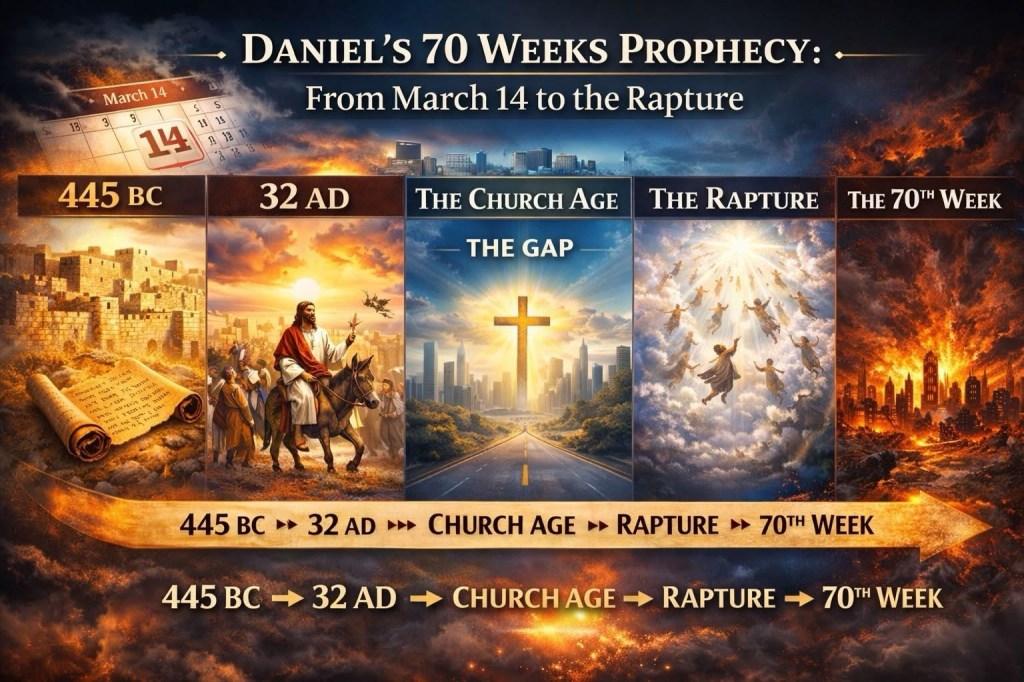









 Unlearning Tradition, Relearning Scripture