The Bible teaches, “And when the chief Shepherd appears, you will receive the unfading crown of glory. Likewise, you younger people, be subject to the elders. Clothe yourselves, all of you, with humility toward one another, for ‘God opposes the proud but gives grace to the humble’” (1 Peter 5:4-5). One thing that God despises is arrogance. It is truly sad that many Christians are not learning from the Bible.
During my seminary days, our preaching professor emphasized that if he heard any of us preaching in Greek, he would immediately stop us. He made a valid point in discouraging the use of foreign languages that our audience might not understand. However, it’s perfectly acceptable to learn or use Latin phrases, as well as Greek and Hebrew, in educational settings.
The Old Testament Bible was originally written in Hebrew, with portions in Aramaic. During the silent years of God—period stretching from Malachi to the appearance of John the Baptist—the Old Testament was translated into Greek, a version known as the Septuagint. The entire New Testament was written in Greek as well. Latin was not used in the Bible until the 4th century of Christianity, primarily due to the influence of Emperor Constantine’s era.
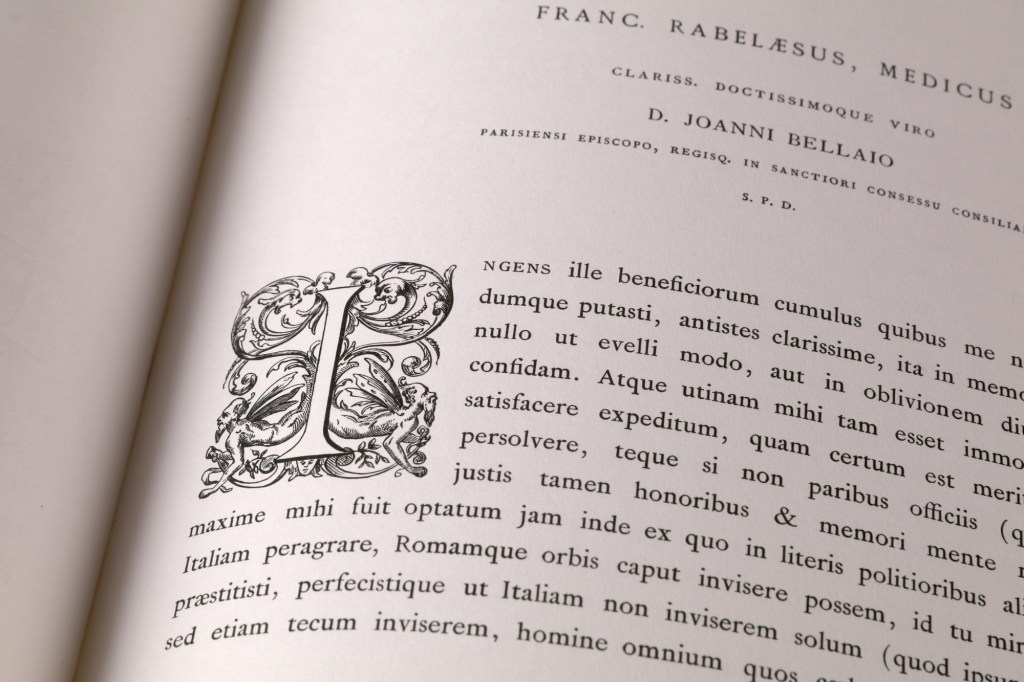
It is ironic that some Christians today quote statements of faith in Latin, a language that most people do not understand. This practice mirrors the Dark Ages of Christianity, when the Bible was written in Latin, effectively forbidding common people from reading and learning directly from it.
A teaching from the Bible by Paul comes to mind: “The one who speaks in a tongue builds up himself, but the one who prophesies builds up the church” (1 Corinthians 14:4). Paul discourages the use of foreign tongues because they were unintelligible to most people. Shouldn’t Christians, then, refrain from doing the same? Therefore, when Christians quote statements of faith in Latin, useless of course while in Vatican City, could this be considered unintelligible, similar to the speaking in tongues mentioned in the first-century church?
Christians who frequently quote in Latin today are behaving similarly to the Corinthian church during Paul’s time. Since Paul discouraged the use of foreign tongues, would he approve Christians quoting in Latin today?
Why was the Bible translated from its original languages into various modern languages? Wasn’t this done to make the Bible more accessible and understandable, thereby strengthening the church? Isn’t that the very argument Paul made in 1 Corinthians 14:1-12, discouraging speaking in foreign tongues? In fact, Paul even added, “If anyone speaks in a tongue, let there be only two or at most three, and each in turn, and let someone interpret. But if there is no one to interpret, let each of them remain silent in the church and speak to himself and to God.” (1 Corinthians 14:27-28)
It’s truly ironic that some Christians still fail to grasp this. Hopefully, they will come to recognize that such behavior is neither appropriate nor approved by the teachings of the Bible. This is especially relevant when we consider that these Christians adhere to the traditions of the Reformation— people who opposed Roman Catholicism— with figures like Martin Luther leading the charge. Luther recognized the mistake of keeping the Bible in Latin, so he translated it into German, the language spoken by the masses in Germany.
Many devout Christians have undertaken the same endeavor of translating the Bible into their native languages. John Wycliffe, along with his followers, successfully completed the first complete English Bible in 1382, although it was a translation of the Latin Vulgate rather than the original languages.
William Tyndale’s translation, the first from the original Hebrew and Greek, was published in 1526 as the New Testament. His work laid the foundation for subsequent English Bibles, but he was executed before completing the Old Testament. Miles Coverdale completed the first full, printed English Bible in 1535, building on Tyndale’s translations and incorporating his own from other sources.
We, as English readers of the Bible, should always be grateful for the efforts of these dedicated Christians. Therefore, let us discourage the use of Latin and instead express our statements of faith in English. Unless, of course, your intention is to simply elevate yourselves.
#StayQuiet
Peter, in the words of Acts 3:6, declared, “I possess neither silver nor gold, but in the name of Jesus Christ, I offer you what I have.” Share this article freely, for you freely receive. Take note, underlines and highlights are clickable links for definitions or Bible references. Stay updated by heading to our about page and subscribe directly to receive notifications in your inbox. Blessing!
 Unlearning Tradition, Relearning Scripture