Tag: Messianic Kingdom

  • Hope Springs Eternal

    Photo taken from Cebu Daily News

    In these troubling times, it’s heartwarming to hear stories of human goodness. Here’s a link to a heartwarming tale of a stray dog finding a loving home in the US.

    The Bible said, “The wolf and the lamb shall graze together; the lion shall eat straw like the ox, and dust shall be the serpent’s food. They shall not hurt or destroy in all My holy mountain,” says the LORD.” (Isaiah 65:25)

    Let’s learn from this story of a stray dog. Many are struggling and may be falling into depression. All it took was a chance encounter with a stranger who was willing to extend a helping hand. The rest is up to us. If you responded positively to that opportunity, your chances of bettering yourself are now possible. However, never abuse a gracious offer. They only offer you a hand, not their entire person.

    Depression is the fear of being alone in your misery, but that’s never true. Scripture states, “Behold, the virgin shall conceive and bear a Son, and they shall call His name Immanuel” (which means, God with us – Matthew 1:23).” That’s Jesus Christ.

    In the Book of Revelation, the Bible proclaims, “And I heard a resounding voice from the throne declaring, ‘Behold, the dwelling place of God has come to man. He will reside among them, and they will be His people. God Himself will be with them as their God.’” (Revelation 21:3)

    The Jerusalem temple, the visible manifestation of the First Heaven and First Earth, has ceased to exist. This aligns with Jesus Christ’s teachings in Scripture, as it has passed away. For reference, check out Matthew 24:1-35.

    Paul, in his letter to the church of Corinth, declared, “Therefore, if anyone is in Christ, they have become a new creation. The old has passed away; behold, the new has come.” (2 Corinthians 5:17)

    The New Creation has been a constant presence since the arrival of Christ Jesus, marking the inauguration of God’s kingdom. (For Scripture references, see Luke 17:20-21 and Matthew 12:28.) Its fullness becomes a complete reality with the destruction of the Old Covenant Jewish temple. Jesus declared, “Destroy this temple, and in three days I will raise it up.” (John 2:19) Clearly, the temple about to be destroyed was the Jerusalem temple. Christ Jesus, along with His church, constitutes the New Temple (Ephesians 2:19-22 and Ephesians 5:23), which He established by His resurrection.

    Though it is sad that the organized church has mangled the image of God’s church. Often times, it becomes a stumbling block for people to believe the Gospel. Nevertheless, never be afraid to be alone, especially if you are truly a Christian.

    Regardless of what happens, God promises never to abandon or forsake us. As it says in Hebrews 13:5, “Keep your life free from love of money and be content with what you have, for he has said, ‘I will never leave you nor forsake you.’”

    Scripture also warns that “the love of money brings trouble” (1 Timothy 6:10). Instead, seek God’s blessings, as it says in Proverbs 10:22, “The blessing of the LORD makes rich, and he adds no sorrow with it.”

    There is hope in humanity, after all. God’s goodness shines through in the hearts of those who are always ready to care and help. However, they must embrace the Gospel. Ephesians 2:8-9 emphasizes, “For by grace you have been saved through faith. It is not your own doing; it is the gift of God, not a result of works, so that no one may boast.”

    Share the Gospel, but do not imposed rules, regulations, or practices that are not explicitly taught in Scripture. The Bible intended God’s church to be a community, not an organization.

    Peter, in the words of Acts 3:6, declared, “I possess neither silver nor gold, but in the name of Jesus Christ, I offer you what I have.” Share this article freely, for you freely receive. Take note, underlines and highlights are clickable links for definitions or Bible references. Stay updated by heading to our about page and subscribe directly to receive notifications in your inbox. Blessing!

  • Another Open Letter to the Church:

    Quoting Paul’s words, “For I wrote to you out of much affliction and anguish of heart and with many tears, not to cause you pain but to let you know the abundant love that I have for you.” Speaking God’s truth in love, as taught in 2 Corinthians 2:4, so I share out of love for God’s church.

    Without a doubt, no one can truly be a Christian without doctrine. Doctrine refers to a set of beliefs or teachings that define one’s faith. In the context of Christianity, doctrine encompasses the fundamental truths about Jesus Christ, His salvation, His kingdom, and other related matters. Consequently, no Christian can claim to believe in Christ Jesus without being deeply concerned about the doctrine. Paul emphasized the significance of vigilance and perseverance in one’s life and doctrine, stating, “Be vigilant about your life and doctrine. Persevere in them, for if you do, you will save both yourself and your listeners.” (1 Timothy 4:16)

    Clearly, doctrine and faith are closely intertwined; it’s impossible to claim one without the other. The Christian faith is a set of doctrines centered on Christ Jesus. It’s no wonder that twice Paul condemned those who distorted the Gospel (see Galatians 1:6-7; 2 Corinthians 11:2-4). The Gospel is God’s doctrine for salvation. Ignorance and arrogance are dangerous predicaments for individuals claiming to be Christians. Be discerning and avoid falling for such lies.

    The Bible alone holds the authority to definitively speak about God’s doctrine for salvation. When read and taught in its context, Scripture remains inspired and inerrant. Consequently, Christians must be aware of potential errors, human influences, or biases that may arise when they read and listen to extra-biblical literatures. Scripture quotes must always be consistent with the biblical teaching of their text. The apostle taught Christians, saying, “I have applied all these things to myself and Apollos for your benefit, brothers, that YOU MAY LEARN BY US NOT TO GO BEYOND WHAT IS WRITTEN, that none of you may be puffed up in favor of one against another.” (1 Corinthians 4:6)

    Lately, with the recent events in Israel, many Christians have been making predictions about the future, claiming they are based on biblical prophecy. However, a closer look at their approach reveals that they have been quoting Scriptures without considering their context. I challenge anyone who claims to have found a prophecy about a third rebuilding of the Jewish temple in the Scriptures to provide the specific passage.

    Paul gave a warning to the church, saying, “For the time is coming when people will not endure sound teaching, but having itching ears they will accumulate for themselves teachers to suit their own passions, and will turn away from listening to the truth and wander off into myths.” (2 Timothy 4:3-4)

    That time occurred during Paul’s era, and unfortunately, it persists to this day. As I mentioned in my article “A Love Letter to the Church,” “since the decline in doctrinal standards has been ongoing for decades, if not centuries, defective doctrines have become the norm. Consequently, truthful biblical teachings have become indistinguishable to most Christians.” We don’t require another reformation; instead, we need a renewed interest in biblical truth. We can’t find it unless we revisit the writings of the first-century church, the Bible, and learn from there. That’s why our ministry is named “Unlearning Tradition, Relearning Scripture.” May God grant us grace to make time for this, even amidst our busy schedules. If securing our future here is important to you, I emphasize that our spiritual well-being is of utmost importance cause it’s about now and forevermore.

    Paul emphasized this in his letter to the church, “Let us focus on the unseen rather than the visible. The visible is fleeting, while the unseen is eternal.” (2 Corinthians 4:18)

    P.S. After encountering contradictions in the traditional teachings of the church, I made an effort to relearn Scripture. Despite knowing that Scripture is a unity, I couldn’t reconcile the traditional teachings. With the help of my seminary training, I embarked on a journey of restudying the Bible. As God promised in Proverbs 2:1-5, if we receive God’s words, treasure its commandments, and make ourselves attentive to its wisdom, yearning for understanding like that of hidden treasures, we will be given understanding and knowledge.

    With utmost humility and confidence in the Lord, I share that my understanding of the Scripture has grown. By God’s grace, I have found the courage to teach and explain it in my Bible study groups. If I were solely concerned with gaining acceptance and personal benefits, would I risk challenging the prevailing popular beliefs? However, driven by concern for my own salvation and the hope of reuniting with my departed son, I could not remain silent and continue adhering to conventional Bible teachings. Recognizing that my ultimate reward lies with the Lord Jesus Christ, I have chosen to openly share the Word to honor God and out of love for His church. Ultimately, God alone is the ultimate arbiter of truth, as revealed in His sacred Bible.

    Keep in mind that back in the days of Jesus Christ and the early church, the Sanhedrin, the Jewish religious order, was the recognized authority of Scripture. However, they led the people astray. Therefore, titles alone do not signify authority in conveying the truthful teachings of God’s word; correct exposition does. Hence, Paul emphasized, “Do your utmost to present yourself to God as one approved, a worker who has no need to be ashamed, rightly handling the word of truth.” (2 Timothy 2:15) Didn’t Paul uphold the doctrines of the Bible? 

    Peter , in the words of Acts 3:6, declared, “I possess neither silver nor gold, but in the name of Jesus Christ, I offer you what I have.” Share freely, for you freely receive. Stay updated by heading to our about page and subscribe directly to receive notifications in your inbox. Blessing!

  • Focus on the Subject

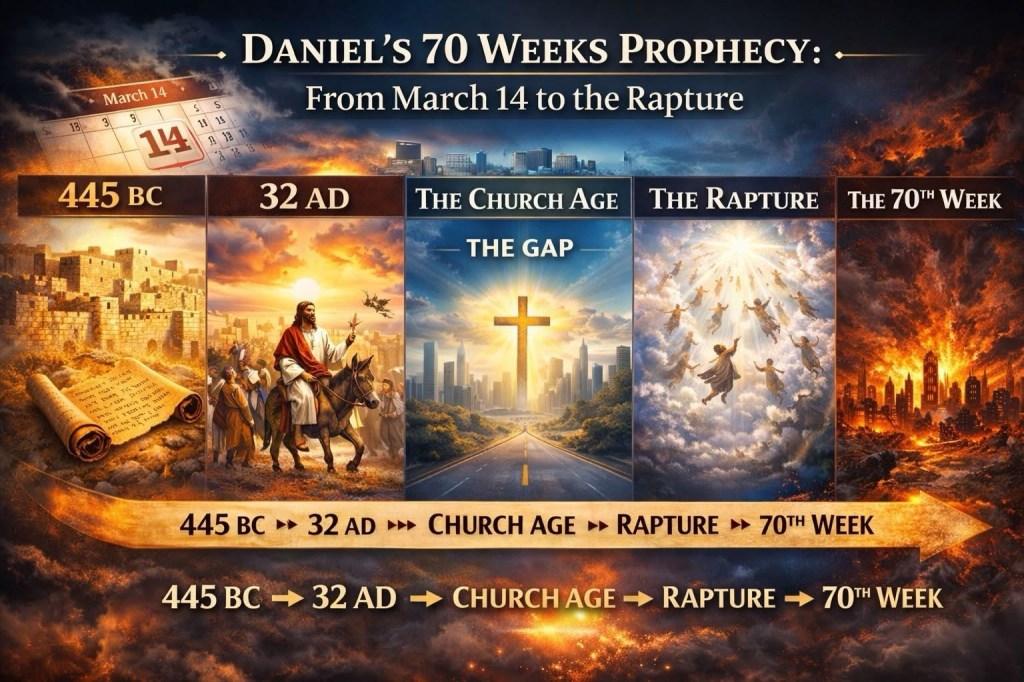
    Some Christian pastors argue that the church vanished after Revelation 3, suggesting that this indicates the rapture of the church. However, consider the photo above: did everything around the mushroom disappear, or was the focus solely on the mushroom? This analogy suggests that the idea of a church rapture is not necessarily valid. Rather, John shifts his focus to the judgment of Old Covenant Israel. This is evident in Revelation 11:15, where the seventh angel blows his trumpet, and heavenly voices proclaim, “The kingdom of the world has become the kingdom of our Lord and of His Christ, and He shall reign forever and ever.”

    In John’s Gospel (the Book of Revelation was also written by him), Christ Jesus, confronted by the Sanhedrin, the religious order of the Jews, declared, “My kingdom is not of this world. If My kingdom were of this world, My servants would have been fighting so that I might not be handed over to the Jews. But My kingdom is not of this world.” (John 18:36)

    Therefore, the kingdom that Christ Jesus conquered was that of the Old Covenant Israel. In Matthew 21, when confronted by the chief priests and Jewish elders, questioning His signs and authority to teach, Jesus Christ responded, “Therefore I tell you, the kingdom of God will be taken away from you and given to a people producing its fruits” (Matthew 21:43). Now, let’s consider the language of imminence that Christ Jesus spoke to the seven churches in Revelation. 

    First, to Ephesus, “Remember therefore from where you have fallen; repent, and do the works you did at first. If not, I WILL COME TO YOU and remove your lampstand from its place, unless you repent. Yet this you have: you hate the works of the Nicolaitans, which I also hate. He who has an ear, let him hear what the Spirit says to the churches. To the one who conquers I WILL GRANT TO EAT OF THE TREE OF LIFE, which is in the paradise of God.” (Revelation 2:5-7)

    Repentance is only possible during one’s lifetime, not after death, as demonstrated by Christ’s teachings in the story of Lazarus and the rich man (Luke 16:19-31). Therefore, Jesus’ warning is directed at the living church of Ephesus, urging them to repent before His return. Isn’t it logical then that Jesus implied His return would be in their lifetime?

    Second, to Smyrna, “Don’t be afraid of what you’re about to endure. The devil is about to imprison some of you for ten days, testing your faith. Be steadfast until death, and I’ll give you the crown of life. He who has an ear, let him hear what the Spirit says to the churches. THE ONE WHO CONQUERS WON’T BE HARMED BY THE SECOND DEATH.” (Revelation 2:10-11)

    The second death occurred at the final judgment of Christ Jesus, as described in Revelation 20:11-15. Concerning Christ’s deliverance and justice, refer to Luke 18:1-8, where Christ delivers a parable about an unjust judge. Jesus emphasizes the swift and imminent nature of His justice, stating that it would be speedy. I doubt the faithful Christians of Smyrna understood a millennial as the idea of such swift justice. However, it’s important to note that Christ’s teachings in Luke 18:1-8 were delivered in the context of Luke 17:20-31, where Jesus speaks about the coming of His kingdom. More importantly, in Luke 18:8, Jesus implicitly assures His disciples that His swift justice would be with them during their lifetime. Jesus said “Nevertheless, when the Son of Man comes, will he find faith on earth?” (Luke 18:8)

    Third, to Pergamum, “Repent, or I’LL COME TO YOU SOON and wage war against them with the sword of my mouth. He who has an ear, let him hear what the Spirit says to the churches. To the one who conquers, I’ll give some of the hidden manna and a white stone with a new name written on it, a name known only to the one who receives it.” (Revelation 2:16-17)

    Jesus prophesied that His coming to Christians in Pergamum would be imminent, not a millennium later. Why do Christians choose to complicate the straightforward statements of Christ Jesus? Keep in mind that Jesus Christ warns not to add or deduct from His Words written in Revelation: “I warn everyone who hears the words of the prophecy of this book: if anyone adds to them, God will add to him the plagues described in this book, and if anyone takes away from the words of the book of this prophecy, God will take away his share in the tree of life and in the holy city, which are described in this book. He who testifies to these things says, ‘SURELY I AM COMING SOON.’ Amen. Come, Lord Jesus!” (Revelation 22:18-20)

    Fourth, to Tyatira, “HOLD ON TO WHAT YOU HAVE UNTIL I RETURN. The one who conquers and keeps My works until the end will receive authority over the nations and rule them with an iron rod, just as I received authority from My Father.” (Revelation 2:25-27)

    Isn’t “until I return” an assurance of imminent arrival? Jesus Christ, once again, assures churches of John’s lifetime that they should keep the faith because He is coming soon.

    Fifth, to Sardis, “remember what you received and heard. Keep it and repent. If you don’t wake up, I WILL COME LIKE A THIEF, and you won’t know when I will attack you again. However, there are still a few names in Sardis, people who haven’t defiled themselves, and they will walk with Me in white, for they are worthy. The one who conquers will be clothed in white garments, and I will never erase his name from the book of life. I will proclaim his name before My Father and before His angels. He who has an ear, let him hear what the Spirit says to the churches.” (Revelation 3:3-6)

    The phrase “coming like a thief” suggests that Jesus’ return will be an unexpected event. This underscores the significance of the church’s role during this momentous occasion. If no one is present to witness it, what purpose does it serve for Christ to emphasize to the church that His return will be like a thief in the night? It’s important to remember that this message was addressed to the church during John’s time. In other words, the church wouldn’t have a precise understanding of the exact time of Christ’s return, but it would certainly be within the lifetime of John and his immediate audience.

    Sixth, to Philadelphia, “I AM COMING SOON. Hold on to what you have so that no one can take away your crown. The one who conquers will become a pillar in the temple of My God. They will never leave it, and I will write on them the name of My God and the name of the city of My God, the new Jerusalem, which descends from My God from heaven, and My own new name.” (Revelation 3:11-12)

    I suppose this time, it’s quite straightforward to understand. Jesus Christ had promised Christians in Philadelphia that His return would be imminent, not in the distant future of churches during John’s lifetime, but even ours, as futurists have led many to believe.

    Lastly, the seventh, to Laodicea, “Behold, I STAND AT THE DOOR AND KNOCK. If anyone hears My voice and opens the door, I will come in to them and eat with them, and they will eat with Me. The one who conquers will be granted a place with Me on My throne, just as I conquered and sat down with My Father on His throne. He who has an ear, let him hear what the Spirit says to the churches.” (Revelation 3:20-22)

    Jesus Christ was speaking to the church of Laodicea, not to us. This is a recurring theme in John’s writings, referring to churches in his lifetime. Unless you believe that John would remain alive, as John clarified in his Gospel that this was not what Christ had told Peter. Instead, John wrote, “Jesus said to Peter, ‘If it is My will that he (John) remain until I come, what is that to you? You follow Me!’” See John 21:20-25. Can you comprehend Christ’s declaration to Peter? Or have you been blinded by tradition to the point where it seems incomprehensible to you? Jesus Christ implicitly communicated to Peter that His return would occur during John’s lifetime.

    Christ Jesus has fulfilled His purpose and promises. He declared that He alone would establish His church. The church is eternal, and even Hades has no power over it as seen in Matthew 16:18-19. The church is not just a parenthesis to Israel, its fulfillment signals the end of Old Covenant Israel. Keep in mind that “hades and death” were thrown to the lake of fire before John declared the passing of the first heaven and first earth and the coming of the new heaven and new earth (Revelation 21:1). Incidentally, the first heaven and the first earth refer to the Old Covenant, while the New Heaven and New Earth is the New Covenant. Consequently, Paul explained in 2 Corinthians 5:16-17, “From now on, therefore, we regard no one according to the flesh (that is, circumcision). Even though we once regarded Christ according to the flesh, we regard Him thus no longer. Therefore, IF ANYONE IS IN CHRIST, HE IS A NEW CREATION. The old has passed away; behold, the new has come.”

    See Galatians 6:11-15, for a parallel teaching of Paul on circumcision and flesh: “See with what large letters I am writing to you with my own hand. It is those who want to make a good showing IN THE FLESH WHO WOULD FORCE YOU TO BE CIRCUMCISED, and only in order that they may not be persecuted for the cross of Christ. For even those who are circumcised do not themselves keep the law, but they desire to have you circumcised that they may boast in your flesh. But far be it from me to boast except in the cross of our Lord Jesus Christ, by which the world has been crucified to me, and I to the world. FOR NEITHER CIRCUMCISION COUNTS FOR ANYTHING, NOR UNCIRCUMCISION, BUT A NEW CREATION.”

    I completely understand if my discussion here might have confused you. I was in a similar situation many years ago. However, after being persuaded by Christ’s words, I dedicated myself to a serious and sincere study of God’s word. Today, there is a resurgence of Christians embracing the authentic teachings of the Bible. If you want to understand, all you need to do is to keep your focus, read, and study the Bible. While reading the Bible, avoid getting sidetracked by unnecessary details and focus on the main subject. In God’s own time, you will fully comprehend Scripture.

    Peter, in the words of Acts 3:6, declared, “I possess neither silver nor gold, but in the name of Jesus Christ, I offer you what I have.” Share freely, for you freely receive. Stay updated by heading to our about page and subscribe directly to receive notifications in your inbox. Blessing!

  • Is it Sound Teaching?

    I’ve heard of many preachers and read devotionals that emphasize Peter’s conviction, love, and commitment to Jesus Christ in John 21. In this passage, Jesus asks Peter three times, “Do you love Me more than these?” (John 21:15-17). However, have we ever considered what Jesus meant by “these”?

    To clarify, let’s examine the context of the story. In John 20:21, Jesus commands Peter and the other apostles to go out and preach the Gospel, saying, “Peace be with you. As the Father has sent Me, so I am sending you.” This took place in Jerusalem soon after Christ’s resurrection.

    Jesus first appeared to His apostles twice in Jerusalem. The first time is detailed in John 20:19-23, and the second time, with Thomas present, is described in John 20:24-29. John 21 aligns with Matthew 28:9-10, which summarizes the events of John 20:19-29, where Jesus instructs them to leave Jerusalem and wait for Him in Galilee, promising another appearance. Acts 1:3 informs us that Jesus appeared to the apostles multiple times over forty days, teaching them about the kingdom of God, His last appearance being in Jerusalem before His ascension to heaven (Acts 1:3-11).

    The setting of John 21:1-3 is in Galilee, where Peter decided to go fishing with some of the other disciples, many of whom were fishermen by trade. This leads me to pose a few questions: Was Peter faithful to the words of Christ? Didn’t Peter and the other apostles receive the Holy Spirit when Jesus breathed on them in Jerusalem (John 20:19-22)? Hadn’t Jesus called Peter to follow Him even before His crucifixion, death, and resurrection (John 1:40-43)? Previously, when Jesus first called them, He said, “Follow Me, and I will make you fishers of men” (Matthew 4:18-19; Mark 1:16-17). Notice that John 21 begins by telling us that Peter and the others went fishing.

    Returning to the central question: When Jesus asked Peter, “Do you love Me more than these?”, was He referring to Peter’s former profession or perhaps his need for provision and food? Did Peter forget Jesus’ teaching on trusting God for provision when they were initially sent out in Matthew 10? Jesus instructed, “Acquire no gold or silver or copper for your belts, no bag for your journey, or two tunics or sandals or a staff, for the laborer deserves his food” (Matthew 10:9-10). Once more, it’s worth noting that Christ’s words address the apostles, urging them not to be concerned about food or provisions. Jesus is fully aware of their needs.

    In some ways, Peter seems to have faltered. So, did Peter prove himself faithful in John 21?

    Now, consider the remarkable catch of fish described in John 21:5-11. After fishing all night and catching nothing (John 21:3-4), it was only after Jesus told them to cast their net on the right side of the boat that they caught a large number of fish. Was it because they cast their net on the right side that they succeeded? I am convinced they tried both sides throughout the night without success. This substantial catch teaches us that it was ultimately Jesus’ work, reinforcing the lesson that God is our true provider, as emphasized in Matthew 6:24-33.

    Here are the highlights of Jesus’ teaching:

    • You cannot serve both God and money. Jesus urges us to let go of our anxieties about life—what we will eat or drink, and what we will wear. Is life not more than food and the body more than clothing? Consider the birds of the air: they neither sow, reap, nor gather into barns, yet our heavenly Father provides for them. Are we not of greater value than they?
    • Reflect on the lilies of the field and their effortless growth: they neither toil nor spin. Yet, Jesus assure us, even Solomon in all his glory was not adorned like one of these. If God so beautifully clothes the grass of the field, which flourishes today and is cast into the oven tomorrow, will He not care for us even more, O you of little faith?
    • Do not be anxious, asking, “What shall we eat?” or “What shall we drink?” or “What shall we wear?”, for those who do not believe chase after such things, yet our heavenly Father knows our needs. Instead, .

    David, in one of his Psalms, stated, “I have been young, and now am old, yet I have not seen the righteous forsaken or his children begging for bread” (Psalms 37:25).

    Peter, along with the other apostles and ourselves, must learn to have faith so that we may faithfully follow Jesus Christ and honor His Word.

    John’s narrative does not end here. For the third time, Jesus asked Peter, “Do you love Me?” (John 21:17). After Peter’s response, Jesus assured him that he would be faithful and would ultimately die a martyr’s death, reiterating His call to follow Him (John 17-19).

    Hold your horses! Haven’t we been told by preachers and devotionals that Jesus used the Greek word “agápē” (G25) for love on two occasions? However, on the third occasion, out of compassion for Peter’s inability to meet such a high standard of love, Jesus used “phileō” instead. A quick search using a lexicon reveals that when Jesus spoke of God’s love for Him, He also used “phileō.” This is evident in John 5:20: “For the Father loves (phileō) the Son and shows Him all that He Himself is doing. And greater works than these will He show Him, so that you may marvel.” Therefore, Jesus didn’t lower His demand for love from Peter; the same can be said for us. It is a myth to claim that God or Jesus Christ lowered His standard for humanity. If that were the case, then Jesus would not have needed to offer Himself and die on the cross to redeem those of us who believe, as stated in 2 Corinthians 5:21.

    Let’s revisit our discussion on John 21. No one can be truly faithful to Jesus Christ unless God performs a significant work in our hearts. Remember that God is the potter and we are His clay. Just as a potter sometimes destroys his creations to perfect them, Jesus—our potter—works on Peter and on us. Therefore, do not despair if you fail repeatedly. Instead, continue to heed Jesus’ call to follow Him.

    After Jesus revealed to Peter that he would soon be faithful, Peter remained anxious and impatient, eager to know about others. He asked Jesus about John, as seen in John 21:20-21:

    “Peter turned and saw the disciple whom Jesus loved (John) following them, the one who also had leaned back against him during supper and had asked, ‘Lord, who is it that is going to betray you?’ When Peter saw him, he said to Jesus, ‘Lord, what about this man?’”

    In response, Jesus lovingly rebuked Peter while encouraging him, revealing His timeline for return as stated in John 21:22-23:

    “Jesus said to him (Peter), ‘If it is My will that he (John) remain until I come, what is that to you? You follow Me!’ So the rumor spread among the brothers that this disciple was not to die; yet Jesus did not say to him that he was not to die, but, ‘If it is My will that he (John) remain until I come, what is that to you?’”

    This was not the only instance where Jesus assured that His return would be within the lifetime of John and perhaps some other disciples, as noted in Matthew 16:28.

    Jesus declared to His apostles, “Truly, I say to you, there are some standing here who will not taste death until they see the Son of Man coming in His kingdom” (Matthew 16:28).

    Are there any apostles of Jesus Christ still living today? Perhaps they are just hiding away, reminiscent of the conspiracies about Elvis Presley still being alive in some discreet location. Alternatively, should we trust Christ’s declaration to His apostles that He truly returned, which contradicts much of what is taught today?

    Additionally, in Matthew 10, before sending out His apostles to proclaim the imminent coming of His kingdom, Jesus said, “When they persecute you in one town, flee to the next, for truly, I say to you, you will not have gone through all the towns of Israel before the Son of Man comes” (Matthew 10:23).

    If you approach the scriptures with an open heart and set aside any preconceived notions about the Second Coming of Jesus Christ, you will find consistent affirmations from the apostles regarding this truth. While many people believe that Christ’s return is still in the future, Jesus has consistently stated that His coming is soon. However, “soon” was meant for His apostles, not for us.

    I want to highlight that John assured us his writing was truthful. In John 21:24, it states, “This is the disciple who is bearing witness about these things, and who has written these things, and we know that his testimony is true.”

    In John 20-21, John assures his readers that Jesus is truly alive. He emphasizes this in John 21:14, which states, “This was now the third time that Jesus was revealed to the disciples after He was raised from the dead.”

    This is the core message John conveys to his immediate audience and to everyone reading his Gospel today. Both Peter and John, along with all the followers of Jesus at that time, received the comforting assurance that Jesus’ return would happen within their lifetimes.

    As I conclude this sharing, I encourage you to consider a few questions: Could Jesus lie? Was He mistaken in telling His apostles that He would return in their lifetime? Or is it possible that biblical scholars, preachers, and pastors are wrong in asserting that the Second Coming is still to come?

    Your answers to these questions will reflect your understanding of Jesus Christ. Remember that Jesus is the promised prophet mentioned in Deuteronomy 18:15-22.

    Here are the highlights of Deuteronomy 18:15-22:

    • The LORD your God will raise up a prophet like Moses from among the Israelites—listen to Him. Peter, inspired by the Holy Spirit, testifies that Jesus Christ is the promised Great Prophet of God (Acts 3:19-23).
    • God will raise a prophet from among the Israelites, placing His words in His mouth. Those who do not listen will be held accountable. Jesus Christ is the fulfillment of this promised prophet (John 8:28; John 12:49-50; John 15:15).
    • A prophet who speaks in God’s name without His command or claims to speak in the name of other gods shall die. If you are wondering how to determine whether the word the LORD has not spoken, know that if a prophet’s predictions do not come true, that message is not from the LORD, and you need not fear such a prophet. So here is the thing: Anyone who insists that Christ Jesus did not return during the lifetime of His apostles is essentially accusing Jesus of being a false prophet or a liar. Isn’t that blasphemy?

    I understand that this topic can be confusing. If you choose to believe Christ’s declaration about His imminent return, you may be left with many questions. I empathize with your journey and assure you that sincere inquiry will lead to understanding. Keep in mind that this quest for truth is vital.

    In conclusion, the Gospels teach us the truth about Jesus Christ and serve as an apologetic against false teaching. We should hold preachers accountable for their messages. John 21 focuses on Jesus, not Peter, so let’s refrain from moralizing biblical characters like Peter, Paul, or others. Do not let yourself be shortchanged. Reject feel-good messages that do not contain God’s truth. Always ask, “Is it sound teaching?”

    Peter, in the words of Acts 3:6, declared, “I possess neither silver nor gold, but in the name of Jesus Christ, I offer you what I have.” Share freely, for you freely receive. Stay updated by heading to our about page and subscribe directly to receive notifications in your inbox. Blessing!

  • The Teachings of Jesus Christ is Life and Spirit (John 6:63)

    Our study this morning is from John 15:15-18.

    “The Jews therefore marveled, saying, “How is it that this man [Jesus Christ] has learning, when He has never studied?” So Jesus answered them, “My teaching is not Mine, but His who sent Me. If anyone’s will is to do God’s will, he will know whether the teaching is from God or whether I am speaking on My own authority. The one who speaks on his own authority seeks his own glory; but the one who seeks the glory of Him who sent Him is true, and in Him there is no falsehood.”

    So, how do we know that we are learning from Jesus Christ, the Father, and the Holy Spirit, not from men? The teaching should always be in sync with the Scripture. Unlike today, a lot of Christian doctrines are misaligned, opposing each other.

    Example: Christians teach that at the moment of death, believers would go to heaven, and yet they also say Jesus has yet to return. However, Jesus, in John 14:6, said, “I am the way, and the truth, and the life. No one comes to the Father except through Me.” Christ beforehand also said, “Let not your hearts be troubled. Believe in God; believe also in Me. In My Father’s house are many rooms. If it were not so, WOULD I HAVE TOLD YOU THAT I GO TO PREPARE A PLACE FOR YOU? AND IF I GO AND PREPARE A PLACE FOR YOU, I WILL COME AGAIN AND WILL TAKE YOU TO MYSELF, THAT WHERE I AM YOU MAY BE ALSO.” (John 14:1-3)

    We all know forty days after Jesus’ resurrection [Acts 1:3], He ascended to the Father, thereby fulfilling His promise to prepare and return to take the believers to be with Him in heaven. So, if the Christian teaching today is correct, and He has yet to return, then no one can go to the Father at the moment because Jesus promised and made clear He alone is the way to the Father, and He would return to take the believers to heaven. In other words, before Jesus’ return, heaven should be off-limits to us.

    That truth is reinforced by Hebrews 9:28: “So also Christ, having been offered once to bear the sins of many, WILL APPEAR A SECOND TIME, NOT TO BEAR SIN, BUT TO BRING SALVATION TO THOSE WHO ARE WAITING FOR HIM.”

    Christians today aren’t the only ones waiting for Christ’s return. The contemporaries of Paul and Peter, Christians before the destruction of the Jerusalem temple, were waiting as well. See passages below.

    “so that you are not lacking in any gift, as you wait for the revealing of our Lord Jesus Christ (1Co 1:7)

    “But our citizenship is in heaven, and from it we await a Savior, the Lord Jesus Christ” (Php 3:20)

    “For not only has the word of the Lord sounded forth from you in Macedonia and Achaia, but your faith in God has gone forth everywhere, so that we need not say anything. For they themselves report concerning us the kind of reception we had among you, and how you turned to God from idols to serve the living and true God, and to wait for His Son from heaven, whom He raised from the dead, Jesus who delivers us from the wrath to come.” (1Th 1:8-10)

    Paul and his generation of Christians were waiting for Christ’s return. Peter made clear however, the return of Christ Jesus and His salvation would be consummated in his generation. See 1Peter 1:10-13.

    “CONCERNING THIS SALVATION, the prophets [OT prophets] who prophesied about the grace that was to be yours [Peter’s contemporary Christians] searched and inquired carefully, inquiring what person or time the Spirit of Christ in them was indicating when He [God] predicted the sufferings of Christ and the subsequent glories. IT WAS REVEALED TO THEM THAT THEY WERE SERVING NOT THEMSELVES [OT prophets] BUT YOU [Peter’s contemporary Christians], in the things that have now been announced to you [Peter’s contemporaries] through those who preached the good news to you [Peter’s contemporaries] by the Holy Spirit sent from heaven, things into which angels long to look. THEREFORE, PREPARING YOUR [Peter’s contemporary Christians] MINDS FOR ACTION, AND BEING SOBER-MINDED, SET YOUR HOPE [Peter’s contemporary Christians] FULLY ON THE GRACE THAT WILL BE BROUGHT TO YOU [Peter’s contemporary Christians] AT THE REVELATION [or appearing] OF JESUS CHRIST.”

    Peter, therefore rightly reiterated Jesus’ Word and promise. See Matthew 16:28. “Truly, I say to you [Peter and his fellow apostles], there are some standing here who will not taste death until they see the Son of Man coming in His kingdom.”

    Unless perhaps, the then apostles of Christ are still alive today – similar to the conspiracy theory about Elvis Presley being alive still and in hiding somewhere 😝.

    If somebody promised to meet you at a specific time then stood you up, what do you make of that person? Trustworthy or not? Oh, maybe you would say perhaps he has a legitimate reason for being remiss of his word? But that can’t be true with Christ Jesus. The promised great prophet of Deuteronomy 18:15-22; Acts 3:22-23; Acts 7:37.

    Do you understand the implications of such teaching? Asserting that Jesus Christ is yet to come; contrary to the claim of the Scripture. It opposes the very Word and promise of Christ Jesus. Therefore, futurist preachers today are actually – perhaps unknowingly but still by inference – saying Jesus failed in His Word and promise. The renowned, actually it should be infamous, C.S. Lewis said perhaps Jesus was hallucinating so He said those words to His apostles. Lewis even said, “Matthew 24:34 is the most embarrassing verse in the Bible” because Jesus promised to return to the generation of His apostles, but He did not. [https://www.behindthegospels.com/p/surprised-by-cs-lewis-the-most-embarrassing]

    I don’t know about most Christians, but I would always adhere to Jesus Christ and His infallible words. It cannot be that Christ remised on His Word. Rather, if the Bible says one thing and the contemporary teaching opposes it, the Bible being infallible would mean it is always right. It’s our Christian duty to study the Bible until we have reconciled with God’s Word, discerning the truth. If modern Christian teaching does not stand up to the scrutiny of Scripture, then it ought to be disputed and corrected – even if it would invite attacks from critics because they insist on their truth.

    Let me forewarn everyone though, back in the garden of Eden and with the temptation of Jesus Christ, it was the devil who had twisted God’s Word. No wonder, therefore, the unbelieving Jews opposed Christ’s Words, so Jesus refers to them as children of the devil (John 8:44-45). Certainly, we would not want to be in opposition to God’s Word.

    In conclusion, Scripture said,

    “He [Jesus Christ] was foreknown before the foundation of the world but was made manifest in the last times [last days] for the sake of you [Peter’s immediate audience or readers] who through Him are believers in God, who raised Him from the dead and gave Him glory, so that your faith and hope are in God. Having purified your souls by your obedience to the truth for a sincere brotherly love, love one another earnestly from a pure heart, since you have been born again, not of perishable seed but of imperishable, through the living and abiding word of God; for “All flesh is like grass and all its glory like the flower of grass. The grass withers, and the flower falls, but the word of the Lord remains forever.” And this word is the good news that was preached to you.” (1Pe 1:20-25)

    Scripture made clear, that no one was mysteriously born again, but by the unchanging imperishable Word of God. Would you rather trust in man’s teachings or only the Word of God? Seek and discern the source of your learnings. Was it from man’s imagination or the diligent and careful study of God’s Word? Truthful teaching of God’s Word should always adhere to, not oppose, clear and straightforward teachings of the Scripture.

    Jesus Christ said, “The Spirit is the one who gives life. The flesh doesn’t help at all. The words that I have spoken to you are spirit and are life. (John 6:63)

    Peter, in the words of Acts 3:6, declared, “I possess neither silver nor gold, but in the name of Jesus Christ, I offer you what I have.” Share freely, for you freely receive. Stay updated by heading to our about page and subscribe directly to receive notifications in your inbox. Blessing!