Tag: Kingdom of heaven

  • Priceless!

    Many people blame God when life becomes difficult, asking questions like, “Why did God allow this to happen?” Is God really uncaring? Did He create a miserable life for us?

    In the beginning, God created man, provided him with a suitable partner, and placed them in His garden. However, there was a condition: they were forbidden from eating the fruit from a particular tree. But Adam, humanity’s representative before God, chose to disobey the covenant. Consequently, troubles have plagued humanity ever since.

    The Bible recounts the first murder following their banishment from the garden and mentions how, as human populations grew, God observed their persistent wickedness. It states, “Every intention of the thoughts of man’s heart was only evil continually.” This contradicts the very intention of God in creation, as evident in Genesis 1:3-31, where each day of God’s work is described as good or very good.

    So, is it really God’s fault that humanity is in such a fallen state? Isn’t it rather a result of humanity’s own choices to reject God and His goodness?

    Despite humanity’s rebellion, God allows people to live until their physical lives come to an end. Only then does God take back the source of life from them. Ecclesiastes 12:7 states, “The dust returns to the earth as it was, and the spirit returns to God who gave it.”

    God alone is the source of life. When humanity attempts to govern itself, it faces the consequences of separation from God. He warned Adam, saying, “You may surely eat of every tree in the garden, but of the tree of the knowledge of good and evil you shall not eat, for in the day that you eat of it, you shall surely die” (Genesis 2:16-17). Adam’s spiritual or covenant death was a result of breaking that covenant. God does not revoke what He has given—the breath of life—until the physical body expires. Although God intended for humanity to live forever, as shown by the presence of the tree of life in the Garden of Eden, Adam and Eve were expelled from the garden because they lost their right to eternal life.

    God always provides for us. He reversed the curse on the ground that had made it unproductive due to Adam’s sin, as described in Genesis 3:16-19. However, this promise came after He had judged the world with the flood during Noah’s time. The LORD stated, “I will never again curse the ground because of man, for the intention of man’s heart is evil from his youth. Neither will I ever again strike down every living creature as I have done. While the earth remains, seedtime and harvest, cold and heat, summer and winter, day and night shall not cease” (Genesis 8:21-22).

    Remarkably, even after Adam’s curse, God’s purpose in creating humanity in His image remains unchanged. He promised the Seed of the woman. Hence, the Scriptures proclaim, “But when the fullness of time had come, God sent forth His Son, born of a woman, born under the law, to redeem those who were under the law, so that we might receive adoption as sons” (Galatians 4:4-5).

    This promise is not limited to those under the Mosaic Law but extends to everyone who believes in Jesus Christ. As Galatians 3:24-28 states, “So then, the law was our guardian until Christ came, in order that we might be justified by faith. But now that faith has come, we are no longer under a guardian, for in Christ Jesus you are all sons of God through faith. For as many of you as were baptized into Christ have put on Christ. There is neither Jew nor Greek, neither slave nor free, nor male and female; for you are all one in Christ Jesus.”

    In the beginning, God nurtured Adam and Eve in the garden, even after their expulsion from it. Scripture states that God made garments of skins and clothed them. Similarly, He cared for the Israelites during their time in the wilderness. God regarded Israel as a special nation among the nations until they rejected Christ Jesus. However, He was not surprised by Israel’s rejection of Him; it had been prophesied. In Genesis 3:15, God declared, “I will put enmity between you (the serpent) and the woman, and between your offspring and her offspring; He shall bruise your head, and you shall bruise His heel.” Christ Jesus was the promised offspring of the woman. In contrast, Old Covenant Israel is described as the offspring of the devil, as seen in John 8:44-45. Jesus addressed the unbelieving Jews, saying, “You are of your father the devil, and your will is to do your father’s desires. He was a murderer from the beginning and does not stand in the truth, because there is no truth in him. When he lies, he speaks out of his own character; for he is a liar and the father of lies. But because I tell the truth, you do not believe me.”

    John the Baptist had the same description for the unbelieving Jews, see Matthew 3:7, “But when he saw many of the Pharisees and Sadducees coming to his baptism, he said to them, ‘You brood of vipers! Who warned you to flee from the wrath to come?’”

    With the arrival of Christ Jesus, God extends His care to all who believe in Him, offering the gift of eternal life. All we need to do is believe and trust in God’s goodness. As Paul states in Romans, “What then shall we say to these things? If God is for us, who can be against us? He who did not spare His own Son but gave Him up for us all, how will He not also with Him graciously give us all things?” (Romans 8:31-32).

    Life in this world will not always be trouble-free. Everything tangible and physical is subject to corruption and decay. The Christian life is rooted in the spiritual, even as we live in the flesh. We are called to salvation and yet remain here on Earth because it is our mission to share the Gospel of Christ with others. This calling is not limited to being a missionary; it involves being part of God’s work and living accordingly. That is the true essence of Christianity. Therefore, let us cultivate a legacy of sharing the message of Jesus and His Gospel, so that others might also join us in eternal life.

    I urge all Christians to refrain from dividing ourselves over doctrinal differences. Let us humbly embrace the true teachings of the Bible and strive for unity in faith. Paul clearly states in Ephesians that Christianity comprises one body and one Spirit. We are called by one Lord, one faith, one baptism, and one God and Father of all (Ephesians 4:4-6).

    Understand the parables of Jesus: “The kingdom of heaven is like treasure hidden in a field, which a man found and covered up. Then in his joy he goes and sells all that he has and buys that field. ‘Again, the kingdom of heaven is like a merchant in search of fine pearls, who, on finding one pearl of great value, went and sold all that he had and bought it.’” (Matthew 13:44-46)

    The Gospel of Jesus Christ is the only gift that anyone can carry into eternity—God’s kingdom. Jesus proclaimed that the kingdom of heaven is here (Luke 17:20-21). We should learn from the Bible to understand that there is nothing more valuable than discovering God’s kingdom. It is truly priceless!

    Peter, in the words of Acts 3:6, declared, “I possess neither silver nor gold, but in the name of Jesus Christ, I offer you what I have.” Share this article freely, for you freely receive. Take note, underlines and highlights are clickable links for definitions or Bible references. Stay updated by heading to our about page and subscribe directly to receive notifications in your inbox. Blessing!


  • The Wedding Vow

    Recently, a friend from afar came to visit us. She inquired about my journey to becoming a pastor. To summarize my experience, I explained that I spent six years in an organized church, where I received a salary. However, for close to twelve years now, I have been serving independently, conducting Bible studies without a salary. Instead, I trust in God for voluntary contributions. She was amazed by God’s goodness and grace.

    Is it permissible for a pastor to engage in money-making ventures or be employed in secular work while also serving God? Paul addressed this question in 1 Corinthians 9:7-14.

    “Who serves as a soldier at his own expense? Who plants a vineyard without eating any of its fruit? Or who tends a flock without getting some of the milk? Do I say these things on human authority? Does not the Law say the same? For it is written in the Law of Moses, “You shall not muzzle an ox when it treads out the grain.” Is it for oxen that God is concerned? Does He not certainly speak for our sake? It was written for our sake, because the plowman should plow in hope and the thresher thresh in hope of sharing in the crop. If we have sown spiritual things among you, is it too much if we reap material things from you? If others share this rightful claim on you, do not we even more? Nevertheless, we have not made use of this right, but we endure anything rather than put an obstacle in the way of the gospel of Christ. Do you not know that those who are employed in the temple service get their food from the temple, and those who serve at the altar share in the sacrificial offerings? In the same way, the Lord commanded that those who proclaim the gospel should get their living by the gospel.” (1 Corinthians 9:7-14)

    Jesus told a person who wanted to follow Him, “Foxes have holes, and birds of the air have nests, but the Son of Man has nowhere to lay His head.” (Luke 9:58)

    We do not follow Jesus for material gains, but rather for forgiveness, restoration to God, and the gift of eternal life. This principle applies to everyone, including both pastors and disciples of Christ.

    Jesus warns those who wish to follow Him that it won’t be easy. It’s not a bed of roses; life’s challenges will still arise. He further emphasized this by telling another potential follower, “No one who puts his hand to the plow and looks back is fit for the kingdom of God.” (Luke 9:62)

    It’s ironic that many Christians often put Jesus or the Bible on the backseat when life’s troubles or even busyness arise. This is not a true way to follow Jesus Christ. Following Him can be summarized by the wedding vow: “I promise to be true to you in good times and in bad, in sickness and in health. I will love you and honor you all the days of my life.”

    Oddly, Jesus even states, “Whoever loves father or mother more than Me is not worthy of Me, and whoever loves son or daughter more than Me is not worthy of Me.” (Matthew 10:37)

    The journey of following Jesus is a narrow path with no other options. Hence, Jesus earlier in Luke 9 teaches: “If anyone would come after Me, let him deny himself and take up his cross daily and follow Me. For whoever would save his life will lose it, but whoever loses his life for My sake will save it.” (Luke 9:23-24)

    Doesn’t seem to have options there, do we? It requires a strong commitment to follow Him, regardless of the consequences or obstacles. Jesus Christ invites us, saying, “Come, follow Me,” with no qualifications or exceptions.

    During our Bible study, we often come across a passage in Scripture that leads to disagreement among some participants about its applicability to everyone. Consider Christ’s directive: “And Jesus, looking at him, loved him and said to him, ‘You lack one thing: go, sell all that you have and give to the poor, and you will have treasure in heaven; and come, follow Me.’” (Mark 10:21).

    Is this an isolated teaching in Scripture? It is not. Jesus, in Luke 12:33-34, teaches something similar that applies to all who wish to be His disciples: “Sell your possessions and give to the needy. Provide yourselves with moneybags that do not grow old, with a treasure in the heavens that does not fail, where no thief approaches and no moth destroys. For where your treasure is, there will your heart be also.” (Luke 12:33-34)

    The central message of Christ Jesus is not to demand that we sell all our possessions, but rather to emphasize that we should not love material wealth more than we love God. We need to place our hearts in the right position, as stated in Matthew 6:19-21. Jesus further explains, “No one can serve two masters; either he will hate the one and love the other, or he will be devoted to one and despise the other. You cannot serve God and money.” (Matthew 6:24)

    We should follow Jesus with full conviction and trust. Take some time to reflect on whether you can endure the journey of following Him. The cost may be high, but the reward is priceless—eternal entry into God’s kingdom. Remember that when we decide to follow Jesus Christ, we are bound by a sacred commitment, like a wedding vow.

    Peter, in the words of Acts 3:6, declared, “I possess neither silver nor gold, but in the name of Jesus Christ, I offer you what I have.” Share this article freely, for you freely receive. Take note, underlines and highlights are clickable links for definitions or Bible references. Stay updated by heading to our about page and subscribe directly to receive notifications in your inbox. Blessing!

  • Hope Springs Eternal

    Photo taken from Cebu Daily News

    In these troubling times, it’s heartwarming to hear stories of human goodness. Here’s a link to a heartwarming tale of a stray dog finding a loving home in the US.

    The Bible said, “The wolf and the lamb shall graze together; the lion shall eat straw like the ox, and dust shall be the serpent’s food. They shall not hurt or destroy in all My holy mountain,” says the LORD.” (Isaiah 65:25)

    Let’s learn from this story of a stray dog. Many are struggling and may be falling into depression. All it took was a chance encounter with a stranger who was willing to extend a helping hand. The rest is up to us. If you responded positively to that opportunity, your chances of bettering yourself are now possible. However, never abuse a gracious offer. They only offer you a hand, not their entire person.

    Depression is the fear of being alone in your misery, but that’s never true. Scripture states, “Behold, the virgin shall conceive and bear a Son, and they shall call His name Immanuel” (which means, God with us – Matthew 1:23).” That’s Jesus Christ.

    In the Book of Revelation, the Bible proclaims, “And I heard a resounding voice from the throne declaring, ‘Behold, the dwelling place of God has come to man. He will reside among them, and they will be His people. God Himself will be with them as their God.’” (Revelation 21:3)

    The Jerusalem temple, the visible manifestation of the First Heaven and First Earth, has ceased to exist. This aligns with Jesus Christ’s teachings in Scripture, as it has passed away. For reference, check out Matthew 24:1-35.

    Paul, in his letter to the church of Corinth, declared, “Therefore, if anyone is in Christ, they have become a new creation. The old has passed away; behold, the new has come.” (2 Corinthians 5:17)

    The New Creation has been a constant presence since the arrival of Christ Jesus, marking the inauguration of God’s kingdom. (For Scripture references, see Luke 17:20-21 and Matthew 12:28.) Its fullness becomes a complete reality with the destruction of the Old Covenant Jewish temple. Jesus declared, “Destroy this temple, and in three days I will raise it up.” (John 2:19) Clearly, the temple about to be destroyed was the Jerusalem temple. Christ Jesus, along with His church, constitutes the New Temple (Ephesians 2:19-22 and Ephesians 5:23), which He established by His resurrection.

    Though it is sad that the organized church has mangled the image of God’s church. Often times, it becomes a stumbling block for people to believe the Gospel. Nevertheless, never be afraid to be alone, especially if you are truly a Christian.

    Regardless of what happens, God promises never to abandon or forsake us. As it says in Hebrews 13:5, “Keep your life free from love of money and be content with what you have, for he has said, ‘I will never leave you nor forsake you.’”

    Scripture also warns that “the love of money brings trouble” (1 Timothy 6:10). Instead, seek God’s blessings, as it says in Proverbs 10:22, “The blessing of the LORD makes rich, and he adds no sorrow with it.”

    There is hope in humanity, after all. God’s goodness shines through in the hearts of those who are always ready to care and help. However, they must embrace the Gospel. Ephesians 2:8-9 emphasizes, “For by grace you have been saved through faith. It is not your own doing; it is the gift of God, not a result of works, so that no one may boast.”

    Share the Gospel, but do not imposed rules, regulations, or practices that are not explicitly taught in Scripture. The Bible intended God’s church to be a community, not an organization.

    Peter, in the words of Acts 3:6, declared, “I possess neither silver nor gold, but in the name of Jesus Christ, I offer you what I have.” Share this article freely, for you freely receive. Take note, underlines and highlights are clickable links for definitions or Bible references. Stay updated by heading to our about page and subscribe directly to receive notifications in your inbox. Blessing!

  • Learn from the past and bear fruits for Christ Jesus.

    Passage this morning: “Jesus said to them, “Have you never read in the Scriptures: “‘The stone that the builders rejected has become the cornerstone; this was the Lord’s doing, and it is marvelous in our eyes’? Therefore I tell you, the kingdom of God will be taken away from you and given to a people producing its fruits. And the one who falls on this stone will be broken to pieces; and when it falls on anyone, it will crush him.” When the chief priests and the Pharisees heard His parables, they perceived that He was speaking about them.” (Matthew 21:42-45)

    Conclusion: Faith is a prerequisite to be kingdom people (Matt. 8:10). Scripture states, “Without faith, no one can please God (Hebrews 11:6).” To develop faith, we must understand and believe that Jesus Christ is the Word and that they are one. No Christian can claim to believe in Jesus Christ and yet doubt His Word. The Bible is then the centerpiece of how we learn to live as Christians and be kingdom people.

    Jesus, in John 15, emphasized that unless we abide in Him and His Word, we cannot bear fruits. Israel, however, failed to bear fruits because they rejected the True Vine, Jesus Christ. Due to their pride and desire to rule over God’s vineyard, they failed to produce any fruit. Tragically, they even killed Jesus Christ, the true heir of the vineyards, as revealed in Matthew 21:33-45.

    We Christians should learn from the Scriptures’ teachings and avoid repeating Israel’s mistakes. Consider John 11:45-50, Scripture said: “Many of the Jews who had come with Mary and witnessed what Jesus did believed in Him, but some went to the Pharisees and reported what Jesus had done. Consequently, the chief priests and Pharisees convened a council and asked, ‘What should we do? For this man performs numerous signs. If we allow Him to continue in this manner, everyone will believe in Him, AND THE ROMANS WILL SEIZE BOTH OUR POSITIONS AND OUR NATION.’ However, one of them, Caiaphas, the high priest that year, responded, ‘You are completely ignorant. You do not comprehend that it is better for one person to die for the people than for the entire nation to perish.’” (John 11:45-50)

    The religious leaders of Jesus’ time, defended the institution they had established, fearing to lose their authority, they ultimately killed Jesus Christ and later the people who had come to believe in His teachings.

    Destiny has nothing to do with history repeating itself; rather, it’s because people failed to learn from history. The Bible provides historical accounts of Old Covenant Israel and the early church to illustrate the mistakes of the past. Learning from the past should guide us not to repeat their mistakes. Christians, we cannot preserve the sanctity of the church through human means or ideas. Instead, we must learn from the Bible to avoid the mistakes of the past and follow the word of God. By abiding in Christ Jesus and His Word, we will bear fruits for Him.

    Note: Click on underlines and highlights for definitions or Bible references.

    Peter , in the words of Acts 3:6, declared, “I possess neither silver nor gold, but in the name of Jesus Christ, I offer you what I have.” Share freely, for you freely receive. Stay updated by heading to our about page and subscribe directly to receive notifications in your inbox. Blessing!

  • True North of Life

    Blogging has faced criticism from some Christian ministers, particularly those in positions of authority. Some bloggers and vloggers have been accused of misrepresenting themselves and spreading false information, which is true, but not all. However, can we assert that all Christian ministers are truly faithful to God’s word? If so, we wouldn’t have diverse interpretations of the Bible. Similarly, some bloggers and vloggers may have been consistent with truthful facts, while others are not. Therefore, it would be unfair to categorize people based on their status. Instead, people are defined by their convictions and words. In Christian ministry, the Bible alone stands as the foundation of truth, but it must always be handled rightly and properly expounded.

    I started blogging during my seminary days. A professor introduced us to the concept, and I briefly began a few blogs before discontinuing them. Since English grammar wasn’t my strong suit, so I stopped writing altogether.

    When I transitioned to the pastorate, we were asked to contribute to the church’s quarterly magazine. I recall that for the next six years, I was required to write one article per quarter. However, I stopped writing when I began and was preoccupied with my independent Bible study ministry.

    It’s been eleven years since we began our ministry. I don’t recall the exact date I resumed writing, but this time, I created this blog website to reach a wider audience.

    The pandemic gave me more time to write, and it became more practical due to the social distancing health protocols. As a result, my ministry has expanded to include blogging, explaining God’s Word, and conducting online Bible studies.

    God certainly works in mysterious ways. I hope my writings will continue to be useful and relevant even after I’m gone.

    I believe it still would be, as Ecclesiastes declared, “What has been is what will be, and what has been done is what will be done. There is nothing new under the sun. Is there anything that is said, ‘See, this is new’? It has already existed in the ages that have passed.” (Ecclesiastes 1:9-10)

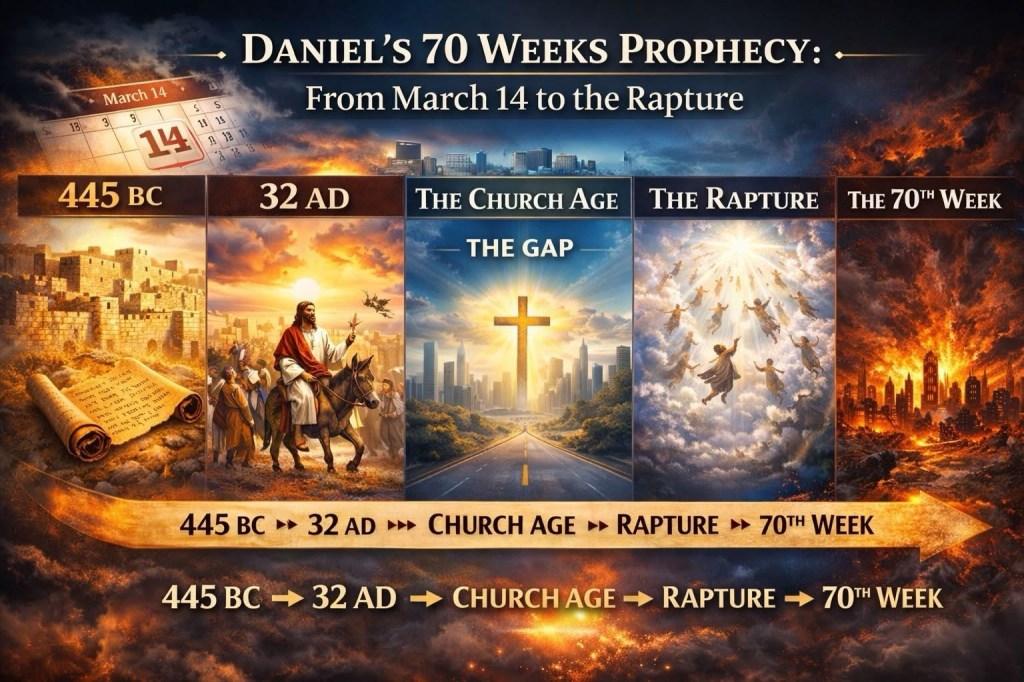
    The Christian endeavor to do better would not end. Contrary to popular beliefs, the Christian age would not end with the rapture. The Christian age, which commenced at the Pentecost of Acts 2, continues and will continue for eternity. God’s church is the manifestation of His kingdom, which I would like to detail next.

    The Book of Hebrews said, “Therefore let us be grateful for receivingtake note, it’s in the present, active, participle – a kingdom that cannot be shaken, and thus let us offer to God acceptable worship, with reverence and awe.” (Hebrews 12:28)

    Note: In Greek, the “present active participle” serves as a verbal adjective, signifying an action that is ongoing or repeated. It occurs simultaneously with the main verb in a sentence, providing additional context and detail to the action being described.

    Therefore, God’s unshakable kingdom is already at work, present yet awaiting its completion. Christ’s Church represents God’s kingdom on Earth, unlike the Davidic kingdom of the Old Covenant, which ended disastrously. The kingdom was initially split into two— Israel and Judah— due to the sins of Solomon and Rehoboam. Israel fell into the Assyrian Empire, Judah into Babylon, and finally Rome. In contrast, the New Covenant kingdom of Christ Jesus is eternal and unshakable, as evident in Hebrews 12:22-28.

    See Scripture: “But you have come – again take note it’s in the Second Perfect, Active, Indicative to Mount Zion and to the city of the living God, the heavenly Jerusalem, and to myriads of angels, to the general assembly and church of the firstborn who are enrolled in heaven, and to God, the Judge of all, and to the spirits of the righteous made perfect, and to Jesus, the mediator of a new covenant, and to the sprinkled blood, which speaks better than the blood of Abel.” (Hebrews 12:22-24, NASB)

    Did you notice that Hebrews explicitly stated that God’s church is the new heavenly Jerusalem? This is synonymous with the New Heaven and New Earth as described by John in Revelation, who refers to her as the bride of Christ Jesus—the church (Revelation 21:1-2). It’s commendable that the NASB translation of the Bible faithfully retained the word “church,” unlike most modern English translations.

    Note: In Greek, the “second perfect active indicative” form is used to express a completed action that occurred in the past and carries lasting implications or a state that continues into the present.

    No wonder, in Luke 17:20-21, the Bible provides another proof that God’s kingdom is already present during Christ Jesus’ incarnation.

    The scripture states, “When the Pharisees asked Jesus about the kingdom of God, He replied, ‘The kingdom of God is not coming in a way that can be seen or heard. It is already among you.’”

    In Revelation, Scripture proclaims, “The kingdom of the world has becomethat note, Second Aorist, Middle Deponent, Indicative – the kingdom of our Lord and of His Christ, and He will reign forever and ever.” (Revelation 11:15)

    Note: In Greek, a “second aorist middle deponent indicative” verb form shows a completed action from the past. It mainly uses the middle voice, but the verb is considered deponent. This means it has only middle (or middle and passive) forms, while still having an active meaning.

    Therefore, Since John had witnessed Christ Jesus, who proclaimed that the kingdom was present among them, John addressed his contemporary audience, the church of his era, in Revelation. He declared, “The kingdom of the world has become the kingdom of our Lord and of His Christ.” Consequently, God’s kingdom has permeated the world, and its fulfillment lies in the generation that first witnessed its arrival.

    Whether you believe Christ Jesus has returned fulfilling His promise to come in the lifetime of His apostles, as stated in Matthew 16:28; Matthew 10:23; Mark 9:1; Luke 9:27, and many other passages of the Bible or not, the fact remains that God’s kingdom has arrived as Jesus Christ Himself declared in Luke 17:20-21; Matthew 12:28; Luke 11:20; Romans 14:16-17; Colossians 1:13; Hebrews 12:28. Take time to carefully study those passages. Remember that if you unreasonably reject God’s word, you are not opposing me, but rather God. 

    As Gamaliel told the religious order of his time accusing Peter and John of falsehood, “So in the present case I tell you, keep away from these men and let them alone, for if this plan or this undertaking is of man, it will fail; but if it is of God, you will not be able to overthrow them. You might even be found opposing God!” (Acts 5:38-39)

    Do not be misled by teachings like that of the rapture and the likes. Popular as they may be, it does not mean they are true to the Bible. Unless you can defend it conclusively with Scriptures.

    Christ Jesus and His apostles confronted prevailing popular traditional beliefs and teachings. They went against the then recognized and accepted religious order. Who is in the right? If you know your Bible, you know the answer to that. 

    Keep in mind religious titles and positions do not count in the eyes of God, unless they uphold and honor God’s word (Hebrews 13:7; 1 Thessalonians 5:12-13). God’s truth can only be proven through faithful exposition of the Bible. 

    I write for two primary reasons: to preserve the sanctity of God’s word and to clarify theological concepts or ideas found in Scripture. My hope is to enrich the spiritual lives of Christians by revealing God’s truth. Isn’t theology then a means of edifying the church? Paul’s ecclesiology in Ephesians, which explains the doctrine of the church, wasn’t it for her edification? If a pastor, or someone in a Bible college or seminary, disagrees, perhaps they don’t understand Paul’s exhortation in Ephesians chapters one to two. If this is the case, then Christianity is certainly in danger of losing its identity.

    Compass, used for navigation, always points north, aligning with Earth’s magnetic field, guiding travelers on their journeys. Similarly, in life, we must learn from the sole source of truth, the Word of God. Preserving the sanctity of God’s Word, as it has been taught and explained in the Bible, is crucial. It should remain the True North in our life’s journey. If it were distorted, misinterpreted, or misbelieved, people would be misled and have misguided faith.

    Note: Click on underlines and highlights for definitions or Bible references.

    Peter, in the words of Acts 3:6, declared, “I possess neither silver nor gold, but in the name of Jesus Christ, I offer you what I have.” Share freely, for you freely receive. Stay updated by heading to our about page and subscribe directly to receive notifications in your inbox. Blessing!

  • A Love Letter to the Church

    Since June is an occasion for fathers, I am writing this letter to call on the attention of Christian fathers. Many Christian fathers are unable to minister to their families these days, perpetuating a cycle of decline. Since most Christian churches grow through birth rather than evangelism, it’s no surprise that we’re witnessing a decline in Christian leadership over time. To address this present dilemma, we must train the next generation in biblical interpretation. We should teach them how to properly explain Scripture, as people have been prioritizing communication skills over faithfulness to the content. Consequently, we see Christians adopting diverse and peculiar doctrines.

    However, since the deterioration in doctrine has been occurring for decades, if not centuries, defective doctrines have become the norm. Consequently, truthful biblical teaching has become indistinguishable to most Christians.

    The sanctity of the church hinges on two key aspects: right doctrine and Christian living, and these two aspects are intrinsically linked. How can we discern true Christian living if our doctrines are flawed? How can the church remain unified if each individual has their own interpretation of the church or its doctrine? Remember that Paul emphasized that true Christian unity rests on its doctrine. See Scripture below: 


    “As a prisoner for the Lord, I urge you to walk in a manner befitting your calling. Be humble and gentle, patient, and loving towards one another. Let us strive to maintain the unity of the Spirit in the bond of peace. We are one body and one Spirit, just as you were called to the ONE hope that belongs to your calling. We have ONE Lord, ONE faith, ONE baptism, ONE God and Father of all, who is over all, through all, and in all.

    Grace has been given to each of us according to the measure of Christ’s gift. Therefore, it says, “When He ascended on high, He led a host of captives and gave gifts to men.” (In saying “He ascended,” what does it mean but that He also descended into the lower regions, the earth? He who descended is the one who also ascended far above all the heavens, so that He might fill all things.)

    He gave the apostles, the prophets, the evangelists, the pastors, and the teachers to EQUIP the saints for the work of ministry and to BUILD UP the body of Christ, the church. Until we all attain to the UNITY OF FAITH (i.e. beliefs or doctrines) and knowledge of the Son of God, we will mature into men, reaching the measure of the fullness of Christ. Then we will no longer be children, tossed to and fro by the waves and carried about by every wind of doctrine, human cunning, and deceitful schemes.” Rather than SPEAKING THE TRUTH IN LOVE, we are to grow up in every way into Christ, the head of the church, from whom the whole body (i.e. the church), joined and held together by every joint, when each part works properly, makes the body grow so that it builds itself up in love. (Ephesians 4:1-16)


    Love, as defined in Scripture, encompasses, rather centers on, right doctrines. So, why has the church chosen to prioritize protecting its aesthetics over its inner self or constitution (i.e., its doctrines)? Until when will Christians continue to be pretentious, claiming that everything is well with the church?

    Lies, deceptions, or prosthetics can only keep those who are indifferent, naive in Scripture, or fatally attached due to relational bonds, but not the thinking, intellectually inclined, and truth-seeking Christians. Are you truly not aware of the reasons behind the church’s failures? The church has long ceased to effectively fulfill its mandate from Christ. 

    If you claim ignorance, then you don’t deserve to lead the church (1Timothy 3:1-13; Titus 1:5-9) . However, if you are aware of the situation, your silence and indifference are harming God’s church. Let me remind everyone of Paul’s words: “If anyone destroys God’s temple (i.e., the church), God will destroy him. For God’s temple is holy, and you are that temple.” (1 Corinthians 3:17)

    Each Christian is obligated to uphold the sanctity of God’s church, particularly ministers, pastors, elders, deacons, and those who claim to be reverends. 

    Quoting Paul’s words: “For I wrote to you out of much affliction and anguish of heart and with many tears, not to cause you pain but to let you know the abundant love that I have for you.” (2 Corinthians 2:4)

    As the saying goes, “Sharing is caring.” Let’s consider this article in the context of loving and caring for God’s church. 

    Peter , in the words of Acts 3:6, declared, “I possess neither silver nor gold, but in the name of Jesus Christ, I offer you what I have.” Share freely, for you freely receive. Stay updated by heading to our about page and subscribe directly to receive notifications in your inbox. Blessing!

  • Focus on the Subject

    Some Christian pastors argue that the church vanished after Revelation 3, suggesting that this indicates the rapture of the church. However, consider the photo above: did everything around the mushroom disappear, or was the focus solely on the mushroom? This analogy suggests that the idea of a church rapture is not necessarily valid. Rather, John shifts his focus to the judgment of Old Covenant Israel. This is evident in Revelation 11:15, where the seventh angel blows his trumpet, and heavenly voices proclaim, “The kingdom of the world has become the kingdom of our Lord and of His Christ, and He shall reign forever and ever.”

    In John’s Gospel (the Book of Revelation was also written by him), Christ Jesus, confronted by the Sanhedrin, the religious order of the Jews, declared, “My kingdom is not of this world. If My kingdom were of this world, My servants would have been fighting so that I might not be handed over to the Jews. But My kingdom is not of this world.” (John 18:36)

    Therefore, the kingdom that Christ Jesus conquered was that of the Old Covenant Israel. In Matthew 21, when confronted by the chief priests and Jewish elders, questioning His signs and authority to teach, Jesus Christ responded, “Therefore I tell you, the kingdom of God will be taken away from you and given to a people producing its fruits” (Matthew 21:43). Now, let’s consider the language of imminence that Christ Jesus spoke to the seven churches in Revelation. 

    First, to Ephesus, “Remember therefore from where you have fallen; repent, and do the works you did at first. If not, I WILL COME TO YOU and remove your lampstand from its place, unless you repent. Yet this you have: you hate the works of the Nicolaitans, which I also hate. He who has an ear, let him hear what the Spirit says to the churches. To the one who conquers I WILL GRANT TO EAT OF THE TREE OF LIFE, which is in the paradise of God.” (Revelation 2:5-7)

    Repentance is only possible during one’s lifetime, not after death, as demonstrated by Christ’s teachings in the story of Lazarus and the rich man (Luke 16:19-31). Therefore, Jesus’ warning is directed at the living church of Ephesus, urging them to repent before His return. Isn’t it logical then that Jesus implied His return would be in their lifetime?

    Second, to Smyrna, “Don’t be afraid of what you’re about to endure. The devil is about to imprison some of you for ten days, testing your faith. Be steadfast until death, and I’ll give you the crown of life. He who has an ear, let him hear what the Spirit says to the churches. THE ONE WHO CONQUERS WON’T BE HARMED BY THE SECOND DEATH.” (Revelation 2:10-11)

    The second death occurred at the final judgment of Christ Jesus, as described in Revelation 20:11-15. Concerning Christ’s deliverance and justice, refer to Luke 18:1-8, where Christ delivers a parable about an unjust judge. Jesus emphasizes the swift and imminent nature of His justice, stating that it would be speedy. I doubt the faithful Christians of Smyrna understood a millennial as the idea of such swift justice. However, it’s important to note that Christ’s teachings in Luke 18:1-8 were delivered in the context of Luke 17:20-31, where Jesus speaks about the coming of His kingdom. More importantly, in Luke 18:8, Jesus implicitly assures His disciples that His swift justice would be with them during their lifetime. Jesus said “Nevertheless, when the Son of Man comes, will he find faith on earth?” (Luke 18:8)

    Third, to Pergamum, “Repent, or I’LL COME TO YOU SOON and wage war against them with the sword of my mouth. He who has an ear, let him hear what the Spirit says to the churches. To the one who conquers, I’ll give some of the hidden manna and a white stone with a new name written on it, a name known only to the one who receives it.” (Revelation 2:16-17)

    Jesus prophesied that His coming to Christians in Pergamum would be imminent, not a millennium later. Why do Christians choose to complicate the straightforward statements of Christ Jesus? Keep in mind that Jesus Christ warns not to add or deduct from His Words written in Revelation: “I warn everyone who hears the words of the prophecy of this book: if anyone adds to them, God will add to him the plagues described in this book, and if anyone takes away from the words of the book of this prophecy, God will take away his share in the tree of life and in the holy city, which are described in this book. He who testifies to these things says, ‘SURELY I AM COMING SOON.’ Amen. Come, Lord Jesus!” (Revelation 22:18-20)

    Fourth, to Tyatira, “HOLD ON TO WHAT YOU HAVE UNTIL I RETURN. The one who conquers and keeps My works until the end will receive authority over the nations and rule them with an iron rod, just as I received authority from My Father.” (Revelation 2:25-27)

    Isn’t “until I return” an assurance of imminent arrival? Jesus Christ, once again, assures churches of John’s lifetime that they should keep the faith because He is coming soon.

    Fifth, to Sardis, “remember what you received and heard. Keep it and repent. If you don’t wake up, I WILL COME LIKE A THIEF, and you won’t know when I will attack you again. However, there are still a few names in Sardis, people who haven’t defiled themselves, and they will walk with Me in white, for they are worthy. The one who conquers will be clothed in white garments, and I will never erase his name from the book of life. I will proclaim his name before My Father and before His angels. He who has an ear, let him hear what the Spirit says to the churches.” (Revelation 3:3-6)

    The phrase “coming like a thief” suggests that Jesus’ return will be an unexpected event. This underscores the significance of the church’s role during this momentous occasion. If no one is present to witness it, what purpose does it serve for Christ to emphasize to the church that His return will be like a thief in the night? It’s important to remember that this message was addressed to the church during John’s time. In other words, the church wouldn’t have a precise understanding of the exact time of Christ’s return, but it would certainly be within the lifetime of John and his immediate audience.

    Sixth, to Philadelphia, “I AM COMING SOON. Hold on to what you have so that no one can take away your crown. The one who conquers will become a pillar in the temple of My God. They will never leave it, and I will write on them the name of My God and the name of the city of My God, the new Jerusalem, which descends from My God from heaven, and My own new name.” (Revelation 3:11-12)

    I suppose this time, it’s quite straightforward to understand. Jesus Christ had promised Christians in Philadelphia that His return would be imminent, not in the distant future of churches during John’s lifetime, but even ours, as futurists have led many to believe.

    Lastly, the seventh, to Laodicea, “Behold, I STAND AT THE DOOR AND KNOCK. If anyone hears My voice and opens the door, I will come in to them and eat with them, and they will eat with Me. The one who conquers will be granted a place with Me on My throne, just as I conquered and sat down with My Father on His throne. He who has an ear, let him hear what the Spirit says to the churches.” (Revelation 3:20-22)

    Jesus Christ was speaking to the church of Laodicea, not to us. This is a recurring theme in John’s writings, referring to churches in his lifetime. Unless you believe that John would remain alive, as John clarified in his Gospel that this was not what Christ had told Peter. Instead, John wrote, “Jesus said to Peter, ‘If it is My will that he (John) remain until I come, what is that to you? You follow Me!’” See John 21:20-25. Can you comprehend Christ’s declaration to Peter? Or have you been blinded by tradition to the point where it seems incomprehensible to you? Jesus Christ implicitly communicated to Peter that His return would occur during John’s lifetime.

    Christ Jesus has fulfilled His purpose and promises. He declared that He alone would establish His church. The church is eternal, and even Hades has no power over it as seen in Matthew 16:18-19. The church is not just a parenthesis to Israel, its fulfillment signals the end of Old Covenant Israel. Keep in mind that “hades and death” were thrown to the lake of fire before John declared the passing of the first heaven and first earth and the coming of the new heaven and new earth (Revelation 21:1). Incidentally, the first heaven and the first earth refer to the Old Covenant, while the New Heaven and New Earth is the New Covenant. Consequently, Paul explained in 2 Corinthians 5:16-17, “From now on, therefore, we regard no one according to the flesh (that is, circumcision). Even though we once regarded Christ according to the flesh, we regard Him thus no longer. Therefore, IF ANYONE IS IN CHRIST, HE IS A NEW CREATION. The old has passed away; behold, the new has come.”

    See Galatians 6:11-15, for a parallel teaching of Paul on circumcision and flesh: “See with what large letters I am writing to you with my own hand. It is those who want to make a good showing IN THE FLESH WHO WOULD FORCE YOU TO BE CIRCUMCISED, and only in order that they may not be persecuted for the cross of Christ. For even those who are circumcised do not themselves keep the law, but they desire to have you circumcised that they may boast in your flesh. But far be it from me to boast except in the cross of our Lord Jesus Christ, by which the world has been crucified to me, and I to the world. FOR NEITHER CIRCUMCISION COUNTS FOR ANYTHING, NOR UNCIRCUMCISION, BUT A NEW CREATION.”

    I completely understand if my discussion here might have confused you. I was in a similar situation many years ago. However, after being persuaded by Christ’s words, I dedicated myself to a serious and sincere study of God’s word. Today, there is a resurgence of Christians embracing the authentic teachings of the Bible. If you want to understand, all you need to do is to keep your focus, read, and study the Bible. While reading the Bible, avoid getting sidetracked by unnecessary details and focus on the main subject. In God’s own time, you will fully comprehend Scripture.

    Peter, in the words of Acts 3:6, declared, “I possess neither silver nor gold, but in the name of Jesus Christ, I offer you what I have.” Share freely, for you freely receive. Stay updated by heading to our about page and subscribe directly to receive notifications in your inbox. Blessing!

  • Christ Jesus: The Great Shepherd

    Jesus Christ in John 10 proclaims, “I am the good shepherd” (John 10:11). This declaration echoes Ezekiel 34:11, where the Lord God declares, “Behold, I, I Myself will search for My sheep and will seek them out.”

    Christ Jesus came to fulfill both the Law and the Prophets (Matthew 5:17-18). If He had arrived and left other Old Testament Scriptures unfulfilled for millennia, then His Word would have been deemed incomplete. However, Christ Jesus is the Word (John 1:1-5, 14-18), and He has undoubtedly fulfilled all His promises. Therefore, it is our responsibility to reconcile His teachings with our own.

    Being ridiculed by the religious leaders of Israel for mingling with sinners and tax-collectors, Jesus Christ then told them two parables:

    “What man of you, having a hundred sheep, if he has lost one of them, does not leave the ninety-nine in the open country, and go after the one that is lost, until he finds it? And when he has found it, he lays it on his shoulders, rejoicing. And when he comes home, he calls together his friends and his neighbors, saying to them, ‘Rejoice with me, for I have found my sheep that was lost.’ Just so, I tell you, there will be more joy in heaven over one sinner who repents than over ninety-nine righteous persons who need no repentance.” “Or what woman, having ten silver coins, if she loses one coin, does not light a lamp and sweep the house and seek diligently until she finds it? And when she has found it, she calls together her friends and neighbors, saying, ‘Rejoice with me, for I have found the coin that I had lost.’ Just so, I tell you, there is joy before the angels of God over one sinner who repents.” (Luke 15:4-10)

    In Christ’s parable, the lost sheep represents the sinners and tax collectors who are seeking salvation through His words and teachings. If Jesus Christ fulfills the prophecy in Ezekiel 34 as the Shepherd of God’s flock, then it follows that those who oppose Him and His message are false shepherds.

    If God condemned the false shepherds of the Old Testament, would He not do the same today for pastors who do not guide people to His Word?

    Christianity centers on God’s Word. Men’s traditions have no authority over God’s Word. Christ Jesus and His Word is the final arbiter of faith and truth.

    Peter, in the words of Acts 3:6, declared, “I possess neither silver nor gold, but in the name of Jesus Christ, I offer you what I have.” Share freely, for you freely receive. Stay updated by heading to our about page and subscribe directly to receive notifications in your inbox. Blessing!
  • True Christian Unity

    At its inception, Christianity was not divided. Scripture states, “There is one body and one Spirit—just as you were called to the one hope that belongs to your call—one Lord, one faith, one baptism, one God and Father of all, who is over all and through all and in all” (Ephesians 4:4-6). Here, Paul refers to the church as the “body” (Ephesians 1:22-23). However, today we see Christians divided among themselves. Why is this the case? Is it solely due to differences in doctrine? Many Christians tend to avoid discussing theological doctrines in order to maintain the unity of the church.

    The real issue is not doctrine itself, but rather false doctrines. This concern is echoed in the letters of Paul, Peter, and other New Testament writers. Therefore, Christians should study the Bible to understand the true doctrines of Scripture and achieve unity in faith. This is precisely the goal of our ministry: to teach Christians how to rightly interpret the Word of God. 

    Unfortunately, many pastors, despite their seminary training, choose to adhere to the writings of men. It is essential for all Christians to agree that the Bible is the only book inspired by God, inerrant, and the sole source of truth for faith. If God’s workers continue down this path, it is not surprising that Christianity remains fragmented, incohesive, and divided.

    I was once told, “Pastor, your ministry might not interest a lot of people.” However, we are not seeking a large audience, but rather individual Christians who are eager to deepen their understanding of Scripture. The apostle Paul instructed, “What you have heard from me in the presence of many witnesses, entrust to faithful men who will be able to teach others also” (2 Timothy 2:2).

    Christians, do not settle for simply listening and hearing. Be like the Bereans; learn to verify teachings against Scripture. Paul warned, “Keep a close watch on yourself and on the teaching. Persist in this, for by doing so you will save both yourself and your hearers” (1 Timothy 4:16).

    Scripture also states, “There is a way that seems right to a man, but its end is the way to death” (Proverbs 14:12). Follow Jesus Christ and His Word—He alone is the way, the truth, and the life (John 14:6).

    If Christians are united in their faith, there should be minimal conflict. But it has to be the right doctrine and faith. Our ministry’s goal is to strengthen and unify that faith. However, we recognize that this is not always easy, especially within a congregation. Jesus Christ didn’t convert five thousand people at once; He initially started with twelve, one of whom would betray Him. Therefore, it is important to start with individuals or a small group and allow growth to happen naturally.

    Jesus Christ told a parable, saying, “The kingdom of heaven is like a grain of mustard seed that a man took and sowed in his field. It is the smallest of all seeds, but when it has grown it is larger than all the garden plants and becomes a tree, so that the birds of the air come and make nests in its branches.” (Mat 13:31-32)

    Paul teaches, “I planted, Apollos watered, but God gave the growth.” (1Co 3:6)

    Pastors and Christians need to understand that we are not tasked with building the church; rather, we are called to equip people with the Word of God. It is Christ Jesus alone who builds His church, as stated in Mattew 16:18. Scripture said, “So then you (that is, Gentile believers) are no longer strangers and aliens, but you are fellow citizens with the saints (Jewish Christians) and members of the household of God (the church), built on the foundation of the apostles and prophets (Scripture, both New & Old), Christ Jesus Himself being the cornerstone, in whom the whole structure, being joined together, grows into a holy temple in the Lord. In Him you also are being built together into a dwelling place for God by the Spirit.” (Eph 2:19-22)

    Numbers do not mean anything to God; rather, it is the quality and character of His people that matters.

    The Bible teaches, “After this many of His (Jesus Christ’s) disciples turned back and no longer walked with Him. So Jesus said to the twelve, “Do you want to go away as well?” Simon Peter answered Him, “Lord, to whom shall we go? You have the words of eternal life, and we have believed, and have come to know, that you are the Holy One of God.” Jesus answered them, “Did I not choose you, the twelve? And yet one of you is a devil.”” (Jhn 6:66-70)

    At the end of the day, only those who are truly converted and understand the Scripture well will continue to live in faith and spread the Word.

    Peter, in the words of Acts 3:6, declared, “I possess neither silver nor gold, but in the name of Jesus Christ, I offer you what I have.” Share freely, for you freely receive. Stay updated by heading to our about page and subscribe directly to receive notifications in your inbox. Blessing!

  • Spliced Gospel

    According to vocabulary.com, the earliest records of the word “splice” date back to the early 16th century when it was borrowed from the Middle Dutch verb “splissen.” Sailors used this verb to join ropes end to end by interweaving their strands. In 1912, the infant motion-picture industry adopted the word “splice” to describe the cutting and joining of film during the editing process. Ironically, this is precisely what happens to the modern interpretation of the Gospel—it’s spliced and edited.

    In my previous blog post titled “The Gospel Heralds God’s Kingdom and the Time of the End,” I discussed how the Gospel relates to the conclusion of Old Covenant Israel and the establishment of God’s kingdom. Unfortunately, this message is no longer what is commonly preached and taught in conventional Christianity. As a result, many Christians feel it is acceptable to disregard the doctrine of the last days and instead focus solely on the grace of God. This has led to disagreements among Christians regarding the doctrine of the Second Coming of Jesus Christ.

    Watch all three videos in the intended sequence. I generally agree with most of the first two videos, so my criticism lies in his explanation of “the end of the age.”

    R.C. Sproul was on the right track until he reached Luke 21:24. Here’s an excerpt of the passage where he deviates from the correct interpretation: “Jerusalem will be trampled underfoot by the Gentiles until the times of the Gentiles are fulfilled.” Although Sproul was able to connect this verse to Paul’s words in Romans 11:25, “A partial hardening has come upon Israel until the fullness of the Gentiles has come in,” his interpretation of both texts don’t align with their context. R.C. Sproul suggested that if there was a time for the Gentiles, there must also be a time for the Jews. However, he conveniently overlooked the fact that he had repeatedly asserted that the “last days” refer to the Jewish age. Therefore, if we follow his reasoning, it implies that the “last days” encompassed the Jewish age—the era of the apostles until the destruction of the temple—followed by the times of the Gentiles, and then returned to the Jewish age.

    Jesus Christ spoke of only two ages—“in this age and in the age to come,” as mentioned in Matthew 12:32. This concept was also expressed by Christ Jesus in various other passages, such as Mark 10:29-30 and Luke 18:29-30. However, the most profound statement about the two ages can be found in Luke 20:34-36.

    “And Jesus said to them [Sadducees], “The sons of this age marry and are given in marriage, but those who are considered worthy to attain to that age and to the resurrection from the dead neither marry nor are given in marriage, for they cannot die anymore, because they are equal to angels and are sons of God, being sons of the resurrection.”

    Jesus Christ made a clear distinction between the two ages: resurrection, therefore pointing to salvation, becomes a reality only at the age to come. Check and see, Hebrews 9:28 teaches the same truth. Now, to which age do the Sadducees belong? Obviously, it’s the Jewish age. The temple was still standing. Old Testament temple offerings and regulations were still in effect.

    Hebrews, written in 68 AD, according to Bible Hub Timeline. The temple was still standing before it was destroyed in 70 AD. Hebrews 8:13 says, “In speaking of a new covenant, He makes the first one obsolete. And what is becoming obsolete and growing old is ready to vanish away.” Hebrews was correct; the temple and its regulations were ready to vanish away. Hence, with the destruction of the Jewish temple, all temple regulations halted, and the Jewish age ended.

    But R.C. Sproul was suggesting a return of the Jews. He especially mentioned the Jews’ return to Jerusalem in 1948. Also, the Sixth Day War was fought between Israel and a coalition of Arab states, primarily Egypt, Syria, and Jordan, from 5 to 10 June 1967. Yet, despite all these years, since 1948, that the Jews have returned to Jerusalem, the temple was never rebuilt. The Dome of Rock stands today on the exact spot where the former Jewish temple was built, stood, and then was destroyed. Besides, any suggestion of a re-establishment of another Jewish age contradicts Scripture’s clear declaration of God’s working for salvation. See Galatians 3:25-29.

    But now that faith has come, we are no longer under a guardian, for in Christ Jesus you are all sons of God, through faith. For as many of you as were baptized into Christ have put on Christ. There is neither Jew nor Greek, there is neither slave nor free, there is no male and female, for you are all one in Christ Jesus. And if you are Christ’s, then you are Abraham’s offspring, heirs according to promise.”

    In other words, even with the return of the Jews in 1948, the train has passed them, and they’ve missed the ride. That’s exactly the point of the two passages. Actually, Paul was the authority behind both Luke 21:24 and Romans 11:25, which were connected rightly by R.C. Sproul but were interpreted wrongly.

    Let us take a look at both passages within its context.

    “They will fall by the edge of the sword and be led captive among all nations, and Jerusalem will be trampled underfoot by the Gentiles, until the times of the Gentiles are fulfilled. ‘And there will be signs in sun and moon and stars, and on the earth distress of nations in perplexity because of the roaring of the sea and the waves, people fainting with fear and with foreboding of what is coming on the world. For the powers of the heavens will be shaken. And then they will see the Son of Man coming in a cloud with power and great glory. Now when these things begin to take place, straighten up and raise your heads, because your redemption is drawing near.’” (Luke 21:24-28)

    How would the times of the Gentiles be fulfilled? What does Luke mean by “times of the Gentiles”?

    Daniel spoke of “times of the Gentiles ruling over Israel”. God revealed the meaning of Nebuchadnezzar’s dream. In the dream, there were four Gentile nations to rule over Israel, and it’s on the last or fourth Gentile kingdom when God’s kingdom would be manifested. See Daniel 2:40-46.

    “And there shall be a fourth kingdom, strong as iron, because iron breaks to pieces and shatters all things. And like iron that crushes, it shall break and crush all these. And as you saw the feet and toes, partly of potter’s clay and partly of iron, it shall be a divided kingdom, but some of the firmness of iron shall be in it, just as you saw iron mixed with the soft clay. And as the toes of the feet were partly iron and partly clay, so the kingdom shall be partly strong and partly brittle. As you saw the iron mixed with soft clay, so they will mix with one another in marriage, but they will not hold together, just as iron does not mix with clay. And in the days of those kings the God of heaven will set up a kingdom that shall never be destroyed, nor shall the kingdom be left to another people. It shall break in pieces all these kingdoms and bring them to an end, and it shall stand forever, just as you saw that a stone was cut from a mountain by no human hand, and that it broke in pieces the iron, the bronze, the clay, the silver, and the gold. A great God has made known to the king what shall be after this. The dream is certain, and its interpretation sure.” Then King Nebuchadnezzar fell upon his face and paid homage to Daniel, and commanded that an offering and incense be offered up to him.”

    We have the advantage of history guiding us in understanding fulfilled prophecies, but that does not mean it cannot be explained internally by Scripture itself. Rome, the fourth Gentile empire after Babylon, succeeded in ruling over Israel. The Stone has repeatedly been interpreted as a reference to Jesus Christ. In Luke 20, Jesus Christ delivered a parable. At the conclusion of his parable, the Bible states, “But He [Jesus Christ] looked directly at them [Jewish religious leaders] and said, ‘What then is this that is written: “The stone that the builders rejected has become the cornerstone’? Everyone who falls on that stone will be broken to pieces, and when it falls on anyone, it will crush him.’ The scribes and the chief priests attempted to seize Him at that very moment, for they recognized that He had uttered this parable in opposition to them, but they were afraid of the people.” (Luke 20:17-19)

    In Acts 4, Peter preaching before the Jews said, “This Jesus is the stone that was rejected by you, the builders, which has become the cornerstone.” (Act 4:11)

    The “times of the Gentiles” in Luke 21:24 then refer to the end of the Jewish age and the arrival of God’s kingdom. Isn’t that the time when the “resurrection of the last days” should occur? Look at the context. Luke went on to say, “Now when these things begin to take place, straighten up and raise your heads because your redemption is drawing near (Luke 21:28).” Then, again, Luke added, saying, “So also, when you see these things taking place, you know that the kingdom of God is near (Luke 21:31).”

    God’s complete redemption of His people would occur only when God’s kingdom has been fully consummated. See 1 Corinthians 15:23-27.

    “But each in his own order: Christ the firstfruits, then at His coming those who belong to Christ. Then comes the end, when he delivers the kingdom to God the Father after destroying every rule and every authority and power. For He must reign until He has put all His enemies under His feet. The last enemy to be destroyed is death. For “God has put all things in subjection under His feet.” But when it says, “all things are put in subjection,” it is plain that He is excepted who put all things in subjection under Him.”

    Now let see Romans 11:25 together with its context.

    “Lest you be wise in your own sight, I do not want you to be unaware of this mystery, brothers: a partial hardening has come upon Israel, until the fullness of the Gentiles has come in. And in this way all Israel will be saved, as it is written, “The Deliverer will come from Zion, He will banish ungodliness from Jacob”; “and this will be My covenant with them when I take away their sins.” As regards the gospel, they are enemies for your sake. But as regards election, they are beloved for the sake of their forefathers.” (Rom 11:25-28)

    Let’s examine Paul’s statement: “I don’t want you to be unaware about this mystery.” What mystery? That’s the Jew and Gentile are both under God’s New Covenant. Check out Ephesians 2:11-3:6.

    Now, from the context of Romans 11, Paul clearly was now addressing the Gentile Christians, Paul said, “Now I’m speaking to you Gentiles. Inasmuch then as I am an apostle to the Gentiles, I magnify my ministry (Rom 11:13).”

    In his letter to the believers in Rome, Paul addressed both Jewish and Gentile Christians. However, at this point, he was specifically speaking to Gentile Christians. What was the issue? The Gentile Christians seemed to have misunderstood, thinking that God was done with Israel. They believed they were destined for destruction. To clarify this, Paul explained, “No, not yet. Not until Christ Jesus returns with the fullness of God’s kingdom, they still have a chance.” To support his point, he quoted Scripture, specifically Psalm 14:7 and Isaiah 59:20-22, saying, “In this way all Israel will be saved, as it is written, ‘The Deliverer will come from Zion, He will banish ungodliness from Jacob’, “and this will be My covenant with them when I take away their sins.” (Romans 11:26-27)

    Who would be saved according to Paul, in Romans 11? It’s the remnant of Israel saved by grace (Romans 11:5-7). That’s also the elect of Paul’s era (Romans 11:25-32), properly applied—“It’s the Jews who responded to the Gospel of Christ Jesus (1 Thess 1:4-5) before the fullness of the Gentiles has come in”, the fulfillment of Daniel’s prophecy (Daniel 2:40-46), and the consumation of God’s kingdom (1Co 15:23-26).

    Furthermore, R.C. Sproul proposed the possibility of two comings after the incarnate coming of Christ Jesus—one in judgment of Israel (70 AD), and the latter in fulfillment of all Scripture, especially that of National Israel coming to faith. That’s exactly what Paul has been arguing from Romans 9-11. All is not lost for Israel. See Romans 11:1-6, Paul explained, “I ask, then, has God rejected His people? By no means! For I myself am an Israelite, a descendant of Abraham, a member of the tribe of Benjamin. God has not rejected His people whom He foreknew. Do you not know what the Scripture says of Elijah, how he appeals to God against Israel? “Lord, they have killed your prophets, they have demolished your altars, and I alone am left, and they seek my life.” But what is God’s reply to him? “I have kept for Myself seven thousand men who have not bowed the knee to Baal. So too at the present time there is a remnant, chosen by grace. But if it is by grace, it is no longer on the basis of works; otherwise grace would no longer be grace.

    So here is where Paul and Sproul differed. Paul said “at the present time there is a remnant chosen by grace.” Obviously Paul didn’t mean sometime in his distant future, but at the present time. That’s Paul’s era, so it was Israel’s last days before judgment comes. Sproul on the other hand, suggested the exact opposite, that there is another round of grace for Israel—a second act of grace from God. That has always been the achilles heel of futurism. (Click highlight to see explanation on futurism. I agree with most of the explanation of GotQuestions.Org on futurism except for the last paragraph.)

    See Romans 13:11, Paul promises the church, saying, “Besides this you know the time, that the hour has come for you to wake from sleep. For salvation is nearer to us now than when we first believed.” By “you and us”, Paul refers to him and the Christians in Rome of his era, not us today. Romans was written in 57 AD. Paul came to faith in 34 AD. So it has been more than two decades since Paul became a Christian. The destruction of Jerusalem and the temple came in 70 AD, the end of the Jewish age. Isn’t Paul indeed closer to salvation, because after the end of the Jewish age—that’s AD 70—comes the time for eternal life? See again Christ’s words regarding the two ages.

    Scripture said, “And He [Jesus Christ] said to them [the apostles], “Truly, I say to you, there is no one who has left house or wife or brothers or parents or children, for the sake of the kingdom of God, who will not receive many times more in this time [Jewish age], and in the age to come eternal life [New Covenant Age].”” (Luke 18:29-30. Also Mark 10:29-30, and etc)

    Respecting context, audience and time revelance is key in understanding the Bible. R.C. Sproul was a prominent figure from the Reformed traditions and yet, he did not argue from the confessions or creeds, only by Scripture. I guess, as in the case of many, like me before, his preexisting ideas from the traditional teachings of the Bible may have hindered his understanding on some Scriptural passages. But he will always have my respect, even though I have to disagree with some points he raised in his video teaching “End of the Age”.

    I do not claim to be more knowledgeable than R.C. Sproul. I followed his teachings once but had to step away when the doctrines became paradoxical. Perhaps being out of conventional Christianity also has its advantages. You are not pressured to submit to preexisting teachings but can freely exegete Scripture. Conform only to Scripture.

    “So Jesus said to the Jews who had believed Him, “If you abide in My word, you are truly My disciples, and you will know the truth, and the truth will set you free.”” (Jhn 8:31-32)

    Peter, in the words of Acts 3:6, declared, “I possess neither silver nor gold, but in the name of Jesus Christ, I offer you what I have.” Share freely, for you freely receive. Stay updated by heading to our about page and subscribe directly to receive notifications in your inbox. Blessing!