Tag: John 6:63

  • Gospel of Mark: The Baptism of the Holy Spirit and the Word (#2.1)

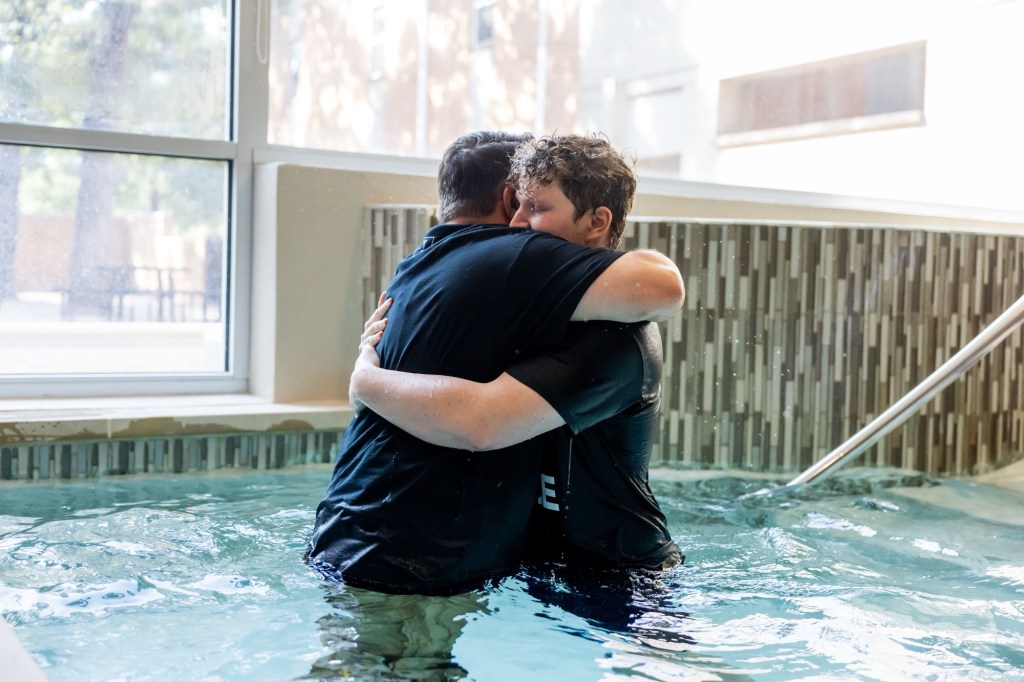
    John the Baptist declared, “I have baptized you with water, but the Lord will baptize you with the Holy Spirit.” (Mark 1:8) After His resurrection, Jesus appeared for forty days, proving His resurrection and teaching about the kingdom of God. (Acts 1:3) He said, “You heard from Me; for John baptized with water, but you will be baptized with the Holy Spirit not many days from now.” (Acts 1:4–5) This was fulfilled in the outpouring of the Spirit at Pentecost (Acts 2:1–4):

    > “When the day of Pentecost arrived, they were all together in one place. And suddenly there came from heaven a sound like a mighty rushing wind, and it filled the entire house where they were sitting. And divided tongues as of fire appeared to them and rested on each one of them. And they were all filled with the Holy Spirit and began to speak in other tongues as the Spirit gave them utterance.”

    Peter, filled with the Holy Spirit, identified this event as the fulfillment of Joel’s prophecy (Acts 2:14–21), declaring that God’s Spirit would be poured out on all flesh, culminating in salvation for “everyone who calls upon the name of the Lord” (Acts 2:21).

    Jesus had earlier told Nicodemus that a person must be “born of water and the Spirit” to enter God’s kingdom (John 3:5). He later told His disciples, those who had stayed with Him, saying, “The words that I have spoken to you are spirit and life” (John 6:63), showing the deep connection between the Spirit and the Word of God. Paul affirms this in Ephesians 5:25–26, saying Christ sanctifies the Church by “the washing of water with the Word.”

    John’s baptism was a baptism of repentance, pointing forward to Christ (Acts 19:1–7). But the true baptism that saves is the baptism of Jesus—by the Word, which is the Spirit. As John himself said, “He must increase, but I must decrease” (John 3:30w). When the Gospel is proclaimed, the Spirit comes with it, as seen in Acts 10:44–46, where the Holy Spirit fell on Gentiles simply by hearing the Word, without any laying on of hands.

    Scripture also clearly states that Jesus Himself never baptized with water (John 4:1–2). Paul declared, “For Christ did not send me to baptize but to preach the gospel, and not with words of eloquent wisdom, lest the cross of Christ be emptied of its power.” (1 Corinthians 1:17) Salvation, therefore, is by grace through faith (Ephesians 2:8–22), with the Spirit and the Word working as one. Peter confirms that Scripture is Spirit-inspired (2 Peter 1:20–21), and Paul affirms that the Gospel—the law of the Spirit of life (i.e., the Gospel)—frees believers from the law of sin and death (Genesis 2:16-17; Romans 8:1–4).
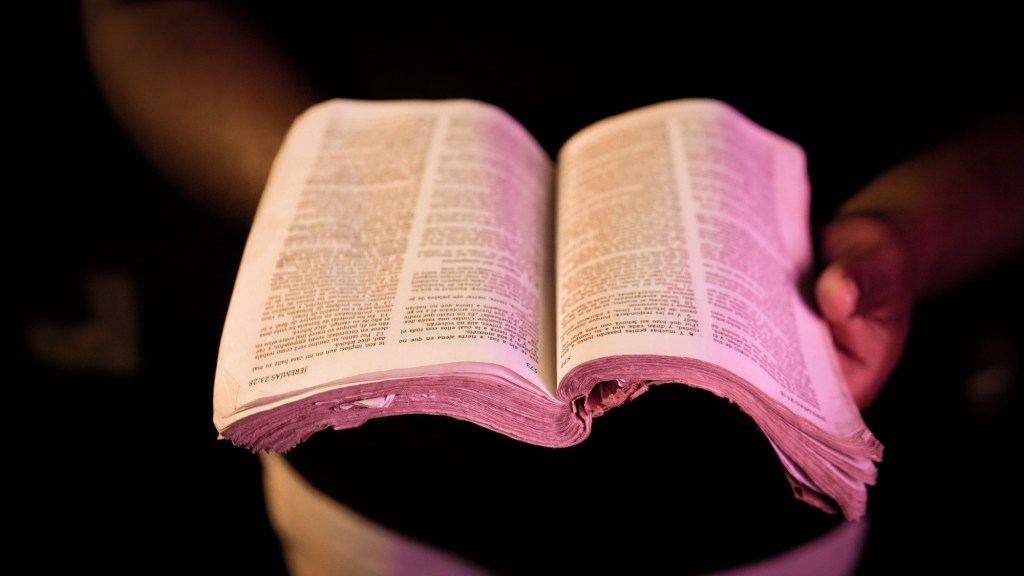
    In essence, the baptism of the Holy Spirit is the cleansing and life-giving work of God through His Word, fulfilling John’s prophecy about Jesus Christ and securing eternal life for all who believe in His Word.

    The Bible declares:

    “In the beginning was the Word, and the Word was with God, and the Word was God.” (John 1:1)

    “And the Word became flesh and lived among us. We have seen His glory, the glory as of the only Son from the Father, full of grace and truth.” (John 1:14)

    “For from His fullness we have all received, grace upon grace. For the law was given through Moses; grace and truth came through Jesus Christ.” (John 1:16-17)


    Here’s an honest question then: Why do some pastors imply there’s something special to be baptized at the Jordan River? Isn’t baptism at the Jordan River the epitome of John’s baptism, which cannot save one who has not received the Holy Spirit? If we have been baptized as Christians, is it not then a regression to submit ourselves for baptism at the Jordan River?

    Christ’s Great Commission in Matthew 28:19-20 calls us not only to baptize but also to teach believers to obey all that He has commanded. While water baptism is an outward sign of faith and an important act of obedience, the mission of the Church goes beyond this initial step. If we recognize that the Holy Spirit works through the Word of God, then the emphasis must be on guiding Christians to live according to His Word—allowing the Spirit to transform their hearts and actions. Assurance of salvation is vital, but it should be coupled with ongoing discipleship, where believers are taught, challenged, and equipped to follow the commands of Christ daily. True discipleship involves a life shaped by the Word, not just a moment of ritual.

    The parable of the sower, as taught by Jesus Christ, affirms that genuine Christian transformation occurs when one hears and truly understands the Word of God (Matthew 13:23). In harmony with this, Paul teaches in Romans that faith is born through hearing—specifically, by hearing the words of Christ (Romans 10:17).

    Here’s the call for all of us Christians: If we truly desire to improve the church, we must return to the Bible. Let us relearn the authentic teachings of Scripture and let go of traditions that have, over time, weakened the church. Together, we can make the church shine as the true light of the world by faithfully reflecting the teachings of Jesus Christ.

    Peter, in the words of Acts 3:6, declared, “I possess neither silver nor gold, but in the name of Jesus Christ, I offer you what I have.” Share this article freely, for you freely receive. Take note, underlines and highlights are clickable links for definitions or Bible references. Stay updated by heading to our about page and subscribe directly to receive notifications in your inbox. Blessings!


  • Peter and the Building of Christ’s Church in Matthew

    The Gospel of Matthew uniquely includes the episode where Peter asks Jesus to command him to walk on water, and he does so until fear causes him to sink (Matthew 14:28-30). This detail sheds light on Matthew’s particular portrayal of Peter. While other preachers often highlight Peter’s sinking due to doubt, this reflection focuses on why Matthew made this addition.

    Yes, this portion of Matthew’s narrative teaches about the significance of faith. But on a bigger perspective it teaches something more.

    Among the Gospels, Matthew mentions Peter most frequently. Matthew also records Peter’s profound confession when Jesus asked, “But who do you say that I am?” to which Peter replied, “You are the Christ, the Son of the living God” (Matthew 16:15-16). This confession leads to one of the Gospel’s central declarations:

    > “Blessed are you, Simon son of Jonah, because flesh and blood did not reveal this to you, but My Father in heaven. And I also say to you that you are Peter, and on this Rock I will build My church, and the gates of Hades will not overpower it. I will give you the keys of the kingdom of heaven…” (Matthew 16:17-19)

    Only in Matthew do we find Jesus explicitly introducing His Church in connection with the Kingdom of heaven. It is no coincidence that Peter became the first to stand and preach at Pentecost, marking the Church’s beginning. (Acts 2:14-41)

    The Church is built on the power of Christ’s resurrection. Jesus said in John 2:19, “Destroy this temple, and in three days I will raise it up,” which John explains as referring to the temple of His body (John 2:21). The New Testament repeatedly identifies the Church as the body and temple of Christ:

    • “Do you not know that you [the church] are God’s temple and that God’s Spirit dwells in you?” (1 Corinthians 3:16)
    • “Your body [the body of believers] is a temple of the Holy Spirit… glorify God in your body.” (1 Corinthians 6:19-20)
    • “We are the temple of the living God…” (2 Corinthians 6:16)
    • “You… are members of the household of God… built on the foundation of the apostles and prophets, Christ Jesus Himself being the cornerstone.” (Ephesians 2:19-22)
    • “You… like living stones are being built up as a spiritual house.” (1 Peter 2:4-5)

    Matthew’s Gospel reveals Peter’s highs and lows. He is praised for his confession but quickly rebuked for trying to hinder Christ’s mission (Matthew 16:21-24). He follows Jesus after His arrest yet denies Him three times (Matthew 26:58-75). Still, upon learning Jesus’ missing body, he runs to the empty tomb (John 20:1-4). Peter’s journey mirrors that of many believers—bold in faith yet imperfect—and yet still used by Christ for His glory.

    This pattern continues in the Church today. Christ builds His Church through ordinary, flawed but willing people, both those who proclaim His Word and those who support the work as “fellow workers for the truth” (3 John 1:5-8). As Paul states:

    > “We have this treasure in jars of clay, to show that the surpassing power belongs to God and not to us.” (2 Corinthians 4:7)

    The Church is a unified spiritual body with diverse functions (Romans 12:4-8). History bears this out: Martin Luther could not have led the Reformation without the support of Prince Frederick III, which allowed him to translate the Bible into the language of the people.

    Ultimately, the Church rests on the foundation of the apostles and prophets, with Christ Jesus as the cornerstone (Ephesians 2:20). God’s Word must remain central. Jesus uses humble and imperfect believers who obey His Word to advance His work. May we take this biblical pattern to heart, learning to serve faithfully in the building of Christ’s Church.

    Learning from Peter

    Jesus asked Peter three times, “Do you love Me more than these?” The “these” could have referred to the food they had just eaten, or perhaps even Peter’s livelihood as a fisherman, because the context of John 21 shows the disciples returning to fishing, catching fish instead of men. (John 21:1-14) Each time Peter responded, Jesus commissioned him: “Feed My lambs,” “Tend My sheep,” “Feed My sheep” (John 21:14-17).

    Peter’s answers shifted slightly. The first two times, he said, “Yes, Lord; You know I love You.” (John 21:15-16) But the third reply revealed a deeper surrender: “Lord, You know everything; You know that I love You.” (John 21:17)

    This exchange reminds us to surrender fully to Jesus Christ. As Scripture says, “Not by might, nor by power, but by My Spirit, says the LORD of hosts.” (Zechariah 4:6) He alone knows our hearts, our fears, and our struggles. Jesus also declared, “It is the Spirit who gives life; the flesh is no help at all. The words that I have spoken to you are spirit and life.” (John 6:63) His Word carries His Spirit and power. Therefore, remain in His Word and let Him be your strength. Keep your focus on Jesus, and we will not sink. Jesus calls on us Christians to be fishers of men (Matthew 4:19), not to become Satan, setting our minds not on the things of God but on things of men (Matthew 16:23).


    Peter, in the words of Acts 3:6, declared, “I possess neither silver nor gold, but in the name of Jesus Christ, I offer you what I have.” Share this article freely, for you freely receive. Take note, underlines and highlights are clickable links for definitions or Bible references. Stay updated by heading to our about page and subscribe directly to receive notifications in your inbox. Blessings!

  • Jesus Washing of the Disciples’ Feet: Is it really simply about leadership, or as some say humility?

    Photo taken from Dalagang Bukid

    Here’s the irony of modern Christianity: it often focuses on the visual rather than the true teachings of Jesus Christ. The Jewish custom of washing one’s feet was originally an act of welcoming a guest.

    I remember a lesson often repeated by one of my seminary professors: many could deliver a message that sounded moving, yet they relied on the wrong Bible passage, which ended up weakening or distorting its true meaning.

    John 13 isn’t just about leadership. It’s about the Gospel of Jesus Christ. The grace of God through faith in Jesus Christ. Jesus was teaching His disciples to share about His grace through the teaching of His Word.

    In the warm climate of the ancient Middle East, where people wore open sandals, walked on dry soil, and travelled dusty roads, foot washing was part of hospitality. For example, in Judges 19:20‑21, an old man welcomes a Levite: “Peace be to you; I will care for all your wants. Only, do not spend the night in the square.” He then brought him into his house, fed his donkey, and washed his feet before eating and drinking. Likewise, Abigail, daughter of Nabal, expressed affection and acceptance of David’s offer to take her as wife when she said, “Here is your slave girl as a maidservant to wash the feet of the servants of my lord” (1 Samuel 25:40‑42).

    This is the same context we see in John 13:1-14:7, when Jesus washed His disciples’ feet. The narrative begins with John 13:1, where Scripture notes that Jesus, knowing His hour had come, “loved His own who were in the world… to the end.” When Peter resisted, Jesus explained: “What I am doing you do not understand now, but afterward you will understand… If I do not wash you, you have no share with Me” (John 13:7‑8). He also said, “Not all of you are clean” (John 13:11), pointing to Judas’ betrayal.

    Jesus’ act was more than humility; it demonstrated that His followers were cleansed and welcomed into the house of God the Father, which Christ was preparing through His death and resurrection (John 14:1‑6). The essence of John 13 is God’s grace through faith in Christ.

    As Christians, our calling is not just to replicate the act of foot washing, which has little relevance in our modern context of cemented roads, closed shoes, and car travel, but to share God’s grace through Jesus Christ. Titus 3:4‑8 reminds us that salvation comes not by our works, but by God’s mercy and the washing of regeneration by the Holy Spirit.

    The Word of Jesus is life and spirit (John 6:63). Its power is not revealed through random selection of verses, but through understanding the fullness of Scripture and its teachings. To share God’s Word faithfully, we must first be its true disciples. Paul encourages us in 2 Timothy 2:15 to present ourselves as approved workers, rightly handling the word of truth. Likewise, 1 Timothy 4:16 reminds us to be vigilant over our life and doctrine, for by doing so, we bring salvation to both ourselves and those who listen.

    Finally, we are warned not to blindly follow anyone, especially hypocritical leaders. As Jesus said in Matthew 15:12‑14, “Every plant that my heavenly Father has not planted will be rooted up. Let them alone; they are blind guides. And if the blind lead the blind, both will fall into a pit.”

    Let us therefore focus on the real teachings of Christ, share His Word with grace, and walk as true disciples.

    Peter, in the words of Acts 3:6, declared, “I possess neither silver nor gold, but in the name of Jesus Christ, I offer you what I have.” Share this article freely, for you freely receive. Take note, underlines and highlights are clickable links for definitions or Bible references. Stay updated by heading to our about page and subscribe directly to receive notifications in your inbox. Blessings!

  • The Teachings of Jesus Christ is Life and Spirit (John 6:63)

    Our study this morning is from John 15:15-18.

    “The Jews therefore marveled, saying, “How is it that this man [Jesus Christ] has learning, when He has never studied?” So Jesus answered them, “My teaching is not Mine, but His who sent Me. If anyone’s will is to do God’s will, he will know whether the teaching is from God or whether I am speaking on My own authority. The one who speaks on his own authority seeks his own glory; but the one who seeks the glory of Him who sent Him is true, and in Him there is no falsehood.”

    So, how do we know that we are learning from Jesus Christ, the Father, and the Holy Spirit, not from men? The teaching should always be in sync with the Scripture. Unlike today, a lot of Christian doctrines are misaligned, opposing each other.

    Example: Christians teach that at the moment of death, believers would go to heaven, and yet they also say Jesus has yet to return. However, Jesus, in John 14:6, said, “I am the way, and the truth, and the life. No one comes to the Father except through Me.” Christ beforehand also said, “Let not your hearts be troubled. Believe in God; believe also in Me. In My Father’s house are many rooms. If it were not so, WOULD I HAVE TOLD YOU THAT I GO TO PREPARE A PLACE FOR YOU? AND IF I GO AND PREPARE A PLACE FOR YOU, I WILL COME AGAIN AND WILL TAKE YOU TO MYSELF, THAT WHERE I AM YOU MAY BE ALSO.” (John 14:1-3)

    We all know forty days after Jesus’ resurrection [Acts 1:3], He ascended to the Father, thereby fulfilling His promise to prepare and return to take the believers to be with Him in heaven. So, if the Christian teaching today is correct, and He has yet to return, then no one can go to the Father at the moment because Jesus promised and made clear He alone is the way to the Father, and He would return to take the believers to heaven. In other words, before Jesus’ return, heaven should be off-limits to us.

    That truth is reinforced by Hebrews 9:28: “So also Christ, having been offered once to bear the sins of many, WILL APPEAR A SECOND TIME, NOT TO BEAR SIN, BUT TO BRING SALVATION TO THOSE WHO ARE WAITING FOR HIM.”

    Christians today aren’t the only ones waiting for Christ’s return. The contemporaries of Paul and Peter, Christians before the destruction of the Jerusalem temple, were waiting as well. See passages below.

    “so that you are not lacking in any gift, as you wait for the revealing of our Lord Jesus Christ” (1Co 1:7)

    “But our citizenship is in heaven, and from it we await a Savior, the Lord Jesus Christ” (Php 3:20)

    “For not only has the word of the Lord sounded forth from you in Macedonia and Achaia, but your faith in God has gone forth everywhere, so that we need not say anything. For they themselves report concerning us the kind of reception we had among you, and how you turned to God from idols to serve the living and true God, and to wait for His Son from heaven, whom He raised from the dead, Jesus who delivers us from the wrath to come.” (1Th 1:8-10)

    Paul and his generation of Christians were waiting for Christ’s return. Peter made clear however, the return of Christ Jesus and His salvation would be consummated in his generation. See 1Peter 1:10-13.

    “CONCERNING THIS SALVATION, the prophets [OT prophets] who prophesied about the grace that was to be yours [Peter’s contemporary Christians] searched and inquired carefully, inquiring what person or time the Spirit of Christ in them was indicating when He [God] predicted the sufferings of Christ and the subsequent glories. IT WAS REVEALED TO THEM THAT THEY WERE SERVING NOT THEMSELVES [OT prophets] BUT YOU [Peter’s contemporary Christians], in the things that have now been announced to you [Peter’s contemporaries] through those who preached the good news to you [Peter’s contemporaries] by the Holy Spirit sent from heaven, things into which angels long to look. THEREFORE, PREPARING YOUR [Peter’s contemporary Christians] MINDS FOR ACTION, AND BEING SOBER-MINDED, SET YOUR HOPE [Peter’s contemporary Christians] FULLY ON THE GRACE THAT WILL BE BROUGHT TO YOU [Peter’s contemporary Christians] AT THE REVELATION [or appearing] OF JESUS CHRIST.”

    Peter, therefore rightly reiterated Jesus’ Word and promise. See Matthew 16:28. “Truly, I say to you [Peter and his fellow apostles], there are some standing here who will not taste death until they see the Son of Man coming in His kingdom.”

    Unless perhaps, the then apostles of Christ are still alive today – similar to the conspiracy theory about Elvis Presley being alive still and in hiding somewhere 😝.

    If somebody promised to meet you at a specific time then stood you up, what do you make of that person? Trustworthy or not? Oh, maybe you would say perhaps he has a legitimate reason for being remiss of his word? But that can’t be true with Christ Jesus. The promised great prophet of Deuteronomy 18:15-22; Acts 3:22-23; Acts 7:37.

    Do you understand the implications of such teaching? Asserting that Jesus Christ is yet to come; contrary to the claim of the Scripture. It opposes the very Word and promise of Christ Jesus. Therefore, futurist preachers today are actually – perhaps unknowingly but still by inference – saying Jesus failed in His Word and promise. The renowned, actually it should be infamous, C.S. Lewis said perhaps Jesus was hallucinating so He said those words to His apostles. Lewis even said, “Matthew 24:34 is the most embarrassing verse in the Bible” because Jesus promised to return to the generation of His apostles, but He did not. [https://www.behindthegospels.com/p/surprised-by-cs-lewis-the-most-embarrassing]

    I don’t know about most Christians, but I would always adhere to Jesus Christ and His infallible words. It cannot be that Christ remised on His Word. Rather, if the Bible says one thing and the contemporary teaching opposes it, the Bible being infallible would mean it is always right. It’s our Christian duty to study the Bible until we have reconciled with God’s Word, discerning the truth. If modern Christian teaching does not stand up to the scrutiny of Scripture, then it ought to be disputed and corrected – even if it would invite attacks from critics because they insist on their truth.

    Let me forewarn everyone though, back in the garden of Eden and with the temptation of Jesus Christ, it was the devil who had twisted God’s Word. No wonder, therefore, the unbelieving Jews opposed Christ’s Words, so Jesus refers to them as children of the devil (John 8:44-45). Certainly, we would not want to be in opposition to God’s Word.

    In conclusion, Scripture said,

    “He [Jesus Christ] was foreknown before the foundation of the world but was made manifest in the last times [last days] for the sake of you [Peter’s immediate audience or readers] who through Him are believers in God, who raised Him from the dead and gave Him glory, so that your faith and hope are in God. Having purified your souls by your obedience to the truth for a sincere brotherly love, love one another earnestly from a pure heart, since you have been born again, not of perishable seed but of imperishable, through the living and abiding word of God; for “All flesh is like grass and all its glory like the flower of grass. The grass withers, and the flower falls, but the word of the Lord remains forever.” And this word is the good news that was preached to you.” (1Pe 1:20-25)

    Scripture made clear, that no one was mysteriously born again, but by the unchanging imperishable Word of God. Would you rather trust in man’s teachings or only the Word of God? Seek and discern the source of your learnings. Was it from man’s imagination or the diligent and careful study of God’s Word? Truthful teaching of God’s Word should always adhere to, not oppose, clear and straightforward teachings of the Scripture.

    Jesus Christ said, “The Spirit is the one who gives life. The flesh doesn’t help at all. The words that I have spoken to you are spirit and are life.” (John 6:63)

    Peter, in the words of Acts 3:6, declared, “I possess neither silver nor gold, but in the name of Jesus Christ, I offer you what I have.” Share freely, for you freely receive. Stay updated by heading to our about page and subscribe directly to receive notifications in your inbox. Blessing!