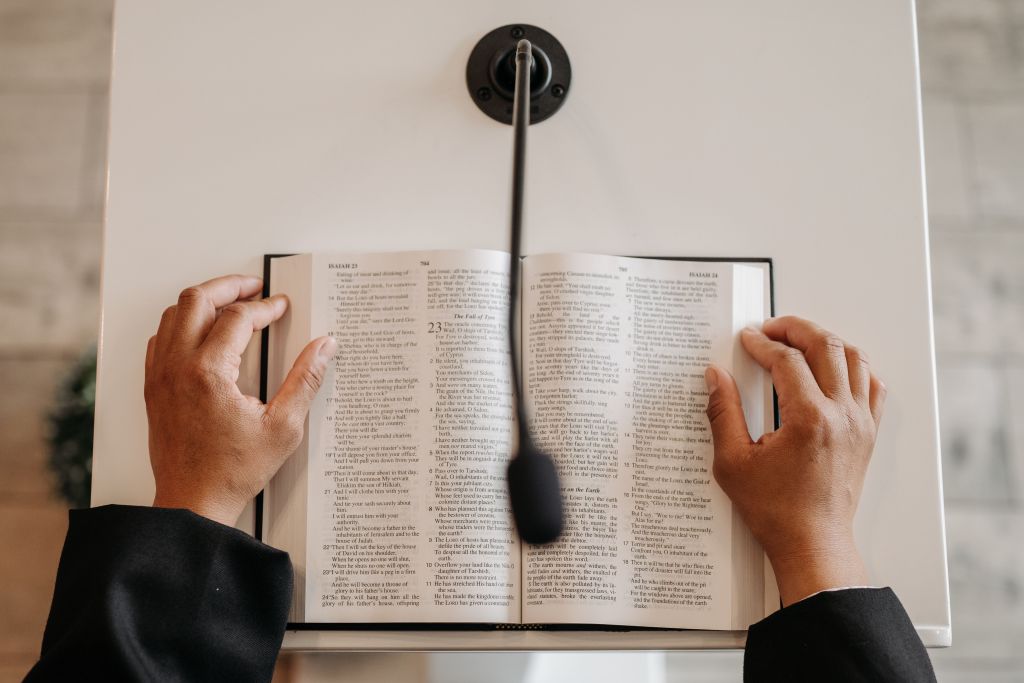
Since last week, our study was on Matthew 12:1-8. The focus of Matthew 12 may be seen in verses 6-8. Jesus states,“I tell you, something greater than the temple is here. And if you had known what this means, ‘I desire mercy, and not sacrifice,’ you would not have condemned the guiltless. For the Son of Man is Lord of the Sabbath.” (Matthew 12:6-8)
Key to understanding Matthew 12 boils down to comprehending its context, Christ’s declarations, and His quote from Hosea 6:6, “For I desire mercy and not sacrifice, the knowledge of God rather than burnt offerings.”
Christ’s Quotation of Hosea 6:6
Hosea, the last prophet to condemn the Ten Tribes of Israel, particularly the Northern kingdom, delivered his prophecies long after the kingdom’s division during the reign of Rehoboam. Despite its prosperity under Jeroboam’s rule, the Northern kingdom became insecure that Jews from the North might continue to travel to Jerusalem for worship, as per the Law of Moses. Consequently, Jeroboam constructed a rival temple in both Bethel and Dan. (1 Kings 12:25-33) This act marked the beginning of the Northern kingdom’s decline, ultimately leading to its conquest by the Assyrians in 722 BC, fulfilling God’s pronouncement of judgment upon the Ten Tribes – “I will put an end to the kingdom of the house of Israel.” (Hosea 1:4)
Before Hosea, Amos had already prophesied the downfall of Israel. The LORD declared, “Behold, I am establishing a plumb line in the midst of My people Israel; I will never again pass by them. The high places of Isaac shall be desolate, and the sanctuaries of Israel shall be laid waste, and I will rise against the house of Jeroboam with the sword.” (Amos 7:8-9) Amos repeated this same message of judgment, see Amos 8:2, “The end has come upon my people Israel; I will never again pass by them.”
Christ’s quotation of Hosea 6:6, “For I desire mercy and not sacrifice, the knowledge of God rather than burnt offerings,” was a pivotal moment. Interestingly, this wasn’t the first time Jesus had quoted this verse. He had done so earlier in Matthew 9:13, highlighting the primary purpose of His coming—to offer redemption (“For I did not come to call the righteous, but sinners”).
Context of Matthew
The context of Matthew was the arrival of Jesus, the promised Christ (or Messiah) of the Old Testament Scripture. And yet, Jews of Jesus’ days, though acknowledging His signs (John 2:23), refused to acknowledge the truth; they were in denial.
Christ’s Declaration
In John’s Gospel, Jesus makes a bold declaration: “Destroy this temple, and in three days I will raise it up.” (John 2:19) John clarifies that Jesus is referring to the temple of His body, which is His church. (John 2:21-22) Jesus delves into the theme of the temple in Matthew 12. Let us explore the story.
Pharisees questioned Jesus for allowing His disciples to pluck grain and eat on the Sabbath. In response, Jesus cited the example of David taking the bread of Presence, which was forbidden to him under the Mosaic Law because it was reserved for the priests. This pointed out their hypocrisy. Jesus then addressed the priests, noting that they were engaged in slaughtering animals for sacrifice on the Sabbath and other days, as per Numbers 28:9-10, yet they were not guilty. To emphasize the truth, Jesus declared, “I tell you, something greater than the temple is here.” He emphasized that if priests were not guilty for performing their duty, then Jesus Christ, who was greater than the temple, was even more deserving of their reverence. He then quoted Hosea 6:6 to support his claim: “Jesus is the fulfillment of God’s offer for redemption, as stated in Hosea 6:1-2: ‘Come, let us return to the LORD; for He has torn us apart so that He may heal us; He has struck us down, and He will bind us up. After two days, He will revive us; on the third day, He will raise us up, so that we may live before Him.’” Consequently, Jesus declared in John 2:19 that He would raise this temple (which, as explained in John 2:21, refers to His body) after three days.
Understanding the Doctrine of the Church
Understanding the doctrine of the church begins with recognizing that its establishment is rooted in the proclamation of the Gospel and the resurrection of Christ. Hosea 6:2, “On the third day He will raise us up, that we may live before Him,” holds significant importance in this context. It is essential to grasp that the church is not a physical structure or a place of assembly, but rather God’s people who are saved by grace through faith in Christ’s death and resurrection. As Jesus stated to Peter, “On this rock—referring to the confession of Peter, Jesus is the Christ, the Son of God (Matthew 16:16)—I will build My church, and the gates of Hades will not overpower it. I will give you the keys of the kingdom of heaven, and whatever you bind on earth will have been bound in heaven, and whatever you loose on earth will have been loosed in heaven.” (Matthew 16:18-19) Christ Jesus and His Gospel serve as the keys to entrance into God’s kingdom. Jesus further emphasizes, “I am the way, and the truth, and the life. No one comes to the Father except through Me.” (John 14:6)
Hebrews clearly taught that for as long as the temple in Jerusalem stands, the present age (i.e. the Jewish age, Hebrews 9:8-10) exists, which deals with food and drink and various washings, regulation until the time of reformation. (Hebrews 9:1-10) The reformation here has nothing to do with the reformation of Martin Luther and his contemporaries, but all about God’s workings. Hebrews 2:5 called it “the world to come“, while in 6:5, it’s referred to as the “age to come“. Jesus Christ and Paul spoke of only two ages, the present age and the age to come. See Luke 20:34-36.
“And Jesus said to them, “The sons of this age marry and are given in marriage, but those who are considered worthy to attain to that age and to the resurrection from the dead neither marry nor are given in marriage, for they cannot die anymore, because they are equal to angels and are sons of God, being sons of the resurrection.” (Luke 20:34-36)
It’s evident that “the present age or this age” refers to the era before the resurrection of the dead. The age that follows would be the age of the New Heaven and the New Earth. Hebrews 9:8-10 provides a brief reference. The present age encompasses the period when temple regulations and sacrifices were still practiced. The time of Reformation would mark the cessation of the temple and its regulations and offerings. Do you still see the temple standing today?
Sabbath
Back on our discussion on Matthew. Jesus Christ further highlights His claim of divinity by declaring “For the Son of Man is Lord of the Sabbath” (Matthew 12:8). “Son of Man” is a reference to the Anointed One, the Christ (or Messiah) of Daniel 7:13-14. The Messiah was tasked with ruling over God’s kingdom.
“I saw in the night visions, and behold, with the clouds of heaven there came one like a Son of Man, and He came to the Ancient of Days and was presented before Him. And to Him was given dominion and glory and a kingdom, that all peoples, nations, and languages should serve Him; His dominion is an everlasting dominion, which shall not pass away, and His kingdom one that shall not be destroyed.” (Daniel 7:13-14)
As the Lord of the Sabbath, Jesus actually shifted the discussion to His role as the Lord of creation. Genesis begins with God as the Creator (Genesis 1:1). The subsequent passages in Genesis 1 use creation language until Genesis 2:1-2, where God completed all His work and rested on the seventh day, which is the Sabbath. This is the underlying implication of Christ’s assertion that He is the Lord of the Sabbath.
Creation language was clearly in play when Paul explained in Romans 8:18-23 the expectations and hope of redemption of Israel.
“For I consider that the sufferings of this present time are not worth comparing with the glory that is to be revealed to us. For the creation waits with eager longing for the revealing of the sons of God. For the creation was subjected to futility, not willingly, but because of Him who subjected it, in hope that the creation itself will be set free from its bondage to corruption and obtain the freedom of the glory of the children of God. For we know that the whole creation has been groaning together in the pains of childbirth until now. And not only the creation, but we ourselves, who have the firstfruits of the Spirit, groan inwardly as we wait eagerly for adoption as sons, the redemption of our bodies. For in this hope we were saved. Now hope that is seen is not hope. For who hopes for what he sees? But if we hope for what we do not see, we wait for it with patience. Likewise the Spirit helps us in our weakness. For we do not know what to pray for as we ought, but the Spirit himself intercedes for us with groanings too deep for words. And He who searches hearts knows what is the mind of the Spirit, because the Spirit intercedes for the saints according to the will of God. And we know that for those who love God all things work together for good, for those who are called according to His purpose. For those whom He foreknew He also predestined to be conformed to the image of his Son, in order that He might be the firstborn among many brothers. And those whom He predestined He also called, and those whom He called He also justified, and those whom He justified he also glorified.” (Romans 8:18-30)
As I have wrote and explained in several of my articles. Do not be bothered by doctrines such as “foreknowledge”, “predestination”, supposedly supporting the idea of “election”. All these terms applies only to the Old Covenant Israel. See Romans 11:5-8.
“So too at the present time there is a remnant, chosen – Greek word same as “election” – by grace. But if it is by grace, it is no longer on the basis of works; otherwise grace would no longer be grace. What then? Israel failed to obtain what it was seeking. The elect obtained it, but the rest were hardened, as it is written, “God gave them a spirit of stupor, eyes that would not see and ears that would not hear, down to this very day.”” (Romans 11:5-8)
Paul made it clear that, despite the election, salvation is still by grace. He reiterated his teaching in Ephesians 2:8-9, stating, “For by grace you have been saved through faith. This is not your own doing; it is a gift from God, not a result of works, so that no one may boast.”
Now, even with Revelation, the concept of creation language was evident. Jesus Christ, in Revelation 21:5 states, “Behold, I am making all things new.” “It is done! I am the Alpha and the Omega, the beginning and the end.” (Revelation 21:6)
John, in Revelation, saw the passing of the first heaven and the first earth, and the coming of the new heaven and a new earth. This connects us back to Genesis 1:1, “In the beginning, God created the heavens and the earth“. So, was it a literal passing away of the physical creation or covenant creation language? Paul, in Romans 8, used creation language to assure believers of God’s covenant redemption. Or in plain words, God’s promised redemption.
The theme of a new heaven and a new earth may be found in Isaiah 65:17-66:24. It speaks of the renewal of God’s people. Hence, “heaven and earth” is covenant language of God’s creation. Proof may be seen in Isaiah 51:16. God declared, “And I have put My words in your mouth and covered you in the shadow of My hand, establishing the heavens and laying the foundations of the earth, and saying to Zion, ‘You are My people.’” (Isaiah 51:16)
The Bible, particularly in Hebrews 4:4, quotes Genesis 2:1-2. Surprisingly, Hebrews asserts that the Sabbath rest for the people of God is not yet complete. This is evident in Hebrews 4:9-10, which states, “So then, there remains a Sabbath rest for the people of God, for whoever has entered God’s rest has also rested from his works as God did from His.” This implies that God is still actively engaged in His creation work. Interestingly, in John’s Gospel, when Jesus was questioned about healing on a Sabbath, he responded, “My Father is working until now, and I am working.” (John 5:17) What was the work that Jesus Christ ought to complete? In Matthew 5:17-18, Jesus states, “Do not think that I have come to abolish the Law or the Prophets; I have not come to abolish them but to fulfill them. For truly, I say to you, until heaven and earth pass away, not an iota, not a dot, will pass from the Law until all is accomplished.” The phrase “heaven and earth” refers to the Old Covenant Israel. With the judgment of God against them, destroying the temple and scattering them in AD 70, the Mosaic law, which was the basis of them being instituted as God’s people became the source of their judgment. See Deuteronomy 28:15-68 & Leviticus 26:14-46, but for a quick summary of the Mosaic Covenant on Disobedience, see Deuteronomy 28:58-61.
“If you are not careful to do all the words of this law that are written in this book, that you may fear this glorious and awesome name, the LORD your God, then the LORD will bring on you and your offspring extraordinary afflictions, afflictions severe and lasting, and sicknesses grievous and lasting. And He will bring upon you again all the diseases of Egypt, of which you were afraid, and they shall cling to you. Every sickness also and every affliction that is not recorded in the book of this law, the LORD will bring upon you, until you are destroyed.”
John, in Revelation saw the visions of God’s judgment, see Revelation 8:6-9:21; 15-16, 18, and noticed covenant language of God’s punishment from the Law and the Prophets. Paul, in Romans 8 states, “There is therefore now no condemnation for those who are in Christ Jesus. For the law of the Spirit of life (i.e. The Gospel of the New Covenant) has set you free in Christ Jesus from the law of sin and death (Genesis 2:16-17; Romans 5:12-14; 1 Corinthians 15:21-22). For God has done what the law (i.e Mosaic Law), weakened by the flesh, could not do. By sending His own Son in the likeness of sinful flesh and for sin, He condemned sin in the flesh, in order that the righteous requirement of the law might be fulfilled in us, who walk not according to the flesh but according to the Spirit.” (Romans 8:1-4)
How was the righteous requirement of the law fulfilled in us? See Hebrews 9:11-12, 15, 28.
“But Christ has appeared as a high priest of the good things that have come. In the greater and more perfect tabernacle not made with hands (that is, not of this creation), He entered the most holy place once for all time, not by the blood of goats and calves, but by his own blood, having obtained eternal redemption.” (Hebrews 9:11-12)
“Therefore, Jesus is the mediator of a new covenant, so that those who are called might receive the promise of the eternal inheritance, because a death has taken place for redemption from the transgressions committed under the first covenant.” (Hebrews 9:15)
“So also Christ, having been offered once to bear the sins of many, will appear a second time, not to bear sin, but to bring salvation to those who are waiting for Him.” (Hebrews 9:28)
Conclusion
The temple, the Sabbath, they were all pointing to the fact that mankind remains outside of the Garden of Eden. See Revelation 21:1, with the passing of the first heaven and the first earth, and the arrival of the new heaven and the earth, John saw no temple. Because the Lord God the Almighty and the Lamb are its temple. (Revelation 21:22). No wonder, Paul states, “Therefore let no one pass judgment on you in questions of food and drink, or with regard to a festival or a new moon or a Sabbath. These are a shadow of the things to come, but the substance belongs to Christ.” (Colossians 2:16-17)
Moreover, in another vision, but the same context, after God’s judgment on Old Covenant Israel, Scripture states, “Here is a call for the endurance of the saints, those who keep the commandments of God and their faith in Jesus. And I heard a voice from heaven saying, ‘Write this: Blessed are the dead who die in the Lord from now on.’ ‘Blessed indeed,’ says the Spirit, ‘that they may rest from their labors, for their deeds follow them!‘” (Revelation 14:12-13)
Isn’t this the fulfillment of God’s promised of Sabbath rest for His people? Scripture states, “For whoever has entered God’s rest has also rested from his works as God did from His” (Hebrews 4:9-10). Henceforth, Christians shouldn’t be bothered by the Sabbath, nor the temple. With the completion of the New Creation, the New Heaven and the New Earth, Scripture states, “Behold, the dwelling place of God is with man. He will dwell with them, and they will be His people, and God Himself will be with them as their God.” (Revelation 21:3)
No wonder Jesus declares, “Woman, believe Me, the hour is coming when neither on this mountain nor in Jerusalem will you worship the Father. You worship what you do not know; we worship what we know, for salvation is from the Jews. But the hour is coming, and is now here, when the true worshipers will worship the Father in spirit and truth, for the Father is seeking such people to worship him. God is spirit, and those who worship him must worship in spirit and truth.” (John 4:21-24)
Did Jesus just hint at the temple’s impending destruction? Consequently, He told the Samaritan woman, “The hour is coming when neither on this mountain nor in Jerusalem will you worship the Father.” On the other hand, when Jesus said, “But the hour is coming and is now here,” He declared that henceforth, people should worship God in truth and in spirit because judgment is imminent. The temple, together with all its regulations and practices has become obsolete, see Hebrews 8:13, “In speaking of a new covenant, He makes the first one obsolete. And what is becoming obsolete and growing old is ready to vanish away.”
Is everyone now enjoying God’s Sabbath rest? No, according to the Bible, “Blessed are those who wash their robes, so that they may have the right to the tree of life and that they may enter the city by the gates. Outside are the dogs, sorcerers, sexually immoral people, murderers, idolaters, and everyone who loves and practices falsehood.” (Revelation 22:14-15) The preaching of the Gospel remains significant. Scripture states, “Then I saw another angel flying directly overhead, with an eternal gospel to proclaim to those who dwell on earth, to every nation, tribe, language, and people.” (Revelation 14:6)
We Christians are called to live by faith and share the Good News of the Bible with those who are outside, not yet part of God’s grace, so that they may also experience the same blessings we have. Unfortunately, many Christians remain confused and don’t understand the blessings they already possess. They often confuse material possessions as indicators of God’s blessings, leading them to be too busy pursuing these possessions and neglecting the need to study the Bible and truly comprehend God’s true riches. They settle for Sunday worship services, which are not as substantial as joining a Bible study group. This is the true reason why the church isn’t growing in Christ Jesus. Take time to reflect on your walk with Jesus Christ. The Bible states, “The things that are seen are transient, but the things that are unseen are eternal” (2 Corinthians 4:18). So, decide which one should be your priority?
Blessings!
Peter, in the words of Acts 3:6, declared, “I possess neither silver nor gold, but in the name of Jesus Christ, I offer you what I have.” Share this article freely, for you freely receive. Take note, underlines and highlights are clickable links for definitions or Bible references. Stay updated by heading to our about page and subscribe directly to receive notifications in your inbox. Blessings!