Tag: hypocrisy

  • Day or Night

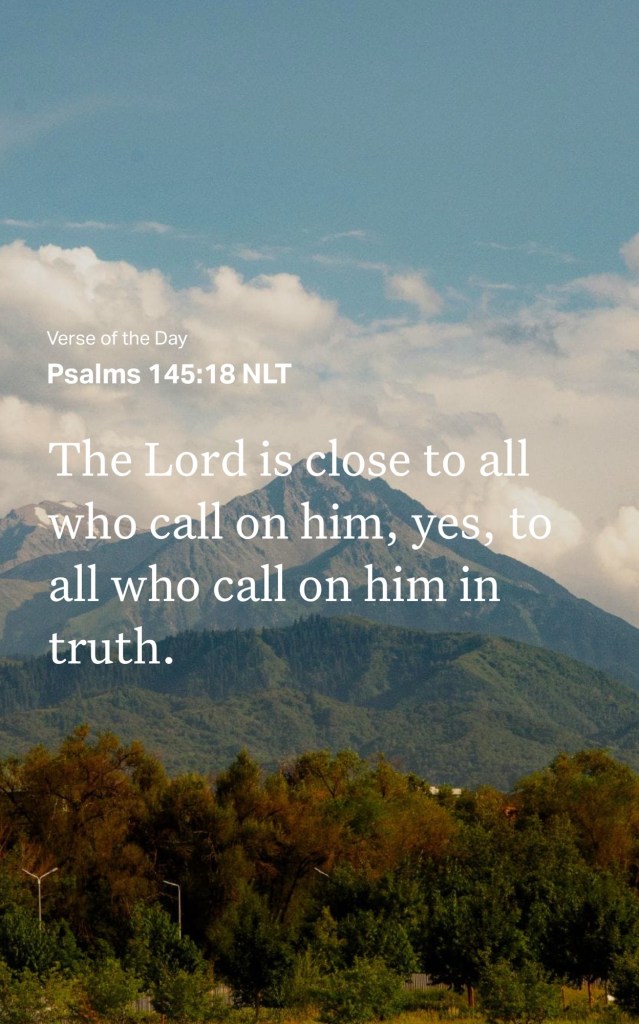
    Verse of the day taken from Bible.com. Our circumstances do not separate us from God; rather, it is the absence of faith and trust in Him. In fact, God remains faithful even when people are faithless (2 Timothy 2:13).

    The verse highlights a significant point: God will always be faithful. Because He is good, He will continue to provide for our needs. After the flood, God made a covenant with Noah, who represents humanity before God after Adam. In Genesis 8:21-22, God says, “I will never again curse the ground because of man, for the intention of man’s heart is evil from his youth. Neither will I ever again strike down every living creature as I have done. While the earth remains, seedtime and harvest, cold and heat, summer and winter, day and night shall not cease.”

    God will always stay true to His Word and promises. Therefore, we should ask: “Why is it being taught that God will destroy not only the Earth but also heaven itself with the return of Christ Jesus?”

    In Isaiah 66:1, Scripture states, “Thus says the LORD: “Heaven is My throne, and the earth is My footstool; what is the house that you would build for Me, and what is the place of My rest?” Think again, what has been taught and held as Christian beliefs? Would God truly destroy heaven, His throne, and Earth, His reign?

    Let us take a moment to reflect on the verse of the day: “The Lord is close to all who call on Him, yes, to all who call on Him in truth” (Psalm 145:18 NLT). The key phrase here is “to all who call on Him in truth.” God’s righteousness is closely connected to His truth, and He does not tolerate hypocrisy. He calls everyone to worship and follow Him in truth and spirit (John 4:24). Therefore, no one can genuinely claim faith in God or Jesus Christ without adhering to His truth.

    Scripture teaches us: “Truthful lips endure forever, but a lying tongue lasts only for a moment. Deceit is in the heart of those who devise evil, but those who plan for peace find joy. No harm befalls the righteous, but the wicked are filled with trouble. Lying lips are an abomination to the Lord, but those who act faithfully are His delight” (Proverbs 12:19-22).

    Years ago, I bumped into a predecessor in pastoral ministry who shared a troubling story with me. He spoke of a person notorious for working against pastors who do not yield to his demands. This individual called him, asking the pastor to share the faith with a gravely ill deaconess—a woman known to both of us as a passive supporter of his malicious ways.

    I hope I am mistaken, but can you understand the mindset of the person who made this request? He is notorious for creating problems for pastors whenever it benefits him. To my knowledge, he has done this at least three times, but there may be many more instances in the past that we are unaware of. He seems to believe he can deceive God and evade justice, perhaps thinking he can emulate the grace shown to the thief on the cross; you can refer to Luke 23:39-43 if you’re not familiar with the story. He may be hoping that, at the last moment, he and those like him can confess their sins and escape the consequences of their actions.

    However, Scripture warns us: “Do not be deceived: God is not mocked, for whatever one sows, that will he also reap. For the one who sows to his own flesh will from the flesh reap corruption, but the one who sows to the Spirit will from the Spirit reap eternal life.” (Galatians 6:7-8)

    Christians, faith, and truth cannot be separated. Conniving together for evil works against the righteous for whatever earthly benefit would never be tolerated by God. Because God is righteous and true. Let’s evaluate our ways to see if we indeed have called on God in truth?

    There is no such thing as half-truth. It’s either truth or a lie. We Christians are called to renounce our worldly ways. How then can anyone justify deceit and yet claim faith in Jesus Christ?

    Concerning life, Jesus Christ teaches, “Beware of the leaven of the Pharisees, which is hypocrisy. Nothing is covered up that will not be revealed, or hidden that will not be known. Therefore, whatever you have said in the dark shall be heard in the light, and what you have whispered in private rooms shall be proclaimed on the housetops. ‘I tell you, My friends, do not fear those who kill the body, and after that have nothing more that they can do. But I will warn you whom to fear: fear Him who, after He has killed, has authority to cast into hell. Yes, I tell you, fear Him! Are not five sparrows sold for two pennies? And not one of them is forgotten before God. Why, even the hairs of your head are all numbered. Fear not; you are of more value than many sparrows.’” (Luke 12:1-7)

    The Christian walk is not a journey in compromises. Nothing we did in darkness is kept from God. Rather, we are called to walk the faith. The Bible says, “And without faith it is impossible to please God, for whoever would draw near to Him must believe that He exists and that He rewards those who seek Him.” (Hebrews 11:6)

    Reflect carefully about your confession and faith. Only a truthful confession of faith counts with God. Hence, the Christian life will always be challenging. Anyone who claims to be a Christian and yet involves themselves in lies better wake up. For God’s omniscience sees through our hearts and minds. Let us therefore walk the talk.

    The apostle Paul, in his letter to the Thessalonian Christians, said: “But you are not in darkness, brothers, for that day to surprise you like a thief. For you are all children of light, children of the day. We are not of the night or of the darkness.” (1 Thessalonians 5:4-5)

    We belong either to the day or night. There’s no middle ground. God cannot be deceived. We can always rely on His righteousness and grace.

    Peter, in the words of Acts 3:6, declared, “I possess neither silver nor gold, but in the name of Jesus Christ, I offer you what I have.” Share this article freely, for you freely receive. Take note, underlines and highlights are clickable links for definitions or Bible references. Stay updated by heading to our about page and subscribe directly to receive notifications in your inbox. Blessing!

  • The Hypocrisy Virus: Be Careful Not to Catch It

    Passage in Scripture to ponder: 

    In the meantime, when so many thousands of the people had gathered together that they were trampling one another, He (Jesus) began to say to His disciples first, “Beware of the leaven of the Pharisees, which is hypocrisy. Nothing is covered up that will not be revealed, or hidden that will not be known.” (Luke 12:1-2)

    The Bible, due to the hypocrisy of supposedly religious people, narrated these words of Jesus Christ: “Nothing is concealed that will not be revealed, nor is anything hidden that will not be known.” This phrase was recorded twice in Luke’s Gospel. In Luke 8, Jesus used this phrase after explaining the Parable of the Sower to His disciples (Luke 8:11-15). He then went on to say, “No one after lighting a lamp covers it with a jar or puts it under a bed, but puts it on a stand so that those who enter may see the light. For nothing is hidden that will not be made manifest, nor is anything secret that will not be known and come to light. Therefore, take care how you hear, for to the one who has, more will be given, and from the one who has not, even what he thinks he has will be taken away.” (Luke 8:16-18)

    Jesus Christ in this instance cautioned the disciples that if they had truly understood what He had taught them, then they were good soils, and they should live up to what they had learned and remained as such. However, if not, perhaps they were just pretentious, like the Pharisees. Jesus then assured them that whatever they thought they knew, had, or gained would be taken away from them. Clearly, this is judgment language. Conversely, if they had remained faithful to His Word, Jesus assured them that more would be given to them.

    Life’s challenges can either make or break an individual. As the saying goes, “The true color of the paint is only revealed after being stirred.” Similarly, our Christian walk would only be evident after we have steadfastly adhered to God’s word, even amidst hardships or blessings that life may bring.

    The Book of Proverbs emphasizes that every word of God is true and serves as a shield for those who seek refuge in Him. However, it cautions against adding to His words, as this may lead to God’s rebuke and be found a liar. The author of Proverbs presents two requests: to deny them not during his lifetime; that is, to remove falsehood and lying from his life. He also asks for neither poverty nor riches but only the food that is necessary for him, lest he become excessively satisfied and deny God or, conversely, become impoverished and resort to stealing, profaning the name of his God. (Proverbs 30:5-9)

    This proverb has been a guiding principle in my life since I became a Christian, especially now that I am a servant of God’s Word.

    The true blessing in life is to know Jesus Christ. Once we have known Him, we should yearn for an intimate relationship with Him. This intimacy is not achieved through our imagination or second-guessing of who Jesus is. Instead, we have the Bible, God’s revelation of Himself, Jesus Christ, and the Holy Spirit, which teach us about Him. 

    In John’s Gospel, Jesus said to Thomas, “I am the way, the truth, and the life. No one comes to the Father except through Me. If you had known Me, you would have known My Father also. From now on, you do know Him and have seen Him.” (John 14:6-7)

    If it weren’t for the Scriptures, we would be left questioning or debating without end about Jesus or the path to God the Father. We wouldn’t have the correct theology, knowing that the only way to the Father is through Christ Jesus, not through Mary or any other individual who was made a saint by a religious order. The Bible twice states, “There is a way that seems right to a man, but its end is the way to death” (Proverbs 14:12; 16:25). Wouldn’t it be ironic to discover the truth only after it was too late? This is the story of the Rich Man and Lazarus; check out Luke 16:19-31.

    In the Gospel of John, Thomas, at one point, did not have a proper theology of God and of Jesus Christ. He was confused, unable to relate to the circumstances at hand, after Jesus told them He alone is the way to the Father. Wouldn’t it be much more confusing today, now that Jesus no longer physically walks on Earth? No wonder we have different sects or denominations today. How would anyone desiring to believe in Jesus Christ discern which teachings are true? Isn’t proper theology then a must? 

    Scripture affirms that God continues to communicate with us, but only through His Son, Jesus Christ (Hebrews 1:1-2). However, this communication is no longer in His incarnated state or manifested in a theophany, but rather through His Word, the Bible. Scripture declares, “In the beginning was the Word, and the Word was with God, and the Word was God.” (John 1:1)

    If Thomas, who had the privilege of directly seeing and hearing from Jesus Christ, found it so difficult to comprehend, certainly wouldn’t it be so much more today without theology or proper teachings of the Bible? Especially in today’s digital age, where both true and false narratives are prevalent, how can we discern which one to believe? Isn’t it paramount that we grasp the fundamental principles of our faith? Paul emphasized that the sole foundation of Christianity lies in Christ Jesus (1 Corinthians 3:11), and this should be the guiding principle in building His church (1 Corinthians 3:9-10; Matthew 16:18; Ephesians 2:19-22). 

    In Luke 12, the second time Jesus used the phrase, “Nothing is covered up that will not be revealed, or hidden that will not be known (Luke 12:2)”, it can be interpreted in two ways. First, in conjunction with its immediate preceding context, Luke 12:1, Jesus was reassuring the disciples that the pretentious religiosity of the Pharisees, which they should avoid, would be exposed. On the other hand, it could also be that the disciples’ accurate proclamations of His Gospel would not be in vain (Luke 12:2-3). Consequently, although they might be in danger due to the Pharisaic evil influence and plots, they need not fear man (Luke 12:4-7). 

    As Christians, especially those who have the responsibility of sharing Christ Jesus full-time, we should not be hesitant or uncertain about what we confess, share, and teach. The reality of our faith and ministry profoundly impacts our eternity, and those who listens to us (1 Timothy 4:16). God is not a man who judges from a distance; He witnesses everything and comprehends the true state of our hearts. While some may deceive, as the Pharisees did during Jesus’ time, no one can outsmart God. 

    Being a doctor, engineer, architect, judge, or any other profession is a serious matter because it can be critical to one’s health or life. This is especially true for Christians, especially pastors or teachers of the Bible, because it involves not just this temporal existence but eternity. The Christian life and ministry are not just fancy things to do and discard without consequences. God judges our intentions, and He knows the true condition of our hearts, whether we are doing it for Him or for some other worldly reason. Paul declared, “Do you not know that you are God’s temple (i.e., the church) and that God’s Spirit dwells in you? If anyone destroys God’s temple, God will destroy him. For God’s temple is holy, and you are that temple. Let no one deceive himself. If anyone among you thinks that he is wise in this age, let him become a fool that he may become wise. For the wisdom of this world is folly with God. For it is written, ‘He catches the wise in their craftiness,’ and again, ‘The Lord knows the thoughts of the wise, that they are futile.’ (1 Corinthians 3:16-20)

    There’s a reason why Jesus advised His disciples to be wary of the influence of the Pharisees. It’s contagious and can spread rapidly, like a virus. Any professing Christian who has fallen into that state should seek God’s mercy and grace, hoping to be awakened before it’s too late. Yet, the irony of life is that regret is always too late. 

    Christians who are burdened to bring back their sliding brethren should do so with caution. Scripture said, “If another believer is overcome by some sin, you who are godly should gently and humbly help that person back onto the right path. And be careful not to fall into the same temptation yourself.” (Gal 6:1, NLT)

    Christians who have remained steadfast in God’s word should always be watchful, like in the pandemic days. We armed ourselves with preventive measures and distanced from those who have contracted COVID-19, especially the vulnerable. Since it’s easily transmissible, likewise Pharisaic trends, pretentious as they are, can be persuasive and pervasive, catching you flat-footed, compromising your faith and eternity. 

    Once again, I wrote this article in the spirit of Paul’s words in 2 Corinthians 2:4, with affliction, pain, and love for whoever it may concern.

    Peter, in the words of Acts 3:6, declared, “I possess neither silver nor gold, but in the name of Jesus Christ, I offer you what I have.” Share freely, for you freely receive. Stay updated by heading to our about page and subscribe directly to receive notifications in your inbox. Blessing!

    Note: All underlined or highlighted words can be clicked for definitions or Scripture references.