
At its inception, Christianity was not divided. Scripture states, “There is one body and one Spirit—just as you were called to the one hope that belongs to your call—one Lord, one faith, one baptism, one God and Father of all, who is over all and through all and in all” (Ephesians 4:4-6). Here, Paul refers to the church as the “body” (Ephesians 1:22-23). However, today we see Christians divided among themselves. Why is this the case? Is it solely due to differences in doctrine? Many Christians tend to avoid discussing theological doctrines in order to maintain the unity of the church.
The real issue is not doctrine itself, but rather false doctrines. This concern is echoed in the letters of Paul, Peter, and other New Testament writers. Therefore, Christians should study the Bible to understand the true doctrines of Scripture and achieve unity in faith. This is precisely the goal of our ministry: to teach Christians how to rightly interpret the Word of God.
Unfortunately, many pastors, despite their seminary training, choose to adhere to the writings of men. It is essential for all Christians to agree that the Bible is the only book inspired by God, inerrant, and the sole source of truth for faith. If God’s workers continue down this path, it is not surprising that Christianity remains fragmented, incohesive, and divided.
I was once told, “Pastor, your ministry might not interest a lot of people.” However, we are not seeking a large audience, but rather individual Christians who are eager to deepen their understanding of Scripture. The apostle Paul instructed, “What you have heard from me in the presence of many witnesses, entrust to faithful men who will be able to teach others also” (2 Timothy 2:2).
Christians, do not settle for simply listening and hearing. Be like the Bereans; learn to verify teachings against Scripture. Paul warned, “Keep a close watch on yourself and on the teaching. Persist in this, for by doing so you will save both yourself and your hearers” (1 Timothy 4:16).
Scripture also states, “There is a way that seems right to a man, but its end is the way to death” (Proverbs 14:12). Follow Jesus Christ and His Word—He alone is the way, the truth, and the life (John 14:6).
If Christians are united in their faith, there should be minimal conflict. But it has to be the right doctrine and faith. Our ministry’s goal is to strengthen and unify that faith. However, we recognize that this is not always easy, especially within a congregation. Jesus Christ didn’t convert five thousand people at once; He initially started with twelve, one of whom would betray Him. Therefore, it is important to start with individuals or a small group and allow growth to happen naturally.
Jesus Christ told a parable, saying, “The kingdom of heaven is like a grain of mustard seed that a man took and sowed in his field. It is the smallest of all seeds, but when it has grown it is larger than all the garden plants and becomes a tree, so that the birds of the air come and make nests in its branches.” (Mat 13:31-32)
Paul teaches, “I planted, Apollos watered, but God gave the growth.” (1Co 3:6)
Pastors and Christians need to understand that we are not tasked with building the church; rather, we are called to equip people with the Word of God. It is Christ Jesus alone who builds His church, as stated in Mattew 16:18. Scripture said, “So then you (that is, Gentile believers) are no longer strangers and aliens, but you are fellow citizens with the saints (Jewish Christians) and members of the household of God (the church), built on the foundation of the apostles and prophets (Scripture, both New & Old), Christ Jesus Himself being the cornerstone, in whom the whole structure, being joined together, grows into a holy temple in the Lord. In Him you also are being built together into a dwelling place for God by the Spirit.” (Eph 2:19-22)
Numbers do not mean anything to God; rather, it is the quality and character of His people that matters.
The Bible teaches, “After this many of His (Jesus Christ’s) disciples turned back and no longer walked with Him. So Jesus said to the twelve, “Do you want to go away as well?” Simon Peter answered Him, “Lord, to whom shall we go? You have the words of eternal life, and we have believed, and have come to know, that you are the Holy One of God.” Jesus answered them, “Did I not choose you, the twelve? And yet one of you is a devil.”” (Jhn 6:66-70)
At the end of the day, only those who are truly converted and understand the Scripture well will continue to live in faith and spread the Word.
Peter, in the words of Acts 3:6, declared, “I possess neither silver nor gold, but in the name of Jesus Christ, I offer you what I have.” Share freely, for you freely receive. Stay updated by heading to our about page and subscribe directly to receive notifications in your inbox. Blessing!
In John 9, Jesus’ disciples asked Him, “Rabbi, who sinned, this man or his parents, that he was born blind?” Jesus answered, “It was not that this man sinned, or his parents, but that the works of God might be displayed in him.” (John 9:2-3)
What did Jesus mean by “the works of God”? In John 6:29, we see that the work of God is for people to believe in Jesus Christ, whom He has sent.
John 9 is not solely about miracles and healings; rather, John emphasizes that these events are signs of Christ Jesus (John 20:30-31). Before Christ’s coming, the Jews experienced four hundred years of silence from God—where no miracles or words were spoken (What were the 400 years of silence? | GotQuestions.org; I disagree with the last sentence on this site. To understand why, visit my blog site https://unlearningtraditionrelearningscripture.com). Malachi foretold that Israel should anticipate the arrival of a forerunner preceding the coming of Christ Jesus (Malachi 3:1-5; 4:1-6). Thus, the signs performed by Christ announced His arrival (John 7:31). Although recognized by the religious leaders, they ultimately rejected Jesus, misleading Israel and condemning Him to the cross (John 11:47-48).
Are we faithfully bringing Jesus Christ to the awareness of others? Is our teaching about Jesus Christ aligned with Scripture? As Christians, are we living lives that reflect God’s grace?
We must always be vigilant about what we teach. It is essential to convey only the truths found in Scripture. Paul warned against those who teach about another Jesus or another Gospel (Galatians 1:6-7; 2 Corinthians 11:3-4).
“I am astonished that you are so quickly deserting him who called you in the grace of Christ and are turning to a different gospel—not that there is another one, but there are some who trouble you and want to distort the gospel of Christ.” (Galatians 1:6-7)
“But I am afraid that as the serpent deceived Eve by his cunning, your thoughts will be led astray from a sincere and pure devotion to Christ. For if someone comes and proclaims another Jesus than the one we proclaimed, or if you receive a different spirit from the one you received, or if you accept a different gospel from the one you accepted, you put up with it readily enough.” (2 Corinthians 11:3-4)
Let us learn only from the Word of God and not from men. Jesus Christ told a parable: “Can a blind man lead a blind man? Will they not both fall into a pit? A disciple is not above his teacher, but everyone when fully trained will be like his teacher.” (Luke 6:39-40)
True teaching of God’s Word is only truly learned when one is thoroughly trained in it. While reading men’s writings can sometimes be helpful, it should always be approached with discernment and discretion. We must be careful not to repeat the mistakes of others, as this could lead us to mislead those we teach. If that happens, can we still claim to be doing the work of God, which is to lead people to believe in Jesus Christ?
Peter, in the words of Acts 3:6, declared, “I possess neither silver nor gold, but in the name of Jesus Christ, I offer you what I have.” Share freely, for you freely receive. Stay updated by heading to our about page and subscribe directly to receive notifications in your inbox. Blessing!
According to vocabulary.com, the earliest records of the word “splice” date back to the early 16th century when it was borrowed from the Middle Dutch verb “splissen.” Sailors used this verb to join ropes end to end by interweaving their strands. In 1912, the infant motion-picture industry adopted the word “splice” to describe the cutting and joining of film during the editing process. Ironically, this is precisely what happens to the modern interpretation of the Gospel—it’s spliced and edited.
In my previous blog post titled “The Gospel Heralds God’s Kingdom and the Time of the End,” I discussed how the Gospel relates to the conclusion of Old Covenant Israel and the establishment of God’s kingdom. Unfortunately, this message is no longer what is commonly preached and taught in conventional Christianity. As a result, many Christians feel it is acceptable to disregard the doctrine of the last days and instead focus solely on the grace of God. This has led to disagreements among Christians regarding the doctrine of the Second Coming of Jesus Christ.
Watch all three videos in the intended sequence. I generally agree with most of the first two videos, so my criticism lies in his explanation of “the end of the age.”
R.C. Sproul was on the right track until he reached Luke 21:24. Here’s an excerpt of the passage where he deviates from the correct interpretation: “Jerusalem will be trampled underfoot by the Gentiles until the times of the Gentiles are fulfilled.” Although Sproul was able to connect this verse to Paul’s words in Romans 11:25, “A partial hardening has come upon Israel until the fullness of the Gentiles has come in,” his interpretation of both texts don’t align with their context. R.C. Sproul suggested that if there was a time for the Gentiles, there must also be a time for the Jews. However, he conveniently overlooked the fact that he had repeatedly asserted that the “last days” refer to the Jewish age. Therefore, if we follow his reasoning, it implies that the “last days” encompassed the Jewish age—the era of the apostles until the destruction of the temple—followed by the times of the Gentiles, and then returned to the Jewish age.
Jesus Christ spoke of only two ages—“in this age and in the age to come,” as mentioned in Matthew 12:32. This concept was also expressed by Christ Jesus in various other passages, such as Mark 10:29-30 and Luke 18:29-30. However, the most profound statement about the two ages can be found in Luke 20:34-36.
“And Jesus said to them [Sadducees], “The sons of this age marry and are given in marriage, but those who are considered worthy to attain to that age and to the resurrection from the dead neither marry nor are given in marriage, for they cannot die anymore, because they are equal to angels and are sons of God, being sons of the resurrection.”
Jesus Christ made a clear distinction between the two ages: resurrection, therefore pointing to salvation, becomes a reality only at the age to come. Check and see, Hebrews 9:28 teaches the same truth. Now, to which age do the Sadducees belong? Obviously, it’s the Jewish age. The temple was still standing. Old Testament temple offerings and regulations were still in effect.
Hebrews, written in 68 AD, according to Bible Hub Timeline. The temple was still standing before it was destroyed in 70 AD. Hebrews 8:13 says, “In speaking of a new covenant, He makes the first one obsolete. And what is becoming obsolete and growing old is ready to vanish away.” Hebrews was correct; the temple and its regulations were ready to vanish away. Hence, with the destruction of the Jewish temple, all temple regulations halted, and the Jewish age ended.
But R.C. Sproul was suggesting a return of the Jews. He especially mentioned the Jews’ return to Jerusalem in 1948. Also, the Sixth Day War was fought between Israel and a coalition of Arab states, primarily Egypt, Syria, and Jordan, from 5 to 10 June 1967. Yet, despite all these years, since 1948, that the Jews have returned to Jerusalem, the temple was never rebuilt. The Dome of Rock stands today on the exact spot where the former Jewish temple was built, stood, and then was destroyed. Besides, any suggestion of a re-establishment of another Jewish age contradicts Scripture’s clear declaration of God’s working for salvation. See Galatians 3:25-29.
“But now that faith has come, we are no longer under a guardian, for in Christ Jesus you are all sons of God, through faith. For as many of you as were baptized into Christ have put on Christ. There is neither Jew nor Greek, there is neither slave nor free, there is no male and female, for you are all one in Christ Jesus. And if you are Christ’s, then you are Abraham’s offspring, heirs according to promise.”
In other words, even with the return of the Jews in 1948, the train has passed them, and they’ve missed the ride. That’s exactly the point of the two passages. Actually, Paul was the authority behind both Luke 21:24 and Romans 11:25, which were connected rightly by R.C. Sproul but were interpreted wrongly.
Let us take a look at both passages within its context.
“They will fall by the edge of the sword and be led captive among all nations, and Jerusalem will be trampled underfoot by the Gentiles, until the times of the Gentiles are fulfilled. ‘And there will be signs in sun and moon and stars, and on the earth distress of nations in perplexity because of the roaring of the sea and the waves, people fainting with fear and with foreboding of what is coming on the world. For the powers of the heavens will be shaken. And then they will see the Son of Man coming in a cloud with power and great glory. Now when these things begin to take place, straighten up and raise your heads, because your redemption is drawing near.’” (Luke 21:24-28)
How would the times of the Gentiles be fulfilled? What does Luke mean by “times of the Gentiles”?
Daniel spoke of “times of the Gentiles ruling over Israel”. God revealed the meaning of Nebuchadnezzar’s dream. In the dream, there were four Gentile nations to rule over Israel, and it’s on the last or fourth Gentile kingdom when God’s kingdom would be manifested. See Daniel 2:40-46.
“And there shall be a fourth kingdom, strong as iron, because iron breaks to pieces and shatters all things. And like iron that crushes, it shall break and crush all these. And as you saw the feet and toes, partly of potter’s clay and partly of iron, it shall be a divided kingdom, but some of the firmness of iron shall be in it, just as you saw iron mixed with the soft clay. And as the toes of the feet were partly iron and partly clay, so the kingdom shall be partly strong and partly brittle. As you saw the iron mixed with soft clay, so they will mix with one another in marriage, but they will not hold together, just as iron does not mix with clay.And in the days of those kings the God of heaven will set up a kingdom that shall never be destroyed, nor shall the kingdom be left to another people. It shall break in pieces all these kingdoms and bring them to an end, and it shall stand forever, just as you saw that a stone was cut from a mountain by no human hand, and that it broke in pieces the iron, the bronze, the clay, the silver, and the gold. A great God has made known to the king what shall be after this. The dream is certain, and its interpretation sure.” Then King Nebuchadnezzar fell upon his face and paid homage to Daniel, and commanded that an offering and incense be offered up to him.”
We have the advantage of history guiding us in understanding fulfilled prophecies, but that does not mean it cannot be explained internally by Scripture itself. Rome, the fourth Gentile empire after Babylon, succeeded in ruling over Israel. The Stone has repeatedly been interpreted as a reference to Jesus Christ. In Luke 20, Jesus Christ delivered a parable. At the conclusion of his parable, the Bible states, “But He [Jesus Christ] looked directly at them [Jewish religious leaders] and said, ‘What then is this that is written: “The stone that the builders rejected has become the cornerstone’? Everyone who falls on that stone will be broken to pieces, and when it falls on anyone, it will crush him.’The scribes and the chief priests attempted to seize Him at that very moment, for they recognized that He had uttered this parable in opposition to them, but they were afraid of the people.” (Luke 20:17-19)
In Acts 4, Peter preaching before the Jews said, “This Jesus is the stone that was rejected by you, the builders, which has become the cornerstone.” (Act 4:11)
The “times of the Gentiles” in Luke 21:24 then refer to the end of the Jewish age and the arrival of God’s kingdom. Isn’t that the time when the “resurrection of the last days” should occur? Look at the context. Luke went on to say, “Now when these things begin to take place, straighten up and raise your heads because your redemption is drawing near (Luke 21:28).” Then, again, Luke added, saying, “So also, when you see these things taking place, you know that the kingdom of God is near (Luke 21:31).”
God’s complete redemption of His people would occur only when God’s kingdom has been fully consummated. See 1 Corinthians 15:23-27.
“But each in his own order: Christ the firstfruits, then at His coming those who belong to Christ. Then comes the end, when he delivers the kingdom to God the Fatherafter destroying every rule and every authority and power. For He must reign until He has put all His enemies under His feet. The last enemy to be destroyed is death. For “God has put all things in subjection under His feet.” But when it says, “all things are put in subjection,” it is plain that He is excepted who put all things in subjection under Him.”
Now let see Romans 11:25 together with its context.
“Lest you be wise in your own sight, I do not want you to be unaware of this mystery, brothers: a partial hardening has come upon Israel, until the fullness of the Gentiles has come in. And in this way all Israel will be saved, as it is written, “The Deliverer will come from Zion, He will banish ungodliness from Jacob”; “and this will be My covenant with them when I take away their sins.” As regards the gospel, they are enemies for your sake. But as regards election, they are beloved for the sake of their forefathers.” (Rom 11:25-28)
Let’s examine Paul’s statement: “I don’t want you to be unaware about this mystery.” What mystery? That’s the Jew and Gentile are both under God’s New Covenant. Check out Ephesians 2:11-3:6.
Now, from the context of Romans 11, Paul clearly was now addressing the Gentile Christians, Paul said, “Now I’m speaking to you Gentiles. Inasmuch then as I am an apostle to the Gentiles, I magnify my ministry (Rom 11:13).”
In his letter to the believers in Rome, Paul addressed both Jewish and Gentile Christians. However, at this point, he was specifically speaking to Gentile Christians. What was the issue? The Gentile Christians seemed to have misunderstood, thinking that God was done with Israel. They believed they were destined for destruction. To clarify this, Paul explained, “No, not yet. Not until Christ Jesus returns with the fullness of God’s kingdom, they still have a chance.” To support his point, he quoted Scripture, specifically Psalm 14:7 and Isaiah 59:20-22, saying, “In this way all Israel will be saved, as it is written, ‘The Deliverer will come from Zion, He will banish ungodliness from Jacob’, “and this will be My covenant with them when I take away their sins.” (Romans 11:26-27)
Who would be saved according to Paul, in Romans 11? It’s the remnant of Israel saved by grace (Romans 11:5-7). That’s also the elect of Paul’s era (Romans 11:25-32), properly applied—“It’s the Jews who responded to the Gospel of Christ Jesus (1 Thess 1:4-5) before the fullness of the Gentiles has come in”, the fulfillment of Daniel’s prophecy (Daniel 2:40-46), and the consumation of God’s kingdom (1Co 15:23-26).
Furthermore, R.C. Sproul proposed the possibility of two comings after the incarnate coming of Christ Jesus—one in judgment of Israel (70 AD), and the latter in fulfillment of all Scripture, especially that of National Israel coming to faith. That’s exactly what Paul has been arguing from Romans 9-11. All is not lost for Israel. See Romans 11:1-6, Paul explained, “I ask, then, has God rejected His people? By no means! For I myself am an Israelite, a descendant of Abraham, a member of the tribe of Benjamin. God has not rejected His people whom He foreknew. Do you not know what the Scripture says of Elijah, how he appeals to God against Israel? “Lord, they have killed your prophets, they have demolished your altars, and I alone am left, and they seek my life.” But what is God’s reply to him? “I have kept for Myself seven thousand men who have not bowed the knee to Baal. So too at the present time there is a remnant, chosen by grace. But if it is by grace, it is no longer on the basis of works; otherwise grace would no longer be grace.”
So here is where Paul and Sproul differed. Paul said “at the present time there is a remnant chosen by grace.” Obviously Paul didn’t mean sometime in his distant future, but at the present time. That’s Paul’s era, so it was Israel’s last days before judgment comes. Sproul on the other hand, suggested the exact opposite, that there is another round of grace for Israel—a second act of grace from God. That has always been the achilles heel of futurism. (Click highlight to see explanation on futurism. I agree with most of the explanation of GotQuestions.Org on futurism except for the last paragraph.)
See Romans 13:11, Paul promises the church, saying, “Besides this you know the time, that the hour has come for you to wake from sleep. For salvation is nearer to us now than when we first believed.” By “you and us”, Paul refers to him and the Christians in Rome of his era, not us today. Romans was written in 57 AD. Paul came to faith in 34 AD. So it has been more than two decades since Paul became a Christian. The destruction of Jerusalem and the temple came in 70 AD, the end of the Jewish age. Isn’t Paul indeed closer to salvation, because after the end of the Jewish age—that’s AD 70—comes the time for eternal life? See again Christ’s words regarding the two ages.
Scripture said, “And He [Jesus Christ] said to them [the apostles], “Truly, I say to you, there is no one who has left house or wife or brothers or parents or children, for the sake of the kingdom of God, who will not receive many times more in this time [Jewish age], and in the age to come eternal life [New Covenant Age].”” (Luke 18:29-30. Also Mark 10:29-30, and etc)
Respecting context, audience and time revelance is key in understanding the Bible. R.C. Sproul was a prominent figure from the Reformed traditions and yet, he did not argue from the confessions or creeds, only by Scripture. I guess, as in the case of many, like me before, his preexisting ideas from the traditional teachings of the Bible may have hindered his understanding on some Scriptural passages. But he will always have my respect, even though I have to disagree with some points he raised in his video teaching “End of the Age”.
I do not claim to be more knowledgeable than R.C. Sproul. I followed his teachings once but had to step away when the doctrines became paradoxical. Perhaps being out of conventional Christianity also has its advantages. You are not pressured to submit to preexisting teachings but can freely exegete Scripture. Conform only to Scripture.
“So Jesus said to the Jews who had believed Him, “If you abide in My word, you are truly My disciples, and you will know the truth, and the truth will set you free.”” (Jhn 8:31-32)
Peter, in the words of Acts 3:6, declared, “I possess neither silver nor gold, but in the name of Jesus Christ, I offer you what I have.” Share freely, for you freely receive. Stay updated by heading to our about page and subscribe directly to receive notifications in your inbox. Blessing!
Can a Christian claim to believe in Jesus Christ and yet be ignorant of His Word? This is the paradox of modern Christianity.
As John 1:14-18 and John 1:1 make clear, Jesus Christ is the Word. Therefore, a person can’t claim to believe in Jesus Christ and not know His Word. Some have even rejected the teachings of the Bible while simultaneously claiming to be Christians.
Shouldn’t Christians always be honest and straightforward? If someone hasn’t converted yet, we shouldn’t call them Christians. Attending a Sunday gathering doesn’t automatically make someone a Christian, and neither does water baptism if there’s no genuine conversion.
In their efforts to fill up Sunday gatherings, Christians have been misguided in their approach to growing the body of believers. Instead of sharing the Scripture and teaching people the truth first, they’ve prioritized bringing people to join Sunday gatherings. Many times without clear confirmations, they rush them into baptism without ensuring that they’ve truly converted to Christ Jesus and His Word.
True Christianity requires a deep understanding of the Word of God. We should not rush people into baptism or joining a Sunday gathering but rather share the Scripture with them until they demonstrate full submission to Jesus Christ and His Word.
In reality, as I have discussed in my other blog “Sunday Cliché”, modern Christianity has blended together Christians and nominal Christians. Aren’t you then dangerously exposing new Christians to “wolves in sheep’s clothing”?
Conversion into Christianity is a process. It is not like buying somebody a ticket and sending the person for a ride. Recognize that time is essential for studying the Scripture so that we can fully comprehend God’s Word and grow in our faith. Patiently guide a person to Christ Jesus. If you’re not equipped to teach, then you ought to learn first the fundamentals of the faith. The apostle Paul told Timothy, “You then, my child, be strengthened by the grace that is in Christ Jesus, and what you have heard from me in the presence of many witnesses entrust to faithful men, who will be able to teach others also (2Ti 2:1-2)”. That, and that alone, is the true essence of discipleship.
Ultimately, the best way to determine if someone is a Christian is by observing how they respond to life’s challenges and temptations. If they demonstrate a genuine commitment to Christ and His Word, then they are truly a Christian. As the saying goes, “The proof of the pudding is in the eating.”
Peter, in the words of Acts 3:6, declared, “I possess neither silver nor gold, but in the name of Jesus Christ, I offer you what I have.” Share freely, for you freely receive. Stay updated by heading to our about page and subscribe directly to receive notifications in your inbox. Blessing!
“The Jews therefore marveled, saying, “How is it that this man [Jesus Christ] has learning, when He has never studied?” So Jesus answered them, “My teaching is not Mine, but His who sent Me. If anyone’s will is to do God’s will, he will know whether the teaching is from God or whether I am speaking on My own authority. The one who speaks on his own authority seeks his own glory; but the one who seeks the glory of Him who sent Him is true, and in Him there is no falsehood.”
So, how do we know that we are learning from Jesus Christ, the Father, and the Holy Spirit, not from men? The teaching should always be in sync with the Scripture. Unlike today, a lot of Christian doctrines are misaligned, opposing each other.
Example: Christians teach that at the moment of death, believers would go to heaven, and yet they also say Jesus has yet to return. However, Jesus, in John 14:6, said, “I am the way, and the truth, and the life. No one comes to the Father except through Me.” Christ beforehand also said, “Let not your hearts be troubled. Believe in God; believe also in Me. In My Father’s house are many rooms. If it were not so, WOULD I HAVE TOLD YOU THAT I GO TO PREPARE A PLACE FOR YOU? AND IF I GO AND PREPARE A PLACE FOR YOU, I WILL COME AGAIN AND WILL TAKE YOU TO MYSELF, THAT WHERE I AM YOU MAY BE ALSO.” (John 14:1-3)
We all know forty days after Jesus’ resurrection [Acts 1:3], He ascended to the Father, thereby fulfilling His promise to prepare and return to take the believers to be with Him in heaven. So, if the Christian teaching today is correct, and He has yet to return, then no one can go to the Father at the moment because Jesus promised and made clear He alone is the way to the Father, and He would return to take the believers to heaven. In other words, before Jesus’ return, heaven should be off-limits to us.
That truth is reinforced by Hebrews 9:28: “So also Christ, having been offered once to bear the sins of many, WILL APPEAR A SECOND TIME, NOT TO BEAR SIN, BUT TO BRING SALVATION TO THOSE WHO ARE WAITING FOR HIM.”
Christians today aren’t the only ones waiting for Christ’s return. The contemporaries of Paul and Peter, Christians before the destruction of the Jerusalem temple, were waiting as well. See passages below.
“so that you are not lacking in any gift, as you wait for the revealing of our Lord Jesus Christ” (1Co 1:7)
“But our citizenship is in heaven, and from it we await a Savior, the Lord Jesus Christ” (Php 3:20)
“For not only has the word of the Lord sounded forth from you in Macedonia and Achaia, but your faith in God has gone forth everywhere, so that we need not say anything. For they themselves report concerning us the kind of reception we had among you, and how you turned to God from idols to serve the living and true God, and to wait for His Son from heaven, whom He raised from the dead, Jesus who delivers us from the wrath to come.” (1Th 1:8-10)
Paul and his generation of Christians were waiting for Christ’s return. Peter made clear however, the return of Christ Jesus and His salvation would be consummated in his generation. See 1Peter 1:10-13.
“CONCERNING THIS SALVATION, the prophets [OT prophets] who prophesied about the grace that was to be yours [Peter’s contemporary Christians] searched and inquired carefully, inquiring what person or time the Spirit of Christ in them was indicating when He [God] predicted the sufferings of Christ and the subsequent glories. IT WAS REVEALED TO THEM THAT THEY WERE SERVING NOT THEMSELVES [OT prophets] BUT YOU [Peter’s contemporary Christians], in the things that have now been announced to you [Peter’s contemporaries] through those who preached the good news to you [Peter’s contemporaries] by the Holy Spirit sent from heaven, things into which angels long to look. THEREFORE, PREPARING YOUR [Peter’s contemporary Christians] MINDS FOR ACTION, AND BEING SOBER-MINDED, SET YOUR HOPE [Peter’s contemporary Christians] FULLY ON THE GRACE THAT WILL BE BROUGHT TO YOU [Peter’s contemporary Christians] AT THE REVELATION [or appearing] OF JESUS CHRIST.”
Peter, therefore rightly reiterated Jesus’ Word and promise. See Matthew 16:28. “Truly, I say to you [Peter and his fellow apostles], there are some standing here who will not taste death until they see the Son of Man coming in His kingdom.”
Unless perhaps, the then apostles of Christ are still alive today – similar to the conspiracy theory about Elvis Presley being alive still and in hiding somewhere 😝.
If somebody promised to meet you at a specific time then stood you up, what do you make of that person? Trustworthy or not? Oh, maybe you would say perhaps he has a legitimate reason for being remiss of his word? But that can’t be true with Christ Jesus. The promised great prophet of Deuteronomy 18:15-22; Acts 3:22-23; Acts 7:37.
Do you understand the implications of such teaching? Asserting that Jesus Christ is yet to come; contrary to the claim of the Scripture. It opposes the very Word and promise of Christ Jesus. Therefore, futurist preachers today are actually – perhaps unknowingly but still by inference – saying Jesus failed in His Word and promise. The renowned, actually it should be infamous, C.S. Lewis said perhaps Jesus was hallucinating so He said those words to His apostles. Lewis even said, “Matthew 24:34 is the most embarrassing verse in the Bible” because Jesus promised to return to the generation of His apostles, but He did not. [https://www.behindthegospels.com/p/surprised-by-cs-lewis-the-most-embarrassing]
I don’t know about most Christians, but I would always adhere to Jesus Christ and His infallible words. It cannot be that Christ remised on His Word. Rather, if the Bible says one thing and the contemporary teaching opposes it, the Bible being infallible would mean it is always right. It’s our Christian duty to study the Bible until we have reconciled with God’s Word, discerning the truth. If modern Christian teaching does not stand up to the scrutiny of Scripture, then it ought to be disputed and corrected – even if it would invite attacks from critics because they insist on their truth.
Let me forewarn everyone though, back in the garden of Eden and with the temptation of Jesus Christ, it was the devil who had twisted God’s Word. No wonder, therefore, the unbelieving Jews opposed Christ’s Words, so Jesus refers to them as children of the devil (John 8:44-45). Certainly, we would not want to be in opposition to God’s Word.
In conclusion, Scripture said,
“He [Jesus Christ] was foreknown before the foundation of the world but was made manifest in the last times [last days] for the sake of you [Peter’s immediate audience or readers] who through Him are believers in God, who raised Him from the dead and gave Him glory, so that your faith and hope are in God. Having purified your souls by your obedience to the truth for a sincere brotherly love, love one another earnestly from a pure heart, since you have been born again, not of perishable seed but of imperishable, through the living and abiding word of God;for “All flesh is like grass and all its glory like the flower of grass. The grass withers, and the flower falls, but the word of the Lord remains forever.”And this word is the good news that was preached to you.” (1Pe 1:20-25)
Scripture made clear, that no one was mysteriously born again, but by the unchanging imperishable Word of God. Would you rather trust in man’s teachings or only the Word of God? Seek and discern the source of your learnings. Was it from man’s imagination or the diligent and careful study of God’s Word? Truthful teaching of God’s Word should always adhere to, not oppose, clear and straightforward teachings of the Scripture.
Jesus Christ said, “The Spirit is the one who gives life. The flesh doesn’t help at all. The words that I have spoken to you are spirit and are life.” (John 6:63)
Peter, in the words of Acts 3:6, declared, “I possess neither silver nor gold, but in the name of Jesus Christ, I offer you what I have.” Share freely, for you freely receive. Stay updated by heading to our about page and subscribe directly to receive notifications in your inbox. Blessing!

Accountants always believe in numbers. They can study your books of account to know whether a business is doing good or bad. So they say, “Numbers don’t lie,” but it’s not necessarily true in terms of Christian ministries.
Boracay used to be the most sought-after beach resort in the Philippines, but news reports below said it’s no longer true today. Here once more is proof that nothing lasts forever. During its heyday, every investor milked the island to make money, without any consideration of its long-term negative effect on nature. Improper waste disposal of the masses, among other things, had eroded the sanctity of the island. Similarly, the same has long occurred in the modern church or Christianity.
Christians always have the desire to multiply their number and yet, they refuse to keep biblical disciplines, compromising truths of the Bible, thereby throwing away the sanctity of the church. Negligence will always have its cost. It’s like falling into quicksand, the more resistance Christians exert, keeping even further away from biblical truths, the deeper they sink.
Mind you, Christianity is not simply about learning biblical truths, but learning biblical truths and living it out. As the saying goes, “Practice makes perfect.” The apostle Paul said it adequately: “Therefore, I urge you, brothers and sisters, in view of God’s mercy, TO OFFER YOUR BODIES AS A LIVING SACRIFICE, holy and pleasing to God— this is your true and proper worship. Do not conform to the pattern of this world, but be transformed by the renewing of your mind. Then you will be able to test and approve what God’s will is—his good, pleasing and perfect will.”(Romans 12:1-2 NIV)
Don’t be mistaken; Paul was not asking Christians to keep the discipline during Sunday gatherings. The pronoun “your” here, used by Paul, is in the Greek plural. Therefore, by “bodies or body”, Paul was calling upon individual Christians, as a member of Christ’s body, to live their everyday life in godliness, and that is his call for the church’s spiritual act of worship, thereby keeping the sanctity of the church.
Consequently, see Paul’s words to the misbehaving church in Corinth:
“Your boasting is not good. Do you not know that a little leaven leavens the whole lump? Cleanse out the old leaven that you may be a new lump, as you really are unleavened. For Christ, our Passover lamb, has been sacrificed.”(1Co 5:6-7)
Again, see how serious was Paul in his call for church’s sanctity. Once again, Paul said:
“I wrote to you in my letter not to associate with sexually immoral people— not at all meaning the sexually immoral of this world, or the greedy and swindlers, or idolaters, since then you would need to go out of the world. But now I am writing to you not to associate with anyone who bears the name of brother if he is guilty of sexual immorality or greed, or is an idolater, reviler, drunkard, or swindler—not even to eat with such a one. For what have I to do with judging outsiders? Is it not those inside the church whom you are to judge? God judges those outside. “Purge the evil person from among you.””(1Co 5:9-13)
Look, Paul even quoted from Deuteronomy, the Scripture “purge the evil person from among you”, to demonstrate that his call was not from him alone, but God Himself.
Sadly though, even today, a lot of modern churches refuse to deal away the bad eggs that are among them. Worse, they appear to be in a state of denial, pretending that all is well and good. Hence, the rust that is within them, which they refuse to reckon with, has eaten up its entire structure. That is the common sad story of many Christian congregations. Most start well, yet somehow end badly. Those who struggle to survive are actually in a near-comatose state.
So what is the common mistake?
John chapter six started by telling us a large crowd had been following Christ Jesus. The crowd was said to be five thousand people. To modern Christian thinking, that’s a successful ministry, isn’t it? All because modern Christianity has adopted the world’s concept of success and CEO mindset – it’s all about the numbers and ROI (return on investment). Consequently, by such a barometer or measurement of success, Christ Jesus would have a failed ministry. See John 6:66-67. “After this many of His (Christ Jesus’) disciples turned back and no longer walked with Him. So Jesus said to the twelve, “Do you want to go away as well?”
To add insult to injury, out of the twelve, one even betrayed Jesus Christ. Yet, truly Jesus Christ was faithful to His ministry. The disciples came to know the truth about Him. See the preceding verses. “Simon Peter answered Him (Jesus Christ), “Lord, to whom shall we go? You have the words of eternal life, and we have believed, and have come to know, that you are the Holy One of God.” Jesus answered them, “Did I not choose you, the twelve? And yet one of you is a devil.” He spoke of Judas the son of Simon Iscariot, for he, one of the twelve, was going to betray Him.” (John 6:68-71)
Christianity is never about the numbers. In God’s kingdom and workings, numbers do lie. It’s not about the quantity but the quality. Christianity is about the one lost sheep recovered. It’s about Christians learning the Scripture and living by the Scripture. The failure of a church is always due to its non-adherence to the Scripture. Christians cannot let God’s truth slide or be diluted due to concerns about attendance or a decrease in memberships. Christians cannot compromise God’s truth, for that alone keeps or upholds the sanctity of God’s church. Jesus Christ was never concerned His large following would be diminished. Jesus Christ said, “Enter by the narrow gate. For the gate is wide and the way is easy that leads to destruction, and those who enter by it are many. For the gate is narrow and the way is hard that leads to life, and those who find it are few.” (Mat 7:13-14)
See also the words of Christ Jesus to the Seven Churches of the Book of Revelation. It has no ifs or buts, only compliance with God’s standards.
On the flip side, faithfulness to God’s truth would have its sure reward. Every Christian has a role to play. Every investment – be it time spent, money offered, or anything else done for the spread of the Gospel – would have its return. And God alone rewards our faithfulness, notwithstanding whether we are early or late in His ministry. Christ Jesus taught that truth in Matthew 20:1-16, the parable of the Lord’s vineyard vis-a-vis His laborers; everyone would have one single and common reward – that is, entrance into God’s kingdom.
Now, if anyone would desire something else other than be part of God’s kingdom people, then sorry to say this: you are repeating the sin of Adam and Eve. They both succumbed to the temptation of the serpent, which is the devil, foolishly rejecting God, who alone is our sufficiency in all things.
Christians, stop compromising the faith. Do not lose sight of God’s true concern. Numbers mean nothing to God if it lacks quality. Elijah was wrong thinking he had failed vis-a-vis his call for Israel to return to God. The Bible said, “Do you not know what the Scripture says of Elijah, how he appeals to God against Israel? “Lord, they have killed your prophets, they have demolished your altars, and I alone am left, and they seek my life.” But what is God’s reply to him? “I have kept for myself seven thousand men who have not bowed the knee to Baal.” So too at the present time there is a remnant, chosen by grace.”(Rom 11:2-5)
God alone calls people to salvation (Rom 11:4). The Gospel is always God’s means in calling people to salvation (Rom 10:14-17). God concerns Himself with the faithful remnant, not the entirety of Old Covenant Israel (Rom 11:4-5). Saving faith comes only by hearing the Words of Christ (Rom 10:17). The same applies to us Christians today. We should only and always be concerned about the truthfulness of our Gospel message and the validity of its message in our daily lives.
Peter, in the words of Acts 3:6, declared, “I possess neither silver nor gold, but in the name of Jesus Christ, I offer you what I have.” Share freely, for you freely receive. Stay updated by heading to our about page and subscribe directly to receive notifications in your inbox. Blessing!
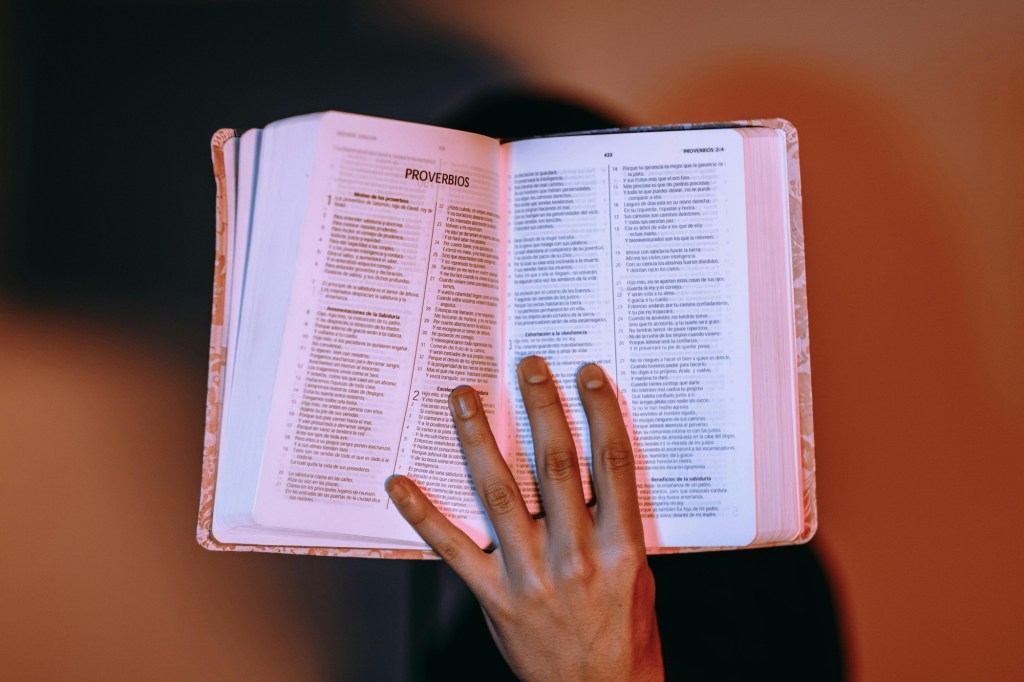
It has always been asked of me, “How can I best explain the Gospel to an intellectual person? Like a scientist, a doctor, or someone who is a wide reader or a good researcher.”
To answer, we must first be willing to reject and disprove traditions that have been prevalently taught and believed upon but cannot be supported by Scripture. Jesus Christ said, “If you abide in My word, you are truly My disciples, and you will know the truth, and the truth will set you free.” (John 8:31-32)
Again Jesus Christ told the unbelieving Jews, “Why do you not understand what I say? It is because you cannot bear to hear My word. You are of your father the devil, and your will is to do your father’s desires. He was a murderer from the beginning, and does not stand in the truth, because there is no truth in him. When he lies, he speaks out of his own character, for he is a liar and the father of lies. But because I tell the truth, you do not believe Me.” (John 8:43-45)
Therefore, to do so, we must first be well acquainted with the Scripture. We need to know the truth. Explain thoroughly the teachings of Christ Jesus. Do not be shy to refute conventional teachings or beliefs that are unfounded in the Word of God.
Yes, I understand it’s a long process. That’s exactly why Christ Jesus spent three years teaching His disciples. Consequently, Christians also must be immersed in discipleship. By discipleship, that means learning to approach Scripture correctly respecting its context, immediate audience, and the specific teaching or message of Christ Jesus on a particular passage in the Bible.
It is a time-consuming process, and it does not guarantee a positive response from most. But remember, Jesus Christ, didn’t focus on the most, only on those who have been willing to follow Him notwithstanding its cost.
Once more, see Scripture: “All these things Jesus said to the crowds in parables; indeed, He said nothing to them without a parable. This was to fulfill what was spoken by the prophet: “I will open My mouth in parables; I will utter what has been hidden since the foundation of the world.” Then He left the crowds and went into the house. And His disciples came to Him, saying, “Explain to us the parable of the weeds of the field.”” (Matthew 13:34-36)
Take note that the parables of Jesus were not meant to conceal but utter what has been hidden; in other words, parables are meant to unveil the truths of God’s Word. Also, only to those few disciples did Jesus explain further the truth. No, it’s not because they were the chosen ones; rather, they came to ask and inquire about the truth.
Let us therefore not rush the process; rather be disciplined in keeping the process. In time, perhaps it could even be beyond our lifetime, it shall bear fruit.
Lastly, it is a reality that we could create enemies or people would not find us pleasing once we stand by God’s truth. That’s exactly why Jesus Christ said to His disciples, “If anyone would come after Me, let him deny himself and take up his cross and follow Me. For whoever would save his life will lose it, but whoever loses his life for My sake will find it.” (Matthew 16:24-25)
Christianity is a journey, and in our journey, we ought to know and discern the way. Jesus Christ alone is the Way, the Truth, and the Life (John 14:6). It would be ironic for us to follow the crowd but miss the way.
Jesus Christ said, “Enter by the narrow gate. For the gate is wide and the way is easy that leads to destruction, and those who enter by it are many. For the gate is narrow and the way is hard that leads to life, and those who find it are few.” (Matthew 7:13-14)
Christianity cannot be a multifaceted truth but the one single way to truth. Yet, there is diversity of supposed truths presented and proposed by Christians of different denominations, even among those who claims to be non-denominational. That is exactly why intellectual skeptics find post-modern Christianity confusing or worse a lie; hence, a stumbling block to the faith.
Jesus Christ alone is the Door (John 10:7,9) and the Good Shepherd (John 10:11). Upon Him and His Word alone should we follow, believe and teach. Christ Jesus alone is the One Way to true Christianity. Let us be humble enough to learn from His word, the Bible. Scripture Alone.
If you want to follow our journey of unlearning tradition and relearning Scripture, you can stay updated just head to our about page and subscribe directly to receive notifications in your inbox. Subscription is free.
Colonial mentality is still very much embedded in the minds of most people, especially here in the Philippines. Simple discipleship approaches have to be imported from foreign soil. No wonder Christianity here has always been challenged, without real progress.
Discipleship is never about programs. Approaches might differ according to each cultural background but the main task of discipleship remains the same. Programs without truthful teaching of God’s Word cannot be real discipleship. If programs are just approaches so that Christianity would adjust to the likings of unbelievers or nominal Christians, then it’s already a failure even at the onset.
A lot of people lose interest in Christianity not because of the Gospel message, but mainly due to the hypocrisy or conflicting nature of supposedly Christians. Yes, professing Christians (wolves in sheep’s clothing) are the main stumbling block to Christianity.
Jesus Christ called on His prospective disciples saying “Follow me”. Christ’s call on people to follow Him – that’s the essence of real discipleship. Now, to follow Jesus does not simply mean eating with Him or walking with Him, but to learn from His teaching. Hence, discipleship without truthful teaching of God’s Word is not discipleship – it’s simply a bandwagon in the guise of discipleship.
Here are the Words of Jesus Christ concerning His call for discipleship. See Matthew 10:24-39. I am separating it into two parts for clarity’s sake.
First, Jesus Christ said:
““A disciple is not above his teacher, nor a servant above his master. It is enough for the disciple to be like his teacher, and the servant like his master. If they have called the Master of the house (Jesus Christ is the Master of God’s house, the church) Beelzebul, how much more will they malign those of His household. “So have no fear of them, for nothing is covered that will not be revealed, or hidden that will not be known. What I tell you in the dark, say in the light, and what you hear whispered, proclaim on the housetops. And do not fear those who kill the body but cannot kill the soul. Rather fear Him (God) who can destroy both soul and body in hell. Are not two sparrows sold for a penny? And not one of them will fall to the ground apart from your Father. But even the hairs of your head are all numbered. Fear not, therefore; you are of more value than many sparrows. So everyone who acknowledges Me (Jesus Christ) before men, I also will acknowledge before My Father who is in heaven, but whoever denies Me before men, I also will deny before My Father who is in heaven.”
Doing discipleship is never a walk in the park. It would have its challenges. You would always be maligned, gossiped, or backstabbed; it all comes with the work. So we cannot be onion-skinned. Just shake off the dust if it doesn’t work out. But never leave the potential disciple if he/she is truly seeking to follow Jesus Christ.
Second, Jesus Christ went on teaching:
“Do not think that I have come to bring peace to the earth. I have not come to bring peace, but a sword. For I have come to set a man against his father, and a daughter against her mother, and a daughter-in-law against her mother-in-law. And a person’s enemies will be those of his own household. Whoever loves father or mother more than Me is not worthy of Me, and whoever loves son or daughter more than Me is not worthy of Me. And whoever does not take his cross and follow Me is not worthy of Me. Whoever finds his life will lose it, and whoever loses his life for My sake will find it.”
Jesus Christ told us, disciples should continue the journey of following Him even when opposition seems to overwhelm us. Even loved ones or family members could oppose our journey. Yet, if we chose to save it, that would be the end of our discipleship journey. On the other hand, if we persist on our journey, surely we will find Jesus and not be lost on our way.
Jesus Christ was not all talk without application. He demand commitment to discipleship, taught it, and applied it to Himself.
Jesus Christ exemplified discipleship, teaching only from the perspective of the Trinity God. See John 7:16, “So Jesus answered them, “My teaching is not Mine, but His (God the Father) who sent Me.” Check out also John 12:49.
Even the Holy Spirit, the 3rd Person of the Holy Trinity, has always been consistent with the Word of God. See John 6:63 “It is the Spirit who gives life; the flesh is no help at all. The words that I have spoken to you are spirit and life.”
Perhaps James, one of Jesus’ brothers by Joseph, appeared also to oppose His way. Jesus was ridiculed by His own and yet He persisted following the Father’s will. See John 7:2-5.
“Now the Jews’ Feast of Booths was at hand. So His (Jesus’) brothers said to Him, “Leave here and go to Judea, that Your disciples also may see the works You are doing. For no one works in secret if He seeks to be known openly. If You do these things, show Yourself to the world.” For not even His brothers believed in Him.”
Yet, it was after Jesus Christ had faithfully followed the will of the Father – died on the cross, resurrected, and ascended; thereby, fulfilling Scripture – did James became His determined apostle.
Worry not that our relationship with people might be compromised by following Jesus Christ. But trust His heart, goodness, and grace. Just as James found grace in Christ Jesus, Scripture assured us saying “Jesus Christ is the same yesterday and today and forever.” (Hebrews 13:8)
The main goal of discipleship should be QUALITY, not QUANTITY. But that has always been a challenge to workers of the Word ‘cause discipleship is never an overnight journey. Jesus Christ spent three years teaching the disciples. Sadly, the quest for QUALITY disciples has always been challenged by demands for QUANTITY. The issue of ROI (Return on Investment) from supporting organized Christianity forced workers of the Word to fast-track, thereby compromising truthful discipleship.
On the other hand, sad to say but we also have pastors who seem not able to teach only from the Bible. They relied on human-tailored Bible study materials, most of which – if not all – have compromised from the truth. Human biases are very obvious for Christians who truly understand Scripture. Consequently, we have well-meaning Christian leaders who have no option but to send pastors to join discipleship conferences. Worse, even with joining such conferences nothing seems to progress. So, at the end of the day, we see pastors and Christian leaders joining discipleship conferences to no avail.
Learning discipleship begins with learning to study and teach the Word of God. Before the disciples were sent out to preach, they had to know the message. Paul went around the Roman Empire teaching the Word of God only after he had personally been called by Jesus Christ and taught by Him. See Galatians 1:11-12.
“For I would have you know, brothers, that the gospel that was preached by me is not man’s gospel. For I did not receive it from any man, nor was I taught it, but I received it through a revelation of Jesus Christ.”
Paul’s understanding of Judaism didn’t suffice. He needed to see the connection between the Old Testament Scripture vis-a-vis that of Jesus’ teaching (New Testament Scripture) and work. Yes, Jesus Christ didn’t offer a new teaching; rather He connected the OT Scripture with His Word ‘cause Christ came to fulfill all Scripture (Matthew 5:17).
Apollos’ preaching in Ephesus was called upon and augmented so that it may fully adhere to the teaching of Jesus Christ. See Acts 18:24-26.
“Now a Jew named Apollos, a native of Alexandria, came to Ephesus. He was an eloquent man, competent in the Scriptures. He had been instructed in the way of the Lord. And being fervent in spirit, he spoke and taught accurately the things concerning Jesus, though he knew only the baptism of John. He began to speak boldly in the synagogue, but when Priscilla and Aquila heard him, they took him aside and explained to him the way of God more accurately.”
Admit it or not, human-tailored discipleship materials come and go. It has become like a fashion trend. Whichever material was used, after its initial launch or sometime later, Christians are always left hanging, not knowing what’s next.
Let us teach Christians how to study the Bible so that they may qualify to teach and lead others. That should be the foundational rule in discipleship. See Ephesians 2:19-21.
“So then you are no longer strangers and aliens, but you are fellow citizens with the saints and members of the household of God (the church), built on the foundation of the apostles and prophets, Christ Jesus himself being the cornerstone, in whom the whole structure, being joined together, grows into a holy temple (the church) in the Lord.”
Make no mistake the foundation of truthful Christianity has always been Jesus Christ and His Word – nothing more, nothing less.
Here then are the guiding passages for discipleship:
“You then, my child (Timothy), be strengthened by the grace that is in Christ Jesus, and what you have heard from me (Paul) in the presence of many witnesses entrust to faithful men, who will be able to teach others also.” (2Timothy 2:1-2)
Discipleship won’t suffice by simply inviting Christians to a short seminar and providing them with materials to follow. We all know most Christians are not well-versed in Scripture. They have questions, and they would be asked questions. Hence, we need to have Christian mentors who are truly equipped to handle the Scripture rightly (2Timothy 2:15). Consequently, with our present context launching a congregation-wide discipleship is not possible – simply because we need qualified mentors, truly equipped in Scripture. It cannot be denied, that not everyone who goes to a Sunday Christian gathering is a committed Christian. Worse, it’s a fact that we have unconverted people joining such gatherings. Sadly, we also have them among supposedly Christian leadership.
Next, “So Jesus said to the Jews who had believed Him, “If you abide in My WORD, you are truly My disciples, and you will know the truth, and the truth will set you free.”” (John 8:31-32)
Discipleship is not simply a movement armed with a human-tailored material within or outside a congregation. Rather, it’s all about following Jesus Christ; again, it’s about learning and teaching from His Word. Faith is learned when we knew intimately and believe the One whom we follow.
On the other hand, here is a guide for Christian mentors to know if a person is not ready to be a disciple:
“When many of His (Jesus’) disciples heard it, they said, “This is a hard saying; who can listen to it?” But Jesus, knowing in Himself that His disciples were grumbling about this, said to them, “Do you take offense at this? Then what if you were to see the Son of Man ascending to where He was before? It is the Spirit who gives life; the flesh is no help at all. The words that I have spoken to you are spirit and life. But there are some of you who do not believe.” (For Jesus knew from the beginning who those were who did not believe, and who it was who would betray Him.) And He said, “This is why I told you that no one can come to Me unless it is granted Him by the Father.” After this many of His disciples turned back and no longer walked with Him.” (John 6:60-66)
Incidentally, I’m not endorsing the idea of “election or predestination” in our present context. We have to understand that Christ’s expression of “election language or metaphor” was due to the impending judgment coming upon Old Covenant Jews, who sent Jesusto be crucified. See Paul’s letter to the believers.
“For you, brothers, became imitators of the churches of God in Christ Jesus that are in Judea. For you suffered the same things from your own countrymen as they did from the Jews, who killed both the Lord Jesus and the prophets, and drove us out, and displease God and oppose all mankind by hindering us from speaking to the Gentiles that they might be saved—so as always to fill up the measure of their sins. But wrath has come upon them at last!” (1Th 2:14-16)
Similar to God’s initial judgment against Old Covenant Israel, it was the Babylonians who became God’s instrument for judgment; Jerusalem and the temple were destroyed in 586 B.C. Now, with God’s final judgment upon Old Covenant Israel, it was the Romans destroying Jerusalem and the temple in 70 A.D.; hence, true to Paul’s words “God’s wrath has come upon them at last (1Thessalonians 2:16). Also, fulfilling Jesus’ word concerning that final destruction of Jerusalem and the temple (Matthew 23:37-38; 24:1-2,15-21).
Jerusalem today, without the temple, ceased to be God’s Old Covenant Israel. And mind you, there was no further prophecy of another rebuilding of the Jerusalem temple in Scripture. Whatever was prophesied in the Old Testament Scripture concerning a rebuilding of the temple was initially fulfilled during Nehemiah and Ezra’s time and until that of Herod’s temple. The New Testament Scripture has no direct prophecy of another temple to be rebuilt. Therefore, without Scripture, it’s just a myth or fictional story telling.
Understandably, the temple in Jerusalem was a mere shadow of the true reality of God’s promise dwelling with His people. Jesus Christ, by His resurrection and ascension, commenced the building of His temple – the church. See 1Corinthians 3:16.
“Do you not know that you (Greek plural, not individual, the collective body of Christ, the church) are God’s temple and that God’s Spirit dwells in you?”
Next, 1Corinthians 6:19. “Or do you not know that your body (Greek plural, not individual body but the collective body of Christ, the church) is a temple of the Holy Spirit within you, whom you have from God? You are not your own.”
Also, 2Corinthians 6:16. “What agreement has the temple of God with idols? For we (collective body of Christ, the church) are the temple of the living God; as God said, “I will make My dwelling among them and walk among them, and I will be their God, and they shall be My people.”
Again, Ephesians 2:19-22. “So then you (Gentiles) are no longer strangers and aliens, but you are fellow citizens with the saints (the Jewish believers) and members of the household of God (the collective body of Christ, the church), built on the foundation of the apostles and prophets, Christ Jesus Himself being the cornerstone, in whom the whole structure, being joined together, grows into a holy temple in the Lord. In Him you also are being built together into a dwelling place for God by the Spirit.”
Finally, 1Peter 2:4-5. “As you (Greek plural, the collective body of Christ, the church) come to Him (Jesus Christ), a living stone rejected by men but in the sight of God chosen and precious, you yourselves (same with the first “you”, plural) like living stones are being built up as a spiritual house, to be a holy priesthood, to offer spiritual sacrifices acceptable to God through Jesus Christ.”
On the flip side of God’s judgment pronouncement on Old Covenant Israel, similarly important was God’s promise of grace to the generation of Jews that saw Jerusalem and its temple destroyed. See Romans 11:5-7, the apostle Paul said: “So too at the present time (Paul’s time, not ours) there is a remnant (of Jews, see Romans 9:27), chosen by grace. But if it is by grace, it is no longer on the basis of works; otherwise grace would no longer be grace. What then? Israel failed to obtain what it was seeking. The elect obtained it, but the rest were hardened …”. The believing Jews were clearly the elect spoken in Scripture.
In our quest to make disciples, let us not commit the mistake of omitting the Word of God as the main means for discipleship. Keep in mind that our commission for discipleship came from the Lord Jesus Christ, not men. Let us not be pressured by the idea of ROI, but disciple people by the Word of God. It does not need to be fast-tracked. Practice discernment, some may be ready but most are not. Focus on those who truly honor God’s Word. Remember always that our accountability is to the Word, Jesus Christ.
Now, if the issue you are confronting has to do with the ministry support, and you have been coerced to do otherwise, walk away! Trust God for your sustenance. As the saying goes, “God is never early, yet He is never late.” In hindsight, after you have trusted God in everything, you will see God’s work in display – he has led you out of your Egypt and parted the sea, protected and delivered you, not to the wilderness but His promised land. That is the reality and sum of following Jesus Christ. No ifs, no buts. Just trust and believe.
Scripture said, “And without faith it is impossible to please Him (God), for whoever would draw near to God must believe that He exists and that He rewards those who seek Him.” (Hebrews 11:6)
Blessings!
If you want to follow our journey of unlearning tradition and relearning Scripture and stay updated, you can head to our about page and subscribe directly to receive notifications in your inbox.
Without a doubt, 21st-century Christianity comes in many shapes and forms. Christians differ in doctrines, but they seem to be unified in believing that the return of Jesus Christ is still in the future, though it has been millennia since Jesus promised His apostles that He would be coming in their generation. See Matthew 16:27-28.
“For the Son of Man is going to come with His angels in the glory of His Father, and then He will repay each person according to what he has done. Truly, I say to you, there are some standing here who will not taste death until they see the Son of Man coming in his kingdom.””
The synoptic Gospels – Matthew, Mark, & Luke – have the same assurance concerning the imminent return of Christ:
“And He (Jesus Christ) said to them (apostles), “Truly, I say to you, there are some standing here who will not taste death until they see the kingdom of God after it has come with power.”” (Mark 9:1)
“For whoever is ashamed of Me (Jesus Christ) and of My words, of him will the Son of Man be ashamed when He comes in His glory and the glory of the Father and of the holy angels. But I tell you truly, there are some standing here who will not taste death until they see the kingdom of God.”” (Luke 9:26-27)
Not only that, Jesus Christ sending out the twelve apostles, instructing them on His message, said, “And proclaim as you go, saying, ‘The kingdom of heaven is at hand.’” (Matthew 10:7)
“At hand” in the original Greek language means “near,” and near cannot by any means be thousands of years and continuing, as suggested by the Futurists. Jesus Christ did not just give them the message to proclaim, but He reinforced the message with the assurance that it was indeed occurring soon. See Matthew 10:23.
“When they persecute you (the apostles) in one town, flee to the next, for truly, I say to you, you will not have gone through all the towns of Israel before the Son of Man comes.”
As I researched the validity of Jesus’ words, it’s sad, actually disgusting, to find known Bible scholars saying, “No, Jesus was confused or hallucinating when He uttered those words.” Some dismissed the passages saying, “There must be another meaning for that, but we just have to find out.”
Funny that for as long as the passages or verses are convenient to their theological position, they adhere to the Words of Christ, but if it doesn’t, then it’s excuses after excuses. Scripture does not need affirmation from men; rather, the Bible is the dispenser of truth because it is the Word of God.
One of the key disciplines in interpreting Scripture involves recognizing “time statements.” However, Futurists often overlook these time statements in the Bible, particularly in the New Testament, and instead suggest that they refer to the future. It’s important to remember that what the apostles considered “the future” is no longer future to us today.
Hence, statements like “this generation” in Matthew 24:34 no longer make an impact on the readers, for time statements have been disregarded. See Matthew 24:29-34.
“29 Immediately after the tribulation of those days the sun will be darkened, and the moon will not give its light, and the stars will fall from heaven, and the powers of the heavens will be shaken. 30 Then will appear in heaven the sign of the Son of Man, and then all the tribes of the earth will mourn, and they will see the Son of Man coming on the clouds of heaven with power and great glory. 31 And He will send out His angels with a loud trumpet call, and they will gather His elect from the four winds, from one end of heaven to the other. 32 “From the fig tree learn its lesson: as soon as its branch becomes tender and puts out its leaves, you know that summer is near. 33 So also, when you see all these things, you know that He is near, at the very gates. 34 Truly, I say to you, this generation will not pass away until all these things take place.
So some have suggested “this generation” refers to the generation who saw the literal signs of Matthew 24:29-34. Yet, they miss out on John’s confession in Revelation that he was already in tribulation. See Revelation 1:9.
“I, John, your brother and partner in the tribulation and the kingdom and the patient endurance that are in Jesus, was on the island called Patmos on account of the word of God and the testimony of Jesus.”
Scripture is a unity. The apostles’ writings cannot be different from the Words of Jesus found in the Gospels, the Book of Acts, or the Book of Revelation. Jesus’ words have their foundation in the Old Testament Scripture. The entire Bible is a cohesive revelation concerning the declaration and fulfillment of God’s words.
See Luke 24:44.
Then He (Jesus Christ) said to them (The disciples), “These are My words that I spoke to you while I was still with you, that everything written about Me in the Law of Moses and the Prophets and the Psalms must be fulfilled.”
In recent years, we have witnessed the rise of fake news online. Most people now get their news from the web, particularly from platforms like Facebook and YouTube. Unfortunately, fake news spreads easily because many individuals click to watch or read without considering the source or the intent of the uploader or poster.
Even if a Facebook post or YouTube video contains factual information, ignoring the date it was published can severely affect its relevance today. The same principle applies when reading and studying the Bible. It is essential to recognize the audience’s relevance, the timing of statements, and their historical accuracy. Failing to do so can lead to misinterpretations of Scripture, whether by inexperienced readers or poorly informed pastors.
Jesus Christ warned, “Can a blind man lead a blind man? Will they not both fall into a pit?” (Luke 6:39)
Find someone who can teach you the disciplines of studying Scripture. Avoid using human-tailored Bible study materials, as they often reflect human influence. It’s important to recognize that even within different Bible translations, traces of human interpretation can be found. Let me be clear: the Bible itself is perfect, infallible, and without error; the issues arise with the translations.
You don’t need to be a scholar of Greek, Hebrew, or Aramaic, but it is beneficial to read the Bible by comparing different translations. Additionally, learning to use language tools, such as lexicons, is essential for in-depth Bible study. There are many free lexicon tools available online or for download. You just need to find someone knowledgeable to guide you in using these tools effectively.
It’s never too late to start studying Scripture and practicing proper exegesis. Ultimately, Scripture reveals truths about salvation that extend beyond our physical needs and concerns, addressing both our current lives and eternity. Don’t let yourself become part of confused Christianity.
Peter, in the words of Acts 3:6, declared, “I possess neither silver nor gold, but in the name of Jesus Christ, I offer you what I have.” Share this article freely, for you freely receive. Take note, underlines and highlights are clickable links for definitions or Bible references. Stay updated by heading to our about page and subscribe directly to receive notifications in your inbox. Blessing!
What exists now is what will be, and what has been done is what will be done; there is nothing truly new on earth. Is there anything about which someone can say, “Look at this! It is new!”? It was already done long ago, before our time.
ÜTruly there is nothing new under heaven. The human existence is an unending cycle of struggle and nothing is ever permanent except the capacity to commit mistake. Oh yes, man isn’t perfect and always susceptible to error. I believe that is a fact that no one can deny.
My wife and I have been doing discipleship with people of different background and age, and we both agree that only one thing is constant – no matter how well they know Scripture, people just can’t resist the temptation of disobedience. On the other hand, I suppose every Christian mentor would agree that the calling of Christ Jesus for discipleship and salvation involves TOTAL SURRENDER to Him.
The Synoptic Gospels told of a story about a rich man who came to Jesus Christ and sought to inherit eternal life (Matthew 19:16-26; Mark 10:17-27; Luke 18:18-27). The man claimed to have lived according to the commandments of the Mosaic Laws (Matthew 19:20; Mark 10:20; Luke 18:21), yet Jesus implied something remains lacking. See Mark 10:21.
As Jesus looked at him, He felt love for him and said, “You lack one thing. Go, sell whatever you have and give the money to the poor, and you will have treasure in heaven. Then come, follow Me.”
Isn’t it obvious that subsequent to following Jesus, obedience or total surrender is demanded by Christ?
See also, Matthew 19:21.
Jesus said to him, “If you wish to be perfect, go sell your possessions and give the money to the poor, and you will have treasure in heaven. Then come, follow Me.”
The same, isn’t it? The condition for obedience is required, so again Jesus said, “Then come, follow Me.” Perhaps some may argue that in other English translations, it’s “and”, not “then”. Would it matter? The instruction of Christ was clear; the man ought to obey His command first before following Him.
Finally, Luke 18:22.
When Jesus heard this, He said to him, “One thing you still lack. Sell all that you have and give the money to the poor, and you will have treasure in heaven. Then come, follow Me.”
As we can see, all three Gospel writers – Matthew, Mark and Luke – they all pointed out that though the rich man claimed adherence to the Mosaic Law, it wasn’t enough. Jesus asked the rich man to sell everything then come follow Him.
It definitely was not about living a destitute life and giving everything for the poor. See John 12:3-8.
Mary therefore took a pound of expensive ointment made from pure nard, and anointed the feet of Jesus and wiped His feet with her hair. The house was filled with the fragrance of the perfume. But Judas Iscariot, one of His disciples (he who was about to betray Him), said, “Why was this ointment not sold for three hundred denarii and given to the poor?” He said this, not because he cared about the poor, but because he was a thief, and having charge of the moneybag he used to help himself to what was put into it. Jesus said, “Leave her alone, so that she may keep it for the day of my burial. For the poor you always have with you, but you do not always have Me.”
Rather, it’s about the condition of one’s heart. See Matthew 6:19-21.
Do not lay up for yourselves treasures on earth, where moth and rust destroy and where thieves break in and steal, but lay up for yourselves treasures in heaven, where neither moth nor rust destroys and where thieves do not break in and steal. For where your treasure is, there your heart will be also.
It was pointed out by the Scripture, his great possession or wealth became a hindrance for him to truthfully follow Christ, hence Jesus asked him to sell everything. See Matthew 19:22. “When the young man heard this he went away sorrowful, for he had great possessions.“
Also, Mark 10:22. “Disheartened by the saying, he went away sorrowful, for he had great possessions.“
And again, Luke 18:23. “But when he heard these things, he became very sad, for he was extremely rich.”
Twice in Matthew, Jesus suggested that it is better to cut off a person’s hand if it leads him to sin. See Matthew 5:30.
And if your right hand causes you to sin, cut it off and throw it away. For it is better that you lose one of your members than that your whole body go into hell.
Now see Matthew 18:8.
And if your hand or your foot causes you to sin, cut it off and throw it away. It is better for you to enter life crippled or lame than with two hands or two feet to be thrown into the eternal fire.
The point of Christ was/is to deny the ways of Adam – transgressed the covenant and dealt faithlessly with God. See Hosea 6:7.
But like Adam they transgressed the covenant; there they dealt faithlessly with Me [God].
Christ’s desire was/is that people should come before Him with sincere intention and with complete trust and faith in Him. In other words, Christ Jesus demands total surrender.
Total surrender means putting our faith in Christ Jesus alone, not on worldly goods, exactly what the rich man was doing. The Scripture did say,
For the love of money is a root of all kinds of evils. It is through this craving that some have wandered away from the faith and pierced themselves with many pangs. (1 Timothy 6:10)
It is important to note that all three Gospel writers in relation to the story of Jesus, and the rich man had its context telling their audience/readers the prerequisite or demands for entrance to God’s kingdom. See Mark 10:15. “I tell you the truth, whoever does not receive the kingdom of God like a child will never enter it.” Then followed by the encounter of Jesus and the rich man.
Same with Matthew 19:14. “But Jesus said, ‘Let the little children come to Me and do not try to stop them, for the kingdom of heaven belongs to such as these.‘” Then we have the narrative of Jesus and the rich man.
Finally, Luke 18:17. “I tell you the truth, whoever does not receive the kingdom of God like a child will never enter it.” It was followed by the same story of Jesus and the rich man.
A lot of times, as I teach the Bible, each time we came across the above passages, there seems to be a common concern among my audience, so they ask, “Do I really need to sell everything to inherit salvation?” Some would even deny the words of Christ and suggest otherwise. The words of our Lord Jesus Christ is clear and timeless. It was true for that man and for everyone else who seek to follow Jesus Christ or have eternal life – no if’s and no but’s.
The prophet of God, in Jeremiah 17:9, said, “The heart is deceitful above all things, and desperately sick; who can understand it?”
The problem of mankind may be seem from the first humans found in Genesis, Adam and Eve. It is clear from Genesis chapter two that everything man needs for existence and enjoyment was provided by God. See Genesis 2:7-9.
Then the LORD God formed the man of dust from the ground and breathed into his nostrils the breath of life, and the man became a living creature. And the LORD God planted a garden in Eden, in the east, and there He put the man whom He had formed. And out of the ground the LORD God made to spring up every tree that is pleasant to the sight and good for food. The tree of life was in the midst of the garden, and the tree of the knowledge of good and evil.
Also, Genesis 2:15-23.
The LORD God took the man and put him in the garden of Eden to work it and keep it. And the LORD God commanded the man, saying, “You may surely eat of every tree of the garden, but of the tree of the knowledge of good and evil you shall not eat, for in the day that you eat of it you shall surely die.” Then the LORD God said, “It is not good that the man should be alone; I will make him a helper fit for him.” Now out of the ground the LORD God had formed every beast of the field and every bird of the heavens and brought them to the man to see what he would call them. And whatever the man called every living creature, that was its name. The man gave names to all livestock and to the birds of the heavens and to every beast of the field. But for Adam there was not found a helper fit for him. So the LORD God caused a deep sleep to fall upon the man, and while he slept took one of his ribs and closed up its place with flesh. And the rib that the LORD God had taken from the man He made into a woman and brought her to the man. Then the man said, “This at last is bone of my bones and flesh of my flesh; she shall be called Woman, because she was taken out of Man.”
Nothing was lacking for man; God allowed man to have everything He created. Oh yes, perhaps some will say, “Nope, God denied something from man – the fruit from the tree of knowledge of good and evil (Genesis 2:16-17).”
Allow me to clear out this confusion. God denied nothing from man and everything He created was good, even the fruit from the tree of knowledge of good and evil. See Genesis 1:31.
God saw all that He had made—and it was very good! There was evening, and there was morning, the sixth day.
See also 1 Timothy 4:4.
For every creation of God is good and no food is to be rejected if it is received with thanksgiving.
The tree of knowledge of good and evil was good in itself, but God made a covenant with man or a commandment as soon as man was placed inside the Garden of Eden. See Genesis 2:15-17.
The LORD God took the man and put him in the garden of Eden to work it and keep it. And the LORD God commanded the man, saying, “You may surely eat of every tree of the garden, but of the tree of the knowledge of good and evil you shall not eat, for in the day that you eat of it you shall surely die.”
In other words, man’s breaking of God’s covenant made them realized good from evil, and the evil were them – Adam and Eve – not the fruit that they ate making them evil. That’s the irony of human disobedience. The same is true for everyone, both Christians and non-Christians alike, for just as God demand faith in Christ Jesus for eternal life, so obedience is required for eternal fellowship with Him.
Now, on the topic of death as punishment for Adam and Eve once they broke God’s covenant, it must be clear that the penalty for their sin was immediate as can be seen in Genesis 2:17. “For in the day that you eat of it you shall surely die.”
The judgment was immediate and executed. So Adam and Eve died, but it’s obvious that it is not physically, for they continue to exist and even have children, therefore it’s a spiritual death.
The evidence of death was evident when they hid from the presence of God, and they found themselves naked. Again, nakedness here did not imply physical nudity rather a spiritual one. For after God formed both Adam and Eve, later Scripture said, “And the man and his wife were both naked and were not ashamed” (Genesis 2:25).
Spiritual death clearly refers to man’s disfellowship with God; they were no longer in covenant relationship with God. Next, man was banished from the Garden of Eden where the Tree of Life was/is, so the natural consequence of humanity henceforth was to die physically due to human natural composition. Remember, man was made from the dust of the ground; see Genesis 2:7.
Then the LORD God formed the man of dust from the ground and breathed into his nostrils the breath of life, and the man became a living creature.
See also Genesis 3:17-19.
And to Adam He said, “Because you have listened to the voice of your wife and have eaten of the tree of which I commanded you, ‘You shall not eat of it,’ cursed is the ground because of you; in pain you shall eat of it all the days of your life; thorns and thistles it shall bring forth for you; and you shall eat the plants of the field. By the sweat of your face you shall eat bread, till you return to the ground, for out of it you were taken; for you are dust, and to dust you shall return.”
The composition of mankind was from the dust of the ground which is susceptible to erosion and decay, so the physical existence of mankind was now limited to our present reality, after which everyone returns to the dust.
The apostle Paul spoke of the same truth in his letter to the Corinthians. See 1 Corinthians 15:47-49.
The first man [Adam] was from the earth, a man of dust; the Second Man [Jesus Christ] is from heaven. As was the man of dust, so also are those who are of the dust, and as is the Man of heaven, so also are those who are of heaven. Just as we have borne the image of the man of dust, we shall also bear the image of the Man of heaven.
That is the reason and purpose of God in Christ Jesus our Lord – to redeem His creation back in fellowship with Him at the Garden of Eden, where the Tree of Life is. Hence, the coming of Jesus Christ indeed was/is the essence of Gospel. See Luke 22:19-20.
And He [Jesus Christ] took bread, and when He had given thanks, He broke it and gave it to them, saying, “This is My body, which is given for you. Do this in remembrance of Me.” And likewise the cup after they had eaten, saying, “This cup that is poured out for you is the New Covenant in my blood.
See Matthew 26:39.
And going a little farther He fell on His face and prayed, saying, “My Father, if it be possible, let this cup pass from Me; nevertheless, not as I will, but as You will.”
By “this cup,” both in Luke 22:20 and Matthew 26:39, Jesus spoke of His crucifixion and death as suitable offering for Him to commence His New Covenant.
See also, Matthew 26:26-29.
Now as they were eating, Jesus took bread, and after blessing it broke it and gave it to the disciples, and said, “Take, eat; this is My body.” And He took a cup, and when He had given thanks He gave it to them, saying, “Drink of it, all of you, for this is My blood of the covenant, which is poured out for many for the forgiveness of sins. I tell you I will not drink again of this fruit of the vine until that day when I drink it new with you in My Father’s kingdom.”
The fullness of the New Covenant will be completed when Christ Jesus finally reigns in His Father’s kingdom or God’s kingdom.
Now, in Hebrews 9:15, Scripture said,
Therefore He [Jesus Christ] is the mediator of a New Covenant, so that those who are called may receive the promised eternal inheritance, since a death has occurred that redeems them from the transgressions committed under the first covenant.
Interestingly, Scripture continued on, so Hebrews 9:28 said,
So Christ, having been offered once to bear the sins of many, will appear a second time, not to deal with sin but to save those who are eagerly waiting for Him.
The Second Coming of Christ then is not detach, as suggested by many, from the doctrine of salvation. For it is clear that only after Jesus had appeared a second time would salvation be completed.
The Coming (First and Second) of Jesus Christ then was the offering of the New Covenant – a second and the last chance we may say for man to be restored back into fellowship with God and live eternally. But it is not a corporate spiritual restoration of mankind but individually, and only available to anyone who truthfully professed faith in Christ Jesus. Again, faith and obedience to Christ Jesus is intrinsically bind together; it cannot come one after the other as can be seen from the invitation of Jesus Christ to the rich man in the Synoptic Gospels. Again see Mark 10:21.
And Jesus, looking at him (the rich man), loved him, and said to him, “You lack one thing: go, sell all that you have and give to the poor, and you will have treasure in heaven; and come, follow Me.”
So we see, no one can truthfully claim to have been following Jesus Christ without obedience to Him. See John 8:21, Jesus addressing the Pharisees “So He [Jesus] said to them again, “I am going away, and you will seek Me, and you will die in your sin. Where I am going, you cannot come.”
Now see John 13:36.
Simon Peter said to Him [Jesus Christ], “Lord, where are you going?” Jesus answered him, “Where I am going you cannot follow Me now, but you will follow afterward.”
Then in John 14:3-6, Jesus said,
“And if I go and prepare a place for you, I will come again and will take you to Myself, that where I am you may be also. And you know the way to where I am going.” Thomas said to Him, “Lord, we do not know where You are going. How can we know the way?” Jesus said to him, “I am the way, and the truth, and the life. No one comes to the Father except through Me.
Do you now understand what it meant to be “following Jesus”? Jesus said “Where I am you may be also (John 14:3).” That should be clear enough, don’t you think? The call to “follow Jesus” was/is an invitation for eternity.
Now, see Luke 18:24-27.
Jesus, seeing that he [the rich man] had become sad, said, “How difficult it is for those who have wealth to enter the kingdom of God! For it is easier for a camel to go through the eye of a needle than for a rich person to enter the kingdom of God.” Those who heard it said, “Then who can be saved?” But He said, “What is impossible with man is possible with God.”
The disciples clearly understood that entrance to God’s kingdom means salvation (Luke 18:25-26). And salvation is possible only with God (Luke 18:27). Jesus Christ alone is the means by which anyone could come to the Father (John 14:6). Isn’t it ironic that many are similar to the rich man, they wanted worldly riches and eternal life? But Scripture had clearly said that “no one can have both.” See Matthew 6:24; Jesus said,
No one can serve two masters, for either he will hate the one and love the other, or he will be devoted to the one and despise the other. You cannot serve God and money.
So the Beatitude of Jesus Christ makes sense now. See Matthew 5:3-12.
Blessed are the poor in spirit, for theirs is the kingdom of heaven. Blessed are those who mourn, for they shall be comforted. Blessed are the meek, for they shall inherit the earth. Blessed are those who hunger and thirst for righteousness, for they shall be satisfied. Blessed are the merciful, for they shall receive mercy. Blessed are the pure in heart, for they shall see God. Blessed are the peacemakers, for they shall be called sons of God. Blessed are those who are persecuted for righteousness’ sake, for theirs is the kingdom of heaven. Blessed are you when others revile you and persecute you and utter all kinds of evil against you falsely on my account. Rejoice and be glad, for your reward is great in heaven, for so they persecuted the prophets who were before you.
Nowhere did Jesus say, “Blessedness is having an abundance of material wealth,” so why be envious of them who have much in life? Rich or poor, we all need Christ Jesus for our salvation. Seek Him in truth and spirit. Worry not about your daily needs, for Christ Jesus promised to provide. Do not fall victim into the irony of disobedience.
“But seek first the kingdom of God and His righteousness (Jesus Christ), and all these things will be added to you.” (Matthew 6:33)
“For Christ is the end of the law for righteousness to everyone who believes.” (Romans 10:4)
Blessings!
If you want to follow our journey of unlearning tradition and relearning Scripture, you can stay updated by heading to our about page and subscribe directly to receive notifications in your inbox.By the way, subscription is free and with no hidden cost.