Let me warn Christians that anyone who claims and teaches that the present conflict in Iran is a prelude to the Second Coming of Jesus Christ is delusional and false. All the prophecies in the Old Testament were fulfilled in Christ Jesus.
After His resurrection, Jesus Christ declared, “These are My words that I spoke to you (i.e., the disciples) while I was still with you. Everything written about Me in the Law of Moses, the Prophets, and the Psalms must be fulfilled.” (Luke 24:44) During His sermon on the mount, Jesus emphasized, “Do not think that I have come to abolish the Law or the Prophets; I have not come to abolish them but to fulfill them” (Matthew 5:17). In essence, Jesus Christ proclaimed that He was fulfilling Scriptures from the very beginning of His earthly ministry and even after His resurrection. It’s crucial to understand that if Jesus didn’t fulfill all Scriptures, He wouldn’t be true to His Word and couldn’t be the Christ. However, Jesus certainly is the Christ.
Hebrews teaches that the coming of Jesus Christ signaled the last days. See Scripture, “Long ago, at many times and in many ways, God spoke to our fathers by the prophets, but in these last days He has spoken to us by His Son, whom He appointed the heir of all things, through whom also He created the world” (Hebrews 1:1-2). The Bible says “it’s the last days”, not millennia. Peter affirmed it’s the last days in Acts 2:16-40, same as Paul and other apostles (2 Timothy 3:1; James 5:3; 2 Peter 3:3).
Contrary to contemporary Christian teachings, God’s kingdom cannot be postponed. Daniel prophesied that it will come during the reign of the fourth Gentile kingdom ruling over Israel, asserting that it’s certain and sure (Daniel 2:44-45). Rome was the fourth empire after Babylon (Daniel 2:36-38), Persia, and Greece (Daniel 8:20-21). The fact is, even the Jewish religious leaders, despite denying Christ, knew its time; hence, Jesus said they were forcing themselves into the kingdom. See Luke 16:16, “The Law and the Prophets were until John; since then the good news of the kingdom of God is preached, and everyone forces his way into it.”
The teaching about a Revived Roman Empire was developed to circumvent God’s declarations. There are many more lies invented to justify their assertions, and sadly many Christians have fallen into their myths and deceptions.
God’s kingdom is spiritual. The Bible nowhere teaches it would be physical. Jesus made clear it’s not coming in ways that can be observed.
Jesus Christ declared the arrival of God’s kingdom; see Luke 17:20-21, “Being asked by the Pharisees when the kingdom of God would come, Jesus answered them, ‘The kingdom of God is not coming in ways that can be observed, nor will they say, “Look, here it is!” or “There!” for behold, the kingdom of God is in the midst of you.’”
See Christ’s conversation with the Samaritan woman: “Jesus said to her, ‘Woman, believe Me, the hour is coming when neither on this mountain nor in Jerusalem will you worship the Father. You worship what you do not know; we worship what we know, for salvation is from the Jews. But the hour is coming, and is now here, when the true worshipers will worship the Father in spirit and truth, for the Father is seeking such people to worship Him. God is spirit, and those who worship Him must worship in spirit and truth.’ The woman said to Him, ‘I know that Messiah is coming (He who is called Christ). When He comes, He will tell us all things.’ Jesus said to her, ‘I who speak to you am He.’” (John 4:21-26)
Without a doubt, Jesus is the Christ, the Messiah who was to come. He came, therefore the Messianic kingdom was inaugurated; that’s the reason the temple was destroyed in 70 A.D. Take note, Jesus did say, with His coming, Jerusalem would cease to be the place for worship. Believers are no longer confined to spaces or a sanctuary, but are to worship God in truth and spirit.
The Messianic kingdom was spoken in Psalm 2. Jesus Christ is the King of Zion, a fulfillment of Isaiah 9:6-7 and Isaiah 7:14 as declared in Matthew 1:22-23. The Bible never spoke of a gap in the prophetic fulfillment of God’s kingdom. The talk of a rapture is nonsense. With the coming of Jesus, the Messianic kingdom has begun. Paul, in Acts, declared the fulfillment of Psalm 2, “And we bring you the good news that what God promised to the fathers, this He has fulfilled to us, their children, by raising Jesus, as also it is written in the second Psalm, ‘You are My Son, today I have begotten You’” (Acts 13:32-33). The Messianic kingdom is God’s kingdom – the kingdom of heaven – as heralded by John the Baptist (Matthew 3:1-2) and announced by Jesus Christ to have arrived (Matthew 4:17; 12:28; Luke 11:20).
What is too hard to understand? It’s plain and simple. But contemporary Christianity resists the truth and insists on what they have been told and taught. Example of the lie below:
Taken from Tony Campbell
Now that another Middle East crisis is at hand, soothsayers once more are abound. But Jesus Christ alone is the true prophet of God, to whom we ought to listen. At the transfiguration of Jesus, God declared, “This is My beloved Son, with whom I am well pleased; listen to Him.” (Matthew 17:5)
Christians, let us not be alarmed by claims or teachings that supposedly the end of the world is coming. The Bible never spoke of the end of the world, but the end of the age. Jesus Christ taught about two ages only, the present age and the age to come, see Mark 10:29-30 and Luke 18:29-30. By “present age or in this age”, Jesus didn’t mean our time but the Old Covenant age – the period in which He came, lived, died, and resurrected, which consists of regulations, offerings, and animal sacrifices – see Hebrews 9:1-15. The Bible teaches that Christ Jesus has made it obsolete, with the passing of the Jewish temple (Hebrews 8:13). Making it impossible for the Mosaic regulations to be observed and practiced. The Bible declared Christ Jesus the mediator of the New Covenant (Hebrews 9:15; 12:24).
Paul, in Ephesians, expounded on the mystery of God about the church also teaches only two ages (Ephesians 1:21-22).
However, Jewish survivors of the A.D. 70 destruction of the temple continued in disbelief, so they came out with the Talmudic writings. Prominent on its declaration is a third rebuilding of the Jewish temple, which was nowhere taught in the Old or New Testament Scripture, but has been promoted by some Christians who hold dispensational theology. Beware of what you are learning, believing, and teaching. You might be disseminating falsehoods.
Study the Bible thoroughly with a clear mind, free from biases introduced by mainstream Christianity. Just a few decades after Jesus Christ’s resurrection, false gospels began spreading, prompting Paul to confront them by writing letters to various churches (Galatians 1:6-9; 2 Corinthians 11:1-4). Also, the writing of the gospels ensued— Matthew, Mark, Luke, and John. Today, it remains an issue even millennia later. The root cause seems to be Christianity’s tendency to rely on the writings of early church fathers, those of the Reformers, or modern scholars rather than the Bible itself.
Peter, in the words of Acts 3:6, declared, “I possess neither silver nor gold, but in the name of Jesus Christ, I offer you what I have.” Share this article freely, for you freely receive. Take note, underlines and highlights are clickable links for definitions or Bible references. Stay updated by heading to our about page and subscribe directly to receive notifications in your inbox. Blessing!
Recently, my wife and I took a bus trip to Baguio City. It’s a good idea to buy your tickets in advance because the ticket counters at the station can get really crowded. A lot of people end up standing in line, hoping to get a ticket and board the bus. These people are betting on chance passengers.
The apostle James says, “Your life is like a mist that vanishes quickly.” (Jas 4:14) Don’t take chances. Always bet on God’s word. Peter says, “As the Scriptures say, ‘People are like grass; their beauty is like a flower in the field. The grass withers and the flower fades. But the word of the Lord remains forever.’ That word is the Good News you heard.” (1Pet 1:24-25, NLT)
Matthew 9:9-13 tells us about the calling of Matthew, and cross-referencing it to Hosea 6:6 together with its biblical context, as quoted by Matthew (Matt 9:13).
The Jewish people of the Old Covenant and cohabiting people like the Samaritans, who lived during Jesus’ time, eagerly awaited the arrival of the Christ (John 1:41; 4:25; Luke 2:9-11). However, many of them missed their chance due to their arrogance, not ignorance. Isaiah 10:20-23; 65:1-17 and Daniel 12:4,7-9 prophesied the complete end or the time of the end for Old Covenant Israel. Jesus spoke of the temple’s final destruction (Matthew 23:37-38; 24:2; Luke 21:20-22), fulfilling Zechariah’s prophecy of the New heavenly Jerusalem (Zechariah 14), also described by John in Revelation 21-22. With the temple destroyed for the second and final time, the declaration in Hebrews 8:13, stating that the Old Covenant became obsolete, reached its climax. Old Covenant Israel relied on the Mosaic law rather than the grace offered through Christ Jesus, which caused them to miss their chance. (Galatians 3:10-11)
Consequently, God through Jesus Christ came to call on the lost, so He replied to the self-righteous Pharisees, who refused to mingle with outcasts, “Those who are well have no need of a physician, but those who are sick” (Matt 9:12). Of course, the context of Matthew 9:9-13 does not involve literally sickly people, but the outcasts and sinners.
Let me clarify that God does not love sinners; instead, He detests them. Consequently, we witnessed God’s punishment and destruction of all humanity in the Genesis 6-9 account of Noah’s flood, leaving only eight individuals alive. Scripture explicitly states that this was because Noah found grace in God’s sight (Genesis 6:8). Yes, the translated word “favor” in that verse in most modern Bible translations originates from the Hebrew word “grace.” This was because God was fulfilling His covenant to restore His creation that had fallen in Adam through Jesus Christ (Hosea 1:10-11; Romans 9:25-26; 11:1-2, 26-29; 1 Corinthians 15:22).
Matthew presents himself as the perfect example of the sick—spiritually, of course. He was a tax collector, which in the context of Old Covenant Israel made him a traitor, since he collected taxes from his own countrymen on behalf of their oppressor, Rome.
Matthew identified those dining with Jesus as tax collectors and sinners (Matthew 9:10). These individuals weren’t known for their blatant sins; rather, they belonged to the lost tribes of Israel, specifically the ten tribes of the Northern kingdom. God had denounced these ten tribes in Hosea 6:6-10. Consequently, they were referred to as sinners in Matthew 9:10 and the lost sheep of the house of Israel in Matthew 10:6. Ephraim was a reference to Israel, the ten northern tribes.
Like Adam, who was banished from the Garden of Eden for breaking God’s covenant—not to eat from the tree of knowledge of good and evil (Genesis 2:15-16; Genesis 3)—Israel, particularly the ten tribes of the Northern kingdom, was lost. God through Hosea declared, “But like Adam, they (i.e. Israel) transgressed the covenant; there they dealt faithlessly with Me.” (Hosea 6:7)
Jesus came to restore both Israel and Judah to God, and this truth extends to all humanity. The Bible states, “For as in Adam all die, so also in Christ shall all be made alive.” (1Co 15:22) Therefore, the Gospel of Jesus Christ is intended for everyone to hear and believe.
From God’s perspective, being “lost” signifies death. Jesus illustrated this concept in his parable of the prodigal son. The father exclaimed, “For this my son was dead, and is alive again; he was lost, and is found.” (Luke 15:24) Consequently, like Adam, Israel, or the ten northern tribes, they died covenantally or spiritually. As a result, anyone without Christ Jesus, the last Adam, would not possess eternal life, as mentioned in 1 Corinthians 15:45.
As evident in the opening chapter of Hosea, particularly Hosea 1:4-9, God’s judgment against Israel was consistently clear and reiterated throughout the book. However, in Hosea 2:14-23 and other passages like Hosea 6:1-2, God revealed His restoration through the resurrection of Christ on the third day. Can you comprehend the logical progression from death to resurrection? Adam’s death, which affected all humanity, was spiritual in nature, so the remedy is also spiritual, not physical. Jesus articulated this truth in John 2:18-22 and Matthew 16:18, and Paul reaffirmed it in Ephesians 1:20-23. Paul explained that this restoration would occur through the church, which is a spiritual awakening or renewal of people, just as Jesus had declared to the apostles in Matthew 16:17-18. Furthermore, 1 Peter 2:9-10 indicated that this restoration was already underway. (Incidentally, the correct translation for Matthew 16:18 should be “the gates of Hades,” referring to the place of death, rather than “hell.”)
In Hosea chapters 3 to 5, God revealed that Israel would continue to disobey Him. However, by His grace, God would call a remnant from Israel to salvation (Hosea 1:10-11; Romans 9-11), which Paul announced was already at work (Romans 9:1-8; 11:1-6, 25-27). Jesus Christ and His Gospel would be the instruments of God’s call (Romans 10:12-17).
As evident in the Gospel of Matthew, the dominant religious authorities—the Sanhedrin—comprising Sadducees and Pharisees—were mostly self-righteous and adhered to beliefs inconsistent with the Bible. Jesus Christ was primarily rejected because He taught according to the Word of God, not human traditions (Mark 7:1-7). Jesus addressed the unbelieving Jews, stating, “I know that you are descendants of Abraham; yet you seek to kill Me because My word has no place in you.” (John 8:37)
Christ’s Gospel and teachings were new to the people, causing resistance from the crowd. Consequently, Jesus stressed the significance of entering through the narrow gate, which leads to life, while the wide gate leads to destruction. He explained that the narrow gate is challenging to find and few enter, whereas many pass through the easy, wide gate (Matthew 7:13-14). Here, Jesus was comparing His teachings, which are the narrow gate, to the contemporary teachings of that era—the wide gate. Similarly, during the Reformation era initiated by Martin Luther, he was among a select few who believed and taught correctly from Scripture that salvation is achieved by grace, through faith, not of works. He emphasized that the righteous shall live by faith (Romans 1:16-17).
The same can be said today. Throughout the millennia, modern Christianity has embraced many teachings and beliefs that are not in accordance with the Bible. Hence, sound doctrine would be heard and believed by a minority; most would suspect it’s a heresy. As the saying goes, “Repeat a lie often, and it becomes the truth”. This was because modern Christianity has focused on the writings of the so-called “early church fathers,” particularly those from one or two centuries after the last apostle of Jesus Christ. Moreover, during the reign of Emperor Constantine, this trend worsened. The Reformation occurred during the 16th century, and yet, it also produced its own flaws. The Bible’s teaching wasn’t fully restored.
Many claim faith in Jesus but then revert to old routines, with little real change. They attend churches or online services but struggle to distinguish biblical passages or interpret them correctly. They rarely join Bible study groups. This indifference damages faith and stems mostly from discrepancies between church teachings and Scripture.
The Bible can be confusing. Many say, “I cannot understand Scripture,” and pastors’ explanations differ. These are common feelings among believers. Some, frustrated, become indifferent.
Matthew’s and the rest of the Gospels were written precisely because of distortions to the Gospel. Paul wrote Galatians before any of the gospels were written, and he states, “I am astonished that you are so quickly deserting Him (i.e. God) who called you in the grace of Christ and are turning to a different gospel—not that there is another one, but there are some who trouble you and want to distort the gospel of Christ.” (Gal 1:6-7)
Both Matthew and Mark were written around the same time as Paul’s letters to the Corinthians. In 2 Corinthians 11:3, Paul addresses the same issue he had mentioned in Galatians. He warns that, just as the serpent deceived Eve with his cunning, their thoughts could be led astray from a sincere and pure devotion to Christ. Then Paul went on to rebuke them, saying, “For if someone comes and proclaims another Jesus than the one we proclaimed, or if you receive a different spirit from the one you received, or if you accept a different gospel from the one you accepted, you put up with it readily enough.” (2 Corinthians 11:4)
Paul, in his letter to the Corinthian church, was battling heresy. False teachings can be detrimental to one’s salvation. See Paul’s words to Timothy: “Keep a close watch on yourself and on the teaching. Persist in this, for by so doing you will save both yourself and your hearers” (1Ti 4:16). Hence, Paul told Christians in Corinth: “Do not be deceived: ‘Bad company ruins good morals’” (1Co 15:33).
We have seen in history how Christianity has been waged through swords. Examples would be the time of the Christian Crusaders. Today, it’s being done in the West, favoring Israel over any of its enemies. This was mainly due to the beliefs and teachings of Christian Zionism and Dispensationalism. The latter is the prevailing belief and teaching of most churches today. It is erroneous and inaccurate.Paul declared in Galatians, “And if you are Christ’s, then you are Abraham’s offspring, heirs according to promise” (Galatians 3:29). Old Covenant Israel missed its chance. Only a remnant of them were saved. They bet on the wrong ticket, the ride came, and they missed it. Jesus is the only ticket to salvation.
Though Israel ceased to be the chosen people of God (Matt 21:33-45), God’s wrath against the generation that crucified Jesus Christ had already been fulfilled; the temple destroyed (Matt 23:32-38). Nevertheless, the Bible declares, “For God’s anger is but for a moment, and His favor is for a lifetime” (Psalm 30:4-5). God’s word is always true. His anger and vengeance against Old Covenant Israel were fulfilled with the second and final destruction of the Jewish Temple. However, God’s grace is eternal, so there remains hope for modern-day Israel. Like everyone else, they must hear and believe the Gospel of Christ Jesus (Rev 14:6).
The Bible alone is infallible, while everything else can be erroneous and proven inaccurate when examined in light of the Scriptures. (WCF 1.4; 31.4)
Matthew’s Gospel leads us to Christ Jesus. He quoted Old Testament Scriptures to confirm that Jesus is indeed the Christ. We have four Gospels in our Bible and numerous letters from the apostles of Jesus Christ. Why rely on uninspired secondhand sources instead of the Word of God? Let’s seize the opportunity to become Christ’s disciples, learning and teaching solely from His Word (John 8:31-32). Paul exemplified this principle, stating, “Now, brothers and sisters, I have applied these things to myself and Apollos for your benefit, so that you may learn from us the meaning of the saying, ‘Do not go beyond what is written.’ Then you will not be puffed up in being a follower of one of us over against the other.’” (1 Corinthians 4:6, NIV)
Christ Jesus came and inaugurated the New Creation. Paul states, “Therefore, if anyone is in Christ, he is a new creation. The old has passed away; behold, the new has come.” (2 Corinthians 5:17) Hebrews declared that the Old Covenant became obsolete (Hebrews 8:13). Jesus Christ ushered in the age of grace, with the Gospel at its core. People must hear and believe the Gospel. It is an eternal gospel (Revelation 14:6); therefore, it is everlasting, contrary to the claims of many.
Most of the religious leaders during the time of Jesus, Paul, and the rest of the apostles insisted on their prevailing beliefs, and they missed their chance. As the saying goes, “If we have not learned from history, then we are bound to repeat its mistakes.” Missing our chance is a crucial mistake. It will cost us eternity like anyone else who rejected, mingled, muddled, and watered down God’s Word.
Matthew and the rest of the apostles, except for Judas, adhered to God’s word. Comparing Scriptures with Scriptures, they were saved by grace. Let’s not miss the chance and learn from the Bible.
So, who are you? Are you a Pharisee or an outcast, like Matthew? Christ Jesus doesn’t care about our past. The Gospel call is for everyone, but only those who recognize Christ and His Gospel would benefit from the message. That’s the lesson in Matthew 9:9-13. However, after we’ve trusted Jesus Christ, we should be different from our past lives. Paul said, “Follow me, as I follow Christ (1 Co 11:1).” Therefore, follow pastors or teachers of the Bible only if they are truly following Jesus Christ. Be a Berean, as the Bible states, “They received the word with all eagerness, examining the Scriptures daily to see if these things were so.” (Acts 17:11) Don’t be content with listening; study the Bible on your own and ask questions if needed. Then compare the answers with the Word of God and verify if they’re consistent with the Scriptures.
We have only one chance in our lifetime to bet on Christ Jesus. Don’t miss this chance.
Peter, in the words of Acts 3:6, declared, “I possess neither silver nor gold, but in the name of Jesus Christ, I offer you what I have.” Share this article freely, for you freely receive. Take note, underlines and highlights are clickable links for definitions or Bible references. Stay updated by heading to our about page and subscribe directly to receive notifications in your inbox. Blessing!
The article says, Ajoy, now 34, is one of a growing network of “ex-evangelicals” who have removed themselves from what they now view as the damaging beliefs of some evangelical, Pentecostal, and Baptist churches. She runs a popular TikTok account discussing faith and, among other things, the effects of traumatic religious experiences that can last for years – even a lifetime. Click to read the full article below.
Scaring people into believing doesn’t work. It has resulted in people who claim to believe in Christ Jesus but wouldn’t endure for their faith. Their sole desire was to be raptured and escape the supposed seven years of tribulation that follow the rapture.
Here is a short video explaining how the teaching about rapture came to exist.
Paul, in his letter to the church, emphasized, “For it has been granted to you that for the sake of Christ you should not only believe in Him but also suffer for His sake, engaged in the same conflict that you witnessed I had and now hear that I still endure.” (Philippians 1:29-30)
John, the apostle of Christ Jesus, was already facing tribulation. John in Revelation said, “I, John, your brother and partner in the tribulation and the kingdom and the patient endurance that are in Jesus, was on the island called Patmos on account of the word of God and the testimony of Jesus.” (Revelation 1:9) Yes, the tribulation that Jesus Christ taught in Matthew 24:9-14, which applies to His followers— Christians of John’s era.
How can we be certain that this applies to the first-century Christians, particularly during John’s time? Jesus spoke of a Great Tribulation that would follow, as mentioned in Matthew 24:15-35. This refers to the Old Covenant Jews, specifically the destruction of the temple and city by the Romans.
If you are not convinced, see the context of Matthew 24, leading to Christ’s teaching on the tribulation and great tribulation. Scripture in Matthew 24 told us: “Jesus left the temple and was going away, when His disciples came to point out to Him the buildings of the temple. But He answered them, ‘You see all these, do you not? Truly, I say to you, there will not be left here one stone upon another that will not be thrown down.’ As He sat on the Mount of Olives, the disciples came to Him privately, saying, ‘Tell us, when will these things be, and what will be the sign of your coming and of the end of the age?’” (Matthew 24:1-3)
What age was ending? Jesus only spoke of two ages. Refer to Mark 10:29-30: “Jesus declared, ‘Truly, I say to you, no one who has forsaken home, brothers, sisters, mother, father, children, or possessions for my sake and for the gospel will not receive a hundredfold reward in this present age—houses, brothers, sisters, mothers, children, and possessions—along with persecutions. And in the age to come, eternal life.’”
The present age that Jesus spoke of was the Old Covenant Age, while the age to come is the New Covenant, which we understand as the Church Age.
One significant piece of evidence that the Old Covenant Age has ended is the absence of the Jewish temple. The Book of Hebrews illustrates this point, specifically in Hebrews 9:8-28. Let’s examine these passages to understand their proper teaching.
First, the scripture teaches us that the Holy Spirit indicates that the way into the holy places is not yet opened as long as the first section (the temple) is still standing, which symbolizes the present age. (Hebrews 9:1-10)
Next, from Hebrews 9:11-26:
Under this arrangement, gifts and sacrifices are offered that cannot perfect the conscience of the worshiper; they only address food, drink, and various washings—regulations for the body imposed until the time of reformation. However, when Christ appeared as the High Priest of the good things that have come, He entered once for all into the holy places—not by means of the blood of goats and calves but by means of His own blood, thus securing an eternal redemption.
If the blood of goats and bulls, and the sprinkling of defiled persons with the ashes of a heifer, can sanctify for the purification of the flesh, how much more will the blood of Christ, who through the eternal Spirit offered Himself without blemish to God, purify our conscience from dead works to serve the living God?
Therefore, Jesus Christ is the mediator of a new covenant, so that those who are called may receive the promised eternal inheritance, because a death has occurred that redeems them from the transgressions committed under the first covenant. Where there is a will, the death of the one who made it must be established. A will takes effect only at death; it is not in force while the one who made it is alive. Thus, not even the first covenant was inaugurated without blood.
When every commandment of the law was declared by Moses to all the people, he took the blood of calves and goats along with water, scarlet wool, and hyssop, and sprinkled both the book itself and all the people, saying, “This is the blood of the covenant that God commanded for you.” In the same way, he sprinkled the blood on the tent and all the vessels used in worship. Indeed, under the law, almost everything is purified with blood, and without the shedding of blood, there is no forgiveness of sins.
Therefore, it was necessary for the copies of the heavenly things to be purified with these rites, but the heavenly things themselves required better sacrifices than these. For Christ has entered, not into holy places made with hands, which are copies of the true things, but into heaven itself, now to appear in the presence of God on our behalf.
He did not need to offer Himself repeatedly, as the high priest enters the holy places every year with blood not his own; otherwise, He would have had to suffer repeatedly since the foundation of the world. But as it is, He has appeared once for all at the end of the ages (the term “aiōn” in Greek could be translated as “age,” not necessarily “ages”) to put away sin by the sacrifice of Himself.
Lastly, Hebrews 9:27-28:
Just as it is appointed for man to die once and after that comes judgment, so Christ, having been offered once to bear the sins of many, will appear a second time, not to deal with sin but to save those who are eagerly waiting for Him.
The Christian church has lost its grip on truth. When will Christians wake up to realize that their primary mission is not simply to maintain the existence of the organized church? The means does not always justify the end. Christians should uphold the truths of the Bible. If believing in those truths causes some Christians to leave, so be it.
We can learn from the story in John 6. Jesus Christ shared the truth about Himself with the Jews, but they found it strange and unacceptable. Scripture states, “When many of Christ’s disciples heard it, they said, ‘This is a hard saying; who can listen to it?’” Jesus, aware that His disciples were grumbling, responded, “Do you take offense at this? Then what if you were to see the Son of Man ascending to where He was before? It is the Spirit who gives life; the flesh is no help at all. The words that I have spoken to you are spirit and life” (John 6:60-63).
Jesus went on to say: “This is why I told you that no one can come to Me unless it is granted him by the Father.” After this, many of His disciples turned back and no longer walked with Him. So Jesus said to the twelve, “Do you want to go away as well?” Simon Peter answered Him, “Lord, to whom shall we go? You have the Words of eternal life, and we have believed and have come to know that You are the Holy One of God.” Jesus answered them, “Did I not choose you, the twelve? And yet one of you is a devil.” He spoke of Judas, the son of Simon Iscariot, for he, one of the twelve, was going to betray Him. (John 6:65-71)
Paul, in Romans 10:17, concluded his lengthy discourse on election, which began in Romans 9, by stating, “So faith comes from hearing, and hearing through the word of Christ.” God calls people through His Word. Jesus has earlier emphasized this concept in John 6:63, saying, “My Word is spirit and life.” This is the biblical manifestation of election, not a supernatural, random selection by God.
Following the story of John 6, in another similar occasion, “Jesus said to Jews, “If God were your Father, you would love Me, for I came from God and I am here. I came not of My own accord, but He sent Me. Whydoyou not understand what I say? It is because you cannot bear to hear My WORD.” (John 8:42-43)
Christianity revolves around Jesus Christ and His Word, nothing more and nothing less. I encourage fellow Christians to engage in a sincere study of God’s Word. There is a reason why believers should attend seminary and graduate before becoming pastors; this training equips them to teach from Scripture correctly.
However, If they still cannot teach solely from the Bible, they should seek additional training to learn how to handle the Bible correctly, as instructed by the apostle Paul (2 Timothy 2:15).
Let me remind everyone of what the apostle James said about us who teach from the Bible: “My brothers, not many of you should become teachers, for you know that we who teach will be judged more strictly.” (James 3:1)
A lot of Christians desires to learn from the Bible. As the saying goes in a Spiderman movie, “With great powers comes great responsibility”, the same may be said of us who teach from the Bible. Jesus Christ said, “Can a blind man lead a blind man? Will they not both fall into a pit? A disciple is not above his teacher, but everyone when he is fully trained will be like his teacher.” (Luke 6:39-40)
In Isaiah 30:20, the Bible promised, “And though the Lord give you the bread of adversity and the water of affliction, yet your Teacher will not hide Himself anymore, but your eyes shall see your Teacher.” Christ Jesus is the manifestation of God’s promised Teacher. Shouldn’t Christians seek to learn from Him alone? Jesus is the Word (John 1:14-17). He further emphasized in Luke 6:40 that we could emulate Him by comprehending God’s Word.
Peter, in the words of Acts 3:6, declared, “I possess neither silver nor gold, but in the name of Jesus Christ, I offer you what I have.” Share this article freely, for you freely receive. Take note, underlines and highlights are clickable links for definitions or Bible references. Stay updated by heading to our about page and subscribe directly to receive notifications in your inbox. Blessing!
The concept of the “end of the world” is not found in the Bible. It’s a mistranslation; the Bible actually refers to the “end of the ages.”
In 1 Corinthians 10:11, Paul writes, “Now these things happened to them as an example, but they were written down for our instruction, to whom the end of the ages has come.” In this context, “them” refers to Old Covenant Israel, as Paul declares that the end of the ages has arrived for them.
Furthermore, Hebrews 9:24-26 explains, “For Christ has entered, not into holy places made with hands, which are copies of the true things, but into heaven itself, now to appear in the presence of God on our behalf. Nor was it to offer Himself repeatedly, as the high priest enters the holy places every year with blood not his own; for then He would have had to suffer repeatedly since the foundation of the world. But as it is, He has appeared once for all at the end of the ages to put away sin by the sacrifice of Himself.”
Isn’t it evident that with the incarnate coming of Jesus Christ, Old Covenant Israel reached the end of the ages?
With the temple destroyed and the Old Testament regulations no longer applicable, this signifies the conclusion of the Old Covenant era, paving the way for the New Creation or New Covenant era, as ushered in by Christ Jesus. Consequently, Paul asserted in 2 Corinthians 5:17, “Therefore, if anyone is in Christ, he is a new creation. The old has passed away; behold, the new has come.”
Isn’t the New Covenant also the everlasting covenant? Hebrews 13:20 states, “Now may the God of peace who brought again from the dead our Lord Jesus, the great shepherd of the sheep, by the blood of the eternal covenant.” Since it is an eternal covenant, why do we still hear teachings about an impending end? Doesn’t this seem contradictory to God’s word?
Scripture only mentions two ages. Jesus Christ said, “And whoever speaks a word against the Son of Man will be forgiven, but whoever speaks against the Holy Spirit will not be forgiven, either in this age or in the age to come.” (Matthew 12:32)
Paul also mentions these ages: “far above all rule and authority and power and dominion, and above every name that is named, not only in this age but also in the one to come.” (Ephesians 1:21)
Additionally, Paul writes, “For it is impossible, in the case of those who have once been enlightened, who have tasted the heavenly gift, and have shared in the Holy Spirit, and have tasted the goodness of the word of God and the powers of the age to come, and then have fallen away, to restore them again to repentance, since they are crucifying once again the Son of God to their own harm and holding Him up to contempt.” (Hebrews 6:4-6)
Scripture also notes, “As Jesus sat on the Mount of Olives, the disciples came to Him privately, saying, ‘Tell us, when will these things be, and what will be the sign of Your coming and of the end of the age?’” (Matthew 24:3)
Have you noticed that the disciples associated the destruction of the Jewish temple with the return of Christ and the end of the age? Remember the Bible speaks of only two ages: the coming of Jesus Christ marked the coming end of the first age, and His return will bring it to completion. The New Covenant is eternal and therefore has no end. As a result, the disciples of Christ were living in the intermediate period of the two ages. This concept is highlighted in the Book of Hebrews, which states: “Long ago, at many times and in many ways, God spoke to our fathers by the prophets; but in these last days, He has spoken to us by His Son, whom He appointed the heir of all things, through whom also He created the world.” (Hebrews 1:1-2)
According to the Bible, what age should we be in today, millennia after the destruction of the temple? It seems illogical for Christians to talk about a coming end. The Jewish temple has long been gone, just as Christ Jesus had declared its end, making it unreasonable for some Christians to discuss the rebuilding of the temple, especially since the Bible does not indicate that a third temple in Jerusalem will be constructed. This belief is not a Christian teaching; rather, it stems from those who continue to adhere to Judaism, which implies a rejection of Christ Jesus. Sadly, numerous Christians have fallen to this lie.
Claims regarding the rebuilding of the Jerusalem temple have been circulating for decades, and those who support these teachings can be compared to the boy who cried wolf. Deuteronomy 18:15-22 cautions us against such individuals, identifying them as false prophets. Conversely, any assertions that contradict Christ’s declarations inadvertently label Jesus a liar. No wonder, Paul asserted and declared: “Keep a close watch on yourself and on the teaching. Persist in this, for by so doing you will save both yourself and your hearers.” (1Ti 4:16)
Many Christians mistakenly believe that the doctrine of Christ’s return is a minor issue that does not impact one’s salvation. However, the doctrines of the Bible are interconnected; they form a unified teaching about Christ Jesus and His offer of salvation.
Consider John 14:1-7:
“Let not your hearts be troubled. Believe in God; believe also in Me. In My Father’s house are many rooms. If it were not so, would I have told you that I go to prepare a place for you? And if I go and prepare a place for you, I will come again and will take you to Myself, that where I am, you may be also. And you know the way to where I am going.”
Thomas said to Him, “Lord, we do not know where You are going. How can we know the way?”
Jesus said to him, “I am the way, and the truth, and the life. No one comes to the Father except through Me. If you had known Me, you would have known My Father also. From now on, you do know Him and have seen Him.”
This passage emphasizes the importance of understanding Christ’s teachings, including His return, as part of the holistic message of salvation.
Jesus emphasized two important points here. First, He is the only way to the Father. Second, no one will be able to be where He went until He returns. Jesus said, “If I go and prepare a place for you, I will come again and will take you to Myself, so that where I am, you may be also.”
Note: Click on underlines and highlights for definitions or Bible references.
Peter , in the words of Acts 3:6, declared, “I possess neither silver nor gold, but in the name of Jesus Christ, I offer you what I have.” Share freely, for you freely receive. Stay updated by heading to our about page and subscribe directly to receive notifications in your inbox. Blessing!
Blogging has faced criticism from some Christian ministers, particularly those in positions of authority. Some bloggers and vloggers have been accused of misrepresenting themselves and spreading false information, which is true, but not all. However, can we assert that all Christian ministers are truly faithful to God’s word? If so, we wouldn’t have diverse interpretations of the Bible. Similarly, some bloggers and vloggers may have been consistent with truthful facts, while others are not. Therefore, it would be unfair to categorize people based on their status. Instead, people are defined by their convictions and words. In Christian ministry, the Bible alone stands as the foundation of truth, but it must always be handled rightly and properly expounded.
I started blogging during my seminary days. A professor introduced us to the concept, and I briefly began a few blogs before discontinuing them. Since English grammar wasn’t my strong suit, so I stopped writing altogether.
When I transitioned to the pastorate, we were asked to contribute to the church’s quarterly magazine. I recall that for the next six years, I was required to write one article per quarter. However, I stopped writing when I began and was preoccupied with my independent Bible study ministry.
It’s been eleven years since we began our ministry. I don’t recall the exact date I resumed writing, but this time, I created this blog website to reach a wider audience.
The pandemic gave me more time to write, and it became more practical due to the social distancing health protocols. As a result, my ministry has expanded to include blogging, explaining God’s Word, and conducting online Bible studies.
God certainly works in mysterious ways. I hope my writings will continue to be useful and relevant even after I’m gone.
I believe it still would be, as Ecclesiastes declared, “What has been is what will be, and what has been done is what will be done. There is nothing new under the sun. Is there anything that is said, ‘See, this is new’? It has already existed in the ages that have passed.” (Ecclesiastes 1:9-10)
The Christian endeavor to do better would not end. Contrary to popular beliefs, the Christian age would not end with the rapture. The Christian age, which commenced at the Pentecost of Acts 2, continues and will continue for eternity. God’s church is the manifestation of His kingdom, which I would like to detail next.
The Book of Hebrews said, “Therefore let us be grateful for receiving – take note, it’s in the present, active, participle – a kingdom that cannot be shaken, and thus let us offer to God acceptable worship, with reverence and awe.” (Hebrews 12:28)
Note: In Greek, the “present active participle” serves as a verbal adjective, signifying an action that is ongoing or repeated. It occurs simultaneously with the main verb in a sentence, providing additional context and detail to the action being described.
Therefore, God’s unshakable kingdom is already at work, present yet awaiting its completion. Christ’s Church represents God’s kingdom on Earth, unlike the Davidic kingdom of the Old Covenant, which ended disastrously. The kingdom was initially split into two— Israel and Judah— due to the sins of Solomon and Rehoboam. Israel fell into the Assyrian Empire, Judah into Babylon, and finally Rome. In contrast, the New Covenant kingdom of Christ Jesus is eternal and unshakable, as evident in Hebrews 12:22-28.
See Scripture: “But you have come – againtake note it’s in the Second Perfect, Active, Indicative –to Mount Zion and to the city of the living God, the heavenly Jerusalem, and to myriads of angels, to the general assembly and church of the firstborn who are enrolled in heaven, and to God, the Judge of all, and to the spirits of the righteous made perfect, and to Jesus, the mediator of a new covenant, and to the sprinkled blood, which speaks better than the blood of Abel.” (Hebrews 12:22-24, NASB)
Did you notice that Hebrews explicitly stated that God’s church is the new heavenly Jerusalem? This is synonymous with the New Heaven and New Earth as described by John in Revelation, who refers to her as the bride of Christ Jesus—the church (Revelation 21:1-2). It’s commendable that the NASB translation of the Bible faithfully retained the word “church,” unlike most modern English translations.
Note: In Greek, the “second perfect active indicative” form is used to express a completed action that occurred in the past and carries lasting implications or a state that continues into the present.
No wonder, in Luke 17:20-21, the Bible provides another proof that God’s kingdom is already present during Christ Jesus’ incarnation.
The scripture states, “When the Pharisees asked Jesus about the kingdom of God, He replied, ‘The kingdom of God is not coming in a way that can be seen or heard. It is already among you.’”
In Revelation, Scripture proclaims, “The kingdom of the world has become – that note, Second Aorist, Middle Deponent, Indicative – the kingdom of our Lord and of His Christ, and He will reign forever and ever.” (Revelation 11:15)
Note: In Greek, a “second aorist middle deponent indicative” verb form shows a completed action from the past. It mainly uses the middle voice, but the verb is considered deponent. This means it has only middle (or middle and passive) forms, while still having an active meaning.
Therefore, Since John had witnessed Christ Jesus, who proclaimed that the kingdom was present among them, John addressed his contemporary audience, the church of his era, in Revelation. He declared, “The kingdom of the world has become the kingdom of our Lord and of His Christ.” Consequently, God’s kingdom has permeated the world, and its fulfillment lies in the generation that first witnessed its arrival.
Whether you believe Christ Jesus has returned fulfilling His promise to come in the lifetime of His apostles, as stated in Matthew 16:28; Matthew 10:23; Mark 9:1; Luke 9:27, and many other passages of the Bible or not, the fact remains that God’s kingdom has arrived as Jesus Christ Himself declared in Luke 17:20-21; Matthew 12:28; Luke 11:20; Romans 14:16-17; Colossians 1:13; Hebrews 12:28. Take time to carefully study those passages. Remember that if you unreasonably reject God’s word, you are not opposing me, but rather God.
As Gamaliel told the religious order of his time accusing Peter and John of falsehood, “So in the present case I tell you, keep away from these men and let them alone, for if this plan or this undertaking is of man, it will fail; but if it is of God, you will not be able to overthrow them. You might even be found opposing God!” (Acts 5:38-39)
Do not be misled by teachings like that of the rapture and the likes. Popular as they may be, it does not mean they are true to the Bible. Unless you can defend it conclusively with Scriptures.
Christ Jesus and His apostles confronted prevailing popular traditional beliefs and teachings. They went against the then recognized and accepted religious order. Who is in the right? If you know your Bible, you know the answer to that.
Keep in mind religious titles and positions do not count in the eyes of God, unless they uphold and honor God’s word (Hebrews 13:7; 1 Thessalonians 5:12-13). God’s truth can only be proven through faithful exposition of the Bible.
I write for two primary reasons: to preserve the sanctity of God’s word and to clarify theological concepts or ideas found in Scripture. My hope is to enrich the spiritual lives of Christians by revealing God’s truth. Isn’t theology then a means of edifying the church? Paul’s ecclesiology in Ephesians, which explains the doctrine of the church, wasn’t it for her edification? If a pastor, or someone in a Bible college or seminary, disagrees, perhaps they don’t understand Paul’s exhortation in Ephesians chapters one to two. If this is the case, then Christianity is certainly in danger of losing its identity.
Compass, used for navigation, always points north, aligning with Earth’s magnetic field, guiding travelers on their journeys. Similarly, in life, we must learn from the sole source of truth, the Word of God. Preserving the sanctity of God’s Word, as it has been taught and explained in the Bible, is crucial. It should remain the True North in our life’s journey. If it were distorted, misinterpreted, or misbelieved, people would be misled and have misguided faith.
Note: Click on underlines and highlights for definitions or Bible references.
Peter, in the words of Acts 3:6, declared, “I possess neither silver nor gold, but in the name of Jesus Christ, I offer you what I have.” Share freely, for you freely receive. Stay updated by heading to our about page and subscribe directly to receive notifications in your inbox. Blessing!
Quoting Paul’s words, “For I wrote to you out of much affliction and anguish of heart and with many tears, not to cause you pain but to let you know the abundant love that I have for you.” Speaking God’s truth in love, as taught in 2 Corinthians 2:4, so I share out of love for God’s church.
Without a doubt, no one can truly be a Christian without doctrine. Doctrine refers to a set of beliefs or teachings that define one’s faith. In the context of Christianity, doctrine encompasses the fundamental truths about Jesus Christ, His salvation, His kingdom, and other related matters. Consequently, no Christian can claim to believe in Christ Jesus without being deeply concerned about the doctrine. Paul emphasized the significance of vigilance and perseverance in one’s life and doctrine, stating, “Be vigilant about your life and doctrine. Persevere in them, for if you do, you will save both yourself and your listeners.” (1 Timothy 4:16)
Clearly, doctrine and faith are closely intertwined; it’s impossible to claim one without the other. The Christian faith is a set of doctrines centered on Christ Jesus. It’s no wonder that twice Paul condemned those who distorted the Gospel (see Galatians 1:6-7; 2 Corinthians 11:2-4). The Gospel is God’s doctrine for salvation. Ignorance and arrogance are dangerous predicaments for individuals claiming to be Christians. Be discerning and avoid falling for such lies.
The Bible alone holds the authority to definitively speak about God’s doctrine for salvation. When read and taught in its context, Scripture remains inspired and inerrant. Consequently, Christians must be aware of potential errors, human influences, or biases that may arise when they read and listen to extra-biblical literatures. Scripture quotes must always be consistent with the biblical teaching of their text. The apostle taught Christians, saying, “I have applied all these things to myself and Apollos for your benefit, brothers, that YOU MAY LEARN BY US NOT TO GO BEYOND WHAT IS WRITTEN, that none of you may be puffed up in favor of one against another.” (1 Corinthians 4:6)
Lately, with the recent events in Israel, many Christians have been making predictions about the future, claiming they are based on biblical prophecy. However, a closer look at their approach reveals that they have been quoting Scriptures without considering their context. I challenge anyone who claims to have found a prophecy about a third rebuilding of the Jewish temple in the Scriptures to provide the specific passage.
Paul gave a warning to the church, saying, “For the time is coming when people will not endure sound teaching, but having itching ears they will accumulate for themselves teachers to suit their own passions, and will turn away from listening to the truth and wander off into myths.” (2 Timothy 4:3-4)
That time occurred during Paul’s era, and unfortunately, it persists to this day. As I mentioned in my article “A Love Letter to the Church,” “since the decline in doctrinal standards has been ongoing for decades, if not centuries, defective doctrines have become the norm. Consequently, truthful biblical teachings have become indistinguishable to most Christians.” We don’t require another reformation; instead, we need a renewed interest in biblical truth. We can’t find it unless we revisit the writings of the first-century church, the Bible, and learn from there. That’s why our ministry is named “Unlearning Tradition, Relearning Scripture.” May God grant us grace to make time for this, even amidst our busy schedules. If securing our future here is important to you, I emphasize that our spiritual well-being is of utmost importance cause it’s about now and forevermore.
Paul emphasized this in his letter to the church, “Let us focus on the unseen rather than the visible. The visible is fleeting, while the unseen is eternal.” (2 Corinthians 4:18)
P.S. After encountering contradictions in the traditional teachings of the church, I made an effort to relearn Scripture. Despite knowing that Scripture is a unity, I couldn’t reconcile the traditional teachings. With the help of my seminary training, I embarked on a journey of restudying the Bible. As God promised in Proverbs 2:1-5, if we receive God’s words, treasure its commandments, and make ourselves attentive to its wisdom, yearning for understanding like that of hidden treasures, we will be given understanding and knowledge.
With utmost humility and confidence in the Lord, I share that my understanding of the Scripture has grown. By God’s grace, I have found the courage to teach and explain it in my Bible study groups. If I were solely concerned with gaining acceptance and personal benefits, would I risk challenging the prevailing popular beliefs? However, driven by concern for my own salvation and the hope of reuniting with my departed son, I could not remain silent and continue adhering to conventional Bible teachings. Recognizing that my ultimate reward lies with the Lord Jesus Christ, I have chosen to openly share the Word to honor God and out of love for His church. Ultimately, God alone is the ultimate arbiter of truth, as revealed in His sacred Bible.
Keep in mind that back in the days of Jesus Christ and the early church, the Sanhedrin, the Jewish religious order, was the recognized authority of Scripture. However, they led the people astray. Therefore, titles alone do not signify authority in conveying the truthful teachings of God’s word; correct exposition does. Hence, Paul emphasized, “Do your utmost to present yourself to God as one approved, a worker who has no need to be ashamed, rightly handling the word of truth.” (2 Timothy 2:15) Didn’t Paul uphold the doctrines of the Bible?
Peter , in the words of Acts 3:6, declared, “I possess neither silver nor gold, but in the name of Jesus Christ, I offer you what I have.” Share freely, for you freely receive. Stay updated by heading to our about page and subscribe directly to receive notifications in your inbox. Blessing!
Without a doubt, 21st-century Christianity comes in many shapes and forms. Christians differ in doctrines, but they seem to be unified in believing that the return of Jesus Christ is still in the future, though it has been millennia since Jesus promised His apostles that He would be coming in their generation. See Matthew 16:27-28.
“For the Son of Man is going to come with His angels in the glory of His Father, and then He will repay each person according to what he has done. Truly, I say to you, there are some standing here who will not taste death until they see the Son of Man coming in his kingdom.””
The synoptic Gospels – Matthew, Mark, & Luke – have the same assurance concerning the imminent return of Christ:
“And He (Jesus Christ) said to them (apostles), “Truly, I say to you, there are some standing here who will not taste death until they see the kingdom of God after it has come with power.”” (Mark 9:1)
“For whoever is ashamed of Me (Jesus Christ) and of My words, of him will the Son of Man be ashamed when He comes in His glory and the glory of the Father and of the holy angels. But I tell you truly, there are some standing here who will not taste death until they see the kingdom of God.”” (Luke 9:26-27)
Not only that, Jesus Christ sending out the twelve apostles, instructing them on His message, said, “And proclaim as you go, saying, ‘The kingdom of heaven is at hand.’” (Matthew 10:7)
“At hand” in the original Greek language means “near,” and near cannot by any means be thousands of years and continuing, as suggested by the Futurists. Jesus Christ did not just give them the message to proclaim, but He reinforced the message with the assurance that it was indeed occurring soon. See Matthew 10:23.
“When they persecute you (the apostles) in one town, flee to the next, for truly, I say to you, you will not have gone through all the towns of Israel before the Son of Man comes.”
As I researched the validity of Jesus’ words, it’s sad, actually disgusting, to find known Bible scholars saying, “No, Jesus was confused or hallucinating when He uttered those words.” Some dismissed the passages saying, “There must be another meaning for that, but we just have to find out.”
Funny that for as long as the passages or verses are convenient to their theological position, they adhere to the Words of Christ, but if it doesn’t, then it’s excuses after excuses. Scripture does not need affirmation from men; rather, the Bible is the dispenser of truth because it is the Word of God.
One of the key disciplines in interpreting Scripture involves recognizing “time statements.” However, Futurists often overlook these time statements in the Bible, particularly in the New Testament, and instead suggest that they refer to the future. It’s important to remember that what the apostles considered “the future” is no longer future to us today.
Hence, statements like “this generation” in Matthew 24:34 no longer make an impact on the readers, for time statements have been disregarded. See Matthew 24:29-34.
“29 Immediately after the tribulation of those days the sun will be darkened, and the moon will not give its light, and the stars will fall from heaven, and the powers of the heavens will be shaken. 30 Then will appear in heaven the sign of the Son of Man, and then all the tribes of the earth will mourn, and they will see the Son of Man coming on the clouds of heaven with power and great glory. 31 And He will send out His angels with a loud trumpet call, and they will gather His elect from the four winds, from one end of heaven to the other. 32 “From the fig tree learn its lesson: as soon as its branch becomes tender and puts out its leaves, you know that summer is near. 33 So also, when you see all these things, you know that He is near, at the very gates. 34 Truly, I say to you, this generation will not pass away until all these things take place.
So some have suggested “this generation” refers to the generation who saw the literal signs of Matthew 24:29-34. Yet, they miss out on John’s confession in Revelation that he was already in tribulation. See Revelation 1:9.
“I, John, your brother and partner in the tribulation and the kingdom and the patient endurance that are in Jesus, was on the island called Patmos on account of the word of God and the testimony of Jesus.”
Scripture is a unity. The apostles’ writings cannot be different from the Words of Jesus found in the Gospels, the Book of Acts, or the Book of Revelation. Jesus’ words have their foundation in the Old Testament Scripture. The entire Bible is a cohesive revelation concerning the declaration and fulfillment of God’s words.
See Luke 24:44.
Then He (Jesus Christ) said to them (The disciples), “These are My words that I spoke to you while I was still with you, that everything written about Me in the Law of Moses and the Prophets and the Psalms must be fulfilled.”
In recent years, we have witnessed the rise of fake news online. Most people now get their news from the web, particularly from platforms like Facebook and YouTube. Unfortunately, fake news spreads easily because many individuals click to watch or read without considering the source or the intent of the uploader or poster.
Even if a Facebook post or YouTube video contains factual information, ignoring the date it was published can severely affect its relevance today. The same principle applies when reading and studying the Bible. It is essential to recognize the audience’s relevance, the timing of statements, and their historical accuracy. Failing to do so can lead to misinterpretations of Scripture, whether by inexperienced readers or poorly informed pastors.
Jesus Christ warned, “Can a blind man lead a blind man? Will they not both fall into a pit?” (Luke 6:39)
Find someone who can teach you the disciplines of studying Scripture. Avoid using human-tailored Bible study materials, as they often reflect human influence. It’s important to recognize that even within different Bible translations, traces of human interpretation can be found. Let me be clear: the Bible itself is perfect, infallible, and without error; the issues arise with the translations.
You don’t need to be a scholar of Greek, Hebrew, or Aramaic, but it is beneficial to read the Bible by comparing different translations. Additionally, learning to use language tools, such as lexicons, is essential for in-depth Bible study. There are many free lexicon tools available online or for download. You just need to find someone knowledgeable to guide you in using these tools effectively.
It’s never too late to start studying Scripture and practicing proper exegesis. Ultimately, Scripture reveals truths about salvation that extend beyond our physical needs and concerns, addressing both our current lives and eternity. Don’t let yourself become part of confused Christianity.
Peter, in the words of Acts 3:6, declared, “I possess neither silver nor gold, but in the name of Jesus Christ, I offer you what I have.” Share this article freely, for you freely receive. Take note, underlines and highlights are clickable links for definitions or Bible references. Stay updated by heading to our about page and subscribe directly to receive notifications in your inbox. Blessing!
The Hastings’ Dictionary of the Bible defined “eschatology” as
The department of theology which is concerned with the “last things,” that is, with the state of individuals after death, and with the course of human history when the present order of things has been brought to a close. It includes such matters as the consummation of the age, the day of judgment, the second coming of Christ, the resurrection, the millennium and the fixing of the conditions of eternity.
The Book of Revelation has been the most neglected writings in the New Testament. It is rarely preached or taught from the pulpit due to the perception that it can cause division. Whenever it has been taught to Christians, controversies—often leading to arguments—ensue. As a result, many Christian congregations avoid the book, not by the members but at the insistence of their leaders. However, the relevance of Revelation cannot be ignored. Like the final words of a dying man, it conveys the last messages of Jesus Christ to the Old Covenant people of God.
The underlined phrase from Hastings sheds light on the current confusion surrounding eschatology. However, if we adjust this idea by replacing some words, we may be able to explore the unity of Scripture without contradictions. Please compare the statement below with Hastings’ original.
“Eschatology concerns the ‘last things,” with the state of individuals after death, and with the course of human history when the Old Covenant of God has been brought to a close.”
I simply change the phrase “the Old Covenant of God” to “the present order of things.” Oops! That statement could already spark controversy, though it might be nothing for ordinary readers.
Currently, biblical scholars recognize at least four different perspectives on the Book of Revelation and prophetic literature. None of these views is considered heretical or false teaching, as each is supported by passages from Scripture. The issue lies not with the Scripture itself, but with its interpretation. All four proponents of eschatology affirm the absolute authority and inerrancy of the 66 books of the Bible. Therefore, the problem ultimately stems from human error, a point on which all sides can agree.
Despite Christianity’s two-millennia-long history, many arguments and debates remain unresolved. This is why none of the four perspectives of eschatology are classified as heresy or false teaching; for now, they are simply considered “debatable.”
The four views of eschatology, namely the Futurist view, the Preterist view, the Historical view, and the Idealist view.
Christian Theology by Millard J. Erickson was a required reading for us during my time at seminary. It spanned four semesters in our Systematic Theology class. I have a particular interest in this subject, especially because it addresses the topic of death, which I feel compelled to explore in search of the truth about what happens after we die. If you’ve read all my blogs, you may know that I came to faith following the tragic death of my only son. I shared my journey in a blog post titled “Regarding Wilmer.”
Here is an excerpt from Christian Theology, by Willard J. Erickson:
At this point it will be helpful to note a system which is used to classify the various interpretations of prophetic or apocalyptic material in Scripture. While it is often most utilized as a means of classifying interpretations of the Book of Revelation or, more generally, all such prophetic literature, the system can also be applied to distinguish views of eschatology:
1. The futuristic viewholds that most of the events described are in the future. They will come to fulfillment at the close of the age, many of them probably clustered together.
2. The preterist viewholds that the events described were taking place at the time of the writer, Since they were current for the writer, they are now in the past.
3. The historical viewholds that the events described were in the future at the time of writing, but refer to matters destined to take place throughout the history of the church. Instead of looking solely to the future for their occurrence, we should also search for them within the pages of history and consider whether some of them may be coming to pass right now.
4. The symbolic or idealist viewholds that the events described are not to be thought of in a time sequence at all. They refer to truths which are timeless in nature, not to singular historical occurrences.
I understand that the definition provided can be difficult to grasp, even for those who deeply appreciate Scripture. This complexity often arises from the perceived vagueness of some biblical passages. That’s why attending seminary can be beneficial for many. Even after I left the organized religious system and began my ministry independently, I encouraged someone to enroll in the same seminary, and he did. He is now serving in a local congregation.
I would like to express my gratitude for my professors during my time at the seminary. They provided me with solid training and equipped me well for studying the Bible. However, it’s important to acknowledge that, much like learning to drive a car, while skills can be taught and acquired, true excellence comes with practice and real-world experience. I want to clarify that I am not claiming to have achieved excellence, but rather that I feel eligible to engage in exegesis (the critical explanation or interpretation of a biblical text) and to apply hermeneutics (the knowledge required for interpreting the Bible).
The futurist view is likely the most familiar perspective for many people. Scripture contains revelations and prophecies that speak of the future; to them only a portion of these prophecies has been fulfilled, while the rest are still pending. Since the 1970s, numerous novels and films have been created about the anticipated Second Coming of Christ, contributing to its popularity. Additionally, the Scofield Reference Bible from the early 1900s has had a significant impact on Christians for over a century.
In this context, there’s a video teaching by Bruce Gore that offers a comprehensive analysis of the dominant futurist view and explores its questionable origins. The futurist perspective comes in various forms and continues to evolve.
Herewith also is a shorter video from Ben Witherington III, a professor of New Testament Interpretation at Asbury Theological Seminary in Wilmore, Kentucky. However, I encourage you to invest the time to watch Bruce Gore’s more detailed video, as it is well worth it.
Many pastors today, being futurists, often claim that Jesus Christ is coming soon. However, many may not realize that according to the dispensational futurist view, the kingdom of heaven has yet to arrive. In contrast, Jesus Christ clearly stated the presence of God’s kingdom, as seen in Matthew 12:28.
But if it is by the Spirit of God that I [Jesus Christ] cast out demons, then the kingdom of God has come upon you.
Studying the Bible is essential. If you clicked on the link for the Scofield Reference Bible, you’ll find that GotQuestions.org offers positive remarks about it. However, Bruce Gore and Ben Witherington III have differing opinions. Their disagreement isn’t about the Bible itself, but rather about its notes and commentary.
It has been two millennia since the Book of Revelation was written, where Jesus promised He is coming soon, not just once, but repeatedly, as stated in Revelation 1:1-3.
The revelation of Jesus Christ, which God gave Him to show to His servants the things that must soon take place. He made it known by sending His angel to His servant John, who bore witness to the word of God and to the testimony of Jesus Christ, even to all that he saw. Blessed is the one who reads aloud the words of this prophecy, and blessed are those who hear, and who keep what is written in it, for the time is near.
“I am coming soon. Hold fast what you have, so that no one may seize your crown.” (Revelation 3:11)
“And behold, I am coming soon. Blessed is the one who keeps the words of the prophecy of this book.” (Revelation 22:7)
“Behold, I am coming soon, bringing My recompense with Me, to repay each one for what he has done. I am the Alpha and the Omega, the first and the last, the beginning and the end.” (Revelation 22:12-13)
“He who testifies to these things says, ‘Surely I am coming soon.’ Amen. Come, Lord Jesus!” (Revelation 22:20)
Proponents of futurism, particularly the dispensationalist view commonly associated with contemporary Christianity, are known for their constant vigilance in searching for signs that could indicate the impending arrival of the Second Coming. In light of our current situation, the COVID-19 pandemic has sparked both excitement and fear, with many believing that Jesus Christ’s return is near. However, we can look back to the early 1900s when the “Spanish Flu” pandemic likely generated similar expectations. If that had been the case, Christians would have been proclaiming that Jesus was coming soon for a century now. I find it difficult to consider a hundred years as “soon.” Unfortunately, the futurist perspective may have become akin to the fable of “The Boy Who Cried Wolf.”
Here is a well-reasoned and valuable presentation by Bruce Gore on the historical context of the Book of Revelation. To view it, click on the highlight. I won’t delve deeper into this perspective, but it’s worth noting that it is also futurist, clearly overshadowed by futurist interpretations.
Below is an excerpt from GotQuestion.Org on the idealist view. Click the link to read.
In the idealist interpretation, the symbols in Revelation are not normally thought to refer to specific individuals and historic events but to typical individuals and events. For instance, every generation will have an “antichrist” and a “mark of the beast”—any number of individuals, world leaders, or empires who exalt themselves against God are the “antichrist,” and those who follow those leaders receive his “mark.” Some part of the church is always going through tribulation, and there will be martyrs in every generation. The idealist interprets Revelation as the ongoing struggle between God and His people and Satan and those who follow him.
The idealist perspective’s refusal to recognize a singular fulfillment of biblical prophecies, viewing them instead as repeated events throughout human history, may unintentionally align closely with the futurist approach. However, the issue arises from the implication that there would be no actual fulfillment of these prophecies, even if this conclusion has not been explicitly stated.
The Preterist view stands apart from the other three interpretations, but that shouldn’t lead us to dismiss it outright. I admit that I was once guilty of this during my seminary days. I recall a moment when my professor briefly introduced the idea that the second coming might have already been fulfilled. Not a single student in the class considered this possibility or took the initiative to reexamine the Scriptures; it was dismissed without thought. Perhaps that explains why the professor didn’t delve deeper into the topic.
The professor may find himself in trouble later for exploring and teaching certain ideas, given the strong influence of futurism among local congregations across the country. If you’re familiar with Martin Luther’s struggles during the Reformation in the 16th century, you can understand the potential challenges he might face if he were to delve deeper into the Preterist view. Herewith is a short video explaining the Reformation.
Looking back, despite its shortcomings, the Reformation opened the floodgate for believers to freely study and rediscover the original teachings of Jesus Christ and the apostles.
“And they devoted themselves to the apostles’ teaching and the fellowship, to the breaking of bread and the prayers”
Yet, like any movement, left in the hands of man, combining Scripture and human ideas, the Reformation movement somehow went south. To read more about my perspective on the Reformation, click on this link “Reformation Went Poof!“
In formatting his eschatology, Dodd pays particular attention to the biblical references to the day of the Lord. He notes that whereas in the Old Testament the day of the Lord is viewed as a future matter, in the New Testament it is depicted as a present occurrence
“Present occurrence” means, at the time of its writing – first-generation Christianity.Herein lies the strong argument for a Preterist view of the Bible. It has been more than a decade since I became a Christian. As you can read from my blog “Regarding Wilmer,” it was due to the death of my only son that I became a Christian. The reality of death came staring at me. All my previous beliefs failed to answer a simple question about human existence – what happens after death? To make the long story short, my earnest desire to find the answer to life’s most practical question and in the course of studying and leading Bible studies, I was led back to that brief moment in the seminary when we were asked if we would consider the possibility that Jesus had returned.
It was a struggle. I often found myself wanting to ignore clear and obvious biblical passages that indicated Jesus had indeed returned, all to avoid rejection, ridicule, and persecution. However, I eventually surrendered to the teachings of Scripture. My quest to deepen my understanding of the Bible has been rewarding. I was able to reconcile the seemingly loose ends of biblical teachings, particularly regarding the unity of Scripture’s eschatology on the topics of death and the Second Coming of Jesus Christ.
A few years ago, my pastor friend, who also believes that Jesus has returned, and I had a friendly discussion with another pastor friend who is a futurist. We posed an important question: “Where do Christians go after death?” His response was, “There are actually three possibilities to that question.” He couldn’t confidently say, “A Christian goes straight to heaven,” even though we often hear that in funeral services. Is this idea just a cliché meant to comfort grieving families? Surely that was not the intention. The issue arises from conflicting passages that oppose each other, especially when we consider the eschatology surrounding death alongside the future return of Jesus Christ.
To support my point, I want to highlight that my futurist pastor friend is not alone in facing this dilemma. While some may confidently assert that Christians immediately go to heaven upon death, I challenge anyone making that claim—who also believes that Jesus has yet to return—to provide biblical passages that back it up. The reality is more nuanced. I’m quoting an excerpt from Thomas G. Long, a professor at Candler School of Theology, who addressed the question: “Do they go directly to heaven or hell, or to a holding place until Christ returns for the final judgment?”
“There are two images in the New Testament about what happens. First, the Resurrection Day, when the trumpet will sound and the dead will be raised up incorruptible. If you only had that image, what we would imagine is that when people die, they lie in some intermediate state awaiting the great Resurrection Day.
“The other image, however, is that death contains no victory over us at all. As soon as we die, we are with God. We get this in the Book of Revelation where John looks up and already the saints who have died are praising God around the throne. In terms of linear time, we can’t work this out. We’ve got two competing images: You either wait until the general resurrection or you go immediately to be with God.
“But the imposition of linear time on what is an eternal idea is what creates the contradiction. I don’t try to make a theologian out of Einstein, but he did show us that events that happen in sequence can also be events that happen simultaneously. If Einstein can imagine that in terms of physics, theologians can imagine it also in terms of the intrusion of eternity into linear time – that we are both immediately raised and raised together.”
With such an answer, it seems to me that there is no assurance that a Christian can immediately enter heaven after death. Don’t you think that poses a serious dilemma? If the Bible relies on science to explain its teachings, it raises significant doubts about the security of salvation. This is the impact of what could be called an “eschatological divide.” The doctrine of salvation is closely tied to the eschatology surrounding Christ’s return. Without a comprehensive understanding of this return, we may feel as if we’re left in a precarious situation. Clearly, the futurist perspective leaves us wanting for answers.
Fellow pastors, we can’t be pulling people’s legs just to comfort them. The Bible, in Ephesians 4:11-14, said:
And He [Jesus Christ] gave the apostles, the prophets, the evangelists, the shepherds [pastors] and teachers, to equip the saints for the work of ministry, for building up the body of Christ, until we all attain to the unity of the faith and of the knowledge of the Son of God, to mature manhood, to the measure of the stature of the fullness of Christ, so that we may no longer be children, tossed to and fro by the waves and carried about by every wind of doctrine, by human cunning, by craftiness in deceitful schemes.
Since we all affirm in unity that Scripture is true and authoritative in matters of life and death—without error—shouldn’t we approach justice with the Words of Christ? We ought to explain our declarations with firm conviction, supported by clear and valid Scriptural passages. After all, by faithfully fulfilling our duty to Christ Jesus our Lord, we will be rewarded accordingly with the unfading crown of glory.
“Shepherd the flock of God that is among you, exercising oversight, not under compulsion, but willingly, as God would have you; not for shameful gain, but eagerly; not domineering over those in your charge, but being examples to the flock. And when the chief Shepherd appears, you will receive the unfading crown of glory.“
It is a misconception to believe that this passage is no longer relevant if Christ has returned. Jesus Christ is the King Eternal, and His reign has no end. Therefore, pastors must continue to seek the approval of Christ Jesus, the Chief Shepherd of God’s flock.
I understand that many questions need to be asked and answered. However, I also recognize that it can be challenging to absorb everything at once. This is the goal of this blog: to unlearn traditional beliefs and relearn the teachings of Scripture. As the saying goes, “Patience is a virtue.” With time and dedication to reading and studying the Bible, you too will come to see the light.
In conclusion, all of my citations come from the futurist perspective, with the exception of Bruce Gore, who is a partial Preterist. If you find futurism lacking in substance, I recommend starting with a couple of videos: one by Bruce Gore and another by Kenneth Gentry, who is also a partial Preterist, discussing the dating of Revelation.
Disclaimer: We do not fully endorse all the sites or sources we have cited; our endorsement is limited to the ones we share here. Additionally, we cannot claim to have watched or listened to all the videos or teachings that those sites have posted. Over time, you will learn to discern which sources to embrace or disregard.
Blessings!
If you want to follow our journey of unlearning tradition and relearning Scripture, you can stay updated by heading to our about page and subscribe directly to receive notifications in your inbox.

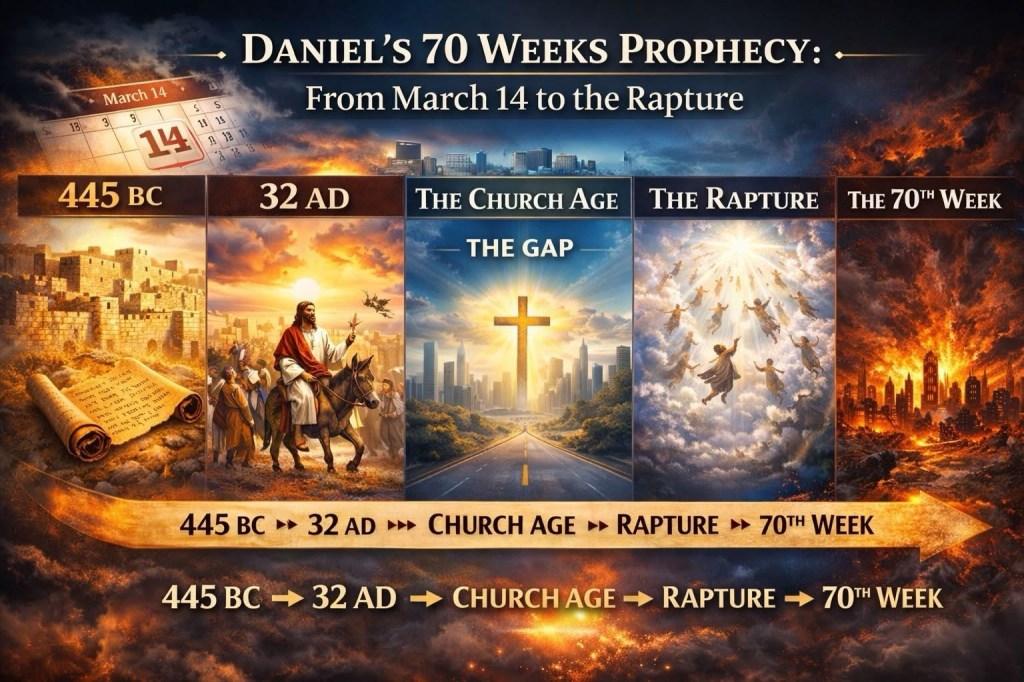







 Unlearning Tradition, Relearning Scripture