Tag: Elijah

  • Gospel of Mark: John the Baptist (#2)

    Photo taken from bibleinfo.com

    In our Bibles, the Old Testament ends with Malachi, and the New Testament begins with Matthew. Malachi is often regarded as the last prophet to speak directly to Israel, and after his prophecy, there was a span of roughly four hundred years before John the Baptist appeared. This period mirrors the time between Joseph’s passing (Genesis 50:26) and the rise of Moses, when Israel endured four centuries of slavery in Egypt. God’s words to Abraham were fulfilled, as stated in Genesis 15:13-14:

    > “Then the LORD said to Abram, ‘Know for certain that your offspring will be sojourners in a land that is not theirs and will be servants there, and they will be afflicted for four hundred years. But I will bring judgment on the nation that they serve, and afterward they shall come out with great possessions.’”

    During those four hundred silent years in Egypt, Scripture records nothing new, and God seemed silent. It was only in Exodus 2:24 that we read:

    > “And God heard their groaning, and God remembered His covenant with Abraham, with Isaac, and with Jacob.”

    From the time of Malachi to the ministry of John the Baptist, history repeated itself with another four hundred years of silence. The arrival of Jesus Christ signified the culmination of this period, a moment that could be called the Second Exodus. Luke 9:30-31 affirms this during the transfiguration:

    > “And behold, two men talked with Jesus, who were Moses and Elijah, who appeared in glory and spoke of His exodus, which He was about to accomplish at Jerusalem.”

    For the second time, Jesus Christ was leading Israel out of bondage—this time from the law into grace (John 1:14-17). Paul highlights this transition in Galatians 3:23: “Before faith came, we were held captive under the law, imprisoned until the coming faith would be revealed.” Understanding this backdrop is crucial to grasping the Gospel of Mark.

    The first instance of this is mentioned by Paul in his letter to the Corinthians, describing the exodus. He emphasizes that the ancestors of the Jews were all under the cloud, passed through the sea, and were baptized into Moses in both the cloud and the sea. They shared the same spiritual nourishment and drank from the spiritual Rock that accompanied them, which was Christ. (1 Corinthians 10:1-4)

    Now, Mark begins by declaring Jesus Christ as the Son of God and the beginning of the Gospel. He cites two Old Testament prophecies, though he attributes them to Isaiah alone:

    > “As it is written in Isaiah the prophet, ‘Behold, I send My messenger before Your face, who will prepare Your way, the voice of one crying in the wilderness: “Prepare the way of the Lord, make His paths straight.”’”

    The two referenced prophets are Isaiah (40:3) and Malachi (3:1). John the Baptist, therefore, is presented as the partial fulfillment of these prophecies, with the complete fulfillment through the coming of Jesus Christ.

    Malachi 3:1 foretold:

    > “Behold, I send My messenger, and he will prepare the way before Me. And the Lord whom you seek will suddenly come to His temple; and the messenger of the covenant in whom you delight, behold, He is coming, says the LORD of hosts.”

    Mark then introduces John the Baptist:

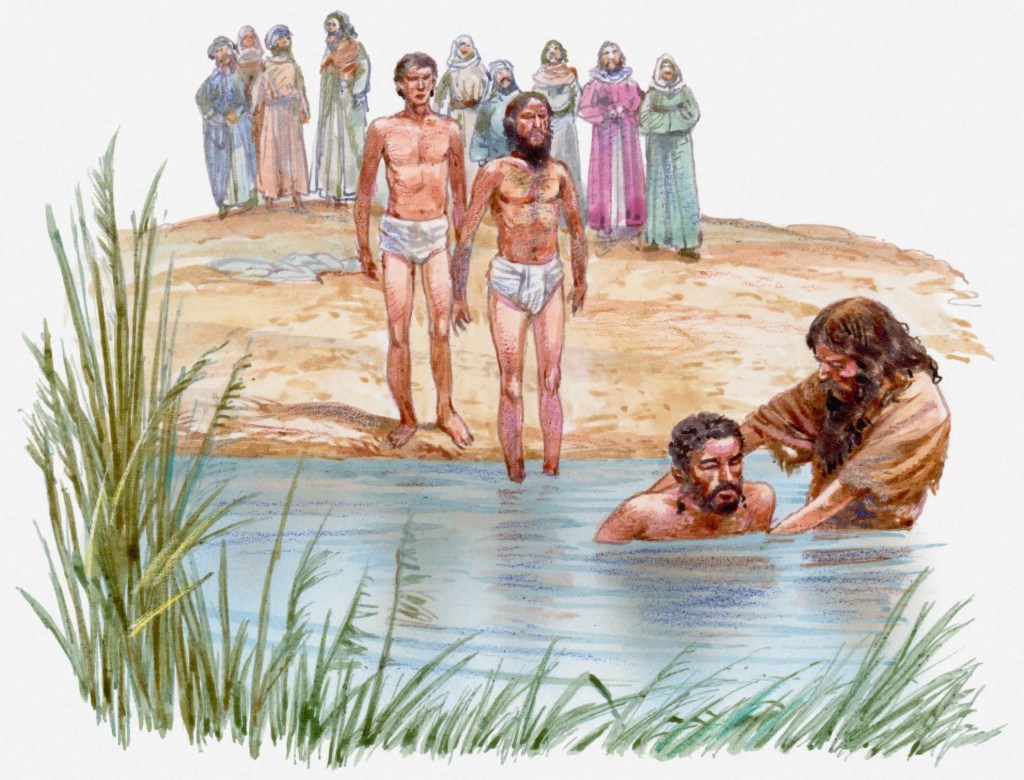
    > “John appeared, baptizing in the wilderness and proclaiming a baptism of repentance for the forgiveness of sins. And all the country of Judea and all Jerusalem were coming to him and were being baptized by him in the river Jordan, confessing their sins. Now John was clothed with camel’s hair and wore a leather belt around his waist and ate locusts and wild honey. And he preached, saying, ‘After me comes He who is mightier than I, the strap of whose sandals I am not worthy to stoop down and untie. I have baptized you with water, but He will baptize you with the Holy Spirit.’” (Mark 1:2-8)

    John’s message, “Repent, for the kingdom of heaven is at hand” (Matthew 3:2), puzzled many. The Jews knew Old Testament prophecy well, and Daniel had foretold that God’s kingdom would appear during the reign of the Fourth Gentile Kingdom—Rome—following Babylon, Medo-Persia, and Greece. With John and Jesus’ arrival, the kingdom of God had indeed come.

    Yet, as in John’s day, people today debate whether the kingdom truly arrived, expecting an earthly utopia. Many Jews back in the days of John and Jesus were also disheartened when political circumstances did not change, remaining under Roman rule. Judas Iscariot, a Zealot hoping for rebellion, betrayed Jesus when his expectations were unmet. Despite spending three years with Jesus, Judas never abandoned his own agenda.

    Jesus confirmed John’s role as the Elijah who was to come:

    > “From the days of John the Baptist until now, the kingdom of heaven has suffered violence, and the violent take it by force. For all the Prophets and the Law prophesied until John, and if you are willing to accept it, he is Elijah who is to come.” (Matthew 11:12-14)

    Understanding these truths lays the proper foundation for studying the Gospel of Mark, which shows Jesus as the fulfillment of the Law and Prophets (Matthew 5:17; Luke 24:25-27) and the dawn of God’s kingdom.


    Peter, in the words of Acts 3:6, declared, “I possess neither silver nor gold, but in the name of Jesus Christ, I offer you what I have.” Share this article freely, for you freely receive. Take note, underlines and highlights are clickable links for definitions or Bible references. Stay updated by heading to our about page and subscribe directly to receive notifications in your inbox. Blessings!

  • Abel’s Offering

    Photo taken from Gospel Encouragement Today

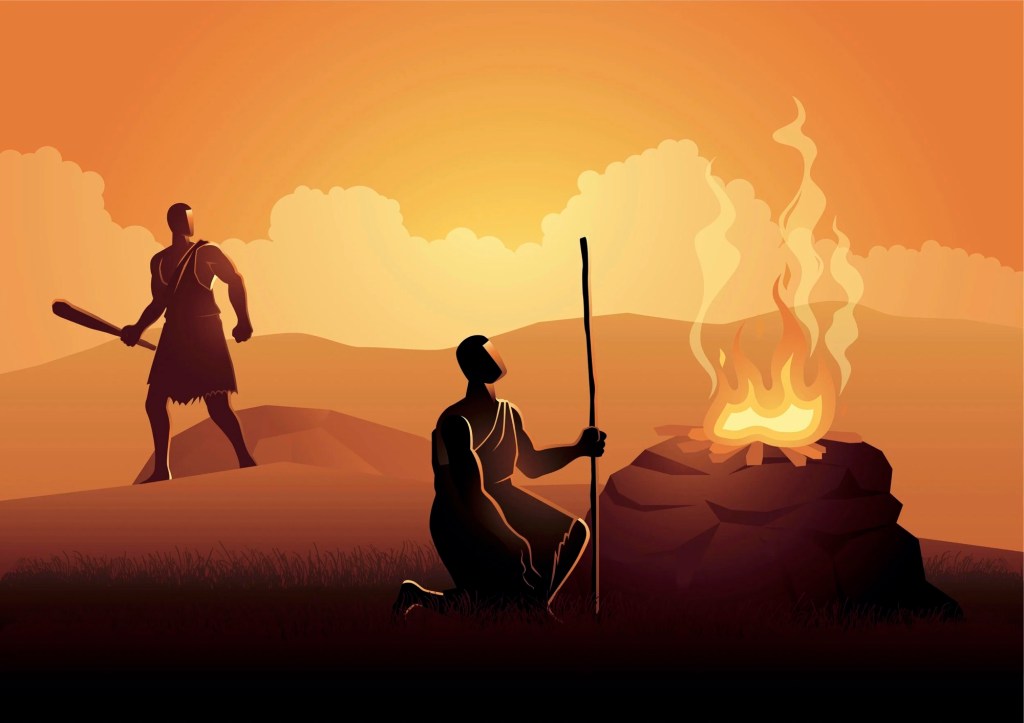
    Reflecting on God’s desire for us who claim to follow Jesus Christ, let us consider the story of Cain and Abel as a case study. Why was Abel’s offering acceptable to God, while Cain’s was not?

    Abel’s offering pleased God because it reflected a heart that honored Him first. In Genesis 4:3-7, we see that Abel offered the firstborn of his flock, signifying that he gave first to God. Cain, on the other hand, “in the course of time” offered some of the produce of the ground, but not the first fruits, indicating a lack of priority or wholehearted devotion.

    Some interpret Abel’s offering as acceptable because it resembled the later Mosaic Law requirement to offer the fat portions to the Lord (Leviticus 3:16). However, the Law was established long after Cain and Abel, so their actions were not legally obligatory. Instead, God’s demand for the fat portions of all animal offerings reflected Abel’s genuine heart of giving to God first, not the other way around.

    See God’s response to Cain—“If you do well, will you not be accepted?”—reveals that the real issue was the heart and attitude behind the offering. The act of giving must come from a place of surrender and prioritizing God above all.

    This principle is echoed throughout Scripture. The story of Elijah and the widow shows the same heart condition: the widow gave the first portion of her last meal to God’s servant, demonstrating trust and putting God first. As a result, she and her son were sustained throughout the famine. (1 Kings 17:8-16)

    Similarly, Paul commended the Macedonians in 2 Corinthians 8:1-6 because they gave themselves first to the Lord before giving their material support, even in extreme poverty. Their offering was accepted because it flowed from a surrendered heart.

    The lesson is clear: God delights in offerings given with a heart that honors Him first. Gifts that are leftovers or given without full surrender do not please Him. True worship and acceptable giving are rooted in putting God above all else, both in life, in our ministry for God, and in offerings.

    Consequently, Paul quoted Jesus saying, “It is more blessed to give than to receive (Acts 20:35),” a statement Jesus spoke before sending out His disciples. For us who serve the Lord Jesus Christ, this means we are called to share the Gospel without seeking payment. Yet, in the same context, the Lord also said, “The laborer deserves his food.” (Matthew 10:8-10) This reminds us that those who labor in the Word of God, as well as those who support them, should do so willingly and freely, without compulsion. In doing this, we reflect the heart of Abel, who offered the first and best of what he had to God, giving with a heart of faith and devotion.

    Peter, in the words of Acts 3:6, declared, “I possess neither silver nor gold, but in the name of Jesus Christ, I offer you what I have.” Share this article freely, for you freely receive. Take note, underlines and highlights are clickable links for definitions or Bible references. Stay updated by heading to our about page and subscribe directly to receive notifications in your inbox. Blessings!

  • Beware of Jezebel

    Photo taken from Mis Relate

    I would venture to say that Elijah was disheartened. He recognized God’s immense power and greatness, yet he struggled to comprehend how wicked individuals could persist in their wickedness.

    Elijah, demonstrating God’s supreme power over anything else, defeated Jezebel’s false prophets. Instead of fearing God, Jezebel, in a defiant act, killed all the prophets of God. (1 Kings 18-19)

    Jezebel openly opposed God and His servants, while wolves in sheep’s clothing concealed their true identities and intentions but do the same (Matt 7:15; 16:6; Mk 12:38; Luke 12:15; Acts 20:29-30). The latter gained approval from their peers and have swayed people with their charming words, dramatic displays, and cunning tactics (2Co 4:2; 11:13-15; Rom 16:18; Eph 4:14; Rev 2:20). It’s no wonder we encounter such individuals who are respected and hold leadership positions within Christian communities. This is one of the reasons why local churches fail, besides flawed doctrines. Shouldn’t we Christians feel discouraged as well? Like in the days of Jezebel, evil always seems to triumph over good. Both Jezebel and the wolves in sheep’s clothing acted in defiance of God. The latter is far worse because they claim faith and yet act in defiance.

    Jesus Christ condemned churches that resembled Jezebel or harbored her within their midst. In Revelation 2:19-20, Christ declares:

    “I am aware of your works, your love, faith, service, and patient endurance, and that your latter works surpass your initial ones. However, I have a serious issue with you: you tolerate that woman Jezebel, who falsely claims to be a prophetess. She is teaching and seducing my servants to engage in sexual immorality and consume food that has been sacrificed to idols.”

    Jezebel’s ways subtly transform Christian devotion to God and the Bible into something else; that’s the point of Christ Jesus in Revelation.

    Jezebel, the wicked and idolatrous queen of King Ahab, wielded significant influence behind the throne. Obedient to her wishes, Ahab constructed a sanctuary for Baal and supported numerous pagan prophets (1 Kings 18:19). In essence, Jezebel represents the epitome of idolatry. Paul, in Colossians, clarified that idolatry goes beyond mere devotion to graven images. Instead, it encompasses sexual immorality, impurity, passion, evil desires, and covetousness (Col 3:5). Essentially, it is the love of the world rather than God, Jesus Christ, and His Word. That is exactly the reason for resurgence of wolves in sheep’s clothing in the Christian communities. They desire salvation and yet loved money, power and recognition.

    Simon the Sorcerer of Acts 8 exemplifies such people. The Bible clearly says Simon believed and was baptized (Acts 8:13). Yet, he had no real transformation; he still sought after fame. Hence, Scripture narrative describes that he remained lost (Acts 8:18-22).

    God changes not. Stop explaining away God’s character and His will. Christians, let us be discerning. Do not simply receive any teachings, but examine the Scriptures daily to see if these things are true. Beware of Jezebels as exemplified in Revelation. Christ Jesus denounced it then and still does. Be faithful to God, Jesus Christ, and His Word. Only then may we please God. Jesus said, “And do not fear those who kill the body but cannot kill the soul. Rather fear Him who can destroy both soul and body in hell.” (Matthew 10:28)

    People may believe they are saved and yet, in reality remains lost. There is a reason that the Bible twice states, “There is a way that seems right to a man, but its end is the way to death.” (Proverbs 14:12; 16:25)

    Paul declared, “Keep a close watch on yourself and on the teaching. Persist in this, for by so doing you will save both yourself and your hearers.” (1 Timothy 4:16)

    The way to salvation encompasses both our beliefs and life.

    Despite prevailing wickedness, let us not doubt God’s justice, righteousness, and grace. God through Isaiah, His prophet, declares, “For My thoughts are not your thoughts, neither are your ways My ways. For as the heavens are higher than the earth, so are My ways higher than your ways and My thoughts than your thoughts. For as the rain and the snow come down from heaven and do not return there but water the earth, making it bring forth and sprout, giving seed to the sower and bread to the eater, so shall My word be that goes out from my mouth; it shall not return to Me empty, but it shall accomplish that which I purpose, and shall succeed in the thing for which I sent it.” (Isa 55:8-11)

    Trust God, He never fails in His Word! The only reason some thought otherwise was because they fail to truly comprehend the Bible.

    Peter, in the words of Acts 3:6, declared, “I possess neither silver nor gold, but in the name of Jesus Christ, I offer you what I have.” Share this article freely, for you freely receive. Take note, underlines and highlights are clickable links for definitions or Bible references. Stay updated by heading to our about page and subscribe directly to receive notifications in your inbox. Blessing!

  • What about the sparrows?

    Remember Elijah. In times of famine, God alone can send sparrows to provide us with sustenance (1Kgs 17:1-6). David, in Psalm 37, declared, “I have been young, and now am old, yet I have not seen the righteous forsaken or their children begging for bread. He is ever generous, and his children become a blessing.” (Psalms 37:25-26)

    Trust God always! God is good all the time. His faithfulness never wavers and endures forever.

    Peter, in the words of Acts 3:6, declared, “I possess neither silver nor gold, but in the name of Jesus Christ, I offer you what I have.” Share this article freely, for you freely receive. Take note, underlines and highlights are clickable links for definitions or Bible references. Stay updated by heading to our about page and subscribe directly to receive notifications in your inbox. Blessing!

  • A Reflection on God’s Goodness

    Adam’s punishment for breaking God’s covenant was not only death, he would also toil for his food until he died (Genesis 3:17-19). However, this curse was reversed after the flood during Noah’s days, as seen in Genesis 8:20-22.

    “Then Noah built an altar to the LORD and took some of every clean animal and some of every clean bird and offered burnt offerings on the altar. And when the LORD smelled the pleasing aroma, the LORD said in His heart, ‘I will never again curse the ground because of man, for the intention of man’s heart is evil from his youth. Neither will I ever again strike down every living creature as I have done. While the earth remains, seedtime and harvest, cold and heat, summer and winter, day and night, shall not cease.’”

    God’s restoration of His blessings to human toil was evident through His covenant with Noah. For that alone, we should be grateful for God’s grace.

    In fact, Jesus teaches us Christians to love even our enemies because God has a common grace for everyone. Check out Matthew 5:44-45, Psalm 145:9 and Acts 14:17. So why is there suffering and scarcity of food or resources for people? It is because of man’s selfishness and greed. Hence, in Christ’s parable in Luke 12:15-21, the rich man who has an abundant harvest is condemned to die because he laid up treasures for himself and is not rich towards God. 

    Christians, there have been talks of an impending economic hardship or collapse. Learn from the story of 1 Kings 17. There was a drought, and therefore, famine ensued. Elijah, a man of God, was shielded from the drought and famine. God asked him to go to the brook and commanded ravens to bring him food. Later, the brook dried up, and he was commanded to go to a widow, whom God commanded to feed Elijah. 

    Elijah came to the widow. She was destitute, with only a handful of flour in a jar and a little oil in a jug, enough for her to prepare her and her son’s last meal. Strangely, Elijah told the widow to go prepare food and bring it first to him. 

    If you have been reading this story in the Bible, perhaps at this point in the story, anyone would say Elijah thought only about himself. Because the widow had already told him she had nothing left except her last resources for her and her son’s last meal. But reading on would reveal Elijah was simply exercising his faith in God. God told him to go to this widow for provision (1 Kings 17:8).

    The widow, clearly burdened by God, did exactly what Elijah told her to bring him food first. The Bible then narrates, “And she went and did as Elijah said. And she and he and her household ate for many days. The jar of flour was not spent, neither did the jug of oil become empty, according to the word of the LORD that He spoke by Elijah.” (1 Kings 17:15-16)

    The widow and her son actually benefited from the presence of Elijah, because God was with him. They experienced God’s divine providence because the widow honored God by responding positively to God’s instructions spoken through Elijah. 

    Christians, if God can provide for Elijah, the widow, and her son in strange ways, and He changes not, He would do the same if only we would trust God, even in the midst of economic difficulties. 

    The Bible in Psalm 37 states, “The steps of a man are established by the LORD, when He delights in his way; though he fall, he shall not be cast headlong, for the LORD upholds his hand. I have been young, and now am old, yet I have not seen the righteous forsaken or his children begging for bread.” (Psalm 37:23-25)

    Jesus Christ teaches us not to worry about food, drink, or clothing. God provides for even the birds, so how much more will He care for us, who are far more precious to Him? These worries often consume the thoughts of those who do not believe, but our heavenly Father knows all our needs. Instead, we should seek first His kingdom and His righteousness—through Christ Jesus (Romans 10:4)—and God will take care of our daily needs (Matthew 6:25-33).

    If we claim to believe in John 3:16, which states that eternal life is in Christ Jesus, why is it so difficult for us to trust that Jesus Christ cares for our daily needs? Stop worrying and have faith in God’s Word.

    Peter, in the words of Acts 3:6, declared, “I possess neither silver nor gold, but in the name of Jesus Christ, I offer you what I have.” Share this article freely, for you freely receive. Take note, underlines and highlights are clickable links for definitions or Bible references. Stay updated by heading to our about page and subscribe directly to receive notifications in your inbox. Blessing!