
Tag: dispensational theology

  • Not by Water but By Fire

    Why is it being taught that the Second Coming of Jesus will result in the destruction of the world by fire? Isn’t this a contradiction of God’s pronouncement and promise made right after the flood in Noah’s days?

    Consider the Scripture: “Then Noah built an altar to the LORD and took some of every clean animal and some of every clean bird and offered burnt offerings on the altar. And when the LORD smelled the pleasing aroma, the LORD said in His heart, ‘I WILL NEVER AGAIN CURSE THE GROUND (this Hebrew word can also be translated as “earth”) BECAUSE OF MAN, for the intention of man’s heart is evil from his youth. Neither will I ever again strike down every living creature as I have done.’” (Genesis 8:20-21)

    God even provided a rainbow as the sign of His covenant, promising never again to destroy the earth due to the wickedness of man (Genesis 9:11-13). But incredibly, many preachers claim, God wouldn’t destroy the earth with water but fire. How does that sound to you?

    Consider a person saying, “I will never kill anyone with knives but guns?” Does that make any difference? It sounds the same, doesn’t it? It still means “I’m going to kill.” Let us not disregard God’s word and make Him appear ridiculous.

    Oh yes! Peter seems to be saying precisely that. Refer to the Bible, “But the day of the Lord will come like a thief; on that day, the heavens will pass away with a loud noise, the elements will burn and be dissolved, and the earth and its works will be revealed.” (2 Peter 3:10) However, we should understand its contextual nuances and contemporary meaning. Peter said, “the elements will burn and be dissolved,” not the heavenly bodies as most translations convey. The Greek word for “elements” is exclusively used in the New Testament in reference to the Mosaic law. For instance, check Galatians 3:23-4:3, Galatians 4:9-10, Colossians 2:8, Colossians 2:16-20, and Hebrews 5:11-6:6. On the other hand, “heavens and earth” refers to a covenant.

    Consider Jeremiah 31:31-34, which states, “Look, the days are coming” — this is the LORD’s declaration — “when I will make a new covenant with the house of Israel and with the house of Judah. This one will not be like the covenant I made with their ancestors on the day I took them by the hand to lead them out of the land of Egypt — My covenant that they broke even though I am their Master” — the LORD’s declaration. “Instead, this is the covenant I will make with the house of Israel after those days” — the LORD’s declaration. “I will put My teaching within them and write it on their hearts (in other words, it’s no longer by works, but faith). I will be their God, and they will be My people. “No longer will one teach his neighbor or his brother, saying, ‘Know the LORD,’ for they will all know Me, from the least to the greatest of them” — this is the LORD’s declaration. “For I will forgive their iniquity and never again remember their sin.” (Jeremiah 31:34)

    Isn’t that exactly what John was declaring, but he phrase it differently? See Revelation 21:1-4, “Then I saw a new heaven and a new earth; for the first heaven and the first earth had passed away, and the sea was no more. I also saw the holy city, the new Jerusalem, coming down out of heaven from God, prepared like a bride adorned for her husband. Then I heard a loud voice from the throne: Look, God’s dwelling is with humanity, and He will live with them. They will be His peoples, and God Himself will be with them and will be their God. He will wipe away every tear from their eyes. Death will be no more; grief, crying, and pain will be no more, because the previous things have passed away.” (Revelation 21:1-4)

    If death is no more, then sin is no more. Paul in 1 Corinthians 15 clearly states, “The sting of death is sin, and the power of sin is the law.” (1 Corinthians 15:56) Consequently, similar to the statement of Jeremiah, God declares, “For I will forgive their iniquity and never again remember their sin.” By faith, Christ Jesus bears the weight of the law of sin and death (Romans 8:1-2), making us righteous in God’s sight. See Scripture:

    Therefore, if anyone is in Christ, he is a new creation. The old has passed away; behold, the new has come. All this is from God, who through Christ reconciled us to Himself and gave us the ministry of reconciliation; that is, in Christ God was reconciling the world to Himself, not counting their trespasses against them, and entrusting to us the message of reconciliation. Therefore, we are ambassadors for Christ, God making His appeal through us. We implore you on behalf of Christ, be reconciled to God. For our sake He made Him to be sin who knew no sin, so that in Him we might become the righteousness of God.” (2Co 5:17-21)

    The New Covenant therefore is the New Heaven and New Earth of Revelation 21

    Here’s another example. Moses addressing Israel declared, “I call heaven and earth to witness against you today, that you will soon utterly perish from the land that you are going over the Jordan to possess. You will not live long in it, but will be utterly destroyed.” (Deu 4:26) Was Moses appealing to the literal heavens and earth or God’s covenant as a witness against them? Without a doubt, Moses refers to God’s covenant with Israel; that’s the context of Deuteronomy:

    “Take this Book of the Law and put it by the side of the ark of the covenant of the LORD your God, that it may be there for a witness against you.” (Deuteronomy 31:26)

    Preachers and pastors should not simply repeat what they have been told and taught. There is a reason why people who aspire to become pastors should enter seminary training. At the seminary, we are trained to properly handle God’s word, so let’s put it into practice. God will hold us accountable for all our words and pronouncements that we assume are taught in Scripture.

    Jesus Christ states, “My sheep hear My voice, and I know them, and they follow Me.” (John 10:27) Christians, ask yourselves, have you been hearing Christ’s voice and following Jesus or hirelings?

    Again, Jesus declares, “I am the good shepherd. The good shepherd lays down His life for the sheep. He who is a hired hand and not a shepherd, who does not own the sheep, sees the wolf coming and leaves the sheep and flees, and the wolf snatches them and scatters them. He flees because he is a hired hand and cares nothing for the sheep.” (John 10:11-13)

    Be discerning. Jesus warns, ““Enter by the narrow gate. For the gate is wide and the way is easy that leads to destruction, and those who enter by it are many. For the gate is narrow and the way is hard that leads to life, and those who find it are few.” (Matthew 7:13-14)

    Again the Bible says, “There is a way that seems right to a man, but its end is the way to death.” (Proverbs 14:12)

    Jesus Christ states, “I am the way, and the truth, and the life. No one comes to the Father except through Me.” (John 14:6) Let us be sure to learn from Christ’s words alone.

    Peter, in the words of Acts 3:6, declared, “I possess neither silver nor gold, but in the name of Jesus Christ, I offer you what I have.” Share this article freely, for you freely receive. Take note, underlines and highlights are clickable links for definitions or Bible references. Stay updated by heading to our about page and subscribe directly to receive notifications in your inbox. Blessings!

  • A War Based on a Lie

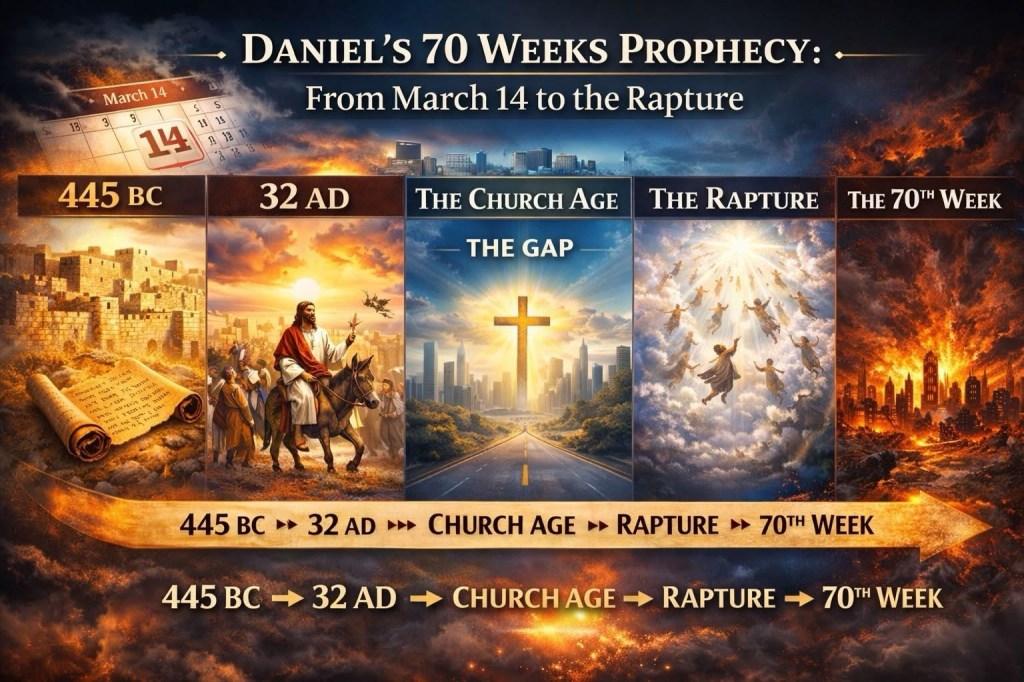
    Let me warn Christians that anyone who claims and teaches that the present conflict in Iran is a prelude to the Second Coming of Jesus Christ is delusional and false. All the prophecies in the Old Testament were fulfilled in Christ Jesus.

    After His resurrection, Jesus Christ declared, “These are My words that I spoke to you (i.e., the disciples) while I was still with you. Everything written about Me in the Law of Moses, the Prophets, and the Psalms must be fulfilled.” (Luke 24:44) During His sermon on the mount, Jesus emphasized, “Do not think that I have come to abolish the Law or the Prophets; I have not come to abolish them but to fulfill them” (Matthew 5:17). In essence, Jesus Christ proclaimed that He was fulfilling Scriptures from the very beginning of His earthly ministry and even after His resurrection. It’s crucial to understand that if Jesus didn’t fulfill all Scriptures, He wouldn’t be true to His Word and couldn’t be the Christ. However, Jesus certainly is the Christ.

    Hebrews teaches that the coming of Jesus Christ signaled the last days. See Scripture, “Long ago, at many times and in many ways, God spoke to our fathers by the prophets, but in these last days He has spoken to us by His Son, whom He appointed the heir of all things, through whom also He created the world” (Hebrews 1:1-2). The Bible says “it’s the last days”, not millennia. Peter affirmed it’s the last days in Acts 2:16-40, same as Paul and other apostles (2 Timothy 3:1; James 5:3; 2 Peter 3:3).

    Contrary to contemporary Christian teachings, God’s kingdom cannot be postponed. Daniel prophesied that it will come during the reign of the fourth Gentile kingdom ruling over Israel, asserting that it’s certain and sure (Daniel 2:44-45). Rome was the fourth empire after Babylon (Daniel 2:36-38), Persia, and Greece (Daniel 8:20-21). The fact is, even the Jewish religious leaders, despite denying Christ, knew its time; hence, Jesus said they were forcing themselves into the kingdom. See Luke 16:16, “The Law and the Prophets were until John; since then the good news of the kingdom of God is preached, and everyone forces his way into it.”

    The teaching about a Revived Roman Empire was developed to circumvent God’s declarations. There are many more lies invented to justify their assertions, and sadly many Christians have fallen into their myths and deceptions.

    God’s kingdom is spiritual. The Bible nowhere teaches it would be physical. Jesus made clear it’s not coming in ways that can be observed

    Jesus Christ declared the arrival of God’s kingdom; see Luke 17:20-21, “Being asked by the Pharisees when the kingdom of God would come, Jesus answered them, ‘The kingdom of God is not coming in ways that can be observed, nor will they say, “Look, here it is!” or “There!” for behold, the kingdom of God is in the midst of you.’”

    See Christ’s conversation with the Samaritan woman: “Jesus said to her, ‘Woman, believe Me, the hour is coming when neither on this mountain nor in Jerusalem will you worship the Father. You worship what you do not know; we worship what we know, for salvation is from the Jews. But the hour is coming, and is now here, when the true worshipers will worship the Father in spirit and truth, for the Father is seeking such people to worship Him. God is spirit, and those who worship Him must worship in spirit and truth.’ The woman said to Him, ‘I know that Messiah is coming (He who is called Christ). When He comes, He will tell us all things.’ Jesus said to her, ‘I who speak to you am He.’” (John 4:21-26)

    Without a doubt, Jesus is the Christ, the Messiah who was to come. He came, therefore the Messianic kingdom was inaugurated; that’s the reason the temple was destroyed in 70 A.D. Take note, Jesus did say, with His coming, Jerusalem would cease to be the place for worship. Believers are no longer confined to spaces or a sanctuary, but are to worship God in truth and spirit. 

    The Messianic kingdom was spoken in Psalm 2. Jesus Christ is the King of Zion, a fulfillment of Isaiah 9:6-7 and Isaiah 7:14 as declared in Matthew 1:22-23. The Bible never spoke of a gap in the prophetic fulfillment of God’s kingdom. The talk of a rapture is nonsense. With the coming of Jesus, the Messianic kingdom has begun. Paul, in Acts, declared the fulfillment of Psalm 2, “And we bring you the good news that what God promised to the fathers, this He has fulfilled to us, their children, by raising Jesus, as also it is written in the second Psalm, ‘You are My Son, today I have begotten You’” (Acts 13:32-33). The Messianic kingdom is God’s kingdom – the kingdom of heaven – as heralded by John the Baptist (Matthew 3:1-2) and announced by Jesus Christ to have arrived (Matthew 4:17; 12:28; Luke 11:20).

    What is too hard to understand? It’s plain and simple. But contemporary Christianity resists the truth and insists on what they have been told and taught. Example of the lie below:

    Taken from Tony Campbell

    Now that another Middle East crisis is at hand, soothsayers once more are abound. But Jesus Christ alone is the true prophet of God, to whom we ought to listen. At the transfiguration of Jesus, God declared, “This is My beloved Son, with whom I am well pleased; listen to Him.” (Matthew 17:5) 

    Christians, let us not be alarmed by claims or teachings that supposedly the end of the world is coming. The Bible never spoke of the end of the world, but the end of the age. Jesus Christ taught about two ages only, the present age and the age to come, see Mark 10:29-30 and Luke 18:29-30. By “present age or in this age”, Jesus didn’t mean our time but the Old Covenant age – the period in which He came, lived, died, and resurrected, which consists of regulations, offerings, and animal sacrifices – see Hebrews 9:1-15. The Bible teaches that Christ Jesus has made it obsolete, with the passing of the Jewish temple (Hebrews 8:13). Making it impossible for the Mosaic regulations to be observed and practiced. The Bible declared Christ Jesus the mediator of the New Covenant (Hebrews 9:15; 12:24).

    Paul, in Ephesians, expounded on the mystery of God about the church also teaches only two ages (Ephesians 1:21-22).

    However, Jewish survivors of the A.D. 70 destruction of the temple continued in disbelief, so they came out with the Talmudic writings. Prominent on its declaration is a third rebuilding of the Jewish temple, which was nowhere taught in the Old or New Testament Scripture, but has been promoted by some Christians who hold dispensational theology. Beware of what you are learning, believing, and teaching. You might be disseminating falsehoods. 

    Study the Bible thoroughly with a clear mind, free from biases introduced by mainstream Christianity. Just a few decades after Jesus Christ’s resurrection, false gospels began spreading, prompting Paul to confront them by writing letters to various churches (Galatians 1:6-9; 2 Corinthians 11:1-4). Also, the writing of the gospels ensued— Matthew, Mark, Luke, and John. Today, it remains an issue even millennia later. The root cause seems to be Christianity’s tendency to rely on the writings of early church fathers, those of the Reformers, or modern scholars rather than the Bible itself.

    Peter, in the words of Acts 3:6, declared, “I possess neither silver nor gold, but in the name of Jesus Christ, I offer you what I have.” Share this article freely, for you freely receive. Take note, underlines and highlights are clickable links for definitions or Bible references. Stay updated by heading to our about page and subscribe directly to receive notifications in your inbox. Blessing!