The Gospel of Matthew uniquely includes the episode where Peter asks Jesus to command him to walk on water, and he does so until fear causes him to sink (Matthew 14:28-30). This detail sheds light on Matthew’s particular portrayal of Peter. While other preachers often highlight Peter’s sinking due to doubt, this reflection focuses on why Matthew made this addition.
Yes, this portion of Matthew’s narrative teaches about the significance of faith. But on a bigger perspective it teaches something more.
Among the Gospels, Matthew mentions Peter most frequently. Matthew also records Peter’s profound confession when Jesus asked, “But who do you say that I am?” to which Peter replied, “You are the Christ, the Son of the living God” (Matthew 16:15-16). This confession leads to one of the Gospel’s central declarations:
> “Blessed are you, Simon son of Jonah, because flesh and blood did not reveal this to you, but My Father in heaven. And I also say to you that you are Peter, and on this Rock I will build My church, and the gates of Hades will not overpower it. I will give you the keys of the kingdom of heaven…” (Matthew 16:17-19)
Only in Matthew do we find Jesus explicitly introducing His Church in connection with the Kingdom of heaven. It is no coincidence that Peter became the first to stand and preach at Pentecost, marking the Church’s beginning. (Acts 2:14-41)
The Church is built on the power of Christ’s resurrection. Jesus said in John 2:19, “Destroy this temple, and in three days I will raise it up,” which John explains as referring to the temple of His body (John 2:21). The New Testament repeatedly identifies the Church as the body and temple of Christ:
“Do you not know that you [the church] are God’s temple and that God’s Spirit dwells in you?” (1 Corinthians 3:16)
“Your body [the body of believers] is a temple of the Holy Spirit… glorify God in your body.” (1 Corinthians 6:19-20)
“We are the temple of the living God…” (2 Corinthians 6:16)
“You… are members of the household of God… built on the foundation of the apostles and prophets, Christ Jesus Himself being the cornerstone.” (Ephesians 2:19-22)
“You… like living stones are being built up as a spiritual house.” (1 Peter 2:4-5)
Matthew’s Gospel reveals Peter’s highs and lows. He is praised for his confession but quickly rebuked for trying to hinder Christ’s mission (Matthew 16:21-24). He follows Jesus after His arrest yet denies Him three times (Matthew 26:58-75). Still, upon learning Jesus’ missing body, he runs to the empty tomb (John 20:1-4). Peter’s journey mirrors that of many believers—bold in faith yet imperfect—and yet still used by Christ for His glory.
This pattern continues in the Church today. Christ builds His Church through ordinary, flawed but willing people, both those who proclaim His Word and those who support the work as “fellow workers for the truth” (3 John 1:5-8). As Paul states:
> “We have this treasure in jars of clay, to show that the surpassing power belongs to God and not to us.” (2 Corinthians 4:7)
The Church is a unified spiritual body with diverse functions (Romans 12:4-8). History bears this out: Martin Luther could not have led the Reformation without the support of Prince Frederick III, which allowed him to translate the Bible into the language of the people.
Ultimately, the Church rests on the foundation of the apostles and prophets, with Christ Jesus as the cornerstone (Ephesians 2:20). God’s Word must remain central. Jesus uses humble and imperfect believers who obey His Word to advance His work. May we take this biblical pattern to heart, learning to serve faithfully in the building of Christ’s Church.
Learning from Peter
Jesus asked Peter three times, “Do you love Me more than these?” The “these” could have referred to the food they had just eaten, or perhaps even Peter’s livelihood as a fisherman, because the context of John 21 shows the disciples returning to fishing, catching fish instead of men. (John 21:1-14) Each time Peter responded, Jesus commissioned him: “Feed My lambs,” “Tend My sheep,” “Feed My sheep” (John 21:14-17).
Peter’s answers shifted slightly. The first two times, he said, “Yes, Lord; You know I love You.” (John 21:15-16) But the third reply revealed a deeper surrender: “Lord, You know everything; You know that I love You.” (John 21:17)
This exchange reminds us to surrender fully to Jesus Christ. As Scripture says, “Not by might, nor by power, but by My Spirit, says the LORD of hosts.” (Zechariah 4:6) He alone knows our hearts, our fears, and our struggles. Jesus also declared, “It is the Spirit who gives life; the flesh is no help at all. The words that I have spoken to you are spirit and life.” (John 6:63) His Word carries His Spirit and power. Therefore, remain in His Word and let Him be your strength. Keep your focus on Jesus, and we will not sink. Jesus calls on us Christians to be fishers of men (Matthew 4:19), not to become Satan, setting our minds not on the things of God but on things of men (Matthew 16:23).
Peter, in the words of Acts 3:6, declared, “I possess neither silver nor gold, but in the name of Jesus Christ, I offer you what I have.” Share this article freely, for you freely receive. Take note, underlines and highlights are clickable links for definitions or Bible references. Stay updated by heading to our about page and subscribe directly to receive notifications in your inbox. Blessings!
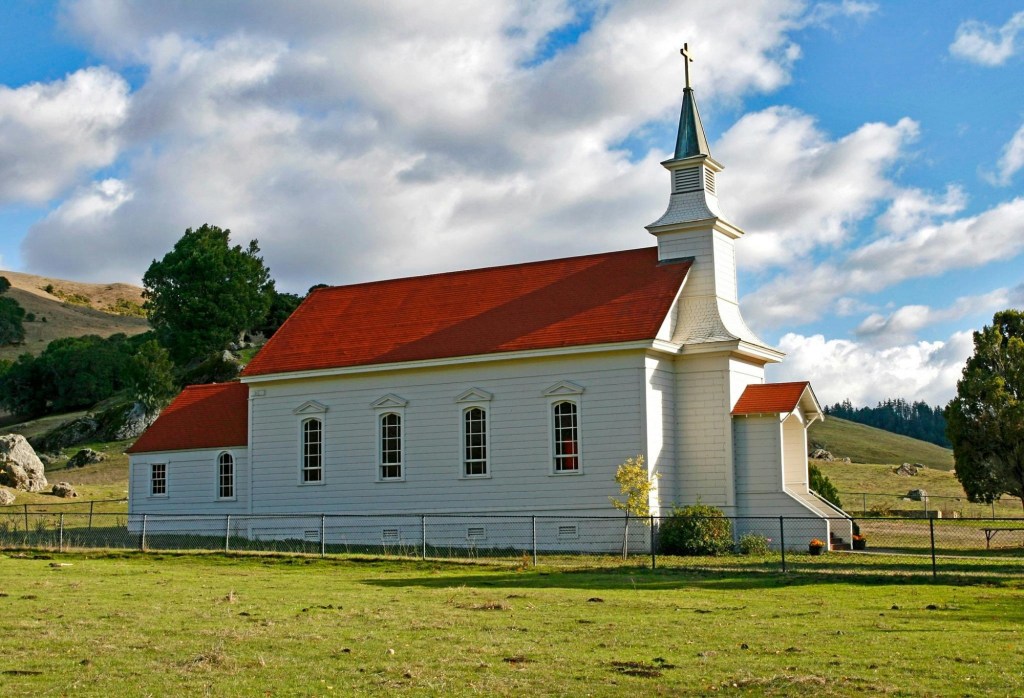
Christians have become overly focused on constructing buildings they call churches. Yet a building without believers is nothing more than a structure—a gathering place at best. As a song says, “A house is not a home when there’s no one there.” Likewise, a building, no matter how grand, is not the church if God’s people are absent.
Before the Reformation, the Roman Catholic Church aimed to construct the Saint Peter’s Basilica in Rome. However, lacking sufficient resources, they introduced the doctrine of indulgence to trick people into donating money. In today’s world, the same strategy may be employed to fund and execute building projects by simply calling them the church.
This fixation on building projects may be influenced by Western trends that many imitate without careful consideration. Some may have thought it’s good for personal legacy. However, these developments often lead to resentment in neighborhoods, as they generate traffic and inconvenience, effectively becoming obstacles to the Gospel itself. However, the mission of God’s people is clear: to spread the Gospel to the world, not to confine it within walls.
The coming of Jesus Christ and the rapid spread of the Gospel during the Roman Empire were no mere coincidences. The Pax Romana established a period of relative peace, while the vast network of Roman roads provided safe and efficient travel. These conditions created a literal and figurative highway for the message of Christ to reach distant lands with remarkable speed.
In contrast, modern Christianity often faces internal obstacles. Institutionalized churches, once intended to safeguard and organize the faith, can sometimes become barriers to the unrestrained sharing of the Gospel. Bureaucracy, divisions, and rigid structures may hold back the very mission they were meant to support. In this light, one might wonder: has modern Christianity, through its own systems, become its greatest hindrance?
Some interpret Hebrews 10:25 as a directive to gather regularly in sanctuaries or buildings. However, the phrase “meet together” appears only twice in the New Testament—Hebrews 10:25 and 2 Thessalonians 2:1—and should be understood as referring to God’s promise to regather Israel, as also seen in Romans 11:25-27. A careful reading of Romans indicates that this regathering was being fulfilled during Paul’s own lifetime.
Paul writes:
“I ask, then, has God rejected His people? By no means! For I myself am an Israelite, a descendant of Abraham, a member of the tribe of Benjamin. God has not rejected His people whom He foreknew. Do you not know what the Scripture says of Elijah, how he appeals to God against Israel? ‘Lord, they have killed Your prophets, they have demolished Your altars, and I alone am left, and they seek my life.’ But what is God’s reply to him? ‘I have kept for Myself seven thousand men who have not bowed the knee to Baal.’ So too at the present time there is a remnant, chosen by grace.” (Romans 11:1-5)
Here, the “present time” refers to Paul’s own era—the final days of Old Covenant Israel—where a remnant, saved by grace through faith in Jesus Christ, was preserved. Paul himself was an example of the remnant chosen by grace (Romans 11:1-5). He makes it clear that he is speaking of Old Covenant Israel, as he also notes in Romans 9:27: “And Isaiah cries out concerning Israel: ‘Though the number of the sons of Israel be as the sand of the sea, only a remnant of them will be saved.’”
If there are any doubts about the expiration of the Old Covenant, one only needs to look at Hebrews 8:13. It declares, “In speaking of a new covenant, God makes the first one obsolete. And what is becoming obsolete and growing old is ready to vanish away.” Furthermore, Hebrews 9 highlights the Jewish temple, the physical symbol of the Old Covenant, which no longer stands today.
Thus, the call to “meet together” is biblically and historically tied to God’s regathering of Israel rather than a universal command for modern believers to hold scheduled gatherings in sanctuaries or buildings.
The true church is not a building but the community of believers who confess Christ and live in faith. Jesus described the kingdom of heaven as a net gathering fish of every kind (Matthew 13:47-49): the Gospel is the net, the world is the sea, and the church—the true church—are the good fish gathered into God’s kingdom.
The early church wholeheartedly devoted itself to the apostles’ teachings (Acts 2:42), which are now reflected in the New Testament Scriptures, and to fellowship with one another. They met daily, not just for the weekly gatherings we often see today, but in the temple courts and later in homes (Acts 5:42; 12:12; Romans 16:5; 1 Corinthians 16:19; Colossians 4:15; Philemon 1:2). Unlike the modern practice of gathering in large buildings open to all, with sufficient parking and amenities, the early Christians shared life together in intimate home settings. This approach made it easier to distinguish genuine believers from those who were merely nominal. In this context, new believers were intentionally introduced to Christian groups, much like Barnabas personally connected Paul to the church (Acts 9:26-27). This created a clear sense of accountability and belonging.
Consequently, Paul’s instruction that the church must be purified was doable (1 Corinthians 5:7-13), applying discipline to those claiming to be brothers yet living in sin. Because everyone is known to each other, Jesus Himself instructs a step-by-step approach to correction (Matthew 18:15-17), which ultimately leads to purging unrepentant sin from the church. A real church is marked not by walls but by lives aligned with God’s Word.
Resources should therefore be directed toward spreading the Gospel, training believers (2 Timothy 2:2), and supporting faithful workers (3 John 5-8)—rather than pouring funds into concrete and mortar. Jesus declared that He would build His church on the rock of Peter’s confession (Matthew 16:18). Peter confessed: “You are the Christ, the Son of the living God (Matthew 16:16).” Scripture states, “therefore thus says the Lord GOD, ‘Behold, I am the One who has laid as a foundation in Zion, a Stone, a tested Stone, a precious Cornerstone, of a sure foundation: Whoever believes will not be in haste.’” (Isaiah 28:16)
Scripture clearly teaches that Christ is the “Rock” (1 Corinthians 10:4), the firm foundation and cornerstone of Zion, which is His church (Hebrews 12:22-24). With Christ Jesus as its head, the church is described as the “true temple” (John 2:19-22; Colossians 1:18). Paul reminds believers: “Do you not know that you (i.e. the church) are God’s temple and that God’s Spirit dwells in you?” (1 Corinthians 3:16). Further study of the following passages—1 Corinthians 6:19; 2 Corinthians 6:16; Ephesians 2:19-22; 1 Peter 2:4-6—reveals that the church is indeed God’s spiritual temple. Therefore, placing great emphasis on physical buildings misrepresents God’s word and the true nature of His church.
Instead of spending hundreds of millions, even billions, of pesos, why not consider renting? Some individuals generously donate, so why not construct a modest gathering place instead of large buildings with only a few attendees? Additionally, some may even be willing to lend out spaces for meetups and gatherings focused on reading and studying God’s word. As Paul instructed Timothy, “Devote yourself to the public reading of Scripture, to exhortation, to teaching.” (1 Timothy 4:13)
God’s workers should be honored (Hebrews 13:7), equipped (2 Timothy 2:15), and sent into the harvest where it truly lies—outside the four walls, in marketplaces, homes, daily encounters, and we don’t need to go far; our very neighborhood (Matthew 9:37-38). The church is God’s people, not the structures we maintain. Let’s stop wasting resources on buildings and instead fully commit to the work Christ commanded: proclaiming the Gospel and building His kingdom through lives, not bricks.
The church is, at its core, an assembly, though it does not always reflect the modern notion of a congregation. According to Scripture, it is the spiritual gathering of the firstborn, whose names are inscribed in heaven (Hebrews 12:22–24). This sacred assembly may appear as a local fellowship of believers or as individuals scattered across various regions, each faithfully fulfilling their service to God in their own context. For instance, Aquila and Priscilla, after being expelled from Rome, settled in Corinth (Acts 18:1-2). They contributed to God’s ministry by carefully explaining the Gospel to Apollos (Acts 18:24-26). Even while distant from Paul, they remained his fellow workers in Christ Jesus (Romans 16:3).
Paul reminds us that the church is composed of members with different gifts. As Ephesians 4:11 states, God appoints some to be pastors, some to be evangelists, and others to be teachers. While a single individual may at times perform the tasks of all three, these are the only offices that currently remain.
The New Testament defines apostles as direct witnesses of Christ—His life, teachings, death, resurrection, and ascension (1 Corinthians 9:1). Paul declared that he was the last of the apostles, uniquely chosen (1 Corinthians 15:8-9). His calling as the apostle to the Gentiles carried great responsibility (Romans 11:13; Acts 9:15-16). Paul’s extensive travels, numerous hardships, and eventual arrival in Rome—then viewed as the edge of the known world—highlight complete fulfillment of Acts 1:8. It is thus understandable that he authored most of the New Testament writings.
Furthermore, there is no scriptural basis proving that Peter ever ministered in Rome. The mention of “Babylon” in 1 Peter 5:13 is often misinterpreted as Rome, yet Revelation 17:5-6, 17:18, and 11:8 identify “Babylon the Great” as Old Covenant Jerusalem—the city where Jesus was crucified—rather than Rome.
Similarly, there are no prophets today since all divine revelations have been completed in the book of Revelation. As Paul teaches in Romans 12:7-8, some are gifted in serving, others in giving, and some in showing mercy. Each of us is called to faithfully fulfill the role that matches the gift God has given us.
Consequently, if Christians mistakenly view the church primarily as physical spaces—such as buildings, sanctuaries, and halls—they end up striving to fill every empty seat, even gathering those who are unconverted, like guests without a wedding garment— that is, faith in the righteousness of Jesus Christ (Matthew 5:17-20; 21:28-32; Romans 1:16-17; 3:21-26; 5:17; 13:14; Galatians 3:27-29; Ephesians 4:21-24). This is why Scripture declares, “For many are called, but few are chosen.” (Matthew 22:9-14)
Reflect on the Scriptures and be discerning. Do not simply follow others without understanding, for Jesus said, “If the blind lead the blind, both will fall into a pit.” (Matthew 15:14) Let us not imitate the Pharisees, who forsook God’s Word to cling to the traditions of men. (Mark 7:8)
Peter, in the words of Acts 3:6, declared, “I possess neither silver nor gold, but in the name of Jesus Christ, I offer you what I have.” Share this article freely, for you freely receive. Take note, underlines and highlights are clickable links for definitions or Bible references. Stay updated by heading to our about page and subscribe directly to receive notifications in your inbox. Blessings!
Songwriters get their inspiration from life experiences and the things they observe. Likewise, I often write from encounters, conversations, and observations about life, people, and experiences. Someone said, “The pastor should submit to an elder because he is the higher authority between the two.”
Perhaps it’s true, in practice, among contemporary church. But certainly not true with Scriptures. So, let me say it out loud here. That has become the practice because mostly elders are businessmen, and they have the power of the purse.
Again, let me say it out loud here. The Bible did rebuke people who attempted to use money to buy themselves power. In Acts 8, Peter rebuked Simon the sorcerer, saying, “May your silver perish with you, because you thought you could obtain the gift of God with money! You have neither part nor lot in this matter, for your heart is not right before God. Repent, therefore, of this wickedness of yours, and pray to the Lord that, if possible, the intent of your heart may be forgiven you. For I see that you are in the gall of bitterness and in the bond of iniquity” (Acts 8:20-23). So, be careful not to use money to manipulate yourself to power within the church.
Now, on our topic, where in the Bible can we find an elder superior to a pastor? Let’s take Ephesians 4:11-14 for our discussion. In the said passages, the Bible names the following biblical functions: the apostles, the prophets, the evangelists, the pastors, and teachers.
Now, in Titus, Paul called on him to appoint elders (Titus 1:4-9). The same can be seen with Timothy; hence, Paul provided the qualifications for both the elders and the deacons (1 Timothy 3). Paul then, in 1 Timothy 4:13, told Timothy to devote himself to the public reading of Scripture, exhortation, and teaching. Exhortation and teaching are both functions of an evangelist, pastor, and teacher. Titus also was commanded to teach according to sound doctrine. He is to declare the instruction of Paul, which is the New Testament Bible to us, to exhort and rebuke with all authority.
What biblical roles of Ephesians 4:11 were Titus and Timothy performing? As we can see in Scripture, there were only five functions mentioned. We can be sure they aren’t apostles or prophets, but they could be performing one or two of the functions or all three: evangelist, pastor, and teacher. Paul in his second letter to Timothy reminds Timothy to do the work of an evangelist (2 Timothy 4:5).
Consequently, based on our short study, both were pastors. They were tasked with caring for the church (1 Timothy 1:2-5;4:6-16;6:11-21; 2 Timothy 2:1-2, 14-15; 3:10-4:5; Titus 2:1-3:11). It’s significant to mention that 1 & 2 Timothy, together with Titus, have been categorized as pastoral letters. And both Timothy and Titus were tasked with appointing elders and even deacons. So who appears to have higher authority? The elder or the pastor?
Actually, there’s no hierarchy in God’s ministry. Paul, in 1 Corinthians 3:5-11, made an example of himself and Apollos. Paul was an apostle of Christ Jesus, but Apollos wasn’t. Yet, Paul states they were both servants of Jesus through whom people heard the Gospel and believed, as the Lord assigned to each (1 Corinthians 3:5).
Clearly there’s no hierarchy in God’s ministry. So, Paul went on to explain: “I planted, Apollos watered, but God gave the growth. So neither he who plants nor he who waters is anything, but only God who gives the growth. He who plants and he who waters are one, and each will receive his wages according to his labor. For we are God’s fellow workers. You are God’s field, God’s building. According to the grace of God given to me, like a skilled master builder, I laid a foundation, and someone else is building upon it. Let each one take care how he builds upon it. For no one can lay a foundation other than that which is laid, which isJesus Christ.” (1 Corinthians 3:6-11)
Here, therefore, is the conclusion: the highest authority of the church is Christ Jesus, the Bible, the Word of God. Scripture states, “In the beginning was the Word, and the Word was with God, and the Word was God. He was in the beginning with God. All things were made through Him, and without Him was not any thing made that was made. In Him was life, and the life was the light of men.” (John 1:1-4)
“And the Word became flesh and dwelt among us, and we have seen His glory, glory as of the only Son from the Father, full of grace and truth.” (John 1:14)
“For from His fullness we have all received, grace upon grace. For the law was given through Moses; grace and truth came through Jesus Christ.” (John 1:16-17)
Whosoever speaks the Word of God rightly has the higher authority because all authority of the church resides in and from Scripture.
Take a look at the Jerusalem council of Acts 15. The conflict wasn’t resolved by someone in authority, but by he who has the Word of God (Acts 15:13-29).
Jesus Christ declares, “All authority in heaven and on earth has been given to Me. Go therefore and make disciples of all nations, baptizing them in the name of the Father and of the Son and of the Holy Spirit, teaching them to observe all that I have commanded you. And behold, I am with you always, to the end of the age.” (Matthew 28:18-20)
Take this example: Apollos, in Acts 18, though eloquent and competent in the Scriptures, had been corrected by Priscilla and Aquila, so that his message may be thoroughly accurate, according to God’s Word. Once again, evidently, the final authority of the church resides in Christ Jesus, through the Bible, the Scriptures.
To cite an example outside of the Scripture: During the time of Martin Luther, despite the accepted authority of the Pope and the Roman Catholic Church, Christians who held on to the belief that salvation comes by faith in Christ alone— the righteous shall live by faith (Romans 1:17)— uphold the authority of the Bible over the prevailing religious authority.
Christian leaders, be careful not to claim authority upon yourselves. Whatever Christian ordination you have received, the authority resides in Scriptures, not upon us.
The Bible does call on the church to respect their leaders. See Hebrews 13:7, “Remember your leaders, those who spoke to you the word of God. Consider the outcome of their way of life, and imitate their faith.” And again, “Obey your leaders and submit to them, for they are keeping watch over your souls, as those who will have to give an account. Let them do this with joy and not with groaning, for that would be of no advantage to you.” (Hebrews 13:17)
A Christian leader, be it a pastor, an elder or a deacon, should always speak from God’s Word. It’s a high calling that comes with much responsibility. We are to give an account to Jesus Christ. Consequently, let us always keep in mind the instructions of Paul: “Keep a close watch on yourself and on the teaching. Persist in this, for by so doing you will save both yourself and your hearers.” (1 Timothy 4:16)
To all the believers, Jesus assures servants of His Words, saying, “Whoever receives you receives Me, and whoever receives Me receives Him who sent Me. The one who receives a prophet because he is a prophet will receive a prophet’s reward, and the one who receives a righteous person because he is a righteous person will receive a righteous person’s reward. And whoever gives one of these little ones even a cup of cold water because he is a disciple, truly, I say to you, he will by no means lose his reward.” (Matthew 10:40-42)
On the other hand, to us disciples of Jesus, ministers of His Word, Jesus states, “Whoever humbles himself like this child is the greatest in the kingdom of heaven. Whoever receives one such child in My name receives Me, but whoever causes one of these little ones who believe in Me to sin, it would be better for him to have a great millstone fastened around his neck and to be drowned in the depth of the sea.” (Matthew 18:4-6)
Never wish for the title but forget God’s Word. The final authority of the church isn’t the pastor, nor the elder, but Christ Jesus and His Word.
Peter, in the words of Acts 3:6, declared, “I possess neither silver nor gold, but in the name of Jesus Christ, I offer you what I have.” Share this article freely, for you freely receive. Take note, underlines and highlights are clickable links for definitions or Bible references. Stay updated by heading to our about page and subscribe directly to receive notifications in your inbox. Blessings!
Recently, my wife and I took a bus trip to Baguio City. It’s a good idea to buy your tickets in advance because the ticket counters at the station can get really crowded. A lot of people end up standing in line, hoping to get a ticket and board the bus. These people are betting on chance passengers.
The apostle James says, “Your life is like a mist that vanishes quickly.” (Jas 4:14) Don’t take chances. Always bet on God’s word. Peter says, “As the Scriptures say, ‘People are like grass; their beauty is like a flower in the field. The grass withers and the flower fades. But the word of the Lord remains forever.’ That word is the Good News you heard.” (1Pet 1:24-25, NLT)
Matthew 9:9-13 tells us about the calling of Matthew, and cross-referencing it to Hosea 6:6 together with its biblical context, as quoted by Matthew (Matt 9:13).
The Jewish people of the Old Covenant and cohabiting people like the Samaritans, who lived during Jesus’ time, eagerly awaited the arrival of the Christ (John 1:41; 4:25; Luke 2:9-11). However, many of them missed their chance due to their arrogance, not ignorance. Isaiah 10:20-23; 65:1-17 and Daniel 12:4,7-9 prophesied the complete end or the time of the end for Old Covenant Israel. Jesus spoke of the temple’s final destruction (Matthew 23:37-38; 24:2; Luke 21:20-22), fulfilling Zechariah’s prophecy of the New heavenly Jerusalem (Zechariah 14), also described by John in Revelation 21-22. With the temple destroyed for the second and final time, the declaration in Hebrews 8:13, stating that the Old Covenant became obsolete, reached its climax. Old Covenant Israel relied on the Mosaic law rather than the grace offered through Christ Jesus, which caused them to miss their chance. (Galatians 3:10-11)
Consequently, God through Jesus Christ came to call on the lost, so He replied to the self-righteous Pharisees, who refused to mingle with outcasts, “Those who are well have no need of a physician, but those who are sick” (Matt 9:12). Of course, the context of Matthew 9:9-13 does not involve literally sickly people, but the outcasts and sinners.
Let me clarify that God does not love sinners; instead, He detests them. Consequently, we witnessed God’s punishment and destruction of all humanity in the Genesis 6-9 account of Noah’s flood, leaving only eight individuals alive. Scripture explicitly states that this was because Noah found grace in God’s sight (Genesis 6:8). Yes, the translated word “favor” in that verse in most modern Bible translations originates from the Hebrew word “grace.” This was because God was fulfilling His covenant to restore His creation that had fallen in Adam through Jesus Christ (Hosea 1:10-11; Romans 9:25-26; 11:1-2, 26-29; 1 Corinthians 15:22).
Matthew presents himself as the perfect example of the sick—spiritually, of course. He was a tax collector, which in the context of Old Covenant Israel made him a traitor, since he collected taxes from his own countrymen on behalf of their oppressor, Rome.
Matthew identified those dining with Jesus as tax collectors and sinners (Matthew 9:10). These individuals weren’t known for their blatant sins; rather, they belonged to the lost tribes of Israel, specifically the ten tribes of the Northern kingdom. God had denounced these ten tribes in Hosea 6:6-10. Consequently, they were referred to as sinners in Matthew 9:10 and the lost sheep of the house of Israel in Matthew 10:6. Ephraim was a reference to Israel, the ten northern tribes.
Like Adam, who was banished from the Garden of Eden for breaking God’s covenant—not to eat from the tree of knowledge of good and evil (Genesis 2:15-16; Genesis 3)—Israel, particularly the ten tribes of the Northern kingdom, was lost. God through Hosea declared, “But like Adam, they (i.e. Israel) transgressed the covenant; there they dealt faithlessly with Me.” (Hosea 6:7)
Jesus came to restore both Israel and Judah to God, and this truth extends to all humanity. The Bible states, “For as in Adam all die, so also in Christ shall all be made alive.” (1Co 15:22) Therefore, the Gospel of Jesus Christ is intended for everyone to hear and believe.
From God’s perspective, being “lost” signifies death. Jesus illustrated this concept in his parable of the prodigal son. The father exclaimed, “For this my son was dead, and is alive again; he was lost, and is found.” (Luke 15:24) Consequently, like Adam, Israel, or the ten northern tribes, they died covenantally or spiritually. As a result, anyone without Christ Jesus, the last Adam, would not possess eternal life, as mentioned in 1 Corinthians 15:45.
As evident in the opening chapter of Hosea, particularly Hosea 1:4-9, God’s judgment against Israel was consistently clear and reiterated throughout the book. However, in Hosea 2:14-23 and other passages like Hosea 6:1-2, God revealed His restoration through the resurrection of Christ on the third day. Can you comprehend the logical progression from death to resurrection? Adam’s death, which affected all humanity, was spiritual in nature, so the remedy is also spiritual, not physical. Jesus articulated this truth in John 2:18-22 and Matthew 16:18, and Paul reaffirmed it in Ephesians 1:20-23. Paul explained that this restoration would occur through the church, which is a spiritual awakening or renewal of people, just as Jesus had declared to the apostles in Matthew 16:17-18. Furthermore, 1 Peter 2:9-10 indicated that this restoration was already underway. (Incidentally, the correct translation for Matthew 16:18 should be “the gates of Hades,” referring to the place of death, rather than “hell.”)
In Hosea chapters 3 to 5, God revealed that Israel would continue to disobey Him. However, by His grace, God would call a remnant from Israel to salvation (Hosea 1:10-11; Romans 9-11), which Paul announced was already at work (Romans 9:1-8; 11:1-6, 25-27). Jesus Christ and His Gospel would be the instruments of God’s call (Romans 10:12-17).
As evident in the Gospel of Matthew, the dominant religious authorities—the Sanhedrin—comprising Sadducees and Pharisees—were mostly self-righteous and adhered to beliefs inconsistent with the Bible. Jesus Christ was primarily rejected because He taught according to the Word of God, not human traditions (Mark 7:1-7). Jesus addressed the unbelieving Jews, stating, “I know that you are descendants of Abraham; yet you seek to kill Me because My word has no place in you.” (John 8:37)
Christ’s Gospel and teachings were new to the people, causing resistance from the crowd. Consequently, Jesus stressed the significance of entering through the narrow gate, which leads to life, while the wide gate leads to destruction. He explained that the narrow gate is challenging to find and few enter, whereas many pass through the easy, wide gate (Matthew 7:13-14). Here, Jesus was comparing His teachings, which are the narrow gate, to the contemporary teachings of that era—the wide gate. Similarly, during the Reformation era initiated by Martin Luther, he was among a select few who believed and taught correctly from Scripture that salvation is achieved by grace, through faith, not of works. He emphasized that the righteous shall live by faith (Romans 1:16-17).
The same can be said today. Throughout the millennia, modern Christianity has embraced many teachings and beliefs that are not in accordance with the Bible. Hence, sound doctrine would be heard and believed by a minority; most would suspect it’s a heresy. As the saying goes, “Repeat a lie often, and it becomes the truth”. This was because modern Christianity has focused on the writings of the so-called “early church fathers,” particularly those from one or two centuries after the last apostle of Jesus Christ. Moreover, during the reign of Emperor Constantine, this trend worsened. The Reformation occurred during the 16th century, and yet, it also produced its own flaws. The Bible’s teaching wasn’t fully restored.
Many claim faith in Jesus but then revert to old routines, with little real change. They attend churches or online services but struggle to distinguish biblical passages or interpret them correctly. They rarely join Bible study groups. This indifference damages faith and stems mostly from discrepancies between church teachings and Scripture.
The Bible can be confusing. Many say, “I cannot understand Scripture,” and pastors’ explanations differ. These are common feelings among believers. Some, frustrated, become indifferent.
Matthew’s and the rest of the Gospels were written precisely because of distortions to the Gospel. Paul wrote Galatians before any of the gospels were written, and he states, “I am astonished that you are so quickly deserting Him (i.e. God) who called you in the grace of Christ and are turning to a different gospel—not that there is another one, but there are some who trouble you and want to distort the gospel of Christ.” (Gal 1:6-7)
Both Matthew and Mark were written around the same time as Paul’s letters to the Corinthians. In 2 Corinthians 11:3, Paul addresses the same issue he had mentioned in Galatians. He warns that, just as the serpent deceived Eve with his cunning, their thoughts could be led astray from a sincere and pure devotion to Christ. Then Paul went on to rebuke them, saying, “For if someone comes and proclaims another Jesus than the one we proclaimed, or if you receive a different spirit from the one you received, or if you accept a different gospel from the one you accepted, you put up with it readily enough.” (2 Corinthians 11:4)
Paul, in his letter to the Corinthian church, was battling heresy. False teachings can be detrimental to one’s salvation. See Paul’s words to Timothy: “Keep a close watch on yourself and on the teaching. Persist in this, for by so doing you will save both yourself and your hearers” (1Ti 4:16). Hence, Paul told Christians in Corinth: “Do not be deceived: ‘Bad company ruins good morals’” (1Co 15:33).
We have seen in history how Christianity has been waged through swords. Examples would be the time of the Christian Crusaders. Today, it’s being done in the West, favoring Israel over any of its enemies. This was mainly due to the beliefs and teachings of Christian Zionism and Dispensationalism. The latter is the prevailing belief and teaching of most churches today. It is erroneous and inaccurate.Paul declared in Galatians, “And if you are Christ’s, then you are Abraham’s offspring, heirs according to promise” (Galatians 3:29). Old Covenant Israel missed its chance. Only a remnant of them were saved. They bet on the wrong ticket, the ride came, and they missed it. Jesus is the only ticket to salvation.
Though Israel ceased to be the chosen people of God (Matt 21:33-45), God’s wrath against the generation that crucified Jesus Christ had already been fulfilled; the temple destroyed (Matt 23:32-38). Nevertheless, the Bible declares, “For God’s anger is but for a moment, and His favor is for a lifetime” (Psalm 30:4-5). God’s word is always true. His anger and vengeance against Old Covenant Israel were fulfilled with the second and final destruction of the Jewish Temple. However, God’s grace is eternal, so there remains hope for modern-day Israel. Like everyone else, they must hear and believe the Gospel of Christ Jesus (Rev 14:6).
The Bible alone is infallible, while everything else can be erroneous and proven inaccurate when examined in light of the Scriptures. (WCF 1.4; 31.4)
Matthew’s Gospel leads us to Christ Jesus. He quoted Old Testament Scriptures to confirm that Jesus is indeed the Christ. We have four Gospels in our Bible and numerous letters from the apostles of Jesus Christ. Why rely on uninspired secondhand sources instead of the Word of God? Let’s seize the opportunity to become Christ’s disciples, learning and teaching solely from His Word (John 8:31-32). Paul exemplified this principle, stating, “Now, brothers and sisters, I have applied these things to myself and Apollos for your benefit, so that you may learn from us the meaning of the saying, ‘Do not go beyond what is written.’ Then you will not be puffed up in being a follower of one of us over against the other.’” (1 Corinthians 4:6, NIV)
Christ Jesus came and inaugurated the New Creation. Paul states, “Therefore, if anyone is in Christ, he is a new creation. The old has passed away; behold, the new has come.” (2 Corinthians 5:17) Hebrews declared that the Old Covenant became obsolete (Hebrews 8:13). Jesus Christ ushered in the age of grace, with the Gospel at its core. People must hear and believe the Gospel. It is an eternal gospel (Revelation 14:6); therefore, it is everlasting, contrary to the claims of many.
Most of the religious leaders during the time of Jesus, Paul, and the rest of the apostles insisted on their prevailing beliefs, and they missed their chance. As the saying goes, “If we have not learned from history, then we are bound to repeat its mistakes.” Missing our chance is a crucial mistake. It will cost us eternity like anyone else who rejected, mingled, muddled, and watered down God’s Word.
Matthew and the rest of the apostles, except for Judas, adhered to God’s word. Comparing Scriptures with Scriptures, they were saved by grace. Let’s not miss the chance and learn from the Bible.
So, who are you? Are you a Pharisee or an outcast, like Matthew? Christ Jesus doesn’t care about our past. The Gospel call is for everyone, but only those who recognize Christ and His Gospel would benefit from the message. That’s the lesson in Matthew 9:9-13. However, after we’ve trusted Jesus Christ, we should be different from our past lives. Paul said, “Follow me, as I follow Christ (1 Co 11:1).” Therefore, follow pastors or teachers of the Bible only if they are truly following Jesus Christ. Be a Berean, as the Bible states, “They received the word with all eagerness, examining the Scriptures daily to see if these things were so.” (Acts 17:11) Don’t be content with listening; study the Bible on your own and ask questions if needed. Then compare the answers with the Word of God and verify if they’re consistent with the Scriptures.
We have only one chance in our lifetime to bet on Christ Jesus. Don’t miss this chance.
Peter, in the words of Acts 3:6, declared, “I possess neither silver nor gold, but in the name of Jesus Christ, I offer you what I have.” Share this article freely, for you freely receive. Take note, underlines and highlights are clickable links for definitions or Bible references. Stay updated by heading to our about page and subscribe directly to receive notifications in your inbox. Blessing!
Passage this morning: “Jesus said to them, “Have you never read in the Scriptures: “‘The stone that the builders rejected has become the cornerstone; this was the Lord’s doing, and it is marvelous in our eyes’? Therefore I tell you, the kingdom of God will be taken away from you and given to a people producing its fruits. And the one who falls on this stone will be broken to pieces; and when it falls on anyone, it will crush him.” When the chief priests and the Pharisees heard His parables, they perceived that He was speaking about them.” (Matthew 21:42-45)
Conclusion: Faith is a prerequisite to be kingdom people (Matt. 8:10). Scripture states, “Without faith, no one can please God (Hebrews 11:6).” To develop faith, we must understand and believe that Jesus Christ is the Word and that they are one. No Christian can claim to believe in Jesus Christ and yet doubt His Word. The Bible is then the centerpiece of how we learn to live as Christians and be kingdom people.
Jesus, in John 15, emphasized that unless we abide in Him and His Word, we cannot bear fruits. Israel, however, failed to bear fruits because they rejected the True Vine, Jesus Christ. Due to their pride and desire to rule over God’s vineyard, they failed to produce any fruit. Tragically, they even killed Jesus Christ, the true heir of the vineyards, as revealed in Matthew 21:33-45.
We Christians should learn from the Scriptures’ teachings and avoid repeating Israel’s mistakes. Consider John 11:45-50, Scripture said: “Many of the Jews who had come with Mary and witnessed what Jesus did believed in Him, but some went to the Pharisees and reported what Jesus had done. Consequently, the chief priests and Pharisees convened a council and asked, ‘What should we do? For this man performs numerous signs. If we allow Him to continue in this manner, everyone will believe in Him, AND THE ROMANS WILL SEIZE BOTH OUR POSITIONS AND OUR NATION.’ However, one of them, Caiaphas, the high priest that year, responded, ‘You are completely ignorant. You do not comprehend that it is better for one person to die for the people than for the entire nation to perish.’” (John 11:45-50)
The religious leaders of Jesus’ time, defended the institution they had established, fearing to lose their authority, they ultimately killed Jesus Christ and later the people who had come to believe in His teachings.
Destiny has nothing to do with history repeating itself; rather, it’s because people failed to learn from history. The Bible provides historical accounts of Old Covenant Israel and the early church to illustrate the mistakes of the past. Learning from the past should guide us not to repeat their mistakes. Christians, we cannot preserve the sanctity of the church through human means or ideas. Instead, we must learn from the Bible to avoid the mistakes of the past and follow the word of God. By abiding in Christ Jesus and His Word, we will bear fruits for Him.
Note: Click on underlines and highlights for definitions or Bible references.
Peter , in the words of Acts 3:6, declared, “I possess neither silver nor gold, but in the name of Jesus Christ, I offer you what I have.” Share freely, for you freely receive. Stay updated by heading to our about page and subscribe directly to receive notifications in your inbox. Blessing!
Blogging has faced criticism from some Christian ministers, particularly those in positions of authority. Some bloggers and vloggers have been accused of misrepresenting themselves and spreading false information, which is true, but not all. However, can we assert that all Christian ministers are truly faithful to God’s word? If so, we wouldn’t have diverse interpretations of the Bible. Similarly, some bloggers and vloggers may have been consistent with truthful facts, while others are not. Therefore, it would be unfair to categorize people based on their status. Instead, people are defined by their convictions and words. In Christian ministry, the Bible alone stands as the foundation of truth, but it must always be handled rightly and properly expounded.
I started blogging during my seminary days. A professor introduced us to the concept, and I briefly began a few blogs before discontinuing them. Since English grammar wasn’t my strong suit, so I stopped writing altogether.
When I transitioned to the pastorate, we were asked to contribute to the church’s quarterly magazine. I recall that for the next six years, I was required to write one article per quarter. However, I stopped writing when I began and was preoccupied with my independent Bible study ministry.
It’s been eleven years since we began our ministry. I don’t recall the exact date I resumed writing, but this time, I created this blog website to reach a wider audience.
The pandemic gave me more time to write, and it became more practical due to the social distancing health protocols. As a result, my ministry has expanded to include blogging, explaining God’s Word, and conducting online Bible studies.
God certainly works in mysterious ways. I hope my writings will continue to be useful and relevant even after I’m gone.
I believe it still would be, as Ecclesiastes declared, “What has been is what will be, and what has been done is what will be done. There is nothing new under the sun. Is there anything that is said, ‘See, this is new’? It has already existed in the ages that have passed.” (Ecclesiastes 1:9-10)
The Christian endeavor to do better would not end. Contrary to popular beliefs, the Christian age would not end with the rapture. The Christian age, which commenced at the Pentecost of Acts 2, continues and will continue for eternity. God’s church is the manifestation of His kingdom, which I would like to detail next.
The Book of Hebrews said, “Therefore let us be grateful for receiving – take note, it’s in the present, active, participle – a kingdom that cannot be shaken, and thus let us offer to God acceptable worship, with reverence and awe.” (Hebrews 12:28)
Note: In Greek, the “present active participle” serves as a verbal adjective, signifying an action that is ongoing or repeated. It occurs simultaneously with the main verb in a sentence, providing additional context and detail to the action being described.
Therefore, God’s unshakable kingdom is already at work, present yet awaiting its completion. Christ’s Church represents God’s kingdom on Earth, unlike the Davidic kingdom of the Old Covenant, which ended disastrously. The kingdom was initially split into two— Israel and Judah— due to the sins of Solomon and Rehoboam. Israel fell into the Assyrian Empire, Judah into Babylon, and finally Rome. In contrast, the New Covenant kingdom of Christ Jesus is eternal and unshakable, as evident in Hebrews 12:22-28.
See Scripture: “But you have come – againtake note it’s in the Second Perfect, Active, Indicative –to Mount Zion and to the city of the living God, the heavenly Jerusalem, and to myriads of angels, to the general assembly and church of the firstborn who are enrolled in heaven, and to God, the Judge of all, and to the spirits of the righteous made perfect, and to Jesus, the mediator of a new covenant, and to the sprinkled blood, which speaks better than the blood of Abel.” (Hebrews 12:22-24, NASB)
Did you notice that Hebrews explicitly stated that God’s church is the new heavenly Jerusalem? This is synonymous with the New Heaven and New Earth as described by John in Revelation, who refers to her as the bride of Christ Jesus—the church (Revelation 21:1-2). It’s commendable that the NASB translation of the Bible faithfully retained the word “church,” unlike most modern English translations.
Note: In Greek, the “second perfect active indicative” form is used to express a completed action that occurred in the past and carries lasting implications or a state that continues into the present.
No wonder, in Luke 17:20-21, the Bible provides another proof that God’s kingdom is already present during Christ Jesus’ incarnation.
The scripture states, “When the Pharisees asked Jesus about the kingdom of God, He replied, ‘The kingdom of God is not coming in a way that can be seen or heard. It is already among you.’”
In Revelation, Scripture proclaims, “The kingdom of the world has become – that note, Second Aorist, Middle Deponent, Indicative – the kingdom of our Lord and of His Christ, and He will reign forever and ever.” (Revelation 11:15)
Note: In Greek, a “second aorist middle deponent indicative” verb form shows a completed action from the past. It mainly uses the middle voice, but the verb is considered deponent. This means it has only middle (or middle and passive) forms, while still having an active meaning.
Therefore, Since John had witnessed Christ Jesus, who proclaimed that the kingdom was present among them, John addressed his contemporary audience, the church of his era, in Revelation. He declared, “The kingdom of the world has become the kingdom of our Lord and of His Christ.” Consequently, God’s kingdom has permeated the world, and its fulfillment lies in the generation that first witnessed its arrival.
Whether you believe Christ Jesus has returned fulfilling His promise to come in the lifetime of His apostles, as stated in Matthew 16:28; Matthew 10:23; Mark 9:1; Luke 9:27, and many other passages of the Bible or not, the fact remains that God’s kingdom has arrived as Jesus Christ Himself declared in Luke 17:20-21; Matthew 12:28; Luke 11:20; Romans 14:16-17; Colossians 1:13; Hebrews 12:28. Take time to carefully study those passages. Remember that if you unreasonably reject God’s word, you are not opposing me, but rather God.
As Gamaliel told the religious order of his time accusing Peter and John of falsehood, “So in the present case I tell you, keep away from these men and let them alone, for if this plan or this undertaking is of man, it will fail; but if it is of God, you will not be able to overthrow them. You might even be found opposing God!” (Acts 5:38-39)
Do not be misled by teachings like that of the rapture and the likes. Popular as they may be, it does not mean they are true to the Bible. Unless you can defend it conclusively with Scriptures.
Christ Jesus and His apostles confronted prevailing popular traditional beliefs and teachings. They went against the then recognized and accepted religious order. Who is in the right? If you know your Bible, you know the answer to that.
Keep in mind religious titles and positions do not count in the eyes of God, unless they uphold and honor God’s word (Hebrews 13:7; 1 Thessalonians 5:12-13). God’s truth can only be proven through faithful exposition of the Bible.
I write for two primary reasons: to preserve the sanctity of God’s word and to clarify theological concepts or ideas found in Scripture. My hope is to enrich the spiritual lives of Christians by revealing God’s truth. Isn’t theology then a means of edifying the church? Paul’s ecclesiology in Ephesians, which explains the doctrine of the church, wasn’t it for her edification? If a pastor, or someone in a Bible college or seminary, disagrees, perhaps they don’t understand Paul’s exhortation in Ephesians chapters one to two. If this is the case, then Christianity is certainly in danger of losing its identity.
Compass, used for navigation, always points north, aligning with Earth’s magnetic field, guiding travelers on their journeys. Similarly, in life, we must learn from the sole source of truth, the Word of God. Preserving the sanctity of God’s Word, as it has been taught and explained in the Bible, is crucial. It should remain the True North in our life’s journey. If it were distorted, misinterpreted, or misbelieved, people would be misled and have misguided faith.
Note: Click on underlines and highlights for definitions or Bible references.
Peter, in the words of Acts 3:6, declared, “I possess neither silver nor gold, but in the name of Jesus Christ, I offer you what I have.” Share freely, for you freely receive. Stay updated by heading to our about page and subscribe directly to receive notifications in your inbox. Blessing!
Quoting Paul’s words, “For I wrote to you out of much affliction and anguish of heart and with many tears, not to cause you pain but to let you know the abundant love that I have for you.” Speaking God’s truth in love, as taught in 2 Corinthians 2:4, so I share out of love for God’s church.
Without a doubt, no one can truly be a Christian without doctrine. Doctrine refers to a set of beliefs or teachings that define one’s faith. In the context of Christianity, doctrine encompasses the fundamental truths about Jesus Christ, His salvation, His kingdom, and other related matters. Consequently, no Christian can claim to believe in Christ Jesus without being deeply concerned about the doctrine. Paul emphasized the significance of vigilance and perseverance in one’s life and doctrine, stating, “Be vigilant about your life and doctrine. Persevere in them, for if you do, you will save both yourself and your listeners.” (1 Timothy 4:16)
Clearly, doctrine and faith are closely intertwined; it’s impossible to claim one without the other. The Christian faith is a set of doctrines centered on Christ Jesus. It’s no wonder that twice Paul condemned those who distorted the Gospel (see Galatians 1:6-7; 2 Corinthians 11:2-4). The Gospel is God’s doctrine for salvation. Ignorance and arrogance are dangerous predicaments for individuals claiming to be Christians. Be discerning and avoid falling for such lies.
The Bible alone holds the authority to definitively speak about God’s doctrine for salvation. When read and taught in its context, Scripture remains inspired and inerrant. Consequently, Christians must be aware of potential errors, human influences, or biases that may arise when they read and listen to extra-biblical literatures. Scripture quotes must always be consistent with the biblical teaching of their text. The apostle taught Christians, saying, “I have applied all these things to myself and Apollos for your benefit, brothers, that YOU MAY LEARN BY US NOT TO GO BEYOND WHAT IS WRITTEN, that none of you may be puffed up in favor of one against another.” (1 Corinthians 4:6)
Lately, with the recent events in Israel, many Christians have been making predictions about the future, claiming they are based on biblical prophecy. However, a closer look at their approach reveals that they have been quoting Scriptures without considering their context. I challenge anyone who claims to have found a prophecy about a third rebuilding of the Jewish temple in the Scriptures to provide the specific passage.
Paul gave a warning to the church, saying, “For the time is coming when people will not endure sound teaching, but having itching ears they will accumulate for themselves teachers to suit their own passions, and will turn away from listening to the truth and wander off into myths.” (2 Timothy 4:3-4)
That time occurred during Paul’s era, and unfortunately, it persists to this day. As I mentioned in my article “A Love Letter to the Church,” “since the decline in doctrinal standards has been ongoing for decades, if not centuries, defective doctrines have become the norm. Consequently, truthful biblical teachings have become indistinguishable to most Christians.” We don’t require another reformation; instead, we need a renewed interest in biblical truth. We can’t find it unless we revisit the writings of the first-century church, the Bible, and learn from there. That’s why our ministry is named “Unlearning Tradition, Relearning Scripture.” May God grant us grace to make time for this, even amidst our busy schedules. If securing our future here is important to you, I emphasize that our spiritual well-being is of utmost importance cause it’s about now and forevermore.
Paul emphasized this in his letter to the church, “Let us focus on the unseen rather than the visible. The visible is fleeting, while the unseen is eternal.” (2 Corinthians 4:18)
P.S. After encountering contradictions in the traditional teachings of the church, I made an effort to relearn Scripture. Despite knowing that Scripture is a unity, I couldn’t reconcile the traditional teachings. With the help of my seminary training, I embarked on a journey of restudying the Bible. As God promised in Proverbs 2:1-5, if we receive God’s words, treasure its commandments, and make ourselves attentive to its wisdom, yearning for understanding like that of hidden treasures, we will be given understanding and knowledge.
With utmost humility and confidence in the Lord, I share that my understanding of the Scripture has grown. By God’s grace, I have found the courage to teach and explain it in my Bible study groups. If I were solely concerned with gaining acceptance and personal benefits, would I risk challenging the prevailing popular beliefs? However, driven by concern for my own salvation and the hope of reuniting with my departed son, I could not remain silent and continue adhering to conventional Bible teachings. Recognizing that my ultimate reward lies with the Lord Jesus Christ, I have chosen to openly share the Word to honor God and out of love for His church. Ultimately, God alone is the ultimate arbiter of truth, as revealed in His sacred Bible.
Keep in mind that back in the days of Jesus Christ and the early church, the Sanhedrin, the Jewish religious order, was the recognized authority of Scripture. However, they led the people astray. Therefore, titles alone do not signify authority in conveying the truthful teachings of God’s word; correct exposition does. Hence, Paul emphasized, “Do your utmost to present yourself to God as one approved, a worker who has no need to be ashamed, rightly handling the word of truth.” (2 Timothy 2:15) Didn’t Paul uphold the doctrines of the Bible?
Peter , in the words of Acts 3:6, declared, “I possess neither silver nor gold, but in the name of Jesus Christ, I offer you what I have.” Share freely, for you freely receive. Stay updated by heading to our about page and subscribe directly to receive notifications in your inbox. Blessing!
Since June is an occasion for fathers, I am writing this letter to call on the attention of Christian fathers. Many Christian fathers are unable to minister to their families these days, perpetuating a cycle of decline. Since most Christian churches grow through birth rather than evangelism, it’s no surprise that we’re witnessing a decline in Christian leadership over time. To address this present dilemma, we must train the next generation in biblical interpretation. We should teach them how to properly explain Scripture, as people have been prioritizing communication skills over faithfulness to the content. Consequently, we see Christians adopting diverse and peculiar doctrines.
However, since the deterioration in doctrine has been occurring for decades, if not centuries, defective doctrines have become the norm. Consequently, truthful biblical teaching has become indistinguishable to most Christians.
The sanctity of the church hinges on two key aspects: right doctrine and Christian living, and these two aspects are intrinsically linked. How can we discern true Christian living if our doctrines are flawed? How can the church remain unified if each individual has their own interpretation of the church or its doctrine? Remember that Paul emphasized that true Christian unity rests on its doctrine. See Scripture below:
“As a prisoner for the Lord, I urge you to walk in a manner befitting your calling. Be humble and gentle, patient, and loving towards one another. Let us strive to maintain the unity of the Spirit in the bond of peace. We are one body and one Spirit, just as you were called to the ONE hope that belongs to your calling. We have ONE Lord, ONE faith, ONE baptism, ONE God and Father of all, who is over all, through all, and in all.
Grace has been given to each of us according to the measure of Christ’s gift. Therefore, it says, “When He ascended on high, He led a host of captives and gave gifts to men.” (In saying “He ascended,” what does it mean but that He also descended into the lower regions, the earth? He who descended is the one who also ascended far above all the heavens, so that He might fill all things.)
He gave the apostles, the prophets, the evangelists, the pastors, and the teachers to EQUIP the saints for the work of ministry and to BUILD UP the body of Christ, the church. Until we all attain to the UNITY OF FAITH (i.e. beliefs or doctrines) and knowledge of the Son of God, we will mature into men, reaching the measure of the fullness of Christ. Then we will no longer be children, tossed to and fro by the waves and carried about by every wind of doctrine, human cunning, and deceitful schemes.” Rather than SPEAKING THE TRUTH IN LOVE, we are to grow up in every way into Christ, the head of the church, from whom the whole body (i.e. the church), joined and held together by every joint, when each part works properly, makes the body grow so that it builds itself up in love. (Ephesians 4:1-16)
Love, as defined in Scripture, encompasses, rather centers on, right doctrines. So, why has the church chosen to prioritize protecting its aesthetics over its inner self or constitution (i.e., its doctrines)? Until when will Christians continue to be pretentious, claiming that everything is well with the church?
Lies, deceptions, or prosthetics can only keep those who are indifferent, naive in Scripture, or fatally attached due to relational bonds, but not the thinking, intellectually inclined, and truth-seeking Christians. Are you truly not aware of the reasons behind the church’s failures? The church has long ceased to effectively fulfill its mandate from Christ.
If you claim ignorance, then you don’t deserve to lead the church (1Timothy 3:1-13; Titus 1:5-9) . However, if you are aware of the situation, your silence and indifference are harming God’s church. Let me remind everyone of Paul’s words: “If anyone destroys God’s temple (i.e., the church), God will destroy him. For God’s temple is holy, and you are that temple.” (1 Corinthians 3:17)
Each Christian is obligated to uphold the sanctity of God’s church, particularly ministers, pastors, elders, deacons, and those who claim to be reverends.
Quoting Paul’s words: “For I wrote to you out of much affliction and anguish of heart and with many tears, not to cause you pain but to let you know the abundant love that I have for you.” (2 Corinthians 2:4)
As the saying goes, “Sharing is caring.” Let’s consider this article in the context of loving and caring for God’s church.
Peter , in the words of Acts 3:6, declared, “I possess neither silver nor gold, but in the name of Jesus Christ, I offer you what I have.” Share freely, for you freely receive. Stay updated by heading to our about page and subscribe directly to receive notifications in your inbox. Blessing!
Today we held our weekly family gathering, which includes only my wife, our two daughters, and me. We started this tradition shortly after leaving organized or conventional church. Over time, others joined us, and wanting to share the grace we’ve experienced with those attending, we opened our meetups to their family members, resulting in our Sunday gatherings. Unfortunately, due to negative comments and intrigues from people around their family members causing disharmony, learning from Scripture’s example, we decided to focus solely on those who are genuinely seeking the truth. We hope that as they become better equipped, they will reach out to their own families later.
Meanwhile, I noticed that during our online Sunday Bible studies, my family often felt left out because most of the interaction occurred with people meeting me online. They were right beside me, yet unable to participate or see screen shares. With my wife’s support, I decided to hold separate sessions exclusively for our family. As a result, I now have a second session every Sunday, in addition to our regular Bible study session.
Despite an awkward start today, I was able to communicate the importance of remaining faithful in studying God’s word. We ended the session on a positive note, and the initial discomfort faded. I pray that our devotion to studying God’s word will help them navigate the challenges and questions they face in life.
True blessings come from God’s words. We should not only hear God’s words but also strive to understand them if we desire to be the good soil described by Christ Jesus (Matthew 13:23; Luke 8:15). We came to faith not solely for ourselves but so that our lights may shine before others. This is especially true for our children and partners in life. Jesus Christ said, “No one after lighting a lamp covers it with a jar or puts it under a bed, but puts it on a stand, so that those who enter may see the light. For nothing is hidden that will not be made manifest, nor is anything secret that will not be known and come to light. Take care then how you hear, for to the one who has, more will be given, and from the one who has not, even what he thinks he has will be taken away.” (Luke 8:16-18)
Our claim to Christian faith holds no meaning unless God’s word lives within us and shines before others. As James says, “But be doers of the word, and not hearers only, deceiving yourselves.” (James 1:22)
Paul adds, “Keep a close watch on yourself and on the teaching. Persist in this, for by so doing you will save both yourself and your hearers.” (1 Timothy 4:16)
I share this as a reminder and encouragement to my Christian friends: prioritize your first ministry—your family. I use the word “first,” not “primary,” because your family is within your immediate sphere of influence. Therefore, I do not suggest they be your priority, especially if they do not align with you in faith. That’s why Jesus gave the challenge to anyone who wants to follow Him: “Do not think that I have come to bring peace to the earth. I have not come to bring peace, but a sword. For I have come to set a man against his father, and a daughter against her mother, and a daughter-in-law against her mother-in-law. And a person’s enemies will be those of his own household. Whoever loves father or mother more than Me is not worthy of Me, and whoever loves son or daughter more than Me is not worthy of Me. And whoever does not take his cross and follow Me is not worthy of Me. Whoever finds his life will lose it, and whoever loses his life for My sake will find it.” (Matthew 10:34-39)
Parents, everyone comes to faith under different circumstances. It’s rare, like us, to find faith after the loss of a loved one, such as our son. However, our circumstances shouldn’t be an excuse. For those whose families have disagreements with the faith, it becomes their ministry field. As Christians, we shouldn’t yield to opposition; instead, we should be strong in our faith. Otherwise, how will our light shine before them?
On the other hand, if family members become too destructive and resist the faith, you may need to live your faith in the midst of opposition. In such cases, we might have to adopt Christ’s words in Matthew 10:14: “And if anyone will not receive you or listen to your words, shake off the dust from your feet when you leave that house or town.” I don’t mean to abandon them; instead, we should continue to keep them in our prayers. Perhaps, by God’s grace and mercy, they too will find their way to Him in time.
Meanwhile, like a soldier preparing for a battle, Christians should be trained and discipled so that when the time comes, we are equipped to lead our once hostile family or loved ones to the faith.
The Christian life or journey is not always a smooth ride; there will always be humps and bumps. However, if we truly want to reach our destination or goal, we must persevere through the rough terrain until we achieve our objective.
The Bible, at least four times, expresses the idea that “what is impossible to man, all things are possible with God.” Therefore, we should not give up but keep our faith in God.
Peter, in the words of Acts 3:6, declared, “I possess neither silver nor gold, but in the name of Jesus Christ, I offer you what I have.” Share freely, for you freely receive. Stay updated by heading to our about page and subscribe directly to receive notifications in your inbox. Blessing!
Some Christian pastors argue that the church vanished after Revelation 3, suggesting that this indicates the rapture of the church. However, consider the photo above: did everything around the mushroom disappear, or was the focus solely on the mushroom? This analogy suggests that the idea of a church rapture is not necessarily valid. Rather, John shifts his focus to the judgment of Old Covenant Israel. This is evident in Revelation 11:15, where the seventh angel blows his trumpet, and heavenly voices proclaim, “The kingdom of the world has become the kingdom of our Lord and of His Christ, and He shall reign forever and ever.”
In John’s Gospel (the Book of Revelation was also written by him), Christ Jesus, confronted by the Sanhedrin, the religious order of the Jews, declared, “My kingdom is not of this world. If My kingdom were of this world, My servants would have been fighting so that I might not be handed over to the Jews. But My kingdom is not of this world.” (John 18:36)
Therefore, the kingdom that Christ Jesus conquered was that of the Old Covenant Israel. In Matthew 21, when confronted by the chief priests and Jewish elders, questioning His signs and authority to teach, Jesus Christ responded, “Therefore I tell you, the kingdom of God will be taken away from you and given to a people producing its fruits” (Matthew 21:43). Now, let’s consider the language of imminence that Christ Jesus spoke to the seven churches in Revelation.
First, to Ephesus, “Remember therefore from where you have fallen; repent, and do the works you did at first. If not, I WILL COME TO YOU and remove your lampstand from its place, unless you repent. Yet this you have: you hate the works of the Nicolaitans, which I also hate. He who has an ear, let him hear what the Spirit says to the churches. To the one who conquers I WILL GRANT TO EAT OF THE TREE OF LIFE, which is in the paradise of God.” (Revelation 2:5-7)
Repentance is only possible during one’s lifetime, not after death, as demonstrated by Christ’s teachings in the story of Lazarus and the rich man (Luke 16:19-31). Therefore, Jesus’ warning is directed at the living church of Ephesus, urging them to repent before His return. Isn’t it logical then that Jesus implied His return would be in their lifetime?
Second, to Smyrna, “Don’t be afraid of what you’re about to endure. The devil is about to imprison some of you for ten days, testing your faith. Be steadfast until death, and I’ll give you the crown of life. He who has an ear, let him hear what the Spirit says to the churches. THE ONE WHO CONQUERS WON’T BE HARMED BY THE SECOND DEATH.” (Revelation 2:10-11)
The second death occurred at the final judgment of Christ Jesus, as described in Revelation 20:11-15. Concerning Christ’s deliverance and justice, refer to Luke 18:1-8, where Christ delivers a parable about an unjust judge. Jesus emphasizes the swift and imminent nature of His justice, stating that it would be speedy. I doubt the faithful Christians of Smyrna understood a millennial as the idea of such swift justice. However, it’s important to note that Christ’s teachings in Luke 18:1-8 were delivered in the context of Luke 17:20-31, where Jesus speaks about the coming of His kingdom. More importantly, in Luke 18:8, Jesus implicitly assures His disciples that His swift justice would be with them during their lifetime. Jesus said “Nevertheless, when the Son of Man comes, will he find faith on earth?” (Luke 18:8)
Third, to Pergamum, “Repent, or I’LL COME TO YOU SOON and wage war against them with the sword of my mouth. He who has an ear, let him hear what the Spirit says to the churches. To the one who conquers, I’ll give some of the hidden manna and a white stone with a new name written on it, a name known only to the one who receives it.” (Revelation 2:16-17)
Jesus prophesied that His coming to Christians in Pergamum would be imminent, not a millennium later. Why do Christians choose to complicate the straightforward statements of Christ Jesus? Keep in mind that Jesus Christ warns not to add or deduct from His Words written in Revelation: “I warn everyone who hears the words of the prophecy of this book: if anyone adds to them, God will add to him the plagues described in this book, and if anyone takes away from the words of the book of this prophecy, God will take away his share in the tree of life and in the holy city, which are described in this book. He who testifies to these things says, ‘SURELY I AM COMING SOON.’ Amen. Come, Lord Jesus!” (Revelation 22:18-20)
Fourth, to Tyatira, “HOLD ON TO WHAT YOU HAVE UNTIL I RETURN. The one who conquers and keeps My works until the end will receive authority over the nations and rule them with an iron rod, just as I received authority from My Father.” (Revelation 2:25-27)
Isn’t “until I return” an assurance of imminent arrival? Jesus Christ, once again, assures churches of John’s lifetime that they should keep the faith because He is coming soon.
Fifth, to Sardis, “remember what you received and heard. Keep it and repent. If you don’t wake up, I WILL COME LIKE A THIEF, and you won’t know when I will attack you again. However, there are still a few names in Sardis, people who haven’t defiled themselves, and they will walk with Me in white, for they are worthy. The one who conquers will be clothed in white garments, and I will never erase his name from the book of life. I will proclaim his name before My Father and before His angels. He who has an ear, let him hear what the Spirit says to the churches.” (Revelation 3:3-6)
The phrase “coming like a thief” suggests that Jesus’ return will be an unexpected event. This underscores the significance of the church’s role during this momentous occasion. If no one is present to witness it, what purpose does it serve for Christ to emphasize to the church that His return will be like a thief in the night? It’s important to remember that this message was addressed to the church during John’s time. In other words, the church wouldn’t have a precise understanding of the exact time of Christ’s return, but it would certainly be within the lifetime of John and his immediate audience.
Sixth, to Philadelphia, “I AM COMING SOON. Hold on to what you have so that no one can take away your crown. The one who conquers will become a pillar in the temple of My God. They will never leave it, and I will write on them the name of My God and the name of the city of My God, the new Jerusalem, which descends from My God from heaven, and My own new name.” (Revelation 3:11-12)
I suppose this time, it’s quite straightforward to understand. Jesus Christ had promised Christians in Philadelphia that His return would be imminent, not in the distant future of churches during John’s lifetime, but even ours, as futurists have led many to believe.
Lastly, the seventh, to Laodicea, “Behold, I STAND AT THE DOOR AND KNOCK. If anyone hears My voice and opens the door, I will come in to them and eat with them, and they will eat with Me. The one who conquers will be granted a place with Me on My throne, just as I conquered and sat down with My Father on His throne. He who has an ear, let him hear what the Spirit says to the churches.” (Revelation 3:20-22)
Jesus Christ was speaking to the church of Laodicea, not to us. This is a recurring theme in John’s writings, referring to churches in his lifetime. Unless you believe that John would remain alive, as John clarified in his Gospel that this was not what Christ had told Peter. Instead, John wrote, “Jesus said to Peter, ‘If it is My will that he (John) remain until I come, what is that to you? You follow Me!’” See John 21:20-25. Can you comprehend Christ’s declaration to Peter? Or have you been blinded by tradition to the point where it seems incomprehensible to you? Jesus Christ implicitly communicated to Peter that His return would occur during John’s lifetime.
Christ Jesus has fulfilled His purpose and promises. He declared that He alone would establish His church. The church is eternal, and even Hades has no power over it as seen in Matthew 16:18-19. The church is not just a parenthesis to Israel, its fulfillment signals the end of Old Covenant Israel. Keep in mind that “hades and death” were thrown to the lake of fire before John declared the passing of the first heaven and first earth and the coming of the new heaven and new earth (Revelation 21:1). Incidentally, the first heaven and the first earth refer to the Old Covenant, while the New Heaven and New Earth is the New Covenant. Consequently, Paul explained in 2 Corinthians 5:16-17, “From now on, therefore, we regard no one according to the flesh (that is, circumcision). Even though we once regarded Christ according to the flesh, we regard Him thus no longer. Therefore, IF ANYONE IS IN CHRIST, HE IS A NEW CREATION. The old has passed away; behold, the new has come.”
See Galatians 6:11-15, for a parallel teaching of Paul on circumcision and flesh: “See with what large letters I am writing to you with my own hand. It is those who want to make a good showing IN THE FLESH WHO WOULD FORCE YOU TO BE CIRCUMCISED, and only in order that they may not be persecuted for the cross of Christ. For even those who are circumcised do not themselves keep the law, but they desire to have you circumcised that they may boast in your flesh. But far be it from me to boast except in the cross of our Lord Jesus Christ, by which the world has been crucified to me, and I to the world. FOR NEITHER CIRCUMCISION COUNTS FOR ANYTHING, NOR UNCIRCUMCISION, BUT A NEW CREATION.”
I completely understand if my discussion here might have confused you. I was in a similar situation many years ago. However, after being persuaded by Christ’s words, I dedicated myself to a serious and sincere study of God’s word. Today, there is a resurgence of Christians embracing the authentic teachings of the Bible. If you want to understand, all you need to do is to keep your focus, read, and study the Bible. While reading the Bible, avoid getting sidetracked by unnecessary details and focus on the main subject. In God’s own time, you will fully comprehend Scripture.
Peter, in the words of Acts 3:6, declared, “I possess neither silver nor gold, but in the name of Jesus Christ, I offer you what I have.” Share freely, for you freely receive. Stay updated by heading to our about page and subscribe directly to receive notifications in your inbox. Blessing!