Jesus Christ in John 10 proclaims, “I am the good shepherd” (John 10:11). This declaration echoes Ezekiel 34:11, where the Lord God declares, “Behold, I, I Myself will search for My sheep and will seek them out.”
Christ Jesus came to fulfill both the Law and the Prophets (Matthew 5:17-18). If He had arrived and left other Old Testament Scriptures unfulfilled for millennia, then His Word would have been deemed incomplete. However, Christ Jesus is the Word (John 1:1-5, 14-18), and He has undoubtedly fulfilled all His promises. Therefore, it is our responsibility to reconcile His teachings with our own.
Being ridiculed by the religious leaders of Israel for mingling with sinners and tax-collectors, Jesus Christ then told them two parables:
“What man of you, having a hundred sheep, if he has lost one of them, does not leave the ninety-nine in the open country, and go after the one that is lost, until he finds it? And when he has found it, he lays it on his shoulders, rejoicing. And when he comes home, he calls together his friends and his neighbors, saying to them, ‘Rejoice with me, for I have found my sheep that was lost.’ Just so, I tell you, there will be more joy in heaven over one sinner who repents than over ninety-nine righteous persons who need no repentance.” “Or what woman, having ten silver coins, if she loses one coin, does not light a lamp and sweep the house and seek diligently until she finds it? And when she has found it, she calls together her friends and neighbors, saying, ‘Rejoice with me, for I have found the coin that I had lost.’ Just so, I tell you, there is joy before the angels of God over one sinner who repents.” (Luke 15:4-10)
In Christ’s parable, the lost sheep represents the sinners and tax collectors who are seeking salvation through His words and teachings. If Jesus Christ fulfills the prophecy in Ezekiel 34 as the Shepherd of God’s flock, then it follows that those who oppose Him and His message are false shepherds.
If God condemned the false shepherds of the Old Testament, would He not do the same today for pastors who do not guide people to His Word?
Christianity centers on God’s Word. Men’s traditions have no authority over God’s Word. Christ Jesus and His Word is the final arbiter of faith and truth.
Peter, in the words of Acts 3:6, declared, “I possess neither silver nor gold, but in the name of Jesus Christ, I offer you what I have.” Share freely, for you freely receive. Stay updated by heading to our about page and subscribe directly to receive notifications in your inbox. Blessing!
At its inception, Christianity was not divided. Scripture states, “There is one body and one Spirit—just as you were called to the one hope that belongs to your call—one Lord, one faith, one baptism, one God and Father of all, who is over all and through all and in all” (Ephesians 4:4-6). Here, Paul refers to the church as the “body” (Ephesians 1:22-23). However, today we see Christians divided among themselves. Why is this the case? Is it solely due to differences in doctrine? Many Christians tend to avoid discussing theological doctrines in order to maintain the unity of the church.
The real issue is not doctrine itself, but rather false doctrines. This concern is echoed in the letters of Paul, Peter, and other New Testament writers. Therefore, Christians should study the Bible to understand the true doctrines of Scripture and achieve unity in faith. This is precisely the goal of our ministry: to teach Christians how to rightly interpret the Word of God.
Unfortunately, many pastors, despite their seminary training, choose to adhere to the writings of men. It is essential for all Christians to agree that the Bible is the only book inspired by God, inerrant, and the sole source of truth for faith. If God’s workers continue down this path, it is not surprising that Christianity remains fragmented, incohesive, and divided.
I was once told, “Pastor, your ministry might not interest a lot of people.” However, we are not seeking a large audience, but rather individual Christians who are eager to deepen their understanding of Scripture. The apostle Paul instructed, “What you have heard from me in the presence of many witnesses, entrust to faithful men who will be able to teach others also” (2 Timothy 2:2).
Christians, do not settle for simply listening and hearing. Be like the Bereans; learn to verify teachings against Scripture. Paul warned, “Keep a close watch on yourself and on the teaching. Persist in this, for by doing so you will save both yourself and your hearers” (1 Timothy 4:16).
Scripture also states, “There is a way that seems right to a man, but its end is the way to death” (Proverbs 14:12). Follow Jesus Christ and His Word—He alone is the way, the truth, and the life (John 14:6).
If Christians are united in their faith, there should be minimal conflict. But it has to be the right doctrine and faith. Our ministry’s goal is to strengthen and unify that faith. However, we recognize that this is not always easy, especially within a congregation. Jesus Christ didn’t convert five thousand people at once; He initially started with twelve, one of whom would betray Him. Therefore, it is important to start with individuals or a small group and allow growth to happen naturally.
Jesus Christ told a parable, saying, “The kingdom of heaven is like a grain of mustard seed that a man took and sowed in his field. It is the smallest of all seeds, but when it has grown it is larger than all the garden plants and becomes a tree, so that the birds of the air come and make nests in its branches.” (Mat 13:31-32)
Paul teaches, “I planted, Apollos watered, but God gave the growth.” (1Co 3:6)
Pastors and Christians need to understand that we are not tasked with building the church; rather, we are called to equip people with the Word of God. It is Christ Jesus alone who builds His church, as stated in Mattew 16:18. Scripture said, “So then you (that is, Gentile believers) are no longer strangers and aliens, but you are fellow citizens with the saints (Jewish Christians) and members of the household of God (the church), built on the foundation of the apostles and prophets (Scripture, both New & Old), Christ Jesus Himself being the cornerstone, in whom the whole structure, being joined together, grows into a holy temple in the Lord. In Him you also are being built together into a dwelling place for God by the Spirit.” (Eph 2:19-22)
Numbers do not mean anything to God; rather, it is the quality and character of His people that matters.
The Bible teaches, “After this many of His (Jesus Christ’s) disciples turned back and no longer walked with Him. So Jesus said to the twelve, “Do you want to go away as well?” Simon Peter answered Him, “Lord, to whom shall we go? You have the words of eternal life, and we have believed, and have come to know, that you are the Holy One of God.” Jesus answered them, “Did I not choose you, the twelve? And yet one of you is a devil.”” (Jhn 6:66-70)
At the end of the day, only those who are truly converted and understand the Scripture well will continue to live in faith and spread the Word.
Peter, in the words of Acts 3:6, declared, “I possess neither silver nor gold, but in the name of Jesus Christ, I offer you what I have.” Share freely, for you freely receive. Stay updated by heading to our about page and subscribe directly to receive notifications in your inbox. Blessing!
In John 9, Jesus’ disciples asked Him, “Rabbi, who sinned, this man or his parents, that he was born blind?” Jesus answered, “It was not that this man sinned, or his parents, but that the works of God might be displayed in him.” (John 9:2-3)
What did Jesus mean by “the works of God”? In John 6:29, we see that the work of God is for people to believe in Jesus Christ, whom He has sent.
John 9 is not solely about miracles and healings; rather, John emphasizes that these events are signs of Christ Jesus (John 20:30-31). Before Christ’s coming, the Jews experienced four hundred years of silence from God—where no miracles or words were spoken (What were the 400 years of silence? | GotQuestions.org; I disagree with the last sentence on this site. To understand why, visit my blog site https://unlearningtraditionrelearningscripture.com). Malachi foretold that Israel should anticipate the arrival of a forerunner preceding the coming of Christ Jesus (Malachi 3:1-5; 4:1-6). Thus, the signs performed by Christ announced His arrival (John 7:31). Although recognized by the religious leaders, they ultimately rejected Jesus, misleading Israel and condemning Him to the cross (John 11:47-48).
Are we faithfully bringing Jesus Christ to the awareness of others? Is our teaching about Jesus Christ aligned with Scripture? As Christians, are we living lives that reflect God’s grace?
We must always be vigilant about what we teach. It is essential to convey only the truths found in Scripture. Paul warned against those who teach about another Jesus or another Gospel (Galatians 1:6-7; 2 Corinthians 11:3-4).
“I am astonished that you are so quickly deserting him who called you in the grace of Christ and are turning to a different gospel—not that there is another one, but there are some who trouble you and want to distort the gospel of Christ.” (Galatians 1:6-7)
“But I am afraid that as the serpent deceived Eve by his cunning, your thoughts will be led astray from a sincere and pure devotion to Christ. For if someone comes and proclaims another Jesus than the one we proclaimed, or if you receive a different spirit from the one you received, or if you accept a different gospel from the one you accepted, you put up with it readily enough.” (2 Corinthians 11:3-4)
Let us learn only from the Word of God and not from men. Jesus Christ told a parable: “Can a blind man lead a blind man? Will they not both fall into a pit? A disciple is not above his teacher, but everyone when fully trained will be like his teacher.” (Luke 6:39-40)
True teaching of God’s Word is only truly learned when one is thoroughly trained in it. While reading men’s writings can sometimes be helpful, it should always be approached with discernment and discretion. We must be careful not to repeat the mistakes of others, as this could lead us to mislead those we teach. If that happens, can we still claim to be doing the work of God, which is to lead people to believe in Jesus Christ?
Peter, in the words of Acts 3:6, declared, “I possess neither silver nor gold, but in the name of Jesus Christ, I offer you what I have.” Share freely, for you freely receive. Stay updated by heading to our about page and subscribe directly to receive notifications in your inbox. Blessing!
Not everyone has the privilege of inheriting great wealth from parents or the like. Yes, everyone likes an easy and comfortable life. But not everyone will win the lottery and become an instant millionaire. Some worked hard, sacrificing themselves to build a fortune but with an unfortunate cost. Never allow yourselves to be caught flat-footed.
Jesus Christ said, “Take care, and be on your guard against all covetousness, for one’s life does not consist in the abundance of his possessions.” (Luke 12:15)
Life can be simple and yet enjoyable. You don’t need to have a fancy house or car. Just work for a decent living. Enough to sustain your everyday needs, extras for simple pleasures, and a little bit more for personal and emergency savings.
The Bible said, “Wealth gained hastily will dwindle, but whoever gathers little by little will increase it.” (Proverbs 13:11)
Scripture also states, “The blessing of the LORD makes rich, and He adds no sorrow to it.” (Proverbs 10:22)
Trust and rely on God’s grace and faithfulness. It’s better to rent an apartment and avoid unnecessary financial strain. While buying a property for the long term may seem desirable and ideal, it’s inherently risky. Only invest in real estate when you can pay for it in cash or with a short-term loan. Remember, no one can predict the future, especially in the long run. A sudden illness or an unexpected tragedy could easily derail your financial plans. Consider the second-hand car market. There are many unpaid loans, so cars are piled up in bank storehouses. And that’s just for a five-year loan.
Once again, Jesus Christ teaches against the desire for earthly wealth, emphasizing that the land of a wealthy man yielded abundant crops. Concerned about where to store his surplus, he decided to demolish his barns and construct larger ones. He envisioned himself saying to his soul, “Soul, you have accumulated ample goods for many years; relax, enjoy, and be merry.” However, God rebuked him, saying, “Fool! Tonight, your soul is required of you, and the things you have prepared belong to God.” This verse highlights the importance of prioritizing spiritual wealth over material possessions, as those who accumulate treasure for themselves are not truly rich toward God. (Luke 12:16-21)
Don’t let material wealth deplete your spiritual well-being. Appearances can be misleading. Not everyone living in luxurious mansions or high-end communities is financially secure. Many, if not most, are burdened by substantial debts. Even those who appeared to be millionaires often left behind a legacy of financial obligations.
Life is fleeting, and children grow up rapidly. Cherish your marriage and seize the opportunity to guide your children toward independence, responsibility, and a deep faith in God. Recognize that genuine societal transformation is impossible if families and individuals are fundamentally corrupt. Change begins with us individually. Initiate positive change with your spouse. Commit to discarding unproductive traits or habits that contradict the teachings of Scripture. Only then can both parents impart the same values to their children. As spiritually healthy family sizes increase, sustainable change within society can be initiated numerically, and so on.
Not everyone has found a suitable partner in their faith. However, Christians are called to bear their cross and follow Jesus Christ. Refer to Matthew 10:34-38 for further insight. The Lord Jesus Christ declared, “Do not believe that I have come to bring peace to the earth. I have not come to bring peace, but a sword. For I have come to divide a person against their father, a daughter against their mother, and a daughter-in-law against their mother-in-law. And a person’s enemies will be those within their own household. Whoever loves their father or mother more than Me is not worthy of Me, and whoever loves their son or daughter more than Me is not worthy of Me. And whoever refuses to take their cross and follow Me is not worthy of Me.”
Was Jesus rude or emotionally detached? No, He wasn’t. Understand that Adam loved Eve more than God, which led him to transgress God’s covenant (Hosea 6:7; Genesis 3:6; 17; 1Tim 2:14). As a creation of God, both male and female, humans were designed to have children and propagate life (Genesis 1:27). Loving created things, including spouses, children, or any human relationship, over God is detestable to Him (Romans 1:18-25; Matthew 10:34-38). It’s important to note that the Bible didn’t teach us to hate each other; instead, Christians should love God above all things (Matthew 22:37-40; Mark 12:28-31).
See also the Bible’s teaching on spouses, “Wives, submit to your own husbands, as to the Lord. For the husband is the head of the wife even as Christ is the head of the church, His body, and is Himself its Savior. Now as the church submits to Christ, so also wives should submit in everything to their husbands. Husbands, love your wives, as Christ loved the church and gave Himself up for her, that He might sanctify her, having cleansed her by the washing of water with the word, so that He might present the church to Himself in splendor, without spot or wrinkle or any such thing, that she might be holy and without blemish. In the same way, husbands should love their wives as their own bodies. He who loves his wife loves himself. For no one ever hated his own flesh, but nourishes and cherishes it, just as Christ does the church, because we are members of His body. “Therefore, a man shall leave his father and mother and hold fast to his wife, and the two shall become one flesh.” This mystery is profound, and I am saying that it refers to Christ and the church. However, let each one of you love his wife as himself, and let the wife see that she respects her husband.” (Ephesians 5:22-33)
Therefore, be cautious not to misrepresent biblical teachings. God’s purpose is to redeem His creation from corruption. However, the complexity of life and human relationships often hinder this process. In response, Christ Jesus challenges and calls on Christians to prioritize holding onto Him. Afterward, trust God’s grace to also work on your loved ones. As Jesus said, “With man this is impossible, but with God all things are possible (Matthew 19:26).” This doesn’t imply that God will magically make your spouse, children, and loved ones believe in Christ Jesus. Instead, now that you’re a Christian, you may influence them through your life and actions to also believe in Jesus Christ (1 Corinthians 7:16; 1 Timothy 4:16; 1 Peter 3:1-2).
Jesus Christ, in His teaching about His kingdom and its growth, said, “The kingdom of heaven is like a grain of mustard seed that a man took and sowed in his field. It is the smallest of all seeds, but when it has grown, it is larger than all the garden plants and becomes a tree, so that the birds of the air come and make nests in its branches.” He told them another parable. “The kingdom of heaven is like leaven that a woman took and hid in three measures of flour, till it was all leavened.” (Matthew 13:31-33)
Every Christian is mandated with the task of expanding God’s kingdom. But hypocrisy, deceptions, and lies within Christianity have complicated the proclamation of the Gospel.
So let us be Christians first and through and through. Then our Gospel message would be attractive to the lost. So Jesus Christ said, “And do not seek what you are to eat and what you are to drink, nor be worried. For all the nations of the world seek after these things, and your Father knows that you need them. Instead, seek His kingdom, and these things will be added to you. “Fear not, little flock, for it is your Father’s good pleasure to give you the kingdom. Sell your possessions, and give to the needy. Provide yourselves with moneybags that do not grow old, with a treasure in the heavens that does not fail, where no thief approaches and no moth destroys. For where your treasure is, there will your heart be also.” (Luke 12:29-34)
In that passage, Jesus Christ was teaching about maintaining the right focus and faith in God. Many professing Christians were completely taken aback by Christ’s command to “sell everything and give it to the needy” during His encounter with the wealthy young ruler (Matthew 19:21; Luke 18:22). Their downfall was their inability to comprehend the heart of Jesus Christ. It all boils down to the focus of our hearts. No one can genuinely desire to love both God and money and be a true Christian. Jesus Christ made it clear, “No one can serve two masters, for either he will hate the one and love the other, or he will be devoted to the one and despise the other. You cannot serve God and money.” (Matthew 6:24)
So that is also why Scripture teaches, “But those who desire to be rich fall into temptation, into a snare, into many senseless and harmful desires that plunge people into ruin and destruction. For the love of money is a root of all kinds of evils. It is through this craving that some have wandered away from the faith and pierced themselves with many pangs.” (1 Timothy 6:9-10)
Faith and carvings for money simply cannot go together. Instead, the Bible teaches “Keep your life free from love of money, and be content with what you have, for He has said, “I will never leave you nor forsake you.” (Hebrews 13:5), and again Scripture says, “So we can confidently say, “The Lord is my helper; I will not fear; what can man do to me?” Remember your leaders, those who spoke to you the word of God. Consider the outcome of their way of life, and imitate their faith. Jesus Christ is the same yesterday, today, and forever.” (Hebrews 13:6-8)
Keep the faith, trusting God not only for your salvation, but more so, concerning the lesser things, our provision for life. Because Jesus Christ said “So then, don’t worry saying, ‘What will we eat?’ or ‘What will we drink?’ or ‘What will we wear?’ For the unconverted pursue these things, and your heavenly Father knows that you need them. But above all pursue His kingdom and righteousness, and all these things will be given to you as well.” (Matthew 6:31-33)
In conclusion, abandon your pursuit of trivial matters in life. Instead, focus on the most significant aspect of life: the salvation of our souls. Peter, the apostle of Christ Jesus, said, “Though you have not seen Him [Christ Jesus], you love Him. Though you do not now see Him, you believe in Him and rejoice with joy that is inexpressible and filled with glory, obtaining the outcome of your faith, the salvation of your souls.” ( 1 Peter 1:8-9)
The Christian life revolves around faith and living in accordance with it. Never let temporary setbacks in life derail your path. Focusing excessively on minor matters diverts you from the true Christian walk, making it risky and potentially dangerous.
Peter, in the words of Acts 3:6, declared, “I possess neither silver nor gold, but in the name of Jesus Christ, I offer you what I have.” Share freely, for you freely receive. Stay updated by heading to our about page and subscribe directly to receive notifications in your inbox. Blessing!
Can a Christian claim to believe in Jesus Christ and yet be ignorant of His Word? This is the paradox of modern Christianity.
As John 1:14-18 and John 1:1 make clear, Jesus Christ is the Word. Therefore, a person can’t claim to believe in Jesus Christ and not know His Word. Some have even rejected the teachings of the Bible while simultaneously claiming to be Christians.
Shouldn’t Christians always be honest and straightforward? If someone hasn’t converted yet, we shouldn’t call them Christians. Attending a Sunday gathering doesn’t automatically make someone a Christian, and neither does water baptism if there’s no genuine conversion.
In their efforts to fill up Sunday gatherings, Christians have been misguided in their approach to growing the body of believers. Instead of sharing the Scripture and teaching people the truth first, they’ve prioritized bringing people to join Sunday gatherings. Many times without clear confirmations, they rush them into baptism without ensuring that they’ve truly converted to Christ Jesus and His Word.
True Christianity requires a deep understanding of the Word of God. We should not rush people into baptism or joining a Sunday gathering but rather share the Scripture with them until they demonstrate full submission to Jesus Christ and His Word.
In reality, as I have discussed in my other blog “Sunday Cliché”, modern Christianity has blended together Christians and nominal Christians. Aren’t you then dangerously exposing new Christians to “wolves in sheep’s clothing”?
Conversion into Christianity is a process. It is not like buying somebody a ticket and sending the person for a ride. Recognize that time is essential for studying the Scripture so that we can fully comprehend God’s Word and grow in our faith. Patiently guide a person to Christ Jesus. If you’re not equipped to teach, then you ought to learn first the fundamentals of the faith. The apostle Paul told Timothy, “You then, my child, be strengthened by the grace that is in Christ Jesus, and what you have heard from me in the presence of many witnesses entrust to faithful men, who will be able to teach others also (2Ti 2:1-2)”. That, and that alone, is the true essence of discipleship.
Ultimately, the best way to determine if someone is a Christian is by observing how they respond to life’s challenges and temptations. If they demonstrate a genuine commitment to Christ and His Word, then they are truly a Christian. As the saying goes, “The proof of the pudding is in the eating.”
Peter, in the words of Acts 3:6, declared, “I possess neither silver nor gold, but in the name of Jesus Christ, I offer you what I have.” Share freely, for you freely receive. Stay updated by heading to our about page and subscribe directly to receive notifications in your inbox. Blessing!
It has always been asked of me, “How can I best explain the Gospel to an intellectual person? Like a scientist, a doctor, or someone who is a wide reader or a good researcher.”
To answer, we must first be willing to reject and disprove traditions that have been prevalently taught and believed upon but cannot be supported by Scripture. Jesus Christ said, “If you abide in My word, you are truly My disciples, and you will know the truth, and the truth will set you free.” (John 8:31-32)
Again Jesus Christ told the unbelieving Jews, “Why do you not understand what I say? It is because you cannot bear to hear My word. You are of your father the devil, and your will is to do your father’s desires. He was a murderer from the beginning, and does not stand in the truth, because there is no truth in him. When he lies, he speaks out of his own character, for he is a liar and the father of lies. But because I tell the truth, you do not believe Me.” (John 8:43-45)
Therefore, to do so, we must first be well acquainted with the Scripture. We need to know the truth. Explain thoroughly the teachings of Christ Jesus. Do not be shy to refute conventional teachings or beliefs that are unfounded in the Word of God.
Yes, I understand it’s a long process. That’s exactly why Christ Jesus spent three years teaching His disciples. Consequently, Christians also must be immersed in discipleship. By discipleship, that means learning to approach Scripture correctly respecting its context, immediate audience, and the specific teaching or message of Christ Jesus on a particular passage in the Bible.
It is a time-consuming process, and it does not guarantee a positive response from most. But remember, Jesus Christ, didn’t focus on the most, only on those who have been willing to follow Him notwithstanding its cost.
Once more, see Scripture: “All these things Jesus said to the crowds in parables; indeed, He said nothing to them without a parable. This was to fulfill what was spoken by the prophet: “I will open My mouth in parables; I will utter what has been hidden since the foundation of the world.” Then He left the crowds and went into the house. And His disciples came to Him, saying, “Explain to us the parable of the weeds of the field.”” (Matthew 13:34-36)
Take note that the parables of Jesus were not meant to conceal but utter what has been hidden; in other words, parables are meant to unveil the truths of God’s Word. Also, only to those few disciples did Jesus explain further the truth. No, it’s not because they were the chosen ones; rather, they came to ask and inquire about the truth.
Let us therefore not rush the process; rather be disciplined in keeping the process. In time, perhaps it could even be beyond our lifetime, it shall bear fruit.
Lastly, it is a reality that we could create enemies or people would not find us pleasing once we stand by God’s truth. That’s exactly why Jesus Christ said to His disciples, “If anyone would come after Me, let him deny himself and take up his cross and follow Me. For whoever would save his life will lose it, but whoever loses his life for My sake will find it.” (Matthew 16:24-25)
Christianity is a journey, and in our journey, we ought to know and discern the way. Jesus Christ alone is the Way, the Truth, and the Life (John 14:6). It would be ironic for us to follow the crowd but miss the way.
Jesus Christ said, “Enter by the narrow gate. For the gate is wide and the way is easy that leads to destruction, and those who enter by it are many. For the gate is narrow and the way is hard that leads to life, and those who find it are few.” (Matthew 7:13-14)
Christianity cannot be a multifaceted truth but the one single way to truth. Yet, there is diversity of supposed truths presented and proposed by Christians of different denominations, even among those who claims to be non-denominational. That is exactly why intellectual skeptics find post-modern Christianity confusing or worse a lie; hence, a stumbling block to the faith.
Jesus Christ alone is the Door (John 10:7,9) and the Good Shepherd (John 10:11). Upon Him and His Word alone should we follow, believe and teach. Christ Jesus alone is the One Way to true Christianity. Let us be humble enough to learn from His word, the Bible. Scripture Alone.
If you want to follow our journey of unlearning tradition and relearning Scripture, you can stay updated just head to our about page and subscribe directly to receive notifications in your inbox. Subscription is free.
Many times Christians think of faith as an idea or concept, not a way of life. So many say, “I still need to live, be rational and practical about life.” Consequently, they end up compromising their faith. But Scripture said, “And without faith it is impossible to please Him, for whoever would draw near to God must believe that He exists and that He rewards those who seek Him.” (Hebrews 11:6)
Christians cannot simply let wrongdoings, especially those that compromise the integrity of Christ and His Church, slide – even if it would have detrimental human consequences. For the Christian walk is a matter of faith and belief in Christ Jesus and His Word.
“Then Jesus told His disciples, “If anyone would come after Me, let him deny himself and take up his cross and follow Me. For whoever would save his life will lose it, but whoever loses his life for My sake will find it. For what will it profit a man if he gains the whole world and forfeits his soul? Or what shall a man give in return for his soul?” (Matthew 16:24-26)
Blessing!
If you want to follow our journey of unlearning tradition and relearning Scripture, you can stay updated just head to our about page and subscribe directly to receive notifications in your inbox. Subscription is free.
In the last 2000 years, the world remained as chaotic as before. Perhaps it’s true that with the advancement of medicine, technology, and civil society, living standards today are far better than the barbaric days of humanity. Yet, a quick look at world events would tell us it isn’t so. In the West, people have been shot dead by random shooters. In some other parts of the world, dictators continue to reign over its people. Hunger remains to be a problem all over the world and many more issues. With that, we Christians are left grasping for answers because many times we have been asked, “When would God rectify the wrongs in the world?”
God had done His part by sending His Son Jesus Christ to redeem people from the fall of humanity. Yes, I’m referring to Genesis 3, the fall of Adam and Eve. Jesus Christ came proclaiming, “Repent, for the kingdom of heaven is at hand (Matthew 4:17).” It is sad though that most of present-day Christianity fails to see the reality of Christ’s pronouncement. Consequently, they also fail to communicate the true reality of God’s Word. See Revelation 11:15.
“Then the seventh angel blew his trumpet, and there were loud voices in heaven, saying, “The kingdom of the world has become the kingdom of our Lord and of His Christ, and He shall reign forever and ever.””
The Book of Revelation was prophetic, not historical. It was written before the fall of Jerusalem in 70 A.D. Contrary to the popular view it was sometime in 90 A.D. Click and read my blog on “Dating of Revelation”. Notice that I present it in the past tense because the prophecy of Revelation 11 has been fulfilled. Revelation cannot be a historical narrative simply because it’s an “apokalupsis” (Greek for revelation). It’s a disclosure or unveiling of events to come in John’s time. See Revelation 1:9-10.
“I, John, your brother and partner in the tribulation and the kingdom and the patient endurance that are in Jesus, was on the island called Patmos on account of the word of God and the testimony of Jesus. I was in the Spirit on the Lord’s day, and I heard behind me a loud voice like a trumpet”
Next, see Revelation 1:19. “Write therefore the things that you have seen, those that are and those that are to take place after this.”
Take note that in Revelation 1:19, John was told the things that he was to see would take place after Christ’s revelation. In other words, it’s happening soon – soon to John, not to us living millennia after the writing of Revelation.
See further Christ’s warning regarding the time and any attempt to alter His word. See Revelation 22:16-20.
““I, Jesus, have sent My angel to testify to you (John) about these things for the churches. I am the root and the descendant of David, the bright morning star.” The Spirit and the Bride say, “Come.” And let the one who hears say, “Come.” And let the one who is thirsty come; let the one who desires take the water of life without price. I warn everyone who hears the words of the prophecy of this book: if anyone adds to them, God will add to him the plagues described in this book, and if anyone takes away from the words of the book of this prophecy, God will take away his share in the tree of life and in the holy city, which are described in this book. He who testifies to these things says, “Surely I am coming soon.” Amen. Come, Lord Jesus!”
Now, what is the context of Revelation 11:15? It speaks of the judgment against Old Covenant Jewish Temple, see Revelation 11:1-2.
“Then I was given a measuring rod like a staff, and I was told, “Rise and measure the temple of God and the altar and those who worship there, but do not measure the court outside the temple; leave that out, for it is given over to the nations, and they will trample the holy city for forty-two months.”
So John foresaw the fulfillment of Jesus Christ’s words against Old Covenant Israel, see Luke 21:20-27.
““But when you see Jerusalem surrounded by armies, then know that its desolation has come near. Then let those who are in Judea flee to the mountains, and let those who are inside the city depart, and let not those who are out in the country enter it, for these are days of vengeance, to fulfill all that is written. Alas for women who are pregnant and for those who are nursing infants in those days! For there will be great distress upon the earth (in the Greek, it could alternately be translated as “land”) and wrath against this people. They will fall by the edge of the sword and be led captive among all nations, and Jerusalem will be trampled underfoot by the Gentiles, until the times of the Gentiles are fulfilled. “And there will be signs in sun and moon and stars, and on the earth distress of nations in perplexity because of the roaring of the sea and the waves, people fainting with fear and with foreboding of what is coming on the world. For the powers of the heavens will be shaken. And then they will see the Son of Man coming in a cloud with power and great glory.”
What was the sin of Old Covenant Israel? They rejected the Lord Jesus Christ and killed His prophets and apostles. But how do we know Revelation 11 was about Old Covenant Israel? First, the introduction of chapter eleven spoke clearly of the destruction, (i.e., trample) of the Jewish Temple. Then, in verses 7 and 8, the murderers of God’s witnesses were inhabitants of the “great city” where Jesus Christ was crucified – so that’s none other but Jerusalem.
The “times of the Gentiles” pertain to the four Gentile empires ruling over Israel as prophesied and made clear in the Book of Daniel. Daniel identified the first three empires as Babylon, Mede Persia, and Greece (Daniel 2 & 8). John, on the other hand, prophesied about the events happening in the fourth and last Gentile empire ruling over Jerusalem, and that’s Rome (Revelation 13 &17).
The kingdom of the world of Revelation 11:15 pertains to the Old Covenant Jewish world, while the kingdom of our Lord and His Christ though spiritual is real and everlasting. Years before the fall of Old Covenant Jerusalem, the apostle Paul declared, “From now on, therefore, we regard no one according to the flesh. Even though we once regarded Christ according to the flesh, we regard Him thus no longer. Therefore, if anyone is in Christ, he is a new creation. The old has passed away; behold, the new has come.” (2 Corinthians 5:16-17)
God never neglects on His word and promises. Many like to suggest that Jesus Christ is yet to return fulfilling His word and promise. God forbid, but by their claim, they have made Jesus Christ to be a liar, not true to His word. For as long as our present world rejects Jesus Christ as Lord and Savior, then it will always be chaotic because it is ruled by man, not God. Christians, on the other hand, should keep in mind that our citizenship is with heaven (Philippians 3:20). So indeed, we ought to walk by faith, not by sight (2Co. 5:7). We are troubled by the things around us, so we fail to see the reality that God is indeed with us.
Learn to see beyond the thorns then we will see the beauty of the Rose. That’s the reality of our Christian walk. The psalm below, written by David, is a Messianic Psalm. Memorized this psalm cause that’s the reality of living under Christ’s New Covenant.
“A Psalm of David. The LORD is my Shepherd; I shall not want. He makes me lie down in green pastures. He leads me beside still waters. He restores my soul. He leads me in paths of righteousness for His name’s sake. Even though I walk through the valley of the shadow of death, I will fear no evil, for You are with me; Your rod and your staff, they comfort me. You prepare a table before me in the presence of my enemies; You anoint my head with oil; my cup overflows. Surely goodness and mercy shall follow me all the days of my life, and I shall dwell in the house of the LORD forever.” (Psalms 23:1-6)
Blessings!
If you want to follow our journey of unlearning tradition and relearning Scripture, you can stay updated just head to our about page and subscribe directly to receive notifications in your inbox. Subscription is free.
Without a doubt, 21st-century Christianity comes in many shapes and forms. Christians differ in doctrines, but they seem to be unified in believing that the return of Jesus Christ is still in the future, though it has been millennia since Jesus promised His apostles that He would be coming in their generation. See Matthew 16:27-28.
“For the Son of Man is going to come with His angels in the glory of His Father, and then He will repay each person according to what he has done. Truly, I say to you, there are some standing here who will not taste death until they see the Son of Man coming in his kingdom.””
The synoptic Gospels – Matthew, Mark, & Luke – have the same assurance concerning the imminent return of Christ:
“And He (Jesus Christ) said to them (apostles), “Truly, I say to you, there are some standing here who will not taste death until they see the kingdom of God after it has come with power.”” (Mark 9:1)
“For whoever is ashamed of Me (Jesus Christ) and of My words, of him will the Son of Man be ashamed when He comes in His glory and the glory of the Father and of the holy angels. But I tell you truly, there are some standing here who will not taste death until they see the kingdom of God.”” (Luke 9:26-27)
Not only that, Jesus Christ sending out the twelve apostles, instructing them on His message, said, “And proclaim as you go, saying, ‘The kingdom of heaven is at hand.’” (Matthew 10:7)
“At hand” in the original Greek language means “near,” and near cannot by any means be thousands of years and continuing, as suggested by the Futurists. Jesus Christ did not just give them the message to proclaim, but He reinforced the message with the assurance that it was indeed occurring soon. See Matthew 10:23.
“When they persecute you (the apostles) in one town, flee to the next, for truly, I say to you, you will not have gone through all the towns of Israel before the Son of Man comes.”
As I researched the validity of Jesus’ words, it’s sad, actually disgusting, to find known Bible scholars saying, “No, Jesus was confused or hallucinating when He uttered those words.” Some dismissed the passages saying, “There must be another meaning for that, but we just have to find out.”
Funny that for as long as the passages or verses are convenient to their theological position, they adhere to the Words of Christ, but if it doesn’t, then it’s excuses after excuses. Scripture does not need affirmation from men; rather, the Bible is the dispenser of truth because it is the Word of God.
One of the key disciplines in interpreting Scripture involves recognizing “time statements.” However, Futurists often overlook these time statements in the Bible, particularly in the New Testament, and instead suggest that they refer to the future. It’s important to remember that what the apostles considered “the future” is no longer future to us today.
Hence, statements like “this generation” in Matthew 24:34 no longer make an impact on the readers, for time statements have been disregarded. See Matthew 24:29-34.
“29 Immediately after the tribulation of those days the sun will be darkened, and the moon will not give its light, and the stars will fall from heaven, and the powers of the heavens will be shaken. 30 Then will appear in heaven the sign of the Son of Man, and then all the tribes of the earth will mourn, and they will see the Son of Man coming on the clouds of heaven with power and great glory. 31 And He will send out His angels with a loud trumpet call, and they will gather His elect from the four winds, from one end of heaven to the other. 32 “From the fig tree learn its lesson: as soon as its branch becomes tender and puts out its leaves, you know that summer is near. 33 So also, when you see all these things, you know that He is near, at the very gates. 34 Truly, I say to you, this generation will not pass away until all these things take place.
So some have suggested “this generation” refers to the generation who saw the literal signs of Matthew 24:29-34. Yet, they miss out on John’s confession in Revelation that he was already in tribulation. See Revelation 1:9.
“I, John, your brother and partner in the tribulation and the kingdom and the patient endurance that are in Jesus, was on the island called Patmos on account of the word of God and the testimony of Jesus.”
Scripture is a unity. The apostles’ writings cannot be different from the Words of Jesus found in the Gospels, the Book of Acts, or the Book of Revelation. Jesus’ words have their foundation in the Old Testament Scripture. The entire Bible is a cohesive revelation concerning the declaration and fulfillment of God’s words.
See Luke 24:44.
Then He (Jesus Christ) said to them (The disciples), “These are My words that I spoke to you while I was still with you, that everything written about Me in the Law of Moses and the Prophets and the Psalms must be fulfilled.”
In recent years, we have witnessed the rise of fake news online. Most people now get their news from the web, particularly from platforms like Facebook and YouTube. Unfortunately, fake news spreads easily because many individuals click to watch or read without considering the source or the intent of the uploader or poster.
Even if a Facebook post or YouTube video contains factual information, ignoring the date it was published can severely affect its relevance today. The same principle applies when reading and studying the Bible. It is essential to recognize the audience’s relevance, the timing of statements, and their historical accuracy. Failing to do so can lead to misinterpretations of Scripture, whether by inexperienced readers or poorly informed pastors.
Jesus Christ warned, “Can a blind man lead a blind man? Will they not both fall into a pit?” (Luke 6:39)
Find someone who can teach you the disciplines of studying Scripture. Avoid using human-tailored Bible study materials, as they often reflect human influence. It’s important to recognize that even within different Bible translations, traces of human interpretation can be found. Let me be clear: the Bible itself is perfect, infallible, and without error; the issues arise with the translations.
You don’t need to be a scholar of Greek, Hebrew, or Aramaic, but it is beneficial to read the Bible by comparing different translations. Additionally, learning to use language tools, such as lexicons, is essential for in-depth Bible study. There are many free lexicon tools available online or for download. You just need to find someone knowledgeable to guide you in using these tools effectively.
It’s never too late to start studying Scripture and practicing proper exegesis. Ultimately, Scripture reveals truths about salvation that extend beyond our physical needs and concerns, addressing both our current lives and eternity. Don’t let yourself become part of confused Christianity.
Peter, in the words of Acts 3:6, declared, “I possess neither silver nor gold, but in the name of Jesus Christ, I offer you what I have.” Share this article freely, for you freely receive. Take note, underlines and highlights are clickable links for definitions or Bible references. Stay updated by heading to our about page and subscribe directly to receive notifications in your inbox. Blessing!

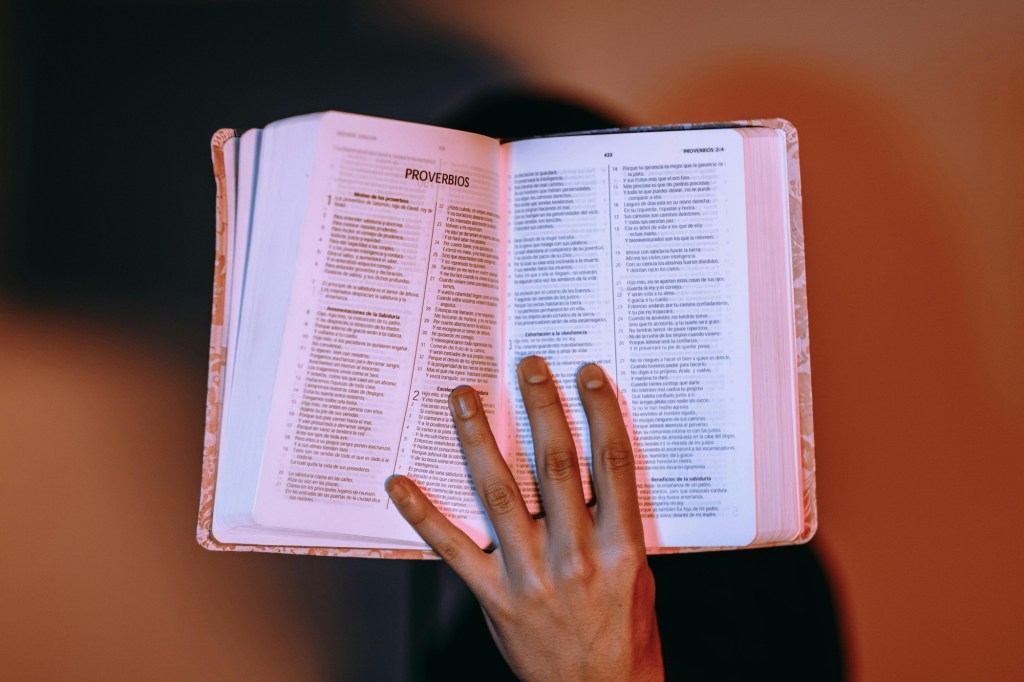








 Unlearning Tradition, Relearning Scripture