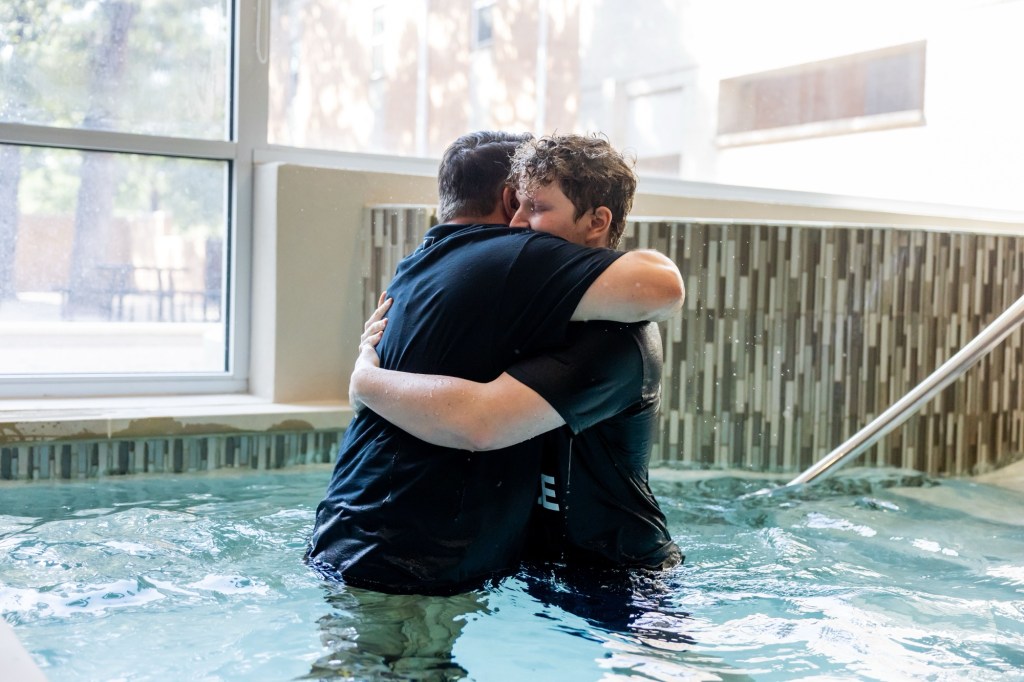
John the Baptist declared, “I have baptized you with water, but the Lord will baptize you with the Holy Spirit.” (Mark 1:8) After His resurrection, Jesus appeared for forty days, proving His resurrection and teaching about the kingdom of God. (Acts 1:3) He said, “You heard from Me; for John baptized with water, but you will be baptized with the Holy Spirit not many days from now.” (Acts 1:4–5) This was fulfilled in the outpouring of the Spirit at Pentecost (Acts 2:1–4):
> “When the day of Pentecost arrived, they were all together in one place. And suddenly there came from heaven a sound like a mighty rushing wind, and it filled the entire house where they were sitting. And divided tongues as of fire appeared to them and rested on each one of them. And they were all filled with the Holy Spirit and began to speak in other tongues as the Spirit gave them utterance.”
Peter, filled with the Holy Spirit, identified this event as the fulfillment of Joel’s prophecy (Acts 2:14–21), declaring that God’s Spirit would be poured out on all flesh, culminating in salvation for “everyone who calls upon the name of the Lord” (Acts 2:21).
Jesus had earlier told Nicodemus that a person must be “born of water and the Spirit” to enter God’s kingdom (John 3:5). He later told His disciples, those who had stayed with Him, saying, “The words that I have spoken to you are spirit and life” (John 6:63), showing the deep connection between the Spirit and the Word of God. Paul affirms this in Ephesians 5:25–26, saying Christ sanctifies the Church by “the washing of water with the Word.”
John’s baptism was a baptism of repentance, pointing forward to Christ (Acts 19:1–7). But the true baptism that saves is the baptism of Jesus—by the Word, which is the Spirit. As John himself said, “He must increase, but I must decrease” (John 3:30w). When the Gospel is proclaimed, the Spirit comes with it, as seen in Acts 10:44–46, where the Holy Spirit fell on Gentiles simply by hearing the Word, without any laying on of hands.
Scripture also clearly states that Jesus Himself never baptized with water (John 4:1–2). Paul declared, “For Christ did not send me to baptize but to preach the gospel, and not with words of eloquent wisdom, lest the cross of Christ be emptied of its power.” (1 Corinthians 1:17) Salvation, therefore, is by grace through faith (Ephesians 2:8–22), with the Spirit and the Word working as one. Peter confirms that Scripture is Spirit-inspired (2 Peter 1:20–21), and Paul affirms that the Gospel—the law of the Spirit of life (i.e., the Gospel)—frees believers from the law of sin and death (Genesis 2:16-17; Romans 8:1–4).
In essence, the baptism of the Holy Spirit is the cleansing and life-giving work of God through His Word, fulfilling John’s prophecy about Jesus Christ and securing eternal life for all who believe in His Word.
The Bible declares:
“In the beginning was the Word, and the Word was with God, and the Word was God.” (John 1:1)
“And the Word became flesh and lived among us. We have seen His glory, the glory as of the only Son from the Father, full of grace and truth.” (John 1:14)
“For from His fullness we have all received, grace upon grace. For the law was given through Moses; grace and truth came through Jesus Christ.” (John 1:16-17)
Here’s an honest question then: Why do some pastors imply there’s something special to be baptized at the Jordan River? Isn’t baptism at the Jordan River the epitome of John’s baptism, which cannot save one who has not received the Holy Spirit? If we have been baptized as Christians, is it not then a regression to submit ourselves for baptism at the Jordan River?
Christ’s Great Commission in Matthew 28:19-20 calls us not only to baptize but also to teach believers to obey all that He has commanded. While water baptism is an outward sign of faith and an important act of obedience, the mission of the Church goes beyond this initial step. If we recognize that the Holy Spirit works through the Word of God, then the emphasis must be on guiding Christians to live according to His Word—allowing the Spirit to transform their hearts and actions. Assurance of salvation is vital, but it should be coupled with ongoing discipleship, where believers are taught, challenged, and equipped to follow the commands of Christ daily. True discipleship involves a life shaped by the Word, not just a moment of ritual.
The parable of the sower, as taught by Jesus Christ, affirms that genuine Christian transformation occurs when one hears and truly understands the Word of God (Matthew 13:23). In harmony with this, Paul teaches in Romans that faith is born through hearing—specifically, by hearing the words of Christ (Romans 10:17).
Here’s the call for all of us Christians: If we truly desire to improve the church, we must return to the Bible. Let us relearn the authentic teachings of Scripture and let go of traditions that have, over time, weakened the church. Together, we can make the church shine as the true light of the world by faithfully reflecting the teachings of Jesus Christ.
Peter, in the words of Acts 3:6, declared, “I possess neither silver nor gold, but in the name of Jesus Christ, I offer you what I have.” Share this article freely, for you freely receive. Take note, underlines and highlights are clickable links for definitions or Bible references. Stay updated by heading to our about page and subscribe directly to receive notifications in your inbox. Blessings!
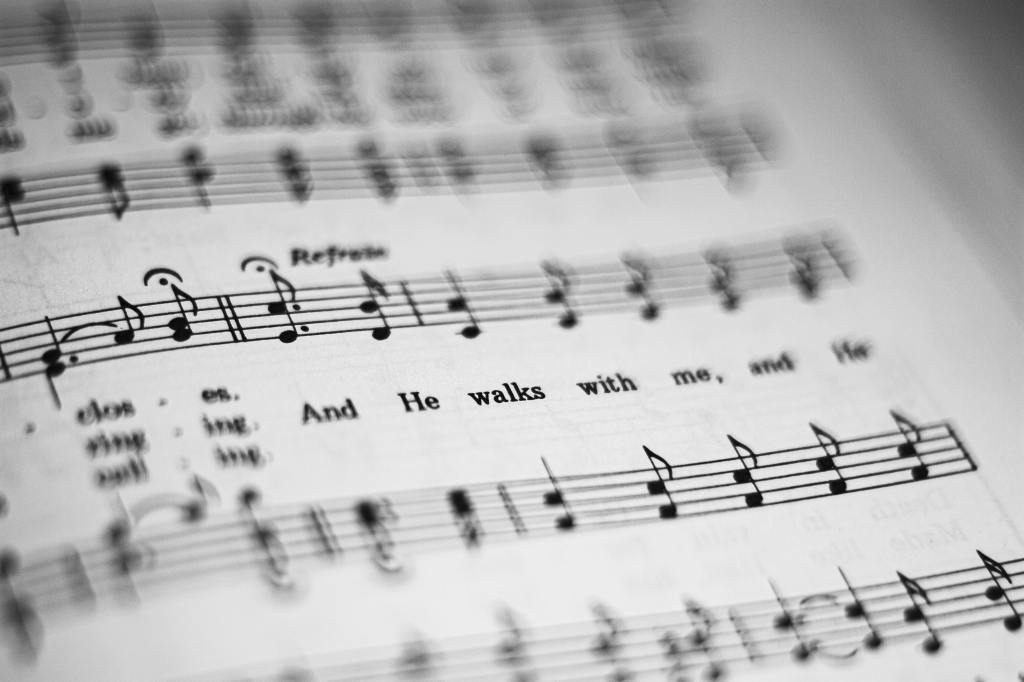
Some Christian congregations argue that hymns should be sung during gatherings, not contemporary music. Is there really a basis for such contention? Three times in the New Testament, Paul spoke about hymns; Ephesians 5:19 & Colossians 3:16.
“addressing one another in psalms and hymns and spiritual songs, singing and making melody to the Lord with your heart,” (Ephesians 5:19)
“Let the word of Christ dwell in you richly, teaching and admonishing one another in all wisdom, singing psalms and hymns and spiritual songs, with thankfulness in your hearts to God.” (Colossians 3:16)
The third was in Acts: “About midnight Paul and Silas were praying and singing hymns to God, and the prisoners were listening to them” (Acts 16:25). Paul, an apostle of Jesus Christ, was the authority behind Luke; he wrote both the Gospel of Luke and Acts.
Yes, all of the New Testament writings have apostolic authority. The same may be said of Hebrews, though modern Bible scholars debate over its authorship. Keep in mind Peter’s statement: “Knowing this first of all, that no prophecy of Scripture comes from someone’s own interpretation. For no prophecy was ever produced by the will of man, but men spoke from God as they were carried along by the Holy Spirit” (2 Peter 1:20-21). Though Peter here refers to the Old Testament Scriptures, are we to believe that the New Testament Scriptures are not of divine inspiration? Here is Paul’s testimony that he received divine inspiration from Jesus Christ:
“For I would have you know, brothers, that the gospel that was preached by me is not man’s gospel. For I did not receive it from any man, nor was I taught it, but I received it through a revelation of Jesus Christ.” (Galatians 1:11-12)
John also, attested that his writings was of divine inspiration from Jesus Christ:
“The revelation of Jesus Christ, which God gave Him to show to His servants (i.e. John and the rests) the things that must soon take place. He made it known by sending his angel to his servant John, who bore witness to the word of God and to the testimony of Jesus Christ, even to all that he saw.” (Revelation 1:1-2)
Note: ScriptureDirect, a Greek linguistic tool, clearly distinguishes between “servants” and “his servant John”. The former is described as a plural noun, while the latter is singular. Here’s the link to download the app.
Peter also implied that his letters were divinely inspired. See 2 Peter 3:15-16, “And count the patience of our Lord as salvation, just as our beloved brother Paul also wrote to you according to the wisdom given him, as he does in all his letters when he speaks in them of these matters. There are some things in them that are hard to understand, which the ignorant and unstable twist to their own destruction, as they do the other Scriptures.” (2 Peter 3:15-16)
Now, the hymns that some Christians ascribe to are not the hymns that Paul referred to. By hymns, Paul referred to the Psalms in the Bible, which are of divine inspiration. Inerrant and prophetic, they speak about the coming of the Christ or Messiah, or the Messianic kingdom. All hymns written outside the Scripture were authored from the 2nd and 3rd centuries AD, and after the Reformation.
Modern Christian songwriters, like their secular counterparts, draw inspiration from their personal experiences and observations. Theology also significantly influences their songwriting. It’s important to note that no Christian would contest that no post-AD 70 Christian songwriters can claim the inerrancy of their lyrics, unlike those of the Psalms in the Bible. Hebrews 1:1-2 states, “Long ago, at many times and in many ways, God spoke to our fathers by the prophets, but in these last days He has spoken to us by His Son, whom He appointed the heir of all things, through whom also He created the world.” This implies that Jesus Christ holds the final revelation of God.
A thorough examination of all the New Testament Scriptures reveals that none of its writings mention the fall of Jerusalem as a historical event. Instead, they emphasize that God’s judgment is imminent and about to be fulfilled at the time of their writings. Since all Scripture was written before A.D. 70, the fall of Jerusalem, a pivotal event that could not have escaped the writings of the New Testament, it is evident that all New Testament Scripture was composed before this date. For further clarification, please refer to this link, which explains that even Revelation was written before the fall of Jerusalem, contrary to the 90s suggestion made by some modern biblical scholars who relied on the writings of early church fathers from the second century of Christianity. None of them were infallible; a quick online search would easily reveal how they contradicted facts. For instance, Irenaeus’ book, ironically titled “Against Heresies,” Book two, chapter 22, claims that Jesus lived to be around 50 years old before His crucifixion. This is a clear contradiction of Scripture. Luke 3:23 explicitly states that Jesus was 30 years old when He began His ministry. According to the accounts of the John’s Gospel, which count the Passover Feasts He was present to and His crucifixion, His ministry lasted approximately 3.5 years. Modern Bible scholars have relied on Irenaeus’ writings to suggest that John wrote Revelation in the 90s. So, who should we believe: the Bible or Irenaeus? Should we rely on the internal evidence of Revelation or Irenaeus?
Now, back to our topic, are hymns outside the Bible more reliable and truthful to the Scripture than modern Christian music? I would say it’s a case-by-case basis, or maybe not. Am I suggesting that we ought not to listen to modern hymns and contemporary Christian music? No, I am not.
Modern hymns and contemporary Christian music are no different from personal testimonies of conversion narratives to the faith. They are not universal to all; we came to faith in different ways, but should have one Lord, one faith, one baptism, one God and Father of all (Ephesians 4:5-6).
Why don’t Christians simply agree to disagree for the time being regarding modern hymns and contemporary Christian music? Let’s prioritize learning from the Bible, which is of utmost importance. As stated in Ephesians 5:25-26, by faith, we have been sanctified, cleansed, and washed for Christ Jesus. By studying the Scriptures, we can individually grow in our understanding of God’s Word. Consequently, we will be able to discern which modern hymns and contemporary Christian music are not aligned with the Scriptures.
The same process should be experienced by each individual Christian. We all ought to grow in faith. Paul states, “And Christ gave some to be apostles, some prophets, some evangelists, some pastors and teachers, to equip the saints for the work of ministry, to build up the body of Christ, until we all reach unity in the faith and in the knowledge of God’s Son, growing into maturity with a stature measured by Christ’s fullness. Then we will no longer be little children, tossed by the waves and blown around by every wind of teaching, by human cunning with cleverness in the techniques of deceit. But speaking the truth in love, let us grow in every way into him who is the head — Christ.” (Ephesians 4:11-15)
We no longer have the apostles with us. And I will argue that neither do we have prophets because Jesus already came. He spoke God’s revelation to us, which are now in our Bibles. Perhaps we still have evangelists, pastors, and teachers, but all of whom should be known and verified by their teachings and lives. Jesus Christ declares, “Everyone then who hears these words of mine and does them will be like a wise man who built his house on the rock. And the rain fell, and the floods came, and the winds blew and beat on that house, but it did not fall, because it had been founded on the rock. And everyone who hears these words of mine and does not do them will be like a foolish man who built his house on the sand. And the rain fell, and the floods came, and the winds blew and beat against that house, and it fell, and great was the fall of it.” (Matthew 7:24-27)
Discern carefully, have you learned from the Rock, no other but Jesus Christ? Be careful not to be part of those who sought the wide gate (Matt 7:13-20), instead of the narrow gate, the way of Christ (John 14:6-7). Christ Jesus may no longer be with us physically, but His presence can be learned and experienced through the Scriptures. Paul states, “For we walk by faith, not by sight.” (2 Corinthians 5:7)
Again Paul declares, we ought not to seek things that can be seen but the things that are unseen. For the things that are seen are transient, but the things that are unseen are eternal (2 Corinthians 4:18). Once we have learned to be guided by the things unseen, that is by faith in Christ Jesus, then unlike Adam, nothing in this world can entice you to forsake God.
So, should we focus on hymns or contemporary Christian music? Let’s not get bogged down by trivial matters. Instead, let’s focus on the Word of God, and we’ll no longer be concerned with such things. Only then can we truly serve Jesus Christ. Remember Christ’s words, “If the blind lead the blind, both will fall into a pit.” (Matthew 15:14)
Peter , in the words of Acts 3:6, declared, “I possess neither silver nor gold, but in the name of Jesus Christ, I offer you what I have.” Note: Click on underlines and highlights for definitions or Bible references. Freely, for you freely receive. Stay updated by heading to our about page and subscribing directly to receive notifications in your inbox. Blessing!
While “cult” is often defined as a misplaced or excessive admiration for a particular person or thing, this dynamic can sometimes appear in unexpected places. For instance, it can be easy to rely entirely on the teachings of a leader rather than engaging directly with the text. When we take every word as absolute truth without exploring the Scripture ourselves, we might unintentionally prioritize a person’s interpretation over the Word of God.
For instance, Jesus declared before His disciples and said:
“Truly, I say to you, there are some standing here who will not taste death until they see the Son of Man coming in His kingdom” (Matthew 16:28).
It was obvious Jesus was telling His immediate audience – His immediate disciples “Peter, James, John and the rest,” not us – that His Return would be within their lifetime. Go tell pastors or any other Christians about this statement from Jesus Christ. I have seen a lot just shrugging it off, not realizing that if we doubted Jesus’ promise here, how then do we believe John 3:16, also a promise of Christ Jesus our Lord?
For God so loved the world, that He gave His only Son, that whoever believes in Him should not perish but have eternal life. (John 3:16)
It is worth considering why many choose to embrace the comforting parts of faith while sometimes overlooking the more challenging aspects of the complete message.
The apostle Paul in his letter to the Galatians spoke of Christians deserting the grace of Christ and turning to a different gospel (Galatians 1:6-7). To the Corinthians, Paul warned against people preaching another Jesus (2 Corinthians 11:4). It is therefore important that we are believing the Jesus Christ of the Bible and understand the Gospel as presented by the Scripture.
So Paul made it clear and said:
Now I want you to know, brothers and sisters, that the Gospel I preached is not of human origin. For I did not receive it or learn it from human source; instead I received it by a revelation of Jesus Christ. (Galatians 1:11-12)
Paul was an apostle of Jesus Christ; he authored almost half of the New Testament writings of the Bible. Every book within the New Testament was authored by an apostle of Jesus Christ.
Paul wrote the epistles of Romans, 1 & 2 Corinthians, Galatians, Ephesians, Philippians, Colossians, 1 & 2 Thessalonians, 1 & 2 Timothy, Titus, and Philemon. I believe Hebrews also. Luke, on the other hand, was a traveling companion of Paul. He wrote the Gospel of Luke and Acts.
Peter was behind the epistles of 1 & 2 Peter. Mark, on the other hand, derived his authority to write a Gospel (Mark) from Peter.
John authored the Gospel of John, Revelation and lastly, the epistles of 1st, 2nd, and 3rd John.
James, the brother of Jesus, who became an apostle and leader of the Jerusalem church (Acts 15:13-20), wrote the epistle of James.
Jude is the same person as Judas (Not Iscariot) mentioned inJohn 14:22. He was one of the twelve apostles of Jesus Christ, brother of James the son of Alphaeus, also known as Thaddaeus in Matthew 10:3. If you have doubts, do a comparison of Matthew 10:2-3 with that of Acts 1:13. But bear in mind that in the Greek, it’s “Judas of James, and James of Alphaeus.” The words “the son” were added by translators, meaning James and Judas were brothers. The same may be said of Luke 6:15-16. See Jude 1:1.
Jude, a servant of Jesus Christ and brother of James, to those who are called, beloved in God the Father and kept for Jesus Christ.
Finally, the apostle Matthew wrote one of the three synoptic Gospels (Matthew) of the Bible. Thus, all 27 books of the New Testament Bible written under the authority of an apostle of Jesus Christ. And they all agreed and preached the same Gospel, so Paul made it clear that no one should preach a different gospel but the Gospel that was from the Lord Jesus Christ. See Galatians 1:6-12.
I am astonished that you [the Galatians] are so quick deserting Him [God] who called you in the grace of Christ and are turning to a different gospel – not that there is another one, but there are some who trouble you and want to distort the gospel of Christ. But even if we [the apostles] or an angel from heaven should preach to you a gospel contrary to the one we preached to you, let him be accursed. As we have said before, so now I say again: If anyone is preaching to you a gospel contrary to the one you received, let him be accursed.
For am I now seeking the approval of man, or of God? Or am I trying to please man? If I were still trying to please man, I would not be a servant of Christ.
For I would have you know, brothers, that the Gospel that was preached by me is not man’s gospel. For I did not receive it from any man, nor was I taught it, but I received it through a revelation of Jesus Christ.
The truths about Jesus Christ and the Gospel may only be determined from within Scripture, both New and Old Testament writings of the Bible – Scripture alone. The 66 books of the Bible were the only inspired writings of men who spoke from God (2 Peter 1:20-21), inerrant and the sole source of truth.
Knowing this first of all, that no prophecy of Scripture comes from someone’s own interpretation. For no prophecy was ever produced by the will of man, but men spoke from God as they were carried along by the Holy Spirit. (2 Peter 1:20-21)
The apostles of Jesus Christ may no longer be with us, but by God’s divine providence, we have the authoritative writings of men who spoke from God written down, preserved, and available for us to know the truthful teachings of God’s Word.
If you treasure the Bible and your salvation, let us not be part of a cult. Challenge yourselves to read the Bible. Join Bible studies that teach people how to properly read and study the Scripture, not simply seeking to hear comforting words from the preacher or pastor. The apostle Paul, in his last letter to Timothy, commanded him saying:
I charge you in the presence of God and of Christ Jesus, who is to judge the living and the dead, and by HIs appearance and His kingdom: Preach the word; be ready in season and out of season; reprove, rebuke, and exhort, with complete patience and teaching. For the time is coming when people will not endure sound teaching, but having itching ears they will accumulate for themselves teachers to suit their own passions, and will turn away from listening to the truth and wander off into myths.
Those words were spoken to Timothy when the last few living apostles were still around, and yet the danger of straying away from the truth was already present. How much more today, living about two millennia away from the immediate disciples of Jesus Christ? Shouldn’t we be more careful of what to believe or not?
Listen to the exhortation of Peter for pastors/elders:
So I exhort the elders among you, as a fellow elder and a witness of the sufferings of Christ, as well as a partaker of the glory that is going to be revealed: Shepherd the flock of God that is among you, exercising oversight, not under compulsion, but willingly, as God would have you, not for shameful gain, but eagerly; not domineering over those in your charge, but being examples to the flock. And when the Chief Shepherd appears, you will receive the unfading crown of glory. (1 Peter 5:1-4)
The apostle Paul states:
Keep a close watch on how you live and on your teaching. Stay true to what is right for the sake of your own salvation and the salvation of those who hear you. (1 Timothy 4:16)
Lastly, Jesus Christ states,
What do you think? If a man has a hundred sheep, and one of them has gone astray, does he not leave the ninety-nine on the mountains and go in search of the one that went astray?And if he finds it, truly, I say to you, he rejoices over it more than over the ninety-nine that never went astray. So it is not the will of My Father who is in heaven that one of these little ones should perish. (Matthew 18:12-14)
Those were the words of Jesus Christ to His disciples, and it continues to resonate today through the Scripture, the Word of God. It was, and still is, the desire of Jesus Christ our Lord that we all be under His flock. Listen then to the words of the Bible, not the pastor if it isn’t according to the inerrant Word of God. Seek true under-shepherds (1Pe 5:1-4; Acts 20:28) of Christ Jesus; those who hold only to the Words of Christ and rightly handles the truth (2Tim 2:15).
After Jesus declared to His disciples in Matthew 16:28, “Truly, I say to you, there are some standing here who will not taste death until they see the Son of Man coming in His kingdom,” the next event recorded was His Transfiguration. Jesus’ face shone like the sun, and His clothes became as white as light—glimpses pointing to His post-resurrection glory at the Right Hand of God.
Consider the supporting Scriptures:
Acts 26:13-15 recounts Paul’s encounter with the risen Christ: “At midday, O king, I saw on the way a light from heaven, brighter than the sun, that shone around me… And the Lord said, ‘I am Jesus whom you are persecuting.’”
Revelation 1:10-18 similarly describes Jesus with eyes like fire, feet like burnished bronze, and a face shining like the sun in full strength—confirming His divine majesty.
> This affirms that Jesus’ declaration was true. He cannot lie, for He is God.
Next, the Transfiguration also portrays Jesus speaking with Moses and Elijah—representing the Law and the Prophets. Luke 9:30-31 clarifies that they “appeared in glory and spoke of His departure” (literally, “Exodus”) to be accomplished in Jerusalem. Moses led Israel out of Egypt; Jesus leads God’s people out of the bondage of the Law, the sting of death (1 Corinthians 15:56). Paul further explains in 1 Corinthians 15:22-26 that Christ’s coming brings resurrection, deliverance, and the ultimate destruction of death.
Salvation would remain only a promise if Jesus had not returned in glory to fulfill His mission. Hebrews 9:28 confirms that His second appearance brings the completion of salvation for those awaiting Him.
Thus, contrary to Albert Schweitzer’s suggestion and C.S. Lewis’ own admitted struggle with Matthew 24:34, Jesus was neither mistaken nor a false prophet. The misunderstanding lies in failing to grasp His true mission: “For the law was given through Moses; grace and truth came through Jesus Christ” (John 1:17). His Transfiguration demonstrates the transition from the Old Covenant to the New, established by faith in Him alone.
> Luke 9:30-31 states, “Suddenly, two men were talking with Jesus — Moses (Law) and Elijah (Prophet). They appeared in glory and were speaking of His departure (Exodus), which He was about to accomplish in Jerusalem.” Jesus came to lead His people in Exodus, out of bondage from the Law to Grace (Galatians 3:22-29).
> Finally, the divine voice declared: “This is My beloved Son, with whom I am well-pleased. Listen to Him” (echoing Psalms 2:7and Deuteronomy 18:15). This affirms Jesus is the Son of God, God’s anointed King and the true Prophet (John 6:14; Acts 3:22-23). If His promise had failed, Deuteronomy 18:19-20 would have justified His condemnation—but His glory and fulfillment of all His promises proved His words true.
Jesus Christ cannot be mistaken in Matthew 16:28; His Transfiguration validates His promise, His mission, and His divine authority.
Peter, in the words of Acts 3:6, declared, “I possess neither silver nor gold, but in the name of Jesus Christ, I offer you what I have.” Share this article freely, for you freely receive. Take note, underlines and highlights are clickable links for definitions or Bible references. Stay updated by heading to our about page and subscribe directly to receive notifications in your inbox. Blessings!