I have noticed a wave of Facebook posts criticizing the SOGIE Bill. Personally, I do not fully grasp its details, though I perceive it mainly as legislation for gender equality. Our society now seems open and inclusive, with hardly anyone openly mocking the LGBT+ community. This raises the question: What specific equality does the bill aim to establish?
This brings up a deeper question for me. Whenever we legislate in favor of one group, it can sometimes feel as though it inadvertently creates tension with another. It leads me to wonder how we can ensure the SOGIE Bill serves as a true measure of equality for everyone, rather than unintentionally favoring one perspective over another.
A Biblical Perspective
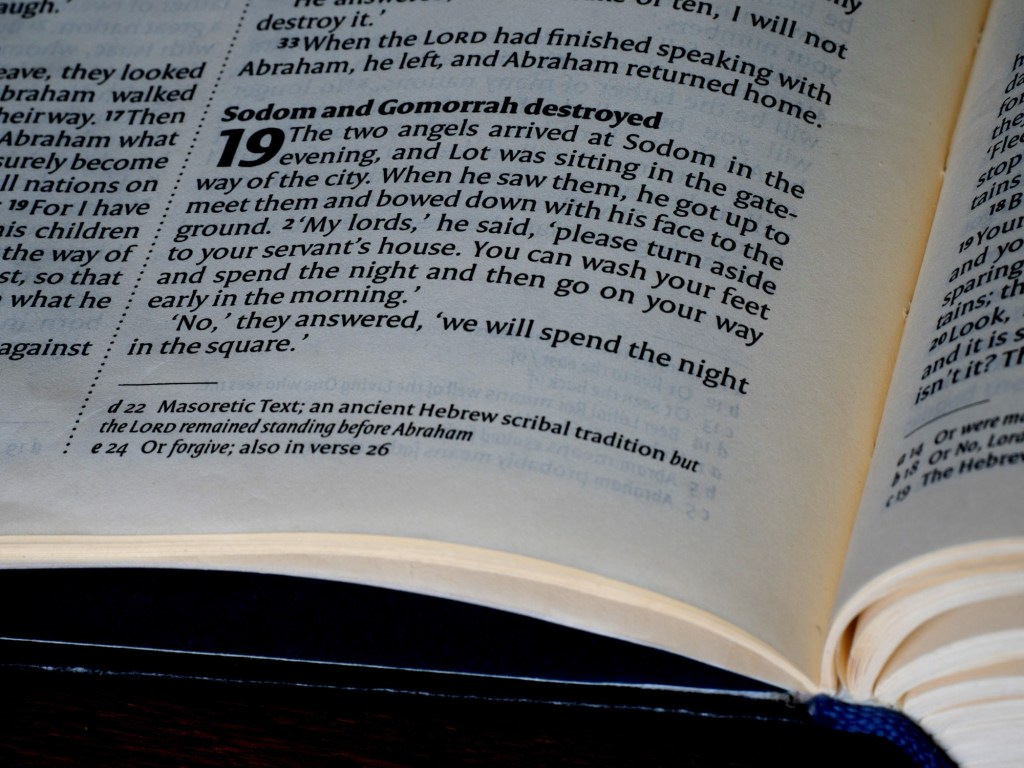
The story of Sodom and Gomorrah in Genesis 19 often comes to mind when discussing homosexual issues. Why did God destroy the city? The book of Jude 1:6–7 provides insight:
“And the angels who did not stay within their own position of authority, but left their proper dwelling, God has kept in eternal chains under gloomy darkness until the judgment of the great day—just as Sodom and Gomorrah and the surrounding cities, which likewise indulged in sexual immorality and pursued unnatural desire, serve as an example by undergoing a punishment of eternal fire.”
Sodom and Gomorrah are compared to the fallen angels; they overstepped, going against God’s order and design. A similar pattern may be seen with humanity in general. Eve was misled into thinking (2 Corinthians 11:3; 1 Timothy 2:14) that eating the forbidden fruit would make them like God, knowing good and evil. She gave the fruit to Adam and they both ate of it and violated God’s covenant (Genesis 3:5-6).
Furthermore, Paul in Romans 1:18–32 explains that humanity’s desire for unnatural relationships is a consequence of turning away from God:
“For although they knew God, they did not honor Him as God or give thanks to Him, but they became futile in their thinking, and their foolish hearts were darkened. Claiming to be wise, they became fools… For this reason God gave them up to dishonorable passions. For their women exchanged natural relations for those that are contrary to nature; and the men likewise gave up natural relations with women and were consumed with passion for one another…”
Paul’s passage groups together every form of sin—sexual, ethical, and moral (Romans 1:24-31). All these are presented as the natural byproducts of a life that does not acknowledge God: “These are grumblers, malcontents, following their own sinful desires; they are loud-mouthed boasters, showing favoritism to gain advantage.” (Jude 1:16)
Jude’s message was not entirely about condemnation; it also carried a strong call for restoration and evangelism. Jude 1:17–23 underscores this balance:
“But you must remember, beloved, the predictions of the apostles of our Lord Jesus Christ. They said to you, ‘In the last time there will be scoffers, following their own ungodly passions.’ It is these who cause divisions, worldly people, devoid of the Spirit. But you, beloved, building yourselves up in your most holy faith and praying in the Holy Spirit, keep yourselves in the love of God, waiting for the mercy of our Lord Jesus Christ that leads to eternal life. And have mercy on those who doubt; save others by snatching them out of the fire; to others show mercy with fear, hating even the garment stained by the flesh.”
Since we are no longer in the ‘last days” as many suppose, but in the era of grace, the New Creation. This passage reminds believers that in the face of ungodliness, the response should be twofold: remain steadfast in faith and extend compassion to those who are lost or struggling. Faithful prayer, spiritual growth, and merciful outreach reflect the heart of Christian restoration, demonstrating that divine justice is always accompanied by the call to redemption.
Concluding Thought
Reflecting on the SOGIE Bill, it is important to understand the difference between promoting equality and creating legislation that may come into tension with religious beliefs. The Bible reminds us that the moral compass of society is deeply tied to our recognition of God’s authority. Any discussion on equality and law must also consider the higher calling of righteousness and truth. Lest we forget, what had become of Old Covenant Israel, whose behavior at the incarnate coming of Jesus Christ can be likened to the time of Judges; a statement repeated notably: “In those days there was no king in Israel. Everyone did what was right in his own eyes (Judges 17:6; 18:1; 19:1; 21:25).”
Scripture declares Jesus Christ, the King of kings and Lord of Lords (Revelation 19:16). Even so, it is not unusual to hear people remark that there is a separation of church and state. Yet precisely for this reason, the Sogie Bill crosses the line.
P.S. This author follows Christ’s principle: “Render to Caesar the things that are Caesar’s, and to God the things that are God’s (Matthew 22:21).” I therefore always advocate for the truth. Yet the world functions not on the basis of the truth—God’s Word—but on popular opinions.
Peter, in the words of Acts 3:6, declared, “I possess neither silver nor gold, but in the name of Jesus Christ, I offer you what I have.” Share this article freely, for you freely receive. Take note, underlines and highlights are clickable links for definitions or Bible references. Stay updated by heading to our about page and subscribe directly to receive notifications in your inbox. Blessings!

