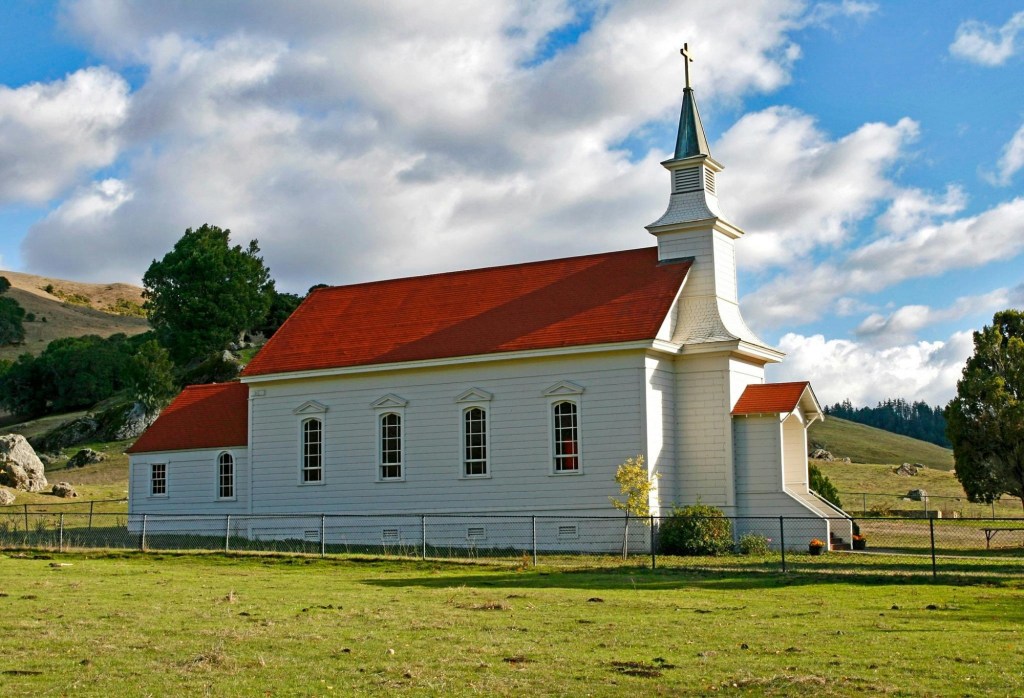
Christians have become overly focused on constructing buildings they call churches. Yet a building without believers is nothing more than a structure—a gathering place at best. As a song says, “A house is not a home when there’s no one there.” Likewise, a building, no matter how grand, is not the church if God’s people are absent.
Before the Reformation, the Roman Catholic Church aimed to construct the Saint Peter’s Basilica in Rome. However, lacking sufficient resources, they introduced the doctrine of indulgence to trick people into donating money. In today’s world, the same strategy may be employed to fund and execute building projects by simply calling them the church.
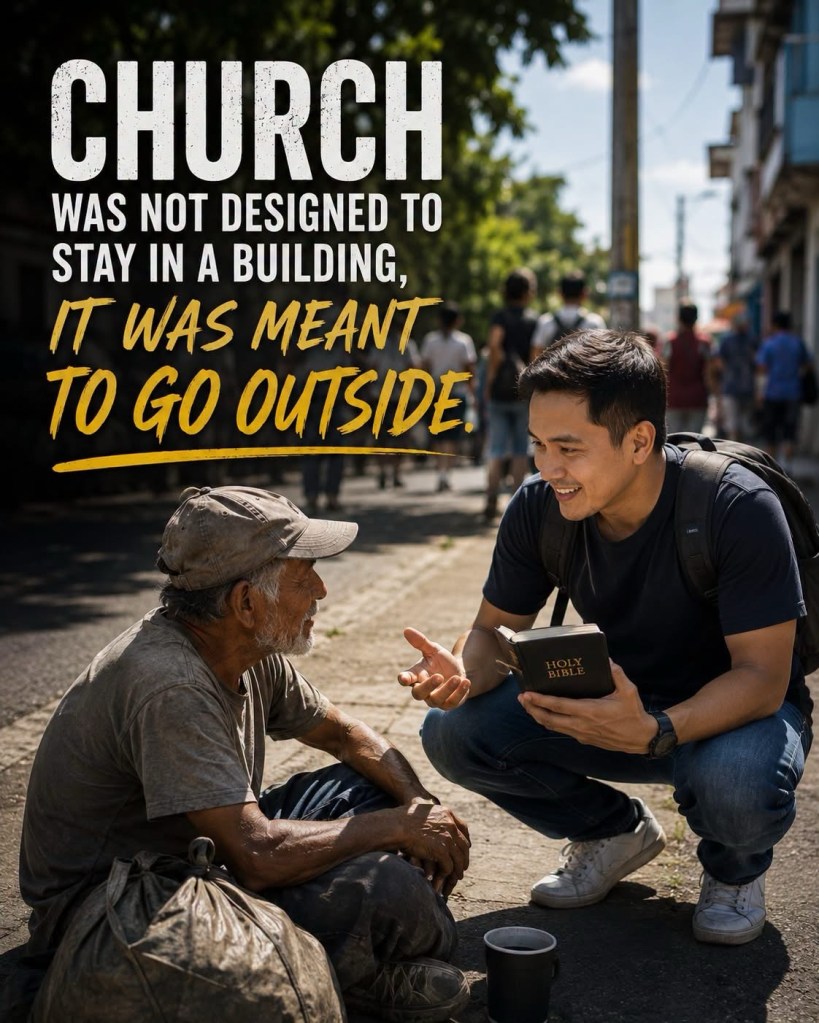
This fixation on building projects may be influenced by Western trends that many imitate without careful consideration. Some may have thought it’s good for personal legacy. However, these developments often lead to resentment in neighborhoods, as they generate traffic and inconvenience, effectively becoming obstacles to the Gospel itself. However, the mission of God’s people is clear: to spread the Gospel to the world, not to confine it within walls.
The coming of Jesus Christ and the rapid spread of the Gospel during the Roman Empire were no mere coincidences. The Pax Romana established a period of relative peace, while the vast network of Roman roads provided safe and efficient travel. These conditions created a literal and figurative highway for the message of Christ to reach distant lands with remarkable speed.
In contrast, modern Christianity often faces internal obstacles. Institutionalized churches, once intended to safeguard and organize the faith, can sometimes become barriers to the unrestrained sharing of the Gospel. Bureaucracy, divisions, and rigid structures may hold back the very mission they were meant to support. In this light, one might wonder: has modern Christianity, through its own systems, become its greatest hindrance?
Some interpret Hebrews 10:25 as a directive to gather regularly in sanctuaries or buildings. However, the phrase “meet together” appears only twice in the New Testament—Hebrews 10:25 and 2 Thessalonians 2:1—and should be understood as referring to God’s promise to regather Israel, as also seen in Romans 11:25-27. A careful reading of Romans indicates that this regathering was being fulfilled during Paul’s own lifetime.
Paul writes:
“I ask, then, has God rejected His people? By no means! For I myself am an Israelite, a descendant of Abraham, a member of the tribe of Benjamin. God has not rejected His people whom He foreknew. Do you not know what the Scripture says of Elijah, how he appeals to God against Israel? ‘Lord, they have killed Your prophets, they have demolished Your altars, and I alone am left, and they seek my life.’ But what is God’s reply to him? ‘I have kept for Myself seven thousand men who have not bowed the knee to Baal.’ So too at the present time there is a remnant, chosen by grace.” (Romans 11:1-5)
Here, the “present time” refers to Paul’s own era—the final days of Old Covenant Israel—where a remnant, saved by grace through faith in Jesus Christ, was preserved. Paul himself was an example of the remnant chosen by grace (Romans 11:1-5). He makes it clear that he is speaking of Old Covenant Israel, as he also notes in Romans 9:27: “And Isaiah cries out concerning Israel: ‘Though the number of the sons of Israel be as the sand of the sea, only a remnant of them will be saved.’”
If there are any doubts about the expiration of the Old Covenant, one only needs to look at Hebrews 8:13. It declares, “In speaking of a new covenant, God makes the first one obsolete. And what is becoming obsolete and growing old is ready to vanish away.” Furthermore, Hebrews 9 highlights the Jewish temple, the physical symbol of the Old Covenant, which no longer stands today.
Thus, the call to “meet together” is biblically and historically tied to God’s regathering of Israel rather than a universal command for modern believers to hold scheduled gatherings in sanctuaries or buildings.
The true church is not a building but the community of believers who confess Christ and live in faith. Jesus described the kingdom of heaven as a net gathering fish of every kind (Matthew 13:47-49): the Gospel is the net, the world is the sea, and the church—the true church—are the good fish gathered into God’s kingdom.
The early church wholeheartedly devoted itself to the apostles’ teachings (Acts 2:42), which are now reflected in the New Testament Scriptures, and to fellowship with one another. They met daily, not just for the weekly gatherings we often see today, but in the temple courts and later in homes (Acts 5:42; 12:12; Romans 16:5; 1 Corinthians 16:19; Colossians 4:15; Philemon 1:2). Unlike the modern practice of gathering in large buildings open to all, with sufficient parking and amenities, the early Christians shared life together in intimate home settings. This approach made it easier to distinguish genuine believers from those who were merely nominal. In this context, new believers were intentionally introduced to Christian groups, much like Barnabas personally connected Paul to the church (Acts 9:26-27). This created a clear sense of accountability and belonging.
Consequently, Paul’s instruction that the church must be purified was doable (1 Corinthians 5:7-13), applying discipline to those claiming to be brothers yet living in sin. Because everyone is known to each other, Jesus Himself instructs a step-by-step approach to correction (Matthew 18:15-17), which ultimately leads to purging unrepentant sin from the church. A real church is marked not by walls but by lives aligned with God’s Word.
Resources should therefore be directed toward spreading the Gospel, training believers (2 Timothy 2:2), and supporting faithful workers (3 John 5-8)—rather than pouring funds into concrete and mortar. Jesus declared that He would build His church on the rock of Peter’s confession (Matthew 16:18). Peter confessed: “You are the Christ, the Son of the living God (Matthew 16:16).” Scripture states, “therefore thus says the Lord GOD, ‘Behold, I am the One who has laid as a foundation in Zion, a Stone, a tested Stone, a precious Cornerstone, of a sure foundation: Whoever believes will not be in haste.’” (Isaiah 28:16)
Scripture clearly teaches that Christ is the “Rock” (1 Corinthians 10:4), the firm foundation and cornerstone of Zion, which is His church (Hebrews 12:22-24). With Christ Jesus as its head, the church is described as the “true temple” (John 2:19-22; Colossians 1:18). Paul reminds believers: “Do you not know that you (i.e. the church) are God’s temple and that God’s Spirit dwells in you?” (1 Corinthians 3:16). Further study of the following passages—1 Corinthians 6:19; 2 Corinthians 6:16; Ephesians 2:19-22; 1 Peter 2:4-6—reveals that the church is indeed God’s spiritual temple. Therefore, placing great emphasis on physical buildings misrepresents God’s word and the true nature of His church.
Instead of spending hundreds of millions, even billions, of pesos, why not consider renting? Some individuals generously donate, so why not construct a modest gathering place instead of large buildings with only a few attendees? Additionally, some may even be willing to lend out spaces for meetups and gatherings focused on reading and studying God’s word. As Paul instructed Timothy, “Devote yourself to the public reading of Scripture, to exhortation, to teaching.” (1 Timothy 4:13)
God’s workers should be honored (Hebrews 13:7), equipped (2 Timothy 2:15), and sent into the harvest where it truly lies—outside the four walls, in marketplaces, homes, daily encounters, and we don’t need to go far; our very neighborhood (Matthew 9:37-38). The church is God’s people, not the structures we maintain. Let’s stop wasting resources on buildings and instead fully commit to the work Christ commanded: proclaiming the Gospel and building His kingdom through lives, not bricks.
The church is, at its core, an assembly, though it does not always reflect the modern notion of a congregation. According to Scripture, it is the spiritual gathering of the firstborn, whose names are inscribed in heaven (Hebrews 12:22–24). This sacred assembly may appear as a local fellowship of believers or as individuals scattered across various regions, each faithfully fulfilling their service to God in their own context. For instance, Aquila and Priscilla, after being expelled from Rome, settled in Corinth (Acts 18:1-2). They contributed to God’s ministry by carefully explaining the Gospel to Apollos (Acts 18:24-26). Even while distant from Paul, they remained his fellow workers in Christ Jesus (Romans 16:3).
Paul reminds us that the church is composed of members with different gifts. As Ephesians 4:11 states, God appoints some to be pastors, some to be evangelists, and others to be teachers. While a single individual may at times perform the tasks of all three, these are the only offices that currently remain.
The New Testament defines apostles as direct witnesses of Christ—His life, teachings, death, resurrection, and ascension (1 Corinthians 9:1). Paul declared that he was the last of the apostles, uniquely chosen (1 Corinthians 15:8-9). His calling as the apostle to the Gentiles carried great responsibility (Romans 11:13; Acts 9:15-16). Paul’s extensive travels, numerous hardships, and eventual arrival in Rome—then viewed as the edge of the known world—highlight complete fulfillment of Acts 1:8. It is thus understandable that he authored most of the New Testament writings.
Through his mission, the Gospel effectively reached the whole world, fulfilling the prophecy that it would go to the ends of the earth, contrary to the claims of modern Christianity (Colossians 1:6, 23; Romans 10:18; 15:19; 16:25-26; Matthew 24:14; 28:19-20; Acts 1:8, 28:15-31).
Furthermore, there is no scriptural basis proving that Peter ever ministered in Rome. The mention of “Babylon” in 1 Peter 5:13 is often misinterpreted as Rome, yet Revelation 17:5-6, 17:18, and 11:8 identify “Babylon the Great” as Old Covenant Jerusalem—the city where Jesus was crucified—rather than Rome.
Similarly, there are no prophets today since all divine revelations have been completed in the book of Revelation. As Paul teaches in Romans 12:7-8, some are gifted in serving, others in giving, and some in showing mercy. Each of us is called to faithfully fulfill the role that matches the gift God has given us.
Consequently, if Christians mistakenly view the church primarily as physical spaces—such as buildings, sanctuaries, and halls—they end up striving to fill every empty seat, even gathering those who are unconverted, like guests without a wedding garment— that is, faith in the righteousness of Jesus Christ (Matthew 5:17-20; 21:28-32; Romans 1:16-17; 3:21-26; 5:17; 13:14; Galatians 3:27-29; Ephesians 4:21-24). This is why Scripture declares, “For many are called, but few are chosen.” (Matthew 22:9-14)
Reflect on the Scriptures and be discerning. Do not simply follow others without understanding, for Jesus said, “If the blind lead the blind, both will fall into a pit.” (Matthew 15:14) Let us not imitate the Pharisees, who forsook God’s Word to cling to the traditions of men. (Mark 7:8)
Peter, in the words of Acts 3:6, declared, “I possess neither silver nor gold, but in the name of Jesus Christ, I offer you what I have.” Share this article freely, for you freely receive. Take note, underlines and highlights are clickable links for definitions or Bible references. Stay updated by heading to our about page and subscribe directly to receive notifications in your inbox. Blessings!

