Tag: 1 Corinthians 5:7-13

  • Rethinking the Church: A Call to Biblical Priorities

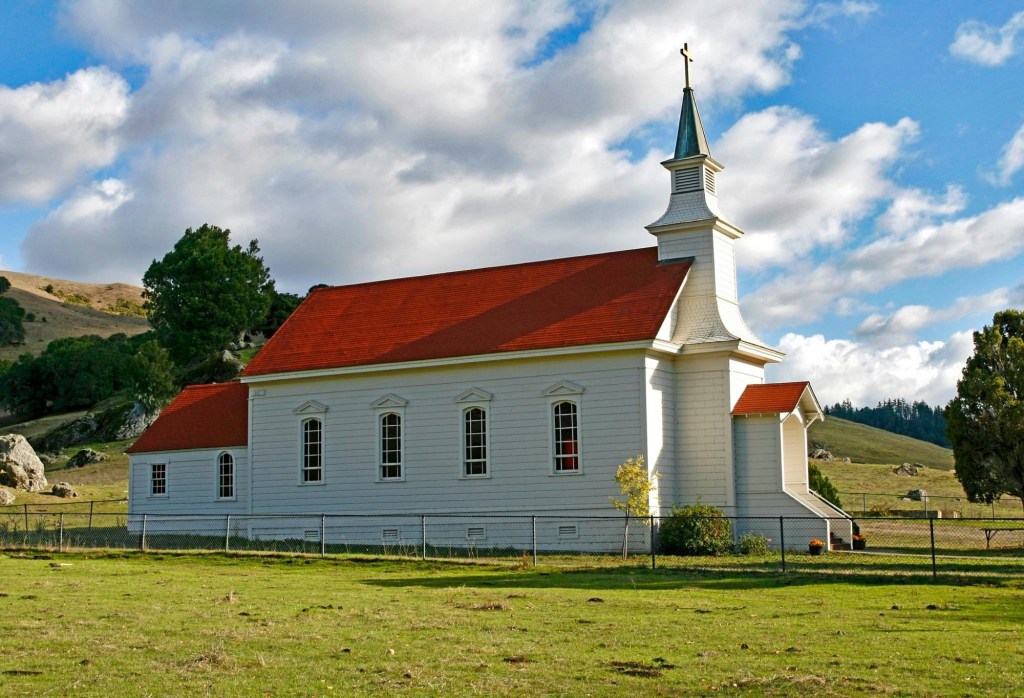
    Christians have become overly focused on constructing buildings they call churches. Yet a building without believers is nothing more than a structure—a gathering place at best. As a song says, “A house is not a home when there’s no one there.” Likewise, a building, no matter how grand, is not the church if God’s people are absent.

    Before the Reformation, the Roman Catholic Church aimed to construct the Saint Peter’s Basilica in Rome. However, lacking sufficient resources, they introduced the doctrine of indulgence to trick people into donating money. In today’s world, the same strategy may be employed to fund and execute building projects by simply calling them the church.

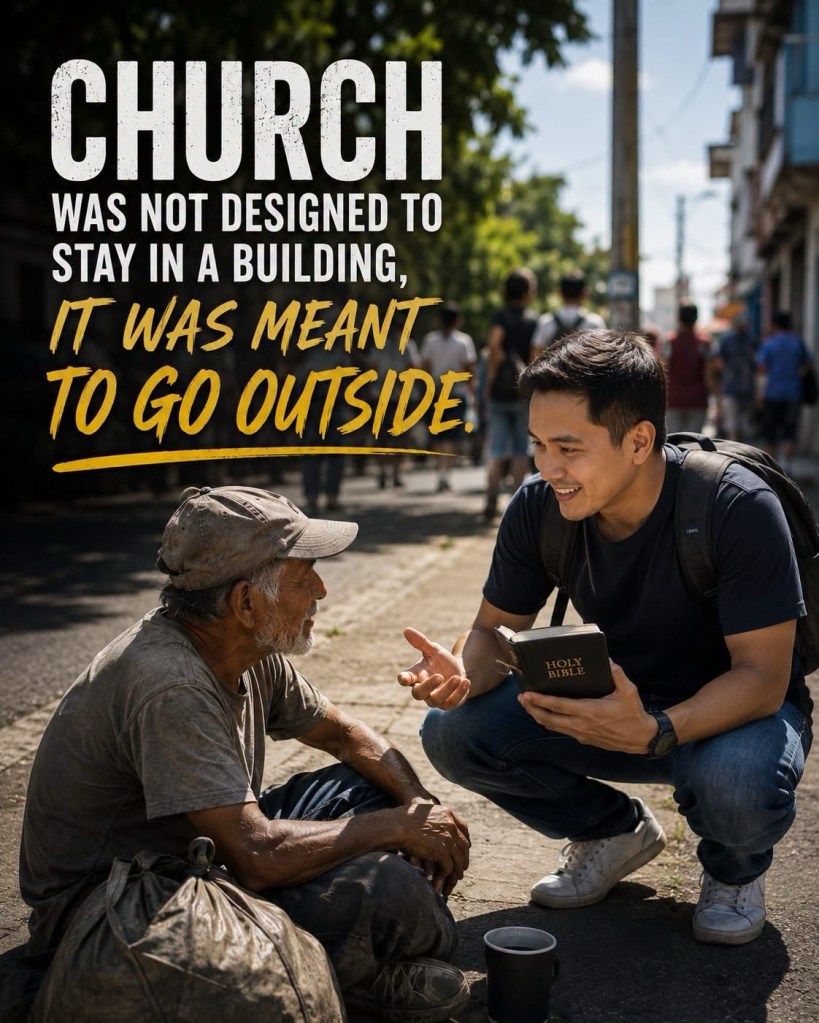
    This fixation on building projects may be influenced by Western trends that many imitate without careful consideration. Some may have thought it’s good for personal legacy. However, these developments often lead to resentment in neighborhoods, as they generate traffic and inconvenience, effectively becoming obstacles to the Gospel itself. However, the mission of God’s people is clear: to spread the Gospel to the world, not to confine it within walls.
    The coming of Jesus Christ and the rapid spread of the Gospel during the Roman Empire were no mere coincidences. The Pax Romana established a period of relative peace, while the vast network of Roman roads provided safe and efficient travel. These conditions created a literal and figurative highway for the message of Christ to reach distant lands with remarkable speed.

    In contrast, modern Christianity often faces internal obstacles. Institutionalized churches, once intended to safeguard and organize the faith, can sometimes become barriers to the unrestrained sharing of the Gospel. Bureaucracy, divisions, and rigid structures may hold back the very mission they were meant to support. In this light, one might wonder: has modern Christianity, through its own systems, become its greatest hindrance?

    Some interpret Hebrews 10:25 as a directive to gather regularly in sanctuaries or buildings. However, the phrase “meet together” appears only twice in the New Testament—Hebrews 10:25 and 2 Thessalonians 2:1—and should be understood as referring to God’s promise to regather Israel, as also seen in Romans 11:25-27. A careful reading of Romans indicates that this regathering was being fulfilled during Paul’s own lifetime.

    Paul writes:

    “I ask, then, has God rejected His people? By no means! For I myself am an Israelite, a descendant of Abraham, a member of the tribe of Benjamin. God has not rejected His people whom He foreknew. Do you not know what the Scripture says of Elijah, how he appeals to God against Israel? ‘Lord, they have killed Your prophets, they have demolished Your altars, and I alone am left, and they seek my life.’ But what is God’s reply to him? ‘I have kept for Myself seven thousand men who have not bowed the knee to Baal.’ So too at the present time there is a remnant, chosen by grace.” (Romans 11:1-5)

    Here, the “present time” refers to Paul’s own era—the final days of Old Covenant Israel—where a remnant, saved by grace through faith in Jesus Christ, was preserved. Paul himself was an example of the remnant chosen by grace (Romans 11:1-5). He makes it clear that he is speaking of Old Covenant Israel, as he also notes in Romans 9:27: “And Isaiah cries out concerning Israel: ‘Though the number of the sons of Israel be as the sand of the sea, only a remnant of them will be saved.’”

    If there are any doubts about the expiration of the Old Covenant, one only needs to look at Hebrews 8:13. It declares, “In speaking of a new covenant, God makes the first one obsolete. And what is becoming obsolete and growing old is ready to vanish away.” Furthermore, Hebrews 9 highlights the Jewish temple, the physical symbol of the Old Covenant, which no longer stands today.

    Thus, the call to “meet together” is biblically and historically tied to God’s regathering of Israel rather than a universal command for modern believers to hold scheduled gatherings in sanctuaries or buildings.

    The true church is not a building but the community of believers who confess Christ and live in faith. Jesus described the kingdom of heaven as a net gathering fish of every kind (Matthew 13:47-49): the Gospel is the net, the world is the sea, and the church—the true church—are the good fish gathered into God’s kingdom.

    The early church wholeheartedly devoted itself to the apostles’ teachings (Acts 2:42), which are now reflected in the New Testament Scriptures, and to fellowship with one another. They met daily, not just for the weekly gatherings we often see today, but in the temple courts and later in homes (Acts 5:42; 12:12; Romans 16:5; 1 Corinthians 16:19; Colossians 4:15; Philemon 1:2). Unlike the modern practice of gathering in large buildings open to all, with sufficient parking and amenities, the early Christians shared life together in intimate home settings. This approach made it easier to distinguish genuine believers from those who were merely nominal. In this context, new believers were intentionally introduced to Christian groups, much like Barnabas personally connected Paul to the church (Acts 9:26-27). This created a clear sense of accountability and belonging.

    Consequently, Paul’s instruction that the church must be purified was doable (1 Corinthians 5:7-13), applying discipline to those claiming to be brothers yet living in sin. Because everyone is known to each other, Jesus Himself instructs a step-by-step approach to correction (Matthew 18:15-17), which ultimately leads to purging unrepentant sin from the church. A real church is marked not by walls but by lives aligned with God’s Word.

    Resources should therefore be directed toward spreading the Gospel, training believers (2 Timothy 2:2), and supporting faithful workers (3 John 5-8)—rather than pouring funds into concrete and mortar. Jesus declared that He would build His church on the rock of Peter’s confession (Matthew 16:18). Peter confessed: “You are the Christ, the Son of the living God (Matthew 16:16).” Scripture states, “therefore thus says the Lord GOD, ‘Behold, I am the One who has laid as a foundation in Zion, a Stone, a tested Stone, a precious Cornerstone, of a sure foundation: Whoever believes will not be in haste.’” (Isaiah 28:16)

    Scripture clearly teaches that Christ is the “Rock” (1 Corinthians 10:4), the firm foundation and cornerstone of Zion, which is His church (Hebrews 12:22-24). With Christ Jesus as its head, the church is described as the “true temple” (John 2:19-22; Colossians 1:18). Paul reminds believers: “Do you not know that you (i.e. the church) are God’s temple and that God’s Spirit dwells in you?” (1 Corinthians 3:16). Further study of the following passages—1 Corinthians 6:19; 2 Corinthians 6:16; Ephesians 2:19-22; 1 Peter 2:4-6—reveals that the church is indeed God’s spiritual temple. Therefore, placing great emphasis on physical buildings misrepresents God’s word and the true nature of His church.

    Instead of spending hundreds of millions, even billions, of pesos, why not consider renting? Some individuals generously donate, so why not construct a modest gathering place instead of large buildings with only a few attendees? Additionally, some may even be willing to lend out spaces for meetups and gatherings focused on reading and studying God’s word. As Paul instructed Timothy, “Devote yourself to the public reading of Scripture, to exhortation, to teaching.” (1 Timothy 4:13)

    God’s workers should be honored (Hebrews 13:7), equipped (2 Timothy 2:15), and sent into the harvest where it truly lies—outside the four walls, in marketplaces, homes, daily encounters, and we don’t need to go far; our very neighborhood (Matthew 9:37-38). The church is God’s people, not the structures we maintain. Let’s stop wasting resources on buildings and instead fully commit to the work Christ commanded: proclaiming the Gospel and building His kingdom through lives, not bricks.

    The church is, at its core, an assembly, though it does not always reflect the modern notion of a congregation. According to Scripture, it is the spiritual gathering of the firstborn, whose names are inscribed in heaven (Hebrews 12:22–24). This sacred assembly may appear as a local fellowship of believers or as individuals scattered across various regions, each faithfully fulfilling their service to God in their own context. For instance, Aquila and Priscilla, after being expelled from Rome, settled in Corinth (Acts 18:1-2). They contributed to God’s ministry by carefully explaining the Gospel to Apollos (Acts 18:24-26). Even while distant from Paul, they remained his fellow workers in Christ Jesus (Romans 16:3).

    Paul reminds us that the church is composed of members with different gifts. As Ephesians 4:11 states, God appoints some to be pastors, some to be evangelists, and others to be teachers. While a single individual may at times perform the tasks of all three, these are the only offices that currently remain. 

    The New Testament defines apostles as direct witnesses of Christ—His life, teachings, death, resurrection, and ascension (1 Corinthians 9:1). Paul declared that he was the last of the apostles, uniquely chosen (1 Corinthians 15:8-9). His calling as the apostle to the Gentiles carried great responsibility (Romans 11:13; Acts 9:15-16). Paul’s extensive travels, numerous hardships, and eventual arrival in Rome—then viewed as the edge of the known world—highlight complete fulfillment of Acts 1:8. It is thus understandable that he authored most of the New Testament writings. 

    Through his mission, the Gospel effectively reached the whole world, fulfilling the prophecy that it would go to the ends of the earth, contrary to the claims of modern Christianity (Colossians 1:6, 23; Romans 10:18; 15:19; 16:25-26; Matthew 24:14; 28:19-20; Acts 1:8, 28:15-31). 

    Furthermore, there is no scriptural basis proving that Peter ever ministered in Rome. The mention of “Babylon” in 1 Peter 5:13 is often misinterpreted as Rome, yet Revelation 17:5-6, 17:18, and 11:8 identify “Babylon the Great” as Old Covenant Jerusalem—the city where Jesus was crucified—rather than Rome.

    Similarly, there are no prophets today since all divine revelations have been completed in the book of Revelation. As Paul teaches in Romans 12:7-8, some are gifted in serving, others in giving, and some in showing mercy. Each of us is called to faithfully fulfill the role that matches the gift God has given us.

    Consequently, if Christians mistakenly view the church primarily as physical spaces—such as buildings, sanctuaries, and halls—they end up striving to fill every empty seat, even gathering those who are unconverted, like guests without a wedding garment— that is, faith in the righteousness of Jesus Christ (Matthew 5:17-20; 21:28-32; Romans 1:16-17; 3:21-26; 5:17; 13:14; Galatians 3:27-29; Ephesians 4:21-24). This is why Scripture declares, “For many are called, but few are chosen.” (Matthew 22:9-14)

    Reflect on the Scriptures and be discerning. Do not simply follow others without understanding, for Jesus said, “If the blind lead the blind, both will fall into a pit.” (Matthew 15:14) Let us not imitate the Pharisees, who forsook God’s Word to cling to the traditions of men. (Mark 7:8)

    Peter, in the words of Acts 3:6, declared, “I possess neither silver nor gold, but in the name of Jesus Christ, I offer you what I have.” Share this article freely, for you freely receive. Take note, underlines and highlights are clickable links for definitions or Bible references. Stay updated by heading to our about page and subscribe directly to receive notifications in your inbox. Blessings!

  • Small Details May Say A Lot (Introduction)

    Even after posting three blogs on John 9, there is still room for a few insights, particularly on the two interesting remarks of Jesus Christ. First, in John 9:4, “We must work the works of Him who sent Me as long as it is day; night is coming when no one can work.” What does Jesus mean by saying “as long as it is day, night is coming”? And the second, John 9:39, “For judgment I came into this world, so that those who do not see may see, and that those who see may become blind.” Lord willing, both will be explained as we go along in our study of the Gospel of John.

    Continuing my study of the Gospel of John, I came across John 5:1. “After this there was a feast of the Jews, and Jesus went up to Jerusalem.” The Bible does not mention which particular Jewish Feast John was referring to, so this will be my focus in this blog and following blog postings.

    As I noted in my earlier post on Spiritual Blindness, the LORD God established seven Jewish annual feasts in Leviticus 23. These seven feasts can also be grouped into three harvest festivals. Three times each year, Jews traveled from many places to Jerusalem for these gatherings—the Passover Feast, the Feast of Pentecost, and the Feast of Tabernacles. The three harvest festivals followed the agricultural cycles in Palestine: barley, then wheat, and finally fruits or grapes. God’s sovereignty is evident here, don’t you think?

    The first harvest festival begins with the Feast of Passover (Leviticus 23:4-8), culminating with the thanksgiving harvest of barley— the Feast of Firstfruits (Leviticus 23:9–11). The second harvest festival was the Feast of Wheat or Pentecost, celebrating the thanksgiving harvest of wheat (Leviticus 23:15–16). Lastly, the third harvest festival begins with the Feast of Trumpets, then the Feast of Atonement, and finally the Feast of Tabernacles or Booths or Ingathering— it’s the harvest of fruits or grapes (Leviticus 23:33–36).

    Here is the overview of the Jewish Annual Festivals or Feasts. The first four Spring Festivals—from Passover to Pentecost—span the initial three months of the Jewish calendar year. After a four-month summer interval, the final three Fall Festivals follow: the Feast of Trumpets, the Feast of Atonement, and the concluding Feast of Ingathering (Tabernacle or Booths).

    Now, on our study of John 5:1, specifically John’s mention of the “feast of the Jews,” Albert Barnes said: Probably, the Passover, though it is not certain. There were two other feasts – the Pentecost and the Feast of Tabernacles.

    On the other hand, Nelson’s New Illustrated Bible Commentary said: The feast of the Jews is probably not the Passover, which John usually refers to by name (John 2:13; John 6:4; John 11:55). It may have been Purim, which is not a divine institution but a Jewish-instigated feast to celebrate the deliverance of the Jews and Queen Esther. It is literally a feast of the Jews.

    Lastly, Robertson’s Word Pictures said: As a matter of fact there is no way of telling what feast it was which Jesus here attended. Even if it was not the passover, there may well be another passover not mentioned besides the three named by John. (John 2:13, John 2:23; John 6:4; John 12:1)

    I reviewed only three Bible commentaries, and their views on John 5:1 do not align, which suggests such sources are not entirely reliable. Grasping the Leviticus 23 Jewish Feasts could help separate fact from fiction. For instance, it might confirm whether Jesus Christ completed three or three and a half years of earthly ministry with His disciples.

    The NNIBC (Nelson’s New Illustrated Bible Commentary) correctly identifies three Gospel passages—John 2:13, John 6:4, and John 11:55—that link Jesus Christ to three annual Jewish festivals, including “the Passover.”

    Let us review every verse in John’s Gospel that mentions “Passover.” John 2:13 and John 2:23 point to the first annual Jewish festival involving Jesus Christ. John 11:55; 12:1; 13:1; 18:28; 18:39; and 19:14 address the third and final festival, since the narrative follows Jesus’ final week with His disciples leading to His crucifixion. John 6:4 therefore relates to the second festival during Jesus’ earthly ministry. This internal evidence suggests his ministry spans three successive years of the annual Passover.

    Across all four Gospels, Jesus’ earthly ministry began after His baptism by John the Baptist (John 1:29–39; Matthew 3:13–17, 4:12–18; Mark 1:9–15; Luke 3:21–23), with John 2:13 noting the first Passover festival involving him. Yet before this Passover appearance in John 2:13—which followed His baptism in John 1:29–33—the apostle John described Jesus serving at a wedding in Cana. It follows that Jesus carried out at least three or three and a half years of ministry, starting at age 30, as Luke 3:23 indicates.

    Returning to the “feast of the Jews” described by the apostle in John 5:1, we already recognize that John records three Passover Festivals involving Jesus. We should also see that a complete cycle of the annual Jewish feasts starts with Passover and concludes with the Feast of Booths (Tabernacle or Ingathering). Notably, John explicitly names only one Feast of Booths in his Gospel, at John 7:2. Following the narrative flow, John 6:4, “Now the Passover, the feast of the Jews was at hand,” connects naturally to John 7:2, “Now the Jews’ Feast of Booths was at hand,” presenting a full cycle of the second annual festival involving Jesus.

    As noted earlier, John 11:55—“Now the Passover of the Jews was at hand …”—addresses the third and final Passover tied to Jesus. Because the following account describes Jesus’ arrest, crucifixion, and resurrection, we face one clear choice. I disagree with Nelson’s New Illustrated Bible Commentary that John might mean “Purim,” a non-divinely established festival from Esther’s time (Esther 9:23–32), since the content of John 5, especially Jesus Christ’s teaching there, aligns with the core of the Feast of Booths. I will explore that in my next blog post. For now, we can consider the nature of the Passover Feast in relation to Jesus Christ’s ministry.

    John concluded his Gospel with the Passover narrative involving Jesus Christ. From a human viewpoint, this marked the crucifixion of Jesus Christ. From God’s perspective, He became the true offering acceptable to God—the fulfillment of the Leviticus 23 “Passover Feast.” It is worth noting that Jesus Christ came to satisfy all requirements of the first, or Old, Covenant (Exodus 12:2-6). As Matthew 5:17–18 records, Jesus declared:

    Do not think that I have come to abolish the Law or the Prophets; I have not come to abolish them but to fulfill them. For truly, I say to you, until heaven and earth pass away, not an iota, nor a dot, will pass from the Law until all is accomplished.

    For in doing so, He would be qualified to inaugurate the second or New Covenant of God. See Hebrews 10:5-10:

    Consequently, when Christ came into the world, He said, “Sacrifices and offerings You have not desired, but a body have You prepared for Me; in burnt offerings and sin offerings You have taken no pleasure. Then I said, ‘Behold, I have come to do Your will, O God. as it is written of Me in the scroll of the book.’” When He said above, “You have neither desired not taken pleasure in sacrifices and offerings and burnt offerings and sin offerings” (these are offered according to the Law), then He added, “Behold I have come to do Your will.” He does away with the first in order to established the second. And by that will we have been sanctified through the offering of the body of Jesus Christ once for all.

    Next, see 1 Corinthians 5:7, the apostle Paul wrote,

    Cleanse out the old leaven that you may be a new lump, as you really were unleavened. For Christ, our Passover Lamb, has been sacrificed.

    Looking then at both Hebrews 10:5–10 and 1 Corinthians 5:7, without a doubt, Jesus Christ indeed fulfilled both the Feast of Passover and Unleavened Bread at the Cross.

    The apostle Paul described believers as “unleavened,” not through their own actions but through the redemptive work of Jesus Christ at the Cross. In Colossians 2:13–14, Paul also noted:

    And you, who were dead in your trespasses and the uncircumcision of your flesh, God made alive together with Him, having forgiven us all our trespasses, by cancelling the record of debt that stood against us with its legal demands. This He set aside, nailing it to the Cross.

    The Feast of Passover and Unleavened Bread having been fulfilled, the cancelling of the record of debt that stood against the believers was then consummated at the cross. So Jesus uttered, “It is finished” (John 19:30), then gave up His spirit. But it should be noted that though atoning sacrifice of Jesus Christ had been completed, yet the Mosaic Law remains and is still in effect at the point of Christ’s death, resurrection, and even after His ascension. Therefore, salvation is assured but has yet to take its full effect, see Hebrews 9:28.

    A side note: Many have long held that because Christ Jesus died on the cross and rose again, everything is complete and salvation is secured forever. We frequently hear the phrase “Once saved, always saved,” which is a common interpretation that can lead believers to assume that regardless of how they live, their claim of faith in Christ guarantees salvation to the end. This is one subtle yet implied traditional idea often presented.

    Let us again look at 1 Corinthians 5:7, but this time we will include the context:

    Cleanse out the old leaven that you may be a new lump, as you really are unleavened. For Christ, our Passover Lamb, has been sacrificed. Let us therefore celebrate the festival, not with the old leaven, the leaven of malice and evil, but with the unleavened bread of sincerity and truth. I wrote to you in my letter not to associate with sexually immoral people – not at all meaning the sexually immoral of the world, or the greedy and swindlers, or idolaters, since then you would need to go out of the world. But now I am writing to you not to associate with anyone who bears the name of brother if he is guilty of sexual immorality or greed, or is an idolater, reviler, drunkard, or swindler – not even to eat with such a one. For what have I to do with judging outsiders? Is it not those inside the church whom you are to judge? God judges those outside. “Purge the evil person from among you.” (1 Corinthians 5:7-13)

    “Purge the evil person from among you” appears in the Old Testament within the Law of Moses, see Deuteronomy 13:5; 17:7, 12; 21:21; and 22:21, 24. This phrase was also applied against Israel, particularly the Tribe of Benjamin, in Judges 20:13. It served as a call for believers to separate themselves or be sanctified. As Hebrews 10:10 notes, “And by that will we have been sanctified through the offering of the body of Jesus Christ once for all.”

    The Nelson’s New Illustrated Bible Dictionary defined “sanctification” as the process of God’s grace by which the believer is separated from sin and becomes dedicated to God’s righteousness. Accomplished by the Word of God (John 17:7) and the Holy Spirit (Romans 8:3–4), sanctification results in holiness, or purification from guilt and the power of sin.

    I notice two issues in the NNIBD explanation. The first may be a typo: the reference for “accomplished by the Word” in John’s Gospel should be John 17:17 rather than John 17:7. The second involves a common traditional reading of Paul’s use of “Spirit” in Romans 8:4. The dictionary describes it “as the Holy Spirit,” so a quick glance at Romans 8:3–4 might suggest Paul contrasts “flesh” with “Holy Spirit.” However, a careful review of Paul’s broader argument in Romans, such as Romans 7:4–6, could clarify his actual meaning.

    Likewise, my brothers, you also have died to the Law through the Body of Christ, so that you may belong to another, to Him who has been raised from the dead. In order that we may bear fruit for God. For while we were living in the flesh, our sinful passions, aroused by the Law, were at work in our members to bear fruit to death. But now we are released from the Law, having died to which held us captive, so that we serve in the NEW WAY OF THE SPIRIT and not in the old way of the written code.

    In other words, Paul’s usage of “flesh” was actually a reference to the “Law,” contrasting it with the Gospel of Christ. The Gospel is the new way of the Spirit, which is not in the old way of written code— the Law of Moses.

    Another passage to look at such be in 2 Corinthians 3:4-8, Paul wrote:

    Such is the confidence that we have through Christ toward God. Not that we are sufficient in ourselves to claim anything as coming from us, but our sufficiency is from God, who has made us sufficient to ministers of the NEW COVENANT, not of letter but of the Spirit. For the letter kills, but the Spirit gives life. Now if the ministry of death, carved in letters on stone, came with such glory that the Israelites could not gaze at Moses’ face because of its glory, which was being brought to an end, will not the ministry of the Spirit have even more glory?

    By “letter,” as against the “Spirit,” Paul was contrasting the Old Covenant with the New Covenant. Therefore, the “letter” refers to the “written code” mentioned also by Paul in Romans, while the “Spirit” refers to the Gospel of Jesus Christ, the New Covenant of God.

    Sanctification, then, is the process of God’s grace displayed on the cross, setting apart believers for God, declaring them therefore “righteous, holy, and pure” from guilt and the power of sin. However, sanctification also is a process by which every believer, now having been declared righteous, free from guilt and the power of sin, should live by. In other words, Christians should walk the talk.

    See Romans 6:17-18:

    But thanks be to God that you who were once slaves of sin have become obedient from the heart to the standard of teaching [the Gospel] to which you were committed, having been set free from sin, have become slaves of righteousness. I am speaking on human terms, because of your natural limitations. For just as you once presented your members as slaves to impurity and to lawlessness leading to more lawlessness, SO NOW PRESENT YOUR MEMBERS AS SLAVES TO RIGHTEOUSNESS LEADING TO SANCTIFICATION.

    To make this clearer, I will restate the passage above, this time with a paraphrased English version that is easier to grasp. The New Living Translation of Romans 6:17–19 notes,

    Thank God! Once you were slaved to sin, but now you wholeheartedly obey this teaching [the Gospel] we have given you. Now you are free from your slavery to sin, and you have become slaves to righteous living. Because of the weakness of your human nature, I am using the illustration of slavery to help you understand all this. Previously, you let yourselves be slaves to impurity and lawlessness, which led ever deeper to sin. NOW YOU MUST GIVE YOURSELVES SLAVES TO RIGHTEOUS LIVING SO THAT YOU WILL BECOME HOLY.

    Note: “Holy” and “sanctification” share the same Greek term. Understanding this nuance helps us recognize that Bible dictionaries, like the commentaries noted earlier, are not entirely reliable. We should learn to study the Bible with care, applying proper exegesis to Scripture rather than letting tradition shape our grasp of God’s Word. Only then can we be confident that our beliefs reflect the true revelation of Scripture.

    Returning to 1 Corinthians 5:7–13, celebrating the festival—meaning Passover and Unleavened Bread—implies believers should align their practice with a confession of faith expressed through sincerity and truth. This is essentially walking the talk. If we claim sanctification through Christ, we should live accordingly. Likewise, Jesus’s statement “It is finished” (John 19:30) signaled His completion of the first two Jewish feasts in Leviticus 23.

    It is misleading to interpret Jesus’ statement in John 19:30 as proof that salvation is finished at the cross; instead, it marks an initial, significant stage in God’s plan. Claiming “once saved, always saved” from that verse is both illogical and unbiblical, particularly because Paul warned of a future judgment in his letter to the same believers in Corinth. See 2 Corinthians 5:10–11.

    For we must all appear before the judgment seat of Christ, so that each one may receive what is due for what he has done in the body, whether good or evil. Therefore, knowing the fear of the Lord, we persuade others. But what we are is known to God, and I hope it is known also to your conscience.

    It is also important to recognize that Paul’s statement of judgment in 2 Corinthians 5:10 points to the Second Coming Judgment of Jesus Christ. This aligns with Revelation 20:11–15.

    Then I saw a great white throne and Him who seated on it. From His presence earth and sky fled away, and no place was found for them. And I saw the dead, great and small, standing before the throne, and books were opened. Then another book was opened, which is the Book of Life. And the dead were judged by what was written in the books, according to what they had done. And the sea gave up the dead who were in it. Death and Hades gave up the dead who were in them, and they were judged, each one of them, according to what they had done. Then Death and Hades were thrown into the Lake of Fire. This is the Second Death, the Lake of Fire. And if anyone’s name was not found written in the Book of Life, he was thrown into the Lake of Fire.

    In conclusion, believers cannot reasonably assert “once saved, always saved” solely on the basis of Jesus’ one-time sacrifice and death at the cross. If salvation were revoked at God’s judgment because people fall short, Christ’s redemptive work would appear inadequate. Instead, we must recognize that God’s plan requires Jesus Christ to have fulfilled all Seven Jewish Feasts, not merely observed them; only then does salvation become real. This is why Jesus Christ stated in Matthew 5:17–18:

    Do not think that I have come to abolish the Law or the Prophets; I have not come to abolish them but to fulfill them. For truly, I say to you, until heaven and earth pass away, not an iota, not a dot, will pass from the Law until all is accomplished.

    I realize this blog may prompt many questions, as it once did for me before I grasped Scripture more clearly. The more traditions we have absorbed, the harder it becomes to understand the Bible’s true teachings. Untangling these ideas takes time, but as the saying goes, “Patience is a virtue.” Proceed one step at a time. I personally must increase my effort to let the Word of God speak, rather than letting traditional ideas shape my interpretation.

    In closing, returning to John 9:39, “For judgment I came into this world, that those who do not see may see, and those who see may become blind.” By judgment, Jesus Christ also pointed to the same judgment described by the apostle Paul in 2 Corinthians 5:10 and Revelation 20:11–15, which I discussed earlier. On the other hand, John 9:4–5 makes it clear that “day” refers to, though is not restricted to, the time He was in the world (John 9:5). It covers the brief period after His ascension, when His immediate disciples were sent—this time by Jesus Christ—to carry out the work of God the Father (John 20:21), to believe in Jesus Christ, whom the Father has sent (John 6:29). Meanwhile, “night” aligns with the judgment spoken by Jesus Christ in John 9:39.

    Returning to our conversation on John 5:1, what was biblically anticipated from Jesus Christ’s fulfillment of the Feast of Booths? We will examine John 5 next.

    Peter, in the words of Acts 3:6, declared, “I possess neither silver nor gold, but in the name of Jesus Christ, I offer you what I have.” Share this article freely, for you freely receive. Take note, underlines and highlights are clickable links for definitions or Bible references. Stay updated by heading to our about page and subscribe directly to receive notifications in your inbox. Blessings!