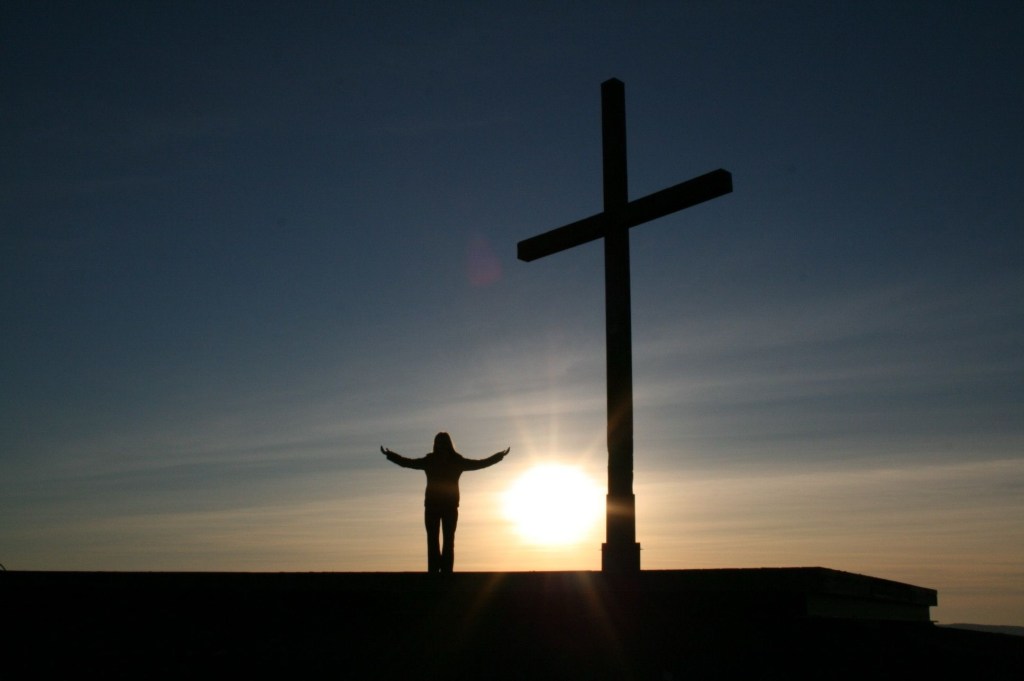
God works in mysterious ways. Instead of focusing on pent-up frustration, I turned on Spotify to listen to Christian music while reading the verse of the day from a Bible app as a starting point to studying a whole book or passages. This morning it’s Micah 6:8. “He (i.e, God) has told you, O man, what is good; and what does the LORD require of you but to do justice, and to love kindness, and to walk humbly with your God?”
Micah prophesied during the reigns of Jotham, Ahaz, and Hezekiah, all kings of Judah—a contemporary of Isaiah. It was a time of prosperity, and Micah denounced the wealthy for oppressing the poor and warned of God’s impending judgment (Micah 1:3-5). The northern kingdom had actually fallen during Micah’s ministry, in 722 BC, and Judah almost did as well (2 Kings 18-20).
Micah prophesied against the rulers and prophets of both Judah and Israel, who falsely claimed to speak from God (Micah 3). The highlight of Micah’s prophecy concerns the last days, the arrival of God’s kingdom (Micah 4:1-7; Isaiah 2:2-4; Romans 10:8-18), and Christ Jesus (Micah 5:2-5). Micah 6:6-8 reveals God’s heart and desire for His people: “With what shall I come before the LORD, and bow myself before God on high? Shall I come before Him with burnt offerings, with calves a year old? Will the LORD be pleased with thousands of rams, with ten thousands of rivers of oil? Shall I give my firstborn for my transgression, the fruit of my body for the sin of my soul?” “He has told you, O man, what is good; and what does the LORD require of you but to do justice, and to love kindness, and to walk humbly with your God?” (Micah 6:6-8)
God changes not. Micah 6:6-8 is precisely reflected in Hosea 6:6, which was quoted twice by Jesus Christ, first in Matthew 9:12-13, “Those who are well have no need of a physician, but those who are sick. Go and learn what this means: ‘I desire mercy, and not sacrifice.’ For I came not to call the righteous, but sinners.” Christ’s coming was to offer a second chance, a restoration to God.
The Bible states that everyone is born of Adam, born after Adam had fallen from the grace of God (Romans 5:12). Jesus Christ, therefore, is our only way back to God. He is the mediator of the New Covenant (Hebrews 9:11-12, 15; 12:22-24; Luke 22:19-20; 1 Corinthians 11:25). The Bible states, “For as in Adam all die, so also in Christ shall all be made alive (1 Corinthians 15:22).” That’s the essence of our Christian water baptism. We die to Adam and are alive in Jesus, rising out of the water a new person in Christ . But unless we acknowledge being sinners, then Christ’s calling or the Gospel makes no sense to us. And unless we truly have become a new person in Christ, then our water baptism does not mean a thing. Water baptism is just an expression of one’s testimony that the person now belongs to Jesus Christ.
The second time is in Matthew 12:6-8, “I tell you, something greater than the temple is here. And if you had known what this means, ‘I desire mercy, and not sacrifice,’ you would not have condemned the guiltless. For the Son of Man is Lord of the Sabbath.”
Jesus Christ is the true temple of God (Matthew 12:6; John 2:19, 21). Christ is the Head, and the church is His body (Colossians 1:18), built on the foundation of the apostles and prophets. Jesus Himself is the cornerstone, and by His death and resurrection, we Christians grow together into a holy temple in the Lord (Ephesians 2).
Yes, we Christians, the holy temple in the Lord, is greater than the Old Covenant Jerusalem temple. Hence, Jesus, in John 4 states, “Believe Me, the hour is coming when neither on this mountain nor in Jerusalem will you worship the Father. You worship what you do not know; we worship what we know, for salvation is from the Jews. But the hour is coming, and IS NOW HERE, when the true worshipers will worship the Father in spirit and truth, for the Father is seeking such people to worship Him. God is spirit, and those who worship Him must worship in spirit and truth.” (John 4:21-24)
What does it take to worship God in spirit and truth? Surely, it does not mean simply going to the Sunday worship service or a building where Christians supposedly gather for worship, but to walk the talk. Here’s Paul’s words regarding worship: “I appeal to you (i.e. the church) therefore, brothers, by the mercies of God, to present your bodies as a living sacrifice, holy and acceptable to God, which is your spiritual worship. Do not be conformed to this world, but be transformed by the renewal of your mind, that by testing you may discern what is the will of God, what is good and acceptable and perfect.” (Romans 12:1-2)
Let me be clear, Paul, by “your bodies” refers to the church. See Romans 12:5, “So we, though many, are one body in Christ, and individually members one of another.”
Christ is the Lord of the Sabbath—a declaration Jesus revealed about Himself, making known that He is the God of creation (see Matthew 12:8; Genesis 1:1-2:2). Yes, Genesis creation account isn’t about God’s narration of His creation of all things, though indeed He alone is the creator of all things (Psalm 33:6-9; Colossians 1:16-17). God in Genesis used creation language to reveal His creation of His people. Hence, Paul, in 2 Corinthians 4:6, quotes Genesis 1:3, to explain God’s Old Covenant vis-à-vis the New, and God’s Old Covenant people vis-à-vis the New, His Church.
John also did the same, quoting Genesis 1:3, and referring it to Jesus, the Word. He even used the same opening phrase in Genesis “in the beginning” to connect the two. See John 1:1-5, “In the beginning was the Word, and the Word was with God, and the Word was God. He was in the beginning with God. All things were made through Him, and without Him was not any thing made that was made. In Him was life, and the life was the light of men. The light shines in the darkness, and the darkness has not overcome it.”
God, through Christ Jesus, creates a new people for Himself, and we—the church—are God’s New Covenant people. (2 Corinthians 5:17-19) But have we truly learned from God’s Word?
- How is it that Christians are still enticed by the world and its riches, if we have known true riches is only with Jesus Christ?
- Have we Christians shown justice and mercy to our fellowmen?
- Have our pastors truly been speaking Christ’s Word? Are we worshipping God and Jesus Christ in truth and in spirit? Why is it there are a lot of nominal Christians?
- Have we been sharing the faith to our loved ones, fiancés, friends, and children? Why is it many times Christians fear men rather than God?
- And I have a lot more vented frustrations having seen Christianity in its present mode. Until when will a Christian truly walk by faith? Does everyone need to have a Damascus experience or a denial like that of Peter before walking truthfully with Jesus? Sadly, many have walked the way of Judas, denying Jesus because He doesn’t suit their expectation of the Christ.
Jesus Christ, without a doubt, has arrived. His kingdom is a present reality, though it isn’t of this world. When asked by the Pharisees when God’s kingdom would come, Jesus states, “The kingdom of God is not coming in ways that can be observed, nor will they say, ‘Look, here it is!’ or ‘There!’ for behold, the kingdom of God is in the midst of you.” (Luke 17:20-21)
The Bible states, “For Jesus must reign until He has put all His enemies under His feet. The last enemy to be destroyed is death” (1 Corinthians 15:25-26). Isn’t death destroyed already? If not, why are pastors saying in wakes, “Our Christian friend is now with the Lord Jesus Christ or in a better place?”
Christians have misunderstood the concept of death being destroyed. It doesn’t imply that Christians would cease to die physically. Instead, death is no longer an end to life, as Jesus states, “Truly I tell you, anyone who hears My word and believes Him who sent Me has eternal life and will not face judgment but has transcended death to life.” (John 5:24)
Here’s the proof from Scripture that “death has been swallowed up in victory” (1 Corinthians 15:54). The Bible, in 1 Corinthians 15:56 states, “The sting of death is sin, and the power of sin is the law.”
Do we still have the Jerusalem temple standing today? If not, how can the Mosaic Law now be observed? Didn’t Christ’s death make obsolete the Mosaic regulations of animal offerings? With the second and final destruction of the Jerusalem temple, Daniel’s visions of the end came to be fulfilled. Scripture states, “When the shattering of the power of the holy people comes to an end; all these things would be finished (Daniel 12:7)”. The Mosaic law is the power of the Old Testament people (Deuteronomy 7:6-11), and it has become obsolete, fulfilled in Christ Jesus (Matthew 5:17; Hebrews 9; Luke 24:25-26; 24:44). Jesus is the true Israel (Isaiah 49:3). Similarly then, we Christians are nobody before God except by faith in Christ Jesus, the mediator of the New Covenant.
Even Adam’s death no longer holds power over Christians. Paul, in Romans, explains, “Therefore, there is no condemnation for those in Christ Jesus. The law of the Spirit of life in Christ Jesus (i.e., the Gospel) has set you free from the law of sin and death (i.e., the law of Adam’s death [Genesis 2:16-17]). For what the law (i.e., the Mosaic law) could not accomplish because it was weakened by the flesh, God did. He condemned sin in the flesh by sending His own Son in the likeness of sinful flesh as a sin offering, so that the law’s requirement would be fulfilled in us who do not walk according to the flesh but according to the Spirit.” (Romans 8:1-4)
Christians, let us live by faith in Jesus Christ, then we shall see the workings of God’s kingdom. And in Him alone will we find peace, and not be frustrated. For Jesus Christ is the same yesterday, and today, and forever (Hebrews 13:8). Paul states, “Rejoice in the Lord always. I will say it again: Rejoice! Let your graciousness be known to everyone. The Lord is near. (Let me be clear, with Paul, Jesus is near, but now God’s with us [Matthew 1:23; Revelation 21:1-3].) Don’t worry about anything, but in everything, through prayer and petition with thanksgiving, present your requests to God. And the peace of God, which surpasses all understanding, will guard your hearts and minds in Christ Jesus.” (Philippians 4:4-7) Therefore, compared to Paul’s era, today’s Christians have the assurance of God’s peace. Unlike the beliefs and teachings of contemporary Christianity, the promises of Jesus are not delayed or long in coming; instead, they are a present reality.
Let us therefore turn our lament into praise. That’s how the psalms were written. That’s how prophets of the Old Testament comforted themselves. At the end of our laments, let us learn that God alone is our peace. Therefore, as Paul states, “If then you have been raised with Christ, seek the things that are above, where Christ is, seated at the right hand of God. Set your minds on things that are above, not on things that are on earth.” (Colossians 3:1-2)
All glory be to God and Jesus Christ alone!
Peter, in the words of Acts 3:6, declared, “I possess neither silver nor gold, but in the name of Jesus Christ, I offer you what I have.” Share this article freely, for you freely receive. Take note, underlines and highlights are clickable links for definitions or Bible references. Stay updated by heading to our about page and subscribe directly to receive notifications in your inbox. Blessings!

