Despite clear utterance from the Lord Jesus Christ that His return or parousia would be during the lifetime of the apostles, it has been rejected and denied by the futurists – actually, that includes the majority of professing Christians. See my blog “Confused Christianity” on Jesus’ assurance concerning His return.
One of the most often used arguments may be found through the writings of Luke, see Acts 1:9-11.
“And when He (Jesus Christ) had said these things, as they were looking on, He was lifted up, and a cloud took Him out of their sight. And while they were gazing into heaven as He went, behold, two men stood by them in white robes, and said, “Men of Galilee, why do you stand looking into heaven? This Jesus, who was taken up from you into heaven, will come in the same way as you saw Him go into heaven.””
They believe “Jesus returning in the same manner as He was taken” means a physical return. Was it?
First, let us see where Jesus was going at His ascension. See John 20:17.
“Jesus said to her (Mary), “Do not cling to me, for I have not yet ascended to the Father; but go to my brothers and say to them, ‘I am ascending to My Father and your Father, to My God and your God.’””
Jesus was ascending to His glory, to God the Father in heaven. Isn’t that where Jesus exactly told the disciples He was going? See John 14:2.
“In My Father’s house are many rooms. If it were not so, would I have told you that I go to prepare a place for you?”
Sometime after His ascension, Jesus Christ appeared to Stephen. See Acts 7:55-56.
“But he (Stephen), full of the Holy Spirit, gazed into heaven and saw the glory of God, and Jesus standing at the right hand of God. And he said, “Behold, I see the heavens opened, and the Son of Man standing at the right hand of God.””
In other words, after His ascension, Jesus Christ, now glorious, is at the right hand of God. Finally, Paul also said the same about Jesus after His ascension. See 1 Timothy 3:16.
“Great indeed, we confess, is the mystery of godliness: He (Jesus Christ) was manifested in the flesh, vindicated by the Spirit, seen by angels, proclaimed among the nations, believed on in the world, taken up in glory.”
Nowhere in Scripture would you find Jesus returning in the flesh, but with the cloud. Isn’t that what Luke wrote in Acts 1:9?
“And when He (Jesus Christ) had said these things, as they were looking on, He was lifted up, and a cloud took Him out of their sight.” (Acts 1:9)
Consequently, the angels were testifying about the imminent fulfillment of God’s kingdom and judgment as prophesied in Daniel 7:13-14.
““I saw in the night visions, and behold, with the clouds of heaven there came one like a son of man, and He came to the Ancient of Days and was presented before Him. And to Him was given dominion and glory and a kingdom, that all peoples, nations, and languages should serve him; his dominion is an everlasting dominion, which shall not pass away, and his kingdom one that shall not be destroyed.”
Incidentally, Jesus made it clear He wasn’t establishing a physical kingdom; see John 18:36.
“Jesus answered, “My kingdom is not of this world. If My kingdom were of this world, My servants would have been fighting, that I might not be delivered over to the Jews. But My kingdom is not from the world.””
Finally, Jesus said His kingdom cannot be observed but is present. See Luke 17:20-21.
“Being asked by the Pharisees when the kingdom of God would come, He (Jesus Christ) answered them, “The kingdom of God is not coming in ways that can be observed, nor will they say, ‘Look, here it is!’ or ‘There!’ for behold, the kingdom of God is in the midst of you.””
Aren’t futurists proclaiming the exact opposite of Jesus at His return and the conflicting realities of His kingdom?
Note: Futurist are those who insist and teach that Jesus’ Return is yet to come.
Blessings!
If you want to follow our journey of unlearning tradition and relearning Scripture and stay updated, you can head to our about page and subscribe directly to receive notifications in your inbox.
One of the major doctrines of the futurist camp has to do with the belief in a rapture. Futurists are those who supposed the Return of Jesus Christ is yet to happen. See my blog “Confused Christianity” for the futurist perspective. Again, as I have said in my previous blog (Delusions of Rebuilding the Temple) futurists are great storytellers, though having no valid biblical passages to support their claim. They are good at sensationalizing from nothing.
Now, the supposed “rapture” doctrine was taken from a verse found in the letter of Paul, see 1 Thessalonians 4:17.
“Then we who are alive, who are left, will be caught up together with them in the clouds to meet the Lord in the air, and so we will always be with the Lord.”
The translation “caught up together” is presented by the futurist camp as the rapture. Here is a summary of their storytelling, at least the most popular version of their narrative:
The rapture of 1 Thessalonians 4:17 would be succeeded by a period of Seven Years Tribulation, after which Christ Jesus together with the church would return. Without going any further in their storyline, I detected an error with their presentation.
The futurists also said only true Christians would be raptured, leaving nominal or professing Christians behind for a second chance to surrender to Christ.
Would any dare say Christians today are better and more faithful as compared to the apostles James, Peter, John, and the rest?
If indeed only the faithful ones would be raptured, why then was the apostle John enduring the tribulation and left behind? See Revelation 1:9-10.
“I, John, your brother and partner in the tribulation and the kingdom and the patient endurance that are in Jesus, was on the island called Patmos on account of the word of God and the testimony of Jesus. I was in the Spirit on the Lord’s day, and I heard behind me a loud voice like a trumpet”
Without a doubt, John claims he was already in the tribulation, yet he was not raptured to escape the tribulation as suggested by futurists.
John also said, “I was in the Spirit on the Lord’s Day”, literally referring to the Day “belonging to the Lord (Greek #2960)” – an adjective pertaining to the “Day of the Lord”. See 1 Thessalonians 5:2.
“For you yourselves are fully aware that the day of the Lord will come like a thief in the night.”
In other words, John was already in the tribulation, which Jesus Christ in Matthew 24 relates to His soon coming, an event preceding His Return, fulfilling His words concerning the Day of the Lord – God’s Judgment Day. See Matthew 24:15-21.
““So when you see the abomination of desolation spoken of by the prophet Daniel, standing in the holy place (let the reader understand), then let those who are in Judea flee to the mountains. Let the one who is on the housetop not go down to take what is in his house, and let the one who is in the field not turn back to take his cloak. And alas for women who are pregnant and for those who are nursing infants in those days! Pray that your flight may not be in winter or on a Sabbath. For then there will be great tribulation, such as has not been from the beginning of the world until now, no, and never will be.”
The reference to Daniel’s prophecy has to do with the destruction of Jerusalem and its temple. See “Delusions of Rebuilding the Temple” for perspective.
So what happened? John said the tribulation was happening, occurring in his days. He was suffering and exiled for his faith but not RAPTURED.
There are loose ends in the futurist storybook. Here is a guide from Scripture concerning prophetic teachings. See Deuteronomy 18:18-22.
“I (God) will raise up for them a prophet like you from among their brothers. And I will put My words in His (Jesus Christ) mouth, and He shall speak to them all that I command Him. And whoever will not listen to My words that He shall speak in My name, I Myself will require it of him. But the prophet who presumes to speak a word in My name that I have not commanded him to speak, or who speaks in the name of other gods, that same prophet shall die.’ And if you say in your heart, ‘How may we know the word that the LORD has not spoken?’— when a prophet speaks in the name of the LORD, if the word does not come to pass or come true, that is a word that the LORD has not spoken; the prophet has spoken it presumptuously. You need not be afraid of him.”
It is easy to tell a wonderful story that is nice to hear and comforting to the heart. But if it isn’t founded on the truths of the Scripture, then it should be better not to fall into such hallucinations and embrace it as truth.
Blessings!
If you want to follow our journey of unlearning tradition and relearning Scripture and stay updated, you can head to our about page and subscribe directly to receive notifications in your inbox.
Disclaimer: This is not a photo of the destroyed Second Temple
The pandemic triggered a lot of delusions from among the Futurist camp – the belief that Jesus is yet to return in the future. Yes, Jesus promised His disciples He was coming in their generation. See my previous blog “Confused Christianity” for a better perspective on the topic.
Futurists believe the Second Coming of Jesus Christ would be preceded by a rebuilding of the Jewish Temple. Futurists are great storytellers on the said topic. Novels and movies have been made based on their narrative. However, there is no valid biblical passage to support such a claim. Nowhere in the Bible did Scripture promise the rebuilding of a Third Jewish Temple.
On the contrary, Jesus Christ spoke of the destruction of the Second Jewish Temple (Herod’s temple), and it came to pass in 70 A.D. See Matthew 24:1-2.
“Jesus left the temple and was going away, when His disciples came to point out to Him the buildings of the temple. But He answered them, “You see all these, do you not? Truly, I say to you, there will not be left here one stone upon another that will not be thrown down.””
Jesus actually first spoke of its destruction in Matthew 23:36-38.
“Truly, I say to you, all these things will come upon this generation. “O Jerusalem, Jerusalem, the city that kills the prophets and stones those who are sent to it! How often would I have gathered your children together as a hen gathers her brood under her wings, and you were not willing! See, your house is left to you desolate.”
By “this generation”, Jesus points to the Jewish generation who saw and crucified Him. See Isaiah 64:10-11 for clarity about the “house” in Matthew 23:38.
Your holy cities have become a wilderness; Zion has become a wilderness, Jerusalem a desolation.Our holy and beautiful house, where our fathers praised you, has been burned by fire, and all our pleasant places have become ruins.
By “house”, Jesus Christ prophecied about the desolation of the temple. Hence, His mention of its destruction in Matthew 24:2 was to reiterate the fact that truly the temple would be destroyed for the second and final time.
The disciples, having heard Jesus saying twice “the temple would be destroyed”, understood its implication, so they asked:
“As He (Jesus Christ) sat on the Mount of Olives, the disciples came to Him privately, saying, “Tell us, when will these things be, and what will be the sign of your coming and of the end of the age?”” (Mat 24:3)
The disciples were able to connect the dots. Temple destruction means “The Return of Christ” and “The End of the Age”. Let me repeat: “IT’S THE END OF THE AGE, NOT THE WORLD.”
The Vine’s Complete Expository Dictionary of the New Testament defined “age, aion” Greek #165 “an age or era”. In other words, it’s the end of an era – the Old Covenant Israel.
It’s not only the apostles who understood that “temple destroyed = second coming = end of the age.” So do generations of Christians after the catastrophic event in Jerusalem. See the quotation about “Julian the Apostate’s attempt to rebuild the temple” below:
The Church Fathers embellished the story in various ways adding that the Jews received Julian’s proposal enthusiastically, coming in thousands to the Temple Mount with stones in their hands, but when the first stones were laid the Jews were threatened by earthquakes and hurricanes, and finally driven off by a heavenly fire and specter of Christ (Gregory of Nazianz, Contra Julianum, Oratio, no. 4, 2:149–50; Socrates, Historia Ecclesiastica, 3:196; Sozomenus, Historia Ecclesiastica, 5:214–5). Two important facts may be gathered from these sources: (1) Julian wished to rebuild the Temple to strengthen paganism against Christianity (he saw Judaism and paganism as having sacrificial rites in common); (2) he wished to refute Jesus’ prophecy concerning the Temple (Luke 21:6; Matt. 24:2).
If Julian the Apostate had succeeded in his effort to rebuild the Jewish temple, then Jesus would’ve failed to fulfill His promise of return. Jesus Christ, about His judgment against Old Covenant Israel, said:
““So when you see the abomination of desolation spoken of by the prophet Daniel, standing in the holy place (let the reader understand), then let those who are in Judea flee to the mountains. Let the one who is on the housetop not go down to take what is in his house, and let the one who is in the field not turn back to take his cloak. And alas for women who are pregnant and for those who are nursing infants in those days! Pray that your flight may not be in winter or on a Sabbath. For then there will be great tribulation, such as has not been from the beginning of the world until now, no, and never will be.”(Mat 24:15-21)
One implied meaning was that the Jewish temple would never be rebuilt ‘cause its desolation wouldn’t be repeated. No surprise, the LORD spoke the same truth through Isaiah the prophet. See Isaiah 25:1-2.
“O LORD, you are my God; I will exalt you; I will praise Your name, for You have done wonderful things, plans formed of old, faithful and sure. For You have made the city a heap, the fortified city a ruin; the foreigners’ palace is a city no more; it will never be rebuilt.”
Remember that Scripture originally had no chapter or verse division. Hence, Isaiah 24 & 25 are in the same context. God was speaking of His judgment. For reference and clarity to the “city” mentioned in Isaiah 25:2, see Isaiah 24:5-12 below. Take note that “earth” should properly be translated as “land, Hebrew #776,” the land of Israel with whom God gave the Mosaic Law.
“The earth lies defiled under its inhabitants; for they have transgressed the laws, violated the statutes, broken the everlasting covenant. Therefore a curse devours the earth, and its inhabitants suffer for their guilt; therefore the inhabitants of the earth are scorched, and few men are left. The wine mourns, the vine languishes, all the merry-hearted sigh. The mirth of the tambourines is stilled, the noise of the jubilant has ceased, the mirth of the lyre is stilled. No more do they drink wine with singing; strong drink is bitter to those who drink it. The wasted city is broken down; every house is shut up so that none can enter. There is an outcry in the streets for lack of wine; all joy has grown dark; the gladness of the earth is banished. Desolation is left in the city; the gates are battered into ruins.” (Isaiah 24:5-12)
The Bible is unified in saying, “Old Covenant Jerusalem and its temple will be destroyed, and not be rebuilt.” Amazing to think: Julian the Apostate, despite his enormous power and authority as emperor of Rome, failed to rebuild a Third Jewish Temple. However, the Muslims successfully built the Dome of Rock on the precise site of the former temple.
In conclusion, let us see John’s story concerning Jesus’ words about temple. See John 2:19-22.
“Jesus answered them, “Destroy this temple, and in three days I will raise it up.” The Jews then said, “It has taken forty-six years to build this temple, and will you raise it up in three days?” But He was speaking about the temple of His body. When therefore He was raised from the dead, His disciples remembered that He had said this, and they believed the Scripture and the word that Jesus had spoken.”
There is no need for a rebuilt temple. The essence of the temple was to signify God’s presence with Israel. But with the New Covenant, God’s dwelling place is with His people. See 2 Corinthians 6:16.
“What agreement has the temple of God with idols? For we (Christians) are the temple of the living God; as God said, “I will make my dwelling among them and walk among them, and I will be their God, and they shall be my people.” (2Co 6:16)
See also 1 Peter 2:4-5.
“As you come to Him (Jesus Christ), a living stone rejected by men but in the sight of God chosen and precious, you yourselves like living stones are being built up as a spiritual house, to be a holy priesthood, to offer spiritual sacrifices acceptable to God through Jesus Christ.”
It is our prayer that everyone would abide in the words of Christ, discerning truth from myths.
“So Jesus said to the Jews who had believed Him, “If you abide in My word, you are truly My disciples, and you will know the truth, and the truth will set you free.”” (Joh 8:31-32)
Blessings!
If you want to follow our journey of unlearning tradition and relearning Scripture and stay updated, you can head to our about page and subscribe directly to receive notifications in your inbox.
Without a doubt, 21st-century Christianity comes in many shapes and forms. Christians differ in doctrines, but they seem to be unified in believing that the return of Jesus Christ is still in the future, though it has been millennia since Jesus promised His apostles that He would be coming in their generation. See Matthew 16:27-28.
“For the Son of Man is going to come with His angels in the glory of His Father, and then He will repay each person according to what he has done. Truly, I say to you, there are some standing here who will not taste death until they see the Son of Man coming in his kingdom.””
The synoptic Gospels – Matthew, Mark, & Luke – have the same assurance concerning the imminent return of Christ:
“And He (Jesus Christ) said to them (apostles), “Truly, I say to you, there are some standing here who will not taste death until they see the kingdom of God after it has come with power.”” (Mark 9:1)
“For whoever is ashamed of Me (Jesus Christ) and of My words, of him will the Son of Man be ashamed when He comes in His glory and the glory of the Father and of the holy angels. But I tell you truly, there are some standing here who will not taste death until they see the kingdom of God.”” (Luke 9:26-27)
Not only that, Jesus Christ sending out the twelve apostles, instructing them on His message, said, “And proclaim as you go, saying, ‘The kingdom of heaven is at hand.’” (Matthew 10:7)
“At hand” in the original Greek language means “near,” and near cannot by any means be thousands of years and continuing, as suggested by the Futurists. Jesus Christ did not just give them the message to proclaim, but He reinforced the message with the assurance that it was indeed occurring soon. See Matthew 10:23.
“When they persecute you (the apostles) in one town, flee to the next, for truly, I say to you, you will not have gone through all the towns of Israel before the Son of Man comes.”
As I researched the validity of Jesus’ words, it’s sad, actually disgusting, to find known Bible scholars saying, “No, Jesus was confused or hallucinating when He uttered those words.” Some dismissed the passages saying, “There must be another meaning for that, but we just have to find out.”
Funny that for as long as the passages or verses are convenient to their theological position, they adhere to the Words of Christ, but if it doesn’t, then it’s excuses after excuses. Scripture does not need affirmation from men; rather, the Bible is the dispenser of truth because it is the Word of God.
One of the key disciplines in interpreting Scripture involves recognizing “time statements.” However, Futurists often overlook these time statements in the Bible, particularly in the New Testament, and instead suggest that they refer to the future. It’s important to remember that what the apostles considered “the future” is no longer future to us today.
Hence, statements like “this generation” in Matthew 24:34 no longer make an impact on the readers, for time statements have been disregarded. See Matthew 24:29-34.
“29 Immediately after the tribulation of those days the sun will be darkened, and the moon will not give its light, and the stars will fall from heaven, and the powers of the heavens will be shaken. 30 Then will appear in heaven the sign of the Son of Man, and then all the tribes of the earth will mourn, and they will see the Son of Man coming on the clouds of heaven with power and great glory. 31 And He will send out His angels with a loud trumpet call, and they will gather His elect from the four winds, from one end of heaven to the other. 32 “From the fig tree learn its lesson: as soon as its branch becomes tender and puts out its leaves, you know that summer is near. 33 So also, when you see all these things, you know that He is near, at the very gates. 34 Truly, I say to you, this generation will not pass away until all these things take place.
So some have suggested “this generation” refers to the generation who saw the literal signs of Matthew 24:29-34. Yet, they miss out on John’s confession in Revelation that he was already in tribulation. See Revelation 1:9.
“I, John, your brother and partner in the tribulation and the kingdom and the patient endurance that are in Jesus, was on the island called Patmos on account of the word of God and the testimony of Jesus.”
Scripture is a unity. The apostles’ writings cannot be different from the Words of Jesus found in the Gospels, the Book of Acts, or the Book of Revelation. Jesus’ words have their foundation in the Old Testament Scripture. The entire Bible is a cohesive revelation concerning the declaration and fulfillment of God’s words.
See Luke 24:44.
Then He (Jesus Christ) said to them (The disciples), “These are My words that I spoke to you while I was still with you, that everything written about Me in the Law of Moses and the Prophets and the Psalms must be fulfilled.”
In recent years, we have witnessed the rise of fake news online. Most people now get their news from the web, particularly from platforms like Facebook and YouTube. Unfortunately, fake news spreads easily because many individuals click to watch or read without considering the source or the intent of the uploader or poster.
Even if a Facebook post or YouTube video contains factual information, ignoring the date it was published can severely affect its relevance today. The same principle applies when reading and studying the Bible. It is essential to recognize the audience’s relevance, the timing of statements, and their historical accuracy. Failing to do so can lead to misinterpretations of Scripture, whether by inexperienced readers or poorly informed pastors.
Jesus Christ warned, “Can a blind man lead a blind man? Will they not both fall into a pit?” (Luke 6:39)
Find someone who can teach you the disciplines of studying Scripture. Avoid using human-tailored Bible study materials, as they often reflect human influence. It’s important to recognize that even within different Bible translations, traces of human interpretation can be found. Let me be clear: the Bible itself is perfect, infallible, and without error; the issues arise with the translations.
You don’t need to be a scholar of Greek, Hebrew, or Aramaic, but it is beneficial to read the Bible by comparing different translations. Additionally, learning to use language tools, such as lexicons, is essential for in-depth Bible study. There are many free lexicon tools available online or for download. You just need to find someone knowledgeable to guide you in using these tools effectively.
It’s never too late to start studying Scripture and practicing proper exegesis. Ultimately, Scripture reveals truths about salvation that extend beyond our physical needs and concerns, addressing both our current lives and eternity. Don’t let yourself become part of confused Christianity.
Peter, in the words of Acts 3:6, declared, “I possess neither silver nor gold, but in the name of Jesus Christ, I offer you what I have.” Share this article freely, for you freely receive. Take note, underlines and highlights are clickable links for definitions or Bible references. Stay updated by heading to our about page and subscribe directly to receive notifications in your inbox. Blessing!
I saw a YouTube video posting saying “Jesus is coming, Be ready,” but wait, how did he know? Didn’t they also claim that no one can know the day or the hour?
Like everyone else, I came to faith embracing the same teachings and declarations. But in my twenty-one years of reading and studying the Bible, I have found more contradictions than truths with their prevailing teachings.
Can we Christians simply ignore statements of Jesus Christ concerning His return and say otherwise? Look and see:
“For the Son of Man is going to come with His angels in the glory of His Father, and then He will repay each person according to what he has done. Truly, I say to you, there are some standing here who will not taste death until they see the Son of Man coming in His kingdom.””Matthew 16:27-28
“And He (Jesus Christ) said to them (Jesus’ immediate audience including the apostles), “Truly, I say to you, there are some standing here who will not taste death until they see the kingdom of God after it has come with power.””Mark 9:1
“For whoever is ashamed of Me (Jesus Christ) and of My words, of him will the Son of Man be ashamed when He comes in His glory and the glory of the Father and of the holy angels. But I tell you truly, there are some standing here who will not taste death until they see the kingdom of God.””Luke 9:26-27
“When they persecute you (the apostles) in one town, flee to the next, for truly, I say to you (the apostles), you will not have gone through all the towns of Israel before the Son of Man comes.”Matthew 10:23
A lot of Christians may have thought of the same thing before, during, and after the First World War, and again with the second one, that Jesus is coming soon. Yet, we knew nothing like what they had claimed happened. Sad to say, it was precisely due to such failed declarations that challenges to the Christian faith have increased.
We have seen similar trends happening again and again. Young people would join a Christian fellowship or Bible study group, excitedly seeking the truth, but after a while, a lot would walk away in search of true Scriptural teachings. Many would find none, so they gave up the search, turning cold and simply becoming attendee Christians. Some would only go by practice, meeting together with friends but not necessarily truthfully seeking the truth. Then as they grow older, when worries and challenges of life start to confront them, many would become like any of the first soils in the parable of Jesus Christ (Matthew 13:18-23).
Our Christian mission is to declare the message of the kingdom, not to impose millennia-old traditions that have no solid foundation in Scripture. In this pandemic, once more, many are interested to know what truly lies ahead. Hence, we see and hear pulpit messages and fellowship gatherings focusing on the topic of eschatology – the doctrine of the last things.
Funny, a lot also claim that the Jewish temple would be rebuilt for a third time. May I ask where in the Bible speaks of a third rebuilt Jewish Temple?
In biblical history, Solomon built the Jewish temple which was destroyed by the Babylonians in 586 B.C. Seventy years after the exile of the Jews (Judah, the Southern kingdom), the temple was rebuilt during the time of Nehemiah and Ezra. It came about due to God’s promise of return and rebuilding by the Jewish people found in the Book of Jeremiah and Daniel. However, in the same vision shown to Daniel regarding the rebuilding, a second another destruction, a final destruction, was also announced (Daniel 9).
Herod the Great worked on the expansion and beautification of the second temple. This is the same temple during the time of Jesus’ earthly ministry and those of the apostles. And Jesus Christ spoke of its destruction, affirming therefore the vision and prophecy of Daniel in all three Synoptic Gospels of the Bible – Matthew 24, Mark 13, and Luke 21.
In Revelation, John saw the vision and the reality of the Holy City and the New Heavenly Jerusalem (Revelation 21). This is misrepresented and missing in the modern teaching of the Bible.
One of the primary disciplines in studying the Bible is to recognize audience relevance, time statements, and the context of the passage. That is violated in the presentation of modern preachers and teachers of the Bible.
Listen to the words of Jesus Christ, see Matthew 15:12-14.
“Then the disciples came and said to Him (Jesus Christ), “Do you know that the Pharisees were offended when they heard this saying?” He answered, “Every plant that My heavenly Father has not planted will be rooted up. Let them alone; they are blind guides. And if the blind lead the blind, both will fall into a pit.””
Do your reading of the Scripture. Don’t just listen to the preaching or teaching of a pastor simply because he is popular or because it is the popular teaching. Beware that when Jesus Christ came teaching and preaching, many found His teaching new and strange ‘cause it was not according to the popular teachings of His time.
“And they were all amazed, so that they questioned among themselves, saying, “What is this? A new teaching with authority! He commands even the unclean spirits, and they obey Him (Jesus Christ).””Mark 1:27
“And they took him (the apostle Paul) and brought him to the Areopagus, saying, “May we know what this new teaching is that you are presenting?”Acts 17:19
“Jesus said these things in the synagogue, as He taught at Capernaum. When many of His disciples heard it, they said, “This is a hard saying; who can listen to it?”“John 6:59-60
Check for yourselves the truthful teachings of the Scripture. Learn to discern truthful teaching of the Bible from man-invented ideas misquoting Scripture. Do not be afraid to challenge conventional Christian ideas or teachings if Scripture proves otherwise.
Remember the words of Jesus Christ.
““Enter by the narrow gate. For the gate is wide and the way is easy that leads to destruction, and those who enter by it are many. For the gate is narrow and the way is hard that leads to life, and those who find it are few.”Matthew 7:13-14
If you want to follow our journey of unlearning tradition and relearning Scripture, you can stay updated by heading to our about page and subscribe directly to receive notifications in your inbox.
The Lord Jesus Christ spent three years calling disciples to Himself. He ate, slept, and taught them the truths of the Bible. When the opportunity arose, He cautioned against living double lives and encouraged them to trust His Word and change for the glory of God. Nowhere in Scripture did He teach the disciples to enrich themselves with worldly goods but to be rich with treasures in heaven.
Many fail to understand that discipleship cannot be done en masse without sacrificing the truths of the Scripture. Certain discipline needs to be done first before truthful discipleship can ensue. Successful disciples are not attained by numbers, nor is it by water baptism; rather, it’s only when one’s life has been transformed for Christ. This is the ultimate goal of discipleship.
“Do not be unequally yoked with unbelievers. For what partnership has righteousness with lawlessness? Or what fellowship has light with darkness? What accord has Christ with Belial? Or what portion does a believer share with an unbeliever? What agreement has the temple of God with idols? For we are the temple of the living God; as God said, “I will make My dwelling among them and walk among them, and I will be their God, and they shall be My people. Therefore go out from their midst, and be separate from them, says the Lord, and touch no unclean thing; then I will welcome you, and I will be a Father to you, and you shall be sons and daughters to Me, says the Lord Almighty.”” 2Co 6:14-18
“I wrote to you in my letter not to associate with sexually immoral people— not at all meaning the sexually immoral of this world, or the greedy and swindlers, or idolaters, since then you would need to go out of the world. But now I am writing to you not to associate with anyone who bears the name of brother if he is guilty of sexual immorality or greed, or is an idolater, reviler, drunkard, or swindler—not even to eat with such a one. For what have I to do with judging outsiders? Is it not those inside the church whom you are to judge? God judges those outside. “Purge the evil person from among you.”” 1Co 5:9-13
The scriptures above explained one crucial discipline that needed to be learned and done. But we have double the problem if the entity supposedly engaging in discipleship was already compromised. Would anyone sincerely deny this truth? The invitation of Jesus Christ is clear, so He said “Come, follow Me.”
True discipleship then begins and ends with the person following Jesus Christ. This involves one’s full commitment to the word of God, notwithstanding its demands.
“So Jesus said to the Jews who had believed Him, “If you abide in My word, you are truly My disciples, and you will know the truth, and the truth will set you free.” John 8:31-32
If you want to follow our journey of unlearning tradition and relearning Scripture, you can stay updated by heading to our about page and subscribe directly to receive notifications in your inbox.
The pandemic has claimed many lives. A lot of questions arise with the passing of a person. We probably have heard sermons concerning the afterlife. I was in a similar circumstance when my only son passed away decades ago. I also have my questions. What happens after death?
Death has always been a mystery, though some may have tried to figure out the answer through research and experiments. Yet, the only source for answer should be from the Giver of Life Himself – God eternal.
Just as I have said earlier, a lot of sermons have focused on the topic of the afterlife to provide hope and assurance. I have heard of sermons on the topic as I attended funeral or necrological services. Yes, all of them were right to say the hope of eternity is in Christ alone. But the details on when and how somehow differs.
Since the passing of my son, I have a particular interest in the topic of death and life. I initially came to faith in Christ Jesus simply for the selfish reason of wanting to see him again. But with the years of seminary training, study, and teaching of the Bible, the Lord Jesus Christ graciously opened my eyes and mind to understand His Word.
Christians, at the end of our physical journey, do not end up in soul sleep but have continued. For Jesus Christ said:
“Jesus said to her, ‘I am the resurrection and the life. Whoever believes in Me, though he die, yet shall he live, and everyone who lives and believes in Me shall never die. Do you believe this?’” John 11:25-26
Obviously, in verse 26, Jesus Christ wasn’t referring to the continuance of physical life but life eternal with Him. None of the apostles remained alive physically though they believed in Christ Jesus. No Christian since the onset of Christianity remained physically alive forever. Without a doubt, Jesus Christ was/is true and faithful to His Word and promises – “everyone who lives and believes in Him shall never die”. Therefore, Christians need not wait for a future resurrection. Again Jesus Christ said:
“Truly, truly, I say to you, whoever hears My word and believes Him who sent Me has eternal life. He does not come into judgment, but has passed from death to life.” John 5:24
The Greek word for “Christian or Christians, Strong #G5546” was used only three times in the New Testament – Acts 11:26, Acts 26:28 and 1 Peter 4:16, “Yet if anyone suffers as a Christian, let him not be ashamed, but let him glorify God in that name.”
The Strong’s Greek definition for the noun “Christian” literally means “follower of Christ”. The apostle Peter clearly taught a Christian person ought to glorify God in that name – follower of Christ. It is therefore important to know the Bible’s definition of a Christian. Go, read and study the Word of God. Do not allow yourself to be trap in the loosely interpreted, used and application of the word “Christian”.
The true blessings of Christ Jesus rest in the authority, truthfulness and validity of His Words.
If you want to follow our journey of unlearning tradition and relearning Scripture, you can stay updated by heading to our about page and subscribe directly to receive notifications in your inbox.
Christendom has two important annual occasions – the celebration of Christmas and the remembering of the Holy Week. It is widely acknowledged that the month of December, a winter time in Bethlehem (December to February), cannot be the time of Christ’s incarnate birth, given that Scripture spoke of shepherds in the field at the time of His birth (Luke 2:4-16). Let me be very clear here: The incarnate birth of Jesus Christ is factual and historical but the celebration of Christmas in December is more highly atradition.
It must have been a little over a month since I last wrote a blog. I came out writing this blog since our calendars once again reminds us of the supposed Holy Week. The idea of the Holy Week was never mentioned in the New Testament Scripture, particularly the Book of Acts, written by Luke narrating the beginning and events of the early church. Here is the reason the Holy Week was never mentioned in Scripture:
Holy Week, in the Christian church, the week between Palm Sunday and Easter, observed with special solemnity as a time of devotion to the Passion of Jesus Christ. In the Greek and Roman liturgical books, it is called the Great Week because great deeds were done by God during this week. The name Holy Week was used in the 4th century bySt. Athanasius, bishopof Alexandria, and St. Epiphanius of Constantia. Originally, onlyGood FridayandHoly Saturdaywere observed as holy days. Later, Wednesday was added as the day on whichJudasplotted to betray Jesus, and by the beginning of the 3rd century the other days of the week had been added. The pre-Nicene church concentrated its attention on the celebration of one great feast, the Christian Passover, on the night between Saturday and Easter Sunday morning. By the later 4th century the practice had begun of separating the various events and commemorating them on the days of the week on which they occurred: Judas’s betrayal and the institution of the Eucharist on Maundy Thursday; the Passion and death of Christ on Good Friday; his burial on Saturday; and his Resurrection on Easter Sunday.
As you can see, the observance of the Holy Week was a tradition that began in the 4th century, hundreds of years after the inception of Christianity. See Matthew 12:40. Jesus Christ said:
For just as Jonah was three days and three nights in the belly of the great fish, so will the Son of Man be three days and three nights in the heart of the earth.
See also John 2:18-22; Matthew 16:21; Matthew 17:22-23 and many more. Jesus Christ, the last and great Prophet of God (Matthew 13:57; Acts 3:19-22), proclaimed that He would be three days and three nights buried on the ground. How then can He had died on a Friday, buried on a Saturday and resurrected on a Sunday? Something obviously is wrong or misleading, don’t you think? See also information below.
Fixing the date on which the Resurrection of Jesus was to be observed and celebrated triggered a major controversy in early Christianity in which an Eastern and a Western position can be distinguished. The dispute, known as the Paschal controversies, was not definitively resolved until the 8th century. In Asia Minor, Christians observed the day of the Crucifixion on the same day that Jews celebrated the Passover offering—that is, on the 14th day of the first full moon of spring, 14 Nisan (seeJewish calendar). The Resurrection, then, was observed two days later, on 16 Nisan, regardless of the day of the week. In the West the Resurrection of Jesus was celebrated on the first day of the week, Sunday, when Jesus had risen from the dead. Consequently, Easter was always celebrated on the first Sunday after the 14th day of the month of Nisan. Increasingly, the churches opted for the Sunday celebration, and the Quartodecimans (“14th day” proponents) remained a minority. The Council of Nicaea in 325 decreed that Easter should be observed on the first Sunday following the first full moon after the spring equinox (March 21). Easter, therefore, can fall on any Sunday between March 22 and April 25.
So like the Christmas celebration, the observation of the Holy Week, specifically regarding the day of resurrection, traditionally understood as a Sunday, also was/is more of tradition rather than Scripture.
Sunday, the first day of the week. It is regarded by most Christians as the Lord’s Day, or the weekly memorial of Jesus Christ’s Resurrection from the dead. The practice of Christians gathering together for worship on Sunday dates back to apostolic times, but details of the actual development of the custom are not clear. Verse 10 of the first chapter of the Revelation to John (mid-1st century AD) mentions the “Lord’s Day”; this was subsequently interpreted by most commentators as a reference to Sunday.St. Justin Martyr(c. 100–c. 165), philosopher and defender of the Christian faith, in his writings described the Christians gathered together for worship on the Lord’s Day: the Gospels or the Old Testament (Hebrew Bible) was read, the presiding minister preached a sermon, and the group prayed together and celebrated the Lord’s Supper.
The Roman emperor Constantine I (died 337), a convert to Christianity, introduced the first civil legislation concerning Sunday in 321, when he decreed that all work should cease on that day, except that farmers could work if necessary. That law, aimed at providing time for worship, was followed later in the same century and in subsequent centuries by further restrictions on Sunday activities.
Make no mistake that the resurrection of Jesus Christ was/is the centerpiece of our faith. See 1 Corinthians 15:12-20; the apostle Paul explaining the truth concerning resurrection said:
12Now if Christ is proclaimed as raised from the dead, how can some of you say that there is no resurrection of the dead? 13But if there is no resurrection of the dead, then not even Christ has been raised. 14And if Christ has not been raised, then our preaching is in vain and your faith is in vain. 15We are even found to be misrepresenting God, because we testified about God that He raised Christ, whom He did not raise if it is true that the dead are not raised. 16For if the dead are not raised, not even Christ has been raised. 17And if Christ has not been raised, your faith is futile and you are still in your sins. 18Then those also who have fallen asleep in Christ have perished. 19If in Christ we have hope in this life only, we are of all people most to be pitied. 20But in fact Christ has been raised from the dead, the firstfruits of those who have fallen asleep.
Let me be very clear here. The death and resurrection of Jesus Christ are factual and historical events clearly authenticated by the Bible and is without error. But the day of resurrection is more of a tradition. You may want to read my blog entitled “Small Details May Say A Lot (The True Sabbath Rest)” for further explanation on the topic of the resurrection day and more. But the point of this blog is to align our understanding of Christ’s Resurrection with that of the Bible. Christ’s Resurrection occurred in fulfillment of the Jewish Feast of Firstfruits, (1 Corinthians 15:20). See Leviticus 23:9-11.
9And the LORD spoke to Moses, saying, 10“Speak to the people of Israel and say to them, When you come into the land that I give you and reap its harvest, you shall bring the sheaf of the firstfruits of your harvest to the priest, 11and he shall wave the sheaf before the LORD, so that you may be accepted. On the day after the Sabbath the priest shall wave it.
Christ’s redemptive work, His death and resurrection, should be understood through the pages of the Old Testament Scripture. See Luke 24:13-27.
13That very day [the day of Christ’s resurrection] two of them were going to a village named Emmaus, about seven miles from Jerusalem, 14and they were talking with each other about all these things that had happened. 15While they were talking and discussing together, Jesus himself drew near and went with them. 16But their eyes were kept from recognizing Him. 17And He said to them, “What is this conversation that you are holding with each other as you walk?” And they stood still, looking sad. 18Then one of them, named Cleopas, answered Him, “Are you the only visitor to Jerusalem who does not know the things that have happened there in these days?” 19And He said to them, “What things?” And they said to Him, “Concerning Jesus of Nazareth, a man who was a prophet mighty in deed and word before God and all the people, 20and how our chief priests and rulers delivered Him up to be condemned to death, and crucified Him. 21But we had hoped that He was the one to redeem Israel. Yes, and besides all this, it is now the third day since these things happened.22Moreover, some women of our company amazed us. They were at the tomb early in the morning, 23and when they did not find His body, they came back saying that they had even seen a vision of angels, who said that He was alive. 24Some of those who were with us went to the tomb and found it just as the women had said, but Him they did not see.”25And He said to them, “O foolish ones, and slow of heart to believe all that the prophets have spoken! 26Was it not necessary that the Christ should suffer these things and enter into His glory?” 27And beginning with Moses and all the Prophets, He interpreted to them in all the Scriptures the things concerning Himself.
See also Luke 24:44-48.
44Then He [Jesus] said to them [the apostles], “These are My words that I spoke to you while I was still with you, that everything written about Me in the Law of Moses and the Prophets and the Psalms must be fulfilled.”45Then He opened their minds to understand the Scriptures, 46and said to them, “Thus it is written, that the Christ should suffer and on the third day rise from the dead, 47and that repentance for the forgiveness of sins should be proclaimed in His name to all nations, beginning from Jerusalem. 48You are witnesses of these things.
Aren’t the apostles witnessed of the New Testament Scripture, which we believe, proclaim and teach? Sadly, it is quite evident that through the centuries, the Christian doctrine have been diluted with tradition, which has been passed down and repeatedly been taught for millennia now. Shouldn’t it be re-examined, corrected and restored to its original narrative – that is, in fulfillment of the Law and the Prophets?
Lord willing, in the next few blogs, we hope to go back to the Bible, to unlearn tradition and relearn Scripture. Let us learn from the Bereans: “they received the Word with all eagerness, examining the Scriptures daily to see if what they have been told is true”.
“There is a way that seems right to a man, but its end is the way to death.” (Proverbs 14:12 & 16:25)
Blessings!
If you want to follow our journey of unlearning tradition and relearning Scripture, you can stay updated by heading to our about page and subscribe directly to receive notifications in your inbox.
Utopia – an imagined place or state of things in which everything is perfect.
I have previously written about my conversion to Christianity on my blog entitled “Regarding Wilmer”. A few days after my only son was buried, a Bible study was started at our home and continued every Monday evening, which lasted for two years. Since then, it has become my habit to read the Bible at every opportunity available to me. I must have read the whole Bible five times over and over – from Genesis to Revelation – to the point that I have practically memorized Scripture. I can easily quote Scriptural verses together with their chapter and verse number. Two pastors handled our Bible study, the first for six months, then I was entrusted to his pastor-brother, who mentored me one-on-one, so altogether two years. I must say, the two, of course, coupled with my regular reading of the Bible, were instrumental in my rapid growth in Christianity. I was then encouraged to study in a seminary for further equipping.
I had doubts about the idea of going to school again, considering my age and time limitation, since I also have to provide for my family, with two daughters still studying. After my conversion to Christianity, I have been so passionate about the faith, and wanting to learn more, so I would eagerly listen and watch every available Christian program, both on radio and television. It was then that I realized that there are a lot of different explanations for a single verse of the Scripture. I knew in my heart that God could not have meant different meanings for His Word, therefore some of the explanations must be erroneous but which one? So I decided to enter seminary study even just for a subject every semester. To make the long story short, I eventually entered full-time study four years later after my initial enrollment as a part-time student.
I remember the day we first arrived at the seminary premises, my youngest daughter – only nine years old at that time – uttered the word “Heaven”. She seemed to have a sense of euphoria knowing that we would be residing in the seminary until my graduation. But the feeling of euphoria was short-lived. We soon realized that’s not true. Looking back, I thank God my family didn’t backslide on their faith, though I don’t mean to say we had a totally bad experience in the seminary. Just as I have said in my previous blog, most of my professors and seminary staff have been kind and a blessing to us.
God truly is amazing. Our experience in the seminary prepared us for our next journey – my pastorate work. But this time, I was armed with my experience and reminded by the Words of Jesus, “Behold, I am sending you out as sheep in the midst of wolves, so be wise as serpents and innocent as doves (Matthew 10:16).”
I have been out of the organized Christian congregation and organizations for more than six years now. Together with my wife and the support of my two daughters, we have been joyfully doing Bible studies in our own small and little way. Gone are the hurts and sad experiences of yesteryears. But as you can see from our about me webpage, we have gone independent and our ministry would primarily focus on Unlearning Tradition and Relearning Scripture. And we know that in doing so, we may have unintentionally stepped on the feet of other Christian ministries. Let us assure you that that was never our intention. Consider us your partner in further learning the truth of the Scripture.
Anyway, as I had said before, eschatology – the study of the last things (click here for a better understanding of eschatology) – has been my favorite. Having lost a son, I certainly want to know for sure what the Bible says on the topic of death. However, in the course of my study on the topic, both in the seminary and later on, the study of Jesus’ Second Coming came head-to-head with the supposed teaching on the final destination of the Christian death.
And on the topic of the Second Coming, it is common for Christians to have an idea of euphoria – it’s more of a utopia once Jesus Christ has returned. Here is the explanation of Got.Questions.Org
The second coming of Jesus Christ is the hope of believers that God is in control of all things, and is faithful to the promises and prophecies in His Word. In His first coming, Jesus Christ came to earth as a baby in a manger in Bethlehem, just as prophesied. Jesus fulfilled many of the prophecies of the Messiah during His birth, life, ministry, death, and resurrection. However, there are some prophecies regarding the Messiah that Jesus has not yet fulfilled. The second coming of Christ will be the return of Christ to fulfill these remaining prophecies. In His first coming, Jesus was the suffering Servant. In His second coming, Jesus will be the conquering King. In His first coming, Jesus arrived in the most humble of circumstances. In His second coming, Jesus will arrive with the armies of heaven at His side.
The Old Testament prophets did not make clearly this distinction between the two comings.This can be seen in Isaiah 7:14, 9:6-7 and Zechariah 14:4. As a result of the prophecies seeming to speak of two individuals, many Jewish scholars believed there would be both a suffering Messiah and a conquering Messiah. What they failed to understand is that there is only one Messiah and He would fulfill both roles. Jesus fulfilled the role of the suffering servant (Isaiah chapter 53) in His first coming. Jesus will fulfill the role of Israel’s deliverer and King in His second coming.Zechariah 12:10 and Revelation 1:7, describing the second coming, look back to Jesus being pierced. Israel, and the whole world, will mourn for not having accepted the Messiah the first time He came.
After Jesus ascended into heaven, the angels declared to the apostles, “‘Men of Galilee,’ they said, ‘why do you stand here looking into the sky? This same Jesus, who has been taken from you into heaven, will come back in the same way you have seen him go into heaven’” (Acts 1:11). Zechariah 14:4 identifies the location of the second coming as the Mount of Olives. Matthew 24:30 declares, “At that time the sign of the Son of Man will appear in the sky, and all the nations of the earth will mourn. They will see the Son of Man coming on the clouds of the sky, with power and great glory.”Titus 2:13 describes the second coming as a “glorious appearing.”
The second coming is spoken of in greatest detail in Revelation 19:11-16, “I saw heaven standing open and there before me was a white horse, whose rider is called Faithful and True. With justice he judges and makes war. His eyes are like blazing fire, and on his head are many crowns. He has a name written on him that no one knows but he himself. He is dressed in a robe dipped in blood, and his name is the Word of God. The armies of heaven were following him, riding on white horses and dressed in fine linen, white and clean. Out of his mouth comes a sharp sword with which to strike down the nations. ‘He will rule them with an iron scepter.’ He treads the winepress of the fury of the wrath of God Almighty. On his robe and on his thigh he has this name written: KING OF KINGS AND LORD OF LORDS.”
Merriam-Webster Dictionary defined “utopia” as a place of ideal perfection especially in laws, government, and social conditions. That is exactly the expectation and understanding of Christians once the Second Coming was fulfilled. So that explains why even well-known Christian writers and scholars would suggest that Jesus was hallucinating when He told His immediate disciples that He would be coming in their generation. See a statement made by famed Christian theologian C.S. Lewis.
Famed Christian theologian C.S. Lewis, author of The Chronicles of Narnia, said this about this passage:
“Say what you like,” we shall be told, “the apocalyptic beliefs of the first Christians have been proved to be false. It is clear from the New Testament that they all expected the Second Coming in their own lifetime. And, worse still, they had a reason, and one which you will find very embarrassing. Their Master had told them so. He shared, and indeed created, their delusion. He said in so many words, ‘this generation shall not pass till all these things be done.’ And he was wrong. He clearly knew no more about the end of the world than anyone else. It is certainly the most embarrassing verse in the Bible.” (C.S. Lewis, The World’s Last Night: And Other Essays, p.97)
As you can see, C.S. Lewis, in his book entitled “The World’s Last Night: And Other Essays” on pages 97-98 made that statement. Click here to read a free PDF copy of the said book. Herein are the passages that they denied as infallible – without error:
In Matthew 24:34, Jesus Christ assured His disciples – Peter, James, John, and the others – telling them the certainty of the destruction of Jerusalem together with the temple – the sign of His return in their generation. See Matthew24:2,15-31, saying “Truly, I say to you, this generation will not pass away until all these things take place.”
In Matthew 16:27-28, Jesus Christ told His disciples that He would build His church (Matt. 16:18-19), and about His impending death and resurrection (Matt. 16:21), then assuring the twelve that His return would be within their lifetime, saying, “For the Son of Man is going to come with His angels in the glory of His Father, and then He will repay each person according to what He has done. Truly, I say to you, there are some standing here who will not taste death until they see the Son of Man coming in His kingdom.”
In Matthew 10:23, Jesus Christ sent out the twelve to preach about the arrival of God’s kingdom (Matt. 10:5-6), telling them about the dangers and importance of their message, saying, “When they persecute you in one town, flee to the next, for truly, I say to you, you will not have gone through all the towns of Israel before the Son of Man comes.”
Do you understand the implication of isolating some of Jesus’ promises, making it appear it’s not true or He was wrong, simply because it does not conform to the idea of utopia once Jesus Christ had returned? In effect, C.S. Lewis and the likes have put the Words of Christ to the test. In Matthew 4:7, at the temptation of Jesus Christ, He told the devil, “Again it is written, ‘You shall not put the Lord your God to the test.’”
Are we free to pick and choose which promises of the Scripture are true or not, simply because it does not agree with our ideas? Don’t we understand that was precisely the temptation of Adam and Eve when the Serpent put the Word of God to a test?
The popular and prevailing understanding of Jesus’ Second Coming, without a doubt, is difficult to unlearn. But an in-depth study of the Scripture would certainly liberate us from the trap. Let us first take a second look at the statement of Got.Questions.Org on the topic of the Second Coming:
First, about GotQuestions.Org’s explainer on the topic of the Second Coming of Jesus Christ, “The Old Testament prophets did not make clearly this distinction between the two comings.”
What distinction?
The second coming of Christ will be the return of Christ to fulfill these remaining prophecies. In His first coming, Jesus was the suffering Servant. In His second coming, Jesus will be the conquering King. In His first coming, Jesus arrived in the most humble of circumstances. In His second coming, Jesus will arrive with the armies of heaven at His side.
That was a correct observation, but it does not mean the First and Second Comings would be separated by millennia and ongoing. The First and Second Comings actually refers to the fulfillment of Leviticus 23 Seven Jewish Festivals, which could be simplified as two Jewish Harvest Festivals – the Spring and Fall Festivals.
The Spring harvest festival began with both the Passover and Unleavened Bread feasts; next, the Feast of Firstfruit; and lastly, the Feast of Weeks or Pentecost. All four festivals had been fulfilled with the supposed “First Coming of Jesus Christ”.
For the Passover and unleavened bread, see 1 Corinthians 5:7-8.
Cleanse out the old leaven that you may be a new lump, as you really are unleavened. For Christ, our Passover lamb, has been sacrificed. Let us therefore celebrate the festival, not with the old leaven, the leaven of malice and evil, but with the unleavened bread of sincerity and truth.
For the Feast of Firstfruit, 1 Corinthians 15:20.
But in fact Christ has been raised from the dead, the firstfruits of those who have fallen asleep.
And for the Feast of Weeks or Pentecost, Acts 2:1-4,12-21,38-41.
When the day of Pentecost arrived, they were all together in one place. And suddenly there came from heaven a sound like a mighty rushing wind, and it filled the entire house where they were sitting. And divided tongues as of fire appeared to them and rested on each one of them. And they were all filled with the Holy Spirit and began to speak in other tongues as the Spirit gave them utterance. (Acts 2:1-4)
And all were amazed and perplexed, saying to one another, “What does this mean?” But others mocking said, “They are filled with new wine.” But Peter, standing with the eleven, lifted up his voice and addressed them: “Men of Judea and all who dwell in Jerusalem, let this be known to you, and give ear to my words. For these people are not drunk, as you suppose, since it is only the third hour of the day. But this is what was uttered through the prophet Joel: “‘And in the last days it shall be, God declares, that I will pour out my Spirit on all flesh, and your sons and your daughters shall prophesy, and your young men shall see visions, and your old men shall dream dreams; even on my male servants and female servants in those days I will pour out my Spirit, and they shall prophesy. And I will show wonders in the heavens above and signs on the earth below, blood, and fire, and vapor of smoke; the sun shall be turned to darkness and the moon to blood, before the day of the Lord comes, the great and magnificent day. And it shall come to pass that everyone who calls upon the name of the Lord shall be saved.’(Acts 2:12-21)
And Peter said to them, “Repent and be baptized every one of you in the name of Jesus Christ for the forgiveness of your sins, and you will receive the gift of the Holy Spirit. For the promise is for you and for your children and for all who are far off, everyone whom the Lord our God calls to himself.” And with many other words he bore witness and continued to exhort them, saying, “Save yourselves from this crooked generation.” So those who received his word were baptized, and there were added that day about three thousand souls. (Acts 2:38-41)
The second half of the Seven Jewish Feasts refers to the Fall Harvest Festival – namely, the Feast of Trumpets; the Day of Atonement; and lastly, the Feast of Booths, covering the supposed Second Coming of Jesus Christ. To read more about the Fall Harvest Festival, go to my blog “Let The Reader Understand”
Hence, Jesus in Matthew 24:29-35 said:
Immediately after the tribulation of those days the sun will be darkened, and the moon will not give its light, and the stars will fall from heaven, and the powers of the heavens will be shaken. Then will appear in heaven the sign of the Son of Man, and then all the tribes of the earth will mourn, and they will see the Son of Man coming on the clouds of heaven with power and great glory. And He will send out his angels with a loud trumpet call, and they will gather His elect from the four winds, from one end of heaven to the other. “From the fig tree learn its lesson: as soon as its branch becomes tender and puts out its leaves, you know that summer is near. So also, when you see all these things, you know that He is near, at the very gates.Truly, I say to you, this generation will not pass away until all these things take place. Heaven and earth will pass away, but my words will not pass away.
Here goes the most embarrassing verse, according to C.S. Lewis. Jesus Christ told His disciples that His return would be upon “this generation” – the generation that would see all that He had spoken, mainly the destruction of Jerusalem and its temple. It happened in 70 A.D., therefore it was indeed witnessed by the first generation of Christians, possibly including John, a witness in the tribulation. See Revelation 1:9.
I, John, your brother and partner in the tribulation and the kingdom and the patient endurance that are in Jesus, was on the island called Patmos on account of the word of God and the testimony of Jesus.
John cannot be talking about any other tribulation because Jesus Christ said:
For then there will be great tribulation, such as has not been from the beginning of the world until now, no, and never will be. (Matthew 24:21)
Here is an excerpt from Got.Questions.Org regarding Jerusalem Temple:
Cline states that the city was completely destroyed at least twice, once by the Babylonians under Nebuchadnezzar (2 Kings 25:8-10) and again by the Romans under Titus in AD 70.
The coming of Jesus Christ was the inauguration of the New Covenant, promised in the Old Testament Scripture, which will be completed upon His return. See first Jeremiah 31:27-34.
Behold, the days are coming, declares the LORD, when I will sow the house of Israel and the house of Judah with the seed of man and the seed of beast. And it shall come to pass that as I have watched over them to pluck up and break down, to overthrow, destroy, and bring harm, so I will watch over them to build and to plant, declares the LORD. In those days they shall no longer say: ‘The fathers have eaten sour grapes, and the children’s teeth are set on edge.’ But everyone shall die for his own iniquity. Each man who eats sour grapes, his teeth shall be set on edge. Behold, the days are coming, declares the LORD, when I will make a new covenant with the house of Israel and the house of Judah,not like the covenant that I made with their fathers on the day when I took them by the hand to bring them out of the land of Egypt, my covenant that they broke, though I was their husband, declares the LORD. For this is the covenant that I will make with the house of Israel after those days, declares the LORD: I will put My law within them, and I will write it on their hearts. And I will be their God, and they shall be My people. And no longer shall each one teach his neighbor and each his brother, saying, ‘Know the LORD,’ for they shall all know Me, from the least of them to the greatest, declares the LORD. For I will forgive their iniquity, and I will remember their sin no more.
Next, in Hebrews 12:22-26, the author of Hebrews speaking to believers awaiting the return of Christ Jesus said:
But you have come to Mount Zion and to the city of the living God, the heavenly Jerusalem, and to innumerable angels in festal gathering, and to the assembly of the firstborn who are enrolled in heaven, and to God, the judge of all, and to the spirits of the righteous made perfect, and to Jesus, the mediator of a new covenant, and to the sprinkled blood that speaks a better word than the blood of Abel. See that you do not refuse Him who is speaking. For if they did not escape when they refused Him who warned them on earth, much less will we escape if we reject Him who warns from heaven. At that time His voice shook the earth, but now He has promised, “Yet once more I will shake not only the earth but also the heavens.”
So indeed, the coming of Jesus Christ was the arrival or commencing of the New Covenant. And it also said, “Yet once more I will shake not only the earth but also the heavens.” In other words, the shaking of the heavens and earth had occurred before, it’s not a happening only at the Second Coming of Jesus Christ. Since we adhere that the Bible is infallible, without error, then it demands that the statement is a truthful and factual.
In that case, if we follow the ideas concerning the Second Coming of Jesus Christ, then why are we still here? There seems to be no utopia after all.
You know what, it was because those were Hebrew covenant language. Yes, “In the beginning God created the heavens and the earth (Genesis 1:1)“ was/is a covenant language.
Now see Isaiah 64:1-12. Isaiah, knowing that God’s judgment was upon Israel, the destruction of Jerusalem and its temple by the Babylonian and the Jewish exile, pleaded for God’s mercy said:
Oh that You [the LORD God] would rend the heavens and come down, that the mountains might quake at Your presence— as when fire kindles brushwood and the fire causes water to boil— to make Your name known to Your adversaries, and that the nations might tremble at Your presence! When You did awesome things that we did not look for, You came down, the mountains quaked at Your presence.From of old no one has heard or perceived by the ear, no eye has seen a God besides you, who acts for those who wait for him. You meet him who joyfully works righteousness, those who remember you in your ways. Behold, you were angry, and we [Israel] sinned; in our sins we have been a long time, and shall we be saved? We have all become like one who is unclean, and all our righteous deeds are like a polluted garment. We all fade like a leaf, and our iniquities, like the wind, take us away. There is no one who calls upon Your name, who rouses himself to take hold of You; for You have hidden Your face from us, and have made us melt in the hand of our iniquities. But now, O LORD, you are our Father; we are the clay, and You are our potter; we are all the work of Your hand. Be not so terribly angry, O LORD, and remember not iniquity forever. Behold, please look, we are all Your people.Your holy cities have become a wilderness; Zion has become a wilderness, Jerusalem a desolation.Our holy and beautiful house, where our fathers praised you, has been burned by fire, and all our pleasant places have become ruins.Will you restrain yourself at these things, O LORD? Will you keep silent, and afflict us so terribly?
In biblical history, Nebuchadnezzar is most famous for the conquering of Judah and the destruction of Judah and Jerusalem in 586 BC
The first destruction of Jerusalem and its temple was God’s rejection of His people, Israel. Isaiah said, that at His (first) judgment in 586 BC, the Babylonians destroyed Jerusalem (Isaiah 64:10-11), God came down (Isaiah 64:3), and the mountains quaked at His presence.
If we take the Hebrew language literally and follow the ideas of the traditional teaching on the Second Coming, God came down in 586 BC, so utopia follows – the history of mankind should have ceased right then and there. Don’t you think we truly need to Unlearn Tradition and Relearn Scripture?
The Son of Man coming in the cloud was a Hebrew metaphor for the coming final judgment of God against Old Covenant Israel. See Daniel 7:9-14.
As I looked, thrones were placed, and the Ancient of Days took His seat; His clothing was white as snow, and the hair of His head like pure wool; His throne was fiery flames; its wheels were burning fire. A stream of fire issued and came out from before Him; a thousand thousands served Him, and ten thousand times ten thousand stood before Him; the court sat in judgment, and the books were opened. “I looked then because of the sound of the great words that the horn was speaking. And as I looked, the beast was killed, and its body destroyed and given over to be burned with fire.As for the rest of the beasts, their dominion was taken away, but their lives were prolonged for a season and a time. “I saw in the night visions, and behold, with the clouds of heaven there came one like a Son of Man, and He came to the Ancient of Days and was presented before Him.And to Him was given dominion and glory and a kingdom, that all peoples, nations, and languages should serve Him; His dominion is an everlasting dominion, which shall not pass away, and His kingdom one that shall not be destroyed.
The “Son of Man” is Jesus Christ. See Matthew 10:23.
When they persecute you in one town, flee to the next, for truly, I say to you, you will not have gone through all the towns of Israel before the Son of Mancomes.
See also Matthew 16:13-16,24-28.
Now when Jesus came into the district of Caesarea Philippi, He asked His disciples, “Who do people say that the Son of Man is?” And they said, “Some say John the Baptist, others say Elijah, and others Jeremiah or one of the prophets.” He said to them, “But who do you say that I am?”Simon Peter replied, “You are the Christ, the Son of the living God.” … Then Jesus told His disciples, “If anyone would come after Me, let him deny himself and take up his cross and follow Me. For whoever would save his life will lose it, but whoever loses his life for My sake will find it. For what will it profit a man if he gains the whole world and forfeits his soul? Or what shall a man give in return for his soul? For the Son of Man is going to come with his angels in the glory of his Father, and then he will repay each person according to what he has done. Truly, I say to you, there are some standing here who will not taste death until they see the Son of Mancoming in His kingdom.”
Lastly, Matthew 24:27-35.
For as the lightning comes from the east and shines as far as the west, so will be the coming of the Son of Man. Wherever the corpse is, there the vultures will gather. “Immediately after the tribulation of those days the sun will be darkened, and the moon will not give its light, and the stars will fall from heaven, and the powers of the heavens will be shaken. Then will appear in heaven the sign of the Son of Man, and then all the tribes of the earth will mourn, and they will see the Son of Man coming on the clouds of heaven with power and great glory. And He will send out His angels with a loud trumpet call, and they will gather His elect from the four winds, from one end of heaven to the other. “From the fig tree learn its lesson: as soon as its branch becomes tender and puts out its leaves, you know that summer is near. So also, when you see all these things, you know that He is near, at the very gates. Truly, I say to you, this generation will not pass away until all these things take place. Heaven and earth will pass away, but my words will not pass away.
A lot of people who deny the Words of Christ, that He was coming in the lifetime of Peter, James, and John, do not realize that without the return of Jesus Christ, “salvation remains to be a promise, not yet a reality”. See Hebrews 9:28
So also Christ, having been offered once to bear the sins of many, will appear a second time, not to bear sin, but to bring salvation to those who are waiting for Him.
See also Revelation 14:12-20.
Here is a call for the endurance of the saints, those who keep the commandments of God and their faith in Jesus. And I heard a voice from heaven saying, “Write this: Blessed are the dead who die in the Lord from now on.” “Blessed indeed,” says the Spirit, “that they may rest from their labors, for their deeds follow them!”Then I looked, and behold, a white cloud, and seated on the cloud one like a Son of Man, with a golden crown on his head, and a sharp sickle in his hand. And another angel came out of the temple, calling with a loud voice to Him who sat on the cloud, “Put in your sickle, and reap, for the hour to reap has come, for the harvest of the earth is fully ripe.” So He who sat on the cloud swung His sickle across the earth, and the earth was reaped. Then another angel came out of the temple in heaven, and he too had a sharp sickle. And another angel came out from the altar, the angel who has authority over the fire, and he called with a loud voice to the one who had the sharp sickle, “Put in your sickle and gather the clusters from the vine of the earth, for its grapes are ripe.” So the angel swung his sickle across the earth and gathered the grape harvest of the earth and threw it into the great winepress of the wrath of God. And the winepress was trodden outside the city, and blood flowed from the winepress, as high as a horse’s bridle, for 1,600 stadia.
Do you realize what you have just read? Christians who have died have finally found rest, only after God’s final judgment on the city of Old Covenant Jerusalem. That is why, before Christ’s Second Coming and final judgment, Revelation 6:9-11 said:
When He [Jesus Christ] opened the fifth seal, I saw under the altar the souls of those who had been slain for the word of God and for the witness they had borne. They cried out with a loud voice, “O Sovereign Lord, holy and true, how long before you will judge and avenge our blood on those who dwell on the earth?” Then they were each given a white robe and told to rest a little longer, until the number of their fellow servants and their brothers should be complete, who were to be killed as they themselves had been.
That is exactly what I have been explaining before the denial of Christ’s return has created an eschatological divide with the doctrine of Christian death. To understand further, go to my blog “The Eschatological Divide”.
Therefore, the Second Coming of Jesus Christ halted the Old Covenant, while the New Covenant was completed. So it’s not the utopia that follows but the fullness of the New Covenant, for we are now in the Christian age, and the Eternal Gospel must be proclaimed to all. And Scripture spoke of no end for the New Covenant or the Christian Age.
See 2 Corinthians 5:16-21. Here is an “already but not yet” statement from Paul. He asked the believers to focus on what’s about to completed, not on what’s passing away.
From now on, therefore, we regard no one according to the flesh [circumcision]. Even though we once regarded Christ according to the flesh, we regard Him thus no longer. Therefore, if anyone is in Christ, he is a new creation. The old has passed away; behold, the new has come. All this is from God, who through Christ reconciled us to Himself and gave us the ministry of reconciliation; that is, in Christ God was reconciling the world to Himself, not counting their trespasses against them, and entrusting to us the message of reconciliation. Therefore, we are ambassadors for Christ, God making His appeal through us. We implore you on behalf of Christ, be reconciled to God. For our sake He [God the Father] made Him [Jesus Christ] to be sin who knew no sin, so that in Him we might become the righteousness of God.
See Revelation 14:6-8.
Then I saw another angel flying directly overhead, with an eternal gospel to proclaim to those who dwell on earth, to every nation and tribe and language and people. And he said with a loud voice, “Fear God and give Him glory, because the hour of His judgment has come, and worship Him who made heaven and earth, the sea and the springs of water.” Another angel, a second, followed, saying, “Fallen, fallen is Babylon the great, she who made all nations drink the wine of the passion of her sexual immorality.”
Old Covenant Jerusalem was Babylon the Great, not Rome, as it was traditionally taught and believed. See Revelation 17:3-5. Babylon the Great was the woman seated on a scarlet beast, which had seven heads and ten horns.
As you can see, if your compass is defective, you would never locate the right direction. The same may be said of Scripture. If you misidentify a biblical reference, off you go with your imagination.
The “seven heads” are seven mountains (or hills in Greek) on which the woman was seated. Revelation 17:9-10 says “The seven heads also are seven kings, five have fallen, one is, the other has not yet come, and when he comes he must remain only a little while.”
Rome is always known (click here) as the city on seven hills. The Seven heads were the Seven Kings or Emperors of Rome – namely: 1st, Julius Caesar (44 BC); 2nd, Augustus Caesar (27BC – 14AD); 3rd, Tiberius Caesar (14-37 AD); 4th, Caligula Caesar (37-41 AD); 5th, Claudius Caesar (41-54 AD); and finally, 6th, Nero Caesar (54-68 AD). Source: click here.
Note: Jews have always considered Julius Caesar as the first of Rome’s emperors. They are more inclined to call him king. See John 19:15 – “We have no king but Caesar.” It was said that under Julius Caesar, Judaism was officially recognized as a legal religion, a policy followed by the first Roman emperor, Augustus. Source: click here.
“Five have fallen, one is” – that was Nero Caesar. Therefore, the Book of Revelation was written by John during Nero’s reign, not in the late 90s as suggested again based on tradition.
The “woman,” “Babylon the Great”, also was the “great city”. See Revelation 17:18, where John revealed that it was the great city where Jesus Christ was crucified (Revelation 11:8); therefore it was Old Covenant Jerusalem. Isn’t it clear that all prophecies of Scripture had been fulfilled?
So what now? The apostle John in Revelation 22:7-20 has these remaining important last words from the Lord Jesus Christ.
And behold, I am coming soon. Blessed is the one who keeps the words of the prophecy of this book. I, John, am the one who heard and saw these things. And when I heard and saw them, I fell down to worship at the feet of the angel who showed them to me, but he said to me, “You must not do that! I am a fellow servant with you and your brothers the prophets, and with those who keep the words of this book. Worship God.” And he said to me, “Do not seal up the words of the prophecy of this book, for the time is near.(Revelation 22:7-10)
Note: Unlike Daniel who was told to seal the book, for the things he wrote refers to the time of the end (it’s the time of the end, not end times; see Daniel 12:9), John was told not to seal this book of the prophecy – meaning, it’s a revelation – for the time is near (see Revelation 22:10). It’s near to John and his audience, not to us who are millennia away from the time of Christ’s revelation. Next …
Let the evildoer still do evil, and the filthy still be filthy, and the righteous still do right, and the holy still be holy.” “Behold, I am coming soon, bringing My recompense with Me, to repay each one for what he has done. I am the Alpha and the Omega, the first and the last, the beginning and the end.” Blessed are those who wash their robes, so that they may have the right to the tree of life and that they may enter the city by the gates. Outside are the dogs and sorcerers and the sexually immoral and murderers and idolaters, and everyone who loves and practices falsehood. (Revelation 22:11-15)
Note: See the urgency and certainty of Christ’s warning: “Behold, I am coming soon”. “Soon” by any means cannot be two thousand years ago and ongoing. It is also significant to understand that it was only upon His return that believers or Christians may have the right to the tree of life (eternal life) as well as to enter the city by the gates – the true Holy City, the New Jerusalem. See Revelation 21:2. And upon His return, outside the city are “the dogs and sorcerers and the sexually immoral and murderers and idolaters, and everyone who loves and practices falsehood” (Revelation 22:15). I don’t see any earth-ending scenario here but the separation of God’s people and those who love falsehood. Don’t you think it makes sense that the Eternal Gospel of Jesus Christ should still be preached even after God’s Final Judgment and the fall of Babylon the Great – again, Old Covenant Jerusalem? See Revelation 14:6-8.
Then I saw another angel flying directly overhead, with an eternal gospel to proclaim to those who dwell on earth, to every nation and tribe and language and people. And he said with a loud voice, “Fear God and give Him glory, because the hour of His judgment has come, and worship Him who made heaven and earth, the sea and the springs of water.” Another angel, a second, followed, saying, “Fallen, fallen is Babylon the great, she who made all nations drink the wine of the passion of her sexual immorality.”
Hence, Habakkuk 2:14 said:
Woe to him [Old Covenant Jerusalem] who builds a town with blood and founds a city on iniquity! Behold, is it not from the LORD of hosts that peoples labor merely for fire, and nations weary themselves for nothing? For the earth will be filled with the knowledge of the glory of the LORD as the waters cover the sea.
Habakkuk was referring to the eternal preaching of the Gospel spoken in Revelation 14:6. So we see despite attempts in history to silence the Bible and suppress the truth, the Word of God would always be proclaimed at any time, and any place. Next …
“I, Jesus, have sent My angel to testify to you [John] about these things for the churches. I am the root and the descendant of David, the bright morning star.” The Spirit and the Bride say, “Come.” And let the one who hears say, “Come.” And let the one who is thirsty come; let the one who desires take the water of life without price.I warn everyone who hears the words of the prophecy of this book: if anyone adds to them, God will add to him the plagues described in this book, and if anyone takes away from the words of the book of this prophecy, God will take away his share in the tree of life and in the holy city, which are described in this book. He who testifies to these things says, “Surely I am coming soon.” Amen. Come, Lord Jesus!
Note: Can you see, underlined, the invitation for eternal life remains open? And the assurance and certainty of things written by John was attested by Jesus Christ Himself. Therefore, despite the lousyness of modern-day Christianity, let it not be a reason for anyone to reject the Gospel of Jesus Christ. Let us discern carefully what we have heard, by checking every declaration and statement vis-a-vis with the Word of God.
On the other hand, Jesus Christ also has warned against diversions or extractions of His Word, the Book of Revelation. Anyone who does so, judgment and forfeiture of eternal life would be the consequence. Surely, that is a scary end, so I embarked on studying the Scripture in-depth to know the truth and be assured of entrance to God’s kingdom.
I know my detractors would also be claiming they speak the truth, so it should be a prudent thing to listen to both sides of the argument and reflect on Scripture to see which one is the truth. Most of you have heard their side of the argument, so perhaps you can give my exposition of the Scripture a chance. At the end of the day, it’s about faith, our salvation, and eternity.
There was no utopia after all, but a New Covenant. But if you mean utopia as in Jesus Christ is Lord of lords and King of kings, make no mistake He was/is victorious (Revelation 17:14; Revelation 5:5), and He reigns now and forevermore (Revelation 19:6). Therefore, in Christ Jesus, we have eternal blessedness, now and beyond this present existence, indeed we are having it now.
Blessings!
If you want to follow our journey of unlearning tradition and relearning Scripture, you can stay updated by heading to our about page and subscribe directly to receive notifications in your inbox.
The Covid-19 pandemic has been around for a year now. Until today, its origin remains to be a matter of opinion, nothing conclusive or official. Just when vaccines are set to roll out, a couple of new variants or mutations of the virus have emerged and is now spreading, even as the original strain remains uncontainable. So once again Christians, especially among futurists camp, have asked, “Aren’t we now in the time of tribulation?” (see blog entitled “The Eschatological Divide” to understand the different perspective on the study of the Last Things)
What is a virus?
Viruses are microscopic parasites, generally much smaller than bacteria. They lack the capacity to thrive and reproduce outside of a host body.
Viruses teeter on the boundaries of what is considered life. On one hand, they contain the key elements that make up all living organisms: the nucleic acids, DNA or RNA (any given virus can only have one or the other). On the other hand, viruses lack the capacity to independently read and act upon the information contained within these nucleic acids.
Science or virology, the branch of science that deals with the study of virus has no definite answer on the origin of the virus (click here to read) except that virus is part of nature. But the COVID-19 virus or any other viruses that causes illness is a mutation not innate in itself. So, though everything has its beginning with God’s creation, and virus may be part of nature, the COVID-19 virus, same with the HIV-Virus or Swine-flu (H1N1 virus) is not a creation of God but a mutation from His original creation. As Christians, we need to see the importance of such difference. For God is good, everything He created is very good, no evil or harm could originate from Him.
See this BBC Documentary entitled “Understanding Viruses”produced in 2017. A couple of years before the emergence of COVID-19 virus, that documentary video was made to explain the possible causes of pandemics, like what we are experiencing today. For a shorter version of the explanation, click here. Epidemics or pandemics caused by viruses are man-made, not from God.
Travels, explorations, deforestations and many other human activities could be a trigger for dormant viruses to enter the human body, be its host, then mutation occurs until it becomes a deadly transmissible virus. It would be prudent then not to blame or make God the cause of the COVID-19 virus, but simply see that it is due to human error – intentionally or unintentionally.
Now on the merits that the new strain is further proof that we are in the tribulation period of the last days. Again, my short and repeated answer is “NO, NO WAY ARE WE IN TRIBULATION.”
Now, if by “tribulation”, you mean a great time of trouble due to the deaths, sickness, and the accompanying economic hardships, make no mistake we are in a difficult times. What I reject is the idea that this COVID-19 and its accompanying hardship are the alleged signs spoken by the Bible connected to Matthew 24:21. “For then there will be great tribulation, such as has not been from the beginning of the world until now, no, and never will be.” The great tribulation, as it has been discussed today among Christians, is believed to be a 3-1/2 years of trouble, a prelude to a Second Coming of Jesus Christ? It’s a myth that has been repeated, therefore becoming a trend, which no Bible-loving Christian should even consider.
See the explanation of GotQuestions.Com regarding the “Great Tribulation“:
The Tribulation is a future time period when the Lord will accomplish at least two aspects of His plan: 1) He will complete His discipline of the nation Israel (Daniel 9:24), and 2) He will judge the unbelieving, godless inhabitants of the earth (Revelation 6 – 18). The length of the Tribulation is seven years. This is determined by an understanding of the seventy weeks of Daniel (Daniel 9:24-27; also see the article on the Tribulation). The Great Tribulation is the last half of the Tribulation period, three and one-half years in length. It is distinguished from the Tribulation period because the Beast, or Antichrist, will be revealed, and the wrath of God will greatly intensify during this time. Thus, it is important at this point to emphasize that the Tribulation and the Great Tribulation are not synonymous terms. Within eschatology (the study of future things), the Tribulation refers to the full seven-year period while the “Great Tribulation” refers to the second half of the Tribulation.
The above explanation is basically the teaching of modern-day Christianity, the futurist view. As you can see, they have verses of Scripture supporting their position or teachings, which was mainly from Daniel 9:24-27. But before we dig into the passage, let us determine its context or background. See Daniel 9:1-2.
In the first year of Darius the son of Ahasuerus, by descent a Mede, who was made king over the realm of the Chaldeans— in the first year of his reign, I, Daniel, perceived in the books the number of years that, according to the word of the LORD to Jeremiah the prophet, must pass before the end of the desolations of Jerusalem, namely, seventy years.
In Daniel 5:30, Scripture said Darius ruled over the kingdom of Babylon after he had defeated Belshazzar the Chaldean king (Babylonian king). Daniel previously had prophesied about four Gentile kingdoms ruling over Jerusalem (Daniel 2:27-45). The four Gentile kingdoms were namely Babylon (Daniel 2:37-38; 7:4); Mede-Persia and Greece (Daniel 2:39; 7:5-6; 11:1-2); then Rome (Daniel 2:40; 7:7-8; Revelation 13:1; 17:7-12). We know the fourth kingdom was Rome, for it’s the city seated on seven hills (Revelation 17:9). Click on the link “Rome” to see the validity of its claim.
Daniel mentioned Jeremiah’s prophecy – “seventy years must passed before the end of the desolations of Jerusalem”. See Jeremiah 25:8-9,11.
Therefore thus says the LORD of hosts: Because you have not obeyed My words, behold, I will send for all the tribes of the north, declares the LORD, and for Nebuchadnezzar the king of Babylon, My servant, and I will bring them against this land and its inhabitants, and against all these surrounding nations. I will devote them to destruction, and make them a horror, a hissing, and an everlasting desolation … This whole land shall become a ruin and a waste, and these nations shall serve the king of Babylon seventy years. Then after seventy years are completed, I will punish the king of Babylon and that nation, the land of the Chaldeans, for their iniquity, declares the LORD, making the land an everlasting waste.
Now back to Daniel 9:1-2. The Seventy Years Babylonian Captivity was over, so Daniel confessed Israel’s sin, and he pleaded and prayed for God’s mercy and restoration and the rebuilding of the temple (Daniel 9:17).
The LORD God replied in a vision, the Seventy Weeks of Daniel 9:24-27 – “the time for God to end the transgression of Israel and the holy city, to put an end to sin, and to atone for iniquity, to bring in everlasting righteousness, to seal both vision and prophets, to anoint a most holy place.” Jesus actually quoted Daniel 9:26 in Matthew 24:15-21. See and compare below.
And after the sixty-two weeks, an anointed one shall be cut off and shall have nothing. And the people of the prince who is to come shall destroy the city and the sanctuary. Its end shall come with a flood, and to the end there shall be war. Desolations are decreed. (Daniel 9:26)
So when you see the abomination of desolation spoken of by the prophet Daniel, standing in the holy place (let the reader understand), then let those who are in Judea flee to the mountains. Let the one who is on the housetop not go down to take what is in his house, and let the one who is in the field not turn back to take his cloak. And alas for women who are pregnant and for those who are nursing infants in those days! Pray that your flight may not be in winter or on a Sabbath. For then there will be great tribulation, such as has not been from the beginning of the world until now, no, and never will be.(Matthew 24:15-21)
Matthew 24:15-21 then is a commentary to Daniel 9:24-27, specifically 9:26.
Isn’t it ironic for Daniel? He pleaded for God’s mercy, restoration and the rebuilding of the temple (Daniel 9:17), yet though God did talk about a rebuilding (Daniel 9:25), He also spoke of a final destruction (Daniel 9:26), so until today the temple remains desolate. The exact location where the temple was once standing before its destruction is now occupied by the Dome of Rock.
See Daniel 9:25 – rebuilding of the temple.
Know therefore and understand that from the going out of the word to restore and build Jerusalem to the coming of an anointed one, a prince [Hebrew 5057], there shall be seven weeks. Then for sixty-two weeks it shall be built again with squares and moat, but in a troubled time.
See Daniel 9:26 – a second and final destruction of the temple.
And after the sixty-two weeks, an anointed one shall be cut off and shall have nothing. And the people of the prince [Hebrew 5057] who is to come shall destroy the city and the sanctuary. Its end shall come with a flood, and to the end there shall be war. Desolations are decreed.
Click on the link to know about “Julian the apostate”, emperor of Rome. He ordered the rebuilding of the Jewish temple but failed. That was long before the Dome of the Rock was built on the temple site. No, he wasn’t a believer of Christianity; hence he was called an apostate. His sole purpose for rebuilding the temple was to disprove Christianity – Jesus Christ and His promise to return in the generation of His disciples destroying the temple (Matthew 24:1-3, 15-28).
Now back to our discussion on Daniel 9:24-27. It is important to understand that the “prince” of verse 25 is also the “prince” of verse 26; both refers to the “Anointed One,” the Christ or Messiah. Such a reading of the Scripture is in accordance to the basic principle of hermeneutics, the science of interpreting Scripture. But the futurist teaches that the verse 25 “prince” refers to Jesus Christ, while verse 26 is the anti-Christ, even if both are the same Hebrew noun. You may want to ask your pastors to verify if indeed that’s how they interpret it.
Messiah comes from the Hebrew word mashiach and means “anointed one” or “chosen one.” The Greek equivalent is the word Christos or, in English, Christ. The name “Jesus Christ” is the same as “Jesus the Messiah.”
Jesus fulfills the role of Prophet, Priest, and King, which is further evidence to His being the Messiah. He is a prophet, because He embodied and preached the Word of God (see John 1:1–18; 14:24; and Luke 24:19); a priest, because His death atones for our sins and reconciles us to the Father (see Hebrews 2:17; 4:14); and a king, because after His resurrection God gave all authority to Him (see John 18:36; Ephesians 1:20–23; and Revelation 19:16).
Though it’s true that historically the Romans attacked and destroyed Jerusalem and burned down the temple in AD 70, it was to fulfill the Day of God’s vengeance; see Luke 21:20-24.
But when you see Jerusalem surrounded by armies, then know that its desolation has come near. Then let those who are in Judea flee to the mountains, and let those who are inside the city depart, and let not those who are out in the country enter it, for these are days of vengeance, to fulfill all that is written. Alas for women who are pregnant and for those who are nursing infants in those days! For there will be great distress upon the earth and wrath against this people. They will fall by the edge of the sword and be led captive among all nations, and Jerusalem will be trampled underfoot by the Gentiles, until the times of the Gentiles are fulfilled.
The “times of the Gentiles” refers to the four Gentile kingdoms ruling over Jerusalem – again namely, Babylon, Mede-Persia, Greece and Rome – prophesied by Daniel, and he clearly explained that during the reign of the fourth kingdom – Rome – the kingdom of heaven would appear and be established (Daniel 2:36-45). In the New Testament time, both John the Baptist (Matthew 3:1-2) and Jesus Christ proclaimed “the kingdom of heaven is at hand” (Matthew 4:17). Fact is, Jesus Christ declared before the Pharisees, the kingdom of heaven has arrived. See Luke 17:20-21.
Being asked by the Pharisees when the kingdom of God would come, He [Jesus] answered them, “The kingdom of God is not coming in ways that can be observed, nor will they say, ‘Look, here it is!’ or ‘There!‘ for behold, the kingdom of God is in the midst of you.”
Many have speculated about a revived Roman Empire in an effort to align their beliefs and teachings with that of Daniel 2, so that their futurist view on the Second Coming of Jesus Christ could possibly stand. But it could not be sustained simply because it’s not from the Word of God, rather an invention of man. Nowhere in the Bible did it spoke of a revived Roman Empire.
Take note that Luke 21:20-24 is similar to Matthew 24:15-21; both spoke of the desolation of Jerusalem. Also, just as Nebuchadnezzar, the king of Babylon, was servant of God for His judgment against Jerusalem. Rome serves the same purpose in the second and final destruction of Old Covenant Jerusalem (Romans 13:1-4).
Let every person be subject to the governing authorities. For there is no authority except from God, and those that exist have been instituted by God.Therefore whoever resists the authorities resists what God has appointed, and those who resist will incur judgment. For rulers are not a terror to good conduct, but to bad. Would you have no fear of the one who is in authority? Then do what is good, and you will receive his approval, for he is God’s servant for your good. But if you do wrong, be afraid, for he does not bear the sword in vain. For he is the servant of God, an avenger who carries out God’s wrath on the wrongdoer.
Who was the governing authority at the time of Paul? No other but Rome.
Now, see again Daniel 9:25.
Know therefore and understand that from the going out of the word to restore and build Jerusalem to the coming of an anointed one, a prince, there shall be seven weeks. Then for sixty-two weeks it shall be built again with squares and moat, but in a troubled time.
The “seven weeks” spoken along with the Anointed One – no other but Jesus Christ – refers to the Day of Pentecost. See Leviticus 23:15-16, the Feast of Weeks or Pentecost.
You shall count seven full weeks from the day after the Sabbath, from the day that you brought the sheaf of the wave offering. You shall count fifty days to the day after the seventh Sabbath. Then you shall present a grain offering of new grain to the LORD.
Pentecost is significant in both the Old and New Testaments. “Pentecost” is actually the Greek name for a festival known in the Old Testament as the Feast of Weeks (Leviticus 23:15; Deuteronomy 16:9). The Greek word means “fifty” and refers to the fifty days that have elapsed since the wave offering of Passover (week). The Feast of Weeks celebrated the end of the grain harvest. Most interesting, however, is its use in Joel and Acts. Looking back to Joel’s prophecy (Joel 2:28–32) and forward to the promise of the Holy Spirit in Christ’s last words on earth before His ascension into heaven (Acts 1:8), Pentecost signals the beginning of the church age.
Note: To amend gotquestions.org’s explanation on the Pentecost, I added open close parentheses “week” to make clear Pentecost has to be 50 days after the third festival of the passover week, which is the feast of firstfruits (click link to see Scriptural support) – the day Jesus Christ resurrected. Click on ligonier.org to see explanation.
Interestingly, Daniel 9:26 said: “And after the sixty-weeks, an anointed one shall be cut off[Hebrew 3772] and shall have nothing.“
The Complete Word Study Bible Dictionary said “cut off [Hebrew 3772]”is a verb meaning to cut off, to cut down, to make a covenant. This word can mean literally to cut something down or off, as grapes (Numbers 13:23, 24) or branches (Judges 9:48, 49).It can also be used figuratively, as with people (Jeremiah 11:19; 50:16). Another important use of this word is to make a covenant (lit., to cut a covenant), perhaps deriving from the practice of cutting an animal in two in the covenant ceremony. God made a covenant with Abraham (Genesis 15:18); Abraham made one with Abimelech (Genesis 21:27). Finally, this word can also mean to destroy, as in Micah’s prophecy (Micah 5:10).
Amazingly, the apostle Paul spoke of the same idea – that is, being cut off from the New Covenant. See Romans 9:1-8.
I am speaking the truth in Christ— I am not lying; my conscience bears me witness in the Holy Spirit— that I have great sorrow and unceasing anguish in my heart. For I could wish that I myself were accursed and cut off from Christ for the sake of my brothers, my kinsmen according to the flesh. They are Israelites, and to them belong the adoption, the glory, the covenants, the giving of the law, the worship, and the promises. To them belong the patriarchs, and from their race, according to the flesh, is the Christ, who is God over all, blessed forever. Amen. But it is not as though the word of God has failed. For not all who are descended from Israel belong to Israel, and not all are children of Abraham because they are his offspring, but “Through Isaac shall your offspring be named.” This means that it is not the children of the flesh who are the children of God, but the children of the promise are counted as offspring.
See also Romans 11:13-24.
Now I am speaking to you Gentiles. Inasmuch then as I am an apostle to the Gentiles, I magnify my ministry in order somehow to make my fellow Jews jealous, and thus save some of them. For if their rejection means the reconciliation of the world, what will their acceptance mean but life from the dead? If the dough offered as firstfruits is holy, so is the whole lump, and if the root is holy, so are the branches. But if some of the branches [Jews] were broken off, and you [Gentiles], although a wild olive shoot, were grafted in among the others and now share in the nourishing root of the olive tree, do not be arrogant toward the branches. If you are, remember it is not you who support the root, but the root that supports you. Then you will say, “Branches were broken off so that I might be grafted in.” That is true. They were broken off because of their unbelief, but you stand fast through faith. So do not become proud, but fear. For if God did not spare the natural branches, neither will He spare you. Note then the kindness and the severity of God: severity toward those who have fallen, but God’s kindness to you, provided you continue in His kindness. Otherwise you too will be cut off. And even they, if they do not continue in their unbelief, will be grafted in, for God has the power to graft them in again. For if you were cut from what is by nature a wild olive tree, and grafted, contrary to nature, into a cultivated olive tree, how much more will these, the natural branches, be grafted back into their own olive tree.
How then should we understand Daniel 9:26? It’s about Christ Jesus’ offering of the New Covenant (see Heb 9:8-15) – salvation by faith, not by circumcision – but since the Jews rejected and crucified Him, they ceased to be God’s covenant people, except of course those who have believed in Him.
In the next verse, Daniel 9:27, it was Jesus Christ then who made a strong covenant with many for one week. Again, not the anti-Christ as alleged and taught by the futurist. The one week is what remains for the completion of the Seventy Weeks of Daniel 24, which actually was about Jesus Christ and His salvation and judgment. See again Daniel 9:27a.
And He [Jesus Christ] shall make a strong covenant [eternal covenant; Hebrews 13:20] with many for one week, and for half of the week He shall put an end to sacrifice and offering.
The half of the week obviously refers to Jesus’ first coming; His sacrifice, death and resurrection made the Old Covenant law on sacrifice and offering obsolete. See Hebrews 8:13.
In speaking of a new covenant, He makes the first one obsolete. And what is becoming obsolete and growing old is ready to vanish away.
Next, Hebrews 9:15-26.
Therefore He [Jesus Christ] is the mediator of a new covenant, so that those who are called may receive the promised eternal inheritance, since a death has occurred that redeems them from the transgressions committed under the first covenant. For where a will is involved, the death of the one who made it must be established. For a will takes effect only at death, since it is not in force as long as the one who made it is alive. Therefore not even the first covenant was inaugurated without blood. For when every commandment of the law had been declared by Moses to all the people, he took the blood of calves and goats, with water and scarlet wool and hyssop, and sprinkled both the book itself and all the people, saying, “This is the blood of the covenant that God commanded for you.” And in the same way he sprinkled with the blood both the tent and all the vessels used in worship. Indeed, under the law almost everything is purified with blood, and without the shedding of blood there is no forgiveness of sins. Thus it was necessary for the copies of the heavenly things to be purified with these rites, but the heavenly things themselves with better sacrifices than these. For Christ has entered, not into holy places made with hands, which are copies of the true things, but into heaven itself, now to appear in the presence of God on our behalf. Nor was it to offer Himself repeatedly, as the high priest enters the holy places every year with blood not his own, for then He would have had to suffer repeatedly since the foundation of the world. But as it is, He has appeared once for all at the end of the ages to put away sin by the sacrifice of Himself.
Did you notice what Hebrews said? The coming of Jesus Christ was the end of ages. It was therefore truly the last days, not an unending last days if we follow the futurist idea of the Second Coming. You may want to read my blog entitled “The Unending Last Days”.
Now, continuing on Daniel 9:27b, see explanation in Luke 21:20-24.
And on the wing of abominations shall come one who makes desolate, until the decreed end is poured out on the desolator.
It was God who made Old Covenant Jerusalem desolate, but of course historically it was the Romans, the people of the Prince – the Anointed One, Jesus Christ. Just as Nebuchadnezzar, king of Babylon was God’s servant for His vengeance against Jerusalem during its first destruction.
In conclusion, since the “seven weeks” of Daniel 9:25 refers to the Pentecost, the last of the four Jewish spring festivals, fulfilled by Christ Jesus at His First Coming. Daniel 9:26-27 then fulfilled the last three Jewish Fall Festivals – namely, the Feast of Trumpets (Leviticus 23:23-25), the Day of Atonement (Leviticus 23:26-32), and lastly, the Feast of Booths or Tabernacle (Leviticus 23:33-43). It should be noticeable that with the fulfillment of the three Jewish Fall Festivals, it also fulfilled Daniel 9:24:
The Jews and the holy city to finish transgression, to put an end to sin – that’s God’s Final Judgment (Matthew 24:29-31), the Feast of Trumpets.
To atone for iniquity, to bring in everlasting righteousness – that’s the Wedding Banquet (Matthew 22:1-14), the day of Atonement.
To seal both vision and prophet, and to anoint a most holy place – that’s the New Jerusalem (Revelation 21:2-6), the Feast of Booths.
It therefore makes no sense believing that the present COVID-19 pandemic is a proof that we are in the time of tribulation. Let me narrow down my arguments to two points:
First, according to Jesus’ own words, the great tribulation refers to the destruction of the Jewish temple in Jerusalem. Is there presently a temple standing to be destroyed that we should be misled into believing we are at the time of tribulation?
Lastly, when John wrote to the seven churches of Asia, the apostle clearly said he was in tribulation, which was millennia ago. According to the futurist teaching, the tribulation is a period of seven years, not two thousands years and continuing.
To end, allow me to quote Jesus’ words.
Let them alone; they are blind guides. And if the blind lead the blind, both will fall into a pit.
Matthew 5:14
Do not blindly follow and listen. Study the Bible. Our Lord Jesus Christ, the Chief Shepherd of God’s flock, in Matthew 24:15 said, “Let the reader understand“. Don’t you yet understand? If you wish to understand better, reach out to us here. We would be more than willing to help.
Blessing!
If you want to follow our journey of unlearning tradition and relearning Scripture, you can stay updated by heading to our about page and subscribe directly to receive notifications in your inbox


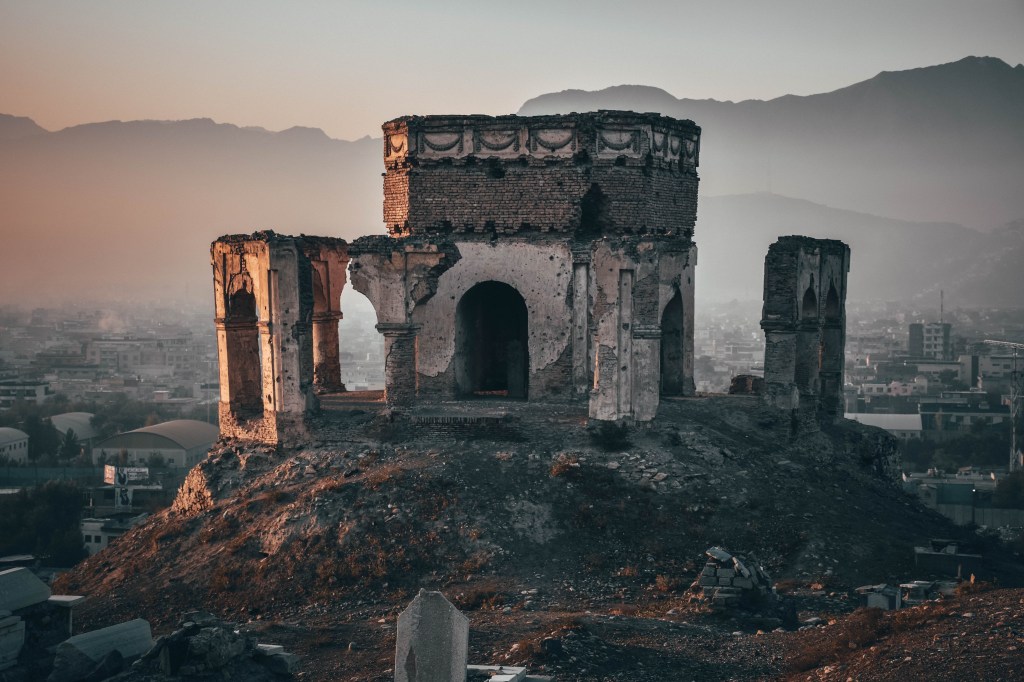







 Unlearning Tradition, Relearning Scripture