Why is it being taught that the Second Coming of Jesus will result in the destruction of the world by fire? Isn’t this a contradiction of God’s pronouncement and promise made right after the flood in Noah’s days?
Consider the Scripture: “Then Noah built an altar to the LORD and took some of every clean animal and some of every clean bird and offered burnt offerings on the altar. And when the LORD smelled the pleasing aroma, the LORD said in His heart, ‘I WILL NEVER AGAIN CURSE THE GROUND (this Hebrew word can also be translated as “earth”) BECAUSE OF MAN, for the intention of man’s heart is evil from his youth. Neither will I ever again strike down every living creature as I have done.’” (Genesis 8:20-21)
God even provided a rainbow as the sign of His covenant, promising never again to destroy the earth due to the wickedness of man (Genesis 9:11-13). But incredibly, many preachers claim, God wouldn’t destroy the earth with water but fire. How does that sound to you?
Consider a person saying, “I will never kill anyone with knives but guns?” Does that make any difference? It sounds the same, doesn’t it? It still means “I’m going to kill.” Let us not disregard God’s word and make Him appear ridiculous.
Oh yes! Peter seems to be saying precisely that. Refer to the Bible, “But the day of the Lord will come like a thief; on that day, the heavens will pass away with a loud noise, the elements will burn and be dissolved, and the earth and its works will be revealed.” (2 Peter 3:10) However, we should understand its contextual nuances and contemporary meaning. Peter said, “the elements will burn and be dissolved,” not the heavenly bodies as most translations convey. The Greek word for “elements” is exclusively used in the New Testament in reference to the Mosaic law. For instance, check Galatians 3:23-4:3, Galatians 4:9-10, Colossians 2:8, Colossians 2:16-20, and Hebrews 5:11-6:6. On the other hand, “heavens and earth” refers to a covenant.
Consider Jeremiah 31:31-34, which states, “Look, the days are coming” — this is the LORD’s declaration — “when I will make a new covenant with the house of Israel and with the house of Judah. This one will not be like the covenant I made with their ancestors on the day I took them by the hand to lead them out of the land of Egypt — My covenant that they broke even though I am their Master” — the LORD’s declaration. “Instead, this is the covenant I will make with the house of Israel after those days” — the LORD’s declaration. “I will put My teaching within them and write it on their hearts (in other words, it’s no longer by works, but faith). I will be their God, and they will be My people. “No longer will one teach his neighbor or his brother, saying, ‘Know the LORD,’ for they will all know Me, from the least to the greatest of them” — this is the LORD’s declaration. “For I will forgive their iniquity and never again remember their sin.” (Jeremiah 31:34)
Isn’t that exactly what John was declaring, but he phrase it differently? See Revelation 21:1-4, “Then I saw a new heaven and a new earth; for the first heaven and the first earth had passed away, and the sea was no more. I also saw the holy city, the new Jerusalem, coming down out of heaven from God, prepared like a bride adorned for her husband. Then I heard a loud voice from the throne: Look, God’s dwelling is with humanity, and He will live with them. They will be His peoples, and God Himself will be with them and will be their God. He will wipe away every tear from their eyes. Death will be no more; grief, crying, and pain will be no more, because the previous things have passed away.” (Revelation 21:1-4)
If death is no more, then sin is no more. Paul in 1 Corinthians 15 clearly states, “The sting of death is sin, and the power of sin is the law.” (1 Corinthians 15:56) Consequently, similar to the statement of Jeremiah, God declares, “For I will forgive their iniquity and never again remember their sin.” By faith, Christ Jesus bears the weight of the law of sin and death (Romans 8:1-2), making us righteous in God’s sight. See Scripture:
“Therefore, if anyone is in Christ, he is a new creation. The old has passed away; behold, the new has come. All this is from God, who through Christ reconciled us to Himself and gave us the ministry of reconciliation; that is, in Christ God was reconciling the world to Himself, not counting their trespasses against them, and entrusting to us the message of reconciliation. Therefore, we are ambassadors for Christ, God making His appeal through us. We implore you on behalf of Christ, be reconciled to God. For our sake He made Him to be sin who knew no sin, so that in Him we might become the righteousness of God.” (2Co 5:17-21)
The New Covenant therefore is the New Heaven and New Earth of Revelation 21.
Here’s another example. Moses addressing Israel declared, “I call heaven and earth to witness against you today, that you will soon utterly perish from the land that you are going over the Jordan to possess. You will not live long in it, but will be utterly destroyed.” (Deu 4:26) Was Moses appealing to the literal heavens and earth or God’s covenant as a witness against them? Without a doubt, Moses refers to God’s covenant with Israel; that’s the context of Deuteronomy:
“Take this Book of the Law and put it by the side of the ark of the covenant of the LORD your God, that it may be there for a witness against you.” (Deuteronomy 31:26)
Preachers and pastors should not simply repeat what they have been told and taught. There is a reason why people who aspire to become pastors should enter seminary training. At the seminary, we are trained to properly handle God’s word, so let’s put it into practice. God will hold us accountable for all our words and pronouncements that we assume are taught in Scripture.
Jesus Christ states, “My sheep hear My voice, and I know them, and they follow Me.” (John 10:27) Christians, ask yourselves, have you been hearing Christ’s voice and following Jesus or hirelings?
Again, Jesus declares, “I am the good shepherd. The good shepherd lays down His life for the sheep. He who is a hired hand and not a shepherd, who does not own the sheep, sees the wolf coming and leaves the sheep and flees, and the wolf snatches them and scatters them. He flees because he is a hired hand and cares nothing for the sheep.” (John 10:11-13)
Be discerning. Jesus warns, ““Enter by the narrow gate. For the gate is wide and the way is easy that leads to destruction, and those who enter by it are many. For the gate is narrow and the way is hard that leads to life, and those who find it are few.” (Matthew 7:13-14)
Again the Bible says, “There is a way that seems right to a man, but its end is the way to death.” (Proverbs 14:12)
Jesus Christ states, “I am the way, and the truth, and the life. No one comes to the Father except through Me.” (John 14:6) Let us be sure to learn from Christ’s words alone.
Peter, in the words of Acts 3:6, declared, “I possess neither silver nor gold, but in the name of Jesus Christ, I offer you what I have.” Share this article freely, for you freely receive. Take note, underlines and highlights are clickable links for definitions or Bible references. Stay updated by heading to our about page and subscribe directly to receive notifications in your inbox. Blessings!
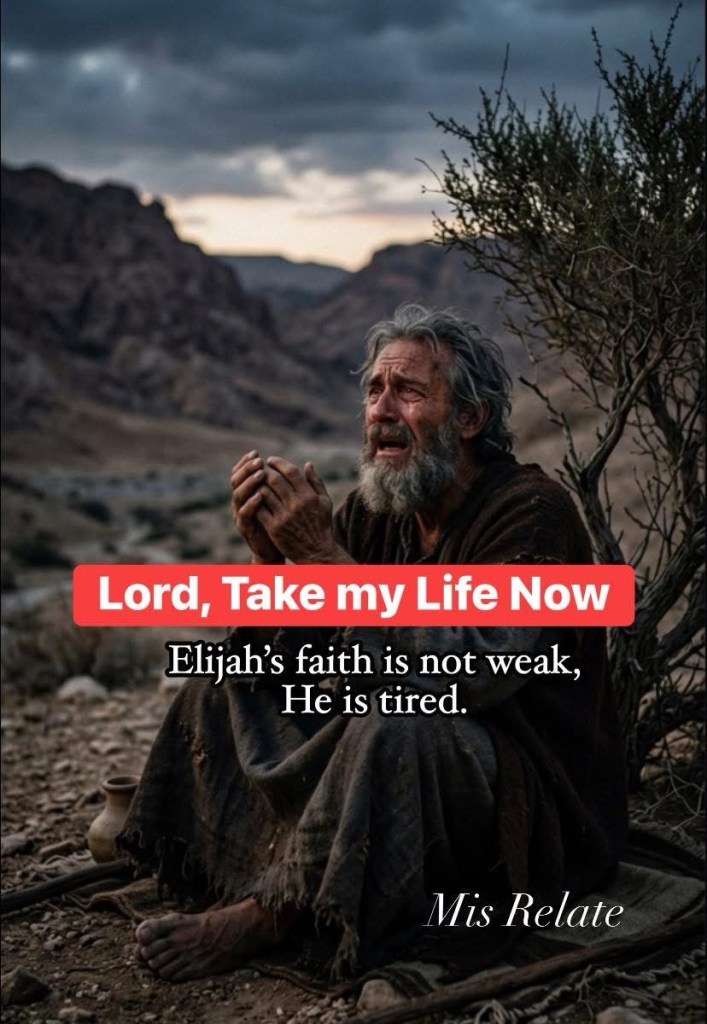
I would venture to say that Elijah was disheartened. He recognized God’s immense power and greatness, yet he struggled to comprehend how wicked individuals could persist in their wickedness.
Elijah, demonstrating God’s supreme power over anything else, defeated Jezebel’s false prophets. Instead of fearing God, Jezebel, in a defiant act, killed all the prophets of God. (1 Kings 18-19)
Jezebel openly opposed God and His servants, while wolves in sheep’s clothing concealed their true identities and intentions but do the same (Matt 7:15; 16:6; Mk 12:38; Luke 12:15; Acts 20:29-30). The latter gained approval from their peers and have swayed people with their charming words, dramatic displays, and cunning tactics (2Co 4:2; 11:13-15; Rom 16:18; Eph 4:14; Rev 2:20). It’s no wonder we encounter such individuals who are respected and hold leadership positions within Christian communities. This is one of the reasons why local churches fail, besides flawed doctrines. Shouldn’t we Christians feel discouraged as well? Like in the days of Jezebel, evil always seems to triumph over good. Both Jezebel and the wolves in sheep’s clothing acted in defiance of God. The latter is far worse because they claim faith and yet act in defiance.
Jesus Christ condemned churches that resembled Jezebel or harbored her within their midst. In Revelation 2:19-20, Christ declares:
“I am aware of your works, your love, faith, service, and patient endurance, and that your latter works surpass your initial ones. However, I have a serious issue with you: you tolerate that woman Jezebel, who falsely claims to be a prophetess. She is teaching and seducing my servants to engage in sexual immorality and consume food that has been sacrificed to idols.”
Jezebel’s ways subtly transform Christian devotion to God and the Bible into something else; that’s the point of Christ Jesus in Revelation.
Jezebel, the wicked and idolatrous queen of King Ahab, wielded significant influence behind the throne. Obedient to her wishes, Ahab constructed a sanctuary for Baal and supported numerous pagan prophets (1 Kings 18:19). In essence, Jezebel represents the epitome of idolatry. Paul, in Colossians, clarified that idolatry goes beyond mere devotion to graven images. Instead, it encompasses sexual immorality, impurity, passion, evil desires, and covetousness (Col 3:5). Essentially, it is the love of the world rather than God, Jesus Christ, and His Word. That is exactly the reason for resurgence of wolves in sheep’s clothing in the Christian communities. They desire salvation and yet loved money, power and recognition.
Simon the Sorcerer of Acts 8 exemplifies such people. The Bible clearly says Simon believed and was baptized (Acts 8:13). Yet, he had no real transformation; he still sought after fame. Hence, Scripture narrative describes that he remained lost (Acts 8:18-22).
God changes not. Stop explaining away God’s character and His will. Christians, let us be discerning. Do not simply receive any teachings, but examine the Scriptures daily to see if these things are true. Beware of Jezebels as exemplified in Revelation. Christ Jesus denounced it then and still does. Be faithful to God, Jesus Christ, and His Word. Only then may we please God. Jesus said, “And do not fear those who kill the body but cannot kill the soul. Rather fear Him who can destroy both soul and body in hell.” (Matthew 10:28)
People may believe they are saved and yet, in reality remains lost. There is a reason that the Bible twice states, “There is a way that seems right to a man, but its end is the way to death.” (Proverbs 14:12; 16:25)
Paul declared, “Keep a close watch on yourself and on the teaching. Persist in this, for by so doing you will save both yourself and your hearers.” (1 Timothy 4:16)
The way to salvation encompasses both our beliefs and life.
Despite prevailing wickedness, let us not doubt God’s justice, righteousness, and grace. God through Isaiah, His prophet, declares, “For My thoughts are not your thoughts, neither are your ways My ways. For as the heavens are higher than the earth, so are My ways higher than your ways and My thoughts than your thoughts. For as the rain and the snow come down from heaven and do not return there but water the earth, making it bring forth and sprout, giving seed to the sower and bread to the eater, so shall My word be that goes out from my mouth; it shall not return to Me empty, but it shall accomplish that which I purpose, and shall succeed in the thing for which I sent it.” (Isa 55:8-11)
Trust God, He never fails in His Word! The only reason some thought otherwise was because they fail to truly comprehend the Bible.
Peter, in the words of Acts 3:6, declared, “I possess neither silver nor gold, but in the name of Jesus Christ, I offer you what I have.” Share this article freely, for you freely receive. Take note, underlines and highlights are clickable links for definitions or Bible references. Stay updated by heading to our about page and subscribe directly to receive notifications in your inbox. Blessing!
Recently, my wife and I took a bus trip to Baguio City. It’s a good idea to buy your tickets in advance because the ticket counters at the station can get really crowded. A lot of people end up standing in line, hoping to get a ticket and board the bus. These people are betting on chance passengers.
The apostle James says, “Your life is like a mist that vanishes quickly.” (Jas 4:14) Don’t take chances. Always bet on God’s word. Peter says, “As the Scriptures say, ‘People are like grass; their beauty is like a flower in the field. The grass withers and the flower fades. But the word of the Lord remains forever.’ That word is the Good News you heard.” (1Pet 1:24-25, NLT)
Matthew 9:9-13 tells us about the calling of Matthew, and cross-referencing it to Hosea 6:6 together with its biblical context, as quoted by Matthew (Matt 9:13).
The Jewish people of the Old Covenant and cohabiting people like the Samaritans, who lived during Jesus’ time, eagerly awaited the arrival of the Christ (John 1:41; 4:25; Luke 2:9-11). However, many of them missed their chance due to their arrogance, not ignorance. Isaiah 10:20-23; 65:1-17 and Daniel 12:4,7-9 prophesied the complete end or the time of the end for Old Covenant Israel. Jesus spoke of the temple’s final destruction (Matthew 23:37-38; 24:2; Luke 21:20-22), fulfilling Zechariah’s prophecy of the New heavenly Jerusalem (Zechariah 14), also described by John in Revelation 21-22. With the temple destroyed for the second and final time, the declaration in Hebrews 8:13, stating that the Old Covenant became obsolete, reached its climax. Old Covenant Israel relied on the Mosaic law rather than the grace offered through Christ Jesus, which caused them to miss their chance. (Galatians 3:10-11)
Consequently, God through Jesus Christ came to call on the lost, so He replied to the self-righteous Pharisees, who refused to mingle with outcasts, “Those who are well have no need of a physician, but those who are sick” (Matt 9:12). Of course, the context of Matthew 9:9-13 does not involve literally sickly people, but the outcasts and sinners.
Let me clarify that God does not love sinners; instead, He detests them. Consequently, we witnessed God’s punishment and destruction of all humanity in the Genesis 6-9 account of Noah’s flood, leaving only eight individuals alive. Scripture explicitly states that this was because Noah found grace in God’s sight (Genesis 6:8). Yes, the translated word “favor” in that verse in most modern Bible translations originates from the Hebrew word “grace.” This was because God was fulfilling His covenant to restore His creation that had fallen in Adam through Jesus Christ (Hosea 1:10-11; Romans 9:25-26; 11:1-2, 26-29; 1 Corinthians 15:22).
Matthew presents himself as the perfect example of the sick—spiritually, of course. He was a tax collector, which in the context of Old Covenant Israel made him a traitor, since he collected taxes from his own countrymen on behalf of their oppressor, Rome.
Matthew identified those dining with Jesus as tax collectors and sinners (Matthew 9:10). These individuals weren’t known for their blatant sins; rather, they belonged to the lost tribes of Israel, specifically the ten tribes of the Northern kingdom. God had denounced these ten tribes in Hosea 6:6-10. Consequently, they were referred to as sinners in Matthew 9:10 and the lost sheep of the house of Israel in Matthew 10:6. Ephraim was a reference to Israel, the ten northern tribes.
Like Adam, who was banished from the Garden of Eden for breaking God’s covenant—not to eat from the tree of knowledge of good and evil (Genesis 2:15-16; Genesis 3)—Israel, particularly the ten tribes of the Northern kingdom, was lost. God through Hosea declared, “But like Adam, they (i.e. Israel) transgressed the covenant; there they dealt faithlessly with Me.” (Hosea 6:7)
Jesus came to restore both Israel and Judah to God, and this truth extends to all humanity. The Bible states, “For as in Adam all die, so also in Christ shall all be made alive.” (1Co 15:22) Therefore, the Gospel of Jesus Christ is intended for everyone to hear and believe.
From God’s perspective, being “lost” signifies death. Jesus illustrated this concept in his parable of the prodigal son. The father exclaimed, “For this my son was dead, and is alive again; he was lost, and is found.” (Luke 15:24) Consequently, like Adam, Israel, or the ten northern tribes, they died covenantally or spiritually. As a result, anyone without Christ Jesus, the last Adam, would not possess eternal life, as mentioned in 1 Corinthians 15:45.
As evident in the opening chapter of Hosea, particularly Hosea 1:4-9, God’s judgment against Israel was consistently clear and reiterated throughout the book. However, in Hosea 2:14-23 and other passages like Hosea 6:1-2, God revealed His restoration through the resurrection of Christ on the third day. Can you comprehend the logical progression from death to resurrection? Adam’s death, which affected all humanity, was spiritual in nature, so the remedy is also spiritual, not physical. Jesus articulated this truth in John 2:18-22 and Matthew 16:18, and Paul reaffirmed it in Ephesians 1:20-23. Paul explained that this restoration would occur through the church, which is a spiritual awakening or renewal of people, just as Jesus had declared to the apostles in Matthew 16:17-18. Furthermore, 1 Peter 2:9-10 indicated that this restoration was already underway. (Incidentally, the correct translation for Matthew 16:18 should be “the gates of Hades,” referring to the place of death, rather than “hell.”)
In Hosea chapters 3 to 5, God revealed that Israel would continue to disobey Him. However, by His grace, God would call a remnant from Israel to salvation (Hosea 1:10-11; Romans 9-11), which Paul announced was already at work (Romans 9:1-8; 11:1-6, 25-27). Jesus Christ and His Gospel would be the instruments of God’s call (Romans 10:12-17).
As evident in the Gospel of Matthew, the dominant religious authorities—the Sanhedrin—comprising Sadducees and Pharisees—were mostly self-righteous and adhered to beliefs inconsistent with the Bible. Jesus Christ was primarily rejected because He taught according to the Word of God, not human traditions (Mark 7:1-7). Jesus addressed the unbelieving Jews, stating, “I know that you are descendants of Abraham; yet you seek to kill Me because My word has no place in you.” (John 8:37)
Christ’s Gospel and teachings were new to the people, causing resistance from the crowd. Consequently, Jesus stressed the significance of entering through the narrow gate, which leads to life, while the wide gate leads to destruction. He explained that the narrow gate is challenging to find and few enter, whereas many pass through the easy, wide gate (Matthew 7:13-14). Here, Jesus was comparing His teachings, which are the narrow gate, to the contemporary teachings of that era—the wide gate. Similarly, during the Reformation era initiated by Martin Luther, he was among a select few who believed and taught correctly from Scripture that salvation is achieved by grace, through faith, not of works. He emphasized that the righteous shall live by faith (Romans 1:16-17).
The same can be said today. Throughout the millennia, modern Christianity has embraced many teachings and beliefs that are not in accordance with the Bible. Hence, sound doctrine would be heard and believed by a minority; most would suspect it’s a heresy. As the saying goes, “Repeat a lie often, and it becomes the truth”. This was because modern Christianity has focused on the writings of the so-called “early church fathers,” particularly those from one or two centuries after the last apostle of Jesus Christ. Moreover, during the reign of Emperor Constantine, this trend worsened. The Reformation occurred during the 16th century, and yet, it also produced its own flaws. The Bible’s teaching wasn’t fully restored.
Many claim faith in Jesus but then revert to old routines, with little real change. They attend churches or online services but struggle to distinguish biblical passages or interpret them correctly. They rarely join Bible study groups. This indifference damages faith and stems mostly from discrepancies between church teachings and Scripture.
The Bible can be confusing. Many say, “I cannot understand Scripture,” and pastors’ explanations differ. These are common feelings among believers. Some, frustrated, become indifferent.
Matthew’s and the rest of the Gospels were written precisely because of distortions to the Gospel. Paul wrote Galatians before any of the gospels were written, and he states, “I am astonished that you are so quickly deserting Him (i.e. God) who called you in the grace of Christ and are turning to a different gospel—not that there is another one, but there are some who trouble you and want to distort the gospel of Christ.” (Gal 1:6-7)
Both Matthew and Mark were written around the same time as Paul’s letters to the Corinthians. In 2 Corinthians 11:3, Paul addresses the same issue he had mentioned in Galatians. He warns that, just as the serpent deceived Eve with his cunning, their thoughts could be led astray from a sincere and pure devotion to Christ. Then Paul went on to rebuke them, saying, “For if someone comes and proclaims another Jesus than the one we proclaimed, or if you receive a different spirit from the one you received, or if you accept a different gospel from the one you accepted, you put up with it readily enough.” (2 Corinthians 11:4)
Paul, in his letter to the Corinthian church, was battling heresy. False teachings can be detrimental to one’s salvation. See Paul’s words to Timothy: “Keep a close watch on yourself and on the teaching. Persist in this, for by so doing you will save both yourself and your hearers” (1Ti 4:16). Hence, Paul told Christians in Corinth: “Do not be deceived: ‘Bad company ruins good morals’” (1Co 15:33).
We have seen in history how Christianity has been waged through swords. Examples would be the time of the Christian Crusaders. Today, it’s being done in the West, favoring Israel over any of its enemies. This was mainly due to the beliefs and teachings of Christian Zionism and Dispensationalism. The latter is the prevailing belief and teaching of most churches today. It is erroneous and inaccurate.Paul declared in Galatians, “And if you are Christ’s, then you are Abraham’s offspring, heirs according to promise” (Galatians 3:29). Old Covenant Israel missed its chance. Only a remnant of them were saved. They bet on the wrong ticket, the ride came, and they missed it. Jesus is the only ticket to salvation.
Though Israel ceased to be the chosen people of God (Matt 21:33-45), God’s wrath against the generation that crucified Jesus Christ had already been fulfilled; the temple destroyed (Matt 23:32-38). Nevertheless, the Bible declares, “For God’s anger is but for a moment, and His favor is for a lifetime” (Psalm 30:4-5). God’s word is always true. His anger and vengeance against Old Covenant Israel were fulfilled with the second and final destruction of the Jewish Temple. However, God’s grace is eternal, so there remains hope for modern-day Israel. Like everyone else, they must hear and believe the Gospel of Christ Jesus (Rev 14:6).
The Bible alone is infallible, while everything else can be erroneous and proven inaccurate when examined in light of the Scriptures. (WCF 1.4; 31.4)
Matthew’s Gospel leads us to Christ Jesus. He quoted Old Testament Scriptures to confirm that Jesus is indeed the Christ. We have four Gospels in our Bible and numerous letters from the apostles of Jesus Christ. Why rely on uninspired secondhand sources instead of the Word of God? Let’s seize the opportunity to become Christ’s disciples, learning and teaching solely from His Word (John 8:31-32). Paul exemplified this principle, stating, “Now, brothers and sisters, I have applied these things to myself and Apollos for your benefit, so that you may learn from us the meaning of the saying, ‘Do not go beyond what is written.’ Then you will not be puffed up in being a follower of one of us over against the other.’” (1 Corinthians 4:6, NIV)
Christ Jesus came and inaugurated the New Creation. Paul states, “Therefore, if anyone is in Christ, he is a new creation. The old has passed away; behold, the new has come.” (2 Corinthians 5:17) Hebrews declared that the Old Covenant became obsolete (Hebrews 8:13). Jesus Christ ushered in the age of grace, with the Gospel at its core. People must hear and believe the Gospel. It is an eternal gospel (Revelation 14:6); therefore, it is everlasting, contrary to the claims of many.
Most of the religious leaders during the time of Jesus, Paul, and the rest of the apostles insisted on their prevailing beliefs, and they missed their chance. As the saying goes, “If we have not learned from history, then we are bound to repeat its mistakes.” Missing our chance is a crucial mistake. It will cost us eternity like anyone else who rejected, mingled, muddled, and watered down God’s Word.
Matthew and the rest of the apostles, except for Judas, adhered to God’s word. Comparing Scriptures with Scriptures, they were saved by grace. Let’s not miss the chance and learn from the Bible.
So, who are you? Are you a Pharisee or an outcast, like Matthew? Christ Jesus doesn’t care about our past. The Gospel call is for everyone, but only those who recognize Christ and His Gospel would benefit from the message. That’s the lesson in Matthew 9:9-13. However, after we’ve trusted Jesus Christ, we should be different from our past lives. Paul said, “Follow me, as I follow Christ (1 Co 11:1).” Therefore, follow pastors or teachers of the Bible only if they are truly following Jesus Christ. Be a Berean, as the Bible states, “They received the word with all eagerness, examining the Scriptures daily to see if these things were so.” (Acts 17:11) Don’t be content with listening; study the Bible on your own and ask questions if needed. Then compare the answers with the Word of God and verify if they’re consistent with the Scriptures.
We have only one chance in our lifetime to bet on Christ Jesus. Don’t miss this chance.
Peter, in the words of Acts 3:6, declared, “I possess neither silver nor gold, but in the name of Jesus Christ, I offer you what I have.” Share this article freely, for you freely receive. Take note, underlines and highlights are clickable links for definitions or Bible references. Stay updated by heading to our about page and subscribe directly to receive notifications in your inbox. Blessing!
It’s Valentine’s Day. Many people will give flowers and dine together as a way to show their love. That’s nice, but real love is most visible when everything isn’t perfect. “God shows His love for us in that while we were still sinners, Christ died for us.” (Romans 5:8)
It is wrong to say that God loves sinners. Neither is it right to say that the church is a hospital. That’s saying that Christ Jesus’ death on the cross wasn’t sufficient to make anyone who believes in Him be righteous in the sight of God.
We Christians aren’t perfect in ourselves, but Christ Jesus fulfilled all Scriptures, perfecting everyone who believes in Him in God’s sight. The Bible states, “the gospel is the power of God for salvation to everyone who believes, to the Jew first and also to the Greek. For in it the righteousness of God is revealed from faith to faith, as it is written, ‘The righteous shall live by faith.’” (Romans 1:16-17)
Again, the Bible declares, “For as by the one man— Adam’s— disobedience the many were made sinners, so by the one man— Jesus Christ’s— obedience the many will be made righteous.” (Romans 5:19)
It all depends on faith. That is faith in Christ Jesus. Not just lip service faith, but faith that works. James, the apostle of Jesus Christ, states, “So also faith by itself, if it does not have works, is dead.” (James 2:17)
Hence, Jesus Christ declared, “If you would be perfect, go, sell what you possess and give to the poor, and you will have treasure in heaven; and come, follow Me.” (Matthew 19:21)
Make no mistake, perfection isn’t attained by good works. Rather, it is by following Jesus Christ through and through. Giving up anything that hinders our commitment to Him. No reservations, no ifs, and no buts. That’s what Jesus was teaching in Matthew 19:21. Nothing, absolutely nothing, should be between us and Jesus Christ.
Christians, let us make Christianity interesting to everyone. Embrace God’s love, live by His love, and spread His love.
Peter, in the words of Acts 3:6, declared, “I possess neither silver nor gold, but in the name of Jesus Christ, I offer you what I have.” Share this article freely, for you freely receive. Take note, underlines and highlights are clickable links for definitions or Bible references. Stay updated by heading to our about page and subscribe directly to receive notifications in your inbox. Blessing!
Personal conversion testimony is valid for as long as we have kept the faith. Though God remembers our actions in the past, He is more concerned about how we have kept the faith. That’s the point of Paul’s assertion saying, “I have fought the good fight, I have finished the race, I have kept the faith.” (2 Timothy 4:7)
Let us not gravitate to personal testimonies that never became a lifetime commitment. That’s the reason we get surprised when spiritual giants get caught in controversy. Paul states, “Follow my example, as I follow the example of Christ.” (1Corinthians 11:1)
The Bible tells us, “Even Simon himself believed, and after being baptized he continued with Philip. And seeing signs and great miracles performed, he was amazed.” (Acts 8:13)
And yet, Simon, perhaps not being able to overcome his old self. He tried to buy from Peter the power of the Holy Spirit (Acts 8:18-19). So Peter replied, “May your silver perish with you, because you thought you could obtain the gift of God with money! You have neither part nor lot in this matter, for your heart is not right before God. Repent, therefore, of this wickedness of yours, and pray to the Lord that, if possible, the intent of your heart may be forgiven you. For I see that you are in the gall of bitterness and in the bond of iniquity.” (Acts 8:20-23)
Our water baptisms serve as a personal testament to our repentance of sins and commitment to follow Jesus Christ. Like a survey, they reflect the moment, not the end, marking the beginning of a lifelong journey with Jesus. Therefore, only in hindsight can people truly validate our transformation for Christ Jesus.
Back when I was still in Metro Manila, I often heard this phrase on a Christian radio station: “If you are still talking about what you have done in the past, then you have not done anything new.” Christians need to constantly walk the talk and live by their faith. Once saved, always saved is only true if one has kept the faith. The best testimony you can give is your life.
Peter, in the words of Acts 3:6, declared, “I possess neither silver nor gold, but in the name of Jesus Christ, I offer you what I have.” Share this article freely, for you freely receive. Take note, underlines and highlights are clickable links for definitions or Bible references. Stay updated by heading to our about page and subscribe directly to receive notifications in your inbox. Blessing!
I saw on YouTube Karen Davila asking, “What should people do to be better in 2026?” (Disclaimer: I didn’t listen to the full interview. So I am just sharing her question and not in any way agreeing or disagreeing with Pastor Peter Tanchi’s answer.) Here’s the link to that interview.
The answer to that question was spoken by Christ Jesus two thousand years ago, saying, “Come to Me, all who labor and are heavy laden, and I will give you rest.” (Matthew 11:28)
We live in a chaotic world, and we tend to fall into its rhythm when we pursue material things. That’s when temptation and compromises often occur. The Bible states, “For the love of money is a root of all kinds of evils. It is through this craving that some have wandered away from the faith and pierced themselves with many pangs.” (1 Timothy 6:10)
People do not necessarily love money instantly, but when they covet the things of this world — like a nice house, car, and more – they realize that the pursuit of a lot of money is important.
God has been the provider since the very beginning, after He created all things. Even when Adam sinned against God, His creative provisions remained available, but man had to work by the sweat of his brow to eat (Genesis 3:17-19). However, after the flood in Noah’s days, when God punished people for living in sin and denying His presence, He restored His blessings of the ground for provision. See Genesis 8:21-22.
“And when the LORD smelled the pleasing aroma, the LORD said in His heart, ‘I will never again curse the ground because of man, for the intention of man’s heart is evil from his youth. Neither will I ever again strike down every living creature as I have done. While the earth remains, seedtime and harvest, cold and heat, summer and winter, day and night, shall not cease.’”
Here is one of many passages in Scripture that disproves the teaching that God will destroy all humanity a second time because of sin. Instead, God provided us with the Gospel so that everyone can have a chance to inherit eternal life through faith in Christ Jesus (Matthew 28:19-20; Habbakuk 2:14; Revelation 14:6).
There has never been a time when the Earth failed to provide enough for food. Scarcity, lack of food, and hunger have always been caused by mankind, not God. Just study human history. The greed of the rich, powerful, and influential has always led them to gather more than they need, leaving only a little for others. So, if we follow the ways of the world, we end up competing against ourselves.
Am I suggesting that we can survive without competing with others? First, we must acknowledge that God is good, true, and faithful. See Hebrews 13:5. The Bible teaches, “Keep your life free from love of money, and be content with what you have, for he has said, ‘I will never leave you nor forsake you.’” There is a saying that goes, “When God closes a door, He opens a window.” So yes, we do not need to compete aggressively in a dog-eat-dog world. God can bless and provide for His people even in the midst of a wilderness, like Exodus.
We need to understand what it means to live by faith. Jesus Christ teaches us to trust God because He cares about us. See Luke 12:22-24, “Therefore I tell you, do not be anxious about your life, what you will eat, nor about your body, what you will put on. For life is more than food, and the body more than clothing. Consider the ravens: they neither sow nor reap, they have neither storehouse nor barn, and yet God feeds them. Of how much more value are you than the birds!”
Secondly, Christ Jesus states, “Instead, seek God’s kingdom, and these things will be added to you. ‘Fear not, little flock, for it is your Father’s good pleasure to give you the kingdom. Sell your possessions, and give to the needy. Provide yourselves with moneybags that do not grow old, with a treasure in the heavens that does not fail, where no thief approaches and no moth destroys. For where your treasure is, there will your heart be also.’” (Luke 12:31-34)
We cannot be true Christians without being part of His kingdom. As subjects of Jesus Christ, our King, we are under His reign and belong to His kingdom. As King, Jesus cares for, protects, and provides for His people. The challenge for us is whether we trust God to care for, protect, and provide — not in the way the world does, but with confidence that He truly does. Living by faith is at the heart of our lives.
David, in Psalm 37, said, “I have been young, and now am old, yet I have not seen the righteous forsaken or his children begging for bread. He is ever lending generously, and his children become a blessing. Turn away from evil and do good; so shall you dwell forever. For the LORD loves justice; He will not forsake His saints. They are preserved forever, but the children of the wicked shall be cut off. The righteous shall inherit the land and dwell upon it forever.” (Psalms 37:25-29)
The land mentioned in this text is not the physical land of Jerusalem, but rather the New Jerusalem described in various biblical passages, including Psalm 48, Jeremiah 31:23 referring to the New Heaven and New Earth (Jeremiah 31:31-40; Revelation 21:1-5), Hebrews 11:8-10, Hebrews 12:22-24, and Hebrews 13:8-14. This New Jerusalem is a reality experienced and understood by faith, existing in the presence of God.
There is much more to discuss on this topic. However, to keep this brief and to answer Karen Davila’s question, once we become Christians, there is no such thing as a good or bad year. Just look at the story of Cain and Abel. From the world’s point of view, Cain has defeated Abel by murdering him, because from the world’s perspective, the survivors are always the victors. But from God’s perspective, and according to the Bible, the victor is Abel. God avenged Abel’s death and Abel was resurrected to be in God’s presence forever. Consider these passages in Scripture:
“You serpents, you brood of vipers, how are you to escape being sentenced to hell? Therefore I send you prophets and wise men and scribes, some of whom you will kill and crucify, and some you will flog in your synagogues and persecute from town to town, so that on you may come all the righteous blood shed on earth, from the blood of righteous Abel to the blood of Zechariah the son of Barachiah, whom you murdered between the sanctuary and the altar.” (Matthew 23:33-35)
“By faith Abel offered to God a better sacrifice than Cain did. By faith he was approved as a righteous man, because God approved his gifts, and even though he is dead, he still speaks through his faith.” (Hebrews 11:4)
Both verses show that Abel was remembered by God, and he has since been enjoying God’s presence, as promised in Hebrews 11:39-40. Paul, in his letter to the Corinthians, states, “But when the perfect comes, the partial will pass away.” (1 Corinthians 13:10)
Christ Jesus, the Son of God, will bring to completion all things when He comes.
Paul, in Philippians, states, “And I am sure of this, that God who began a good work in you will bring it to completion at the day of Jesus Christ” (Philippians 1:6). The Greek word for “completion” here is synonymous with perfection. See Galatians 3:3, “Are you so foolish? Having begun by the Spirit, are you now being perfected by the flesh?” The word for “perfected” in Galatians is the same Greek word as “completion” in Philippians.
No Christian is perfect in themselves; instead, we are being made righteous through faith in Christ Jesus (2 Corinthians 5:21; Romans 1:16-17, etc). Also see Hebrews 9:11-12.
“But when Christ appeared as a high priest of the good things that have come, then through the greater and more perfect tent (not made with hands, that is, not of this creation) he entered once for all into the holy places, not by means of the blood of goats and calves but by means of his own blood, thus securing an eternal redemption.”
When was our eternal redemption secured or perfected? See Hebrews 9:28, “So also Christ, having been offered once to bear the sins of many, will appear a second time, not to bear sin, but to bring salvation to those who are waiting for him.”
Eternal redemption and perfection mean salvation. Christ Jesus finished His work for salvation at His return, contrary to most teachings and beliefs. Therefore, eschatology, or the doctrine of the last things, is crucial and not a minor doctrine as many pastors suggest.
This makes it clear why Hebrews 12:2 says, “Looking to Jesus, the founder and perfecter of our faith, who for the joy that was set before Him endured the cross, despising the shame, and is seated at the right hand of the throne of God.”
Jesus Christ sat on His throne after completing His death, resurrection, and ascension, and He completed and fulfilled all Scriptures with His return in judgment against Old Covenant Jerusalem (Matthew 26:64; Luke 21:20-28). Old Covenant Jerusalem was destroyed in 70 A.D. by the Romans, as prophesied in Scripture. Remember that according to Daniel 2:36-45, the kingdom of heaven will arrive during the reign of the fourth Gentile kingdom over Israel. Historically and biblically, we see God fulfilling Scripture with the rise of the kingdoms of Babylon, Medo-Persia, Greece, and finally Rome. At no point in the Bible does it indicate that the Roman Empire would split into two parts, as some Christians today suggest, calling it the Revived Roman Empire. This is the idea of futurism, which is basically the teachings and beliefs of contemporary Christianity.
Now, continuing on my discussion of the topic of perfection, Jesus teaches, “If you would be perfect, go, sell what you possess and give to the poor, and you will have treasure in heaven; and come, follow Me” (Matthew 19:21). Is it simply about selling everything? Oh yes, in Acts, some believers have sold everything and shared it with the early church (Acts 2:44-45). However, nowhere did Paul and the other apostles teach this. So, what’s truly the point of Christ Jesus telling the rich man to sell everything and follow Him?
Read Matthew 19:16-26. First, Jesus made clear that perfection cannot be attained by adherence to the Mosaic law (Matthew 19:16-21; Galatians 3:10-11), but it is the work of God (Matthew 19:26; Ephesians 2:8-9). Jesus Christ told him to sell everything because he loved his wealth more than God and Jesus Christ. See Matthew 19:22, the Bible reveals, “When the young man heard that, he went away grieving, because he had many possessions.”
No one can truthfully claim to follow Jesus Christ until they renounce everything and fully commit themselves to God and Christ Jesus. Hence, Jesus Christ declares, “In the same way, therefore, every one of you who does not renounce all his possessions cannot be My disciple.” (Luke 14:33)
Renouncing does not literally mean giving everything away. Rather, it means our money or material possessions should not come before our love for God and Jesus Christ. Scripture states, “No one can serve two masters, since either he will hate one and love the other, or he will be devoted to one and despise the other. You cannot serve both God and money.” (Matthew 6:24)
So what’s the conclusion? Paul stated, “Do not be conformed to this world, but be transformed by the renewal of your mind, that by testing you may discern what is the will of God, what is good and acceptable and perfect.” (Romans 12:2)
It’s about transformation—a shift in heart and perspective. Yes, we need money for daily needs. During times of war or financial crisis, our money can lose its value. Land, gold, and other precious metals? If there’s civil war, revolution, or similar upheavals, no one can carry those things in large amounts, especially land, which is immovable by man. In the end, what truly sustains us is God’s grace. Consider this story told by Jesus Christ.
“Then Jesus told them a parable: ‘A rich man’s land was very productive. He thought to himself, “What should I do, since I don’t have anywhere to store my crops? I will do this,” he said. “I’ll tear down my barns and build bigger ones and store all my grain and my goods there. Then I’ll say to myself, ‘You have many goods stored up for many years. Take it easy; eat, drink, and enjoy yourself.’” “But God said to him, ‘You fool! This very night your life is demanded of you. And the things you have prepared — whose will they be?’ “That’s how it is with the one who stores up treasure for himself and is not rich toward God.” Then Jesus said to His disciples, “Therefore I tell you, don’t worry about your life, what you will eat; or about the body, what you will wear. For life is more than food and the body more than clothing. Consider the ravens: They don’t sow or reap; they don’t have a storeroom or a barn; yet God feeds them. Aren’t you worth much more than the birds? Can any of you add one moment to his life span by worrying? If then you’re not able to do even a little thing, why worry about the rest? Consider how the wildflowers grow: They don’t labor or spin thread. Yet I tell you, not even Solomon in all his splendor was adorned like one of these. If that’s how God clothes the grass, which is in the field today and is thrown into the furnace tomorrow, how much more will he do for you — you of little faith? Don’t strive for what you should eat and what you should drink, and don’t be anxious. For the Gentile world eagerly seeks all these things, and your Father knows that you need them. But seek His kingdom, and these things will be provided for you.” (Luke 12:16-31)
Christians, let’s be people of God’s kingdom and not of the world. Like the heroes of faith in Hebrews 11, recognize that we are just sojourners in our current physical existence. Job said, “Naked I came from my mother’s womb, and naked shall I return. The LORD gave, and the LORD has taken away; blessed be the name of the LORD” (Job 1:21). Our material possessions will all be left behind when we leave this physical life. If we are in Christ Jesus, what we possess eternally are the blessings of God’s kingdom. So why not seek to be true citizens of God’s kingdom?
Oh yes, some might argue that at least they intend to leave their wealth to their children and their children’s children and so on, but we are also well aware of the fact that many siblings quarrel over the wealth left behind by a parent. Jesus Christ, for a good reason, states, “Truly, I say to you, only with difficulty will a rich person enter the kingdom of heaven. Again I tell you, it is easier for a camel to go through the eye of a needle than for a rich person to enter the kingdom of God.” (Matthew 19:23-24) So, are we really leaving blessings for them, unless, of course, we have taught them about faith? The Bible states, “The blessing of the LORD makes rich, and He adds no sorrow with it” (Proverbs 10:22). Let God bless our children as He blesses us, because we live by faith and are always thankful for His grace. And God have proven Himself faithful and true. So, let’s leave behind a legacy of life rooted in faith rather than wealth, especially if it’s questionably acquired.
Peter, in the words of Acts 3:6, declared, “I possess neither silver nor gold, but in the name of Jesus Christ, I offer you what I have.” Share this article freely, for you freely receive. Take note, underlines and highlights are clickable links for definitions or Bible references. Stay updated by heading to our about page and subscribe directly to receive notifications in your inbox. Blessing!
Can Christians justify participating in the recently concluded Black Nazarene parade, the present Sinulog parade, or even just the subsequent party without compromising their relationship with Christ Jesus?
The Bible, specifically Genesis 6:5-8, describes the natural behavior of humans and its consequences. It states, “The LORD saw that the wickedness of man was great in the earth, and that every intention of the thoughts of his heart was only evil continually. And the LORD regretted that He had made man on the earth, and it grieved Him to His heart. So the LORD said, ‘I will blot out man whom I have created from the face of the land, man and animals and creeping things and birds of the heavens, for I am sorry that I have made them.’ But Noah found favor in the eyes of the LORD.’”
Interestingly, the Hebrew word for “favor” is actually “grace.” Ironically, Israel disregarded God’s grace. In Judges, this phrase is repeatedly used to describe the behavior of God’s Old Covenant people, stating, “In those days there was no king in Israel. Everyone did what was right in his own eyes.” (Jdg 17:6) Regrettably, this behavior is also observed in many professing Christians. They desire the privilege of being God’s people but simultaneously insist on their own interpretations of what is right.
Consider this passage summarized from 2 Corinthians 5:17-20: “We Christians are ambassadors of Christ Jesus, carrying with us the ministry of reconciliation—that is, the Gospel. Should we then, even for fun, compromise the Gospel?”
If 2 Corinthians 5:17-20 is not convincing enough, how about Romans 6:16-23? Paul explains that presenting oneself as a slave means obeying either sin, leading to death, or righteousness, leading to sanctification. To illustrate, before we became Christians we were all slaves to impurity and lawlessness producing death, but now, as Christians, slaves to God, we are sanctified for eternal life. Paul then concludes, “The wages of sin is death, but God’s gift is eternal life in Christ Jesus”.
Dualistic Christianity is not taught in the Bible. We must stop justifying such an idea. We bear the responsibility of sharing the Gospel. God has called us Christians to be channels of blessing through it. If we blend in with the world, how can people clearly understand what it means to be a Christian? The reality is that we are saved by grace. This means we are all previously under God’s wrath, but through faith in Christ Jesus, we have been given eternal life, enjoying the fullness of God’s blessing.
So, here’s the challenge: Should we arrogantly declare ourselves Christians but live according to our desires or the world’s ways, disregarding God’s Word? If we do, we lose our integrity and credibility as bearers of the Gospel, not just for ourselves, but also for the lost in need of God’s grace because we mishandled the faith. As the Bible states, “Pay close attention to your life and your teaching; persevere in these things, for in doing this you will save both yourself and your hearers.” (1Ti 4:16)
Peter, in the words of Acts 3:6, declared, “I possess neither silver nor gold, but in the name of Jesus Christ, I offer you what I have.” Share this article freely, for you freely receive. Take note, underlines and highlights are clickable links for definitions or Bible references. Stay updated by heading to our about page and subscribe directly to receive notifications in your inbox. Blessing!
Many years ago, while I was still a seminary student doing a practicum in a Muslim community, we were introduced to an Imam, an Islamic leader in the community. He was courteous and welcomed us all, offering us snacks. To avoid offending his faith, we declined to offer a thanksgiving prayer for the food and ate. He gently reprimanded us for not following the teachings of Christianity, which is to thank God for food before eating. He then revealed that this was the reason he refused Christianity because of our inconsistencies and began bombarding us with theological questions that contradicted conventional Christian teachings vis-a-vis the Bible. This experience taught me the importance of being prudent and aware at all times. Ironically, in hindsight, many of the Iman’s ideas and understandings of Jesus Christ and the teachings of the Bible are more accurate than contemporary Christianity.
In Acts 17:16, the Bible tells us, “Now while Paul was waiting for them at Athens, his spirit was provoked within him as he saw that the city was full of idols.”
Every year, I find myself provoked as well. Not because many people don’t truly understand what they have believed and practiced, but because even among evangelical Christians, they feel comfortable joining festivals and its subsequent parties. Consider Israel during the Exodus: they sought an idol even while Moses was on Mount Sinai receiving God’s Covenant (Exodus 32). See Scripture:
“When the people saw that Moses delayed to come down from the mountain, they gathered themselves together to Aaron and said to him, ‘Up, make us gods who shall go before us. As for this Moses, the man who brought us up out of the land of Egypt, we do not know what has become of him.’ So Aaron said to them, ‘Take off the rings of gold that are in the ears of your wives, your sons, and your daughters, and bring them to me.’ So all the people took off the rings of gold that were in their ears and brought them to Aaron. And he received the gold from their hand and fashioned it with a graving tool and made a golden calf. And they said, “These are your gods, O Israel, who brought you up out of the land of Egypt!” When Aaron saw this, he built an altar before it. And Aaron made a proclamation and said, ‘Tomorrow shall be a feast to the LORD.’” (Exodus 32:1-5)
Look carefully at Exodus 32:5, Aaron clearly expressed that the golden calf he made for Israel was intended to represent the LORD, YHWH in Hebrew, the covenant name of God. In other words, Aaron wasn’t introducing a pagan god, but the LORD Himself. Yet this is not acceptable to God. Clearly stipulated in the Mosaic Law, God’s covenant with Israel states:
“And God spoke all these words, saying, ‘I am the LORD your God, who brought you out of the land of Egypt, out of the house of slavery. You shall have no other gods before Me. YOU SHALL NOT MAKE FOR YOURSELF A CARVED IMAGE, OR ANY LIKENESS OF ANYTHING THAT IS IN HEAVEN ABOVE, OR THAT IS IN THE EARTH BENEATH, OR THAT IS IN THE WATER UNDER THE EARTH. You shall not bow down to them or serve them, for I the LORD your God am a jealous God, visiting the iniquity of the fathers on the children to the third and the fourth generation of those who hate Me, but showing steadfast love to thousands of those who love Me and keep My commandments. YOU SHALL NOT TAKE THE NAME OF THE LORD YOUR GOD IN VAIN, FOR THE LORD WILL NOT HOLD HIM GUILTLESS WHO TAKES HIS NAME IN VAIN.” (Exodus 20:1-7)
Again, see Scripture to understand how God viewed Israel’s celebration in the midst of the golden calf named after Him:
“And they rose up early the next day and offered burnt offerings and brought peace offerings. And the people sat down to eat and drink and rose up to play. And the LORD said to Moses, ‘Go down, for your people, whom you brought up out of the land of Egypt, have corrupted themselves. They have turned aside quickly out of the way that I commanded them. They have made for themselves a golden calf and have worshiped it and sacrificed to it and said, “These are your gods, O Israel, who brought you up out of the land of Egypt!” And the LORD said to Moses, “I have seen this people, and behold, it is a stiff-necked people. Now therefore let Me alone, that My wrath may burn hot against them and I may consume them, in order that I may make a great nation of you.”” (Exodus 32:6-10)
It’s ironic that many Christians today do not see joining religious festivals as acting contrary to God’s will. Oh yes, it’s just for fun, and you still claim faith in Jesus Christ. Nowhere in the Bible is dualistic Christianity acceptable. Many don’t see such actions as a hindrance to the responsibilities Christians are called to uphold.
Faith in Christ Jesus not only grants us eternal life, it also makes us ambassadors of the Gospel. See Paul’s teaching on the ambassadorship of Christians:
“Therefore, if anyone is in Christ, he is a new creation. The old has passed away; behold, the new has come. ALL THIS IS FROM GOD, WHO THROUGH CHRIST RECONCILED US TO HIMSELF AND GAVE US THE MINISTRY OF RECONCILIATION; that is, in Christ God was reconciling the world to Himself, not counting their trespasses against them, and ENTRUSTING TO US THE MESSAGE OF RECONCILIATION. THEREFORE, WE ARE AMBASSADORS FOR CHRIST, GOD MAKING HIS APPEAL THROUGH US. We implore you on behalf of Christ, be reconciled to God. For our sake, He made Him to be sin who knew no sin, so that in Him, we might become the righteousness of God.” (2 Corinthians 5:17-21)
Our repentance and confession of faith in Christ comes with a price. We become bound servants of the Gospel, not of the world. While many may perceive these activities as harmless, we must be cautious not to misuse God’s name. As the apostle Paul explains in Romans 6:16, if we present ourselves as obedient slaves, we are either slaves of sin, which leads to death, or of obedience, which leads to righteousness.
In 2 Corinthians 5:21, Paul states that Christ Jesus is the righteousness of God. Therefore, we should be slaves of Christ Jesus, not of the world. Slaves of the Gospel, not of sin. Instead of succumbing to peer pressure or the temptation to be accepted, we should be ambassadors of Christ Jesus and His Gospel.
There is a reason that Christ Jesus said, “Enter by the narrow gate. For the gate is wide and the way is easy that leads to destruction, and those who enter by it are many. For the gate is narrow and the way is hard that leads to life, and those who find it are few” (Matthew 7:13-14). So why compromise if we have truly found the narrow way that leads to life?
Christians are ambassadors of the Gospel of Christ Jesus. It is through us that God has been making an appeal to others to repent and be reconciled with God. But if as ambassadors we have relapsed to the ways of the world and misrepresented Christ Jesus and His Gospel, what would be our consequences: commendations from God or rebuke? Take a look at God’s words in Revelation, written to the Seven churches. Keep in mind that God does not change.
Twice, the Bible states, “There is a way that seems right to a man, but its end is the way to death” (Proverbs 14:12; 16:25). But Christ Jesus declared, “I am the way, and the truth, and the life. No one comes to the Father except through Me” (John 14:6). Enjoy life, but live by the Gospel and never undermine its message.
Peter, in the words of Acts 3:6, declared, “I possess neither silver nor gold, but in the name of Jesus Christ, I offer you what I have.” Share this article freely, for you freely receive. Take note, underlines and highlights are clickable links for definitions or Bible references. Stay updated by heading to our about page and subscribe directly to receive notifications in your inbox. Blessing!
Many people blame God when life becomes difficult, asking questions like, “Why did God allow this to happen?” Is God really uncaring? Did He create a miserable life for us?
In the beginning, God created man, provided him with a suitable partner, and placed them in His garden. However, there was a condition: they were forbidden from eating the fruit from a particular tree. But Adam, humanity’s representative before God, chose to disobey the covenant. Consequently, troubles have plagued humanity ever since.
The Bible recounts the first murder following their banishment from the garden and mentions how, as human populations grew, God observed their persistent wickedness. It states, “Every intention of the thoughts of man’s heart was only evil continually.” This contradicts the very intention of God in creation, as evident in Genesis 1:3-31, where each day of God’s work is described as good or very good.
So, is it really God’s fault that humanity is in such a fallen state? Isn’t it rather a result of humanity’s own choices to reject God and His goodness?
Despite humanity’s rebellion, God allows people to live until their physical lives come to an end. Only then does God take back the source of life from them. Ecclesiastes 12:7 states, “The dust returns to the earth as it was, and the spirit returns to God who gave it.”
God alone is the source of life. When humanity attempts to govern itself, it faces the consequences of separation from God. He warned Adam, saying, “You may surely eat of every tree in the garden, but of the tree of the knowledge of good and evil you shall not eat, for in the day that you eat of it, you shall surely die” (Genesis 2:16-17). Adam’s spiritual or covenant death was a result of breaking that covenant. God does not revoke what He has given—the breath of life—until the physical body expires. Although God intended for humanity to live forever, as shown by the presence of the tree of life in the Garden of Eden, Adam and Eve were expelled from the garden because they lost their right to eternal life.
God always provides for us. He reversed the curse on the ground that had made it unproductive due to Adam’s sin, as described in Genesis 3:16-19. However, this promise came after He had judged the world with the flood during Noah’s time. The LORD stated, “I will never again curse the ground because of man, for the intention of man’s heart is evil from his youth. Neither will I ever again strike down every living creature as I have done. While the earth remains, seedtime and harvest, cold and heat, summer and winter, day and night shall not cease” (Genesis 8:21-22).
Remarkably, even after Adam’s curse, God’s purpose in creating humanity in His image remains unchanged. He promised the Seed of the woman. Hence, the Scriptures proclaim, “But when the fullness of time had come, God sent forth His Son, born of a woman, born under the law, to redeem those who were under the law, so that we might receive adoption as sons” (Galatians 4:4-5).
This promise is not limited to those under the Mosaic Law but extends to everyone who believes in Jesus Christ. As Galatians 3:24-28 states, “So then, the law was our guardian until Christ came, in order that we might be justified by faith. But now that faith has come, we are no longer under a guardian, for in Christ Jesus you are all sons of God through faith. For as many of you as were baptized into Christ have put on Christ. There is neither Jew nor Greek, neither slave nor free, nor male and female; for you are all one in Christ Jesus.”
In the beginning, God nurtured Adam and Eve in the garden, even after their expulsion from it. Scripture states that God made garments of skins and clothed them. Similarly, He cared for the Israelites during their time in the wilderness. God regarded Israel as a special nation among the nations until they rejected Christ Jesus. However, He was not surprised by Israel’s rejection of Him; it had been prophesied. In Genesis 3:15, God declared, “I will put enmity between you (the serpent) and the woman, and between your offspring and her offspring; He shall bruise your head, and you shall bruise His heel.” Christ Jesus was the promised offspring of the woman. In contrast, Old Covenant Israel is described as the offspring of the devil, as seen in John 8:44-45. Jesus addressed the unbelieving Jews, saying, “You are of your father the devil, and your will is to do your father’s desires. He was a murderer from the beginning and does not stand in the truth, because there is no truth in him. When he lies, he speaks out of his own character; for he is a liar and the father of lies. But because I tell the truth, you do not believe me.”
John the Baptist had the same description for the unbelieving Jews, see Matthew 3:7, “But when he saw many of the Pharisees and Sadducees coming to his baptism, he said to them, ‘You brood of vipers! Who warned you to flee from the wrath to come?’”
With the arrival of Christ Jesus, God extends His care to all who believe in Him, offering the gift of eternal life. All we need to do is believe and trust in God’s goodness. As Paul states in Romans, “What then shall we say to these things? If God is for us, who can be against us? He who did not spare His own Son but gave Him up for us all, how will He not also with Him graciously give us all things?” (Romans 8:31-32).
Life in this world will not always be trouble-free. Everything tangible and physical is subject to corruption and decay. The Christian life is rooted in the spiritual, even as we live in the flesh. We are called to salvation and yet remain here on Earth because it is our mission to share the Gospel of Christ with others. This calling is not limited to being a missionary; it involves being part of God’s work and living accordingly. That is the true essence of Christianity. Therefore, let us cultivate a legacy of sharing the message of Jesus and His Gospel, so that others might also join us in eternal life.
I urge all Christians to refrain from dividing ourselves over doctrinal differences. Let us humbly embrace the true teachings of the Bible and strive for unity in faith. Paul clearly states in Ephesians that Christianity comprises one body and one Spirit. We are called by one Lord, one faith, one baptism, and one God and Father of all (Ephesians 4:4-6).
Understand the parables of Jesus: “The kingdom of heaven is like treasure hidden in a field, which a man found and covered up. Then in his joy he goes and sells all that he has and buys that field. ‘Again, the kingdom of heaven is like a merchant in search of fine pearls, who, on finding one pearl of great value, went and sold all that he had and bought it.’” (Matthew 13:44-46)
The Gospel of Jesus Christ is the only gift that anyone can carry into eternity—God’s kingdom. Jesus proclaimed that the kingdom of heaven is here (Luke 17:20-21). We should learn from the Bible to understand that there is nothing more valuable than discovering God’s kingdom. It is truly priceless!
Peter, in the words of Acts 3:6, declared, “I possess neither silver nor gold, but in the name of Jesus Christ, I offer you what I have.” Share this article freely, for you freely receive. Take note, underlines and highlights are clickable links for definitions or Bible references. Stay updated by heading to our about page and subscribe directly to receive notifications in your inbox. Blessing!
Remember Elijah. In times of famine, God alone can send sparrows to provide us with sustenance (1Kgs 17:1-6). David, in Psalm 37, declared, “I have been young, and now am old, yet I have not seen the righteous forsaken or their children begging for bread. He is ever generous, and his children become a blessing.” (Psalms 37:25-26)
Trust God always! God is good all the time. His faithfulness never wavers and endures forever.
Peter, in the words of Acts 3:6, declared, “I possess neither silver nor gold, but in the name of Jesus Christ, I offer you what I have.” Share this article freely, for you freely receive. Take note, underlines and highlights are clickable links for definitions or Bible references. Stay updated by heading to our about page and subscribe directly to receive notifications in your inbox. Blessing!









 Unlearning Tradition, Relearning Scripture