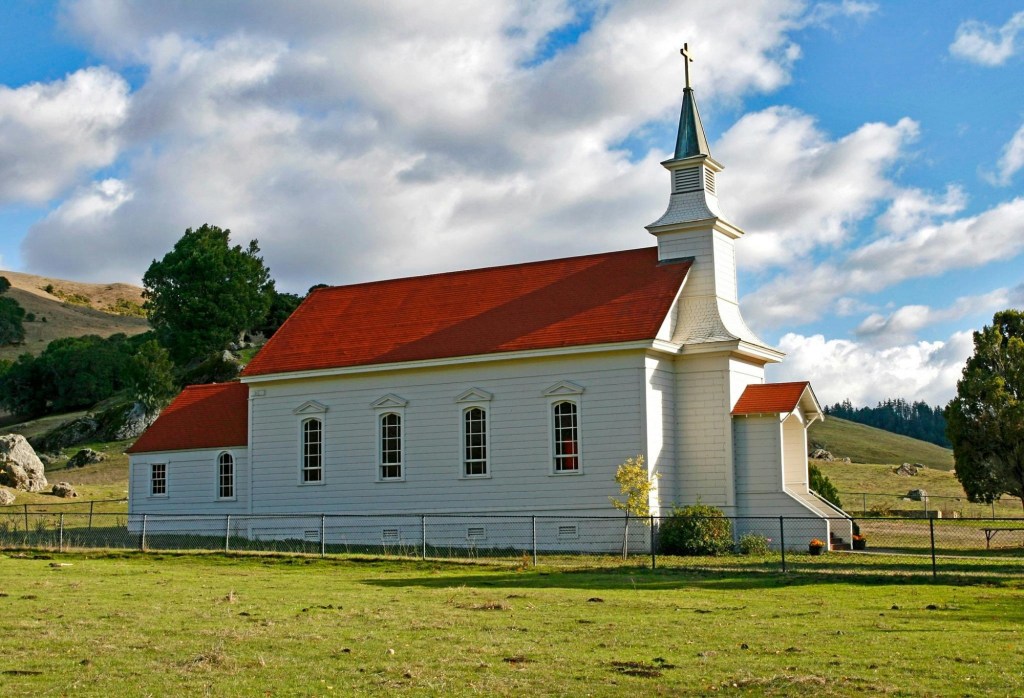
Christians have become overly focused on constructing buildings they call churches. Yet a building without believers is nothing more than a structure—a gathering place at best. As a song says, “A house is not a home when there’s no one there.” Likewise, a building, no matter how grand, is not the church if God’s people are absent.
Before the Reformation, the Roman Catholic Church aimed to construct the Saint Peter’s Basilica in Rome. However, lacking sufficient resources, they introduced the doctrine of indulgence to trick people into donating money. In today’s world, the same strategy may be employed to fund and execute building projects by simply calling them the church.
This fixation on building projects may be influenced by Western trends that many imitate without careful consideration. Some may have thought it’s good for personal legacy. However, these developments often lead to resentment in neighborhoods, as they generate traffic and inconvenience, effectively becoming obstacles to the Gospel itself. However, the mission of God’s people is clear: to spread the Gospel to the world, not to confine it within walls.
The coming of Jesus Christ and the rapid spread of the Gospel during the Roman Empire were no mere coincidences. The Pax Romana established a period of relative peace, while the vast network of Roman roads provided safe and efficient travel. These conditions created a literal and figurative highway for the message of Christ to reach distant lands with remarkable speed.
In contrast, modern Christianity often faces internal obstacles. Institutionalized churches, once intended to safeguard and organize the faith, can sometimes become barriers to the unrestrained sharing of the Gospel. Bureaucracy, divisions, and rigid structures may hold back the very mission they were meant to support. In this light, one might wonder: has modern Christianity, through its own systems, become its greatest hindrance?
Some interpret Hebrews 10:25 as a directive to gather regularly in sanctuaries or buildings. However, the phrase “meet together” appears only twice in the New Testament—Hebrews 10:25 and 2 Thessalonians 2:1—and should be understood as referring to God’s promise to regather Israel, as also seen in Romans 11:25-27. A careful reading of Romans indicates that this regathering was being fulfilled during Paul’s own lifetime.
Paul writes:
“I ask, then, has God rejected His people? By no means! For I myself am an Israelite, a descendant of Abraham, a member of the tribe of Benjamin. God has not rejected His people whom He foreknew. Do you not know what the Scripture says of Elijah, how he appeals to God against Israel? ‘Lord, they have killed Your prophets, they have demolished Your altars, and I alone am left, and they seek my life.’ But what is God’s reply to him? ‘I have kept for Myself seven thousand men who have not bowed the knee to Baal.’ So too at the present time there is a remnant, chosen by grace.” (Romans 11:1-5)
Here, the “present time” refers to Paul’s own era—the final days of Old Covenant Israel—where a remnant, saved by grace through faith in Jesus Christ, was preserved. Paul himself was an example of the remnant chosen by grace (Romans 11:1-5). He makes it clear that he is speaking of Old Covenant Israel, as he also notes in Romans 9:27: “And Isaiah cries out concerning Israel: ‘Though the number of the sons of Israel be as the sand of the sea, only a remnant of them will be saved.’”
If there are any doubts about the expiration of the Old Covenant, one only needs to look at Hebrews 8:13. It declares, “In speaking of a new covenant, God makes the first one obsolete. And what is becoming obsolete and growing old is ready to vanish away.” Furthermore, Hebrews 9 highlights the Jewish temple, the physical symbol of the Old Covenant, which no longer stands today.
Thus, the call to “meet together” is biblically and historically tied to God’s regathering of Israel rather than a universal command for modern believers to hold scheduled gatherings in sanctuaries or buildings.
The true church is not a building but the community of believers who confess Christ and live in faith. Jesus described the kingdom of heaven as a net gathering fish of every kind (Matthew 13:47-49): the Gospel is the net, the world is the sea, and the church—the true church—are the good fish gathered into God’s kingdom.
The early church wholeheartedly devoted itself to the apostles’ teachings (Acts 2:42), which are now reflected in the New Testament Scriptures, and to fellowship with one another. They met daily, not just for the weekly gatherings we often see today, but in the temple courts and later in homes (Acts 5:42; 12:12; Romans 16:5; 1 Corinthians 16:19; Colossians 4:15; Philemon 1:2). Unlike the modern practice of gathering in large buildings open to all, with sufficient parking and amenities, the early Christians shared life together in intimate home settings. This approach made it easier to distinguish genuine believers from those who were merely nominal. In this context, new believers were intentionally introduced to Christian groups, much like Barnabas personally connected Paul to the church (Acts 9:26-27). This created a clear sense of accountability and belonging.
Consequently, Paul’s instruction that the church must be purified was doable (1 Corinthians 5:7-13), applying discipline to those claiming to be brothers yet living in sin. Because everyone is known to each other, Jesus Himself instructs a step-by-step approach to correction (Matthew 18:15-17), which ultimately leads to purging unrepentant sin from the church. A real church is marked not by walls but by lives aligned with God’s Word.
Resources should therefore be directed toward spreading the Gospel, training believers (2 Timothy 2:2), and supporting faithful workers (3 John 5-8)—rather than pouring funds into concrete and mortar. Jesus declared that He would build His church on the rock of Peter’s confession (Matthew 16:18). Peter confessed: “You are the Christ, the Son of the living God (Matthew 16:16).” Scripture states, “therefore thus says the Lord GOD, ‘Behold, I am the One who has laid as a foundation in Zion, a Stone, a tested Stone, a precious Cornerstone, of a sure foundation: Whoever believes will not be in haste.’” (Isaiah 28:16)
Scripture clearly teaches that Christ is the “Rock” (1 Corinthians 10:4), the firm foundation and cornerstone of Zion, which is His church (Hebrews 12:22-24). With Christ Jesus as its head, the church is described as the “true temple” (John 2:19-22; Colossians 1:18). Paul reminds believers: “Do you not know that you (i.e. the church) are God’s temple and that God’s Spirit dwells in you?” (1 Corinthians 3:16). Further study of the following passages—1 Corinthians 6:19; 2 Corinthians 6:16; Ephesians 2:19-22; 1 Peter 2:4-6—reveals that the church is indeed God’s spiritual temple. Therefore, placing great emphasis on physical buildings misrepresents God’s word and the true nature of His church.
Instead of spending hundreds of millions, even billions, of pesos, why not consider renting? Some individuals generously donate, so why not construct a modest gathering place instead of large buildings with only a few attendees? Additionally, some may even be willing to lend out spaces for meetups and gatherings focused on reading and studying God’s word. As Paul instructed Timothy, “Devote yourself to the public reading of Scripture, to exhortation, to teaching.” (1 Timothy 4:13)
God’s workers should be honored (Hebrews 13:7), equipped (2 Timothy 2:15), and sent into the harvest where it truly lies—outside the four walls, in marketplaces, homes, daily encounters, and we don’t need to go far; our very neighborhood (Matthew 9:37-38). The church is God’s people, not the structures we maintain. Let’s stop wasting resources on buildings and instead fully commit to the work Christ commanded: proclaiming the Gospel and building His kingdom through lives, not bricks.
The church is, at its core, an assembly, though it does not always reflect the modern notion of a congregation. According to Scripture, it is the spiritual gathering of the firstborn, whose names are inscribed in heaven (Hebrews 12:22–24). This sacred assembly may appear as a local fellowship of believers or as individuals scattered across various regions, each faithfully fulfilling their service to God in their own context. For instance, Aquila and Priscilla, after being expelled from Rome, settled in Corinth (Acts 18:1-2). They contributed to God’s ministry by carefully explaining the Gospel to Apollos (Acts 18:24-26). Even while distant from Paul, they remained his fellow workers in Christ Jesus (Romans 16:3).
Paul reminds us that the church is composed of members with different gifts. As Ephesians 4:11 states, God appoints some to be pastors, some to be evangelists, and others to be teachers. While a single individual may at times perform the tasks of all three, these are the only offices that currently remain.
The New Testament defines apostles as direct witnesses of Christ—His life, teachings, death, resurrection, and ascension (1 Corinthians 9:1). Paul declared that he was the last of the apostles, uniquely chosen (1 Corinthians 15:8-9). His calling as the apostle to the Gentiles carried great responsibility (Romans 11:13; Acts 9:15-16). Paul’s extensive travels, numerous hardships, and eventual arrival in Rome—then viewed as the edge of the known world—highlight complete fulfillment of Acts 1:8. It is thus understandable that he authored most of the New Testament writings.
Furthermore, there is no scriptural basis proving that Peter ever ministered in Rome. The mention of “Babylon” in 1 Peter 5:13 is often misinterpreted as Rome, yet Revelation 17:5-6, 17:18, and 11:8 identify “Babylon the Great” as Old Covenant Jerusalem—the city where Jesus was crucified—rather than Rome.
Similarly, there are no prophets today since all divine revelations have been completed in the book of Revelation. As Paul teaches in Romans 12:7-8, some are gifted in serving, others in giving, and some in showing mercy. Each of us is called to faithfully fulfill the role that matches the gift God has given us.
Consequently, if Christians mistakenly view the church primarily as physical spaces—such as buildings, sanctuaries, and halls—they end up striving to fill every empty seat, even gathering those who are unconverted, like guests without a wedding garment— that is, faith in the righteousness of Jesus Christ (Matthew 5:17-20; 21:28-32; Romans 1:16-17; 3:21-26; 5:17; 13:14; Galatians 3:27-29; Ephesians 4:21-24). This is why Scripture declares, “For many are called, but few are chosen.” (Matthew 22:9-14)
Reflect on the Scriptures and be discerning. Do not simply follow others without understanding, for Jesus said, “If the blind lead the blind, both will fall into a pit.” (Matthew 15:14) Let us not imitate the Pharisees, who forsook God’s Word to cling to the traditions of men. (Mark 7:8)
Peter, in the words of Acts 3:6, declared, “I possess neither silver nor gold, but in the name of Jesus Christ, I offer you what I have.” Share this article freely, for you freely receive. Take note, underlines and highlights are clickable links for definitions or Bible references. Stay updated by heading to our about page and subscribe directly to receive notifications in your inbox. Blessings!
The notion that Paul was a “tentmaker,” in the contemporary interpretation of the Bible, holding a secular or business to support his ministry, is not explicitly confirmed in Scripture. Acts 18 describes Paul’s time in Corinth, where he resided with Aquila and Priscilla, both of whom were tentmakers by profession (Acts 18:1-4). During this period, he momentarily collaborated with them while continuing his ministry. However, Acts 18:5 reveals that after Silas and Timothy arrived from Macedonia, Paul dedicated himself entirely to preaching and teaching that Jesus is the Christ.
Paul, despite not relying on financial support from the Corinthians during his ministry among them (2Co 11:7), still faced allegations of hidden motives. This is evident in 2 Corinthians 12:16, where he acknowledges that while he didn’t burden them, they still accused him of being crafty and deceiving them.
Paul states, “Was it a sin for me to humble myself in order to exalt you, because I preached the gospel of God to you free of charge? I robbed other churches by accepting their support in order to serve you. And when I was with you and in need, I was not a burden to anyone; for the brothers who came from Macedonia supplied my needs. I have refrained from being a burden to you in any way, and I will continue to do so.” (2Co 11:7-9)
The passage in 2 Corinthians 11:7-9 clearly connects to Acts 18:5, where Luke mentions Timothy and Silas. These two individuals brought the financial support from Macedonia to Paul, enabling him to focus solely on his ministry work.
Furthermore, in his letter to the Philippians, Paul demonstrates that his material needs were met through their unwavering partnership in the Gospel. Philippians 4:10-16 captures his gratitude: “I rejoiced greatly in the Lord that you have finally revived your concern for me. You were indeed concerned for me, but you lacked the opportunity to do so. I understand how to be humbled and how to flourish. I can accomplish all things through him who strengthens me. And you, Philippians, yourselves are aware that at the beginning of the Gospel, when I departed from Macedonia, no church entered into partnership with me in giving and receiving, except for you alone. Even in Thessalonica, you sent me assistance for my needs repeatedly.”
The idea of tentmakers supposedly derived from Paul is clearly unfounded. Paul’s view of ministry and support follows the teachings of Jesus, who instructed the apostles in Matthew 10:9-14 not to acquire provisions for their own journey but to rely on the hospitality of those who received their message: “The laborer deserves his food… And if anyone will not receive you or listen to your words, shake off the dust from your feet when you leave that house or town.”
Paul’s teaching in 1 Corinthians 11:1—“You are to imitate me, just as I imitate Christ”—becomes more understandable when we consider how both he and Jesus lived by faith. Paul’s life and ministry were a reflection of Christ’s example, characterized by trust and reliance on God’s provision rather than self-sufficiency. It’s worth noting that many people may not realize that Jesus never performed miracles to meet His daily needs. He didn’t turn stones into bread or multiply loaves for His own sustenance.
Luke’s account in Luke 8:1–3 shows the practical side of Jesus’ ministry: He travelled from town to town with the Twelve, proclaiming the good news of the Kingdom of God. While doing so, He and His disciples were supported by women who had experienced His grace—Mary Magdalene, Joanna the wife of Chuza, Susanna, and many others—who ministered to them out of their own resources. This example demonstrates a life of faith, receiving what God provided through the generosity of others.
In the same way, Paul lived and served by faith, relying on God’s provision through the support of fellow believers, mirroring the very pattern set by Christ during His earthly ministry.
Scripture’s teachings humbled me. Instead of seeking ways to support our independent Bible studies, we initially relied solely on our savings and occasional assistance from brethren in Metro Manila. Initially, I even contemplated sending letters to solicit support. However, after reflecting on the ministry principles outlined in Jesus Christ’s life and teachings, I abandoned that plan.
Was it hard? It was, but it became doable when I remembered God’s grace from the very moment I believed. God does not change, and His faithfulness sustains.
This principle is reinforced in Hebrews 13:5-8: “Keep your life free from love of money, and be content with what you have… The Lord is my helper; I will not fear…” It reminds believers that Jesus Christ remains constant—yesterday, today, and forever.
Scripture clearly teaches that both those who labour for God and those who support the ministry are united as fellow workers in the truth. As John writes in his letter:
“Beloved, you are faithful in what you are doing for the brothers, even though they are strangers to you. They have testified to the church about your love. You will do well to send them on their way in a manner worthy of God. For they have gone out for the sake of the Name, accepting nothing from the unbelievers. Therefore, we ought to support such men, so that we may be fellow workers for the truth.” (3 John 1:5-8)
This passage highlights the partnership between those who go out to serve and those who uphold them, showing that both share in the mission to advance the truth of God’s Word.
If such faith and reliance on the Lord were possible then, it remains possible now. Our service to the same unchanging Jesus calls us to embrace the faith modeled in Scripture and the ministry journey of the apostles. Ultimately, it all comes down to faith.
P.S. This message is not meant to belittle any of God’s workers who rely on the support of churches or mission organizations. Rather, it stands as a reminder that Jesus Christ is the same yesterday, today, and forever (Hebrews 13:8). He has said, “If you abide in My words, you are truly My disciples, and you will know the truth, and the truth will set you free.” (John 8:31-32) Place your trust in Jesus, even if others may hesitate. In doing so, you will truly experience His grace and goodness, free from human pressures and influences. For those serving in God’s ministry, remember that Jesus Himself commanded that those who proclaim the Gospel should make their living through the Gospel (1 Corinthians 9:14). Likewise, Paul instructed believers: “Let the one who is taught the word share all good things with the one who teaches” (Galatians 6:6).
Peter, in the words of Acts 3:6, declared, “I possess neither silver nor gold, but in the name of Jesus Christ, I offer you what I have.” Share this article freely, for you freely receive. Take note, underlines and highlights are clickable links for definitions or Bible references. Stay updated by heading to our about page and subscribe directly to receive notifications in your inbox. Blessings!
This posting is bound to stir controversy. However, as we have been guided by God’s Word and come to the realization that we may have been mistaken in our belief, shaped by long‑standing traditions and practices, having recognized the error, shouldn’t we reconsider our stance?
Only those touched by the Gospel of Jesus Christ possess the fervent boldness to express their faith. However, any heated matter will cool down if not constantly maintained. Our faith in Jesus Christ must be continually challenged to ensure that our passion for Christ remains unwavering. The primary adversary of all Christians is the deceptive wolves in sheep’s clothing.
Have you encountered any of these individuals? The Bible states:
“Do not be unequally yoked with unbelievers. For what partnership has righteousness with lawlessness? Or what fellowship has light with darkness? What accord has Christ with Belial? Or what portion does a believer share with an unbeliever? What agreement has the temple of God with idols? For we are the temple of the living God; as God said, ‘I will make My dwelling among them and walk among them, and I will be their God, and they shall be My people. Therefore, go out from their midst and be separate from them, says the Lord. Touch no unclean thing; then I will welcome you, and I will be a father to you, and you shall be sons and daughters to Me, says the Lord Almighty.’” (2 Corinthians 6:14-18)
In Paul’s context, the unbelievers he mentioned are not those outside the Christian faith. Instead, they are the wolves in sheep’s clothing within the church. A deeper understanding of this point can be gained by reading Paul’s letter, as least beginning at 2 Corinthians 2:17-7:1; 10:1-12:21.
The identity of the true church can become blurred when a venue where Christians gather also includes those who are ungodly or unrepentant. Scripture speaking about the church states:
“Do you not know that Christians are God’s temple and that God’s Spirit dwells in His church? If anyone destroys God’s temple, God will destroy him. For God’s temple is holy, and you are that temple.” (1 Corinthians 3:16-17)
No wonder, Paul called on the church to “purge the evil from within them” (1 Corinthians 5:13). It raises the question: how can we distinguish who truly belongs to the church? Only God knows who truly belongs to Him (2 Timothy 2:19). Confusion arises when human-made buildings or organizations—formed outside the pattern of Scripture—are still called churches. Jesus said in Matthew 16:18,
“On this Rock I will build My church, and the gates of Hades shall not prevail against it.”
Paul’s perspective on marriages between believers and unbelievers differs from the stance of much of contemporary Christianity. Rather than opposing such unions outright, he presents them as opportunities for the believing spouse to influence and possibly lead the other towards faith. This idea is captured in 1 Corinthians 7:16: “For how do you know, wife, whether you will save your husband? Or how do you know, husband, whether you will save your wife?”
The Rock is Christ Himself (1 Corinthians 10:4), and Peter’s confession—“You are the Christ, the Son of the Living God”—confirms this foundation.
Weekly Sunday gatherings are best understood as occasions for Christians to meet, sometimes accompanied by family and friends who may not yet share their faith, to listen to God’s Word.
The Apostle Paul demonstrated this practice by addressing a variety of audiences: he spoke to people in the marketplace and at the Areopagus in Athens (Acts 17:16-34), taught in the Hall of Tyrannus in Ephesus (Acts 19:8-10), and preached in the synagogues of Thessalonica (Acts 17:1-4), Berea (Acts 17:10-12), and Antioch (Acts 13:14-16). None of these locations were ever described as churches.
Instead, Scripture points out that early Christians gathered in their own homes, forming house churches, as seen in Romans 16:3-5, 1 Corinthians 16:19, Colossians 4:15, and Philemon 1:1-2. This does not imply that believers never assembled in larger spaces for fellowship among themselves, but no building was ever called a church in the biblical sense. Jesus Christ, when teaching about matters of the church, said:
“For where two or three are gathered in My name, there am I among them.” (Matthew 18:20)
The essence of the church is not tied to a specific building or location, but to the fellowship of believers who gather in the name of Christ. This truth is affirmed in John 4:21-24, where worship is shown to transcend physical spaces, focusing instead on spirit and truth.
“Believe Me, woman,” Jesus replied, “a time is coming when you will worship the Father neither on this mountain nor in Jerusalem. You worship what you do not know; we worship what we do know, for salvation is from the Jews. But a time is coming and has now come when the true worshipers will worship the Father in spirit and in truth, for the Father is seeking such as these to worship Him. God is Spirit, and His worshipers must worship Him in spirit and in truth.” (John 4:21-24)
Paul urges Christians to dedicate their lives as a living act of spiritual worship. He instructs believers not to conform to the patterns of this world but to be transformed by the renewing of their minds. Through this transformation, we gain the ability to discern and approve what is the good, pleasing, and perfect will of God. (Romans 12:1-2)
Christians frequently invoke 2 Corinthians 6:14, “Do not be unequally yoked with unbelievers,” to dissuade marriages between different denominations, like a Roman Catholic and an evangelical Christian. Yet, they seem to overlook the threat posed by wolves in sheep’s clothing among their own congregations. This creates an irony: the very misuse of 2 Corinthians 6:14 pressures believers to marry solely within their circle, even if some within that circle may, in fact, be spiritual pretenders.
I posed this question online: Are Christians allowed to be unequally yoked? Here’s the response:
Christians are not permitted to be unequally yoked, according to the teachings of the Bible. The phrase “unequally yoked” comes from 2 Corinthians 6:14, which advises believers not to form binding partnerships with non-believers. This guidance applies to marriage, close friendships, and business relationships where values and life directions might conflict.
Being yoked together implies moving in the same direction and sharing a purpose. If one partner does not share the same faith, it can lead to spiritual struggles, conflicts in values, and difficulty in walking in God’s will. Therefore, Christians are encouraged to seek relationships that strengthen their faith and align with biblical principles.
I fully agree with the second part of the response. However, it appears excessive to completely avoid business relationships or close friendships with unbelievers. This is easily refuted by Paul’s instructions in 1 Corinthians 5:9-13.
“I wrote you in my letter not to associate with sexually immoral people. I was not including the sexually immoral of this world, or the greedy and swindlers, or idolaters. In that case you would have to leave this world. But now I am writing you not to associate with anyone who claims to be a brother but is sexually immoral or greedy, an idolater or a verbal abuser, a drunkard or a swindler. With such a man do not even eat. What business of mine is it to judge those outside the church? Are you not to judge those inside? God will judge those outside. ‘Expel the wicked man from among you.’” (1 Corinthians 5:9-13)
Moreover, Paul’s instructions in 1 Corinthians 7 offer a different perspective on marriage. The principle of “garbage in, garbage out” is evident in the AI’s response. We must exercise caution and discernment with information from the internet.
Christianity generally holds that 2 Corinthians 6:14 applies to marriage. However, its intended context and application are for the church, similar to Paul’s instructions in 1 Corinthians 5:9-13.
Here are the key points on marriage from Paul’s instruction in 1 Corinthians 7:
“To the rest I say (I, not the Lord) that if any brother has a wife who is an unbeliever, and she consents to live with him, he should not divorce her. If any woman has a husband who is an unbeliever, and he consents to live with her, she should not divorce him. For the unbelieving husband is made holy because of his wife, and the unbelieving wife is made holy because of her husband. Otherwise your children would be unclean, but as it is, they are holy. But if the unbelieving partner separates, let it be so. In such cases the brother or sister is not enslaved. God has called you to peace. For how do you know, wife, whether you will save your husband? Or how do you know, husband, whether you will save your wife?Only let each person lead the life that the Lord has assigned to him, and to which God has called him. This is my rule in all the churches.” (1Co 7:12-17)
It’s easy to select, quote verses, and make judgments. However, every verse in Scripture has its context, and each context addresses a specific concern. Let’s avoid misinterpretation and misapplication of God’s Word.
Let us share our faith with our unbelieving loved ones, including those with unbelieving partners. We should share our faith without enforcing it. Faith is best demonstrated through our actions and lifestyle.
Let me repeat Paul’s message:
“For how do you know, wife, whether you will save your husband? Or how do you know, husband, whether you will save your wife? Only let each person lead the life that the Lord has assigned to him, and to which God has called him. This is my rule in all the churches.” (1Co 7:16-17)
Apparently, the problem isn’t having an unbelieving partner, but rather when the believing person compromises their faith.Instead of living a life of faith to influence their unbelieving partners, they submit to their ways. This is where the issue lies.
Of course, the ideal marriages should be between fellow believers in the Lord Jesus Christ. However, it’s also important to recognize that we only truly get to know the person we’ve married when we’ve lived together under one roof. In such a scenario, the ideal setting may not always be as perfect as we imagine. So, perhaps there goes Paul’s teaching for all churches. (1 Corinthians 7)
Important to note, however, was Paul’s instruction in 1 Corinthians 7:15. He emphasized, “But if the unbelieving partner separates, let it be so. In such cases, the brother or sister is not enslaved. God has called you to peace.” This teaching reminds Christians not to compromise their faith within a marriage with an unbeliever. If the unbelieving spouse refuses to accept or live peacefully with your faith, you are called to let them go, so that you may live in the peace God intends and freely practice your faith.
Paul’s statement in 1 Corinthians 7:17 is striking: he emphasises that his instructions are not mere suggestions, but a rule for all the churches. This shows the weight and authority of his words, meant to guide the believers collectively, not just optional advice for individual interpretation.
In my 26 years of being a Christian, I’ve encountered numerous non-Christians who live according to some teachings of Jesus. For instance, they follow Jesus’ teachings,
“So whatever you wish that others would do to you, do also to them, for this is the Law and the Prophets.” (Matthew 7:12)
They are aware of what is harmful to them and refrain from doing it to others, and vice versa. They do what is good to them to others. On the other hand, I’ve also come across a significant number of professing Christians who are actually devilish and engage in actions contrary to the Bible. Some of these actions are openly displayed, while others are kept secret or done in the dark. In such cases, it becomes challenging to discern who is truly far from God’s kingdom.
The Bible told of a story of a man who approached Jesus with a question. After Jesus responded, another person remarked,
“To love God with all your heart, mind, and strength, and to love your neighbor as yourself, is far greater than all the sacrifices and offerings.”
Jesus then stated, “You are not far from the kingdom of God.” (Mark 12:34) This story is found in Mark 12:28-34. The only missing element was a confession of faith in Jesus Christ.
Let me be clear: Salvation is not something that can be passed on to others. Not even to our partners in life, sons or daughters. It is a personal journey that involves a sincere confession of faith in Christ Jesus. This confession acknowledges that without Jesus, no one can earn eternal life. A true confession of faith in Jesus Christ demands a profound transformation in one’s believes, character and values.
The responsibility of living for Jesus rests on us who believe, and we are tasked not only to live our faith but teach it to our husbands or wives, and most especially to our children. Now, after faithfully doing our Christian duty, the rest is upon God’s grace. Paul states,
“I planted, Apollos watered, but God gave the growth. So neither he who plants nor he who waters is anything, but only God who gives the growth.” (1Co 3:6-7)
Christians are called to live in accordance with the teachings of the Bible, allowing God’s Word to shape and transform their lives for His glory. Regarding marriage, Paul recognized its inherent complexities. In 1 Corinthians 7:12, he begins with, “To the rest I say (I, not the Lord),” expressing pastoral counsel that carefully considers the nuances of the situation. This phrasing reflects his unique role as a divinely inspired writer of Scripture, as affirmed in 2 Peter 1:20-21. In contrast, modern pastors, though able to offer wise guidance, cannot claim the same level of authority as Paul did in his inspired writings.
Servants of God’s Word, we are called to present ourselves as approved before Him: diligent workers, unashamed, and rightly handling the Word of truth, as written in 2 Timothy 2:15. This command was given to Timothy and speaks to us today, we who profess to be called by Jesus to teach and share His Word. As we seek to guide others, let us avoid unnecessary complications. In matters of marriage, let us faithfully lean on God’s instructions found in 1 Corinthians 7, using His Word as our clear and unwavering guide.
May this article shed light on the topic of mixed marriages. Pray, read the Bible, and always be guided by Scripture. May the grace of God be upon everyone who reads this article.
P.S. I’m open to reconsider my stance if someone can provide a more effective teaching on this subject. However, these are the teachings I’ve encountered in Scripture.
Peter, in the words of Acts 3:6, declared, “I possess neither silver nor gold, but in the name of Jesus Christ, I offer you what I have.” Share this article freely, for you freely receive. Take note, underlines and highlights are clickable links for definitions or Bible references. Stay updated by heading to our about page and subscribe directly to receive notifications in your inbox. Blessings!
No, that is not correct. The recent earthquakes are not connected to Christ’s return. Let us look into Scripture to see where such an idea might have originated. The Bible says:
“Jesus left the temple and was going away when His disciples came to show Him the temple buildings. But He said to them, ‘Do you see all of these? Truly, I tell you, not one stone here will remain on another; every one will be thrown down.’ Later, as He sat on the Mount of Olives, the disciples approached Him privately and asked, ‘Tell us, when will these things happen, and what will be the sign of Your comingand of the end of the age?’” (Matthew 24:1-3)
Let us explore the question: When will the temple be destroyed? What will be the sign of Your coming and of the end of the age? These seemingly three distinct questions collectively encapsulate a single, overarching inquiry.
Take note, the disciples sought the sign of Jesus’ coming because of His prediction of the temple’s destruction. They were well aware of the connection between the desolation of the temple and the two other events – the coming of Jesus and the end of the age. Jesus first warned them about the deceptive nature of false prophets. He cautioned them:
“Be on guard against false prophets. Many will come in My name, claiming to be the Christ, and they will lead many astray.” (Matthew 24:4-5)
Let’s quickly address the concept of “end of the age.” The Bible states:
“On many past occasions and in many different ways, God spoke to our fathers through the prophets. But in these last days He has spoken to us by His Son, whom He appointed heir of all things, and through whom He made the universe” (Hebrews 1:1-2).
Here’s the proof that God is going to create a new people, see Isaiah 65:17-19:
“For behold, I create new heavens and a new earth, and the former things shall not be remembered or come into mind. But be glad and rejoice forever in that which I create; for behold, I create Jerusalem to be a joy, and her people to be a gladness. I will rejoice in Jerusalem and be glad in My people; no more shall be heard in it the sound of weeping and the cry of distress.”
In the Gospel of Luke, during the Last Supper or the Passover meal, the Bible states:
“And Jesus took bread, and when He had given thanks, He broke it and gave it to His disciples, saying, ‘This is My body, which is given for you. Do this in remembrance of Me.’ And likewise the cup after they had eaten, saying, ‘This cup that is poured out for you is the new covenant in My blood.’” (Luke 22:19-20)
Here is the essence of Christ’s declaration of the New Covenant. Paul, in 2 Corinthians 5:16-17 states:
“From now on, therefore, we regard no one according to the flesh (i.e., circumcision or Old Covenant). Even though we once regarded Christ according to the flesh, we regard Him thus no longer. Therefore, if anyone is in Christ, he is a new creation. The old has passed away; behold, the new has come.”
Back to Christ’s warning against deceptive false prophets (Matthew 24:4-5). As students of the Bible, we should have noticed Jesus’ repeated warning to His disciples on this matter in Matthew 24. Jesus cautions:
“Then if anyone says to you, ‘Look, here is the Christ!’ or ‘There he is!’ do not believe it. For false christs and false prophets will arise and perform great signs and wonders, so as to lead astray, if possible, even the elect. See, I have told you beforehand. So, if they say to you, ‘Look, he is in the wilderness,’ do not go out. If they say, ‘Look, he is in the inner rooms,’ do not believe it’” (Matthew 24:23-26).
It was undoubtedly of utmost importance for Jesus to reiterate this warning three times, as seen for the first time in Matthew 24:4-5. But why did He do so?
Let’s take a look at Jesus’ declaration, both to the Pharisees and to His disciple on the same reference “look, here it is! or there!”
“Being asked by the Pharisees when the kingdom of God would come, Jesus answered them, “The kingdom of God is not coming in ways THAT CAN BE OBSERVED, nor will they say, ‘Look, here it is!’ or ‘There!’ for behold, the kingdom of God is in the midst of you.” And Jesus said to the disciples, “The days are coming when you will desire to see one of the days of the Son of Man, and you will not see it. And they will say to you, ‘Look, there!’ or ‘Look, here!’ Do not go out or follow them. For as the lightning flashes and lights up the sky from one side to the other, so will the Son of Man be in His day. But first He must suffer many things and be rejected by this generation.” (Luke 17:20-25)
Contrary to popular belief, Jesus wasn’t implying that His coming would be swift and easily noticeable by saying, “For as the lightning flashes and illuminates the sky from one side to the other.” Instead, Christ was quoting Zechariah 9:14:
“Then the LORD will appear over them, and His arrow will be sent forth like lightning; the Lord GOD will sound the trumpet and will march forth in the whirlwinds of the south.”
In essence, Jesus declares that He, the Son of Man, will return in the glory of LORD or YHWH, the covenant name of God. God Almighty – God the Father, God the Son and the Holy Spirit.
Look at Jesus words again: “The days are coming when you will desire to see one of the days of the Son of Man, and you will not see it. And they will say to you, ‘Look, there!’ or ‘Look, here!’ Do not go out or follow them.” (Luke 17:22-23)
By quoting from Zechariah 9, Jesus assures His disciples that He is the Christ, the King who came to Jerusalem riding a donkey (Zechariah 9:9). This prophecy was fulfilled just days later in Luke 19:28-38. Contrary to contemporary Christian beliefs and teachings, the Bible never taught about two separate comings of Jesus Christ. With the coming of Jesus, the Christ, He was to fulfill Scriptures (Matthew 5:17; Luke 24:44). The Book of Hebrews clearly teaches:
“Just as man is appointed to die once, and after that to face judgment, so also Christ was offered once to bear the sins of many; and He will appear a second time, not to bear sin, but to bring salvation to those who eagerly await Him” (Hebrews 9:27-28).
It is not two comings, but by His return, He completed His salvation work for all who believe in Him. Christ Jesus’ return would be marked by glory and power, not by a visible appearance, but rather by the event of the temple’s desolation or destruction, which occurred in 70 AD. Contrary to contemporary Christian teachings and beliefs, Acts 1:11 explicitly states that Jesus will return in glory, not in a physical form. Jesus’ coming on the clouds signifies His return in glory, as specifically stated by Paul in 1 Timothy 3:16.
“Indeed, we confess, is the mystery of godliness: He was manifested in the flesh, vindicated by the Spirit, seen by angels, proclaimed among the nations, believed on in the world, and taken up in glory.”
After Christ’s ascension, Jesus manifested Himself to Stephen before his martyrdom for the faith and to Paul during his Damascus encounter. In Acts, Jesus was either seen on the right hand of God (Acts 7:55-56), in glory (Acts 9:3-7), or in the Spirit (Acts 16:7).
Consequently, Jesus cautioned His disciples against believing claims of seeing Him visibly during His coming. Refer to Luke 17:22-24, where He addressed the disciples and said:
“The days are coming when you will yearn to witness one of the days of the Son of Man, but you will not be able to see it. They will say to you, ‘Look, there!’ or ‘Look, here!’ Do not go out or follow them. For as the lightning flashes and illuminates the sky from one side to the other, so will the Son of Man be in His day.”
The same message was conveyed by Jesus in Matthew 24:23-27. In verse 27, Jesus seems to have likened His return to the lightning that illuminates the sky from one side to the other (Luke 17:24), but in reality, He quotes Zechariah 9:14:
“Then the LORD will appear over them, and His arrow will go forth like lightning; the Lord GOD will sound the trumpet and will march forth in the whirlwinds of the south”
The declaration in Zechariah 9:14-17 signifies that Jesus would return in glory and power, and His salvation would be completed upon His return, same with Hebrews 9:28.
“So also Christ was offered once to bear the sins of many; and He will appear a second time, not to bear sin, but to bring salvation to those who eagerly await Him.” (Hebrews 9:28)
There’s no huge gap after all in Christ’s coming, unlike the beliefs of many today. It’s been millennia since Jesus appeared. Instead, Jesus fulfilled Scriptures, as foreshadowed by the Exodus to the Promised Land. Israel spent forty years in Exodus with Moses before Joshua led them in conquering the Promised Land. Luke explained the transfiguration of Jesus, stating:
“Suddenly two men, Moses and Elijah, began talking with Jesus. They appeared in glory and spoke about His departure, which He was about to accomplish at Jerusalem” (Luke 9:30-31).
The Greek word translated “departure” literally means “exodus,” so like the Exodus, which was the shadow of things to come. Jesus was in fulfillment of Scriptures; He led His people in exodus to the true Promised Land. The Bible states:
“For if Joshua had given them rest, God would not have spoken of another day later on. So then, there remains a Sabbath rest for the people of God, for whoever has entered God’s rest has also rested from his works as God did from His.” (Hebrews 4:8-10)
The Promised Land signifies rest. God has welcomed back mankind – that is, those who believe in Jesus Christ – to the Garden of Eden, where God is in communion with man, and man works not to survive, but in the command of God. (Genesis 2:15) Jesus Christ declares:
“Do not work for the food that perishes, but for the food that endures to eternal life, which the Son of Man will give to you. For on Him God the Father has set His seal.” (John 6:27)
Work on how to increase your faith, and always believe in Jesus Christ. For Jesus states:
“So don’t worry about these things, saying, ‘What will we eat? What will we drink? What will we wear?’ These things dominate the thoughts of unbelievers, but your heavenly Father already knows all your needs. Seek the Kingdom of God above all else, and live righteously, and He will give you everything you need.” (Matthew 6:31-33)
Next, in Matthew 24:6-8, Jesus states:
“And you will hear of wars and rumors of wars. See that you are not alarmed, for this must take place, but the end is not yet. For nation will rise against nation, and kingdom against kingdom, and there will be famines and earthquakes in various places. All these are but the beginning of the birth pains.”
During the time of the disciples, were there no wars or rumors of wars, nor were there any earthquakes? The Jewish war occurred during the era of Jesus Christ’s disciples. According to the Jewish historian Flavius Josephus, a severe earthquake struck Jerusalem during the festival of Pentecost (Shavuot) in 66 AD, just before the outbreak of the Jewish-Roman War. Josephus also recorded the occurrence of famine during that period.
Furthermore, the decades preceding the 70 AD destruction of Jerusalem and the temple were marked by a series of geological upheavals throughout the Roman Empire. Although not confined to Jerusalem, earthquakes devastated cities in Crete, Smyrna, Miletus, Campania, and the renowned 63 AD earthquake that obliterated Pompeii. These events were widely interpreted by early followers as forewarnings of the city’s impending downfall.
Continuing on, in Matthew 24:9-15, Jesus next states:
“Then they will deliver you (i.e., the disciples) up to tribulation and put you to death, and you will be hated by all nations for My name’s sake. And then many will fall away and betray one another and hate one another. And many false prophets will arise and lead many astray. And because lawlessness will be increased, the love of many will grow cold. But the one who endures to the end will be saved. And this gospel of the kingdom will be proclaimed throughout the whole world as a testimony to all nations, and then the end will come.”
The Book of Acts chronicles the spread of the Gospel. It begins in Jerusalem (Acts 2-7), extends to all Judea and Samaria (Acts 8), and ultimately reaches the ends of the earth (Acts 11:19-28:31). Paul was in Rome at the conclusion of Luke’s narration in Acts. As the capital of the Roman Empire, Rome represented the culmination of the then-known Jewish world, fulfilling Acts 1:8. Jesus prophesied to His apostles:
“But you will receive power when the Holy Spirit has come upon you, and you will be my witnesses in Jerusalem and in all Judea and Samaria, and to the ends of the earth.”
Jesus finally revealed the sign of His coming, saying:
“So, when you see the abomination of desolation spoken of by the prophet Daniel standing in the holy place (let the reader understand), then let those in Judea flee to the mountains. Those on the housetop should not descend to take what is in their house, and those in the field should not turn back to retrieve their cloaks. Alas, women who are pregnant and those who are nursing infants during those days! Pray that your flight may not occur in winter or on a Sabbath. For then there will be great tribulation, such as has never been experienced since the beginning of the world and will never be again. If those days had not been shortened, no human being would be saved. However, for the sake of the elect, those days will be shortened.” (Matthew 24:15-22)
The destruction of the temple was the sign of Jesus’ coming, as mentioned in Daniel’s prophecies (Daniel 8:13, 9:26-27, and 12:11-13). Anyone still skeptical that Jesus in Matthew 24:15 spoke of the temple’s desolation should simply refer to Luke’s narration on the same event.
“But when you see Jerusalem surrounded by armies, then know that its desolation has come near. Then let those who are in Judea flee to the mountains, and let those who are inside the city depart, and let not those who are out in the country enter it, for these are days of vengeance, to fulfill all that is written. Alas for women who are pregnant and for those who are nursing infants in those days! For there will be great distress upon the earth and wrath against this people. They will fall by the edge of the sword and be led captive among all nations, and Jerusalem will be trampled underfoot by the Gentiles, until the times of the Gentiles are fulfilled.” (Luke 21:20-24)
Interestingly, many people overlooked the fact that Jesus quoted Daniel 12:1 in Matthew 24:21, stating:
“For then there will be great tribulation, such as has not been from the beginning of the world until now, no, and never will be.”
Moreover, it’s crucial to note that Daniel 12:3 states:
“And those who are wise shall shine like the brightness of the sky above; and those who turn many to righteousness, like the stars forever and ever.”
Jesus quoted this verse when He spoke about the kingdom of heaven. Refer to Matthew 13:43. Let us learn from Christ’s teaching on Daniel 12:3 or Matthew 13:43, the context for Jesus’ teaching in Matthew 13:44-52.
“Then the righteous will shine like the sun in the kingdom of their Father. He who has ears, let him hear (Daniel 12:3). The kingdom of heaven is like treasure hidden in a field, which a man found and covered up. Then in his joy he goes and sells all that he has and buys that field.” “Again, the kingdom of heaven is like a merchant in search of fine pearls, who, on finding one pearl of great value, went and sold all that he had and bought it.” “Again, the kingdom of heaven is like a net that was thrown into the sea and gathered fish of every kind. When it was full, men drew it ashore and sat down and sorted the good into containers but threw away the bad. So it will be at the end of the age. The angels will come out and separate the evil from the righteous and throw them into the fiery furnace. In that place there will be weeping and gnashing of teeth.” “Have you understood all these things?” They said to Jesus, “Yes.” And He said to them, “Therefore every scribe who has been trained for the kingdom of heaven is like a master of a house, who brings out of his treasure what is new and what is old.” And when Jesus had finished these parables, he went away from there,” (Matthew 13:43-53)
So, here’s the challenge: have we truly been trained for the kingdom of heaven? Sadly, the fallacy concerning the Return of Jesus has persisted for too long that people have accepted it as the truth. Indeed, as the saying goes, “Repeat a lie often enough, and it becomes the truth.”
Have we been obedient to do our part in God’s kingdom? Paul wrote in Romans:
“So we (i.e., God’s church), though many, are one body in Christ, and individually members one of another. Having gifts that differ according to the grace given to us, let us use them: if prophecy, in proportion to our faith; if service, in our serving; the one who teaches, in his teaching; the one who exhorts, in his exhortation; the one who contributes, in generosity; the one who leads, with zeal; the one who does acts of mercy, with cheerfulness.” (Romans 12:5-8)
Some individuals have been serving for financial gain, but Paul emphasizes that they are not like many others who peddle God’s word. Instead, they are sincere men, commissioned by God, who speak in Christ in the presence of God. (2 Corinthians 2:17) Others, similarly fixated on their calculators evaluating their contributions to God’s work, behave like stock market investors. When their investments decrease, their giving also diminishes. However, what happens when the market is thriving? Do their giving practices align with the increase in their financial standing?
Here’s a story from the Bible:
“Jesus sat opposite the treasury and observed the people depositing money into the offering box. Many wealthy individuals contributed substantial sums. However, a poor widow approached and placed two small copper coins, which constitute a penny. Jesus then called His disciples to Him and said, ‘Truly, I say to you, this impoverished widow has contributed more than all those who are giving to the offering box. They all contributed out of their abundance, but she, despite her poverty, has given everything she had, all that she needed to sustain herself.’” (Mark 12:41-44)
Let us all give to the Lord what has been entrusted to us first. Scripture state:
“Beware lest you say in your heart, ‘My power and the might of my hand have gotten me this wealth.’ You shall remember the LORD your God, for it is He who gives you power to get wealth.” (Deuteronomy 8:17-18)
Christ Jesus told of a person who came to Him, asking about eternal life. Sadly though, being rich, Jesus issued a challenge to him. He walked away sorrowfully. (Matthew 19:16-22) Jesus then turned to His disciples and said:
“Truly, I say to you, only with difficulty will a rich person enter the kingdom of heaven. Again I tell you, it is easier for a camel to go through the eye of a needle than for a rich person to enter the kingdom of God.” (Matthew 19:23-24)
In several instance, the Bible warns against the love of money (1 Timothy 6:10; Hebrews 13:5). Some individuals are called to fulfill their work full-time in Christ’s ministry, while others are blessed with wealth. The Bible states:
“God’s workers accept nothing from people who are not believers. Therefore, we ourselves should support them so that we can be their partners as they teach the truth.” (3 John 5-8)
This serves as a test of our faithfulness to Jesus Christ, for both us as servants of God’s work and all Christians. God’s workers should remain faithful to His Word, and the church should partner with them through support and giving. Consider the story of Elijah in 1 Kings 17. It was not Elijah who was provided with sustenance, but the widow who gave him food.
“So Elijah arose and went to Zarephath. And when he came to the gate of the city, behold, a widow was there gathering sticks. And he called to her and said, ‘Bring me a little water in a vessel, that I may drink.’ And as she was going to bring it, he called to her and said, ‘Bring me a morsel of bread in your hand.’ And she said, ‘As the LORD your God lives, I have nothing baked, only a handful of flour in a jar and a little oil in a jug. And now I am gathering a couple of sticks that I may go in and prepare it for myself and my son, that we may eat it and die.’ And Elijah said to her, ‘Do not fear; go and do as you have said. But first make me a little cake of it and bring it to me, and afterward make something for yourself and your son. For thus says the LORD, the God of Israel, “The jar of flour shall not be spent, and the jug of oil shall not be empty, until the day that the LORD sends rain upon the earth.” And she went and did as Elijah said. And she and he and her household ate for many days. The jar of flour was not spent, neither did the jug of oil become empty, according to the word of the LORD that He spoke by Elijah.” (1 Kings 17:10-16)
Back to our topic, thrice, Jesus warned the disciples, saying:
“If anyone says to you, ‘Look, here is the Christ!’ or ‘There!’ don’t believe it. False christs and false prophets will rise and perform great signs and wonders to deceive, if possible, even the elect. I have already told you this. Therefore, if they say to you, ‘Look, He is in the desert!’ don’t go out; or ‘Look, He is in the inner rooms!’ don’t believe it. Just as the lightning flashes from the east to the west, so too will the coming of the Son of Man. Wherever the dead body is, the eagles will gather around it.” (Matthew 24:23-28)
For Matthew 24:28, most modern translations of the Bible have it as “Wherever the corpse is, there the vultures will gather.” However, the above translation from the NKJV uses “eagle” instead of “vultures.” In Greek, the word “Aetos” (G105) should have been translated as “eagles” instead of “vultures.” This verse is a reference to Deuteronomy 28:49, which states:
“The LORD will bring a nation against you (i.e., the Old Covenant Israel) from far away, from the end of the earth, swooping down like the eagle, a nation whose language you do not understand.”
In 70 AD, Rome, the foreign nation, destroyed both the city of Jerusalem and the sanctuary. God’s judgment was imminent for the generation that crucified Jesus, oppressed, and killed His apostles. Jesus declared:
“Truly, I say to you, all these things will come upon this generation” (Matthew 23:36).
Christ reiterated His judgment, stating:
“Truly, I say to you, this generation will not pass away until all these things take place” (Matthew 24:34).
So, why did post-first-century Christianity commit mistakes until today? Why is our current understanding of Christ’s return completely different from what I explained here? Christian theologians heavily relied on the early church fathers writings instead of the Scriptures, leading to their errors becoming our errors. Jesus emphasized the importance of discipleship, stating:
“Can a blind man lead a blind man? Will they not both fall into a pit? A disciple is not above his teacher, but everyone when he is fully trained will be like his teacher.” (Luke 6:39-40)
We have only one Teacher, and that’s Jesus Christ, our Lord and Savior. (Isaiah 30:22-21; 1 Corinthians 3:5-11) Let us learn from His Word, not from human writings. Be a Berean, verifying every teaching we hear or read from Scripture. (Acts 17:11) The Bible alone is inerrant.
At Unlearning Tradition, Relearning Scripture, we strive to restore the Bible’s authentic teachings. However, the only effective approach is to return to the traditional study of the Bible, as we were trained in seminary. This involves exegeting each passage, analyzing its context, audience, and historical relevance. Before the Bible addressed us, it first spoke to the early Christian community. Reading the Bible in the context of our current events would be eisegesis, which involves inserting our own ideas into the text rather than reading it as it was originally intended.
God through Jesus Christ promised us His eternal blessings. But distorted teachings on the Bible, and the need to live and survive have challenged our faith. How can we understand God’s Word in the midst of life’s turmoil?
The Bible states, “Be still, and know that I am God. I will be exalted among the nations, I will be exalted in the earth!” (Psalm 46:10). Take time to learn from the Bible, and live in faith. Live a victorious life in Jesus Christ.
Jesus states, “I have said these things to you, that in Me you may have peace. In the world you will have tribulation. But take heart; I have overcome the world.” (John 16:33)
Peter, in the words of Acts 3:6, declared, “I possess neither silver nor gold, but in the name of Jesus Christ, I offer you what I have.” Share this article freely, for you freely receive. Take note, underlines and highlights are clickable links for definitions or Bible references. Stay updated by heading to our about page and subscribe directly to receive notifications in your inbox. Blessings!
Songwriters get their inspiration from life experiences and the things they observe. Likewise, I often write from encounters, conversations, and observations about life, people, and experiences. Someone said, “The pastor should submit to an elder because he is the higher authority between the two.”
Perhaps it’s true, in practice, among contemporary church. But certainly not true with Scriptures. So, let me say it out loud here. That has become the practice because mostly elders are businessmen, and they have the power of the purse.
Again, let me say it out loud here. The Bible did rebuke people who attempted to use money to buy themselves power. In Acts 8, Peter rebuked Simon the sorcerer, saying, “May your silver perish with you, because you thought you could obtain the gift of God with money! You have neither part nor lot in this matter, for your heart is not right before God. Repent, therefore, of this wickedness of yours, and pray to the Lord that, if possible, the intent of your heart may be forgiven you. For I see that you are in the gall of bitterness and in the bond of iniquity” (Acts 8:20-23). So, be careful not to use money to manipulate yourself to power within the church.
Now, on our topic, where in the Bible can we find an elder superior to a pastor? Let’s take Ephesians 4:11-14 for our discussion. In the said passages, the Bible names the following biblical functions: the apostles, the prophets, the evangelists, the pastors, and teachers.
Now, in Titus, Paul called on him to appoint elders (Titus 1:4-9). The same can be seen with Timothy; hence, Paul provided the qualifications for both the elders and the deacons (1 Timothy 3). Paul then, in 1 Timothy 4:13, told Timothy to devote himself to the public reading of Scripture, exhortation, and teaching. Exhortation and teaching are both functions of an evangelist, pastor, and teacher. Titus also was commanded to teach according to sound doctrine. He is to declare the instruction of Paul, which is the New Testament Bible to us, to exhort and rebuke with all authority.
What biblical roles of Ephesians 4:11 were Titus and Timothy performing? As we can see in Scripture, there were only five functions mentioned. We can be sure they aren’t apostles or prophets, but they could be performing one or two of the functions or all three: evangelist, pastor, and teacher. Paul in his second letter to Timothy reminds Timothy to do the work of an evangelist (2 Timothy 4:5).
Consequently, based on our short study, both were pastors. They were tasked with caring for the church (1 Timothy 1:2-5;4:6-16;6:11-21; 2 Timothy 2:1-2, 14-15; 3:10-4:5; Titus 2:1-3:11). It’s significant to mention that 1 & 2 Timothy, together with Titus, have been categorized as pastoral letters. And both Timothy and Titus were tasked with appointing elders and even deacons. So who appears to have higher authority? The elder or the pastor?
Actually, there’s no hierarchy in God’s ministry. Paul, in 1 Corinthians 3:5-11, made an example of himself and Apollos. Paul was an apostle of Christ Jesus, but Apollos wasn’t. Yet, Paul states they were both servants of Jesus through whom people heard the Gospel and believed, as the Lord assigned to each (1 Corinthians 3:5).
Clearly there’s no hierarchy in God’s ministry. So, Paul went on to explain: “I planted, Apollos watered, but God gave the growth. So neither he who plants nor he who waters is anything, but only God who gives the growth. He who plants and he who waters are one, and each will receive his wages according to his labor. For we are God’s fellow workers. You are God’s field, God’s building. According to the grace of God given to me, like a skilled master builder, I laid a foundation, and someone else is building upon it. Let each one take care how he builds upon it. For no one can lay a foundation other than that which is laid, which isJesus Christ.” (1 Corinthians 3:6-11)
Here, therefore, is the conclusion: the highest authority of the church is Christ Jesus, the Bible, the Word of God. Scripture states, “In the beginning was the Word, and the Word was with God, and the Word was God. He was in the beginning with God. All things were made through Him, and without Him was not any thing made that was made. In Him was life, and the life was the light of men.” (John 1:1-4)
“And the Word became flesh and dwelt among us, and we have seen His glory, glory as of the only Son from the Father, full of grace and truth.” (John 1:14)
“For from His fullness we have all received, grace upon grace. For the law was given through Moses; grace and truth came through Jesus Christ.” (John 1:16-17)
Whosoever speaks the Word of God rightly has the higher authority because all authority of the church resides in and from Scripture.
Take a look at the Jerusalem council of Acts 15. The conflict wasn’t resolved by someone in authority, but by he who has the Word of God (Acts 15:13-29).
Jesus Christ declares, “All authority in heaven and on earth has been given to Me. Go therefore and make disciples of all nations, baptizing them in the name of the Father and of the Son and of the Holy Spirit, teaching them to observe all that I have commanded you. And behold, I am with you always, to the end of the age.” (Matthew 28:18-20)
Take this example: Apollos, in Acts 18, though eloquent and competent in the Scriptures, had been corrected by Priscilla and Aquila, so that his message may be thoroughly accurate, according to God’s Word. Once again, evidently, the final authority of the church resides in Christ Jesus, through the Bible, the Scriptures.
To cite an example outside of the Scripture: During the time of Martin Luther, despite the accepted authority of the Pope and the Roman Catholic Church, Christians who held on to the belief that salvation comes by faith in Christ alone— the righteous shall live by faith (Romans 1:17)— uphold the authority of the Bible over the prevailing religious authority.
Christian leaders, be careful not to claim authority upon yourselves. Whatever Christian ordination you have received, the authority resides in Scriptures, not upon us.
The Bible does call on the church to respect their leaders. See Hebrews 13:7, “Remember your leaders, those who spoke to you the word of God. Consider the outcome of their way of life, and imitate their faith.” And again, “Obey your leaders and submit to them, for they are keeping watch over your souls, as those who will have to give an account. Let them do this with joy and not with groaning, for that would be of no advantage to you.” (Hebrews 13:17)
A Christian leader, be it a pastor, an elder or a deacon, should always speak from God’s Word. It’s a high calling that comes with much responsibility. We are to give an account to Jesus Christ. Consequently, let us always keep in mind the instructions of Paul: “Keep a close watch on yourself and on the teaching. Persist in this, for by so doing you will save both yourself and your hearers.” (1 Timothy 4:16)
To all the believers, Jesus assures servants of His Words, saying, “Whoever receives you receives Me, and whoever receives Me receives Him who sent Me. The one who receives a prophet because he is a prophet will receive a prophet’s reward, and the one who receives a righteous person because he is a righteous person will receive a righteous person’s reward. And whoever gives one of these little ones even a cup of cold water because he is a disciple, truly, I say to you, he will by no means lose his reward.” (Matthew 10:40-42)
On the other hand, to us disciples of Jesus, ministers of His Word, Jesus states, “Whoever humbles himself like this child is the greatest in the kingdom of heaven. Whoever receives one such child in My name receives Me, but whoever causes one of these little ones who believe in Me to sin, it would be better for him to have a great millstone fastened around his neck and to be drowned in the depth of the sea.” (Matthew 18:4-6)
Never wish for the title but forget God’s Word. The final authority of the church isn’t the pastor, nor the elder, but Christ Jesus and His Word.
Peter, in the words of Acts 3:6, declared, “I possess neither silver nor gold, but in the name of Jesus Christ, I offer you what I have.” Share this article freely, for you freely receive. Take note, underlines and highlights are clickable links for definitions or Bible references. Stay updated by heading to our about page and subscribe directly to receive notifications in your inbox. Blessings!
The Bible teaches, “And when the chief Shepherd appears, you will receive the unfading crown of glory. Likewise, you younger people, be subject to the elders. Clothe yourselves, all of you, with humility toward one another, for ‘God opposes the proud but gives grace to the humble’” (1 Peter 5:4-5). One thing that God despises is arrogance. It is truly sad that many Christians are not learning from the Bible.
During my seminary days, our preaching professor emphasized that if he heard any of us preaching in Greek, he would immediately stop us. He made a valid point in discouraging the use of foreign languages that our audience might not understand. However, it’s perfectly acceptable to learn or use Latin phrases, as well as Greek and Hebrew, in educational settings.
The Old Testament Bible was originally written in Hebrew, with portions in Aramaic. During the silent years of God—period stretching from Malachi to the appearance of John the Baptist—the Old Testament was translated into Greek, a version known as the Septuagint. The entire New Testament was written in Greek as well. Latin was not used in the Bible until the 4th century of Christianity, primarily due to the influence of Emperor Constantine’s era.
It is ironic that some Christians today quote statements of faith in Latin, a language that most people do not understand. This practice mirrors the Dark Ages of Christianity, when the Bible was written in Latin, effectively forbidding common people from reading and learning directly from it.
A teaching from the Bible by Paul comes to mind: “The one who speaks in a tongue builds up himself, but the one who prophesies builds up the church” (1 Corinthians 14:4). Paul discourages the use of foreign tongues because they were unintelligible to most people. Shouldn’t Christians, then, refrain from doing the same? Therefore, when Christians quote statements of faith in Latin, useless of course while in Vatican City, could this be considered unintelligible, similar to the speaking in tongues mentioned in the first-century church?
Christians who frequently quote in Latin today are behaving similarly to the Corinthian church during Paul’s time. Since Paul discouraged the use of foreign tongues, would he approve Christians quoting in Latin today?
Why was the Bible translated from its original languages into various modern languages? Wasn’t this done to make the Bible more accessible and understandable, thereby strengthening the church? Isn’t that the very argument Paul made in 1 Corinthians 14:1-12, discouraging speaking in foreign tongues? In fact, Paul even added, “If anyone speaks in a tongue, let there be only two or at most three, and each in turn, and let someone interpret. But if there is no one to interpret, let each of them remain silent in the church and speak to himself and to God.” (1 Corinthians 14:27-28)
It’s truly ironic that some Christians still fail to grasp this. Hopefully, they will come to recognize that such behavior is neither appropriate nor approved by the teachings of the Bible. This is especially relevant when we consider that these Christians adhere to the traditions of the Reformation— people who opposed Roman Catholicism— with figures like Martin Luther leading the charge. Luther recognized the mistake of keeping the Bible in Latin, so he translated it into German, the language spoken by the masses in Germany.
Many devout Christians have undertaken the same endeavor of translating the Bible into their native languages. John Wycliffe, along with his followers, successfully completed the first complete English Bible in 1382, although it was a translation of the Latin Vulgate rather than the original languages.
William Tyndale’s translation, the first from the original Hebrew and Greek, was published in 1526 as the New Testament. His work laid the foundation for subsequent English Bibles, but he was executed before completing the Old Testament. Miles Coverdale completed the first full, printed English Bible in 1535, building on Tyndale’s translations and incorporating his own from other sources.
We, as English readers of the Bible, should always be grateful for the efforts of these dedicated Christians. Therefore, let us discourage the use of Latin and instead express our statements of faith in English. Unless, of course, your intention is to simply elevate yourselves.
#StayQuiet
Peter, in the words of Acts 3:6, declared, “I possess neither silver nor gold, but in the name of Jesus Christ, I offer you what I have.” Share this article freely, for you freely receive. Take note, underlines and highlights are clickable links for definitions or Bible references. Stay updated by heading to our about page and subscribe directly to receive notifications in your inbox. Blessing!
Westminster Confession of Faith, chapter 26, section 2 states that “saints, by profession, are obligated to maintain a holy fellowship and communion in worshiping God and performing other spiritual services that contribute to their mutual edification. They are also encouraged to assist each other in practical matters, according to their abilities and needs. This communion, as God provides the opportunity, should be extended to all who call upon the name of the Lord Jesus, regardless of location.” (For reference, click on this link: WCF 26.2, search the table of contents, then go to chapter 26, section 2, and look also for the annotation to Hebrews 10:24-25.)
The doctrine presented here is not exclusive to Reformed Christians. Many Christians and preachers have misinterpreted and wrongly applied the text in Scripture, believing that Hebrews 10:24-25 emphasizes the significance of Christian gatherings, particularly Sunday gatherings. However, this is not the intended teaching of Hebrews 10:24-25. Let’s read the passage here: “And let us consider how to encourage one another to love and good works, not neglecting to meet together, as some do, but rather encouraging one another, especially as the Day approaches.”
The phrase “meet together” (Greek: episunagōgē, G1997) appears only twice in the New Testament. It specifically refers to the gathering that will occur upon the return of Christ Jesus. The other instance is found in 2 Thessalonians 2:1, where Paul states, “Now concerning the coming of our Lord Jesus Christ and our being gathered together—which is the same in Greek as ‘meet together’ in Hebrews 10:25—to him, we ask you, brothers.” Here, Paul urges Christians of his day to recognize the truth that Christ’s return is imminent within their generation. Note that Hebrews 10:25 emphasizes, “especially as you see the Day—i.e., the Day of gathering together—approaching or drawing near.”
The term “Day” in verse 25 specifically refers to the Day of the Lord, as evidenced by various biblical passages such as Acts 2:20, 1 Corinthians 5:5, 1 Thessalonians 5:2, 2 Thessalonians 2:2, and 2 Peter 3:10. Contrary to popular belief, it does not denote Sunday but rather Christ’s Day of Judgment, more commonly known as the Second Coming of Jesus, and the gathering of the church to be with Him(refer to 1 Thessalonians 4:16-17).
Another misinterpretation arises from the Lord’s Day mentioned in Revelation 1:10. The context of Revelation 1:10 reveals that John was already enduring tribulation (Revelation 1:9). This aligns with Christ’s prophecy regarding the tribulation of His apostles, which ultimately resulted in the destruction of the Jerusalem temple, as described in Matthew 24:9-15.
“Then they will deliver you (i.e. the apostles) up to tribulation and put you to death, and you will be hated by all nations for My name’s sake. And then many will fall away and betray one another and hate one another. And many false prophets will arise and lead many astray. And because lawlessness will be increased, the love of many will grow cold. But the one who endures to the end will be saved. And this gospel of the kingdom will be proclaimed throughout the whole world as a testimony to all nations, and then the end will come. ‘So when you see the abomination of desolation spoken of by the prophet Daniel, standing in the holy place (let the reader understand), then let those who are in Judea flee to the mountains.’” (Matthew 24:9-16)
If you’re uncertain whether Jesus in Matthew 24:15 was referring to the destruction of the Jewish temple, consider Luke 21:20-22, which provides a clear and direct statement that it pertains to the destruction of Jerusalem.
“But when you see Jerusalem surrounded by armies, then know that its desolation has come near. Then let those who are in Judea flee to the mountains, and let those who are inside the city depart, and let not those who are out in the country enter it, for these are days of vengeance, to fulfill all that is written.” (Luke 21:20-22)
The Lord’s Day of Revelation, therefore, is not a reference to a Sunday, as supposed by Christian traditions, but a reference to the Day of the Lord, Christ’s day of judgment. Further evidence may be seen in Revelation 1:19. John was told, “Write therefore the things that you have seen, those that are and those that are to take place after this.” (Revelation 1:19) Take note that the things that John has seen were as follows: “those that are” and “those that are to take place after this”.
Revelation 2-3 addresses “those that are,” referring to the spiritual states of the existing churches in Asia Minor at the time of John’s writing. These churches are listed as Ephesus, Smyrna, Pergamum, Thyatira, Sardis, Philadelphia, and Laodicea. (Revelation 1:11) Christ’s deliberate selection of the seven churches in Asia Minor was based on the symbolic number “seven,” which signifies completeness, as in God’s creation was completed on the Seventh day. Therefore, His commendations and rebukes apply to all churches, urging them to conduct self-assessment and improvement in preparation for His imminent arrival. So, to each church, Jesus states, “He who has an ear, let him hear.”
To Ephesus, Christ admonished, “He who has an ear, let him hear what the Spirit says to the churches. To the one who conquers I will grant to eat of the tree of life, which is in the paradise of God.” (Revelation 2:7) The “tree of life” was mentioned as well towards the end of Revelation, when all things have been made new (Revelation 21:5); see Revelation 22:2 and 22:14.
To Smyrna, Christ’s commendation, “He who has an ear, let him hear what the Spirit says to the churches. The one who conquers will not be hurt by the second death.” (Revelation 2:11) The “second death” was mentioned in Revelation 20:6; 20:14, both of which have to do with the time of judgment. Revelation 21:8 states, the cowardly, the faithless, etc., have no place in the New Jerusalem, but of the lake of fire, which is the second death.
To Pergamum, Christ’s admonished, “He who has an ear, let him hear what the Spirit says to the churches. To the one who conquers, I will give some of the hidden manna, and I will give him a white stone, inscribed with a new name that no one except the one who receives it knows.” (Revelation 2:17) The “hidden manna” and “a new name” refer to Christ Jesus, the Bread of life (John 6:48-58), and the Word of God (Revelation 19:11-13).
To Thyatira, Christ admonished, “Hold fast to what you have until I come. The one who conquers and preserves my works until the end will receive authority over the nations. He will rule them with a rod of iron, just as when earthen pots are broken into pieces. Even so, I have received authority from my Father. I will also give him the morning star. Those who have ears, let them hear what the Spirit says to the churches.” (Revelation 2:25-29) Christ is the one who rules with a rod of iron. He is the King of kings and Lord of lords. (Revelation 19:13-16) This fulfills Christ’s declaration in Matthew 8:11, “I tell you, many will come from the east and west and will recline at the table with Abraham, Isaac, and Jacob in the kingdom of heaven.” (See also Psalms 2:7-9) This is about the Messianic Reign of Jesus Christ.
To Sardis, Christ warned, “The one who conquers will be clothed in white garments, and I will never erase his name from the book of life. I will proclaim his name before my Father and before his angels. Those who have ears, let them hear what the Spirit says to the churches.” (Revelation 3:5-6) The “white garment” mentioned here is the same as the “white robe” described in Revelation 6:11. It was bestowed upon Christian martyrs and symbolizes the wedding garment of those invited to the Messianic wedding feast of the King’s Son and His Bride. (Matthew 22:11-12 and Revelation 21:2) The “Book of Life” mentioned in Revelation 13:8; 17:8; 20:12; 20:15; 21:27; 22:19; and Philippians 4:3 refers to those who have been marked for redemption by Christ Jesus.
To Philadelphia, Christ’s commendation reads, “I am coming soon. Hold fast what you have, so that no one may seize your crown. The one who conquers, I will make him a pillar in the temple of My God. Never shall he leave it, and I will write on him the name of My God, the name of the city of My God, the new Jerusalem, which comes down from My God out of heaven, and My own new name. He who has an ear, let him hear what the Spirit says to the churches.” (Revelation 3:11-13) This passage is about the “new heaven and the new earth”, the Bride adorned for Her Husband, the holy city and the New Jerusalem (Revelation 21:1-2), and the Lord God Almighty and the Lamb (Revelation 21:22).
To Laodicea, Christ addressed, saying, “Behold, I stand at the door and knock. If anyone hears my voice and opens the door, I will come in to him and eat with him, and he with me. The one who conquers, I will grant him the privilege of sitting with Me on My throne, just as I also conquered and took My seat with My Father on His throne. Those who have an ear, let them heed what the Spirit says to the churches.” (Revelation 3:20-22) This message is essentially the same as Christ’s words to Thyatira, emphasizing the Messianic Reign of Jesus Christ.
Another significant aspect we should have noticed is that Christ spoke to each churches in Messianic languages, such as “tree of life,” “second death,” “hidden manna and white stone,” “rule with a rod of iron,” “white garments,” “book of life,” “I am coming soon,” “the new Jerusalem,” and “I will grant him to sit with Me on My throne, as I conquered and sat down with My Father on His throne.” These all refer to the time of judgment and deliverance.
Finally, the statement “those that are to take place after this”, covers Revelation 4-22. In Revelation 4:1, John heard and he wrote, “Come up here, and I will show you what must take place after this.” Towards the end of Revelation, Jesus states, first, “And behold, I am coming soon. Blessed is the one who keeps the words of the prophecy of this book.” (Revelation 22:7) Then, again, “Behold, I am coming soon, bringing My recompense with Me, to repay each one for what he has done. I am the Alpha and the Omega, the first and the last, the beginning and the end.” (Revelation 22:12-13) In other words, twice, Christ Jesus mentioned His return.
Without a doubt, therefore, “the Lord’s Day” mentioned in Revelation 1:10 is not merely a reference to a Sunday. John was witnessing the events of the “Day of the Lord,” the day of Christ’s judgment. Consequently, Revelation begins with the declaration “Behold, Jesus is coming with the clouds” and concludes with Christ’s declaring twice, “Behold, I am coming soon” (Revelation 22:7, 12). Furthermore, the opening statements of Revelation are crystal clear.
“The revelation of Jesus Christ, which God gave Him to show to His servants the things that must soon take place. He made it known by sending His angel to His servant John, who bore witness to the word of God and to the testimony of Jesus Christ, even to all that he saw. Blessed is the one who reads aloud the words of this prophecy, and blessed are those who hear, and who keep what is written in it, for the time is near.” (Revelation 1:1-3)
Consequently, Hebrews 10:25 cautioned Christians against neglecting the imminent arrival of Jesus Christ and the gathering with Him. This warning was raised by Paul in 2 Thessalonians 2:1-2, decades before the writing of Hebrews. It stemmed from the claims that “the Day of the Lord” had come even while the temple was still standing. If true, it would imply that Old Covenant Israel had been restored and spared from God’s judgment. However, this contradicts Christ’s declaration in Matthew 24, where He explained that the end of the Old Covenant Israel would be evident when the temple was desecrated. Moreover, in Matthew 24, following Christ’s repeated declaration of the temple’s desolation (Matthew 24:2; Matthew 23:37-38), the disciples understood Christ’s words and asked, “Tell us, when will these things be, and what will be the sign of your coming and the end of the age?” (Matthew 24:3). Christ then recounted the events leading up to His coming and the conclusion of the Old Covenant era. See Luke 21:20-28, Jesus Christ states:
“But when you see Jerusalem surrounded by armies, then know that its desolation has come near. Then let those who are in Judea flee to the mountains, and let those who are inside the city depart, and let not those who are out in the country enter it, for these are days of vengeance, to fulfill all that is written. Alas for women who are pregnant and for those who are nursing infants in those days! For there will be great distress upon the earth and wrath against this people. They will fall by the edge of the sword and be led captive among all nations, and Jerusalem will be trampled underfoot by the Gentiles, until the times of the Gentiles are fulfilled. ‘And there will be signs in sun and moon and stars, and on the earth distress of nations in perplexity because of the roaring of the sea and the waves, people fainting with fear and with foreboding of what is coming on the world. For the powers of the heavens will be shaken. And then they will see the Son of Man coming in a cloud with power and great glory. Now when these things begin to take place, straighten up and raise your heads, because your redemption is drawing near.’” (Luke 21:20-28)
Clearly, as stated by Christ Jesus, salvation in its completed state and His Second Coming are not two separate fulfillments, as many Christians believe, but are intertwined together. This is also evident in Hebrews 9:28, which states, “so also Christ, having been offered once to bear the sins of many, will appear a second time, not to bear sin, but to bring salvation to those who are waiting for Him.” (Hebrews 9:28)
Hence, there isn’t a major doctrine—salvation—and the latter a minor one, eschatology— Christ’s Second Coming— after all. Redemption, which means “to be set free for a ransom”, is synonymous with salvation. It means we are no longer in bondage to death, but have eternal life. Consequently, Paul declared, “For our sake, God made Jesus to be sin who knew no sin, so that in Him we might become the righteousness of God.” (2 Corinthians 5:21)
Again, Paul states, “For there is one God, and there is one mediator between God and men, the man Christ Jesus, who gave Himself as a ransom for all, which is the testimony given at the proper time.” (1 Timothy 2:5-6)
Ironically, Hebrews 10:25 has been misinterpreted to refer solely to a Sunday gathering of Christians. However, it goes beyond a Sunday observance and specifically refers to the “Day of the Lord,” as mentioned in Revelation 1:10. There is indeed a pressing need to unlearn outdated traditions and rediscover the teachings of Scripture. I implore God-fearing Christians, those who hold the Word of God in high regard, to make concerted efforts to restore authentic Christian teachings. Christ Jesus is truly honored when we uphold the truths of His Word.
P.S. Sunday holds no significance in the Scriptures. It was introduced only during the reign of Emperor Constantine, a follower of “Sol Invictus,” the sun god. Below is a Youtube documentary that delves into Constantine’s beliefs.
The notion that Jesus resurrected on a Sunday contradicts the Scriptures. The phrase “first day of the week” mentioned in Matthew 28:1, Mark 16:2, Luke 24:1, John 20:1, 19, Acts 20:7, and 1 Corinthians 16:2, was a modern translation from “one Sabbath” in Greek, which refers to a regular Sabbath day in a week, distinct from the high or special Sabbath, the 15th of Nissan, during the annual Leviticus 23 festal week of the Passover.
Which Sabbath was God referring to? During the Passover week, there were two Sabbaths: a regular Sabbath and a special Sabbath. The instruction was to wave the offerings on the day after the special Sabbath, which means it’s the regular Sabbath of the week. How do we know it should be a regular Sabbath and not just any day after the 15th of Nisan? The 15th of Nisan can be any day of the week as long as it falls on that day.
If it’s not a regular Sabbath, the next festival, Leviticus 23:16, would not align with God’s instruction. Scripture states, “You shall count seven full weeks from the day after the Sabbath, starting from the day you brought the sheaf of the wave offering (i.e. the feast of firstfruits, the resurrection day of Jesus). Then, count fifty days until the day after the seventh Sabbath. On that day, present a grain offering of new grain to the LORD.” (Leviticus 23:15-16) Next, “The priest shall wave them with the bread of the firstfruits as a wave offering before the LORD, along with the two lambs. They shall be holy to the LORD for the priest. On the same day, proclaim a holy convocation. Hold a holy assembly and refrain from any ordinary work. This is a statute that shall remain in all your dwelling places throughout your generations.” (Leviticus 23:20-21)
Clearly, except for the special Sabbath on the 15th of Nissan, which was also the beginning of the Feast of Unleavened Bread (Leviticus 23:7-8), all regular Sabbaths during the festival week were referred to as the day for holy convocation. As mentioned in Leviticus 23:2-4, no work should be done on this day. So Christ resurrected on a regular Sabbath, and counting seven full weeks onto the 50th day brings us to Pentecost. Yes, the day of Pentecost is always a Sabbath. All Sabbath, including the special Sabbath (15th of Nisan), were regulated by God, that no work should be done. This explains why the Jews rejected Christ because He performed His signs (healing or miracles) on a Sabbath. However, Jesus responded, “For the Son of Man is lord of the Sabbath.”” (Matthew 12:8)
On a parallel account to Matthew 12’s story, Mark added, “And Jesus said to the Pharisees, ‘The Sabbath was made for man, not man for the Sabbath. So the Son of Man is lord even of the Sabbath.’” (Mark 2:27-28) Jesus points out that He was the One who commands the Sabbath regulation. Hence, being Lord of the Sabbath, He is not subordinate to its regulations. Consequently, in Matthew’s account on the same story, Jesus declared, “I tell you, something greater than the temple is here.” (Matthew 12:6)
It’s worth noting that in 321 A.D., Constantine issued an edict declaring that on the revered day of the Sun, magistrates and city dwellers should rest, and all workshops should be closed. (Codex Justinianus lib. 3, tit. 12, 3; trans. in Philip Schaff, History of the Christian Church, Vol. 3, p. 380, note 1)1. Many Christians believed that this edict by Constantine played a significant role in the adoption of Sunday as the official day of worship for Christianity during that era. If this is true, could these traditions that have been passed down through the millennia have influenced the translation of “one Sabbath” from Greek to “First Day of the week,” which is commonly understood as Sunday? Consequently, the resurrection of Jesus was believed to have occurred on a Sunday.
The YouTube video below refutes the belief that Constantine was genuinely converted to Christianity. It presents evidence that Constantine continued to worship Sol Invictus, the Roman Sun God. If this is the case, Christianity under Constantine was likely legalized for convenience or as a political maneuver. Therefore, while Christianity under Constantine appeared to be advancing, it was also compromised.
Peter, in the words of Acts 3:6, declared, “I possess neither silver nor gold, but in the name of Jesus Christ, I offer you what I have.” Share freely, for you freely receive. Take note, click on underlines and highlights for definitions or Bible references. Stay updated by heading to our about page and subscribe directly to receive notifications in your inbox. Blessing!
One of the remarkable prophecies in the Bible pertains to the arrival of the Son of God. Scripture proclaims, “For to us a child is born, to us a Son is given; and the government shall be upon His shoulder, and His name shall be called Wonderful Counselor, Mighty God, Everlasting Father, Prince of Peace. From the increase of His government and of peace there will be no end, on the throne of David and over His kingdom, to establish it and to uphold it with justice and with righteousness from this time forth and forevermore. The zeal of the LORD of hosts will do this.” (Isaiah 9:6-7)
Christ, the incarnate Jesus, was born and lived a life much like ours—fully human yet free from sin, and, unlike us, fully divine. He shared wisdom inspired by God the Father, accomplished His mission, and willingly went to the cross for the redemption of our sins. He died and stayed in the tomb for three days and three nights, as He had prophesied (Matthew 12:40) and as foretold in Hosea 6:2. On the third day, He was resurrected (1 Corinthians 15:4). For forty days, He appeared alive (Acts 1:3) before being taken up into glory (1 Timothy 3:16)—not in a bodily form, as many had assumed. Stephen saw Him standing at the right hand of the throne of God (Acts 7:56) just before his martyrdom, indicating His reign. This fulfills the prophecy in Isaiah 9:6-7. Therefore, Jesus reigns now and forevermore.
Scripture declared: “Thus says the LORD: ‘Heaven is My throne, and the earth is My footstool; what is the house that you would build for Me, and what is the place of My rest?’” (Isaiah 66:1) The idea of the third Jerusalem temple isn’t a Christian teaching, because God’s throne is in heaven, not earth. He reigns over all creation in heaven. Yet, God now dwells among us Christians; hence, Scripture said Jesus Christ and His Church is the New Temple (Ephesians 2:19-22). Temple means to dwell, same with tabernacle. In other words, it means God dwells with His people, the church; hence, God’s people is the New temple.
The church then isn’t a place, neither is it an organization or institution, but an assembly of Christians. When would Christians, especially pastors, correct that misunderstanding? I hope it’s not due to the fact that you want and need to keep Christians coming into your congregation? Don’t get me wrong. I am not against collective gatherings of the church, for as long as the integrity of the church isn’t compromised. However, the question often asked “Where do you go to church?” is a misrepresentation of the true meaning of the church.
Christians invite people to embrace the Gospel, so it is wrong to say we can invite anyone to the church. It’s only after they have repented and believe, then they become a part of God’s church. Contrary to popular belief, God’s church is not a hospital. Instead, it is the gathering of the redeemed, who have been healed by the grace of God. Their perfection lies not in themselves but in the blood of Christ Jesus. Hence, Paul instructing Christians said: “But now I am writing to you not to associate with anyone who bears the name of brother if he is guilty of sexual immorality or greed, or is an idolater, reviler, drunkard, or swindler—not even to eat with such a one. For what have I to do with judging outsiders? Is it not those inside the church whom you are to judge? God judges those outside. ‘Purge the evil person from among you.’” (1 Corinthians 5:11-13)
Again, Paul declared: “Do you not know that your bodies (i.e. the individual Christian) are members of Christ? Shall I then take the members of Christ and make them members of a prostitute? Never! Or do you not know that he who is joined to a prostitute becomes one body with her? For, as it is written, “The two will become one flesh.” But he who is joined to the Lord becomes one spirit with Him. Flee from sexual immorality. Every other sin a person commits is outside the body, but the sexually immoral person sins against his own body. Or do you not know that your body is a temple of the Holy Spirit within you, whom you have from God? You are not your own, for you were bought with a price. So glorify God in your body.” (1 Corinthians 6:15-20)
Once more, Paul declared: “Do you not know that you (“you” Greek plural, i.e. the church) are God’s temple and that God’s Spirit dwells in you (“you” Greek plural, i.e. the church)? If anyone destroys God’s temple, God will destroy him. For God’s temple is holy, and you are that temple.” (1 Corinthians 3:16-17)
Christians have overlook their responsibility to evangelize and disciple individuals before welcoming them into the church, the body of Christ. This oversight can lead to confusion and challenges when believers interact with those who do not understand the faith. In 2 Corinthians 6:14, Paul advises the church, “Do not be unequally yoked with unbelievers. For what partnership has righteousness with lawlessness? Or what fellowship has light with darkness?” It is a serious error to allow a predator to infiltrate and prey on the flock.
This leads to the conclusion that launching discipleship programs within the church, which include both believers and non-believers, is akin to putting the cart before the horse. Such an approach simply won’t be effective.
Let’s be honest: do you often see familiar faces joining one discipleship program after another? There aren’t many new faces, are there? Evangelism and discipleship go hand in hand; they are intrinsically linked. One cannot truly exist without the other. However, it’s never too late to make a change. In John 6, many disciples followed Jesus, but when He began to teach the truth about Himself, the Scriptures say, “Many of His disciples turned back and no longer walked with Him” (John 6:66). We must be willing to face the consequences of change.
But of course, that’s unacceptable, epecially since the mindset of ROI (return of investment) has been instituted into the leadership. Therefore, the reality of the present-day churches would just persist, like a spinning carousel without stop, increasing its speed, until something gets detached, damaging its structure.
Like any God-fearing Christians in conventional churches, I also desire to see the church healthy and effective for evangelism and discipleship. But how can the church do her role, if Christians among yourselves are the ones receiving discipleship without end?
I have seen Christians leaving a congregation then starting a new one. They may have successfully drawn people into their congregation, but by repeating the same mistakes – bringing people to church without first evangelism and discipleship – in time they are back to square one. They intended to do a 180 degree change but ended up with a 360, finding themselves right where they left. Frustrating and disappointing, I can relate.
Stop concentrating only on numbers and instead adopt the methodology of Christ Jesus. Begin small and exclude those who are not ready. As we see in Scripture, the small group—including Paul, who was specifically called for missions outside of Judea—became the catalyst that, within forty years, reached the far corners of the then-known world – Rome. Ultimately, that was where Paul ended up, as we read in the book of Acts, wasn’t it?
Many have not noticed, but Paul had repeatedly declared the Gospel reaching the end of the world. See passages below:
(1) “But I ask, have they not heard? Indeed they have, for ‘Their voice has gone out to all the earth, and their words to the ends of the world.’” (Romans 10:18)
(2) “but declared first to those in Damascus, then in Jerusalem and throughout all the region of Judea, and also to the Gentiles, that they should repent and turn to God, performing deeds in keeping with their repentance.” (Acts 26:20) The Gentiles receiving the Gospel also implied the ends of the world. No one was excluded anymore. And that’s exactly what Israel refused to do, though it should have been their mandate from the beginning of their creation as God’s people. See Genesis 12:1-3, “Now the LORD said to Abram, ‘Go from your country and your kindred and your father’s house to the land that I will show you. And I will make of you a great nation, and I will bless you and make your name great, so that you will be a blessing. I will bless those who bless you, and him who dishonors you I will curse, and in you all the families of the earth shall be blessed.’”
(3) “This is the reason why I have so often been hindered from coming to you. But now, since I no longer have any room for work in these regions, and since I have longed for many years to come to you, I hope to see you in passing as I go to Spain, and to be helped on my journey there by you, once I have enjoyed your company for a while.” (Romans 15:22-24) Rome, clearly represents the ends of the then known world.
(4) “We always thank God, the Father of our Lord Jesus Christ, when we pray for you, since we heard of your faith in Christ Jesus and of the love that you have for all the saints, because of the hope laid up for you in heaven. Of this you have heard before in the word of the truth, the gospel, which has come to you, as indeed in the whole world it is bearing fruit and increasing—as it also does among you, since the day you heard it and understood the grace of God in truth.” (Colossians 1:3-6)
Again, it’s not too late to make the change, and do it properly. But sacrifices ought to be done. The first step, however, is recognizing that it’s been done wrong.
Jesus shared a parable saying, “For it will be like a man going on a journey, who called his servants and entrusted to them his property” (Matthew 25:14). In this parable, Jesus represents the man who goes on a journey, which symbolizes His death, resurrection, and ascension. He entrusted His property—the church—to His servants.
In the parable, each servant was given talents according to their ability (Matthew 25:15-18). These talents represent Jewish money or resources. Therefore, when the master returned and discovered that one servant had buried his single talent in the ground, he rebuked him, saying, “Then you ought to have invested my money with the bankers, and at my coming, I should have received what was my own with interest” (Matthew 25:27).
The command of Jesus Christ is, and has always been, to make disciples of all nations (Matthew 28:19-20)—not just to construct buildings and label them as churches. Christians are given different talents for evangelism and discipleship. However, many have wasted their talents by focusing on activities unrelated to these missions.
Concerning God’s church, Paul explained, “I planted, Apollos watered, but God gave the growth. So neither he who plants nor he who waters is anything, but only God who gives the growth. He who plants and he who waters are one, and each will receive his wages according to his labor. For we are God’s fellow workers. You are God’s field, God’s building (i.e., the church). According to the grace of God given to me, like a skilled master builder I laid a foundation, and someone else is building upon it. Let each one take care how he builds upon it. For no one can lay a foundation other than that which is laid, which is Jesus Christ.” (1Co 3:6-11)
The sole and true foundation of the church is Christ Jesus and His Word. Paul here called on Christians to be concerned and faithful to God’s Word. The ultimate goal of the church, God’s people, is to build a community of Christians. This is what Jesus mandates us to do. Unfortunately, some Christians, perhaps misled by tradition and practice, have prioritized physical structures over people.
So, ask yourselves, according to the parable of Jesus in Matthew 25:14-30: how will you be received by Him—faithful or unfaithful?
Note: Click on underlines and highlights for definitions or Bible references.
Peter , in the words of Acts 3:6, declared, “I possess neither silver nor gold, but in the name of Jesus Christ, I offer you what I have.” Share freely, for you freely receive. Stay updated by heading to our about page and subscribe directly to receive notifications in your inbox. Blessing!
Since June is an occasion for fathers, I am writing this letter to call on the attention of Christian fathers. Many Christian fathers are unable to minister to their families these days, perpetuating a cycle of decline. Since most Christian churches grow through birth rather than evangelism, it’s no surprise that we’re witnessing a decline in Christian leadership over time. To address this present dilemma, we must train the next generation in biblical interpretation. We should teach them how to properly explain Scripture, as people have been prioritizing communication skills over faithfulness to the content. Consequently, we see Christians adopting diverse and peculiar doctrines.
However, since the deterioration in doctrine has been occurring for decades, if not centuries, defective doctrines have become the norm. Consequently, truthful biblical teaching has become indistinguishable to most Christians.
The sanctity of the church hinges on two key aspects: right doctrine and Christian living, and these two aspects are intrinsically linked. How can we discern true Christian living if our doctrines are flawed? How can the church remain unified if each individual has their own interpretation of the church or its doctrine? Remember that Paul emphasized that true Christian unity rests on its doctrine. See Scripture below:
“As a prisoner for the Lord, I urge you to walk in a manner befitting your calling. Be humble and gentle, patient, and loving towards one another. Let us strive to maintain the unity of the Spirit in the bond of peace. We are one body and one Spirit, just as you were called to the ONE hope that belongs to your calling. We have ONE Lord, ONE faith, ONE baptism, ONE God and Father of all, who is over all, through all, and in all.
Grace has been given to each of us according to the measure of Christ’s gift. Therefore, it says, “When He ascended on high, He led a host of captives and gave gifts to men.” (In saying “He ascended,” what does it mean but that He also descended into the lower regions, the earth? He who descended is the one who also ascended far above all the heavens, so that He might fill all things.)
He gave the apostles, the prophets, the evangelists, the pastors, and the teachers to EQUIP the saints for the work of ministry and to BUILD UP the body of Christ, the church. Until we all attain to the UNITY OF FAITH (i.e. beliefs or doctrines) and knowledge of the Son of God, we will mature into men, reaching the measure of the fullness of Christ. Then we will no longer be children, tossed to and fro by the waves and carried about by every wind of doctrine, human cunning, and deceitful schemes.” Rather than SPEAKING THE TRUTH IN LOVE, we are to grow up in every way into Christ, the head of the church, from whom the whole body (i.e. the church), joined and held together by every joint, when each part works properly, makes the body grow so that it builds itself up in love. (Ephesians 4:1-16)
Love, as defined in Scripture, encompasses, rather centers on, right doctrines. So, why has the church chosen to prioritize protecting its aesthetics over its inner self or constitution (i.e., its doctrines)? Until when will Christians continue to be pretentious, claiming that everything is well with the church?
Lies, deceptions, or prosthetics can only keep those who are indifferent, naive in Scripture, or fatally attached due to relational bonds, but not the thinking, intellectually inclined, and truth-seeking Christians. Are you truly not aware of the reasons behind the church’s failures? The church has long ceased to effectively fulfill its mandate from Christ.
If you claim ignorance, then you don’t deserve to lead the church (1Timothy 3:1-13; Titus 1:5-9) . However, if you are aware of the situation, your silence and indifference are harming God’s church. Let me remind everyone of Paul’s words: “If anyone destroys God’s temple (i.e., the church), God will destroy him. For God’s temple is holy, and you are that temple.” (1 Corinthians 3:17)
Each Christian is obligated to uphold the sanctity of God’s church, particularly ministers, pastors, elders, deacons, and those who claim to be reverends.
Quoting Paul’s words: “For I wrote to you out of much affliction and anguish of heart and with many tears, not to cause you pain but to let you know the abundant love that I have for you.” (2 Corinthians 2:4)
As the saying goes, “Sharing is caring.” Let’s consider this article in the context of loving and caring for God’s church.
Peter , in the words of Acts 3:6, declared, “I possess neither silver nor gold, but in the name of Jesus Christ, I offer you what I have.” Share freely, for you freely receive. Stay updated by heading to our about page and subscribe directly to receive notifications in your inbox. Blessing!
Most people enjoy hearing the positive aspects of being a Christian. Yes, Christians are assured of God’s presence and grace. However, Christianity comes with a price. Jesus Christ called on all who desire to follow Him to bear his own cross.
“Then Jesus told His disciples, ‘If anyone would come after Me, let him deny himself and take up his cross and follow Me. For whoever would save his life will lose it, but whoever loses his life for My sake will find it. For what will it profit a man if he gains the whole world and forfeits his soul? Or what shall a man give in return for his soul?’ (Matthew 16:24-26)”
Christ Jesus carried and went to the cross in obedience to God the Father. Christians, in the same way, ought to carry our own cross in obedience to God’s word. Therefore, anything or anyone that hinders us from obeying God’s word becomes a cross we must carry if we truly want to follow Jesus Christ.
Again, Jesus Christ declared, “Whoever loves father or mother more than Me is not worthy of Me, and whoever loves son or daughter more than Me is not worthy of Me. And whoever does not take his cross and follow Me is not worthy of Me. Whoever finds his life will lose it, and whoever loses his life for My sake will find it.’ (Matthew 10:37-39)”
There are no ifs or buts in following Jesus Christ. Jesus Christ faithfully fulfilled Scripture; we, in turn, ought to fully adhere to His Word. Whatever you consider impossible, entrust it all to Jesus, so that we may faithfully follow Christ.
In Matthew’s Gospel, the disciples witnessed Jesus walking on the water. Having been assured by Christ that it was He, Peter exclaimed, “Lord, if it is you, command me to come to You on the water.” Jesus responded, “Come.” Peter then stepped out of the boat and walked on the water, eventually reaching Jesus. However, when he encountered the wind, he became frightened and began to sink, crying out, “Lord, save me!” Jesus promptly extended His hand and grasped him, asking, “Why did you doubt, you of little faith?” (Matthew 14:26-31)
Following Jesus Christ comes with a price: it demands our unwavering allegiance, commitment, and trust—an all-or-nothing proposition. That’s why faith is the key.
We are not expected to walk on water to demonstrate faith. Instead, we should trust His providential grace in our daily lives and extend grace to others, especially when we have been given more. For further reading, refer to Luke 18:17-30 and Luke 19:2-10.
Peter, in the words of Acts 3:6, declared, “I possess neither silver nor gold, but in the name of Jesus Christ, I offer you what I have.” Share freely, for you freely receive. Stay updated by heading to our about page and subscribe directly to receive notifications in your inbox. Blessing!