The Gospel of Matthew uniquely includes the episode where Peter asks Jesus to command him to walk on water, and he does so until fear causes him to sink (Matthew 14:28-30). This detail sheds light on Matthew’s particular portrayal of Peter. While other preachers often highlight Peter’s sinking due to doubt, this reflection focuses on why Matthew made this addition.
Yes, this portion of Matthew’s narrative teaches about the significance of faith. But on a bigger perspective it teaches something more.
Among the Gospels, Matthew mentions Peter most frequently. Matthew also records Peter’s profound confession when Jesus asked, “But who do you say that I am?” to which Peter replied, “You are the Christ, the Son of the living God” (Matthew 16:15-16). This confession leads to one of the Gospel’s central declarations:
> “Blessed are you, Simon son of Jonah, because flesh and blood did not reveal this to you, but My Father in heaven. And I also say to you that you are Peter, and on this Rock I will build My church, and the gates of Hades will not overpower it. I will give you the keys of the kingdom of heaven…” (Matthew 16:17-19)
Only in Matthew do we find Jesus explicitly introducing His Church in connection with the Kingdom of heaven. It is no coincidence that Peter became the first to stand and preach at Pentecost, marking the Church’s beginning. (Acts 2:14-41)
The Church is built on the power of Christ’s resurrection. Jesus said in John 2:19, “Destroy this temple, and in three days I will raise it up,” which John explains as referring to the temple of His body (John 2:21). The New Testament repeatedly identifies the Church as the body and temple of Christ:
“Do you not know that you [the church] are God’s temple and that God’s Spirit dwells in you?” (1 Corinthians 3:16)
“Your body [the body of believers] is a temple of the Holy Spirit… glorify God in your body.” (1 Corinthians 6:19-20)
“We are the temple of the living God…” (2 Corinthians 6:16)
“You… are members of the household of God… built on the foundation of the apostles and prophets, Christ Jesus Himself being the cornerstone.” (Ephesians 2:19-22)
“You… like living stones are being built up as a spiritual house.” (1 Peter 2:4-5)
Matthew’s Gospel reveals Peter’s highs and lows. He is praised for his confession but quickly rebuked for trying to hinder Christ’s mission (Matthew 16:21-24). He follows Jesus after His arrest yet denies Him three times (Matthew 26:58-75). Still, upon learning Jesus’ missing body, he runs to the empty tomb (John 20:1-4). Peter’s journey mirrors that of many believers—bold in faith yet imperfect—and yet still used by Christ for His glory.
This pattern continues in the Church today. Christ builds His Church through ordinary, flawed but willing people, both those who proclaim His Word and those who support the work as “fellow workers for the truth” (3 John 1:5-8). As Paul states:
> “We have this treasure in jars of clay, to show that the surpassing power belongs to God and not to us.” (2 Corinthians 4:7)
The Church is a unified spiritual body with diverse functions (Romans 12:4-8). History bears this out: Martin Luther could not have led the Reformation without the support of Prince Frederick III, which allowed him to translate the Bible into the language of the people.
Ultimately, the Church rests on the foundation of the apostles and prophets, with Christ Jesus as the cornerstone (Ephesians 2:20). God’s Word must remain central. Jesus uses humble and imperfect believers who obey His Word to advance His work. May we take this biblical pattern to heart, learning to serve faithfully in the building of Christ’s Church.
Learning from Peter
Jesus asked Peter three times, “Do you love Me more than these?” The “these” could have referred to the food they had just eaten, or perhaps even Peter’s livelihood as a fisherman, because the context of John 21 shows the disciples returning to fishing, catching fish instead of men. (John 21:1-14) Each time Peter responded, Jesus commissioned him: “Feed My lambs,” “Tend My sheep,” “Feed My sheep” (John 21:14-17).
Peter’s answers shifted slightly. The first two times, he said, “Yes, Lord; You know I love You.” (John 21:15-16) But the third reply revealed a deeper surrender: “Lord, You know everything; You know that I love You.” (John 21:17)
This exchange reminds us to surrender fully to Jesus Christ. As Scripture says, “Not by might, nor by power, but by My Spirit, says the LORD of hosts.” (Zechariah 4:6) He alone knows our hearts, our fears, and our struggles. Jesus also declared, “It is the Spirit who gives life; the flesh is no help at all. The words that I have spoken to you are spirit and life.” (John 6:63) His Word carries His Spirit and power. Therefore, remain in His Word and let Him be your strength. Keep your focus on Jesus, and we will not sink. Jesus calls on us Christians to be fishers of men (Matthew 4:19), not to become Satan, setting our minds not on the things of God but on things of men (Matthew 16:23).
Peter, in the words of Acts 3:6, declared, “I possess neither silver nor gold, but in the name of Jesus Christ, I offer you what I have.” Share this article freely, for you freely receive. Take note, underlines and highlights are clickable links for definitions or Bible references. Stay updated by heading to our about page and subscribe directly to receive notifications in your inbox. Blessings!
In our Bibles, the Old Testament ends with Malachi, and the New Testament begins with Matthew. Malachi is often regarded as the last prophet to speak directly to Israel, and after his prophecy, there was a span of roughly four hundred years before John the Baptist appeared. This period mirrors the time between Joseph’s passing (Genesis 50:26) and the rise of Moses, when Israel endured four centuries of slavery in Egypt. God’s words to Abraham were fulfilled, as stated in Genesis 15:13-14:
> “Then the LORD said to Abram, ‘Know for certain that your offspring will be sojourners in a land that is not theirs and will be servants there, and they will be afflicted for four hundred years. But I will bring judgment on the nation that they serve, and afterward they shall come out with great possessions.’”
During those four hundred silent years in Egypt, Scripture records nothing new, and God seemed silent. It was only in Exodus 2:24 that we read:
> “And God heard their groaning, and God remembered His covenant with Abraham, with Isaac, and with Jacob.”
From the time of Malachi to the ministry of John the Baptist, history repeated itself with another four hundred years of silence. The arrival of Jesus Christ signified the culmination of this period, a moment that could be called the Second Exodus. Luke 9:30-31 affirms this during the transfiguration:
> “And behold, two men talked with Jesus, who were Moses and Elijah, who appeared in glory and spoke of His exodus, which He was about to accomplish at Jerusalem.”
For the second time, Jesus Christ was leading Israel out of bondage—this time from the law into grace (John 1:14-17). Paul highlights this transition in Galatians 3:23: “Before faith came, we were held captive under the law, imprisoned until the coming faith would be revealed.” Understanding this backdrop is crucial to grasping the Gospel of Mark.
The first instance of this is mentioned by Paul in his letter to the Corinthians, describing the exodus. He emphasizes that the ancestors of the Jews were all under the cloud, passed through the sea, and were baptized into Moses in both the cloud and the sea. They shared the same spiritual nourishment and drank from the spiritual Rock that accompanied them, which was Christ. (1 Corinthians 10:1-4)
Now, Mark begins by declaring Jesus Christ as the Son of God and the beginning of the Gospel. He cites two Old Testament prophecies, though he attributes them to Isaiah alone:
> “As it is written in Isaiah the prophet, ‘Behold, I send My messenger before Your face, who will prepare Your way, the voice of one crying in the wilderness: “Prepare the way of the Lord, make His paths straight.”’”
The two referenced prophets are Isaiah (40:3) and Malachi (3:1). John the Baptist, therefore, is presented as the partial fulfillment of these prophecies, with the complete fulfillment through the coming of Jesus Christ.
Malachi 3:1 foretold:
> “Behold, I send My messenger, and he will prepare the way before Me. And the Lord whom you seek will suddenly come to His temple; and the messenger of the covenant in whom you delight, behold, He is coming, says the LORD of hosts.”
Mark then introduces John the Baptist:
> “John appeared, baptizing in the wilderness and proclaiming a baptism of repentance for the forgiveness of sins. And all the country of Judea and all Jerusalem were coming to him and were being baptized by him in the river Jordan, confessing their sins. Now John was clothed with camel’s hair and wore a leather belt around his waist and ate locusts and wild honey. And he preached, saying, ‘After me comes He who is mightier than I, the strap of whose sandals I am not worthy to stoop down and untie. I have baptized you with water, but He will baptize you with the Holy Spirit.’” (Mark 1:2-8)
John’s message, “Repent, for the kingdom of heaven is at hand” (Matthew 3:2), puzzled many. The Jews knew Old Testament prophecy well, and Daniel had foretold that God’s kingdom would appear during the reign of the Fourth Gentile Kingdom—Rome—following Babylon, Medo-Persia, and Greece. With John and Jesus’ arrival, the kingdom of God had indeed come.
Yet, as in John’s day, people today debate whether the kingdom truly arrived, expecting an earthly utopia. Many Jews back in the days of John and Jesus were also disheartened when political circumstances did not change, remaining under Roman rule. Judas Iscariot, a Zealot hoping for rebellion, betrayed Jesus when his expectations were unmet. Despite spending three years with Jesus, Judas never abandoned his own agenda.
Jesus confirmed John’s role as the Elijah who was to come:
> “From the days of John the Baptist until now, the kingdom of heaven has suffered violence, and the violent take it by force. For all the Prophets and the Law prophesied until John, and if you are willing to accept it, he is Elijah who is to come.” (Matthew 11:12-14)
Understanding these truths lays the proper foundation for studying the Gospel of Mark, which shows Jesus as the fulfillment of the Law and Prophets (Matthew 5:17; Luke 24:25-27) and the dawn of God’s kingdom.
Peter, in the words of Acts 3:6, declared, “I possess neither silver nor gold, but in the name of Jesus Christ, I offer you what I have.” Share this article freely, for you freely receive. Take note, underlines and highlights are clickable links for definitions or Bible references. Stay updated by heading to our about page and subscribe directly to receive notifications in your inbox. Blessings!
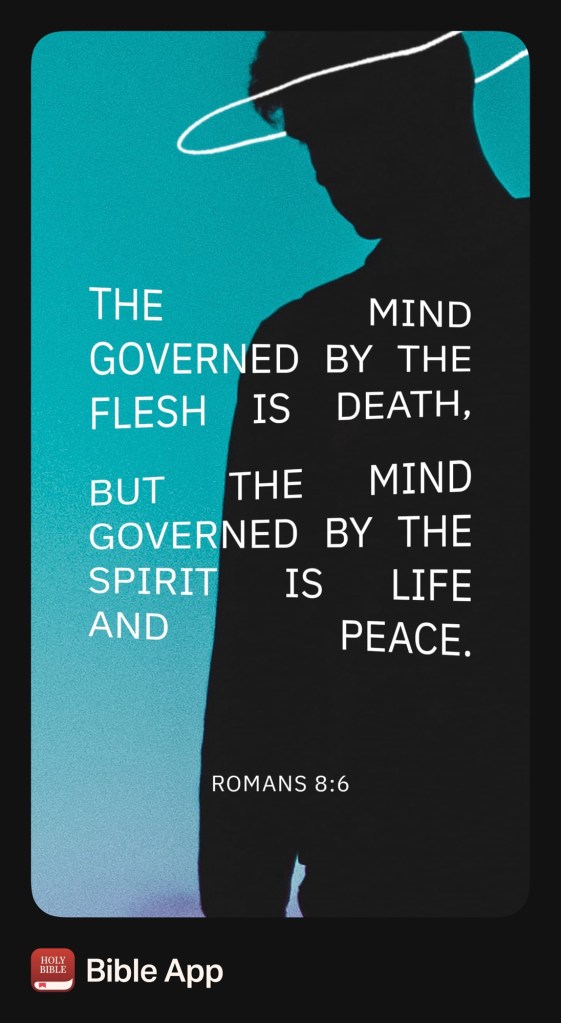
Paul’s teaching in Romans 8:6 presents a direct contrast between life in the flesh and life in the Spirit. The Spirit reflects the life-giving reality of the Gospel, while the flesh signifies the law of sin and death, first introduced in Genesis 2:16-17. To set one’s mind on the flesh results in spiritual death, but to embrace the Spirit leads to life and peace.
See story in Genesis:
> “The LORD God took the man and put him in the garden of Eden to work it and keep it. And the LORD God commanded the man, saying, ‘You may surely eat of every tree of the garden, but of the tree of the knowledge of good and evil you shall not eat, for in the day that you eat of it you shall surely die.’” (Genesis 2:15-17)
> “Now the serpent was more crafty than any other beast of the field that the LORD God had made. He said to the woman, “Did God actually say, ‘You shall not eat of any tree in the garden’?” And the woman said to the serpent, “We may eat of the fruit of the trees in the garden, but God said, ‘You shall not eat of the fruit of the tree that is in the midst of the garden, neither shall you touch it, lest you die.’” But the serpent said to the woman, “You will not surely die. For God knows that when you eat of it your eyes will be opened, and you will be like God, knowing good and evil.” So when the woman saw that the tree was good for food, and that it was a delight to the “Now the serpent was more crafty than any other beast of the field that the LORD God had made. He said to the woman, “Did God actually say, ‘You shall not eat of any tree in the garden’?” And the woman said to the serpent, “We may eat of the fruit of the trees in the garden, but God said, ‘You shall not eat of the fruit of the tree that is in the midst of the garden, neither shall you touch it, lest you die.’” But the serpent said to the woman, “You will not surely die. For God knows that when you eat of it your eyes will be opened, and you will be like God, knowing good and evil.” So when the woman saw that the tree was good for food, and that it was a delight to the eyes, and that the tree was to be desired to make one wise, she took of its fruit and ate, and she also gave some to her husband who was with her, and he ate.” (Genesis 3:1-6)
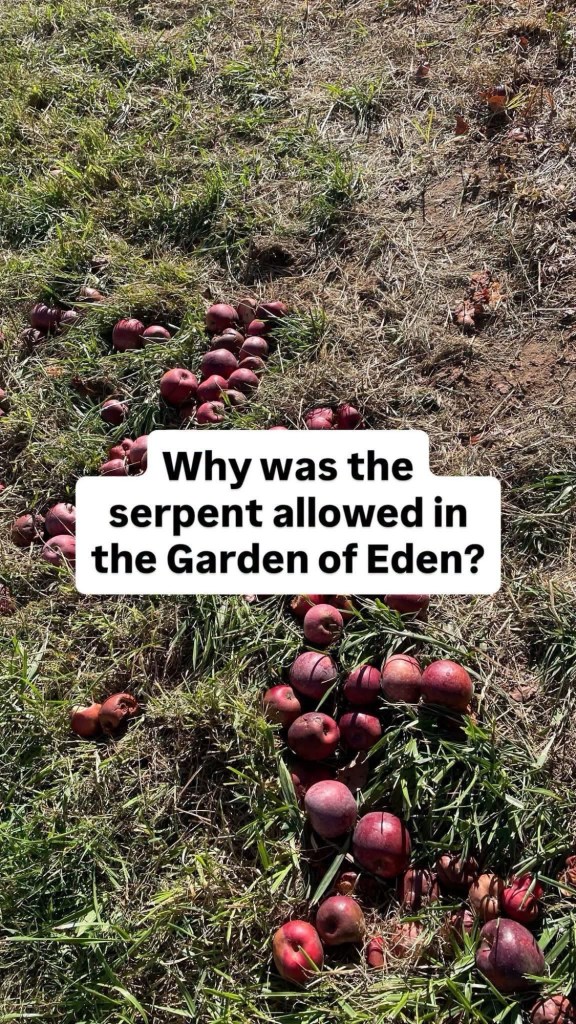
If you asked why God allowed the Serpent to be in the Garden of Eden? Click here for explainer: Fall of the Cherub
Paul calls believers to leave behind the bondage of sin and step into the freedom and renewal that the Spirit of Christ offers.
In Colossians 3:1-2, Paul emphasizes the transformation that takes place when one fully embraces the Gospel rather than clinging to the Mosaic Law— an annex to a temporary remedy for the violation of the First Covenant (i.e., Genesis 2:16-17). He urges believers to lift their focus from earthly concerns to heavenly priorities, drawing a distinction between those trapped in worldly fears and those living by faith in Christ.
The religious leaders in John 11:47-48 illustrate the mindset of those bound to the world and the law. Their fear of losing their power and nation kept them from recognizing the Messiah before them. In contrast, the repentant thief in Luke 23:42 reflects a heart that had released earthly attachments to place hope entirely in Christ’s kingdom.
Paul’s exhortation is to maintain a heavenly perspective even while fulfilling earthly duties. Though life’s responsibilities persist, the believer’s central pursuit should be God’s kingdom and righteousness (Matthew 6:33). By living in the Spirit, believers experience genuine life and peace, as the Gospel reorients the heart from the temporary and visible to the eternal and unseen.
Ultimately, Paul invites believers to self-examination: Are we still consumed by the world, or have we truly set our minds on the things above where Christ reigns?
Peter, in the words of Acts 3:6, declared, “I possess neither silver nor gold, but in the name of Jesus Christ, I offer you what I have.” Share this article freely, for you freely receive. Take note, underlines and highlights are clickable links for definitions or Bible references. Stay updated by heading to our about page and subscribe directly to receive notifications in your inbox. Blessings!
The Serpent, identified in Revelation 12:9 as Satan, first appears as the tempter in Eden (Genesis 3). In Ezekiel 28:12–15, he is described as a fallen guardian cherub. God uses the fall of this angel to illustrate the pride and arrogance of the king of Tyre:
“Son of man, raise a lamentation over the king of Tyre, and say to him, Thus says the Lord GOD: You were the signet of perfection, full of wisdom and perfect in beauty. You were in Eden, the garden of God; every precious stone was your covering, sardius, topaz, and diamond, beryl, onyx, and jasper, sapphire, emerald, and carbuncle; and crafted in gold were your settings and your engravings. On the day that you were created they were prepared. You were an anointed guardian cherub. I placed you; you were on the holy mountain of God; in the midst of the stones of fire you walked. You were blameless in your ways from the day you were created, till unrighteousness was found in you.” (Ezekiel 28:12-15)
This passage reveals that the Serpent was not created to tempt. He began as a perfect guardian cherub but later rebelled against God and deceived Eve.
Humanity’s Choice
Adam, created in God’s image (Genesis 5:1), ultimately chose disobedience. Like the fallen cherub, he turned away from God. Yet here lies the great difference: while fallen angels were not offered redemption, humanity received an invitation to reconciliation. Sin did not end the story—God’s mercy opened the path to hope.
The Wonder of Salvation
The mystery of salvation is so profound that even angels long to understand it. 1 Peter 1:12 declares:
> It was revealed to the Old Testament prophets that they were serving not themselves but you— the church— in the things that have now been announced to you through those who preached the good news to you by the Holy Spirit sent from heaven, things into which angels long to look.
Paul echoes this in Ephesians 3:10:
> So that through the church the manifold wisdom of God might now be made known to the rulers and authorities in the heavenly places.
The fall of angels highlights the tragedy of rebellion, while the redemption of humanity showcases the glory of God’s salvation—a story that moves heaven to awe and calls us to worship.
God’s Answer to Human Suffering
We must stop blaming God for the world’s suffering, for He gave humanity the freedom to choose. Through Adam, sin entered the world, and with it, suffering. But in Christ, redemption is offered:
> “For as in Adam all die, so also in Christ shall all be made alive.” (1 Corinthians 15:22)
God’s blessings are not only spiritual. Paul reminds us:
> “What then shall we say to these things? If God is for us, who can be against us? He who did not spare His own Son but gave Him up for us all, how will He not also with Him graciously give us all things?” (Romans 8:31-32)
And he reassures us:
> “Who shall separate us from the love of Christ? Shall tribulation, or distress, or persecution, or famine, or nakedness, or danger, or sword?… No, in all these things we are more than conquerors through Him who loved us.” (Romans 8:35-37)
Through Christ, suffering has meaning and victory is assured.
The Church’s Call to Renewal
The modern church, at times, has failed to fully embrace Paul’s revelation of God’s manifold wisdom. Too often, deep theology is avoided, and the church is reduced to the image of a sanctuary for the imperfect, rather than a community of people being actively transformed. We are familiar with the common saying: “The church is a hospital for the sick.” Yet Paul’s exhortation challenges this limited view:
> “Cleanse out the old leaven that you may be a new lump, as you really are unleavened. For Christ, our Passover lamb, has been sacrificed…” (1 Corinthians 5:7-8)
Paul also instructs the believers in Colossians 3:5-17 to put away the old self, embracing the life of Christ through love, forgiveness, and thanksgiving. Likewise, Peter reminds the church:
Peter states, > “As obedient children, do not be conformed to the passions of your former ignorance, but as God who called you is holy, you also be holy in all your conduct, since it is written, ‘You shall be holy, for I am holy.’” (1 Peter 1:14-16)
The message is unmistakable: the church is called to be a visible testimony of transformation, embodying God’s holiness and love for the world to see.
Credit: Photo owned by Alexandre Cabanel — Fallen Angel
Conclusion
It all began with the fall of a cherub. Followed by the fall of Adam. Yet, Jesus reminds us of a profound truth:
> “Truly, truly, I say to you, unless a grain of wheat falls into the earth and dies, it remains alone; but if it dies, it bears much fruit. Whoever loves his life loses it, and whoever hates his life in this world will keep it for eternal life. If anyone serves Me, he must follow Me; and where I am, there will My servant be also. If anyone serves Me, the Father will honor him.” (John 12:24-26)
Credit: Photo owned by Scott Roberts
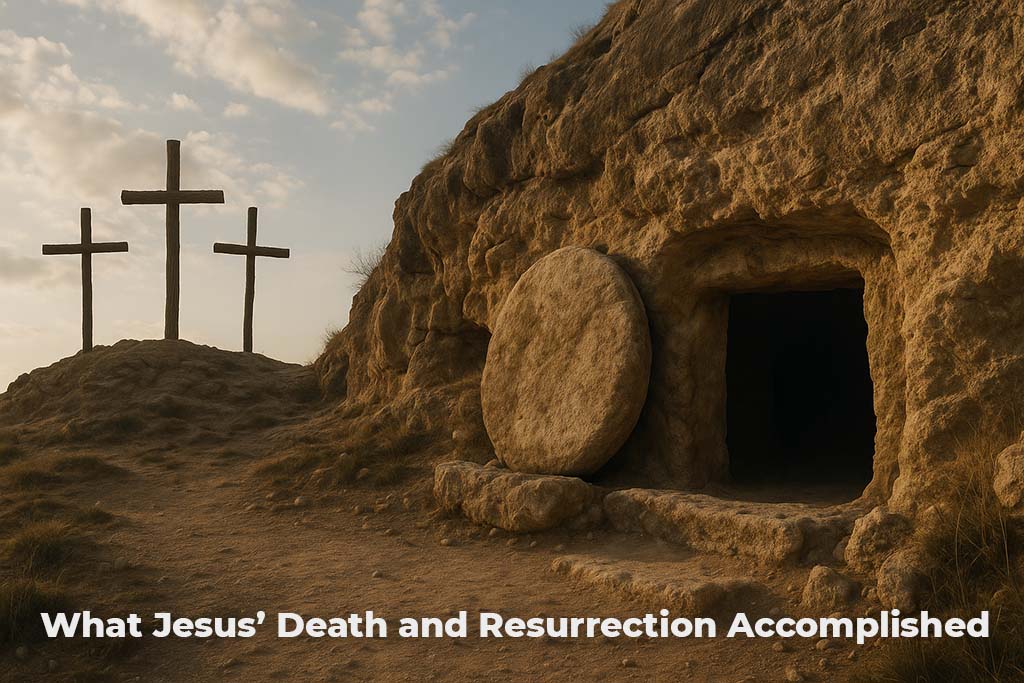
In this passage, Jesus reveals His death and resurrection, was the ultimate act of sacrifice and fruitful surrender. It highlights the contrast between the pride of the fallen cherub and the humble journey of those who choose to follow Christ. By fully submitting to the will of the Father and dying on the cross, Jesus shows the path to true life. Likewise, when we die to ourselves, we gain eternal life, and in faithfully serving our Lord Jesus, we receive the honor that comes from the Father.
Peter, in the words of Acts 3:6, declared, “I possess neither silver nor gold, but in the name of Jesus Christ, I offer you what I have.” Share this article freely, for you freely receive. Take note, underlines and highlights are clickable links for definitions or Bible references. Stay updated by heading to our about page and subscribe directly to receive notifications in your inbox. Blessings!
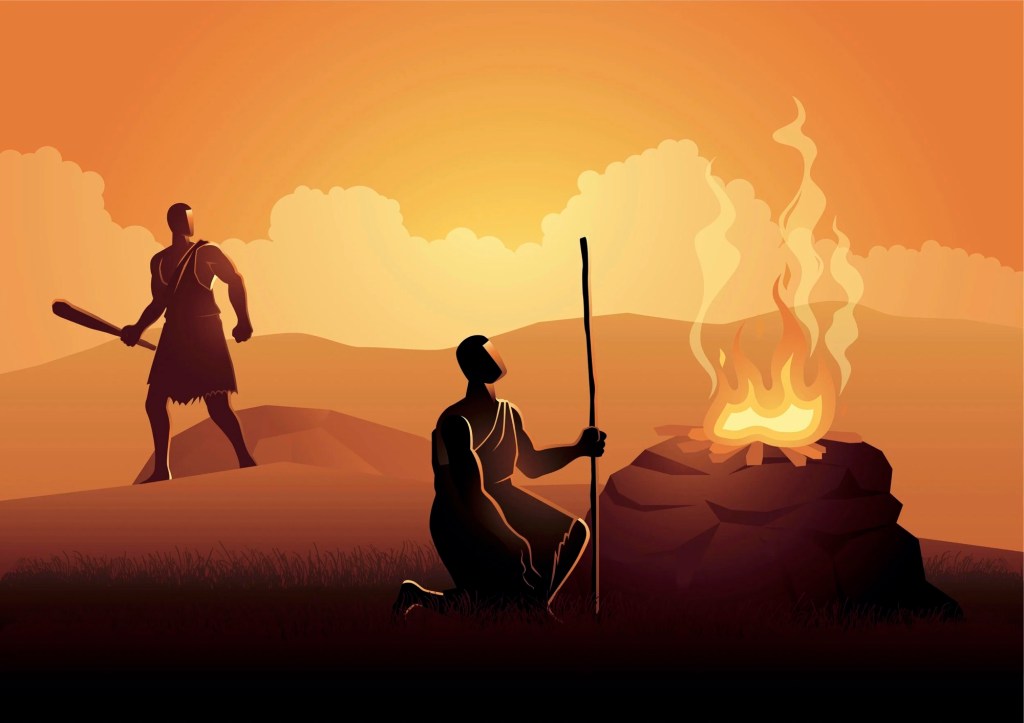
Reflecting on God’s desire for us who claim to follow Jesus Christ, let us consider the story of Cain and Abel as a case study. Why was Abel’s offering acceptable to God, while Cain’s was not?
Abel’s offering pleased God because it reflected a heart that honored Him first. In Genesis 4:3-7, we see that Abel offered the firstborn of his flock, signifying that he gave first to God. Cain, on the other hand, “in the course of time” offered some of the produce of the ground, but not the first fruits, indicating a lack of priority or wholehearted devotion.
Some interpret Abel’s offering as acceptable because it resembled the later Mosaic Law requirement to offer the fat portions to the Lord (Leviticus 3:16). However, the Law was established long after Cain and Abel, so their actions were not legally obligatory. Instead, God’s demand for the fat portions of all animal offerings reflected Abel’s genuine heart of giving to God first, not the other way around.
See God’s response to Cain—“If you do well, will you not be accepted?”—reveals that the real issue was the heart and attitude behind the offering. The act of giving must come from a place of surrender and prioritizing God above all.
This principle is echoed throughout Scripture. The story of Elijah and the widow shows the same heart condition: the widow gave the first portion of her last meal to God’s servant, demonstrating trust and putting God first. As a result, she and her son were sustained throughout the famine. (1 Kings 17:8-16)
Similarly, Paul commended the Macedonians in 2 Corinthians 8:1-6 because they gave themselves first to the Lord before giving their material support, even in extreme poverty. Their offering was accepted because it flowed from a surrendered heart.
The lesson is clear: God delights in offerings given with a heart that honors Him first. Gifts that are leftovers or given without full surrender do not please Him. True worship and acceptable giving are rooted in putting God above all else, both in life, in our ministry for God, and in offerings.
Consequently, Paul quoted Jesus saying, “It is more blessed to give than to receive (Acts 20:35),” a statement Jesus spoke before sending out His disciples. For us who serve the Lord Jesus Christ, this means we are called to share the Gospel without seeking payment. Yet, in the same context, the Lord also said, “The laborer deserves his food.” (Matthew 10:8-10) This reminds us that those who labor in the Word of God, as well as those who support them, should do so willingly and freely, without compulsion. In doing this, we reflect the heart of Abel, who offered the first and best of what he had to God, giving with a heart of faith and devotion.
Peter, in the words of Acts 3:6, declared, “I possess neither silver nor gold, but in the name of Jesus Christ, I offer you what I have.” Share this article freely, for you freely receive. Take note, underlines and highlights are clickable links for definitions or Bible references. Stay updated by heading to our about page and subscribe directly to receive notifications in your inbox. Blessings!
Once again, taking the verse of the day from YouVersion and studying the verse from its context for personal devotion and sharing.
Matthew’s Gospel narrates the story of the wealthy young ruler, shedding light on the challenges posed by prevailing religious beliefs, earthly attachments, and the call to faith in Christ. The young man’s wealth and youth are evident from Matthew 19:22, which states, “When the young man heard this, he went away sorrowful, for he had great possessions.” Luke further specifies that he was a ruler (Luke 18:18), and the Greek term used for “ruler” suggests that he was likely a Jewish leader. His question to Jesus—“What must I do to inherit eternal life?”—and his appeal to the Mosaic Law (Matthew 19:17-19) underscore his religious background.
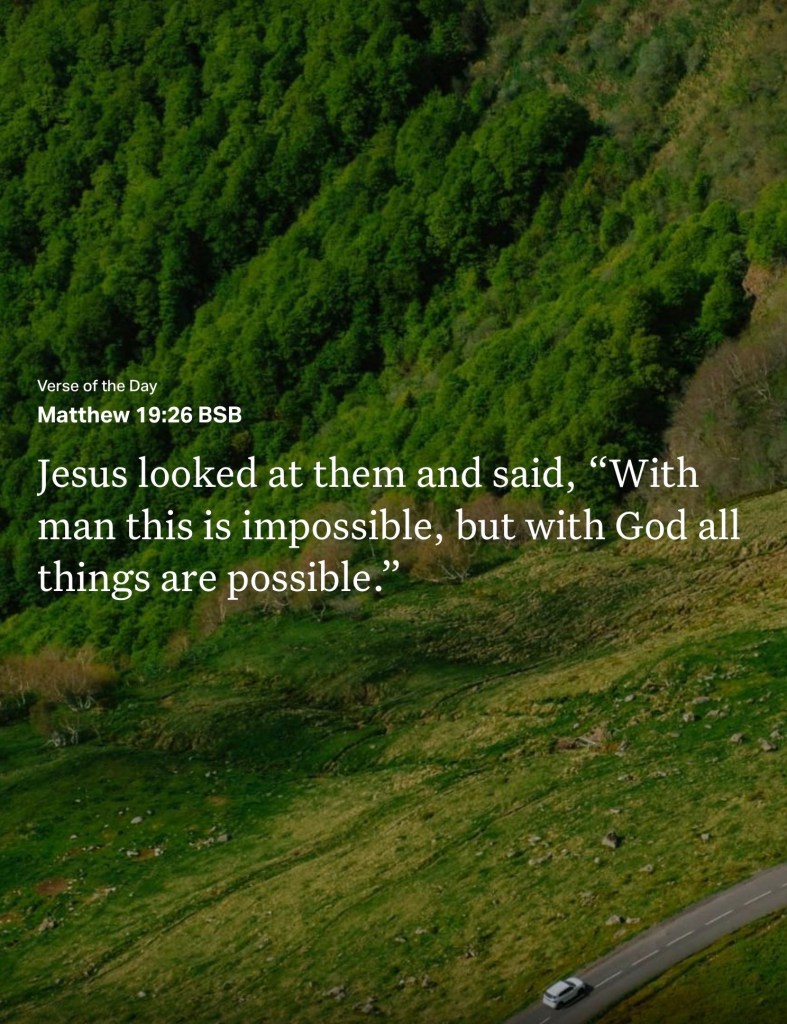
The lesson emerges when Jesus challenges him: “If you would be perfect, go, sell what you possess and give to the poor, and you will have treasure in heaven; and come, follow Me” (Matthew 19:21). The young ruler’s sorrowful departure shows that love for wealth and perhaps his being a religious leader can hinder genuine discipleship. Even someone who claims to follow the Law cannot secure salvation on their own (Matthew 19:25-27). Jesus’ response, “With man this is impossible, but with God all things are possible” (Matthew 19:26), reminds us that salvation comes only through faith in Him, not by works or personal merit.
Jesus’ statement, “But many who are first will be last, and the last first” (Matthew 19:30), is clarified in the parable of the vineyard (Matthew 20:1-16). Both Jews and Gentiles—those who were first recipients of the Gospel and those who are last—are equally recipients of God’s grace. Paul echoes this in Romans 1:16, emphasizing the Gospel’s power for salvation first to the Jew and also to the Greek. And in Ephesians, Paul, taking his teachings from Christ Jesus, states, “Salvation is a gift of grace, not a result of works, so that no one may boast, and we are God’s workmanship created to do good works” (Ephesians 2:8-10).
In God’s kingdom, pride, entitlement, and self-importance have no place. All service—whether in sharing the Gospel, giving, or doing good—is the fruit of God’s workmanship in us. Church leaders, pastors, and elders are partners in ministry, not competitors (3 John 5-8). Yet, many congregations struggle today because leaders either lack biblical training or fail to live by it. True reform requires humble submission to Scripture, abandoning extra-biblical traditions, and patiently modeling obedience for future generations.
To please Christ, there is no other way but to trust Him fully and walk in obedience to His Word. Lasting change is slow, but faithfulness to Scripture will bear fruit in God’s time.
I’ve been eagerly anticipating the transformation in the landscape of Christianity. However, undoubtedly, if more individuals would contribute their own modest efforts, we can achieve greater and more rapid progress together.
I have no illusions that significant change in Christianity will occur soon, but I would be delighted if it does happen soon. Drawing inspiration from Paul’s words, and I hope I am indeed qualified to make the same claim, I would like to modify it slightly to better suit my circumstances: “I have been fighting the good fight, I have hope of completing the race, and I praise Jesus Christ that I have kept the faith.” (2 Timothy 4:7)
Jesus declares, “With man, this is impossible, but with God, all things are possible.” (Matthew 19:26) In Christ alone, everything is achievable!
Peter, in the words of Acts 3:6, declared, “I possess neither silver nor gold, but in the name of Jesus Christ, I offer you what I have.” Share this article freely, for you freely receive. Take note, underlines and highlights are clickable links for definitions or Bible references. Stay updated by heading to our about page and subscribe directly to receive notifications in your inbox. Blessings!
The context of Psalm 34 revolves around the time of King Saul. David, fleeing from King Saul’s relentless pursuit, sought refuge in the Philistine city of Gath. Unfortunately, Gath was the hometown of Goliath, whom David had previously defeated. Recognizing David, the Philistine officials promptly brought him before King Achish.
Concerned for his safety, David chose to humiliate himself rather than face certain death. He resorted to a dramatic display of insanity, involving public antics and defiling his dignity.
In the ancient Near East, an adult man’s beard was an absolute symbol of honor, dignity, and wisdom. Allowing spit to continuously fall down his beard was a severe loss of self-respect. To the Philistines, this behavior was both shocking and deeply convincing. The king, disgusted and annoyed, drove the “madman” away, allowing David to escape unscathed.
Imagine that God had actually rejected King Saul in 1 Samuel 15 because of his disobedience, and then instructed the prophet Samuel to anoint the young shepherd David as the new king in 1 Samuel 16. The story of David’s madness can be found in 1 Samuel 21. How could someone anointed by God be in such humiliation? This has always been a profound mystery to many, not comprehending the workings and ways of God.
Jesus Christ says, “For everyone who boasts will be humbled, and he who humbles himself will be exalted.” (Luke 14:11) This doesn’t mean David boasted, but before God uses people, He first humbles them. The same happened to Joseph. Have we ever considered that God might be humbling us right now?
Thanks be to God! Despite the extreme degradation, David recognized God’s hand in his survival. After this escape, he composed Psalm 34, in which he declares that the Lord saved him from his fears and encourages the brokenhearted to seek refuge in God. This incident exemplifies God’s protection over His anointed king, even in moments of profound weakness and failure.
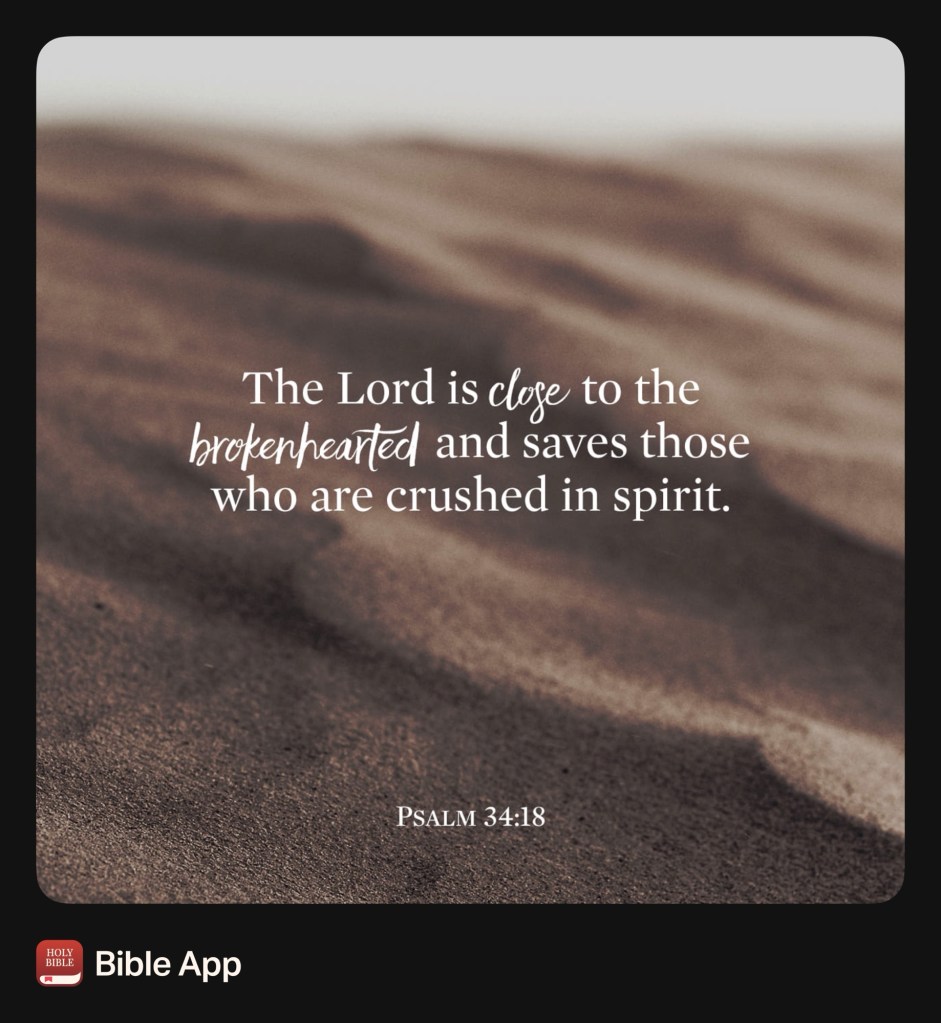
Many times, we fail to acknowledge God’s grace and timely rescue. The Bible says, “The LORD is near to the brokenhearted and saves the crushed in spirit.” (Psalms 34:18)
No matter the circumstances or odds, in times like these, the Lord will always be with us. He will hold us by His hand, saving and restoring us. However, we must learn humility. Only then can we be useful to God. Trust in God! He is the Potter who molds us, the clay, into the form that pleases Him.
Peter, in the words of Acts 3:6, declared, “I possess neither silver nor gold, but in the name of Jesus Christ, I offer you what I have.” Share this article freely, for you freely receive. Take note, underlines and highlights are clickable links for definitions or Bible references. Stay updated by heading to our about page and subscribe directly to receive notifications in your inbox. Blessings!
God works in mysterious ways. Instead of focusing on pent-up frustration, I turned on Spotify to listen to Christian music while reading the verse of the day from a Bible app as a starting point to studying a whole book or passages. This morning it’s Micah 6:8. “He (i.e, God) has told you, O man, what is good; and what does the LORD require of you but to do justice, and to love kindness, and to walk humbly with your God?”
Micah prophesied during the reigns of Jotham, Ahaz, and Hezekiah, all kings of Judah—a contemporary of Isaiah. It was a time of prosperity, and Micah denounced the wealthy for oppressing the poor and warned of God’s impending judgment (Micah 1:3-5). The northern kingdom had actually fallen during Micah’s ministry, in 722 BC, and Judah almost did as well (2 Kings 18-20).
Micah prophesied against the rulers and prophets of both Judah and Israel, who falsely claimed to speak from God (Micah 3). The highlight of Micah’s prophecy concerns the last days, the arrival of God’s kingdom (Micah 4:1-7; Isaiah 2:2-4; Romans 10:8-18), and Christ Jesus (Micah 5:2-5). Micah 6:6-8 reveals God’s heart and desire for His people: “With what shall I come before the LORD, and bow myself before God on high? Shall I come before Him with burnt offerings, with calves a year old? Will the LORD be pleased with thousands of rams, with ten thousands of rivers of oil? Shall I give my firstborn for my transgression, the fruit of my body for the sin of my soul?” “He has told you, O man, what is good; and what does the LORD require of you but to do justice, and to love kindness, and to walk humbly with your God?” (Micah 6:6-8)
God changes not. Micah 6:6-8 is precisely reflected in Hosea 6:6, which was quoted twice by Jesus Christ, first in Matthew 9:12-13, “Those who are well have no need of a physician, but those who are sick. Go and learn what this means: ‘I desire mercy, and not sacrifice.’ For I came not to call the righteous, but sinners.” Christ’s coming was to offer a second chance, a restoration to God.
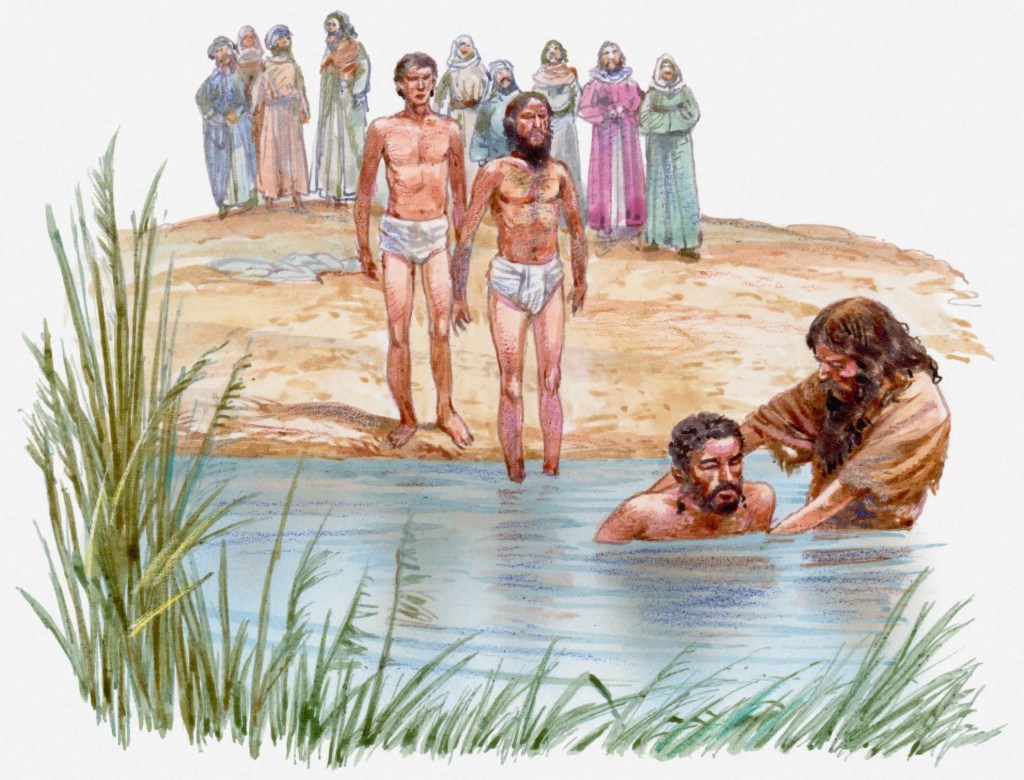
The Bible states that everyone is born of Adam, born after Adam had fallen from the grace of God (Romans 5:12). Jesus Christ, therefore, is our only way back to God. He is the mediator of the New Covenant (Hebrews 9:11-12, 15; 12:22-24; Luke 22:19-20; 1 Corinthians 11:25). The Bible states, “For as in Adam all die, so also in Christ shall all be made alive (1 Corinthians 15:22).” That’s the essence of our Christian water baptism. We die to Adam and are alive in Jesus, rising out of the water a new person in Christ . But unless we acknowledge being sinners, then Christ’s calling or the Gospel makes no sense to us. And unless we truly have become a new person in Christ, then our water baptism does not mean a thing. Water baptism is just an expression of one’s testimony that the person now belongs to Jesus Christ.
The second time is in Matthew 12:6-8, “I tell you, something greater than the temple is here. And if you had known what this means, ‘I desire mercy, and not sacrifice,’ you would not have condemned the guiltless. For the Son of Man is Lord of the Sabbath.”
Jesus Christ is the true temple of God (Matthew 12:6; John 2:19, 21). Christ is the Head, and the church is His body (Colossians 1:18), built on the foundation of the apostles and prophets. Jesus Himself is the cornerstone, and by His death and resurrection, we Christians grow together into a holy temple in the Lord (Ephesians 2).
Yes, we Christians, the holy temple in the Lord, is greater than the Old Covenant Jerusalem temple. Hence, Jesus, in John 4 states, “Believe Me, the hour is coming when neither on this mountain nor in Jerusalem will you worship the Father. You worship what you do not know; we worship what we know, for salvation is from the Jews. But the hour is coming, and IS NOW HERE, when the true worshipers will worship the Father in spirit and truth, for the Father is seeking such people to worship Him. God is spirit, and those who worship Him must worship in spirit and truth.” (John 4:21-24)
What does it take to worship God in spirit and truth? Surely, it does not mean simply going to the Sunday worship service or a building where Christians supposedly gather for worship, but to walk the talk. Here’s Paul’s words regarding worship: “I appeal to you (i.e. the church) therefore, brothers, by the mercies of God, to present your bodies as a living sacrifice, holy and acceptable to God, which is your spiritual worship. Do not be conformed to this world, but be transformed by the renewal of your mind, that by testing you may discern what is the will of God, what is good and acceptable and perfect.” (Romans 12:1-2)
Let me be clear, Paul, by “your bodies” refers to the church. See Romans 12:5, “So we, though many, are one body in Christ, and individually members one of another.”
Christ is the Lord of the Sabbath—a declaration Jesus revealed about Himself, making known that He is the God of creation (see Matthew 12:8; Genesis 1:1-2:2). Yes, Genesis creation account isn’t about God’s narration of His creation of all things, though indeed He alone is the creator of all things (Psalm 33:6-9; Colossians 1:16-17). God in Genesis used creation language to reveal His creation of His people. Hence, Paul, in 2 Corinthians 4:6, quotes Genesis 1:3, to explain God’s Old Covenant vis-à-vis the New, and God’s Old Covenant people vis-à-vis the New, His Church.
John also did the same, quoting Genesis 1:3, and referring it to Jesus, the Word. He even used the same opening phrase in Genesis “in the beginning” to connect the two. See John 1:1-5, “In the beginning was the Word, and the Word was with God, and the Word was God. He was in the beginning with God. All things were made through Him, and without Him was not any thing made that was made. In Him was life, and the life was the light of men. The light shines in the darkness, and the darkness has not overcome it.”
God, through Christ Jesus, creates a new people for Himself, and we—the church—are God’s New Covenant people. (2 Corinthians 5:17-19) But have we truly learned from God’s Word?
How is it that Christians are still enticed by the world and its riches, if we have known true riches is only with Jesus Christ?
Have we Christians shown justice and mercy to our fellowmen?
Have our pastors truly been speaking Christ’s Word? Are we worshipping God and Jesus Christ in truth and in spirit? Why is it there are a lot of nominal Christians?
Have we been sharing the faith to our loved ones, fiancés, friends, and children? Why is it many times Christians fear men rather than God?
And I have a lot more vented frustrations having seen Christianity in its present mode. Until when will a Christian truly walk by faith? Does everyone need to have a Damascus experience or a denial like that of Peter before walking truthfully with Jesus? Sadly, many have walked the way of Judas, denying Jesus because He doesn’t suit their expectation of the Christ.
Jesus Christ, without a doubt, has arrived. His kingdom is a present reality, though it isn’t of this world. When asked by the Pharisees when God’s kingdom would come, Jesus states, “The kingdom of God is not coming in ways that can be observed, nor will they say, ‘Look, here it is!’ or ‘There!’ for behold, the kingdom of God is in the midst of you.” (Luke 17:20-21)
The Bible states, “For Jesus must reign until He has put all His enemies under His feet. The last enemy to be destroyed is death” (1 Corinthians 15:25-26). Isn’t death destroyed already? If not, why are pastors saying in wakes, “Our Christian friend is now with the Lord Jesus Christ or in a better place?”
Christians have misunderstood the concept of death being destroyed. It doesn’t imply that Christians would cease to die physically. Instead, death is no longer an end to life, as Jesus states, “Truly I tell you, anyone who hears My word and believes Him who sent Me has eternal life and will not face judgment but has transcended death to life.” (John 5:24)
Here’s the proof from Scripture that “death has been swallowed up in victory” (1 Corinthians 15:54). The Bible, in 1 Corinthians 15:56 states, “The sting of death is sin, and the power of sin is the law.”
Do we still have the Jerusalem temple standing today? If not, how can the Mosaic Law now be observed? Didn’t Christ’s death make obsolete the Mosaic regulations of animal offerings? With the second and final destruction of the Jerusalem temple, Daniel’s visions of the end came to be fulfilled. Scripture states, “When the shattering of the power of the holy people comes to an end; all these things would be finished (Daniel 12:7)”. The Mosaic law is the power of the Old Testament people (Deuteronomy 7:6-11), and it has become obsolete, fulfilled in Christ Jesus (Matthew 5:17; Hebrews 9; Luke 24:25-26; 24:44). Jesus is the true Israel (Isaiah 49:3). Similarly then, we Christians are nobody before God except by faith in Christ Jesus, the mediator of the New Covenant.
Even Adam’s death no longer holds power over Christians. Paul, in Romans, explains, “Therefore, there is no condemnation for those in Christ Jesus. The law of the Spirit of life in Christ Jesus (i.e., the Gospel) has set you free from the law of sin and death (i.e., the law of Adam’s death [Genesis 2:16-17]). For what the law (i.e., the Mosaic law) could not accomplish because it was weakened by the flesh, God did. He condemned sin in the flesh by sending His own Son in the likeness of sinful flesh as a sin offering, so that the law’s requirement would be fulfilled in us who do not walk according to the flesh but according to the Spirit.” (Romans 8:1-4)
Christians, let us live by faith in Jesus Christ, then we shall see the workings of God’s kingdom. And in Him alone will we find peace, and not be frustrated. For Jesus Christ is the same yesterday, and today, and forever (Hebrews 13:8). Paul states, “Rejoice in the Lord always. I will say it again: Rejoice! Let your graciousness be known to everyone. The Lord is near. (Let me be clear, with Paul, Jesus is near, but now God’s with us [Matthew 1:23; Revelation 21:1-3].) Don’t worry about anything, but in everything, through prayer and petition with thanksgiving, present your requests to God. And the peace of God, which surpasses all understanding, will guard your hearts and minds in Christ Jesus.” (Philippians 4:4-7) Therefore, compared to Paul’s era, today’s Christians have the assurance of God’s peace. Unlike the beliefs and teachings of contemporary Christianity, the promises of Jesus are not delayed or long in coming; instead, they are a present reality.
Let us therefore turn our lament into praise. That’s how the psalms were written. That’s how prophets of the Old Testament comforted themselves. At the end of our laments, let us learn that God alone is our peace. Therefore, as Paul states, “If then you have been raised with Christ, seek the things that are above, where Christ is, seated at the right hand of God. Set your minds on things that are above, not on things that are on earth.” (Colossians 3:1-2)
All glory be to God and Jesus Christ alone!
Peter, in the words of Acts 3:6, declared, “I possess neither silver nor gold, but in the name of Jesus Christ, I offer you what I have.” Share this article freely, for you freely receive. Take note, underlines and highlights are clickable links for definitions or Bible references. Stay updated by heading to our about page and subscribe directly to receive notifications in your inbox. Blessings!
A Psalm of David. Penned by a son of Korah. It reveals David’s heart during a time of deep sorrow, reflecting on the rebellion against him. This was a result of his actions when he took Bathsheba and killed Uriah. It’s a psalm that speaks of repentance, but also of trust in God’s kindness and forgiveness.
All of us in one way or another have fallen short of God’s glory. It is impossible to live up to the standards of the Holy God. That’s precisely the reason Christ Jesus came to offer us a second chance. Scripture states, “For our sake God made Jesus to be sin who knew no sin, so that in Him we might become the righteousness of God.” (2Co 5:21) Let us therefore not be downhearted. God’s grace is sufficient for our weakness. Always trust in His grace. Paul said, “Set your minds on things that are above, not on things that are on earth.” (Col 3:2) Only then may we not fall into sinning.
Peter, in the words of Acts 3:6, declared, “I possess neither silver nor gold, but in the name of Jesus Christ, I offer you what I have.” Note: Click on underlines and highlights for definitions or Bible references. Freely, for you freely receive. Stay updated by heading to our about page and subscribing directly to receive notifications in your inbox. Blessing!
Today, the Roman Catholics celebrate Palm Sunday. Scripture tells us this was the triumphant entry of Jesus, fulfilling Zechariah 9:9, the coming of the King.
Scripture states, “Rejoice greatly, O daughter of Zion! Shout aloud, O daughter of Jerusalem! Behold, your King is coming to you; righteous and having salvation is He, humble and mounted on a donkey, on a colt, the foal of a donkey. I will cut off the chariot from Ephraim and the war horse from Jerusalem; and the battle bow shall be cut off, and He shall speak peace to the nations; His rule shall be from sea to sea, and from the River to the ends of the earth.” (Zechariah 9:9-10) In other words, Jesus Christ, the King who rode on a donkey, was to liberate Israel and bring peace to all people – that’s the meaning of sea to sea, to the ends of the earth.
Reading from Matthew 21:4-9, hysteria and excitement were all over Jerusalem. They exclaimed, “Hosanna to the Son of David! Blessed is He who comes in the name of the Lord! Hosanna in the highest!”
“Blessed is He who comes in the name of the Lord!” is taken from Psalm 118, specifically verses 24-26. This psalm is recited annually during the Feast of Tabernacle, which serves as a rehearsal for the promise of Israel’s regathering. However, the Jews misunderstood its significance. They were perplexed by Christ’s denouncement of the temple (John 2:13-20). Moreover, as mentioned in John 2:13, the upcoming Jewish feast they were about to celebrate was not the Feast of Tabernacle, but the Passover. To add to the complexity, the religious leaders refused to acknowledge Jesus as the Christ, poisoning the minds of the Jews causing them to reject Him.
Luke tells us Jesus knew He would be rejected; Scripture said He wept.
“And when Jesus drew near and saw the city, He wept over it, saying, ‘Would that you, even you, had known on this day the things that make for peace! But now they are hidden from your eyes. For the days will come upon you, when your enemies will set up a barricade around you and surround you and hem you in on every side and tear you down to the ground, you and your children within you. And they will not leave one stone upon another in you, because you did not know the time of your visitation.’” (Luke 19:41-44)
The triumphant entry of Jesus Christ was the tipping point for Israel, a point of no return. Because of their rejection of Christ Jesus, judgment came upon them in 70 A.D. Here, Jesus spoke about the second and final destruction of the temple, saying, “and they will not leave one stone upon another in you, because you did not know the time of your visitation”. Precisely Jesus’ declaration in Matthew 23:36-24:2. Of which, the disciples understood as the return of Jesus and the end of the age – See Matthew 24:3.
“As Jesus sat on the Mount of Olives, the disciples came to Him privately, saying, ‘Tell us, when will these things be, and what will be the sign of your coming and of the end of the age?’”
Did Jesus failed to bring peace? Of course not. Jesus declared to His disciples, “Peace I leave with you; My peace I give to you. Not as the world gives do I give to you. Let not your hearts be troubled, neither let them be afraid. You heard Me say to you, ‘I am going away, and I will come to you.’ If you loved Me, you would have rejoiced, because I am going to the Father, for the Father is greater than I.” (John 14:27-28)
Sadly, like the unbelieving Jews that rejected Jesus Christ, Christians today have the same expectation and misconception of God’s promise of peace.
Paul states, “Rejoice in the Lord always. I will say it again: Rejoice! Let your gentleness be evident to all. The Lord is near. Do not be anxious about anything, but in every situation, by prayer and petition, with thanksgiving, present your requests to God. And the peace of God, which transcends all understanding, will guard your hearts and your minds in Christ Jesus.” (Philippians 4:4-7)
God’s peace does not mean we will be spared from troubling times. An example from Daniel, he was left in the den of lions, without a doubt a life threatening circumstance, and yet, was left unharmed by the lions, see Daniel 6. Scripture concludes, “So Daniel was taken up out of the den, and no kind of harm was found on him, because he had trusted in his God.”
God’s peace comes by faith in Him. The present war in the Middle East has tremendous consequences for the world. Economists and political analysts have projected difficulties and hard times ahead. But as a Christian, we ought to know who holds tomorrow. So live in faith. Walk by faith, and God will sustain us.
Crucial to understand as well is the fulfillment of God’s Word is never dependent on man’s actions. Contrary to what is being taught and believed, the rejection of the Jews didn’t delay the fulfillment of God’s kingdom. Jesus Christ fulfilled Scripture, ushering in His kingdom. The Bible states, “Let us be grateful for receiving a kingdom that cannot be shaken, and thus let us offer to God acceptable worship, with reverence and awe, for our God is a consuming fire.” (Hebrews 12:28-29)
God’s kingdom cannot be shaken, because it’s a spiritual kingdom. Not a physical one like the kingdom of David or Solomon. Jesus Christ declares, “My kingdom is not of this world. If My kingdom were of this world, My servants would have been fighting, that I might not be delivered over to the Jews. But My kingdom is not from the world.” (John 18:36)
Again, Jesus Christ states, “The kingdom of God is not coming in ways that can be observed, nor will they say, ‘Look, here it is!’ or ‘There!’ for behold, the kingdom of God is in the midst of you.” (Luke 17:20-21)
Jesus Christ states, “I have said these things to you, that in Me you may have peace. In the world you will have tribulation. But take heart; I have overcome the world.” (John 16:33)
Paul states, “For the kingdom of God is not a matter of eating and drinking but of righteousness, peace, and joy in the Holy Spirit.” (Romans 14:17) God’s kingdom is a matter of the heart, consciousness, and faith. Consequently, significant to ask: What is the condition of our hearts? Do we really have a heart of worship and believe in Jesus Christ?
Peter, in the words of Acts 3:6, declared, “I possess neither silver nor gold, but in the name of Jesus Christ, I offer you what I have.” Share this article freely, for you freely receive. Take note, underlines and highlights are clickable links for definitions or Bible references. Stay updated by heading to our about page and subscribe directly to receive notifications in your inbox. Blessings!