Jesus Christ in John 10 proclaims, “I am the good shepherd” (John 10:11). This declaration echoes Ezekiel 34:11, where the Lord God declares, “Behold, I, I Myself will search for My sheep and will seek them out.”
Christ Jesus came to fulfill both the Law and the Prophets (Matthew 5:17-18). If He had arrived and left other Old Testament Scriptures unfulfilled for millennia, then His Word would have been deemed incomplete. However, Christ Jesus is the Word (John 1:1-5, 14-18), and He has undoubtedly fulfilled all His promises. Therefore, it is our responsibility to reconcile His teachings with our own.
Being ridiculed by the religious leaders of Israel for mingling with sinners and tax-collectors, Jesus Christ then told them two parables:
“What man of you, having a hundred sheep, if he has lost one of them, does not leave the ninety-nine in the open country, and go after the one that is lost, until he finds it? And when he has found it, he lays it on his shoulders, rejoicing. And when he comes home, he calls together his friends and his neighbors, saying to them, ‘Rejoice with me, for I have found my sheep that was lost.’ Just so, I tell you, there will be more joy in heaven over one sinner who repents than over ninety-nine righteous persons who need no repentance.” “Or what woman, having ten silver coins, if she loses one coin, does not light a lamp and sweep the house and seek diligently until she finds it? And when she has found it, she calls together her friends and neighbors, saying, ‘Rejoice with me, for I have found the coin that I had lost.’ Just so, I tell you, there is joy before the angels of God over one sinner who repents.” (Luke 15:4-10)
In Christ’s parable, the lost sheep represents the sinners and tax collectors who are seeking salvation through His words and teachings. If Jesus Christ fulfills the prophecy in Ezekiel 34 as the Shepherd of God’s flock, then it follows that those who oppose Him and His message are false shepherds.
If God condemned the false shepherds of the Old Testament, would He not do the same today for pastors who do not guide people to His Word?
Christianity centers on God’s Word. Men’s traditions have no authority over God’s Word. Christ Jesus and His Word is the final arbiter of faith and truth.
Peter, in the words of Acts 3:6, declared, “I possess neither silver nor gold, but in the name of Jesus Christ, I offer you what I have.” Share freely, for you freely receive. Stay updated by heading to our about page and subscribe directly to receive notifications in your inbox. Blessing!
At its inception, Christianity was not divided. Scripture states, “There is one body and one Spirit—just as you were called to the one hope that belongs to your call—one Lord, one faith, one baptism, one God and Father of all, who is over all and through all and in all” (Ephesians 4:4-6). Here, Paul refers to the church as the “body” (Ephesians 1:22-23). However, today we see Christians divided among themselves. Why is this the case? Is it solely due to differences in doctrine? Many Christians tend to avoid discussing theological doctrines in order to maintain the unity of the church.
The real issue is not doctrine itself, but rather false doctrines. This concern is echoed in the letters of Paul, Peter, and other New Testament writers. Therefore, Christians should study the Bible to understand the true doctrines of Scripture and achieve unity in faith. This is precisely the goal of our ministry: to teach Christians how to rightly interpret the Word of God.
Unfortunately, many pastors, despite their seminary training, choose to adhere to the writings of men. It is essential for all Christians to agree that the Bible is the only book inspired by God, inerrant, and the sole source of truth for faith. If God’s workers continue down this path, it is not surprising that Christianity remains fragmented, incohesive, and divided.
I was once told, “Pastor, your ministry might not interest a lot of people.” However, we are not seeking a large audience, but rather individual Christians who are eager to deepen their understanding of Scripture. The apostle Paul instructed, “What you have heard from me in the presence of many witnesses, entrust to faithful men who will be able to teach others also” (2 Timothy 2:2).
Christians, do not settle for simply listening and hearing. Be like the Bereans; learn to verify teachings against Scripture. Paul warned, “Keep a close watch on yourself and on the teaching. Persist in this, for by doing so you will save both yourself and your hearers” (1 Timothy 4:16).
Scripture also states, “There is a way that seems right to a man, but its end is the way to death” (Proverbs 14:12). Follow Jesus Christ and His Word—He alone is the way, the truth, and the life (John 14:6).
If Christians are united in their faith, there should be minimal conflict. But it has to be the right doctrine and faith. Our ministry’s goal is to strengthen and unify that faith. However, we recognize that this is not always easy, especially within a congregation. Jesus Christ didn’t convert five thousand people at once; He initially started with twelve, one of whom would betray Him. Therefore, it is important to start with individuals or a small group and allow growth to happen naturally.
Jesus Christ told a parable, saying, “The kingdom of heaven is like a grain of mustard seed that a man took and sowed in his field. It is the smallest of all seeds, but when it has grown it is larger than all the garden plants and becomes a tree, so that the birds of the air come and make nests in its branches.” (Mat 13:31-32)
Paul teaches, “I planted, Apollos watered, but God gave the growth.” (1Co 3:6)
Pastors and Christians need to understand that we are not tasked with building the church; rather, we are called to equip people with the Word of God. It is Christ Jesus alone who builds His church, as stated in Mattew 16:18. Scripture said, “So then you (that is, Gentile believers) are no longer strangers and aliens, but you are fellow citizens with the saints (Jewish Christians) and members of the household of God (the church), built on the foundation of the apostles and prophets (Scripture, both New & Old), Christ Jesus Himself being the cornerstone, in whom the whole structure, being joined together, grows into a holy temple in the Lord. In Him you also are being built together into a dwelling place for God by the Spirit.” (Eph 2:19-22)
Numbers do not mean anything to God; rather, it is the quality and character of His people that matters.
The Bible teaches, “After this many of His (Jesus Christ’s) disciples turned back and no longer walked with Him. So Jesus said to the twelve, “Do you want to go away as well?” Simon Peter answered Him, “Lord, to whom shall we go? You have the words of eternal life, and we have believed, and have come to know, that you are the Holy One of God.” Jesus answered them, “Did I not choose you, the twelve? And yet one of you is a devil.”” (Jhn 6:66-70)
At the end of the day, only those who are truly converted and understand the Scripture well will continue to live in faith and spread the Word.
Peter, in the words of Acts 3:6, declared, “I possess neither silver nor gold, but in the name of Jesus Christ, I offer you what I have.” Share freely, for you freely receive. Stay updated by heading to our about page and subscribe directly to receive notifications in your inbox. Blessing!
In John 9, Jesus’ disciples asked Him, “Rabbi, who sinned, this man or his parents, that he was born blind?” Jesus answered, “It was not that this man sinned, or his parents, but that the works of God might be displayed in him.” (John 9:2-3)
What did Jesus mean by “the works of God”? In John 6:29, we see that the work of God is for people to believe in Jesus Christ, whom He has sent.
John 9 is not solely about miracles and healings; rather, John emphasizes that these events are signs of Christ Jesus (John 20:30-31). Before Christ’s coming, the Jews experienced four hundred years of silence from God—where no miracles or words were spoken (What were the 400 years of silence? | GotQuestions.org; I disagree with the last sentence on this site. To understand why, visit my blog site https://unlearningtraditionrelearningscripture.com). Malachi foretold that Israel should anticipate the arrival of a forerunner preceding the coming of Christ Jesus (Malachi 3:1-5; 4:1-6). Thus, the signs performed by Christ announced His arrival (John 7:31). Although recognized by the religious leaders, they ultimately rejected Jesus, misleading Israel and condemning Him to the cross (John 11:47-48).
Are we faithfully bringing Jesus Christ to the awareness of others? Is our teaching about Jesus Christ aligned with Scripture? As Christians, are we living lives that reflect God’s grace?
We must always be vigilant about what we teach. It is essential to convey only the truths found in Scripture. Paul warned against those who teach about another Jesus or another Gospel (Galatians 1:6-7; 2 Corinthians 11:3-4).
“I am astonished that you are so quickly deserting him who called you in the grace of Christ and are turning to a different gospel—not that there is another one, but there are some who trouble you and want to distort the gospel of Christ.” (Galatians 1:6-7)
“But I am afraid that as the serpent deceived Eve by his cunning, your thoughts will be led astray from a sincere and pure devotion to Christ. For if someone comes and proclaims another Jesus than the one we proclaimed, or if you receive a different spirit from the one you received, or if you accept a different gospel from the one you accepted, you put up with it readily enough.” (2 Corinthians 11:3-4)
Let us learn only from the Word of God and not from men. Jesus Christ told a parable: “Can a blind man lead a blind man? Will they not both fall into a pit? A disciple is not above his teacher, but everyone when fully trained will be like his teacher.” (Luke 6:39-40)
True teaching of God’s Word is only truly learned when one is thoroughly trained in it. While reading men’s writings can sometimes be helpful, it should always be approached with discernment and discretion. We must be careful not to repeat the mistakes of others, as this could lead us to mislead those we teach. If that happens, can we still claim to be doing the work of God, which is to lead people to believe in Jesus Christ?
Peter, in the words of Acts 3:6, declared, “I possess neither silver nor gold, but in the name of Jesus Christ, I offer you what I have.” Share freely, for you freely receive. Stay updated by heading to our about page and subscribe directly to receive notifications in your inbox. Blessing!
There has been considerable debate regarding the date of Christ’s birth. According to the Gospel of Luke, it took place after Caesar Augustus issued a decree for all subjects of the Roman Empire to be registered (Luke 2:1). However, Britannica.com offers an explanation for why Christmas is celebrated on December 25.
In the 3rd century, the Roman Empire, which at the time had not adopted Christianity, celebrated the rebirth of the Unconquered Sun (Sol Invictus) on December 25th. This holiday not only marked the return of longer days after the winter solstice but also followed the popular Roman festival called the Saturnalia (during which people feasted and exchanged gifts). It was also the birthday of the Indo-European deity Mithra, a god of light and loyalty whose cult was at the time growing popular among Roman soldiers.
The church in Rome began formally celebrating Christmas on December 25 in 336, during the reign of the emperor Constantine. As Constantine had made Christianity the effective religion of the empire, some have speculated that choosing this date had the political motive of weakening the established pagan celebrations. The date was not widely accepted in the Eastern Empire, where January 6 had been favored, for another half-century, and Christmas did not become a major Christian festival until the 9th century.
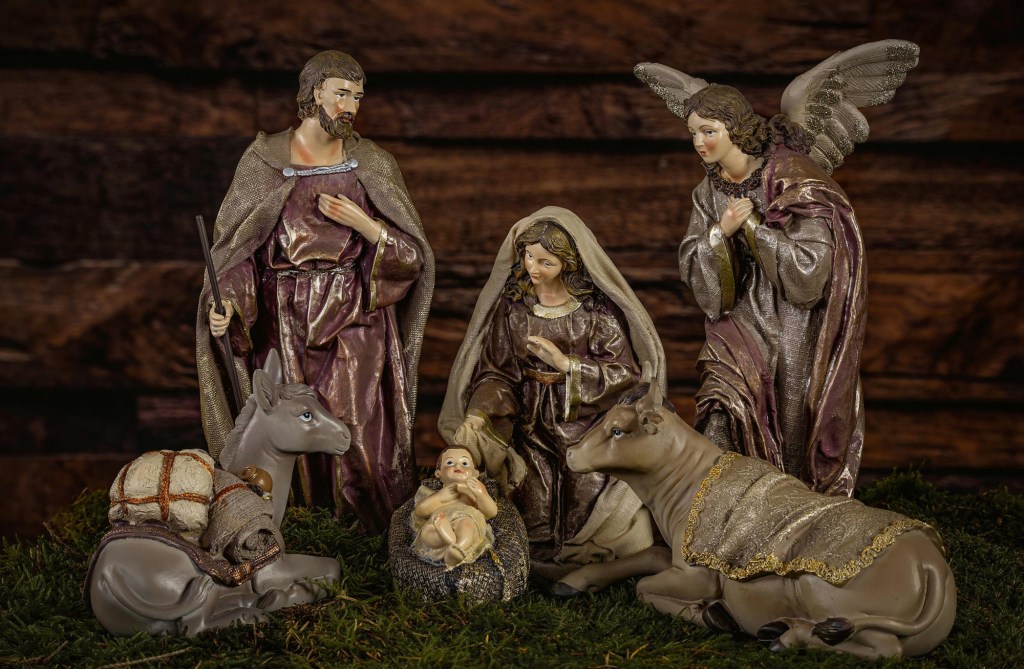
This blog doesn’t intend to challenge the widely celebrated date of Christ’s birth. Instead, I’ll delve into the profound significance of this event. The birth of the incarnate Christ Jesus was the fulfillment of God’s promises in Isaiah 7:14 & 9:6-7.
“Therefore the Lord Himself will give you a sign. Behold, the virgin shall conceive and bear a son, and shall call His name Immanuel (Isa 7:14)”. The Gospel of Matthew divinely spoke of its fulfillment, saying, “She will bear a son, and you shall call His name Jesus, for He will save His people from their sins.” All this took place to fulfill what the Lord had spoken by the prophet: “Behold, the virgin shall conceive and bear a son, and they shall call His name Immanuel” (which means, God with us).” (Matthew 1:21-23)
The context of God’s promise was to encourage King Ahaz to trust in God despite the imminent threat of attack from the combined forces of Israel (the Northern Kingdom) and Syria, stemming from Judah’s refusal to join a coalition of nations against Assyria.
On the other hand, Isaiah 9:6-7 said, “For to us a child is born, to us a son is given; and the government shall be upon His shoulder, and His name shall be called Wonderful Counselor, Mighty God, Everlasting Father, Prince of Peace. Of the increase of His government and of peace there will be no end, on the throne of David and over His kingdom, to establish it and to uphold it with justice and with righteousness from this time forth and forevermore. The zeal of the LORD of hosts will do this.” The New Testament Scripture spoke of its fulfillment on a lot of passages; Luke 1:35; Luke 2:11; John 1:14; John 3:16-17; Romans 8:32; 1Jn 4:10-14.
Here’s the problem. Although modern Christianity acknowledges the fulfillment of Christ’s birth, it conveniently overlooks His rule and kingdom. The prophecy of Isaiah 9:6-7 has been unbiblically divided into two fulfillments. Yes, they acknowledge that Jesus Christ arrived and currently reigns spiritually, but they also believe He will return and reign physically. This belief is known as futurism.
Keep in mind that Scripture declared the arrival of Jesus Christ the commencement of the last days, see Hebrews 1:1-2, “Long ago, at many times and in many ways, God spoke to our fathers by the prophets, but in these last days He has spoken to us by His Son, whom He appointed the heir of all things, through whom also He created the world”. Though, it’s commonly belief that the last days commenced at the Pentecost. Yet Peter, at the Pentecost, quoting Joel 2:28-32 preached about the coming end of the Jewish age. See excerpt from Peter’s message:
“Let all the house of Israel therefore know for certain that God has made Him both Lord and Christ, this Jesus whom you crucified.” Now when they heard this they were cut to the heart, and said to Peter and the rest of the apostles, “Brothers, what shall we do?” And Peter said to them, “Repent and be baptized every one of you in the name of Jesus Christ for the forgiveness of your sins, and you will receive the gift of the Holy Spirit. For the promise is for you and for your children and for all who are far off, everyone whom the Lord our God calls to Himself.” And with many other words he bore witness and continued to exhort them, saying, “Save yourselves from this crooked generation.”” (Act 2:36-40)
See Joel 2:28-32, “And it shall come to pass afterward, that I will pour out My Spirit on all flesh; your sons and your daughters shall prophesy, your old men shall dream dreams, and your young men shall see visions. Even on the male and female servants in those days I will pour out My Spirit. ‘And I will show wonders in the heavens and on the earth, blood and fire and columns of smoke. The sun shall be turned to darkness, and the moon to blood, before the great and awesome day of the LORD comes. And it shall come to pass that everyone who calls on the name of the LORD shall be saved. For in Mount Zion and in Jerusalem there shall be those who escape, as the LORD has said, and among the survivors shall be those whom the LORD calls.’”
Joel prophesied about the impending judgment against Old Covenant Israel. A lot of Christians fail to notice that Jesus Christ taught the disciples about the end of the Jewish age too (see Matthew 24-25). Peter, in turn, announced the arrival of its soon fulfillment (Acts 2). By “soon”, I didn’t mean soon as futurist explains it to justify their insistence on another return by Christ Jesus. But soon as it should properly be understood, both biblically and grammatically, therefore applied to the generation of Jews that crucified Christ Jesus, and persecuted His apostles and servants of His Word. See Christ’s words on that Old Covenant crooked generation, “Fill up, then, the measure of your fathers. You serpents, you brood of vipers, how are you to escape being sentenced to hell? Therefore I send you prophets and wise men and scribes, some of whom you will kill and crucify, and some you will flog in your synagogues and persecute from town to town, so that on you may come all the righteous blood shed on earth, from the blood of righteous Abel to the blood of Zechariah the son of Barachiah, whom you murdered between the sanctuary and the altar. Truly, I say to you, all these things will come upon this generation. “O Jerusalem, Jerusalem, the city that kills the prophets and stones those who are sent to it! How often would I have gathered your children together as a hen gathers her brood under her wings, and you were not willing!See, your house is left to you desolate.” (Matthew 23:32-38)
The unbelieving world cannot comprehend modern Christians’ appreciation of God’s Word. It is not because their hearts were hardened that they failed to understand and believe the faith. Rather, it was due to the inconsistency of biblical declarations and explanations.
A mega-church has recently been doing a series of sermons on the supposed last day’s teachings of the Bible. Like many others before them, they insist that Israel remains to be the favored people of God. Recent excitements about a supposed soon second coming of Christ Jesus have been triggered by recent events in Israel. But instead of teaching about the last days of Israel, they believe in the last days of the church age, because they believe in the restoration of Israel to its former prominence. Keep in mind, that in their teaching the church is just a parenthesis in God’s original plan. On the contrary, Paul taught the reverse, the church was the mystery hidden for ages in God’s plan. See Ephesians 3:7-12.
“Of this gospel I was made a minister according to the gift of God’s grace, which was given me by the working of His power. To me, though I am the very least of all the saints, this grace was given, to preach to the Gentiles the unsearchable riches of Christ, and to bring to light for everyone what is the plan of the mystery hidden for ages in God, who created all things, so that through the church the manifold wisdom of God might now be made known to the rulers and authorities in the heavenly places. This was according to the eternal purpose that He has realized in Christ Jesus our Lord, in whom we have boldness and access with confidence through our faith in Him.”
Paul taught that there is no longer any distinction between Jews and Gentiles; the Gospel is available to both for salvation. The church, therefore, is the heir to God’s promises to Abraham. See Galatians 3:25-29;Ephesians 1:3-3:12. This is not replacement theology, but a fulfillment of God’s unilateral promise to Abraham (Genesis 12:1-3), and all humanity (Genesis 3:15-21).
In Genesis 3:21, God made a garment of skin to clothe both Adam and Eve due to their spiritual nakedness. Keep in mind there was no malice in the beginning before their breaking of God’s covenant, they ate from the forbidden tree. So it’s not about being physically naked. Paul explained the implication of being spiritually naked. See 2 Corinthians 5:1-4.
“For we know that if the tent that is our earthly home is destroyed, we have a building from God, a house not made with hands, eternal in the heavens. For in this tent we groan, longing to put on our heavenly dwelling, if indeed by putting it on we may not be found naked. For while we are still in this tent, we groan, being burdened—not that we would be unclothed, but that we would be further clothed, so that what is mortal may be swallowed up by life.”
By “tent”, Paul meant the temple, which was the temporal representation of God’s covenant. Paul was looking forward to a building from God, a house not made with hands, eternal in the heavens. Jesus Christ was the manifestation of God’s eternal temple. Paul in Colossians told us, that Christ Jesus is the Head, the church is His body (Col 1:18). In Ephesians, Paul revealed that Christians-both Jew and Gentile believers-is the holy temple in the Lord (Eph 2:11-22). Paul, therefore, in 2 Corinthians 5 spoke of the passing of the Old Covenant temple with the fulfillment of Christ Jesus and His Church as the new and eternal Temple. Hence, Paul concludes in 2 Corinthians 5 with these words:
“From now on, therefore, we regard no one according to the flesh. Even though we once regarded Christ according to the flesh, we regard Him thus no longer. Therefore, if anyone is in Christ, he is a new creation. The old has passed away; behold, the new has come. All this is from God, who through Christ reconciled us to Himself and gave us the ministry of reconciliation; that is, in Christ God was reconciling the world to Himself, not counting their trespasses against them, and entrusting to us the message of reconciliation. Therefore, we are ambassadors for Christ, God making His appeal through us. We implore you on behalf of Christ, be reconciled to God. For our sake He made Him to be sin who knew no sin, so that in Him we might become the righteousness of God.” (2Co 5:16-21)
By “flesh” Paul refers to circumcision, the sign of God’s Old Covenant (Gen 17:9-14; Gal 4:21-31). I have always asked this question, “Do you still see the Jewish temple standing in Jerusalem today?” It has been gone for millennia now, after its destruction in 70 A.D., exactly as prophesied by Christ Jesus in Matthew 23-24, Luke 21 & Mark 13.
Study the Bible accordingly. The incarnate coming of Christ Jesus, His death, resurrection, glorius ascension, and judgment against Old Covenant Israel was the complete fulfillment of Isaiah 7:14 and 9:6-7. Jesus Christ came to establish His kingdom and He has been reigning henceforth. And His reign is without end.
So amidst our temporal struggles do not lose heart, because He came and He reigns. Jesus Christ tells us to seek first His kingdom and His righteousness and all our needs will be supplied to us.
On his farewell letter to Timothy, Paul wrote, “The saying is trustworthy, for: If we have died with Him (Christ Jesus), we will also live with Him; if we endure, we will also reign with Him; if we deny Him, He also will deny us; if we are faithless, He remains faithful— for He cannot deny Himself.” (2Timothy 2:11-13)
Let us not be like Adam and Eve. They were in the Garden of Eden communing with God. And yet, they allowed themselves to be tempted by the devil, twisting and manipulating God’s Word.
Christ Jesus came and fulfilled God’s salvation plan for us who believe. God’s salvation encompasses now, in our present existence, and to eternity. Therefore, let us be true to our confession of faith. Trusting Christ Jesus not only our eternity but even our today. That is what it meant to die with Jesus Christ. So Jesus said, “If anyone would come after Me, let him deny himself and take up his cross and follow Me. For whoever would save his life will lose it, but whoever loses his life for My sake will find it.” (Matthew 16:24-25)
Worrying about tomorrow could be a manifestation of faithlessness. Paul said, “If we deny Christ Jesus, He will also deny us”. Our faithlessness would not nullify Christ’s faithfulness, He would always be true to His Word and remain faithful. Consequently, do not be wary about tomorrow. Rather, be concerned that we may not be living in faith, thereby be kick out of God’s kingdom just as it happened to Adam and Eve.
On a side note, isn’t the treasure hidden in Christ’s parable God’s kingdom? Indeed, God’s kingdom cannot be observed, as He told the Pharisees in Luke 17:20-21; however, it can be found (Matt 13:44-46). But how? By the hearing and reading of God’s Word that was spoken by Christ Jesus (Matt 13:37; Matt 13:23; Rom 10:17-18).
Peter, in the words of Acts 3:6, declared, “I possess neither silver nor gold, but in the name of Jesus Christ, I offer you what I have.” Share freely, for you freely receive. Stay updated by heading to our about page and subscribe directly to receive notifications in your inbox. Blessing!


 Unlearning Tradition, Relearning Scripture