The pandemic triggered a lot of delusions from among the Futurist camp – the belief that Jesus is yet to return in the future. Yes, Jesus promised His disciples He was coming in their generation. See my previous blog “Confused Christianity” for a better perspective on the topic.
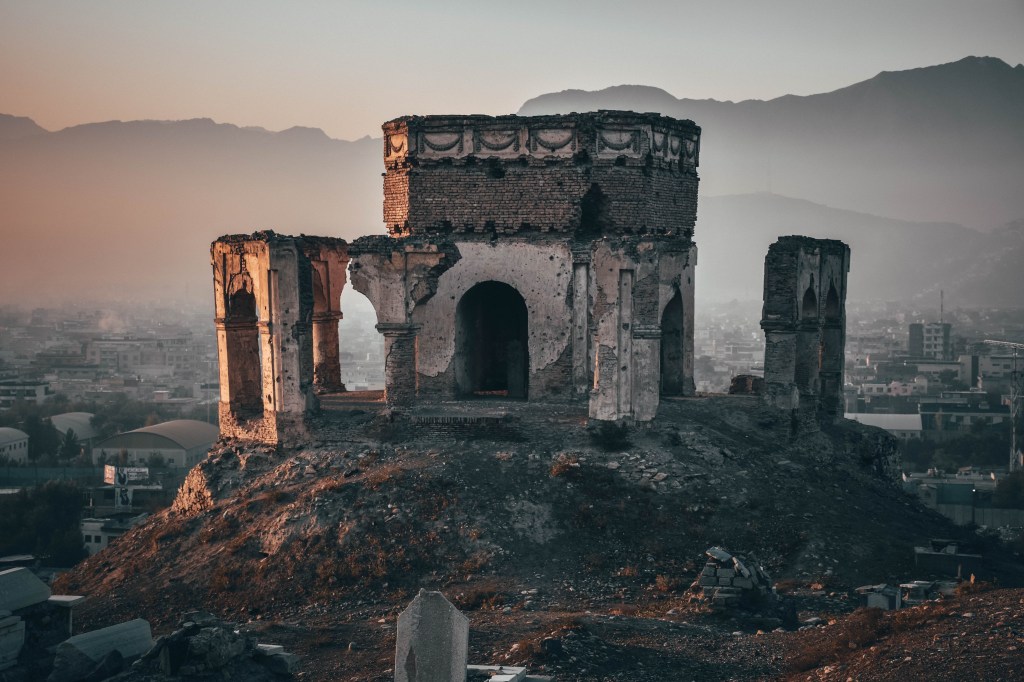
Futurists believe the Second Coming of Jesus Christ would be preceded by a rebuilding of the Jewish Temple. Futurists are great storytellers on the said topic. Novels and movies have been made based on their narrative. However, there is no valid biblical passage to support such a claim. Nowhere in the Bible did Scripture promise the rebuilding of a Third Jewish Temple.
On the contrary, Jesus Christ spoke of the destruction of the Second Jewish Temple (Herod’s temple), and it came to pass in 70 A.D. See Matthew 24:1-2.
“Jesus left the temple and was going away, when His disciples came to point out to Him the buildings of the temple. But He answered them, “You see all these, do you not? Truly, I say to you, there will not be left here one stone upon another that will not be thrown down.””
Jesus actually first spoke of its destruction in Matthew 23:36-38.
“Truly, I say to you, all these things will come upon this generation. “O Jerusalem, Jerusalem, the city that kills the prophets and stones those who are sent to it! How often would I have gathered your children together as a hen gathers her brood under her wings, and you were not willing! See, your house is left to you desolate.”
By “this generation”, Jesus points to the Jewish generation who saw and crucified Him. See Isaiah 64:10-11 for clarity about the “house” in Matthew 23:38.
Your holy cities have become a wilderness; Zion has become a wilderness, Jerusalem a desolation. Our holy and beautiful house, where our fathers praised you, has been burned by fire, and all our pleasant places have become ruins.
By “house”, Jesus Christ prophecied about the desolation of the temple. Hence, His mention of its destruction in Matthew 24:2 was to reiterate the fact that truly the temple would be destroyed for the second and final time.
The disciples, having heard Jesus saying twice “the temple would be destroyed”, understood its implication, so they asked:
“As He (Jesus Christ) sat on the Mount of Olives, the disciples came to Him privately, saying, “Tell us, when will these things be, and what will be the sign of your coming and of the end of the age?”” (Mat 24:3)
The disciples were able to connect the dots. Temple destruction means “The Return of Christ” and “The End of the Age”. Let me repeat: “IT’S THE END OF THE AGE, NOT THE WORLD.”
The Vine’s Complete Expository Dictionary of the New Testament defined “age, aion” Greek #165 “an age or era”. In other words, it’s the end of an era – the Old Covenant Israel.
It’s not only the apostles who understood that “temple destroyed = second coming = end of the age.” So do generations of Christians after the catastrophic event in Jerusalem. See the quotation about “Julian the Apostate’s attempt to rebuild the temple” below:
The Church Fathers embellished the story in various ways adding that the Jews received Julian’s proposal enthusiastically, coming in thousands to the Temple Mount with stones in their hands, but when the first stones were laid the Jews were threatened by earthquakes and hurricanes, and finally driven off by a heavenly fire and specter of Christ (Gregory of Nazianz, Contra Julianum, Oratio, no. 4, 2:149–50; Socrates, Historia Ecclesiastica, 3:196; Sozomenus, Historia Ecclesiastica, 5:214–5). Two important facts may be gathered from these sources: (1) Julian wished to rebuild the Temple to strengthen paganism against Christianity (he saw Judaism and paganism as having sacrificial rites in common); (2) he wished to refute Jesus’ prophecy concerning the Temple (Luke 21:6; Matt. 24:2).
Jewishvirtuallibrary.org
If Julian the Apostate had succeeded in his effort to rebuild the Jewish temple, then Jesus would’ve failed to fulfill His promise of return. Jesus Christ, about His judgment against Old Covenant Israel, said:
““So when you see the abomination of desolation spoken of by the prophet Daniel, standing in the holy place (let the reader understand), then let those who are in Judea flee to the mountains. Let the one who is on the housetop not go down to take what is in his house, and let the one who is in the field not turn back to take his cloak. And alas for women who are pregnant and for those who are nursing infants in those days! Pray that your flight may not be in winter or on a Sabbath. For then there will be great tribulation, such as has not been from the beginning of the world until now, no, and never will be.” (Mat 24:15-21)
One implied meaning was that the Jewish temple would never be rebuilt ‘cause its desolation wouldn’t be repeated. No surprise, the LORD spoke the same truth through Isaiah the prophet. See Isaiah 25:1-2.
“O LORD, you are my God; I will exalt you; I will praise Your name, for You have done wonderful things, plans formed of old, faithful and sure. For You have made the city a heap, the fortified city a ruin; the foreigners’ palace is a city no more; it will never be rebuilt.”
Remember that Scripture originally had no chapter or verse division. Hence, Isaiah 24 & 25 are in the same context. God was speaking of His judgment. For reference and clarity to the “city” mentioned in Isaiah 25:2, see Isaiah 24:5-12 below. Take note that “earth” should properly be translated as “land, Hebrew #776,” the land of Israel with whom God gave the Mosaic Law.
“The earth lies defiled under its inhabitants; for they have transgressed the laws, violated the statutes, broken the everlasting covenant. Therefore a curse devours the earth, and its inhabitants suffer for their guilt; therefore the inhabitants of the earth are scorched, and few men are left. The wine mourns, the vine languishes, all the merry-hearted sigh. The mirth of the tambourines is stilled, the noise of the jubilant has ceased, the mirth of the lyre is stilled. No more do they drink wine with singing; strong drink is bitter to those who drink it. The wasted city is broken down; every house is shut up so that none can enter. There is an outcry in the streets for lack of wine; all joy has grown dark; the gladness of the earth is banished. Desolation is left in the city; the gates are battered into ruins.” (Isaiah 24:5-12)
The Bible is unified in saying, “Old Covenant Jerusalem and its temple will be destroyed, and not be rebuilt.” Amazing to think: Julian the Apostate, despite his enormous power and authority as emperor of Rome, failed to rebuild a Third Jewish Temple. However, the Muslims successfully built the Dome of Rock on the precise site of the former temple.
In conclusion, let us see John’s story concerning Jesus’ words about temple. See John 2:19-22.
“Jesus answered them, “Destroy this temple, and in three days I will raise it up.” The Jews then said, “It has taken forty-six years to build this temple, and will you raise it up in three days?” But He was speaking about the temple of His body. When therefore He was raised from the dead, His disciples remembered that He had said this, and they believed the Scripture and the word that Jesus had spoken.”
There is no need for a rebuilt temple. The essence of the temple was to signify God’s presence with Israel. But with the New Covenant, God’s dwelling place is with His people. See 2 Corinthians 6:16.
“What agreement has the temple of God with idols? For we (Christians) are the temple of the living God; as God said, “I will make my dwelling among them and walk among them, and I will be their God, and they shall be my people.” (2Co 6:16)
See also 1 Peter 2:4-5.
“As you come to Him (Jesus Christ), a living stone rejected by men but in the sight of God chosen and precious, you yourselves like living stones are being built up as a spiritual house, to be a holy priesthood, to offer spiritual sacrifices acceptable to God through Jesus Christ.”
It is our prayer that everyone would abide in the words of Christ, discerning truth from myths.
“So Jesus said to the Jews who had believed Him, “If you abide in My word, you are truly My disciples, and you will know the truth, and the truth will set you free.”” (Joh 8:31-32)
Blessings!
If you want to follow our journey of unlearning tradition and relearning Scripture and stay updated, you can head to our about page and subscribe directly to receive notifications in your inbox.


 Unlearning Tradition, Relearning Scripture